


A consumer study revealed that YouTube reviewers are among the top most trusted product review sources online, right behind marketplace reviews (i.e., Amazon) and review sites (i.e., Trustpilot). Frankly, to my surprise, YouTube reviewers even beat out AI when it comes to trust on product recommendations.
If you’re already here searching, you probably don’t need more convincing. But since YouTube creators are in high demand, it’s important to have methods that actually cut through the noise. You and every other product-based business want to tap into YouTube for marketing, and the good news is, with the right approach, finding the right creator is very doable. It just comes down to how efficient you are with your time and resources.
Before diving into the methods, I want to lay out a few prerequisites. A lot of folks start looking before they even know what they’re looking for. If you’re new to affiliate or influencer marketing or haven’t set up a brand collab or ambassadorship before, here are a few ground rules.
Pre-Requisites
If you are an omnichannel brand and you’ve heard that YouTube creators are great at moving product, first consider your target audience. If your product doesn’t have a dedicated niche, say, hand sanitizer, you can look for adjacent content categories like household cleaning, travel hacks, or parenting tips. What matters is that the creator’s audience overlaps with your ideal customer profile, even if your product isn’t a perfect fit content-wise.
Also, know the difference between influencer and affiliate marketing. A lot of guides use the terms interchangeably, but they’re not the same, and the distinction matters when you’re negotiating and setting expectations.
Influencer marketing means hiring a creator to make content about your product. Usually, you’ll have a campaign brief, pay a deposit, give feedback, and pay the rest after revisions and delivery (or posting).
Affiliate marketing, on the other hand, is performance-based. You’re still working with creators, but they only get paid if they generate sales or click. That’s typically a percentage of revenue or a flat fee per unit sold or click.
The key is finding creators who are open to that type of deal because not all are. So now the question becomes, how do you screen for who’s open to affiliate deals, who understands Amazon or Walmart product marketing, and who can actually sell?
Once we’ve cleared that up, let’s get into how to actually find these creators.
Methodology #1: Influencer Discovery Tools
Levanta
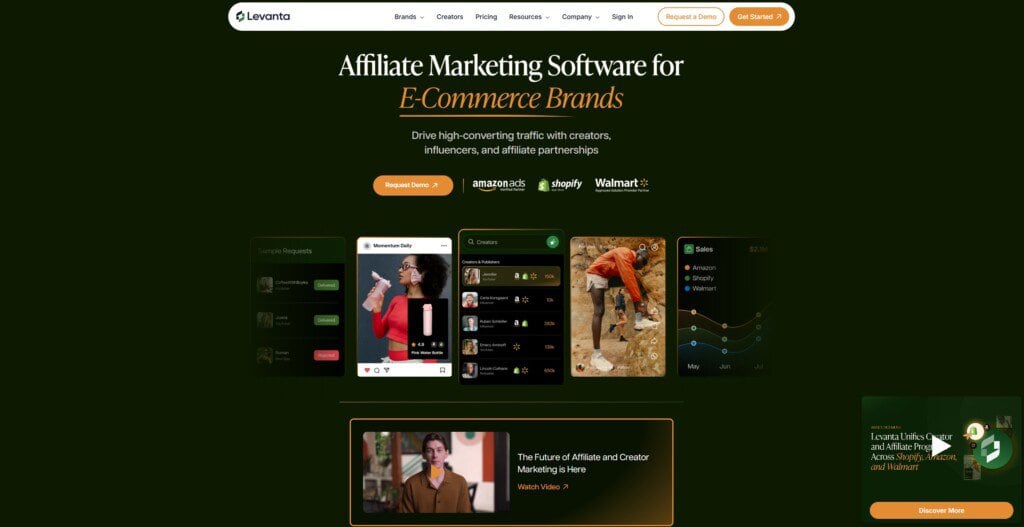
There are a ton of discovery tools out there, but the one that’s stood out to me is Levanta. It’s specifically built to unify creator programs (Amazon, Shopify, and Walmart) so you can run them from one platform, and it connects you with an AI-powered marketplace of 60k+ vetted creators who work on a commission basis. You can find, recruit, and activate partners quickly, manage them efficiently, and optimize your creator spend all at the same time.
If you’re familiar with running omnichannel ecommerce programs, then you understand the pressure to reduce costs while maximizing results, which is difficult (if not impossible) when you’re managing everything across several different paid platforms or tools. Levanta streamlines this to save time and money, and it provides a lot more visibility into incremental performance (meaning, who is really influencing conversions).
Through Levanta, you get access to influencers as well as bloggers, publications, and niche sites, which lets you experiment and figure out which type of marketing partner performs best if you don’t already know. Social listening within the marketplace identifies creators who are already talking about your brand or products, giving you a serious leg up over older, more outdated platforms when it comes to discovery.
That said, this tool isn’t free. Pricing starts at $750 per month with an annual contract. If you’re just starting out or strapped for budget, they have a custom pricing option you should check out. But if you’re already generating revenue and looking for vetted affiliate partners to expand your reach (or revenue), this can save you a ton of time.
There are other platforms out there, but none I’ve seen that cater this directly to Amazon and Walmart brands.
Impact
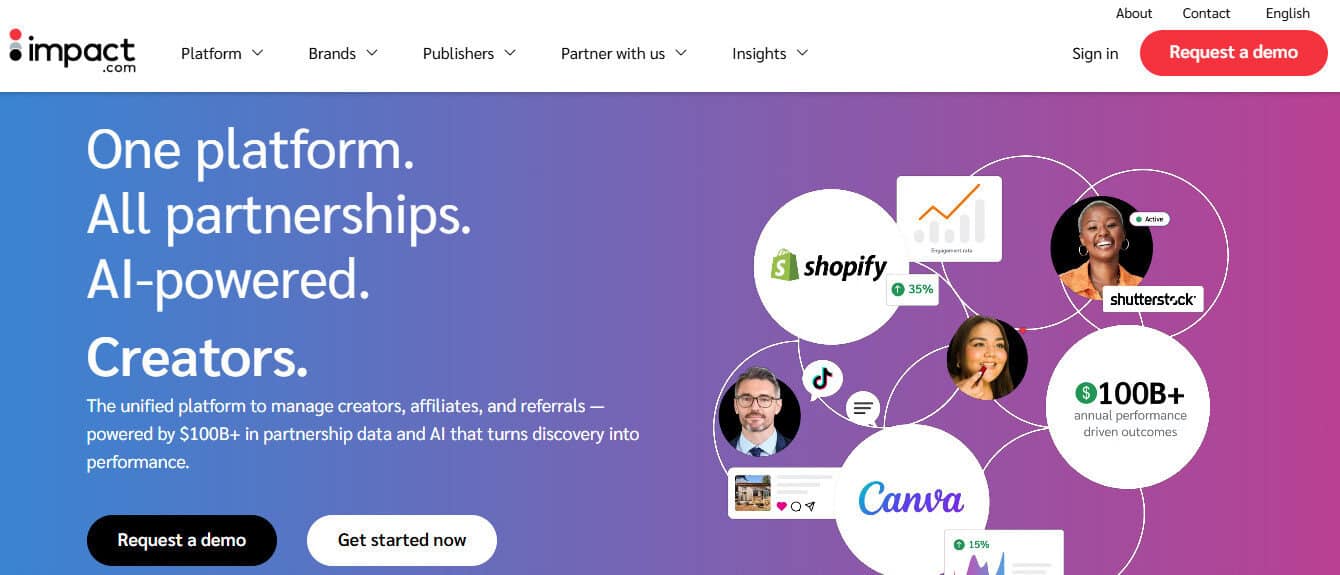
Using Impact to find YouTube influencers is a little more hands-on compared to Levanta, but it is designed to help you treat YouTubers as strategic partners rather than just traffic sources. Since it’s more of a “traditional” affiliate platform, it’s suited for teams building a “creator + affiliate” hybrid program.
There is a marketplace on Impact, of course, where you can (manually) search for influencers, along with bloggers, media publishers, and other potential partners. But it works best when you also proactively recruit beyond the marketplace; you can invite YouTubers directly, issue tracking links or promo codes, and structure deals that include flat fees, performance bonuses, or volume-based tiered payouts.
You can track conversions from YouTube, even across longer buyer journeys, although it doesn’t provide quite the same level of incrementality that Levanta does. Overall, it’s a fit for brands that still need a more traditional (or old-school) affiliate partner model while also managing high-touch YouTube creator collaborations and partnerships from one place.
The Starter tier begins at $30 a month but this is very limited and does not include marketplace access; tiers that provide it are priced from $500 and up.
CJ
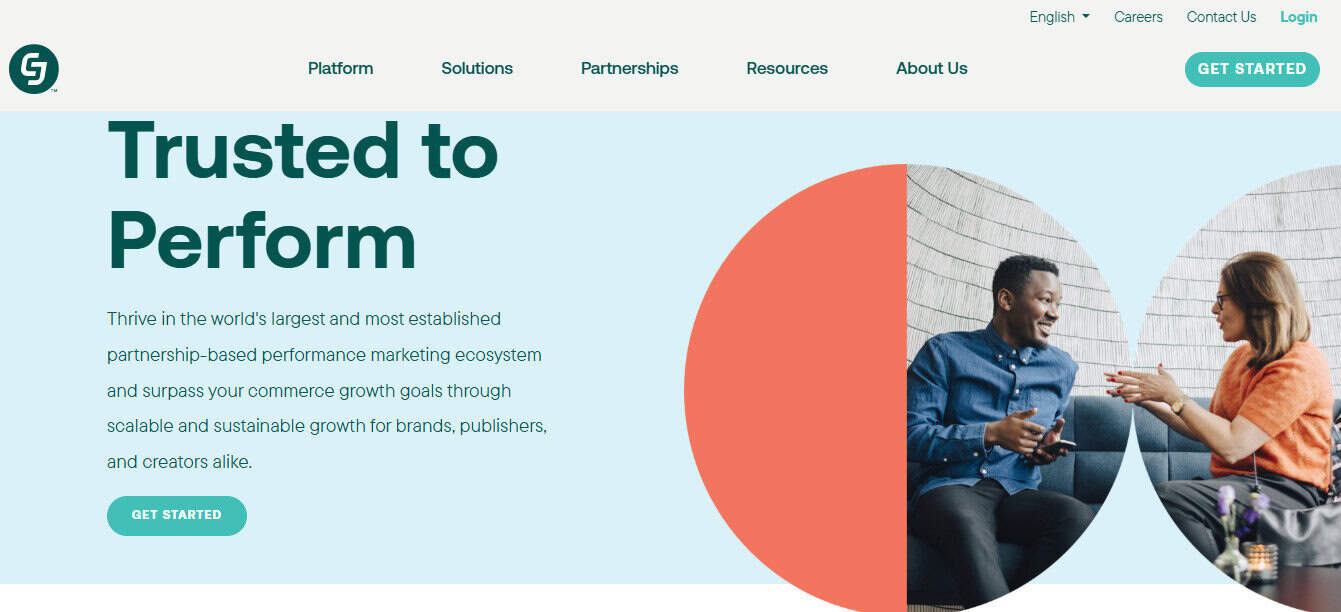
CJ has a publisher marketplace that lets you filter by partner type, including influencers on YouTube, other video publishers, media publishers, and general content creators, and many established YouTubers can be found on this platform.
Although CJ is another more “traditional” affiliate platform rather than an influencer marketplace in the TikTok/DM sense, its infrastructure excels at helping YouTube creators to operate as performance-based partners, with tracking, management, payouts, and compliance operating in the background.
You can issue unique links or promo codes to your partners, attribute conversions, and evaluate partner performance based on sales. Unlike Impact, it provides incrementality as Levanta does, giving insight into assisted conversions, device paths, and revenue contributions so you know which creators genuinely influenced purchase decisions.
The biggest downside is that CJ pricing is bespoke (which includes a network access fee), and being more of a legacy affiliate platform, the dashboards and UX are a little outdated and clunky compared to Levanta and Impact.
Methodology #2: Search on Google
Google is still a solid way to find YouTube creators, especially with how integrated video is in search results now. Gemini’s also made things faster by skipping a lot of the junk listicles and fluff.
A few search tips:
- Be specific. Don’t just search “YouTube creators.” Include the niche, like “YouTube tech review creators,” and try geographic keywords like city, state, or country to narrow it down to creators that fit your ICP.
- Don’t forget to check the Videos tab on the results page. That’s where you’ll find a mix of actual creator channels, collab lists, and intro vlogs that help you vet who’s out there.
This method takes more time and discernment, but it’s also where some of the best organic discoveries happen.
Methodology #3: Search on YouTube

Yes, it sounds obvious. But how you search on YouTube makes all the difference between wasting hours or making meaningful progress.
Here’s what works:
Keywords
Come up with 5 to 10 keywords per product or niche. Run searches and scan through 5 to 10 creators per keyword. If a keyword keeps surfacing solid fits, dig deeper until it feels like the well runs dry.
Hashtags
Same idea here. A trick I recommend is searching hashtags like #ad, #sponsored, or #paidpromotion. That’ll surface videos by creators who’ve done brand deals and understand how to promote products professionally.
Performance Filters
Use filters like “recently uploaded,” “view count,” etc., to find newer or less saturated creators. High-view channels often come with high price tags, so these filters help you find solid mid-tier options.
Cross-Niche
Don’t limit yourself to your product’s niche. Think about where your customer overlaps with other industries and look for creators in those spaces too.
Methodology #4: Look on Other Platforms
I do a lot of scouting on Instagram and TikTok. There’s a ton of crossover between platforms, and not all creators are equally strong on every platform. Just because someone’s killing it on TikTok doesn’t mean they’re doing numbers on YouTube.
This creates a sweet spot. You might find a strong creator who’s open to better terms on YouTube if that’s their secondary platform. That could mean more flexibility around rates, content expectations, or even going with affiliate-only deals.
Methodology #5: Influencer Talent Agencies

With the boom of the creator economy has come the rise of influencer talent agencies. A lot of them maintain public rosters that you can browse to discover potential partners. Some agencies require that all deals go through them, which might mean added fees, but others allow creators to book projects directly as long as the agency didn’t bring in the lead.
This gives you the chance to use agency rosters purely for discovery, then reach out to the creator directly through their YouTube or social media contact info.
Below are a few examples of agencies that make their rosters public:
These sites let you browse freely. Some will show the creator’s stats, a short description, and links to their channels. Others might only list the name, so you’ll need to do some of the legwork yourself to find their pages or contact info.
On the other hand, there are agencies that are a bit more low-key with who they represent. Their rosters are still technically available, but you have to request access by submitting your contact info and stating your reason for reaching out. It might feel like an extra step, but these types of agencies are often more niche-specific. If you can get your hands on a roster, it’s a great way to find high-quality creators in your niche without having to pay a platform fee.
Here are a few examples of those:
Whether the roster is public or private, almost every agency only lists the contact info for the talent agent, not the creator themselves. If you want to reach out directly, you’ll usually need to find them on social and slide into the DMs.
For the Good of the Order
If you’re new to influencer or affiliate marketing, especially the outreach part, don’t get discouraged by low response rates. Outreach is a volume game.
I reach out at least three times if there’s no response. If I do get a reply and the conversation drops off again, I follow up three more times if needed. A lot of people give up way too early. No reply doesn’t mean no. Keep following up.
While these are the most effective tactics I’ve found, this list isn’t the end all be all of how to work with influencers or creators.
You might also find that not every strategy listed here is necessary for your situation. Even if something works, that doesn’t automatically mean it’s the best fit for your business. It’s important to weigh the time, cost, and effort, and figure out the most efficient way to get things done. The right direction is whatever works best for you.