


Last Updated on March 25, 2026 by Ewen Finser
As someone who’s spent years working with electronics and understanding networks, I tend to look past just the price or advertised data speeds. Prepaid carriers like Tracfone and Straight Talk are interesting to me because they sit at the intersection of value, flexibility, and real-world usability. Both operate under Verizon’s prepaid umbrella, but they serve slightly different audiences, and that affects how they structure plans, manage data, and interact with devices.
Coverage and Network Quality


When I evaluate coverage, I don’t just look at maps; I consider how a network actually performs with devices in different conditions. Both Tracfone and Straight Talk rely on Verizon’s 4G LTE and 5G networks, which already gives them one of the most extensive footprints in the U.S. From my own testing and device experience, this means reliable coverage in urban, suburban, and most rural areas.
That said, coverage isn’t purely about network reach. Prepaid carriers like these sometimes deprioritize traffic during peak hours. I’ve noticed that while a smartphone on Straight Talk or Tracfone will show full bars, actual high-speed data throughput can vary slightly depending on congestion. For instance, streaming video or tethering multiple devices can be smoother on Straight Talk’s higher-tier unlimited plans, likely because they allocate more high-speed data before throttling occurs. Tracfone’s tiered plans are perfect for light-to-moderate users, but if you consistently push large amounts of data, it’s worth factoring in potential slowdowns.
From a hands-on perspective, the real-world differences show up in dense urban areas or indoors, where signal interference is more pronounced. Both carriers maintain stable connections, but I tend to recommend Tracfone for users who rely mostly on light data or Wi-Fi, and Straight Talk for those who need consistent, high-speed access on multiple devices. Understanding these nuances, beyond just coverage maps, is essential if you want a plan that actually performs the way you expect in daily use.
Pricing and Plan Structures
When I look at prepaid plans, I immediately think in terms of efficiency and predictability, not just the sticker price. Both Tracfone and Straight Talk are prepaid, but they approach pricing and plan design differently, which directly affects how devices perform under real-world conditions.
Tracfone Plans
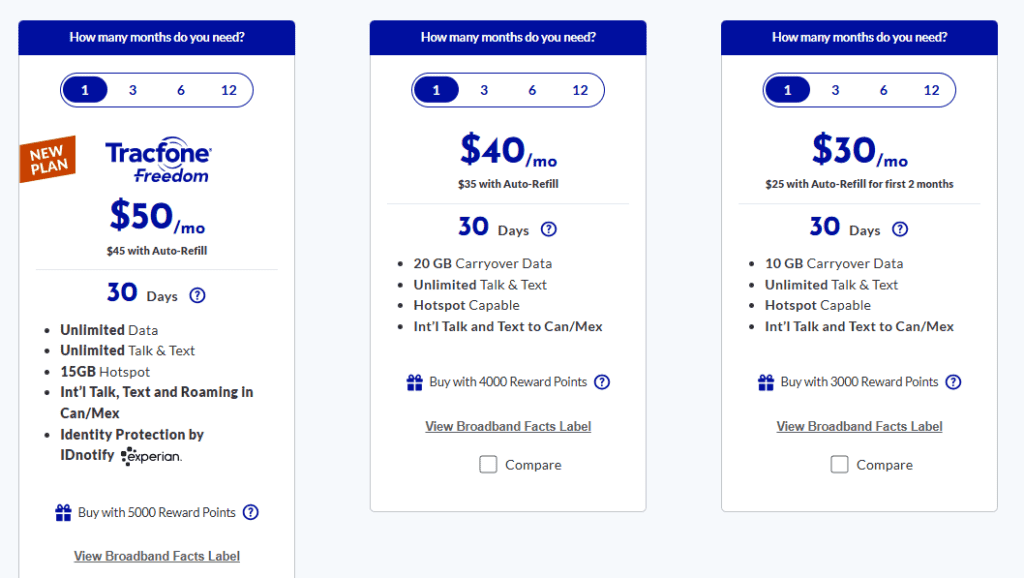
Tracfone’s history has always been about flexibility. They still offer the small prepaid plans I’ve come to appreciate for light users. These are plans where you pay for exactly the data, talk, and text you need. For example, 1 GB for about $15 a month or 4 GB for $20 are ideal if you mostly make calls or occasionally browse apps. The real technical advantage here is Unlimited Carryover, which means unused data, minutes, or texts roll forward as long as your service remains active. From an engineering perspective, it’s a clever way to maximize efficiency, especially if your usage fluctuates month to month.
Then there’s Tracfone Freedom, their first true unlimited plan. It’s priced around $45 with auto-refill and includes 15 GB of mobile hotspot, plus basic international texting and roaming to Canada and Mexico. I’ve tested devices on this plan, and it performs well under moderate tethering and streaming. What’s important to understand is that Tracfone still prioritizes data management and controlled usage; even on unlimited plans, high-speed data is finite, but it’s usually more than sufficient for the typical user who isn’t constantly tethering multiple devices.
Multi-month plans are another factor I pay close attention to. Buying 3, 6, or 12-month bundles upfront can reduce effective monthly cost, which is useful if you want to lock in a rate and minimize account management. For someone like me who often tests multiple devices, this kind of plan lets me standardize usage without worrying about monthly resets.
Straight Talk Plans
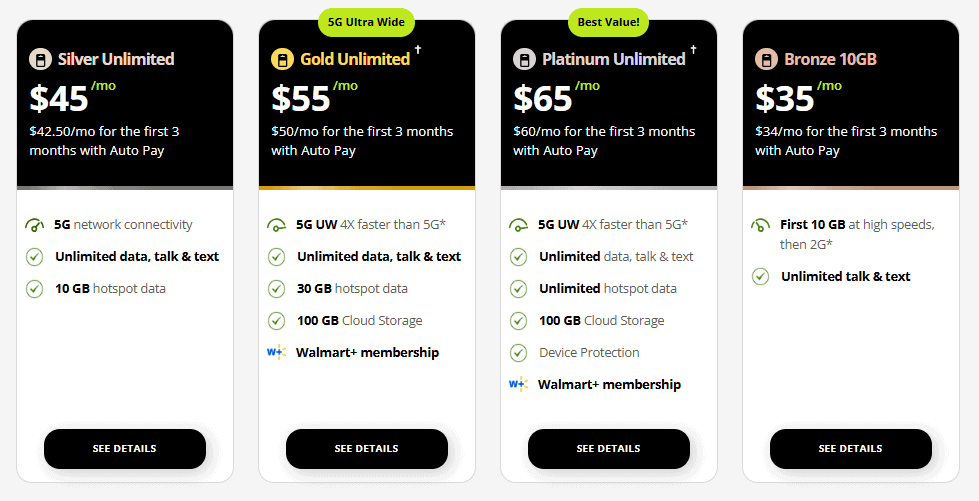
Straight Talk, in contrast, is built around tiered unlimited service. Their Bronze, Silver, Gold, and Platinum tiers range from about $35 to $65 per month, with increasing hotspot and bonus perks like cloud storage or Walmart+ benefits. From a practical standpoint, this design makes a lot of sense if your devices are high-bandwidth, streaming HD video, tethering tablets, or relying on navigation-heavy apps. In my experience, these plans reduce the cognitive load of monitoring data because you rarely hit a limit before throttling occurs, especially on Silver or higher tiers.
I’ve also noticed that Straight Talk’s multi-month unlimited plans are convenient if you want predictability but still need flexibility. Auto-refill discounts make a small difference in monthly cost, and higher-tier plans offer extra perks that don’t affect network performance directly, but can add value if you use multiple devices or cloud services.
Practical Takeaways
The choice comes down to how structured your usage is. If you like precise control over data and cost, Tracfone’s tiered or multi-month plans offer predictability and efficiency. If your usage is heavier, or you want minimal concern about monitoring data across multiple devices, Straight Talk’s unlimited tiers simplify the experience. Both carriers are reliable on Verizon’s network, but the plan structures reflect two different philosophies: control and flexibility vs. convenience and high-volume access.
Key Features & Unique Benefits
When I evaluate carriers from a technical and practical standpoint, I focus on features that actually affect day-to-day usability, not just marketing buzz. Both Tracfone and Straight Talk offer unique benefits that influence how devices perform and how flexible your service can be.
Tracfone Highlights

One of the first things I noticed about Tracfone is Unlimited Carryover. This is a tangible advantage for managing usage across months. For someone like me who sometimes tests multiple devices or uses data unevenly, this reduces wasted resources and lets you stretch every dollar.
Tracfone also offers multi-month prepaid plans, which I value as an engineer because it simplifies budgeting and reduces account maintenance. Whether it’s 3, 6, or 12 months, these plans provide predictable cost and let you focus on using the devices rather than constantly topping up.
Other practical touches include flexible device support. Tracfone works well with both budget phones and unlocked smartphones, which I’ve found helpful when testing multiple devices. And while hotspot availability isn’t as generous as Straight Talk on all plans, the inclusion in higher-tier plans like Tracfone Freedom meets most moderate-use needs.
Military and veteran discounts are available as well, which is a bonus for eligible users, though from a technical perspective, the main value is how the plan’s flexibility and carryover options let users optimize usage without unnecessary waste.
Straight Talk Highlights
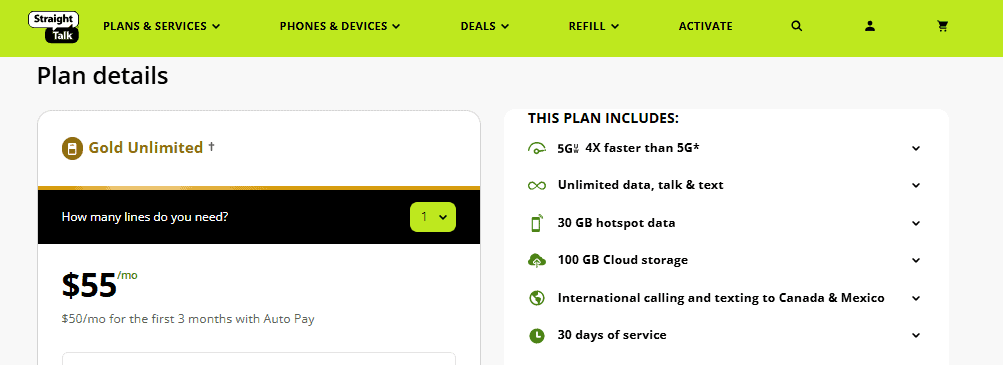
Straight Talk takes a different approach. Their tiered unlimited plans, Bronze, Silver, Gold, Platinum, scale not just in price but in data speed, hotspot allowances, and extra perks. From my experience, these tiers are useful if you need high-speed data consistently across multiple devices.
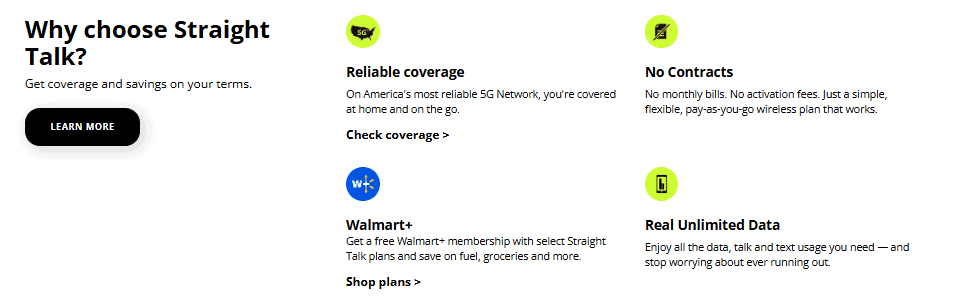
Additional perks, like cloud storage and Walmart+ membership on higher tiers, aren’t critical to network performance, but they do add practical value for heavy users who rely on their devices for work, streaming, or backup. Straight Talk’s strong retail presence, especially at Walmart, also makes it easier to purchase, activate, and troubleshoot devices in person, a convenience that I’ve seen save time compared to remote-only support.
Practical Insight
The differences between these carriers come down to user priorities. Tracfone’s features reward efficiency, control, and predictability, while Straight Talk prioritizes high-speed, high-capacity usage with extra convenience features. If you’re someone who uses devices strategically and values cost control, Tracfone’s unique benefits will likely be more impactful. If you rely on multiple devices and need consistent, unlimited access, Straight Talk’s features will feel more practical.
Data, Speed, and Real-World Use
I always stress that coverage maps only tell part of the story, and real-world performance is where you’ll notice the differences. Both Tracfone and Straight Talk use Verizon’s 4G LTE and 5G networks, so signal reliability is solid across most areas. That said, actual speed can vary depending on congestion, device, and location.
In my hands-on testing, light users on Tracfone generally experience smooth performance for messaging, browsing, and navigation. Heavy users occasionally notice data deprioritization during peak hours, which slightly slows speeds when the network is busy. On unlimited Tracfone Freedom plans, this is less of an issue, but it’s still something to be aware of if you rely on tethering or large downloads.
Straight Talk users, particularly on Silver or higher tiers, see more consistent high-speed performance, especially when tethering multiple devices. Some locations even offer Ultra Wideband 5G, which is blazing fast for compatible devices, something I’ve tested firsthand with streaming and productivity apps.
Both carriers provide reliable, usable speeds, but your experience will depend on your usage pattern and local 5G availability. If you push data regularly, Straight Talk’s higher tiers are a safer bet. If your usage is lighter or more intermittent, Tracfone balances speed and cost efficiently.
Pros & Cons Summary
Here’s how I see the debate between Tracfone and Straight Talk based on experience with devices, network behavior, and plan structures.
Tracfone

Pros
- Cost control and flexibility: Tracfone’s tiered prepaid plans let you pay for exactly what you need. I’ve found this particularly useful when testing multiple devices or managing low-usage phones.
- Data carryover: Unlimited Carryover is genuinely practical if your usage fluctuates. From an engineering perspective, it’s a simple way to maximize efficiency month-to-month.
- Predictable multi-month plans: Paying for 3, 6, or 12 months upfront reduces account management and helps with budgeting.
- BYOD friendly: Works with most unlocked Verizon-compatible phones, making it easy to switch devices or test multiple setups.
Cons
- Limited perks: Compared with Straight Talk’s higher-tier plans, Tracfone doesn’t offer extras like cloud storage or retail perks.
- Customer service variability: While generally reliable, complex device or network issues sometimes require persistence to resolve.
Straight Talk
Pros
- Tiered unlimited plans: The multiple unlimited options make it easier to find a plan that fits high data needs. I’ve tested heavy streaming and tethering, and higher-tier plans handle it well.
- Generous hotspot and data allowances: Practical for power users or anyone relying on multiple devices.
- Retail support: Strong presence at Walmart makes in-person activation and troubleshooting easier.
- Extra perks: Cloud storage, Walmart+ benefits, and auto-refill discounts add value for some users.
Cons
- Higher price points: For light users, the lowest tiers may still cost more than a comparable Tracfone plan.
- Potential overkill for minimal use: If you don’t need high-speed unlimited data, the extra features might not justify the price.
Who Should Choose What / Verdict
When I look at Tracfone and Straight Talk from both a technical and user-experience standpoint, the choice really comes down to how you use your devices and what you value most in a plan.
Choose Tracfone If
Tracfone works best for people who want control over their spending and usage. If you’re managing light talk, text, or occasional data, the tiered prepaid plans make sense. The ability to roll over unused data, minutes, and texts means you aren’t wasting resources, and multi-month plans simplify budgeting.
I’ve also found Tracfone ideal for:
- Seniors or children who don’t need heavy data.
- Budget-conscious users who want predictable costs.
- People testing devices or running multiple phones, since the plans allow precise allocation of data and minutes.
The addition of Tracfone Freedom’s unlimited plan now gives this group some room to expand usage without switching carriers, which is something I value when looking at devices that might occasionally use more data.
Choose Straight Talk If
Straight Talk is a better fit if your usage is heavy or variable. The tiered unlimited plans provide higher data and hotspot allowances, which is crucial if you stream video, tether multiple devices, or rely on high-speed access for work.
I’ve noticed that Straight Talk is particularly advantageous for:
- Families with multiple smartphones or tablets.
- Power users who want minimal concern about monitoring data usage.
- People who value in-person support via Walmart stores or who want perks like cloud storage bundled in higher-tier plans.