


Last Updated on October 20, 2026 by The Digital Merchant Team
Xero has long been a staple in the cloud-based accounting world. It’s sleek, easy to use, and loaded with features that cater to most businesses. But as with most things, it’s not one size fits all. If you’re here looking for the best Xero alternatives, you probably have a reason to switch.
So whether you’ve just outgrown Xero, are looking for deeper automation, or just want something that better aligns with your business’s specific workflows, it’s worth exploring the list of Xero competitors that may be a better fit.
The Best Xero Alternatives At a Glance
Platform | Price (monthly, 2+ users) | Free plan or trial? | Key features | Best fit |
Xero | $27 | 1 month free trial (any tier) | Easy-to-use widgets and AI-powered bank reconciliation | SMEs wanting simplicity and clarity for low-volume accounts |
Puzzle.io | $30 | 2 week free trial (any tier) | AI-native platform with strong error reduction | Agile firms making data-driven decisions in real time |
QuickBooks Online | $38 | Free plan, 1 month trial (any tier) | Reporting depth and AI features across several functions | Owners comfortable building custom reporting views |
FreshBooks | $23 | 1 month free trial (most tiers) | Automated time tracking and invoicing | Service-based businesses keeping things simple |
Zoho Books | $20 | Free plan, 2 week trial (any tier) | Customizable AI automations and inventory management | Tech firms using other tools in the Zoho ecosystem |
Wave | Free (or $19 Pro plan) | Free plan, no trial on other tiers | Best free capabilities and AI-assisted insights | Freelancers or newer firms saving costs |
The Bottom Line, Up Front
If Xero isn’t quite cutting it for your business, you’ve got strong alternatives.
Puzzle.io is ideal for startups and finance teams that want real-time, automated books.
QuickBooks Online remains the go-to for small businesses needing a familiar, feature-rich platform.
FreshBooks is perfect for freelancers and service-based businesses that prioritize simplicity in invoicing and time tracking.
Zoho Books is a powerhouse for businesses already using Zoho’s suite or looking for affordable customization.
And Wave offers solid core accounting features for free. Each platform has its strengths, so your best pick depends on what you value most in your day-to-day.
Why Some Businesses Outgrow Xero
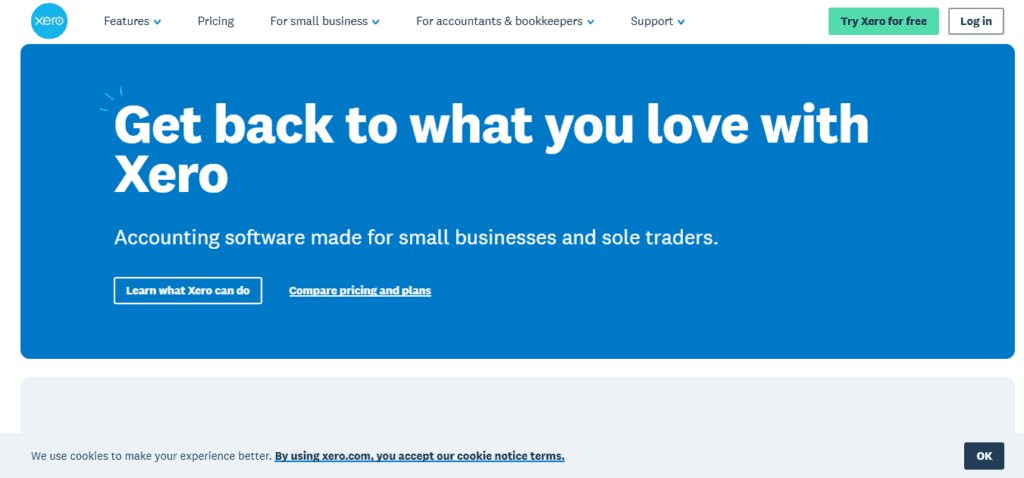
So you’re here with me, reading this article. But why? Either you’re using Xero and are looking for advice on the leap of faith you’re about to take to switch platforms, or you’re getting started and your research led you to Xero, and you’re doing your due diligence. Good for you!
Let’s be clear—Xero is still a great product. It has a loyal user base, a clean UI, and solid functionality. But it’s not for everyone. Here are a few of the most common reasons businesses start looking for something else:
- Lack of real-time automation: Xero still relies heavily on rule-based bookkeeping, which means if your business has lots of transactions or accruals, you’re stuck with manual intervention or third-party tools.
- Scaling challenges: As you grow and bring on new revenue streams, subsidiaries, or investors, Xero can start to feel limiting—especially in areas like project accounting, entity consolidation, or the need for advanced financial analytics.
- Industry limitations: Service-based businesses love Xero, but it can be awkward for SaaS startups, manufacturing companies, or others that rely on more nuanced financial processes.
- Reporting needs: While Xero’s reports are clean, they can lack the depth and flexibility needed by finance teams running strategic, data-driven operations.
This is where platforms like Puzzle.io and Zoho Books start to shine, especially when automation, customization, or real-time financials are non-negotiable.
The Best Xero Alternatives
Puzzle.io – Real-Time Accounting for Fast-Paced Businesses
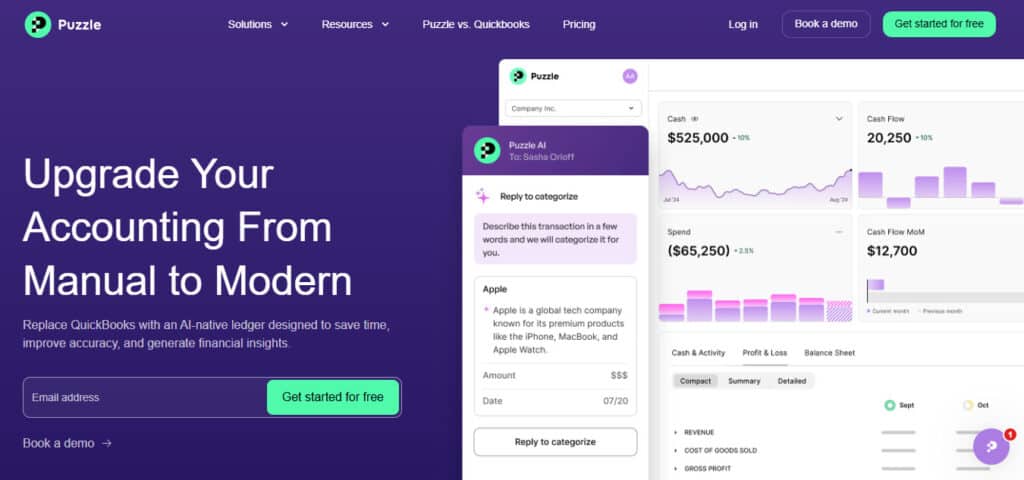
Puzzle.io isn’t just another general ledger in the cloud — it’s a reimagining of accounting software works in an AI-first world. The premise is that where owners and CFOs want answers, not just entries. Built from the ground up with automation in mind, Puzzle connects directly to your bank accounts, payroll platforms, and billing systems to generate clean, GAAP-compliant books without you having to chase receipts and spreadsheets. Importantly, it generates action items for you to review, rather than automating everything, so there’s still an approval trail.
Its new AI features include Chat, that answers plain-language questions without making any changes to your accounts, Cowork that prepares tasks for you to review, and Close that simplifies your month-end process. AI credits do vary by plan though, so be sure you sign up for enough.
Why it stands out from Xero:
- It possesses real-time books with automated accruals and reconciliations (at higher tiers).
- I want to note that Xero can assist with bank reconciliations using rules-based matchmaking, but Puzzle feels more intuitive to me, and its blend of AI and human oversight means a faulty rule is less likely to cascade into a problem.
- The platform has AI-powered categorization that can achieve automation of up to 98%.
- The UI is ultra sleek and doesn’t feel like it was designed in 2009.
- The system was engineered for scalability, meaning as your team and transactions grow, your software doesn’t slow down.
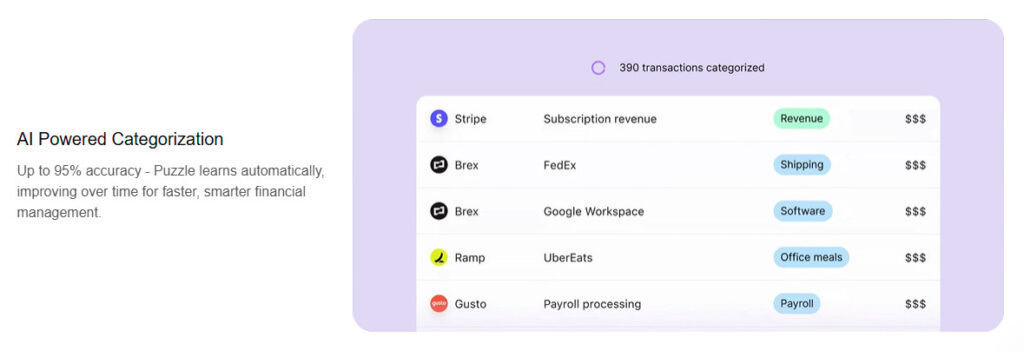
While Xero does offer integrations and automation, it still leans heavily on rules and manual adjustments. Puzzle takes a different approach—let the machine do the majority of bookkeeping, but keep human oversight of exceptions and edge cases (which I approve of, as I always recommend “the humans” keep a close eye on any AI system). If you’re a founder, controller, or CFO spending hours trying to make sense of traditional accounting tools, Puzzle can provide a cleaner way to get to those answers.
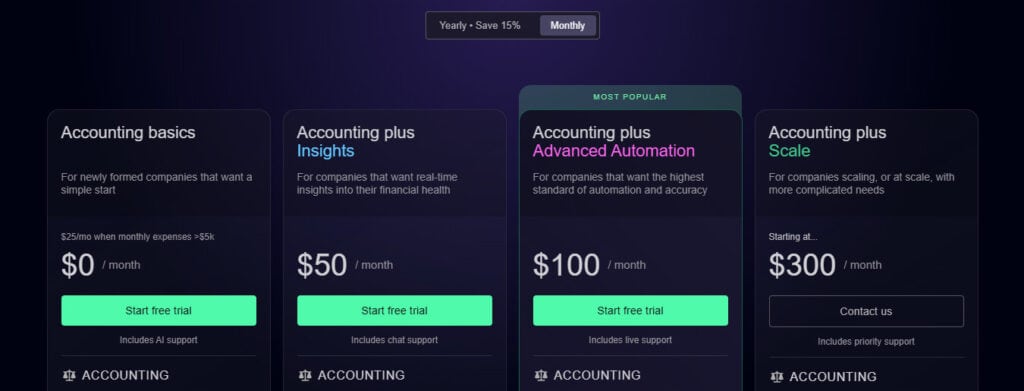
Pricing: Starter tier at $30 a month includes their AI suite, limited credits, and a good base of features. Their $72 Core tier is billed as a ‘QuickBooks replacement’, while higher tiers are Complete at $120/month with priority support and automated reconciliations, and Scale at $360 for high volume across subledgers with significant AI use.
Best for: Startups and high-growth companies that need real-time, automated accrual accounting and intelligent insights.
QuickBooks Online – The 800 lb Gorilla In The Room
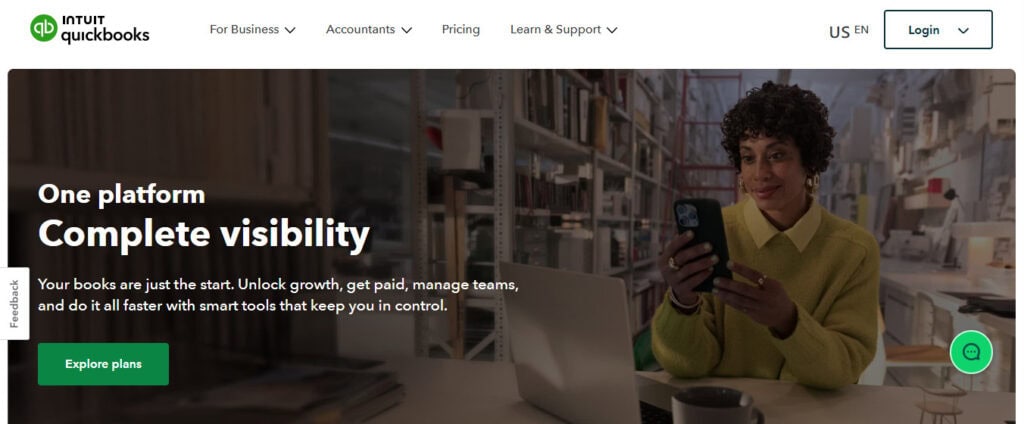
I’m absolutely guilty of this, but if you’ve asked any accountant for software advice in the last decade, chances are you’ve heard, “Just use QuickBooks.” And for good reason—Intuit’s QuickBooks Online (QBO) is the most recognized accounting software in the U.S. It offers deep functionality for payroll, invoicing, inventory, and tax prep, which is pretty much the extent of what any small business would need.
Why it’s a solid alternative to Xero:
- QBO has the widest accountant adoption in the U.S., meaning it’s easier to find help.
- It hosts a robust ecosystem of third-party apps and integrations.
- Built-in payroll and tax tools, including automatic 1099s.
- This is part of the reason I believe QBO is as ubiquitous as it is; it can be tailored to run just about any small business, from shoe sales to construction companies to professional firms. It just works, period.
- It allows management, supervisors, and PMs granular user permissions, which is perfect for growing businesses.
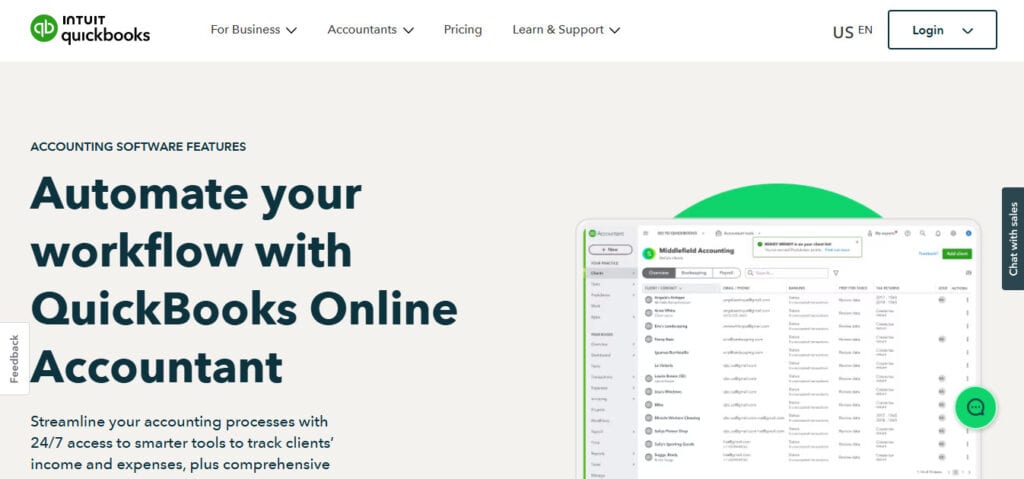
QuickBooks’ main edge over Xero is its broader familiarity among bookkeepers and accountants in North America. If you want to make onboarding easy or outsource your books to a local CPA, odds are they already use QBO.
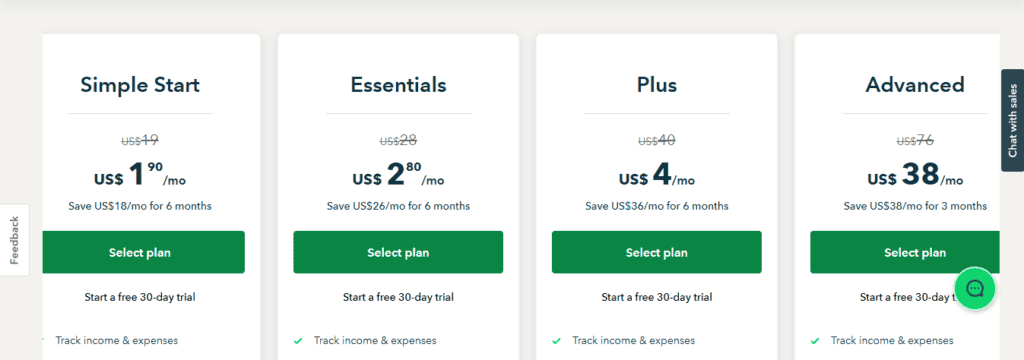
Pricing: Starts at $38/month for their most basic plan that still includes Intuit Intelligence, with Essentials at $85 adding enhanced reports and third-party data. $140 Plus tier adds automated reconciliation and inventory tracking, while the $340 Advanced plan includes free 1099 e-filing and project-level financials.
Best for: Small and medium-sized businesses that are focused on project-based work looking for a feature-rich, widely adopted platform with strong support and integrations.
FreshBooks – Designed for Service-Based Businesses and Freelancers
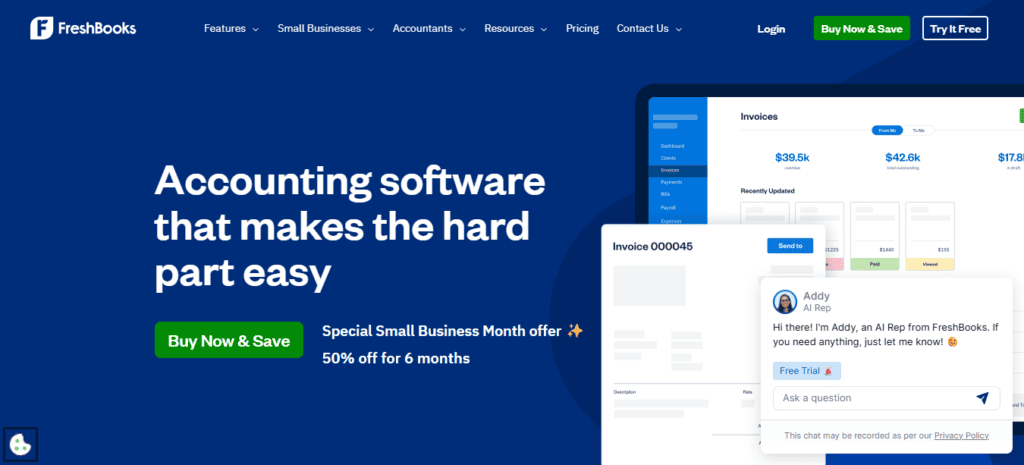
FreshBooks began life as a lightweight invoicing tool, but it’s grown into a full-featured accounting solution that remains super focused on simplicity. If you run a service business and don’t need complex accruals or heavy-duty inventory tracking, FreshBooks makes your life easy.
What sets it apart from Xero:
- Ridiculously easy invoicing with automated reminders and payment links.
- Time tracking and project-based billing baked in.
- To me, this is a big distinguisher as I have found that many accounting platforms are often lackluster when it comes to project-based record keeping
- Client portals that make your business look polished and professional.
- Clean and simple interface designed for non-accountants.
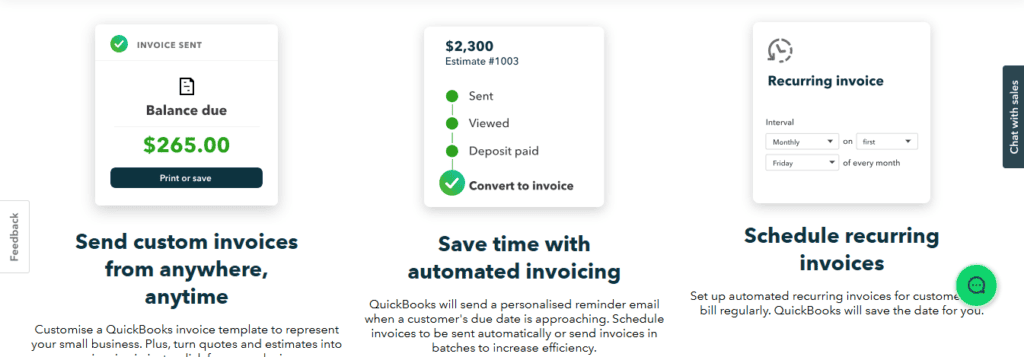
Xero may be more powerful under the hood, but FreshBooks wins on user experience, which is a big thing to consider if you’re not into the numbers side of things. Its reports are basic compared to something like Puzzle or QuickBooks, but they’re more than enough for freelancers or consultants who care more about getting paid than running layered budget forecasts.
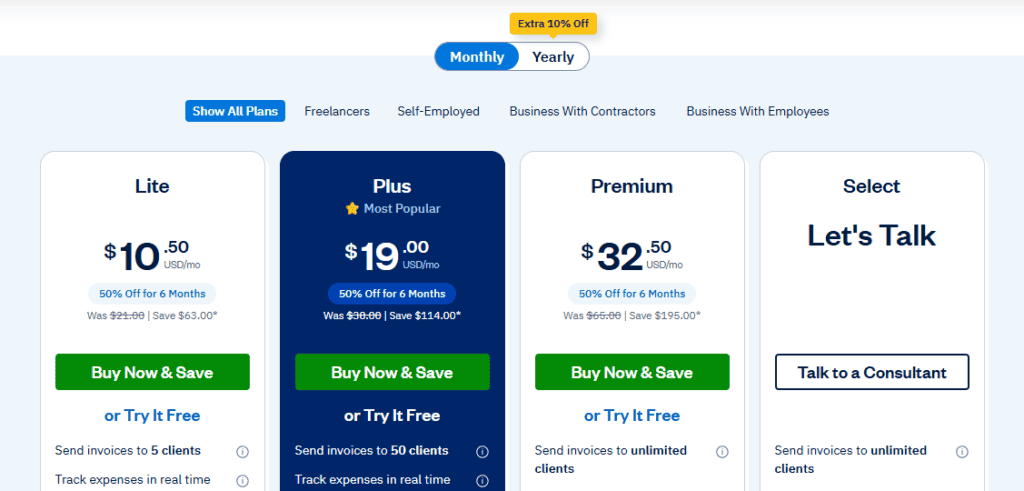
Pricing: Starts at $23/month (Lite) for real-time tracking but limited scope (max 5-client invoicing). The $43 Plus tier 10x’s that limit and adds a multitude of supported payment methods; it’s also the tier you’ll need if you have an accountant who requires access. At $70, Premium removes the cap on clients and adds bill receipt scanning, profitability, and more. Custom pricing for larger teams and businesses is also available.
Best for: Freelancers, solo entrepreneurs, and small service firms who want dead-simple invoicing and time tracking.
Zoho Books – Ideal for Tech-Savvy Businesses Already Using Zoho Suite
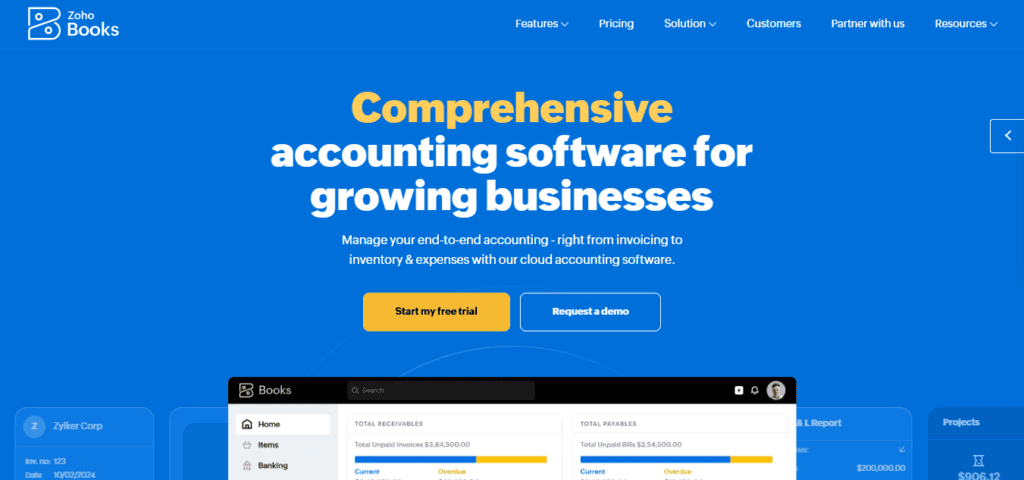
Zoho Books is the sleeper of the accounting world (wow, that sounded nerdy to type out). It’s incredibly affordable, packs a surprising amount of features, and integrates seamlessly with Zoho’s massive suite of business apps, including CRM, inventory, and HR.
Why it can outshine Xero:
- It has tight integration with other Zoho tools for CRM, HR, and inventory, meaning it’s more than just an accounting platform – it can almost function as an ERP.
- Zoho is highly customizable with automations and advanced workflows.
- The platform does an excellent job supporting multi-currency and multi-language support, which is great for global teams.
- I think Zoho is an excellent value for the price, even at the top tier.
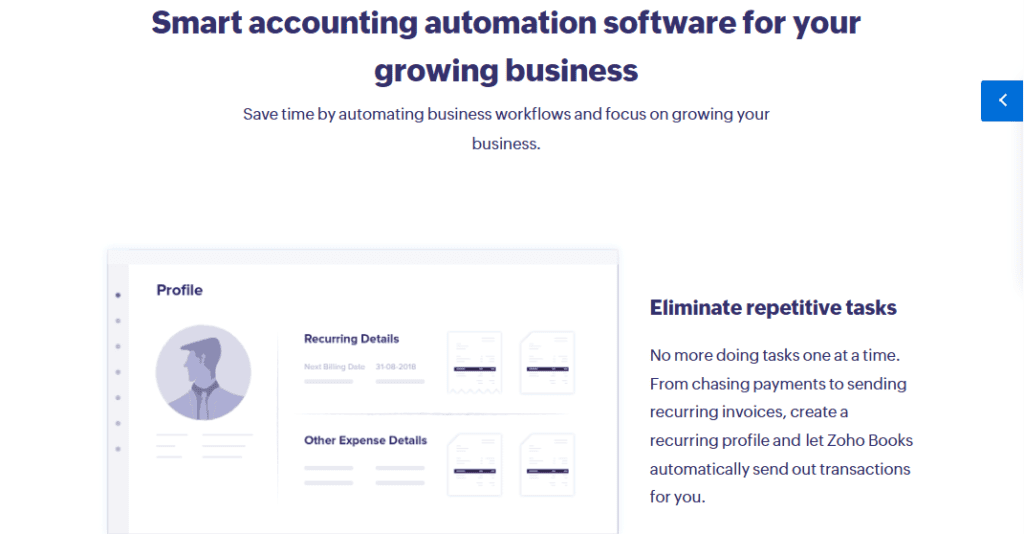
The downside? It’s not quite as intuitive out of the box as FreshBooks or QuickBooks. And if your team doesn’t already use Zoho’s ecosystem, it may not offer as much added value. But for international companies or tech-savvy founders who love a unified suite, Zoho Books delivers.
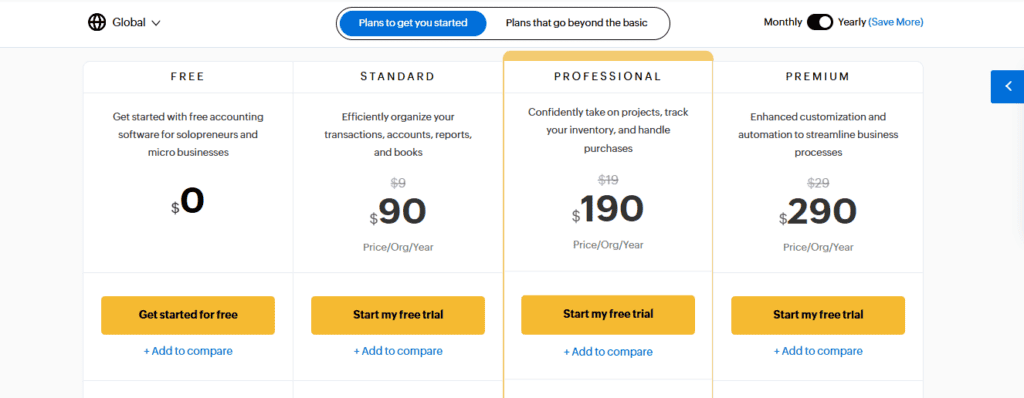
Pricing: Free for businesses under $50K in revenue; paid plans start at $20/month and include greater customisation. The $50 Professional plan timesheets, inventory, price lists, and custom workflows. There are even more comprehensive plans at $70, $150, and $275/month for high-volume businesses.
Best for: Businesses using Zoho CRM or other Zoho apps, or anyone looking for deep customization at a low price.
Wave – Best Free Option for Small Teams and Solopreneurs
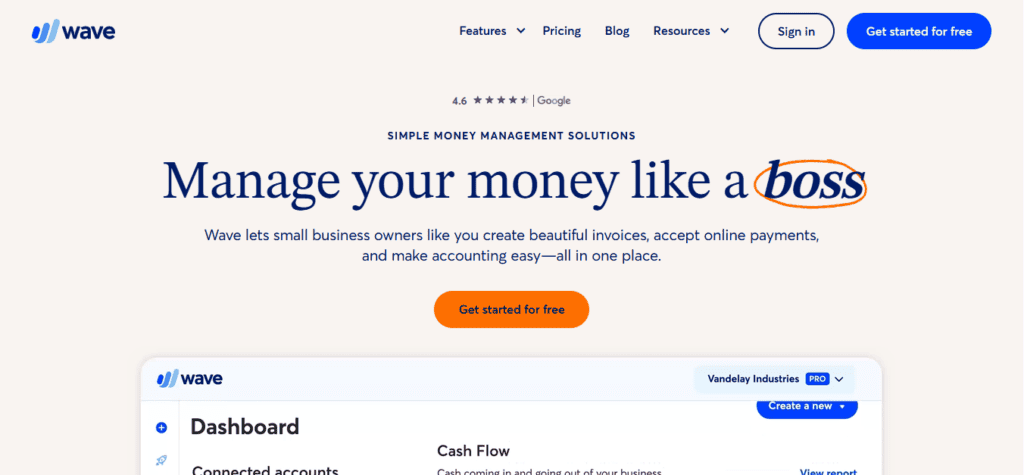
I mention all the time that I’d pick a penny up from the sidewalk, and it’s probably for that reason that I always mention Wave. Wave is one of the few free accounting platforms worth using. It’s clean, user-friendly, and surprisingly powerful given the price tag (which is… zero). While it doesn’t have the bells and whistles of Puzzle or the scalability of QuickBooks, it covers the core needs of many micro-businesses and individuals who just want to get their feet wet.
Why you might pick Wave over Xero:
- Wave has completely free core features, including invoicing, accounting, and receipt scanning.
- While Wave is based on the freemium idea, it also has built-in payments and payroll available if you want to pay a bit extra.
- No hidden fees—what you see is what you get.
- It has a simple interface with just enough reporting to get by.
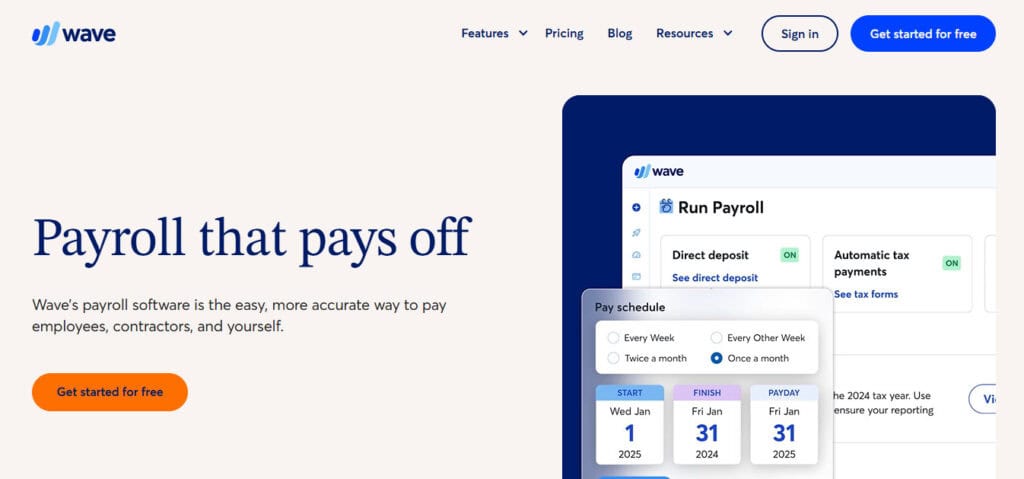
Wave is perfect for people who don’t need a ton of complexity. If your business is small and your finances are straightforward, there’s no reason to overpay for bloated features. That said, support is limited, and it’s not ideal if you have inventory, complex tax needs, or fast-scaling operations. Still, for my money, it’s the best free Xero alternative around.
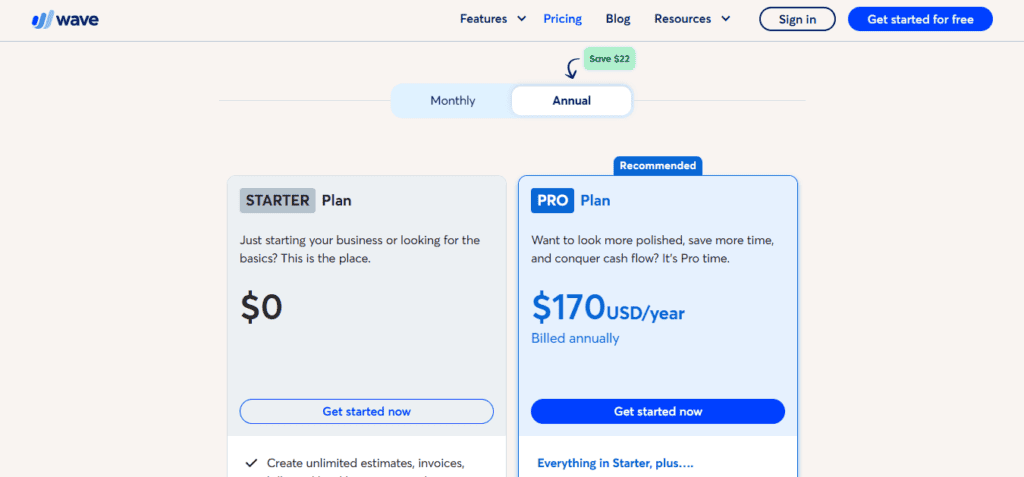
Pricing: Free for accounting, invoicing, and basic features; the $19/month Pro plan adds auto-import features, digital receipt capture, low cost payment channels, and auto-merging capabilities for bank transactions.
Best for: Budget-conscious freelancers, very small businesses, or side hustlers who want solid basics without the cost.
Key Takeaways: Don’t Settle for One Size Fits All
When it comes to accounting software, there’s no universal “best” option. The right tool depends entirely on what kind of business you run, what stage you’re in, and how hands-on you want to be with your books.
If you’re a modern startup or VC-backed company that needs GAAP-compliant books without hiring a full finance team, Puzzle.io is probably your best bet. If you just want a trusted, tried-and-true system that every CPA in town already knows, QuickBooks Online is the path of least resistance. Running a solo service business? FreshBooks or Wave will do the job beautifully. Already using Zoho CRM? Zoho Books might save you time and money.
What matters most is picking software that makes your life easier, not more complicated. Automation, scalability, and ease of use should be non-negotiable these days.
Choosing the Xero Alternative for Your Financial Future
Xero is still a powerhouse, but the accounting world has evolved to deliver a host of alternatives. Today, you have more specialized, automated, and intelligently designed platforms than ever before. Whether you’re managing five invoices a month or handling complex month-end close across multiple departments, there’s a tool out there that can do more than just “keep the books”—it can power the next stage of your business.
Don’t be afraid to experiment with free trials, talk to your accountant, or book demos. You’re not just buying software—you’re buying back your time, reducing human error, and giving your business a stronger financial foundation.