


Last Updated on February 4, 2026 by Ewen Finser
For a long time, I ran influencer campaigns the same way many teams do. Promo codes, basic links, screenshots from creators, and a lot of manual checking. On the surface, things looked fine. Posts went live. Engagement rolled in. Sales moved enough to justify the spend.
The problems only showed up when campaigns started to scale. More creators meant more links, more platforms, and more questions I couldn’t answer with confidence. Which creators actually drove revenue? Which placements mattered? Where was budget being wasted? I found myself making decisions based on partial data and assumptions, not facts.
What finally pushed me to compare tools seriously was realizing how much time I was spending defending numbers instead of acting on them. Reports didn’t match. Attribution was messy. Conversations with creators and internal teams became harder than they needed to be. I needed clarity, not more spreadsheets.
Influencer Tracking Software at a Glance
Below is a high-level snapshot for anyone looking to narrow down options quickly. I go much deeper into each platform later, but this gives you immediate orientation.
Platform | Pricing Range | Attribution Type | Real-Time Analytics | Fraud Detection | Key Integrations | Ideal Business Size |
Everflow | Mid–High | Flexible | Yes | Strong | E-commerce, ads, CRMs | Mid–Large |
Tracko– nomics | Mid | Standard | Yes | Moderate | E-commerce platforms | Mid-size |
Impact. com | High | Advanced | Yes | Strong | Extensive partner ecosystem | Enterprise |
Partner Stack | Mid | Standard | Limited | Moderate | B2B tools, payment systems | B2B programs |
Refersion | Low–Mid | Basic | Yes | Moderate | Shopify | Small–Mid |
Tapfiliate | Low–Mid | Basic | Limited | Moderate | Basic integrations | Small |
Affise | High | Flexible | Yes | Strong | Extensive APIs, enterprise tools | Enterprise |
This table is meant for quick filtering, not final decisions. The real differences show up once you look at how these platforms handle live campaigns, reporting pressure, and scale.
How I Personally Evaluate Influencer Tracking Software

Before getting into the tools themselves, here’s the simple lens I use when judging any influencer tracking platform. This is based on what actually holds up once campaigns are live and messy.
What Actually Matters When Choosing a Tool
Here’s what I look for:
Tracking accuracy beats flashy features
If attribution isn’t reliable, nothing else matters. I need to trust that clicks, conversions, and revenue are being tracked cleanly. When the data feels questionable, every decision slows down.
Ease of use once campaigns are live
A platform can feel fine during setup, then fall apart under real conditions. Multiple creators, active links, and constant questions expose weak workflows fast. If pulling reports takes effort, that friction shows up every week.
Reporting under pressure
Campaigns aren’t neat. Creators miss deadlines. Traffic spikes without warning. I pay close attention to how tools handle chaos. Clear reporting saves more time than any advanced feature.
The Lens I Use Across All Tools
I ask the same questions every time:
- Can I trust the data?
- Can I act on it quickly?
- Does it scale without creating extra work?
If a tool adds complexity as programs grow, it rarely lasts long.
Why Context Matters
There’s no universal “best” influencer tracking software. The right choice depends on:
- Program size
- Team structure
- Sales vs awareness goals
That’s why this list includes different types of platforms. Each one fits a specific situation, and understanding that context is more useful than chasing rankings.
Influencer Tracking Software I’ve Used and Trust
Everything below comes from running real campaigns, dealing with real reporting pressure, and living inside these tools week after week. I’m not ranking them for clicks. I’m explaining where each one genuinely fits and where it doesn’t.
1. Everflow
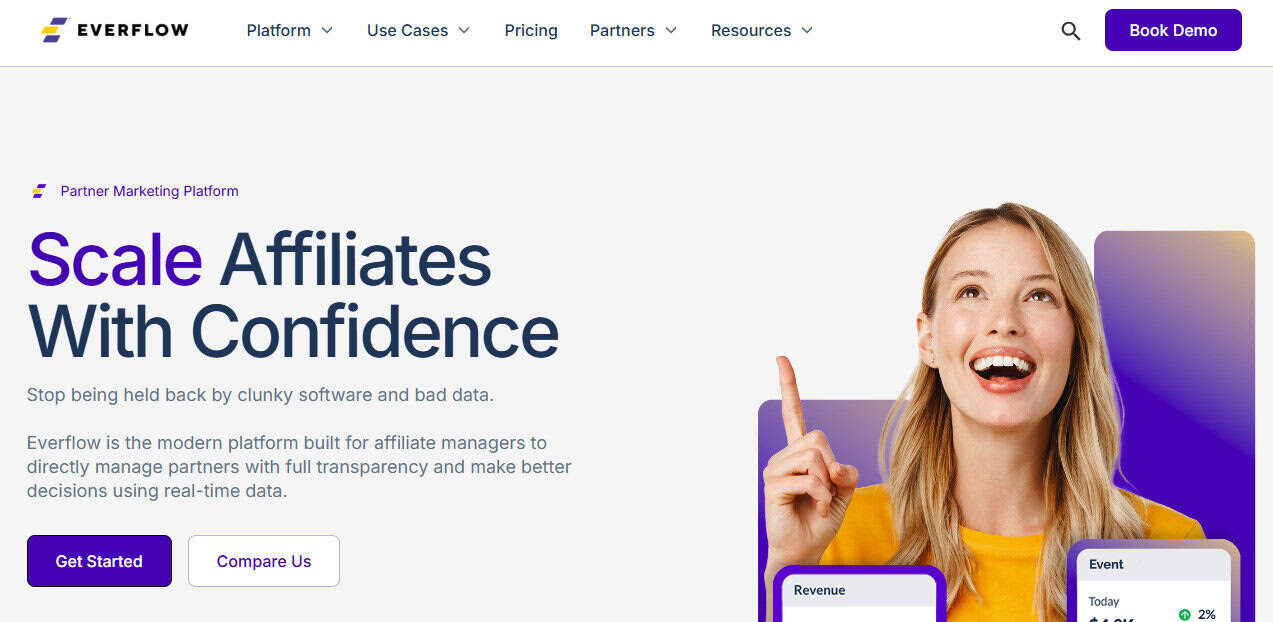
I didn’t start using Everflow because of hype. I landed there after testing a few platforms that either felt too limited or way too heavy for what I needed. What stood out early was balance. It gave me control without forcing me to rebuild my workflow around the software.
In day-to-day use, Everflow feels stable. Once campaigns are live, I’m not babysitting links or second-guessing attribution. Reporting is clear enough that I can answer questions quickly, whether they’re coming from creators or internal teams. Over time, that reliability mattered more than any single feature.
Where Everflow really fits is in programs that blend influencer and affiliate models. If creators drive traffic in different ways, it handles that complexity without feeling bloated.
Core Strengths
- Granular click and conversion tracking
- Flexible attribution logic
- Clean, intuitive interface
- Fraud detection suited for influencer traffic
- Unified influencer and affiliate tracking
Limitations
- Pricing can be high for very small teams
- Advanced automation features take time to learn
Real Campaign Example
On one campaign with multiple creators across platforms, Everflow made underperformers obvious early. I shifted budget to top performers mid-campaign and saw a clear lift in ROI instead of waiting for post-campaign reports.
My Verdict
Best for mid-size to enterprise programs that want flexibility without unnecessary complexity. It’s my default choice when I need confidence in the data without extra friction.
2. Trackonomics
Trackonomics worked well for me in e-commerce-focused programs where the setup needed to be fast and reliable. It doesn’t try to do everything, which can be a good thing early on.
Where I started to feel its ceiling was during scale. As campaigns expanded beyond straightforward affiliate-style flows, reporting flexibility became more limited.
Core Strengths
- Strong e-commerce integrations
- Simple setup
- Reliable for mid-size programs
Limitations
- Limited multi-channel attribution
- Reporting depth falls short at scale
Real Campaign Example
For a retail brand, setup was quick, and performance tracking was consistent. Once we expanded channels, attribution clarity dropped.
My Verdict
A solid choice for mid-size e-commerce brands. Not ideal for complex influencer journeys.
3. Impact.com
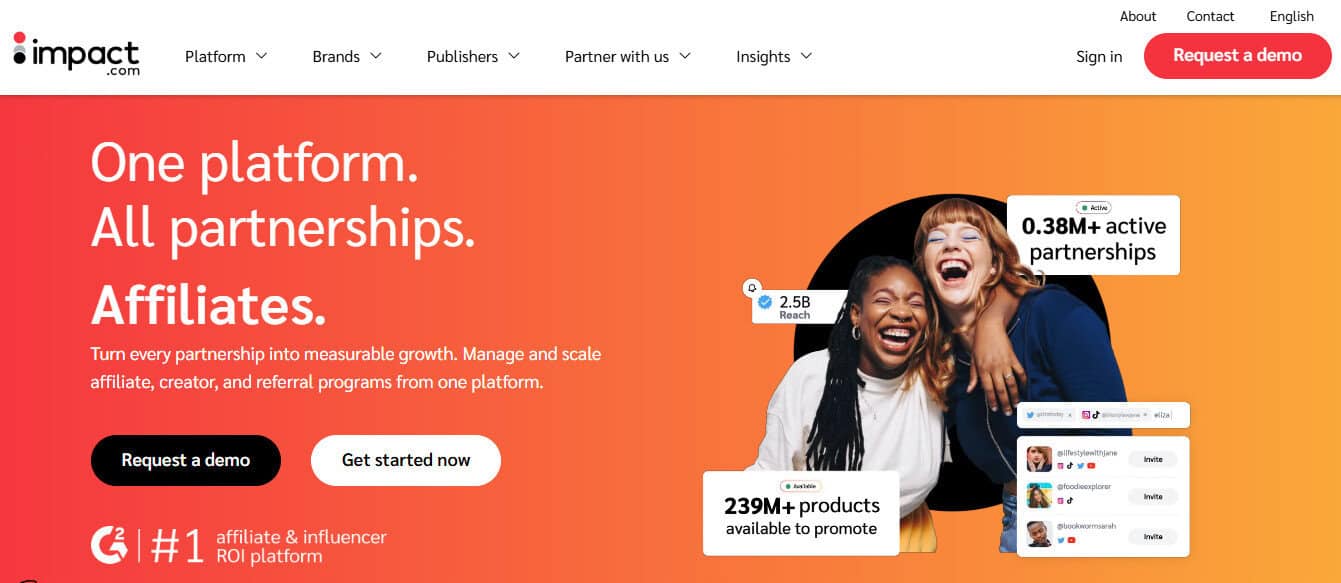
Impact.com is powerful. There’s no way around that. I’ve used it in large programs where automation and partner workflows mattered more than simplicity.
The trade-off is usability. You get depth, but you pay for it in setup time and learning curve. This isn’t a tool you casually onboard in a weekend.
Core Strengths
- Enterprise-grade automation
- Advanced workflows
- Strong partner management
Limitations
- Steep learning curve
- Overkill for small teams
Real Campaign Example
Automation saved hours of reporting time in a large program, but onboarding required dedicated resources.
My Verdict
Best for enterprise teams with complex needs and the bandwidth to manage it.
4. PartnerStack
PartnerStack shines in B2B programs where relationships matter as much as clicks. Onboarding and payments are smooth, which removes friction for partners.
Real-time analytics aren’t its strongest area, but that hasn’t been a dealbreaker in relationship-driven programs.
Core Strengths
- Smooth partner onboarding
- Reliable payments
- Strong B2B focus
Limitations
- Limited real-time analytics
- Less dashboard flexibility
Real Campaign Example
Great for managing partners and payouts, but I supplemented reporting elsewhere.
My Verdict
Ideal for B2B programs focused on partnerships over granular performance tracking.
5. Refersion
I’ve used Refersion mostly with Shopify brands just getting started. It’s simple, predictable, and easy to manage without training.
That simplicity becomes a limitation once programs grow or attribution needs deepen.
Core Strengths
- Fast Shopify setup
- Easy to manage
- Good for small teams
Limitations
- Basic attribution
- Not built for scale
Real Campaign Example
Reliable tracking for a small brand, but limited insight beyond surface performance.
My Verdict
Great for small to mid-size Shopify brands. Not built for complex programs.
6. Tapfiliate
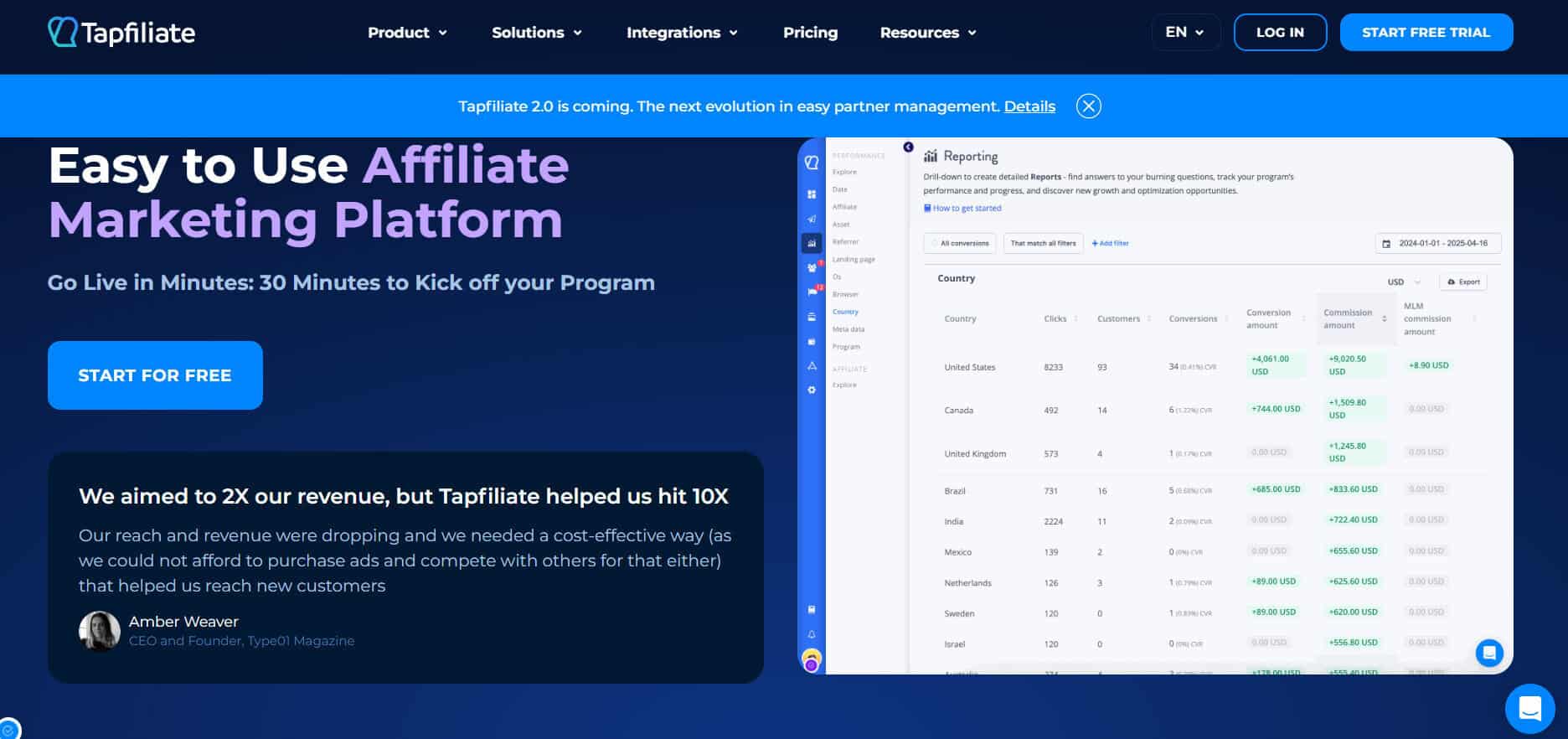
Tapfiliate is one of those tools that’s “good enough” when expectations are realistic. Setup is fast, and it doesn’t overwhelm new teams.
Once you need deeper reporting, you’ll feel its limits.
Core Strengths
- Quick setup
- White-label options
- Beginner-friendly
Limitations
- Limited analytics
- Minimal automation
Real Campaign Example
Perfect for testing influencer campaigns early, but required manual work later.
My Verdict
Best for early-stage programs or testing phases.
7. Affise
Affise is built for technical teams. I’ve seen it shine in complex, multi-channel setups where customization matters more than ease of use.
Flexibility comes at a cost. Setup takes time, and you need technical resources to unlock its full potential.
Core Strengths
- Deep API support
- Highly flexible
- Scales well for enterprise
Limitations
- Steep learning curve
- Requires technical expertise
Real Campaign Example
Powerful integrations, but weeks of setup before campaigns ran smoothly.
My Verdict
Best for large, technical teams that need full control and can handle complexity.
How to Choose the Right Influencer Tracking Software for Your Situation
After testing a lot of platforms, I’ve learned that picking the “right” tool usually has less to do with feature lists and more to do with being honest about your situation. Before I commit to anything, I run through a quick self-check.
Questions I always ask first
- What’s my budget, really?
Not the ideal number. The one I won’t regret paying every month. - How many creators am I managing right now?
Five and fifty require very different tools. - Am I focused on sales or awareness?
Some platforms shine at clicks and engagement, but fall short on revenue tracking. - Will it plug into what I already use?
If it doesn’t work with my e-commerce platform, CRM, or ad stack, it adds friction fast.
Once that’s clear, the choice usually narrows itself.
Small teams just starting out
If you’re running a handful of creators, simplicity matters more than depth. Tools like Refersion or Tapfiliate cover the basics without overwhelming you. The goal here is consistency, not perfection.
Mid-size brands scaling influencer efforts
This is where tracking starts to matter more. You need real-time data, clearer attribution, and some fraud protection. Everflow or Trackonomics tend to hit the right balance. Enough control to optimize, without turning tracking into a full-time job.
Enterprise, multi-channel programs
When you’re managing large budgets and complex journeys, flexibility and automation win. Impact.com or Affise make sense here, but only if you have the resources to support them.
In the end, I’m always weighing the same trade-offs. Do I want simplicity or control? Speed or customization? You rarely get both perfectly. The best choice is the one that fits how you actually work today, not how you hope things will look a year from now.
A Few Closing Thoughts
Influencer tracking is no longer optional. Once real money is involved, visibility becomes essential. Clear data builds confidence. It also creates leverage when decisions need to be made quickly.
There is no universal “best” platform. Every tool on this list solves a slightly different problem. Team size, campaign goals, and technical comfort all change what “best” actually means. The mistake is chasing hype instead of fit.
Across multiple campaigns, Everflow struck the strongest balance. It delivered reliable tracking without slowing daily work. The data felt dependable. Reports stayed readable under pressure. Most importantly, it supported growth without forcing constant workarounds.
That doesn’t mean it’s right for everyone. Smaller teams may want simplicity first. Larger programs may need deeper automation. The only way to know is to get hands-on.
Demos reveal more than feature pages ever will. Short tests expose friction early. Live data shows whether a tool supports real decisions or just looks good in screenshots.
The safest choice is rarely the loudest one. Choose the platform that fits your workflow, not the one with the biggest promises.