


Last Updated on April 9, 2026 by Ewen Finser
FTC Disclaimer: We do make money from this blog and may receive compensation for this work in the form of commissions, fees and complimentary product access. Review our full FTC disclosure here.
Once you’re shipping orders every day, the admin involved can quickly become one of your biggest time drains. Manual fulfillment isn’t just slow, it’s risky, and getting shipping wrong can lead to avoidable expenses like reshipping fees and the headache of dealing with frustrated customers who’ve lost trust in your brand.
If you’ve recently started looking for a way to streamline your shipping operations, you’ve likely come across Shippo and ShippingEasy. While they look similar on the surface, they actually serve very different needs.
Shippo is my favorite shipping management tool, because it has the best combination, in my opinion, of enterprise level features, without the complexity of more advanced tools. In this guide, I’ll share where each tool shines so you can decide which one is right for your growing eCommerce brand.
What to look for in a shipping tool
If you’re only shipping a couple of orders a week, manual fulfillment is manageable. But as you grow, the manual approach starts to show cracks. My own turning point came after a particularly chaotic week where I mixed up a batch of labels, sending products to all the wrong customers. The time and money spent fixing those errors made it clear that I needed a better system.
The right shipping tool won’t just print labels, it will act as an active safety net for your business. Ideally, the right software should:
- Automate: It should pull orders from all your stores (Shopify, Amazon, etc.) into one place so you don’t miss any orders or deal with copy-paste issues.
- Remove guesswork: It should automatically find the best rates and validate addresses to catch typos before they cost you a reshipment fee.
- Improve the customer experience: It should handle the “Where is my order?” emails for you by sending automated, professional tracking updates to your customers.
What is Shippo?
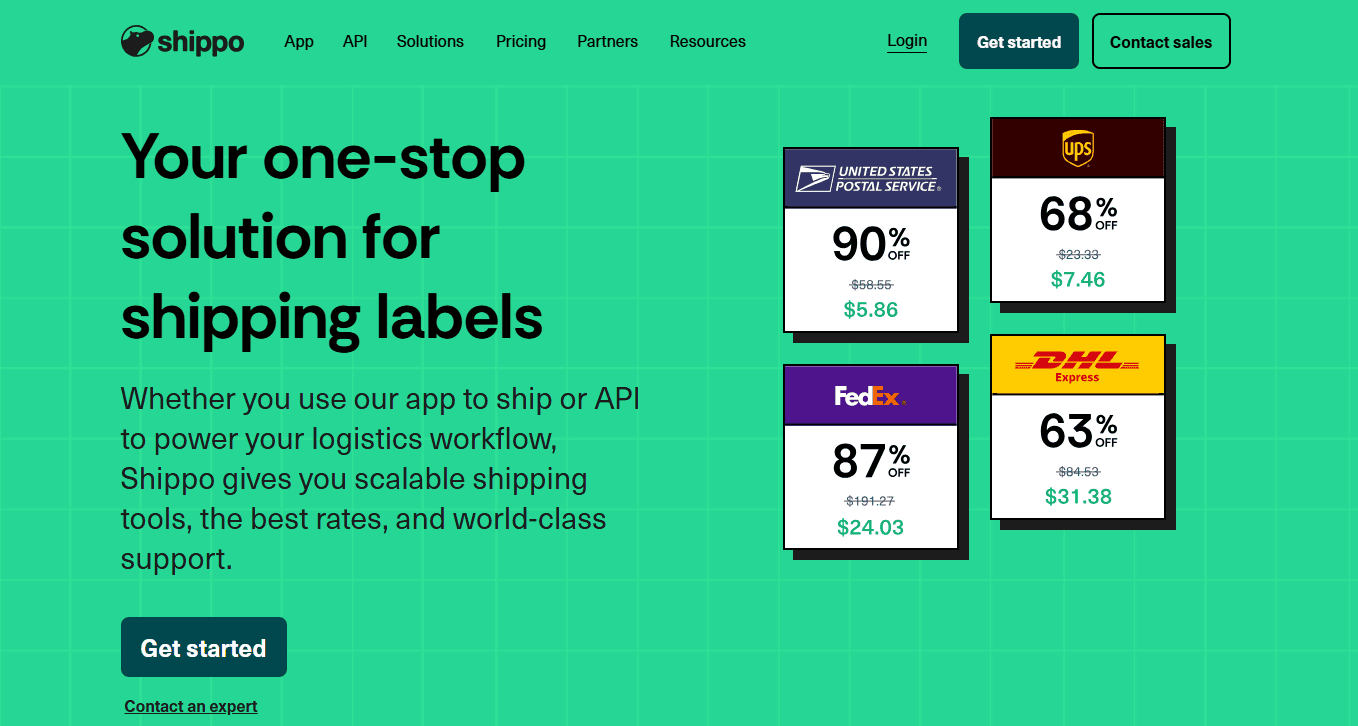
Shippo is a shipping tool designed to simplify fulfillment and scale alongside your business. It provides instant access to deeply discounted rates from over 40 global carriers, including USPS, UPS, FedEx, and DHL Express, so you don’t have to worry about negotiating individual contracts yourself.
But, if you do have your own negotiated rates, you can use them at no extra cost (unlike tools like Shipstation and ShippingEasy, which charge a monthly fee).
Shippo excels at syncing orders from platforms/marketplaces like Shopify and Etsy, validating addresses to prevent delivery errors, automatically applying the right package templates and service levels to your orders, and bulk-printing up to 100 labels at once. This makes it a great fit for startups and scaling eCommerce brands that need speed and cost-efficiency.
Key things Shippo does well:
- Easy to use platform: In my opinion, it is one of the easiest to use platforms, everything is explained thoroughly and it’s extremely intuitive to use.
- Multi-carrier support (US and international): You can compare rates across dozens of global couriers in seconds, so you get the best price for every destination.
- Multi-channel selling: You can easily manage all your store orders (e.g., Amazon, Etsy, Shopify) through a single dashboard, making label creation faster and easier.
- Simple but powerful automation rules: You can set “IF/THEN” logic, like automatically choosing the cheapest rate for packages under 1lb, which cuts down on manual decision-making.
- Scalability: Shippo has an API that you can integrate Shippo into your tech stack if needed, giving you total flexibility over your fulfillment workflow.
- Flexible “Starter” plan: With no monthly fee for up to 30 labels, it’s perfect for businesses with fluctuating volumes who don’t want to pay for a subscription during slow months.
What Is ShippingEasy?
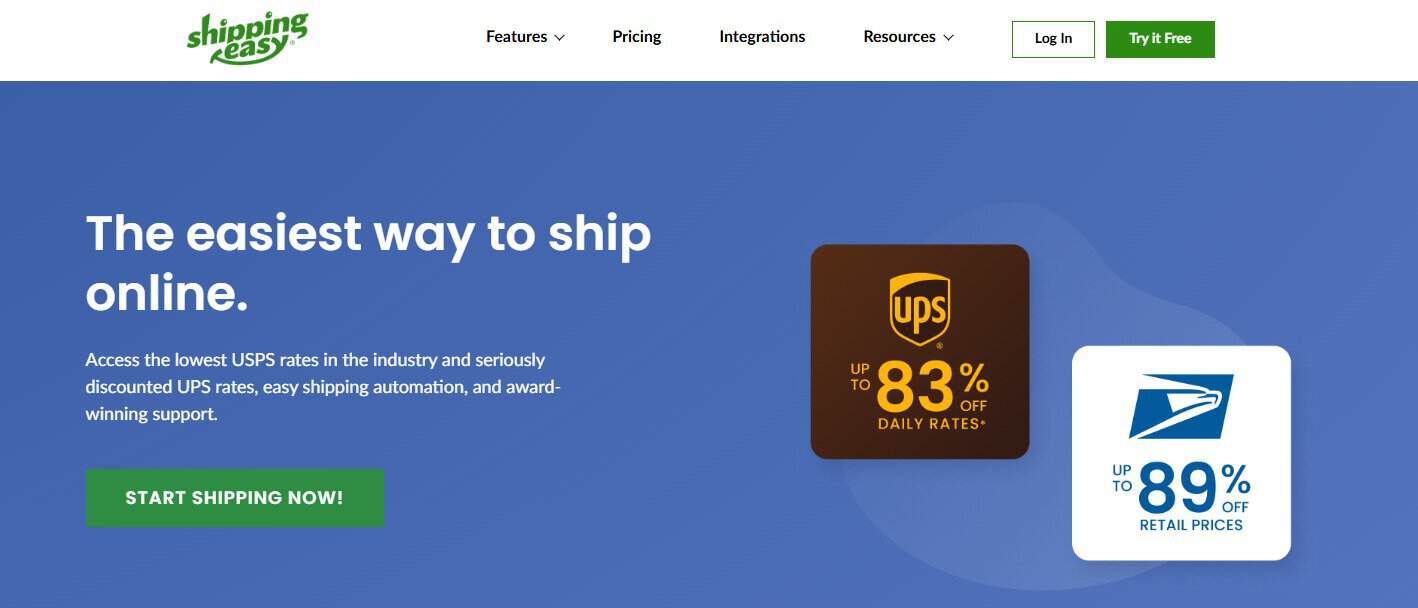
As the name suggests, ShippingEasy is designed to help eCommerce businesses move beyond manual label printing. It’s a popular choice for sellers who want a platform that combines powerful automation with operational tools designed for more complex shipping workflows.
The platform includes tools like automated customer emails, review requests, and deeper workflow automation. It primarily focuses on U.S.-based businesses.
That said, ShippingEasy has clear limitations for businesses seeking flexibility and global reach. It supports only three carriers: USPS, UPS, and FedEx. And while they offer discounted rates for USPS and UPS, FedEx rates aren’t discounted (which Shippo, alternately, does provide).
Its domestic focus can limit those looking for international expansion. Also, ShippingEasy’s built-in marketing features may increase costs as you scale and generally aren’t as robust as dedicated email marketing tools like Klaviyo or Mailchimp. Most importantly, ShippingEasy’s structure is optimized for businesses that have already reached high volumes rather than those in earlier stages.
Key things ShippingEasy does well:
- Easy onboarding: The setup is intuitive, and the ShippingEasy support is great if you need it.
- Powerful automation: You can set up quite sophisticated shipping rules and workflows that help automate fulfilment at scale.
- Amazon-friendly workflow: It feels very familiar for Amazon sellers, with specific tools to manage feedback requests and Seller Fulfilled Prime requirements seamlessly.
- Marketing tools: You can send abandoned cart emails or “thank you” notes directly from the dashboard, which is great for building early customer loyalty.
What to consider when choosing between Shippo and ShippingEasy
Once you understand what each tool is trying to do, the next step is figuring out which one works for your eCommerce brand as you grow. Most shipping tools look similar on feature lists. The real differences show up in how they handle volume, complexity, and growth.
Here are the key things worth thinking about before you choose.
- Your shipping volume (now and in the future)
- How many sales channels you use (and if you’re planning to add new channels later)
- How much automation you need (to save you time and avoid mistakes)
- Do you ship internationally (or will you in the future)
- Customer experience after checkout
Lastly, think about how fast you are growing and is there a chance of outgrowing whichever tool you go for. Switching later on is time-consuming and expensive so you want to avoid it if you can.
Shippo vs ShippingEasy: at a glance
If you need a quick summary of how these two tools stack up – check out my comparison table below:
Feature |
Shippo |
ShippingEasy |
My Take |
Ease of use |
Clean, modern, fast to learn |
Beginner-friendly but dated UI |
Shippo feels smoother long-term |
Integrations |
Shopify, WooCommerce, Amazon, Etsy, eBay, more |
Shopify, Amazon, eBay |
Both provide solid integrations to major e-commerce marketplaces and platforms |
Automations |
IF / THEN rules |
Advanced rule automation |
Shippo is easier to use, ShippingEasy is more thorough |
Batch printing |
Up to 100 labels |
Supported |
Similar, Shippo feels faster |
International shipping |
Strong global support |
Limited focus |
Shippo is the clear winner |
Returns |
Label creation and tracking |
Basic returns |
Depends on volume |
Reporting |
Basic but useful |
Slightly stronger |
Small edge to ShippingEasy |
Marketing |
Shippo offers branded tracking and email notifications, allowing users to customize their post-purchase experience with promotions, sales, and recommendations |
Simple marketing tools like abandoned cart emails or “thank you” notes. |
Depends on what your needs are |
Pricing model |
Shippo’s model is flexible and designed to be scalable (they have a free plan, pro plan, and a premier plan) with access to advanced features |
ShippingEasy uses a tiered, monthly subscription pricing model based on shipping volume |
ShippingEasy’s model is good for lower volume sellers, but Shippo boasts an adaptable pricing model that can scale comfortably with businesses |
Best for |
Growing brands and global sellers |
US-focused operations |
Depends on shipping needs |
Now let’s have a closer look at these metrics and what they mean in practice.
Ease of use and setup
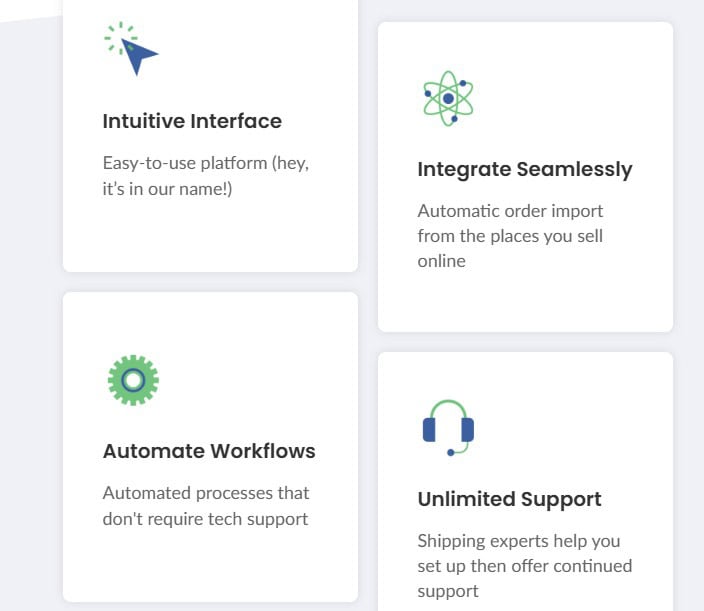
I found both tools easy to get started with, but the user experience is slightly different once you start using them.
Shippo’s setup is fast: you connect your store, and orders start appearing almost immediately. The interface is clean, modern, and focused only on shipping tasks. There’s very little clutter which I really liked and it meant it was easier to hand over to my VA later on.
ShippingEasy is also fairly easy to learn, though the interface is more feature-dense because it includes additional operational and inventory tools. You can still get access to the same data but there are more menus and options to navigate. That can be handy if you need extra tools such as Alexa integration for shipping updates but does take a little longer to familiarise yourself.
- Shippo highlights only orders, shipments, and labels
- ShippingEasy includes more menus and optional features like advanced inventory management and Amazon-specific tools
- Shippo feels easier to navigate at speed
My winner: For me, Shippo is quicker to get started with and easier to navigate at speed.
Integrations and sales channels
Integrations are an essential aspect of any e-commerce business, as they help streamline workflows. ShippingEasy and Shippo both offer several e-commerce integrations, with each integrating with the main eCommerce platforms like Shopify, Amazon, and WooCommerce. Getting started is fairly straightforward, regardless of which tool you choose.
ShippingEasy focuses heavily on core marketplaces and operational tools. It integrates with the main ecommerce platforms, along with accounting and ERP tools such as QuickBooks, Xero, and NetSuite. This makes it a strong choice for businesses that want to manage orders, inventory, and shipping in one place, particularly if they are already operating within those ecosystems.
Shippo also offers a range of integrations across both eCommerce platforms and marketplaces. Orders sync automatically, tracking updates push back to your store, and customers are notified without extra steps. It also stands out with a highly rated and developer-friendly API, which makes it easier to build custom workflows or connect to less common tools if needed.
My winner: If you’re looking for a wide range of integrations, both are strong choices. Overall, ShippingEasy has more integrations, and Shippo excels when it comes to growing businesses. Both tools integrate comparably with the most popular ecommerce platforms. Still, Shippo’s highly-rated API gives it a slight edge here.
Automations and shipping logic
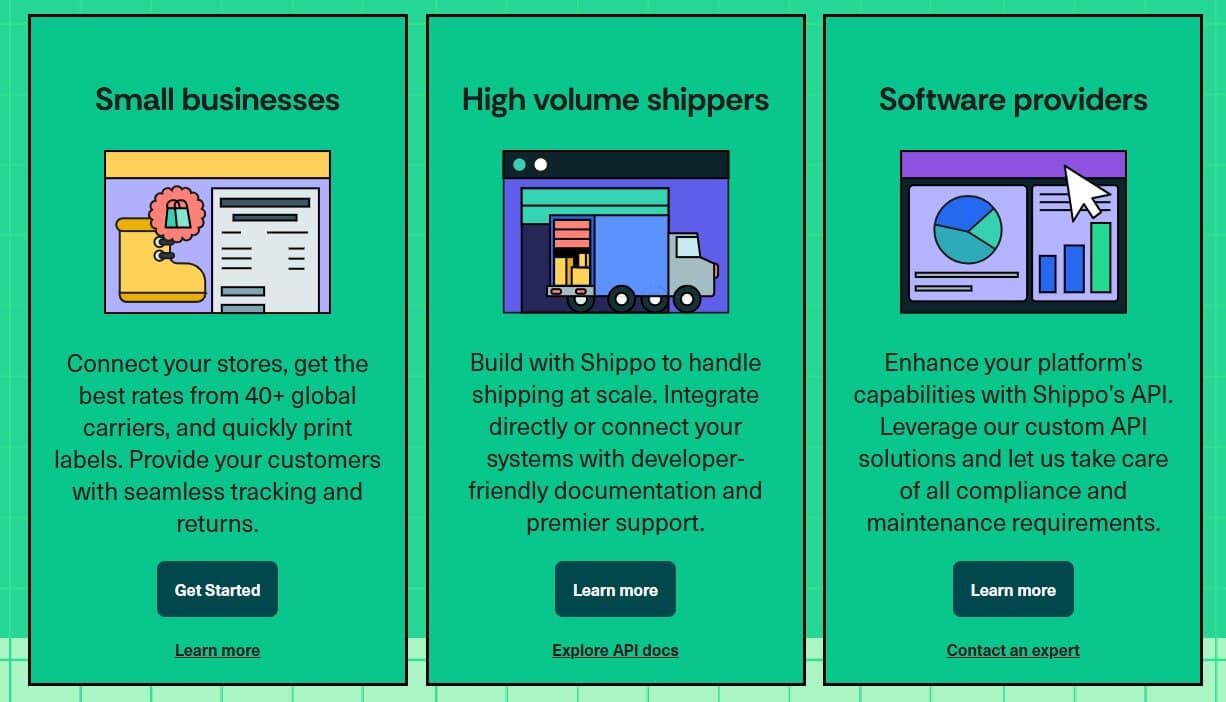
Shippo uses simple IF / THEN automation rules that let you pre-define how shipping should work. Once set up, the system handles repetitive decisions automatically, which reduces mistakes and saves time.
ShippingEasy also has automation, but it focuses more heavily on rule-based workflows designed for businesses that already ship at consistent volumes. It allows you to create more detailed automation conditions across carriers, packaging, and order types.
In practice this looks like:
For example, in Shippo you can run automations such as:
- IF weight < 2 lb THEN use USPS First Class
- IF destination is international THEN use DHL Express
- IF SKU contains “fragile” THEN use specific packaging
- IF order value > $X THEN add signature
ShippingEasy automations can handle similar rules but also allow more detailed operational workflows, such as assigning shipping presets, applying rules across batches of orders, and automating fulfilment decisions for high-volume stores.
My winner: If you want simple automation that’s easy to set up quickly, Shippo works extremely well. If you need deeper rule-based automation for established workflows, ShippingEasy has the edge. In my opinion though, for most growing eCommerce stores, Shippo’s simpler automation is easier to manage day-to-day.
Batch Printing and Daily shipping runs
Shippo allows you to batch print up to 100 labels at once while applying automation rules across the entire batch. If you ship daily, this alone can save hours per week.
ShippingEasy also supports batch printing and bulk workflows, particularly for businesses shipping high daily volumes. It includes tools for processing large batches of orders and applying automation rules across those shipments.
Winner: Both tools handle batch shipping well. Shippo feels slightly faster for straightforward workflows, while ShippingEasy can be stronger for larger operational batches.
Carrier Options and International Shipping
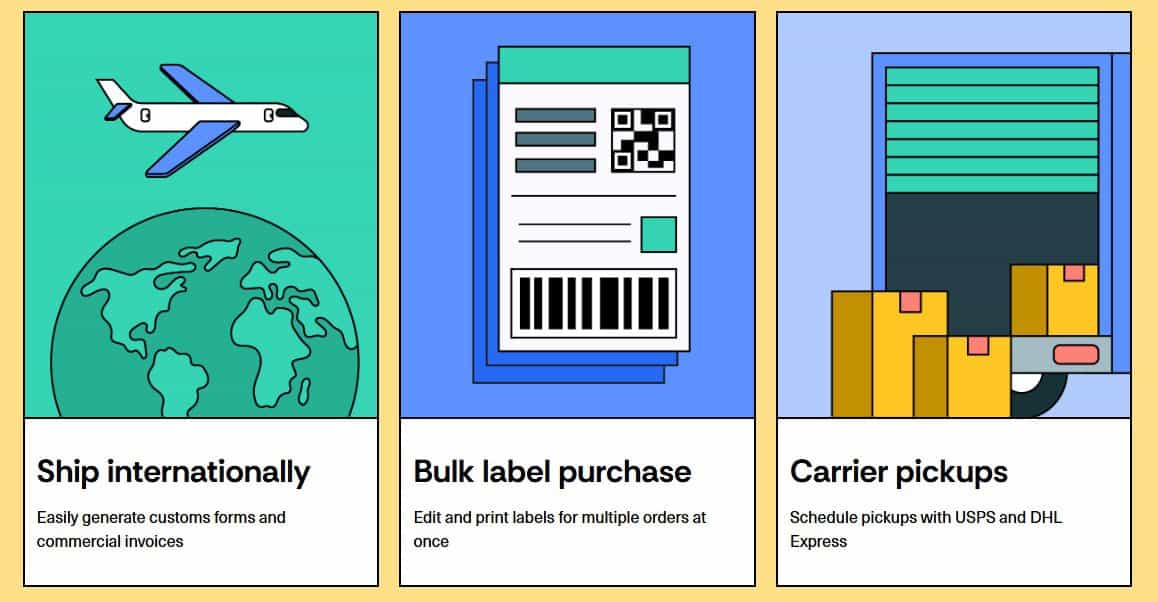
If you ship internationally then carrier options are an important point to consider.
Shippo supports 40+ global carriers, including DHL, FedEx, UPS, USPS, and international carriers, and automatically generates customs paperwork. International shipping feels much closer to domestic shipping, with far less manual effort.
ShippingEasy is primarily focused on US-based sellers. While they offer great rates for USPS and UPS (and integrate with FedEx), their carrier network is smaller and more domestic-centric compared to Shippo’s global reach. This is another reason I ended up switching to Shippo as I found I was losing too much time trying to work out international shipping rates.
Winner: For international businesses, Shippo is the clear winner.
Returns and customer experience
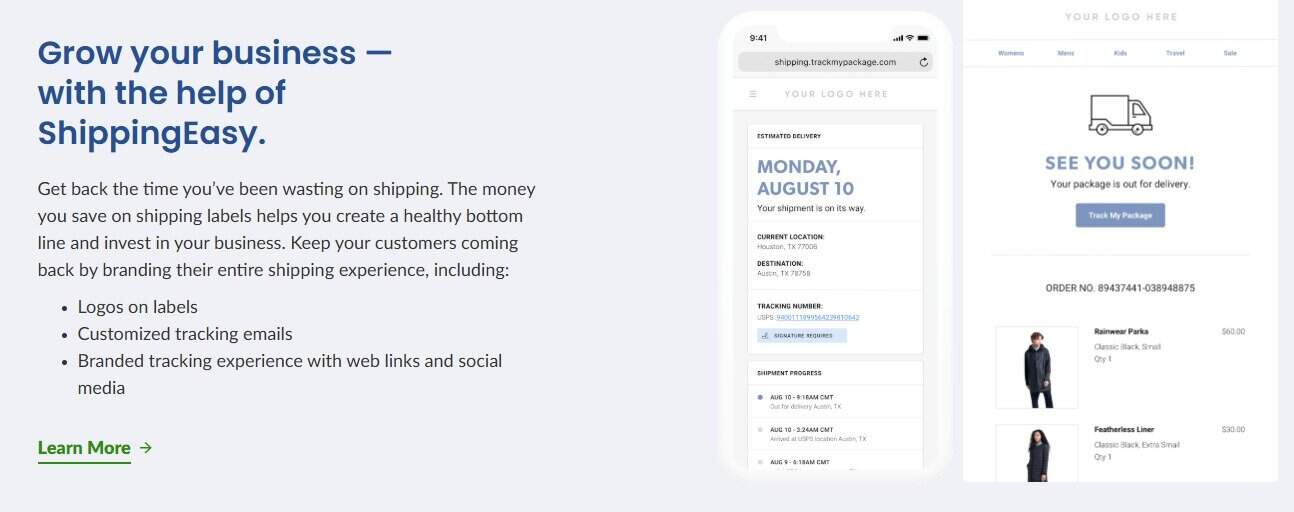
Shippo offers proper returns tooling, including easy return label creation and better tracking visibility. You can also add some branding and personalisation to your tracking notifications, which adds polish and trust.
ShippingEasy supports returns, but they’re basic. You can generate a return label, but there’s no real branded return flow.
Winner: Shippo is best for customer-facing brands but if returns are rare, ShippingEasy is fine.
Reporting and insights
This is an area that ShippingEasy does really well. It offers detailed built-in reporting so you can analyse product performance and shipping margins. I found it useful to look at this data alongside my Amazon reporting to get a full overview of my business.
Shippo only provides shipping metrics, such as carrier performance and spend breakdowns which will be enough for sellers but for some if might be a little limiting. However, it is very handy if you need to track the performance of different carriers or different geographies, so you can make improvements
Winner: ShippingEasy provides more data than Shippo which is useful for brands which don’t have separate analytics tools.
Marketing
Shippo focuses almost entirely on the logistics of shipping. It’s excellent at automating labels, tracking, and returns, and has an impressive branded tracking capability, which allows you to customize your tracking pages with brand colors, logo, and even promotional content–turning a delivery update into a high-impact touchpoint that reinforces your brand and drives repeat purchases.
ShippingEasy has built-in email marketing and a basic Customer Relationship Management (CRM). You can send abandoned cart emails, follow-up requests for reviews, and manage customer lists directly from the shipping dashboard. It is relatively simple compared to a proper email marketing tool, but if you don’t already have one, this can be really handy.
Winner: ShippingEasy comes with a lot of additional marketing tools which small businesses may find useful. But if you already use an email marketing tool, you probably don’t need this one on top.
Pricing and value for money
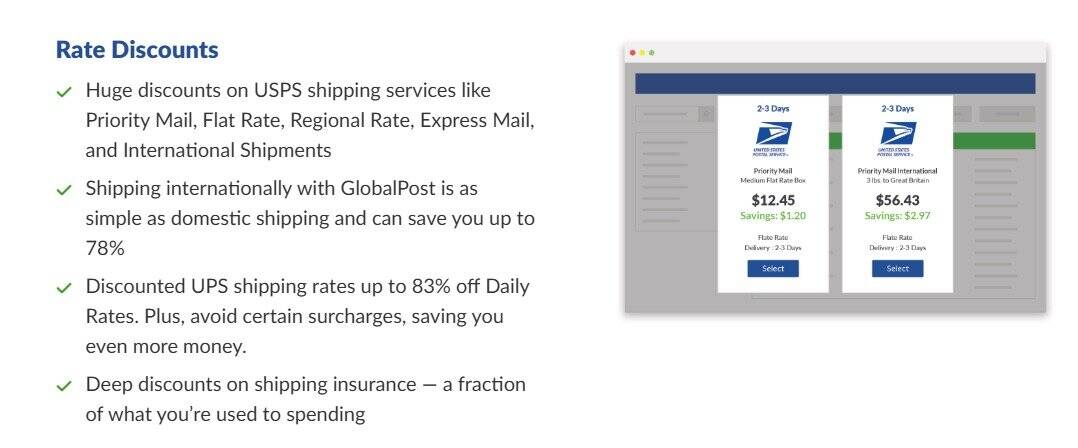
Both tools use volume-based pricing and offer free tiers, which makes them easy to test.
Shippo starts at free up to 30 labels, and starts at $17 and goes up to $179 per month for up to 10,000 labels. If you use the API you pay per label and for other events like API usage and tracking, but it is very affordable. It’s perfect for businesses with fluctuating volumes.
ShippingEasy also has a monthly payment, which is $19.99/month. They also offer a free tier for a limited number of shipments.
Both have discounted labels, and they appear to be roughly the same per shipment. As I mentioned before, Shippo allows you to use your own negotiated rates for free.
Winner: Both options are about equal here in cost, but Shippo offers more value for the amount you pay monthly.
Final verdict: Which should you choose?

Choosing between Shippo and ShippingEasy ultimately comes down to whether you need an all-in-one business suite or a simple, global shipping tool. In my experience, ShippingEasy is particularly strong for US-based sellers running established domestic shipping operations, who want to manage customer shipments and domestic logistics in a single tab without feeling overwhelmed by technical complexity.
However, as my business evolved and I began shipping more frequently, I moved to Shippo because I needed a more robust tool which could easily handle global shipping. While ShippingEasy is particularly strong for established US-based operations, Shippo tends to work better for brands that need broader carrier flexibility or international reach.