


Last Updated on March 26, 2026 by Ewen Finser
If you’re shopping for a Pilot alternative, you’re probably not looking for “bookkeeping but from someone else.” You’re looking for a finance partner that can help you close the books, forecast cash, clean up tax pain, support lenders or investors, and give you better answers than a dashboard ever could. After all, a good outsourced finance firm shouldn’t just tell you what happened last month… they should help you make decisions for the coming months.
Pilot is still a serious player in the space for fractional CFOs. It offers bookkeeping, tax, CFO work, and outsourced operations, and its public pricing is more transparent than many firms in this category. However, Pilot’s tax plans must be purchased with bookkeeping, and its operations packages are also tied to the bookkeeping relationship, so it works best if you want a bundled finance stack rather than a narrow engagement. That’s a strength for some companies, but it is also why a lot of founders start looking around.
With that in mind, here are the five best Pilot CFO alternatives I would look at first.
At a Glance
Best for | What stands out | Pricing visibility | |
Pillar Advisors | Companies that want more than bookkeeping and basic CFO support | Bookkeeping/taxCFO & controllershipStrategic financeCapital structure | Example engagements shown publicly |
indinero | SMBs that want an outsourced finance department | Dedicated controller and teamRev recAR/APForecasting,Multi-entity support | Starts at $750/month |
Burkland | VC-backed startups | Fundraising supportStartup finance stackHR/payroll/tax depth | Custom, fixed, or hourly |
Kruze Consulting | Venture-backed startups that need diligence-ready finance | Tax/bookkeepingFinancial reportingFundraisingFixed monthly packaging | Fixed packages, quote-based |
Graphite Financial | Startups that want a modern one-stop finance shop | Accounting/taxModeling/forecastingCFO services Fixed monthly framing | Accounting starts at $1,500/month; other tiers custom |
1. Pillar Advisors
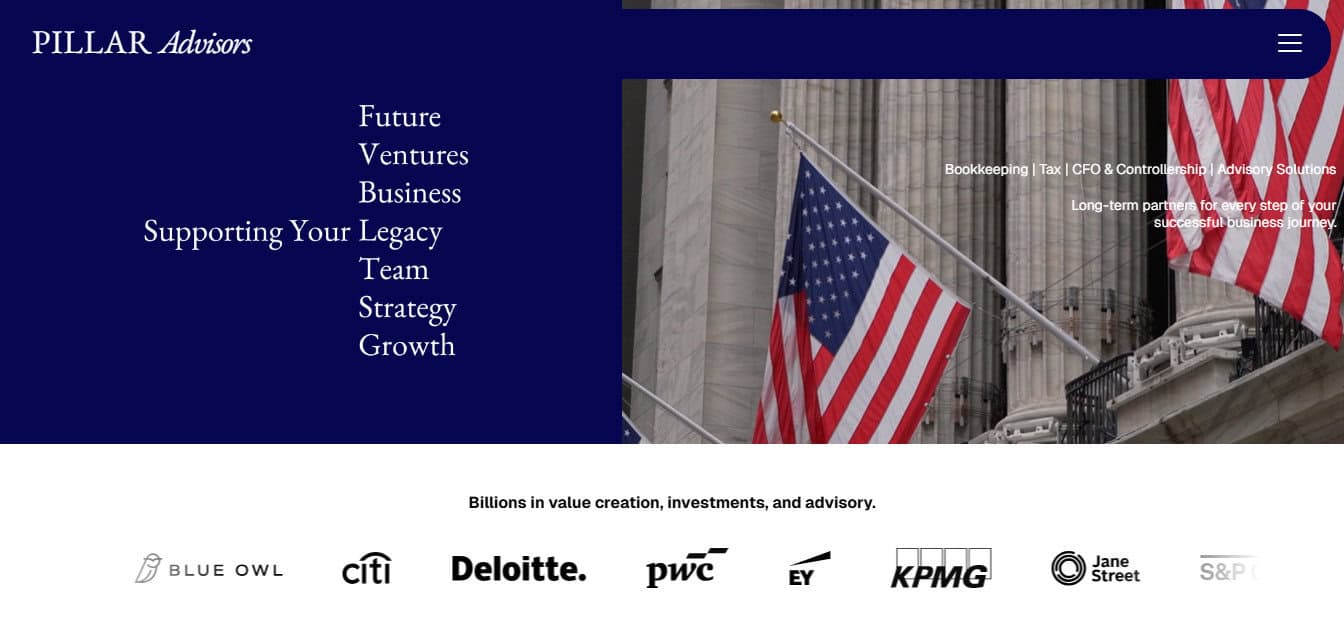
I believe that Pillar Advisors is the most well-rounded alternative in this group, covering bookkeeping and reporting, tax compliance and advisory, financial controls and operations, strategic finance, capital structure advisory, and implementation solutions. That’s a wider lane than most Pilot alternatives, especially the ones built around venture-backed startup accounting.
Pillar also positions themselves around CFO and controllership work, which matters because a lot of businesses don’t just need “CFO strategy”; they need someone to bridge the books, controls, process design, tax, and executive decision support.
What They Do Well
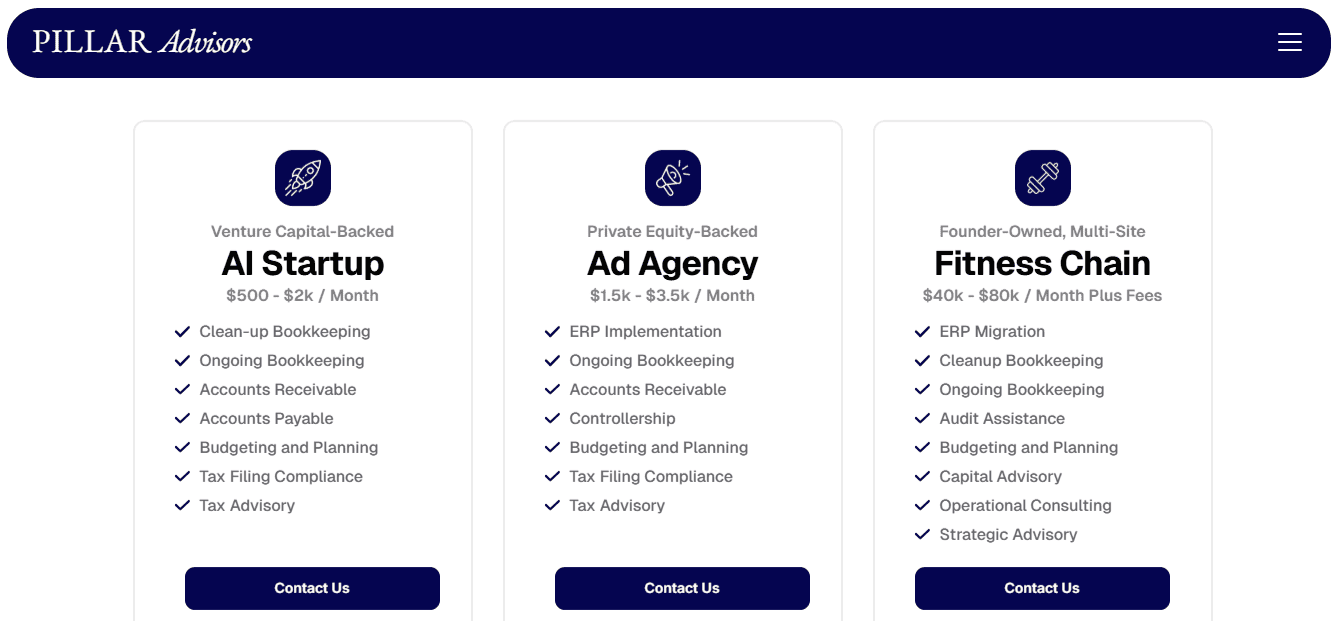
What I like most is that Pillar seems comfortable across different kinds of engagements. For example, they can handle ERP implementation, controllership, capital advisory, and strategic advisory for larger or more complex companies.
That flexibility is where Pillar has an edge over Pilot for some businesses. If you’re founder-owned, multi-site, private-equity backed, or in a transition where systems, reporting, and capital planning all matter at once, Pillar looks more operator-oriented than software-led.
Where They Fall Short
Where Pillar falls short is the same place many higher-touch firms do: pricing is not packaged as neatly as Pilot’s public menu. If you want a click-and-compare buying process, Pilot is easier to benchmark.
Pros
- Very broad service menu
- Visible examples of different engagement sizes
- Stronger fit for businesses with operational complexity
Cons
- Less standardized public pricing
- May be more than a very simple business needs
Best for: Companies that want a finance partner, not just a back office function
2. indinero
indinero has been around a long time, and they still have one of the cleaner outsourced-finance value propositions in this space, offering bookkeeping, accounting, CFO services, business taxes, payroll, and technology/BI support. On the pricing side, it starts at $750 per month and frames the engagement as fixed-price and month-to-month, but customized to need.

What They Do Well
indinero’s real draw is the service depth inside the core package. They offer a dedicated controller and team, monthly reconciliations, revenue recognition, AR/AP processing and reporting, employee reimbursements, inventory reconciliation, payroll support, P&L and balance sheet reporting, cash flow statements and forecasts, QuickBooks Online or NetSuite support, and multi-entity consolidation. The result is real finance infrastructure for a growing business.
It also works across a broad mix of industries, including construction, healthcare, SaaS, e-commerce, professional services, and nonprofits. From a CPA’s point of view, that’s a plus because a firm that has seen revenue recognition, inventory, payroll, and consolidation issues before is easier to trust than one that mainly sells dashboards.
Where They Fall Short
The tradeoff is that indinero can start to feel like a broad outsourced accounting firm first and a pure strategic CFO shop second. That’s not necessarily a flaw, but if your biggest need is board prep, fundraising story work, and heavy strategic finance, you’ll need to look for more specialized support.

Pros
- Strong service breadth
- Reasonable entry point
- Good for companies that need finance operations and reporting.
Cons
- Less startup-brand prestige than some venture-focused firms
- The CFO layer may feel more embedded in a broader accounting bundle
Best for: SMBs that want an outsourced accounting department with CFO access
3. Burkland
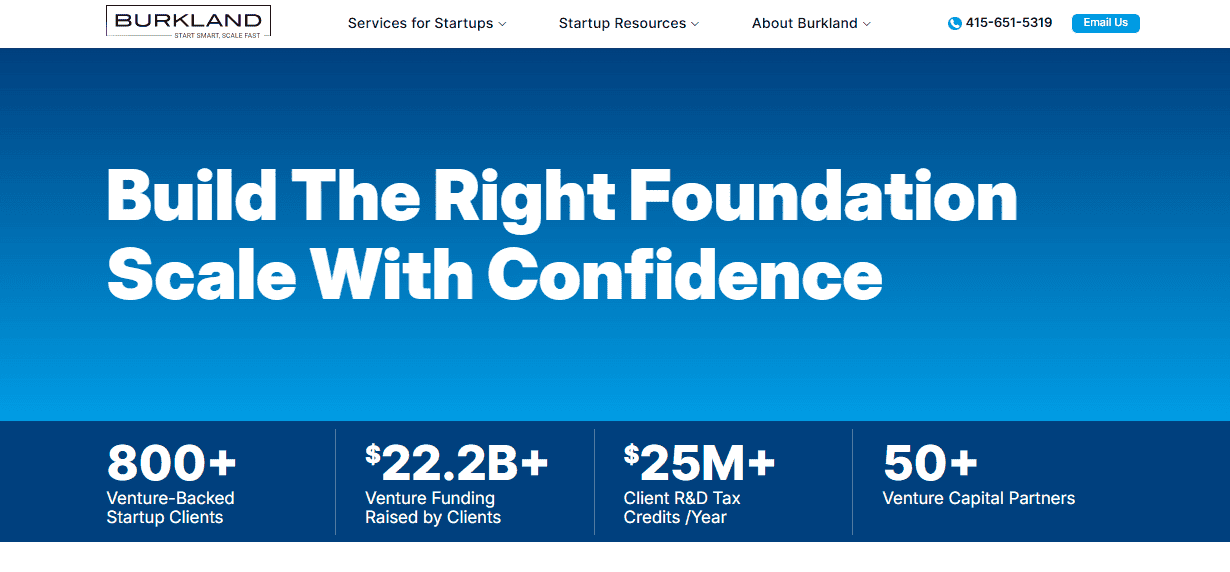
Burkland is one of the clearest Pilot alternatives if you’re a funded startup. They offer fractional CFO services, strategic finance, accounting, tax and compliance, HR, and payroll, and serve 800+ startups across the U.S. Their CFOs also have supported fundraising rounds that helped startups secure nearly $20 billion in venture capital.
What They Do Well
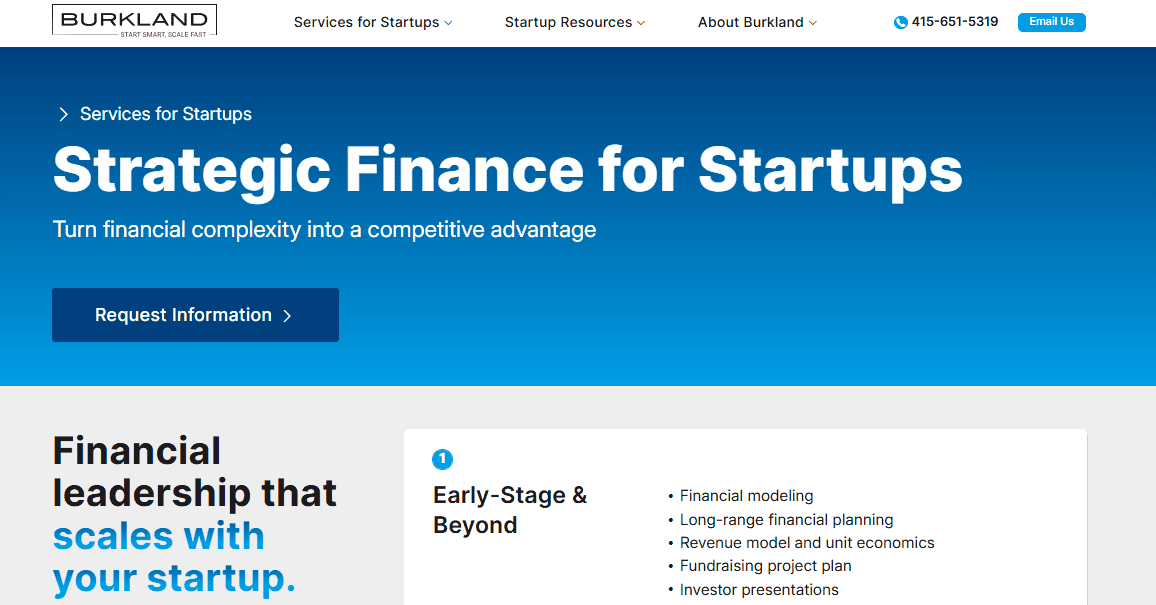
Burkland’s service story is very startup-centric, talking openly about annual planning and forecasting, long-range planning, cash management, treasury management, FP&A, due diligence support, and investor-facing fundraising help. They also work with pre-seed companies to build early financial models and prepare for investor conversations — making Burkland a very strong alternative if your Pilot evaluation is tied to fundraising readiness, not just bookkeeping cleanup.
Another plus is tech-stack flexibility. Burkland works with major platforms like QuickBooks and NetSuite, and they also offer fixed or hourly pricing rather than trying to fit every client into a single prebuilt package.
Where They Fall Short
Burkland is built for startups, and that focus is both its edge and its ceiling. If you run a founder-owned services business, a multi-site operator, or a company that needs broad tax and operational advisory without the venture template, Burkland may be more startup-coded than you need.
Pros
- Deep startup expertise
- Strong fundraising support
- Broad finance + HR offering
- Excellent tech-stack familiarity
Cons
- Best fit skews hard toward venture-backed startups
- Pricing is custom rather than menu-based
Best for: VC-backed startups that need fundraising help and a full startup finance stack
4. Kruze Consulting
Kruze is another startup specialist, but they come at the problem from a slightly different angle than Burkland. Their public positioning is built around expert accounting for VC-funded startups (with former venture capitalists on staff), including tax advisory, financial reporting, and fundraising support — claiming their clients have collectively raised over $15 billion in VC funding.
What They Do Well
What stands out to me is Kruze’s discipline around reporting and startup mechanics. They emphasize diligence-ready financials, fixed monthly packages, monthly financial reports, transaction reconciliation and categorization, and a monthly call with a dedicated controller. For founders who want predictability and board-meeting-grade reporting, that’s a compelling mix.
Kruze is also attractive if tax is a meaningful part of your buying decision. They lean into tax advisory, financial reporting, and startup-specific tax work, not just monthly bookkeeping. That makes it a credible alternative to Pilot for companies that care about both compliance and investor optics.
Where They Fall Short
The downside is that Kruze is even more startup-specific than Burkland. If you’re not VC-backed, you can still talk to them, but they’re squarely aimed at venture-funded companies.
Pros
- Strong venture-backed startup specialization
- Fixed-package mindset that leans heavily into tax and reporting depth, as well as fundraising familiarity
Cons
- Very narrow ICP
- Custom pricing
Best for: Venture-backed startups that need diligence-ready books, tax, and finance support
5. Graphite Financial
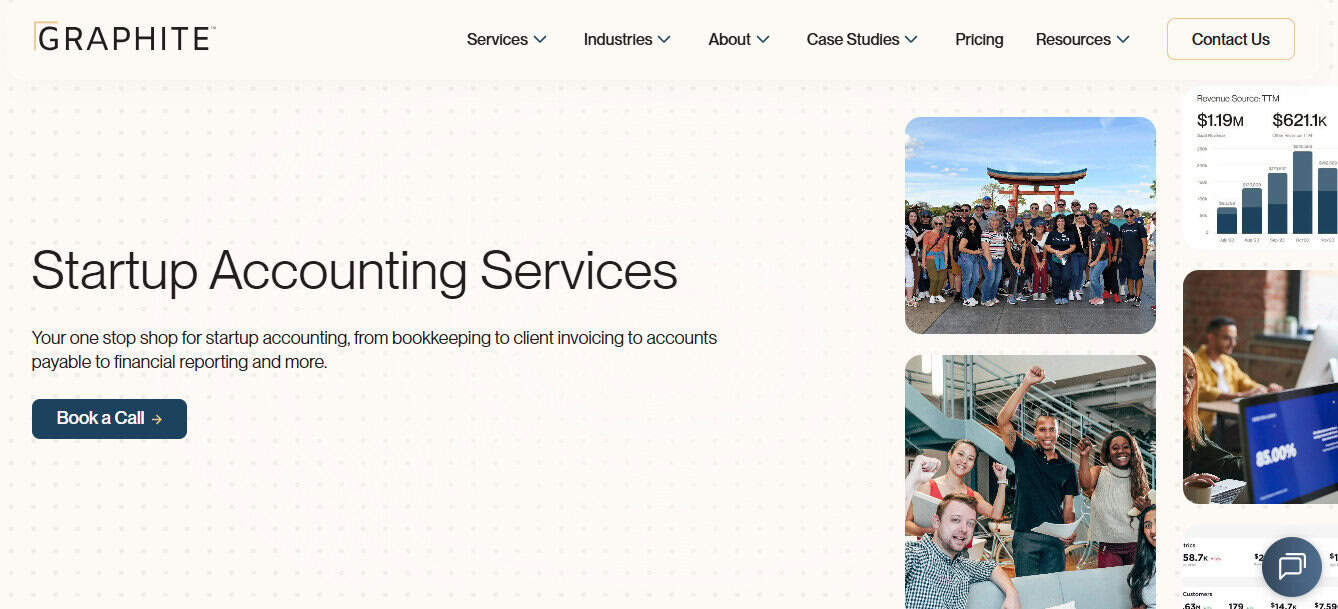
Graphite is a good middle ground between a startup specialist and a broader outsourced finance firm, pitching themselves as a one-stop shop for startup accounting, finance, and tax. They’ve provided support to hundreds of growing companies since 2016, offering bookkeeping and month-end close, tax filings and credits, financial modeling and planning, fundraising support, and fractional CFO services.
What They Do Well
The pricing structure is particularly attractive here. Graphite’s accounting service starts at $1,500 per month, while tax compliance, finance, and CFO tiers are custom. Accounting covers bookkeeping, month-end close, reporting, and operational accounting; finance covers modeling, forecasting, dashboards, and KPI work; CFO covers fundraising prep, M&A support, board presentation support, strategic growth planning, and ad-hoc CFO support.
Graphite also makes a direct case for fixed monthly pricing, dedicated onboarding, a dedicated team of accountants and CFOs, and a modern tech stack. This gives it some of the clarity people like in Pilot, but with a stronger emphasis on customized startup finance workflows and industry-specific support across sectors like SaaS, e-commerce, and fintech.
Where They Fall Short
Much of the higher-value work is custom-priced here, so the visible transparency stops after the accounting tier. Also, like Burkland and Kruze, Graphite is very startup-forward; if your business looks more like a lower-growth operating company than a funded startup, another firm may fit better.
Pros
- Strong one-stop-shop model with clear service buckets
- Visible base accounting price
- Good fit for finance + forecasting buyers
Cons
- Upper tiers require a quote
- Strongest fit is still very startup-heavy
Best for: Startups that want outsourced accounting, tax, modeling, and CFO support in one shop
How to Pick the Best Pilot CFO Alternatives
In my opinion, Pilot is strong when you want a bundled, structured outsourced finance product. But many real businesses do not stay inside neat product lines. They need books cleaned up, tax issues handled, controls improved, budgets rebuilt, lenders answered, systems changed, and owners talked through big decisions.
So if your company is investor-backed and you mainly care about runway, board reporting, fundraising prep, and startup finance mechanics, I would start with Burkland, Kruze, or Graphite. If you want broader outsourced accounting with CFO access and multi-entity support, indinero deserves a hard look.
However, if you want the widest operating lane (especially where bookkeeping, tax, controllership, strategy, capital advice, and project work may all overlap), Pillar Advisors is the most complete alternative in this group. Their public service mix and example engagements suggest it is built for the kind of messiness that comes with real-world use. And as a CPA, that’s usually where I put the most weight.