


- A Quick Guidance by Use Casea
- Why This Guide & How I Evaluate Tools
- Quick Demo Checklist
- A Quick Buying Checklist
- The Shortlist — My Top 8 Platforms
- How Each Affiliate Platform Performs in Real-World Use
- Everflow
- Impact
- Partnerize
- Awin / CJ / Rakuten
- PartnerStack
- Affise / Scaleo / TUNE
- ShareASale / ClickBank
- My Recommended Pick by Use Case — Not Shiny Features
- Implementation Checklist
- How to Measure Success & Avoid Common Mistakes
- Pricing Models Explained
- Concluding Thoughts
Last Updated on March 25, 2026 by Ewen Finser
I’ve tested, demoed, or actively worked with most major affiliate and partnership platforms on the market. Over time, I’ve narrowed my shortlist to a few tools that consistently hold up once real traffic, real partners, and real money are involved. These include Everflow, Impact, Partnerize, PartnerStack, and a handful of large affiliate networks like Awin and CJ.
Each platform shines in different situations. Some are built for scale and enterprise governance. Others focus on speed, simplicity, or fast access to publishers. If I had to recommend one platform to start with for most modern digital merchants, Everflow usually tops my demo list. The reason is simple. It gives me clean attribution, real-time visibility, and flexibility across paid, influencer, and partner channels without forcing me into a rigid network model.
That said, there is no universal “best” platform. The right choice depends on your business stage, partner mix, and reporting needs.
A Quick Guidance by Use Casea

Startups
- Pros: Faster setup, simpler UX, lower operational overhead
- Cons: Fewer built-in publishers, limited enterprise controls
Growth DTC Brands
- Pros: Strong attribution, integrations with paid media and eCommerce
- Cons: Costs increase as volume scales
Enterprise / B2B
- Pros: Contract automation, compliance, deep reporting
- Cons: Longer onboarding, heavier configuration
Why This Guide & How I Evaluate Tools
I wrote this guide because too many affiliate platform reviews focus on features instead of real-world performance. My approach is hands-on. I don’t just watch demos. I recreate real workflows. I build sample partner programs, test attribution edge cases, and try to break reporting before trusting it.
When I evaluate a platform, I usually replicate 3 things:
- First, a standard DTC funnel with paid media overlap.
- Second, an influencer or content partner flows with delayed conversions.
- Third, a multi-touch scenario where attribution gets messy fast.
If a platform can handle those cleanly, it usually works everywhere else.
During demos, I look for failure points. Delayed reporting. Inflated conversions. Limited raw data access. Rigid payout rules. These issues rarely show up in sales calls, but they surface quickly once money moves.
Here’s the framework I use every time.
- Step #1: Tracking fidelity & multi-channel attribution
Can the platform accurately track across web, in-app, and offline touchpoints without guesswork? - Step #2: Data latency & real-time reporting
How fast do clicks and conversions appear? Delays kill optimization. - Step #3: Integration ecosystem
Does it connect cleanly with eComm platforms, CRMs, CDPs, and ad networks I already use? - Step #4: Partner onboarding & management UX
Is it easy for partners to join, find links, and trust the data? - Step #5: Payout automation & tax/compliance support
Can I automate payments without spreadsheets or manual reviews? - Step #6: Fraud detection & traffic quality controls
Are there tools to spot low-quality or abusive traffic early? - Step #7: Pricing, SLAs, and onboarding support
Is pricing transparent, and does support match the complexity?
Quick Demo Checklist
- Ask for raw event exports
- Test attribution windows live
- Review payout workflows
- Verify integration depth
- Stress-test reporting delays
A Quick Buying Checklist
When I evaluate affiliate and partnership platforms, I focus on real results. Features look good on paper but often fail under live traffic. Here’s my checklist for RFPs or demos:
- Track clicks to conversions live: Test both web and app traffic.
- Check multi-touch attribution: See how multiple partners get credit.
- Request raw data exports: Ask for a 30-day sample of clicks and payouts.
- Test partner onboarding: Have a new partner join and use the dashboard.
- Review payout workflows: Walk through automated payments, disputes, and tax handling.
- Check fraud detection: Ask how the system flags invalid or low-quality traffic.
- Verify integrations: Confirm it connects with your eCommerce, CRM, and ad tools.
- Check reporting speed: Events should appear quickly in dashboards.
- Clarify support and SLAs: Understand response times and escalation paths.
Using this checklist helps spot platforms that perform under real-world conditions. It avoids wasting time on demos that look good but fail in practice.
The Shortlist — My Top 8 Platforms
After testing many tools, I keep coming back to these platforms. Each has strengths for different businesses.
- Everflow: Flexible partner platform with strong multi-channel analytics. Best for DTC brands and growth-stage companies. Subtle top pick.
- Impact: Enterprise tool with automation and a large partner network. Works well for global B2B and retail brands.
- Partnerize: Handles global commerce partnerships and contract management. Good for travel, retail, and enterprise programs.
- Awin / CJ / Rakuten: Large affiliate networks giving access to many publishers. Best for small to mid-size brands needing reach.
- PartnerStack: Designed for SaaS and B2B partner programs. Ideal for subscription-based or software companies.
- Affise / Scaleo / TUNE: Focused on ad and mobile networks with fraud controls. Suits mobile-first or performance-driven brands.
- ShareASale / ClickBank: Simple networks for courses, digital products, and niche items. Best for small brands or creators.
This shortlist is my starting point. It helps narrow the platforms worth a deeper look and demo.
How Each Affiliate Platform Performs in Real-World Use
Let’s dive deep and find out how these tools actually work.
Everflow
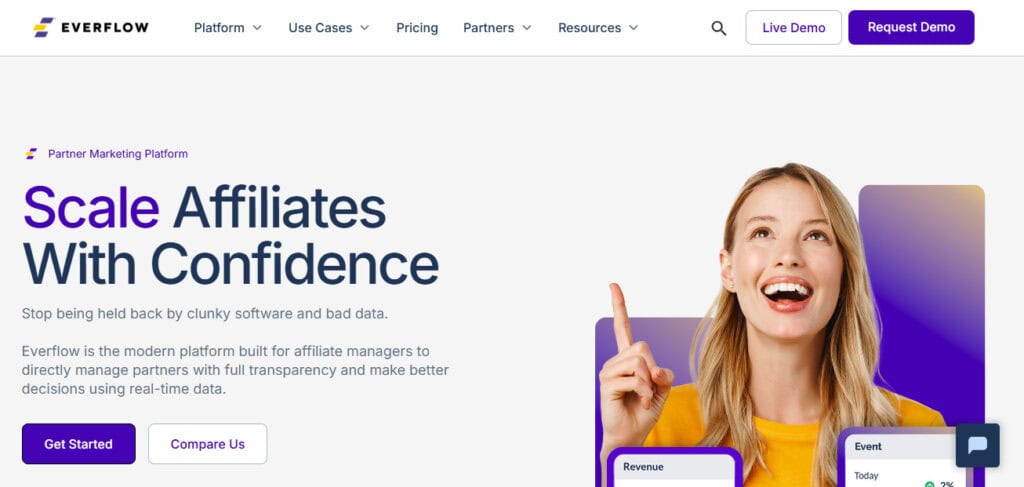
When I tested Everflow across DTC and B2B funnels, I leaned on it for multi-channel attribution. It handled web, app, and offline tracking without hiccups.
Strengths
- Real-time dashboards that let me spot issues immediately.
- Deep multi-channel analytics across paid, influencer, and partner campaigns.
- Robust integrations with Shopify, major CRMs, and ad networks.
- Partner discovery marketplace and optional white-label reporting.
Limitations
- Mid-to-upper tier pricing may be challenging for startups.
- White-label setup takes additional time and planning.
Integrations & Tracking
Everflow connects to eComm platforms, ad networks, CRMs, and reporting tools. Multi-touch attribution is flexible, and raw event exports are easy to access. I could tie a click to a purchase even across delayed conversion paths.
Example Use Case
I once used Everflow to track a Black Friday promo across affiliates and paid ads. One partner’s traffic was credited incorrectly. The real-time reporting let me spot the issue and reassign credit within hours, avoiding payout errors.
Pricing & Demo
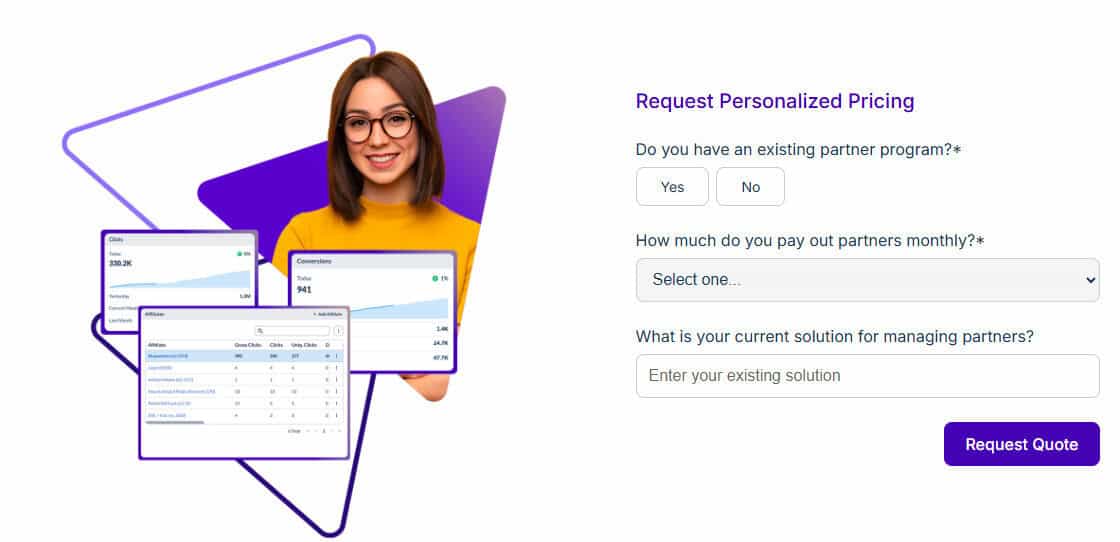
Everflow pricing varies by business size and feature needs. You can request a demo or a 14-day trial. I always ask for a sample raw events export to test reporting accuracy before committing.
My Verdict
If you want modern analytics and plan to run multi-channel partnerships, Everflow should be high on your demo list.
Impact
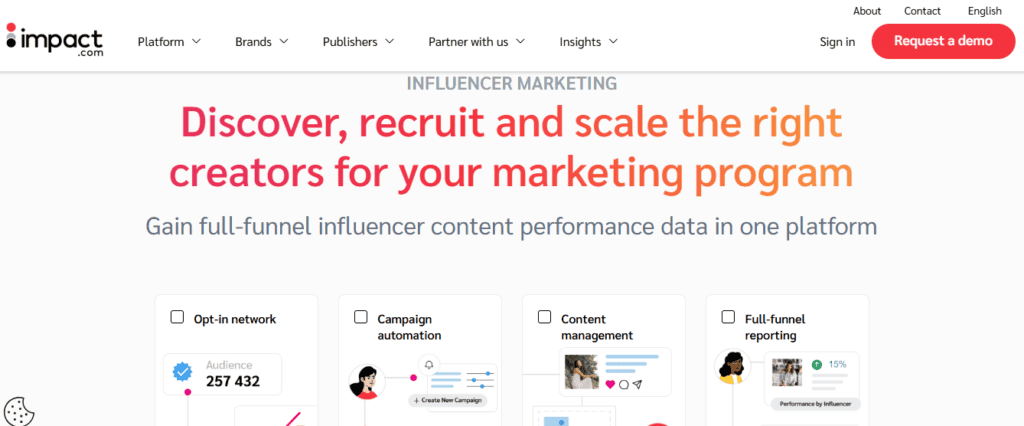
When I used Impact, I focused on enterprise partner programs with complex contracts and automation needs. It excels for large brands with multiple partner types.
Strengths
- Automated partner management and contract workflows.
- Advanced fraud detection and traffic quality rules.
- Detailed reporting for large-scale campaigns.
- Global partner network with pre-vetted affiliates.
Limitations
- Can be overwhelming for smaller teams or startups.
- Setup and onboarding require dedicated resources.
Integrations & Tracking
Impact integrates with major eCommerce platforms, CRMs, and ad networks. Multi-touch tracking is reliable, and reporting is highly customizable.
Example Use Case
I used Impact to manage a B2B SaaS referral program. The platform automated partner payouts and handled compliance checks, saving hours of manual work each month.
Pricing & Demo
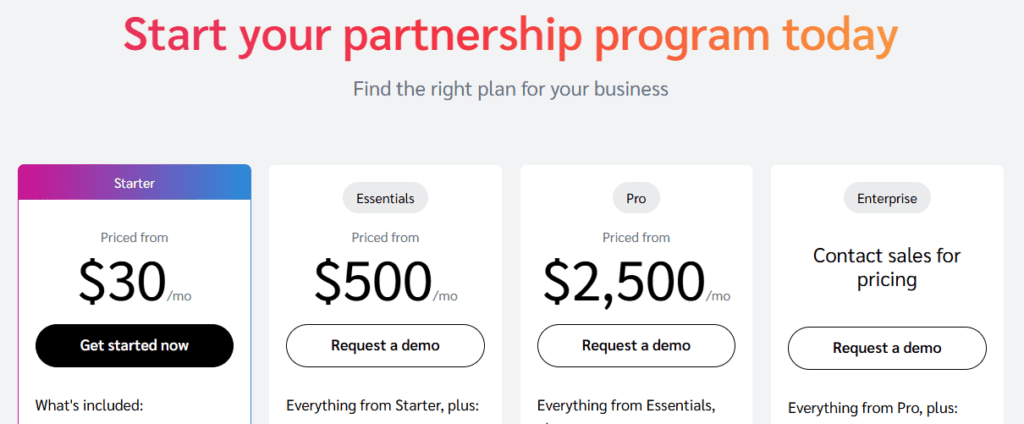
Impact pricing is tiered based on volume and features. Demos are available on request.
My Verdict
Impact works best for enterprises that need automation and a large partner network.
Partnerize
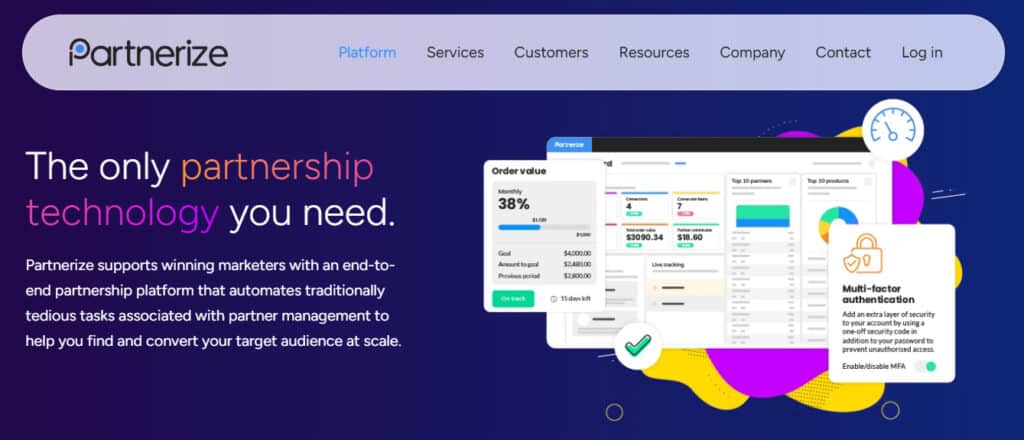
I tested Partnerize mainly for global commerce partnerships. It works well for retail and travel brands operating in multiple regions.
Strengths
- Strong global partner network.
- Centralized contract and compliance management.
- Detailed reporting and analytics dashboards.
- Automation tools for partner recruitment and payouts.
Limitations
- May feel heavy for smaller brands.
- Onboarding and training take time.
Integrations & Tracking
Partnerize connects with eComm platforms, CRMs, and ad networks. It handles multi-touch attribution across regions, making global campaigns manageable.
Example Use Case
I used Partnerize to track seasonal travel promotions across Europe and the U.S. Partners were automatically paid according to local currency rules, and analytics gave clear ROI metrics.
Pricing & Demo
Partnerize offers custom pricing based on business size. Demos are available by request.
My Verdict
Best for brands running global commerce partnerships with automated partner management.
Awin / CJ / Rakuten
When I explored Awin, CJ, and Rakuten, I focused on access to large affiliate pools. These platforms are network-first, rather than pure SaaS solutions.
Strengths
- Instant access to thousands of affiliates and publishers.
- Strong tracking and reporting built into the network.
- Useful for performance marketing and digital campaigns.
- Payment and tax handling managed by the network.
Limitations
- Less flexibility than standalone platforms for custom attribution.
- Network fees or commissions can add up.
Integrations & Tracking
Networks connect to online stores and sometimes to analytics tools. Multi-touch attribution is limited compared to platforms like Everflow.
Example Use Case
I ran a seasonal product launch through CJ. The network provided ready affiliates, and payouts were automated. I relied on network reports rather than raw event exports.
Pricing & Demo
Most networks charge a setup fee plus commissions. Access demos through account representatives.
My Verdict
Best for brands needing a broad affiliate reach quickly without building a partner program from scratch.
PartnerStack
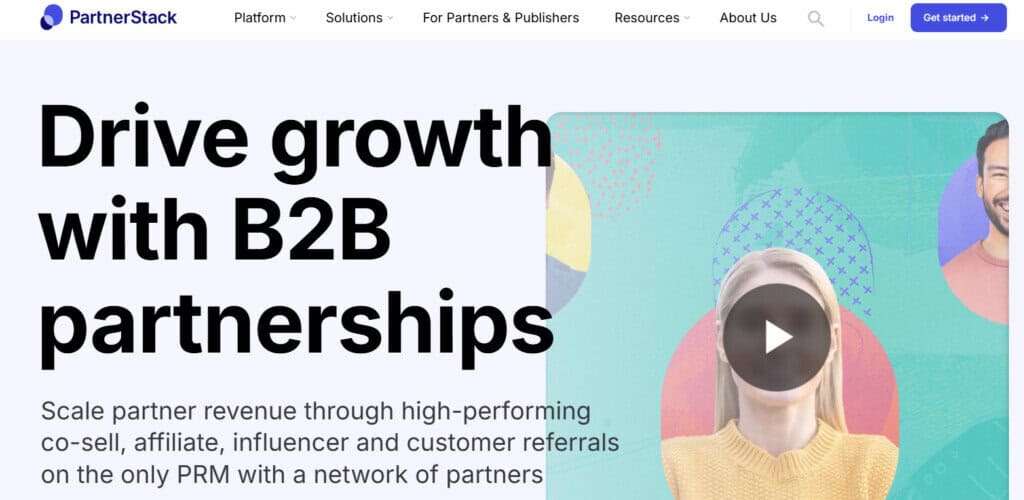
I used PartnerStack primarily for SaaS referral programs. It works best for subscription-based and B2B products.
Strengths
- Built specifically for SaaS and B2B partner programs.
- Easy partner onboarding and referral tracking.
- Automation of payouts and compliance checks.
- Clean analytics dashboards for program performance.
Limitations
- Limited support for eCommerce or retail.
- Smaller partner network compared to Awin or Impact.
Integrations & Tracking
PartnerStack connects with CRMs, email marketing, and payment platforms. Tracking is clear and consistent for subscription conversions.
Example Use Case
I used PartnerStack to manage a SaaS referral campaign. Partners signed up quickly, and automated payouts removed manual work. Reporting made it easy to see which partners drove real revenue.
Pricing & Demo
Pricing is tiered by active partners and revenue. Demos are available directly on the website.
My Verdict
Best for SaaS and B2B brands seeking clean referral tracking and automation.
Affise / Scaleo / TUNE
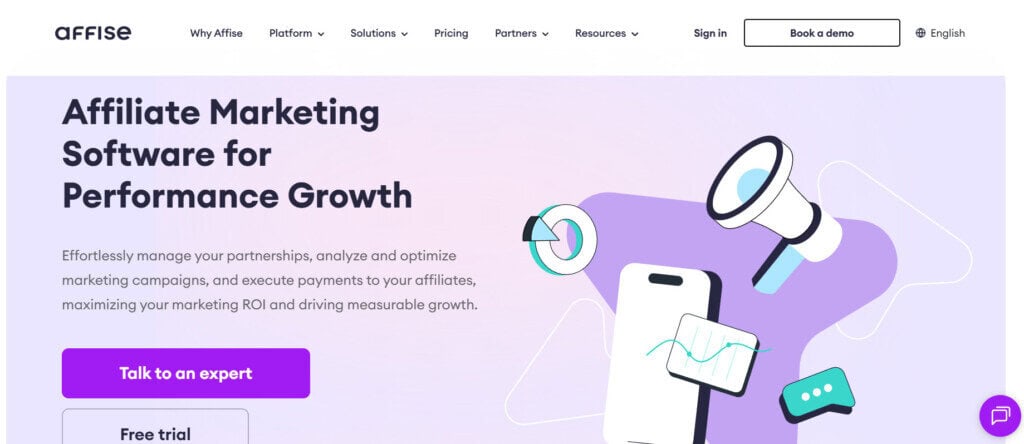
I tested Affise, Scaleo, and TUNE for ad and mobile network campaigns. These platforms are lean, fast, and performance-focused.
Strengths
- Optimized for mobile and ad network tracking.
- Strong fraud detection and traffic quality controls.
- Flexible campaign management.
- Transparent reporting and raw data access.
Limitations
- Can require technical expertise to set up.
- Less suited for non-digital products or B2B SaaS.
Integrations & Tracking
They integrate with ad networks, mobile apps, and eCommerce tools. Multi-touch attribution is solid but requires configuration.
Example Use Case
I used Affise to manage a mobile app launch. Fraud filters and attribution rules kept payouts accurate. Reporting helped adjust ad spend quickly.
Pricing & Demo
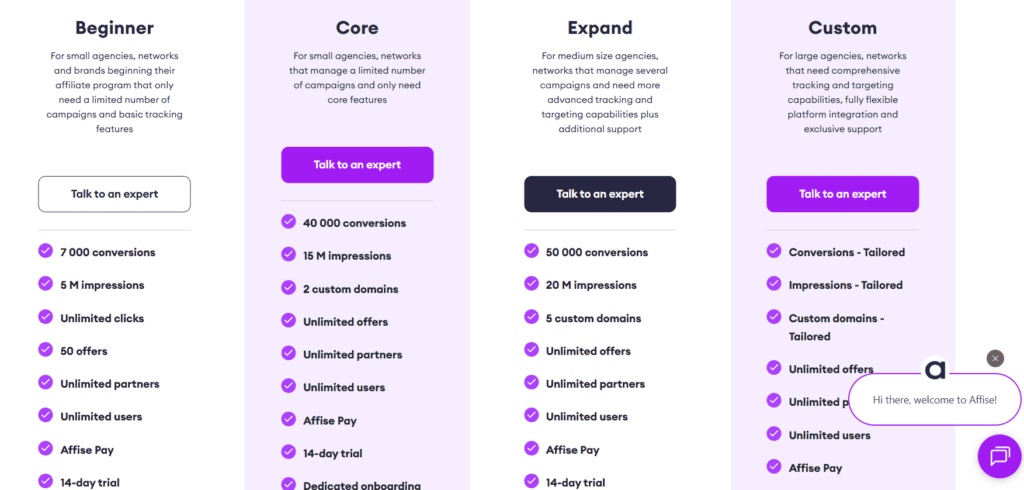
Pricing depends on traffic volume and feature set. Demos are available on request.
My Verdict
Best for performance marketers and mobile-first campaigns.
ShareASale / ClickBank
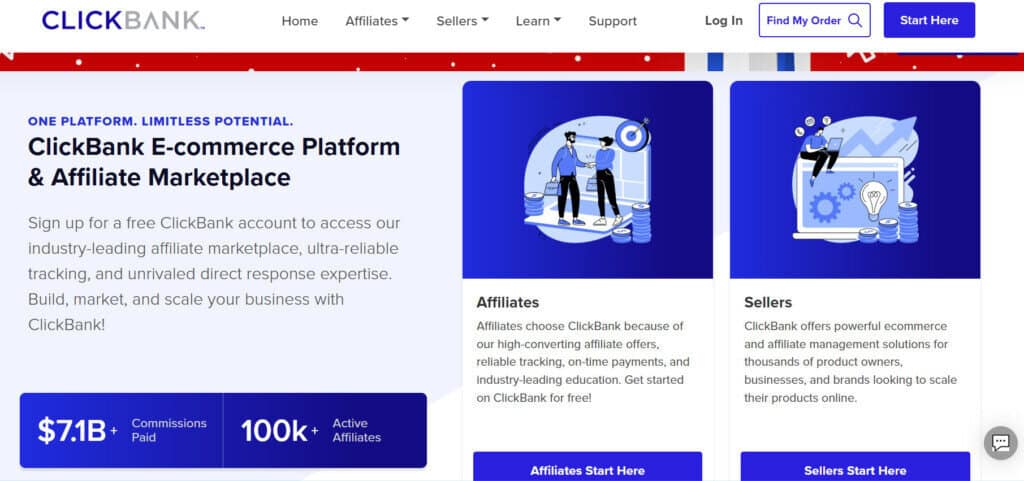
I tested ShareASale and ClickBank for small brands and digital products. They are network-first solutions with simple onboarding.
Strengths
- Easy to set up for courses, ebooks, or small product lines.
- Access to active affiliate networks.
- Automated payouts and reporting.
- Minimal technical setup required.
Limitations
- Limited analytics compared to SaaS platforms.
- Attribution flexibility is basic.
Integrations & Tracking
Networks connect with eComm platforms and basic payment processors. Tracking works for single-click conversions.
Example Use Case
I launched a digital course on ShareASale. Affiliates signed up quickly, and reporting showed which partners drove sales. Payouts were automatic, no spreadsheets needed.
Pricing & Demo
Setup fees vary. Demos and account creation are straightforward via their sites.
My Verdict
Best for small brands or creators selling digital products with minimal setup.
My Recommended Pick by Use Case — Not Shiny Features
Choosing a platform depends on your goals, not the flashiest feature list. Here’s how I approach six common scenarios:
1. Startup DTC
- Recommended: Everflow, ShareASale
- Rationale: Quick setup, easy partner onboarding, clear reporting for small teams.
2. Growth DTC with Paid Ads
- Recommended: Everflow, Impact, PartnerStack
- Rationale: Strong multi-channel attribution and paid media tracking to measure ROAS.
3. Enterprise Retailer
- Recommended: Impact, Partnerize
- Rationale: Automation, contract management, and compliance for large-scale partnerships.
4. B2B SaaS
- Recommended: PartnerStack, Everflow
- Rationale: Clean referral tracking and scalable partner programs.
5. Mobile App / Gaming
- Recommended: Affise, Scaleo, TUNE
- Rationale: Mobile-focused tracking, fraud detection, and performance campaign flexibility.
6. Influencer + Creator Program
- Recommended: Everflow, Awin, CJ
- Rationale: Easy onboarding, affiliate links, real-time reporting, and large publisher pools.
The key is matching platform strengths to real needs. I always test the shortlist against your specific funnel before making a final choice.
Implementation Checklist
Onboarding a partner platform requires a clear plan. I follow an 8-week process to make sure nothing breaks.
Week 0–1: Discovery
- Identify KPIs, partner types, and traffic sources.
- Map business needs platform capabilities.
Week 1–2: Data Mapping
- Connect eCommerce, CRM, ad networks, and apps.
- Define event triggers and attribution rules.
Week 2–3: Test Campaigns
- Launch small pilot campaigns.
- Verify click-to-conversion flow and reporting.
Week 3–4: QA Event Mapping
- Check multi-touch attribution.
- Validate raw data exports and dashboards.
Week 4–5: Sample Payouts
- Run trial payouts to partners.
- Test dispute and refund workflows.
Week 5–6: Fraud Baseline
- Configure filters for low-quality traffic.
- Monitor early performance anomalies.
Week 6–7: Partner Portal Setup
- Customize dashboards, links, and notifications.
- Add brand assets and onboarding materials.
Week 7–8: SLA & Support Finalization
- Confirm account manager, support contacts, and escalation paths.
- Document procedures for partner questions.
Following this plan reduces mistakes and speeds up partner adoption. I treat it like a checklist and adjust for each business size and vertical.
How to Measure Success & Avoid Common Mistakes
I track a few key metrics to know if a partner program works. These numbers tell me what’s driving revenue and where to adjust.
Key Metrics I Follow:
- Partner-driven revenue: Total sales attributed to each partner.
- Conversion rate: Percentage of clicks that become purchases.
- Average order value uplift: Compare orders with and without partner traffic.
- Partner LTV vs CAC: How much a partner costs versus the revenue they bring.
- Fraud or low-quality traffic: Keep an eye on unusual patterns.
- Multi-touch accuracy: Ensure all contributors get credit fairly.
Common Mistakes I See:
- Ignoring offline or delayed conversions.
- Letting vanity metrics like clicks drive payouts.
- Weak partner onboarding, causing confusion or churn.
- Failing to test reporting before launching live campaigns.
- Not exporting raw data to verify accuracy.
- Skipping fraud checks early, which inflates ROI.
Measuring these metrics keeps the program accountable. I make it a habit to review dashboards weekly and validate raw event data monthly. It helps me catch small issues before they become costly.
Pricing Models Explained
Pricing can get confusing, so I like to break it down clearly. Most platforms use one of three models:
1. SaaS/subscription model
- Fixed monthly or annual fee.
- Usually based on seats, active partners, or features.
2. Network commission/revenue share
- Platform takes a percentage of partner-driven revenue.
- Common in Awin, CJ, and ShareASale.
3. Per-click / per-conversion
- Pay only when a click or sale happens.
- Works well for performance campaigns or mobile apps.
I always calculate the total cost of ownership for 12 months. That includes platform fees, setup costs, and operational overhead. A platform might look cheap upfront but require hours of manual work.
For new programs, I prefer platforms with transparent pricing and trial periods. This lets me test tracking, reporting, and payouts without committing to a full year.
Concluding Thoughts
After trying multiple platforms, it really comes down to what you need. For a modern tool that gives clear reporting and handles multi-channel partnerships, I usually start with Everflow. It’s flexible and shows data in ways that make sense.
If your goal is quick access to lots of publishers, then a network like Awin or CJ works better. They get you live fast and handle payouts automatically.
When I run demos, I follow the same checklist every time. I watch a click go to conversion. I ask for a raw data export. I run a small test campaign. I check how easy it is for partners to join and how payouts work. Doing this early saves headaches later.
My advice is to pick two or three platforms that match your needs. Book a demo, request a raw data export, and try a short test campaign. You’ll see quickly which platform actually works for your business.