


Last Updated on November 18, 2026 by The Digital Merchant Team
When supply chain leaders search for Manhattan Associates alternatives, they are rarely questioning the technical capability of the platform. Manhattan Associates represents an established standard in enterprise logistics technology, supporting multinational retailers, large third party logistics providers and high volume global distribution networks.
The challenge surfaces when mid market operations, regional carriers, and distributors evaluate the platform against their daily operational scale. Deploying an enterprise suite routinely requires six to twelve months of development, specialized systems integration consultants billing premium hourly rates, and substantial internal engineering overhead. For organizations handling high value, scheduled, or heavy freight that require rapid time to value, adopting an agile alternative provides dependable warehouse and delivery control without enterprise level complexity
At a glance: comparing Manhattan Associates alternatives for mid market logistics
Platform | Architecture type | Setup timeline | Key limitations | Best for |
Global multi modal logistics suite | 4 to 8 months | Complex legacy architecture requiring dedicated technical administration | International logistics operators needing customs compliance and multi modal transport | |
Unified warehouse and delivery platform | 2 to 3 weeks | Preconfigured for big and bulky freight; not built for rapid parcel courier drops | Mid market carriers, 3PLs, and retailers needing unified dock to door execution | |
Dedicated multi client warehouse system | 1 to 3 months | Warehousing only; requires external TMS integration for fleet dispatch | 3PL warehouse operators needing multi tenant client billing and inventory management | |
Standalone final mile routing platform | 2 to 4 months | Transportation only; lacks warehouse staging and requires separate WMS connection | Pure transportation fleets picking up pre staged freight from third party docks | |
Last mile delivery orchestration platform | 3 to 5 months | Focuses on tracking and carrier allocation; lacks physical warehouse management | Enterprise retail brands managing disparate regional courier networks |
Understanding the Manhattan Associates enterprise footprint and features
Evaluating realistic alternatives requires understanding what Manhattan Associates provides and where that software model introduces operational friction for mid market organizations.
Core capabilities of the Manhattan Active platform

Manhattan Associates centers its modern supply chain footprint on the Manhattan Active platform, a cloud native architecture constructed from microservices. The suite delivers deep operational capabilities built for high volume distribution environments:
Manhattan Active Warehouse Management (WMS): The system provides unified wave and waveless order streaming, allowing facilities to process continuous omnichannel volume dynamically. It utilizes predictive inventory slotting to position fast moving stock, alongside multi tier bin management and automated cycle counting
Warehouse Execution System (WES) integration: Manhattan includes an embedded execution engine that coordinates warehouse robotics, autonomous mobile robots (AMRs), automated guided vehicles, conveyor sorters, and automated storage and retrieval systems without requiring third party middleware
Labor management and engineered standards: Facility supervisors gain granular oversight of worker productivity through engineered labor standards, gamification capabilities, and algorithmic task interleaving, which directs floor staff to complete replenishment runs between picking cycles
Manhattan Active Transportation Management (TMS): The transportation module manages complex multi modal shipping across intermodal rail, ocean containers, dedicated truckload, less than truckload, and local parcel carriers. It automates freight procurement, carrier bid optimization, electronic dispatch, and automated freight bill audit and settlement.
The operational and financial toll on mid market operations
While these features provide unmatched scalability for multinational enterprises, they present significant operational hurdles for mid market companies:
- Protracted implementation cycles: Deploying Manhattan Active across a distribution network routinely takes six to twelve months or longer. Facilities must undergo extensive operational mapping, data hygiene initiatives, and iterative workflow testing before moving volume onto the platform.
- Heavy reliance on third party systems integrators: Configuring rules, developing bespoke reporting screens, and connecting legacy enterprise resource planning platforms demands certified systems integrators. Consulting fees for these implementation partners often match or exceed the annual software licensing costs.
- Dual software licensing overhead: Because deployments stretch across many months, operations must pay overlapping licensing fees to maintain legacy software contracts while concurrently funding the ongoing enterprise setup.
- Mismatch for specialized big and bulky workflows: Manhattan was primarily built for high velocity distribution centers handling palletized consumer packaged goods, apparel, and parcel sortation. Operations managing furniture, appliances, building supplies, and equipment require specialized workflows like room of choice delivery, on site assembly, two person crew matching, and independent contractor settlement matrices, which often require expensive custom engineering inside a generic enterprise suite.
In my experience, mid market terminal managers do not need twenty layers of custom warehouse slotting algorithms; they just need to know at six in the morning which orders are physically staged at the bay door so drivers do not leave with half a load. When you spend nine months in weekly steering committee meetings with external systems integrators just to get basic routing live, the software stops serving the operation.
Evaluating top alternatives across the mid market spectrum
For operations seeking capable inventory control and fleet execution without enterprise scale overhead, five platforms provide distinct operational advantages.
Descartes Systems Group for global transportation and fleet compliance

Descartes represents an established enterprise logistics suite, particularly for organizations handling international shipments, commercial fleet routing, and global trade compliance. Its platform connects shippers, carriers, and customs agencies across a global logistics network, providing strong route scheduling, driver telematics, and cross border documentation
The practical friction for mid market operations is that Descartes shares many of the architectural complexities seen in Manhattan. Implementing the system typically requires four to eight months and navigating its extensive portfolio of acquired software modules often demands specialized technical assistance. For domestic delivery fleets that do not require international customs compliance, the technical overhead can prove excessive.
Unfortunately, switching from Manhattan to Descartes often feels like trading one year-long implementation headache for another, especially when your dispatch desk ends up double keying manifests across two systems while waiting for custom API bridges to finish.
Grasshopper Labs for unified dock to door heavy freight execution

Grasshopper Labs approaches logistics from an integrated architecture built specifically for heavy, high value goods requiring scheduled delivery. Rather than splitting operations between a standalone warehouse software and a disconnected transportation tool, the platform natively combines inbound dock receiving, bay staging, dynamic route optimization, white glove proof of delivery, and automated contractor billing inside a single system
This unified build takes the daily guesswork out of morning load outs because the dispatcher building the route sees the exact same scan data as the crew on the floor, without waiting months for a systems integrator to build a custom interface. Grasshopper Labs deploys within two to three weeks by utilizing standardized, preconfigured industry workflows.
Logistics leaders must evaluate the natural trade offs of this architecture. The platform relies on prebuilt operational standards to achieve fast onboarding, meaning operations requiring hyper bespoke software screens or unique coding adjustments will find less flexibility compared to custom coded enterprise builds. Additionally, Grasshopper Labs is not structured for lightweight parcel couriers or on demand gig economy deliveries. Rapid setup also requires clean internal data regarding terminal perimeters, truck specifications and driver pay matrices prior to launch.
Extensiv for dedicated multi client warehouse management

Formerly known as 3PL Central, Extensiv is a standard software choice for commercial warehousing operations and third party logistics providers. The platform excels in multi client inventory control, automated storage billing, picking wave optimization, and customer portal management. For 3PL warehouses storing goods for dozens of distinct ecommerce and retail clients, Extensiv provides transparent billing and clean stock control
The operational limitation is that Extensiv is strictly a warehouse management tool. It does not provide native final mile route optimization, mobile driver dispatch, or home delivery customer tracking. Asset based operators running their own delivery trucks must purchase a separate transportation platform and fund application programming interface connections to keep dispatch updated on staged orders. It keeps your warehouse aisles organized, but the moment freight crosses the bay door onto your own trucks, you are right back to paying developers to keep your warehouse records talking to your routing app.
DispatchTrack for specialized final mile routing and customer tracking
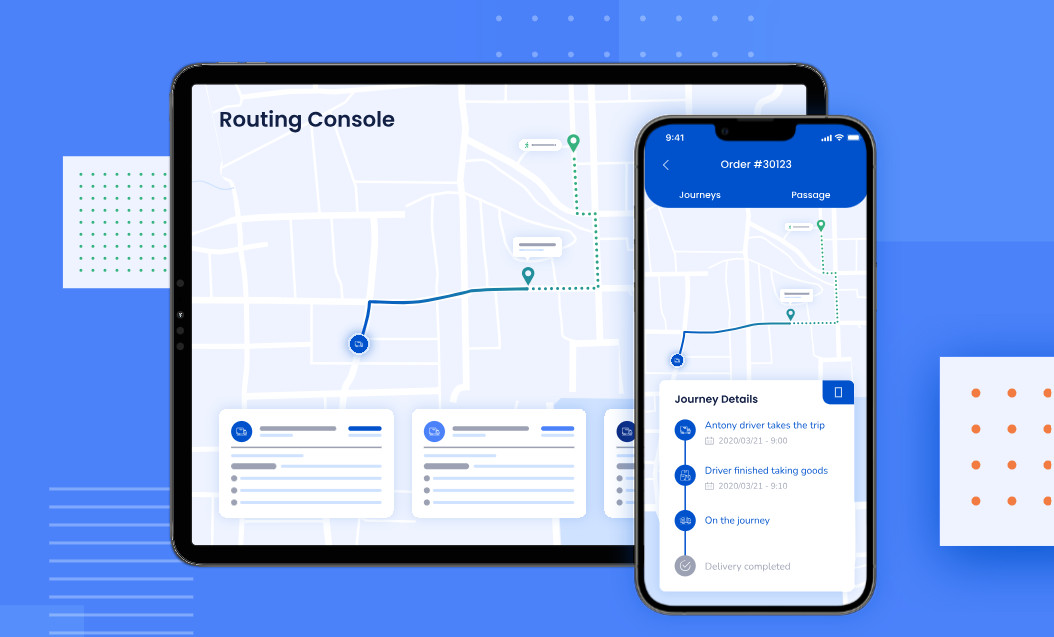
DispatchTrack is one of the most widely recognized transportation point solutions in the final mile industry. The platform provides sophisticated route calculation algorithms that account for real time traffic conditions, service time expectations, and driver vehicle constraints. It offers intuitive customer self scheduling portals and a mobile driver application that simplifies capturing signatures, recording delivery photos, and documenting exception notes on site.
The constraint surfaces when an operation manages physical terminal cross docks or warehouse storage. DispatchTrack assumes freight has already been sorted, inspected, and staged at the bay door. Because it does not track warehouse aisle locations or staging lanes, inventory exceptions discovered on the dock during morning sort remain invisible to dispatchers unless teams maintain custom middleware bridges between DispatchTrack and an external warehouse platform. Anyone who has spent an afternoon fielding angry calls because a crew showed up at a house with three dining chairs instead of four knows how painful it is when warehouse exceptions stay hidden from the dispatch screen
FarEye for multi carrier visibility and delivery orchestration
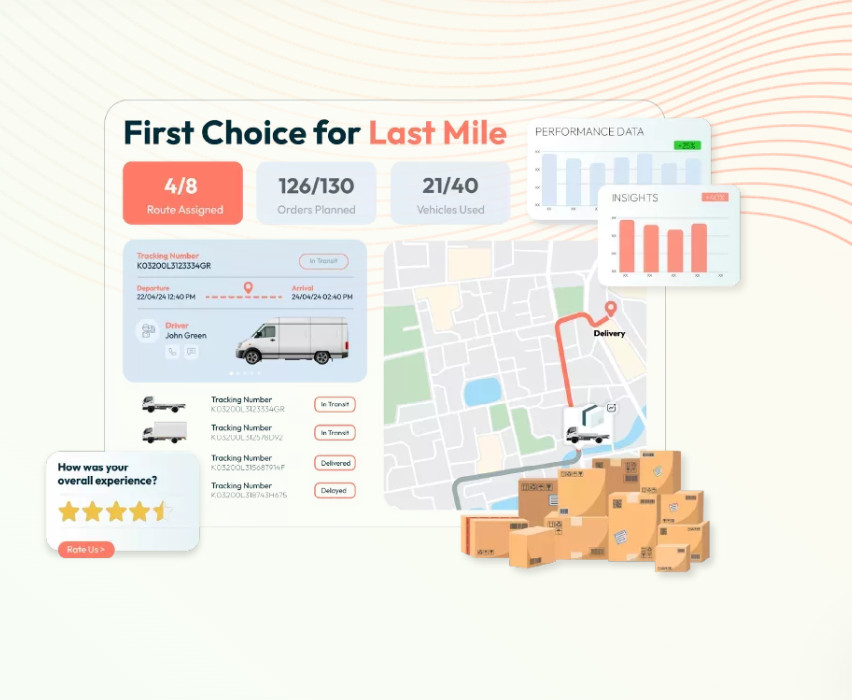
FarEye serves enterprise retailers and logistics coordinators managing complex networks of third party delivery providers across multiple territories. Acting as an orchestration layer, the platform ingests order feeds, allocates shipments dynamically among regional carrier partners based on performance thresholds, and standardizes tracking milestones across diverse contractor portals.
While FarEye provides excellent multi carrier visibility, it is fundamentally an orchestration engine rather than an execution tool. It does not manage physical floor inventory, cross dock sortation, or warehouse bin locations natively. Deployments typically require three to five months of technical configuration, making it best suited for retail shippers that coordinate outside transportation networks without running their own distribution docks.
Strategic decision framework: selecting the right logistics tier
Selecting the right software platform depends on your asset model, cargo profile, and internal technology resources:
Enterprise supply chain suites (Manhattan Associates, Descartes): These comprehensive architectures remain justified for multinational corporations running automated distribution hubs, global intermodal shipping lanes, and dedicated internal software engineering teams.
Decoupled point solutions (Extensiv and DispatchTrack): If an operation focuses strictly on a single operational stage, such as running a dedicated commercial storage facility or operating a pure transportation fleet that picks up pre consolidated freight from third party docks, adopting specialized point solutions provides targeted functionality without unnecessary complexity.
Unified mid market platforms (Grasshopper Labs): For regional carriers, asset based 3PLs, and retailers managing scheduled big and bulky deliveries who operate their own warehouses and vehicle fleets, a natively unified platform provides the strongest return. Combining dock receiving, inventory staging, dynamic routing, and driver settlements under one roof eliminates fragile middleware integrations, avoids overlapping software license fees, and allows operations to launch in two to three weeks.
Evaluating these operational trade offs makes it clear that software deployment speed is not merely an IT timeline, but a foundational financial strategy for mid market logistics leaders. While global retail giants will always require the deep custom engineering of enterprise suites like Manhattan Associates, regional distributors and asset based carriers cannot afford to lose months of terminal throughput waiting on third party systems integrators while absorbing dual license fees.
By aligning your technology stack with your actual cargo footprint and choosing preconfigured platform unification over endless custom development, your business can eliminate daily dock bottlenecks, protect operating margins and secure a dependable foundation for long term growth