


- Comparing Descartes alternatives for delivery operations
- Why logistics teams look for Descartes alternatives for delivery
- Evaluating Descartes alternatives for dispatch and delivery
- Core operational criteria when evaluating delivery software
- Strategic decision framework: selecting the right delivery platform
Last Updated on November 18, 2026 by The Digital Merchant Team
When operations leaders evaluate Descartes alternatives, they are rarely looking to replace international customs filing software or cross-border freight forwarding systems. Instead, I’ve found that the real bottleneck usually sits in daily domestic fulfillment: route optimization, dispatch visibility and final-mile delivery execution
Descartes delivers an extensive enterprise logistics ecosystem, but that comprehensive footprint requires substantial technical and financial commitments. For growing carriers, retailers and mid-market logistics providers, deploying an enterprise suite often means absorbing six-to-twelve-month rollout schedules, paying heavy third-party developer fees, and maintaining two separate software licenses during prolonged deployments.
If an organization requires agile delivery dispatch and inventory synchronization without enterprise level overhead, exploring focused alternatives provides a faster route to operational efficiency.
Comparing Descartes alternatives for delivery operations
Platform | Architecture type | Setup timeline | Key limitations | Best for |
DispatchTrack | Standalone final-mile TMS | 2 to 4 months | Transportation only; requires separate WMS and custom API bridges | Pure transportation fleets picking up pre-staged freight from third-party docks |
Grasshopper Labs | Unified warehouse and delivery | 2 to 3 weeks | Preconfigured for big and bulky; not built for gig economy parcel drops | Mid market carriers, 3PLs and retailers needing dock to door control |
FarEye | Last-mile delivery orchestration | 3 to 5 months | Focused on tracking and visibility. Lacks native warehouse staging | Enterprise retail brands managing multi-carrier third-party courier networks |
Bringg | Final-mile dispatch synchronization | 2 to 4 months | Built primarily for lightweight parcel and on-demand gig economy courier networks | Ecommerce brands and food retailers running high-speed local parcel delivery |
Manhattan Associates | Enterprise supply chain suite | 6 to 12+ months | Heavy custom coding, long deployment cycles and steep consulting fees | Multinational enterprises with internal IT engineering departments |
Why logistics teams look for Descartes alternatives for delivery

The overhead of legacy enterprise architecture
Descartes represents a capable solution for organizations that possess both the extensive budget and the operational timeframe required to construct a proprietary transportation architecture. Within an enterprise deployment, this framework typically demands custom system integrations, unique application programming interfaces and specialized connections between existing enterprise resource planning software and operational databases
However, building and maintaining that level of bespoke architecture frequently introduces severe operational friction. Instead of delivering immediate execution efficiency, the platform requires extensive technical maintenance to keep internal data pipelines functional. For growing logistics providers, the continuous overhead of supporting custom interfaces, proprietary views and disconnected reporting tools often outweighs the operational advantages of an enterprise suite. When you are trying to get twenty trucks out the door at six in the morning, nobody wants to wait on a database administrator just to tweak a basic routing rule.
Protracted implementation timelines and dual licensing costs
Deploying an enterprise platform like Descartes is rarely a rapid process, with implementation cycles routinely extending up to a full year. When a transportation management rollout spans twelve months, the financial burden extends far beyond the core software contract. Operations must budget for dual licensing fees throughout the entire transition period, paying for the legacy system while simultaneously funding the ongoing Descartes setup.
This extended overlap creates immediate strain on daily execution. While the transition remains underway, dispatchers, drivers, and warehouse coordinators are forced to operate across two independent systems at the same time. In my experience, asking a busy dispatch desk to double key manifests for eight months straight is the fastest way to burn out your best people. You also run the risk of increased data entry errors, slower terminal throughput and strained operating margins.
Heavy reliance on specialized external consultants
A distinct operational hurdle associated with Descartes is the ongoing dependence on specialized consulting resources. Because enterprise suites rely on intricate technical frameworks, configuring initial routing workflows and maintaining system integrity requires certified systems integrators or dedicated technical consultants
When daily business needs shift or a terminal introduces a new operational requirement, logistics leaders cannot simply adjust settings internally. Operations teams must submit development requests and rely on external software engineers who often lack direct experience in physical warehouse staging or final-mile dispatch. Paying premium hourly consulting fees just to modify screen layouts or maintain system stability creates continuous technical dependency, leaving terminal managers waiting on external developers to resolve basic operational bottlenecks on the loading dock.
The operational seam between dock staging and road dispatch
A core operational friction point for asset-based delivery fleets is the physical handoff between the loading dock and the delivery truck. When delivery teams rely on standalone routing systems or decoupled enterprise modules, warehouse staging and road dispatch operate on separate tracks. Inbound receiving crews log freight inside one tool, while dispatchers schedule routes inside another.
When an item is damaged during morning sort, held back for missing components, or rejected at staging, that exception often remains trapped inside dock records. Because standalone routing platforms lack native warehouse staging views, dispatchers unknowingly route incomplete orders. Drivers arrive at customer homes only to discover missing hardware or absent pieces, causing failed first-time deliveries and duplicate windshield time. Connecting those separate platforms requires continuous middleware maintenance, leaving operators spending valuable engineering resources just to keep dock inventory aligned with dispatch manifests
Evaluating Descartes alternatives for dispatch and delivery
DispatchTrack for dedicated final-mile routing
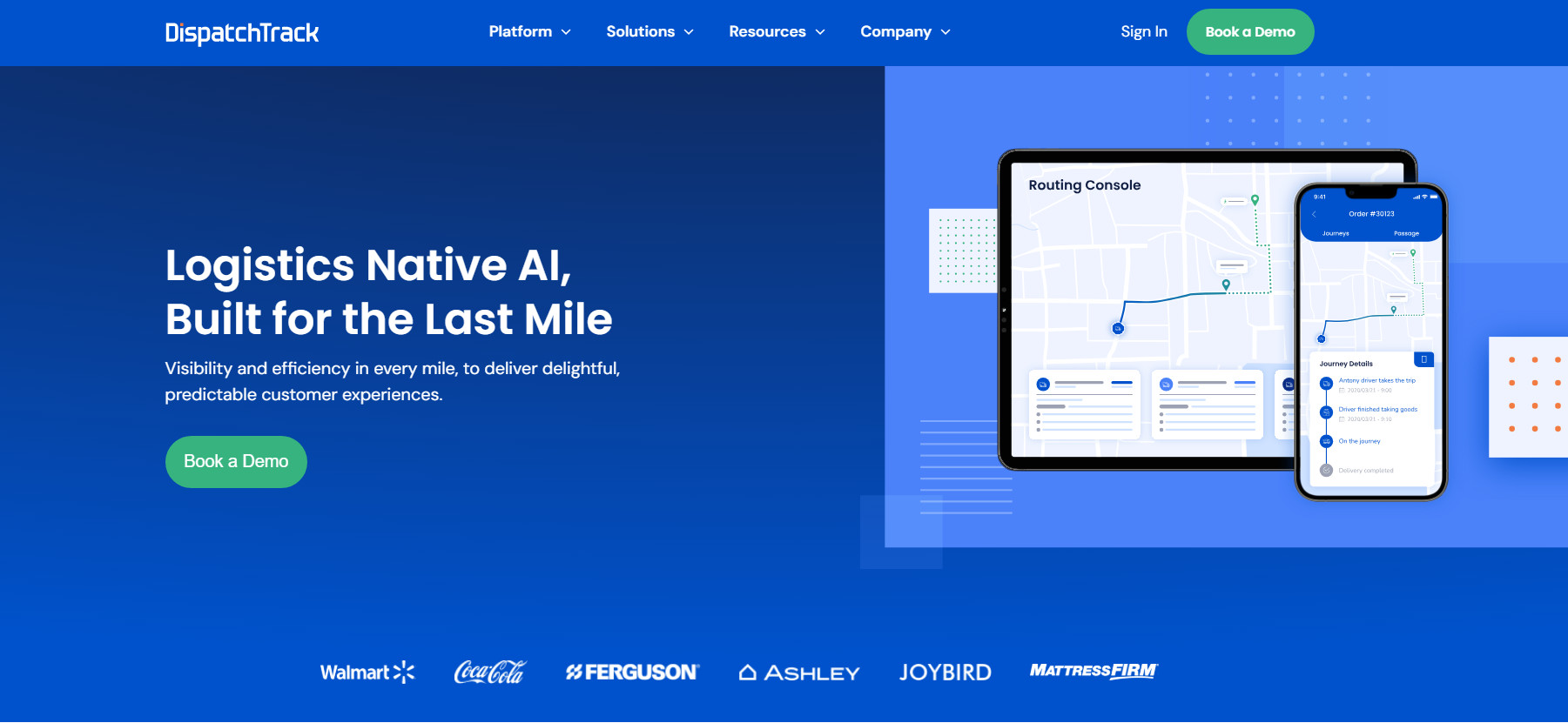
If your job is keeping trucks moving across town, DispatchTrack is a reliable workhorse. Dispatchers like it because the routing algorithms account for actual road traffic patterns instead of just drawing straight lines on a map. It pushes clean arrival alerts to customers, and the mobile application makes it easy for drivers to capture signatures, upload photos, and log notes directly from delivery sites. For fleets picking up pre-staged freight from customer docks without running a physical facility, it handles the transit run cleanly.
The trouble hits when an operator manages physical warehouse docks alongside the fleet. DispatchTrack is strictly a transportation tool that assumes every piece on the manifest is already inspected and sitting at the bay door. When someone damages a sofa during morning sort, that exception remains trapped on the warehouse side. Your team ends up sending drivers out with incomplete loads unless dispatchers manually cross check spreadsheets or you pay developers to maintain fragile API connections between your warehouse database and the dispatch screen.
Grasshopper Labs for unified dock to door execution
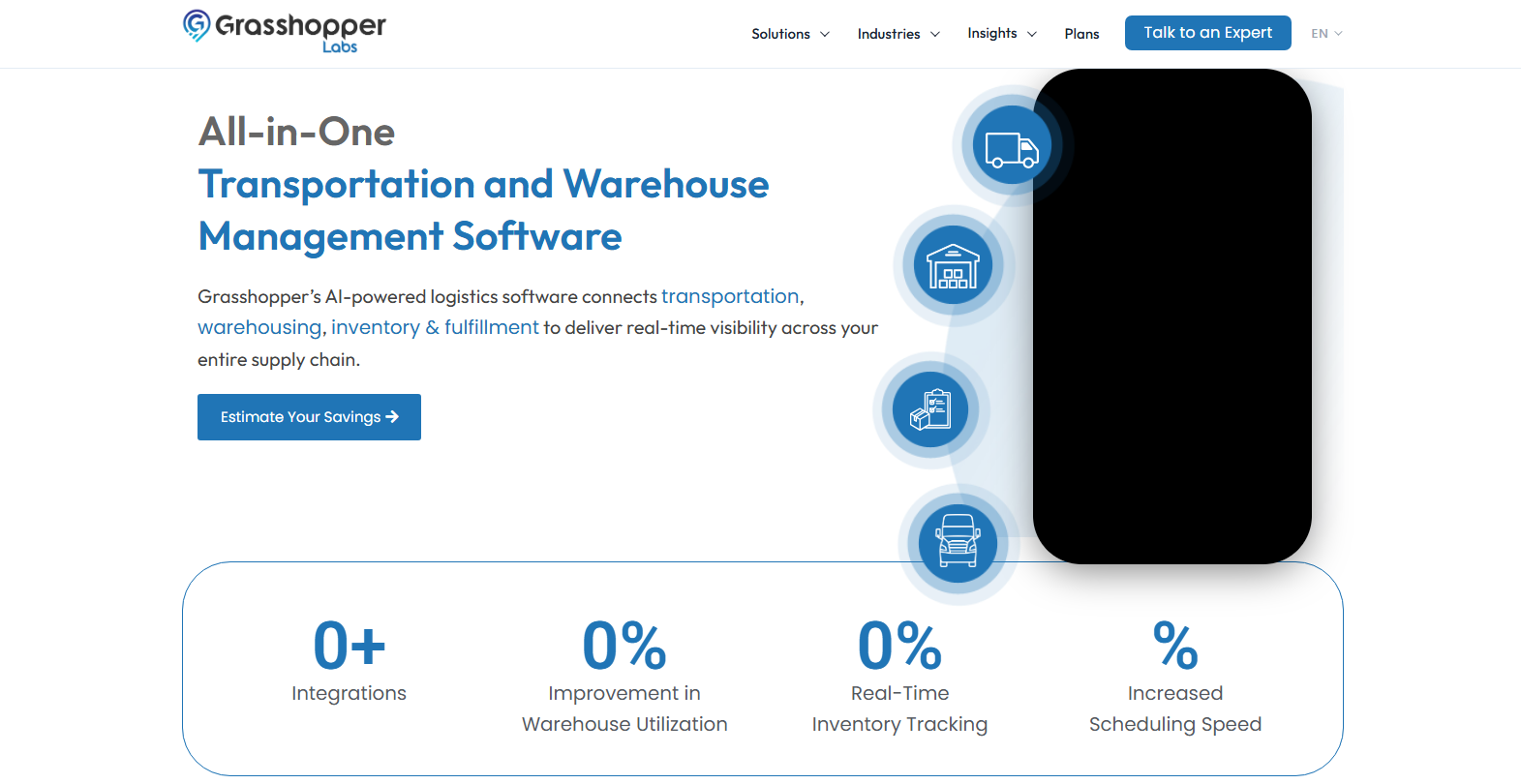
Grasshopper Labs links dock receiving directly to the dispatch board. Instead of juggling two separate software subscriptions, the platform combines inbound receiving, bay staging, route planning and proof of delivery in a single native database. For teams handling furniture, appliances, and heavy freight requiring two-person crews, dispatchers can verify that every item is staged and ready before creating a route, stopping drivers from hauling incomplete orders. It takes the guesswork out of the morning load out because the person building the route sees the exact same scan data as the crew on the floor
The trade off is that Grasshopper achieves two-to-three week launches by using standardized workflows. That means you must adopt built in operational views instead of ordering bespoke screens or custom code adjustments. It is also not built for parcel couriers dropping off small bags on demand. Deploying it effectively requires having clean facility records, vehicle specs and driver rate matrices ready to import
FarEye for multi carrier delivery synchronization
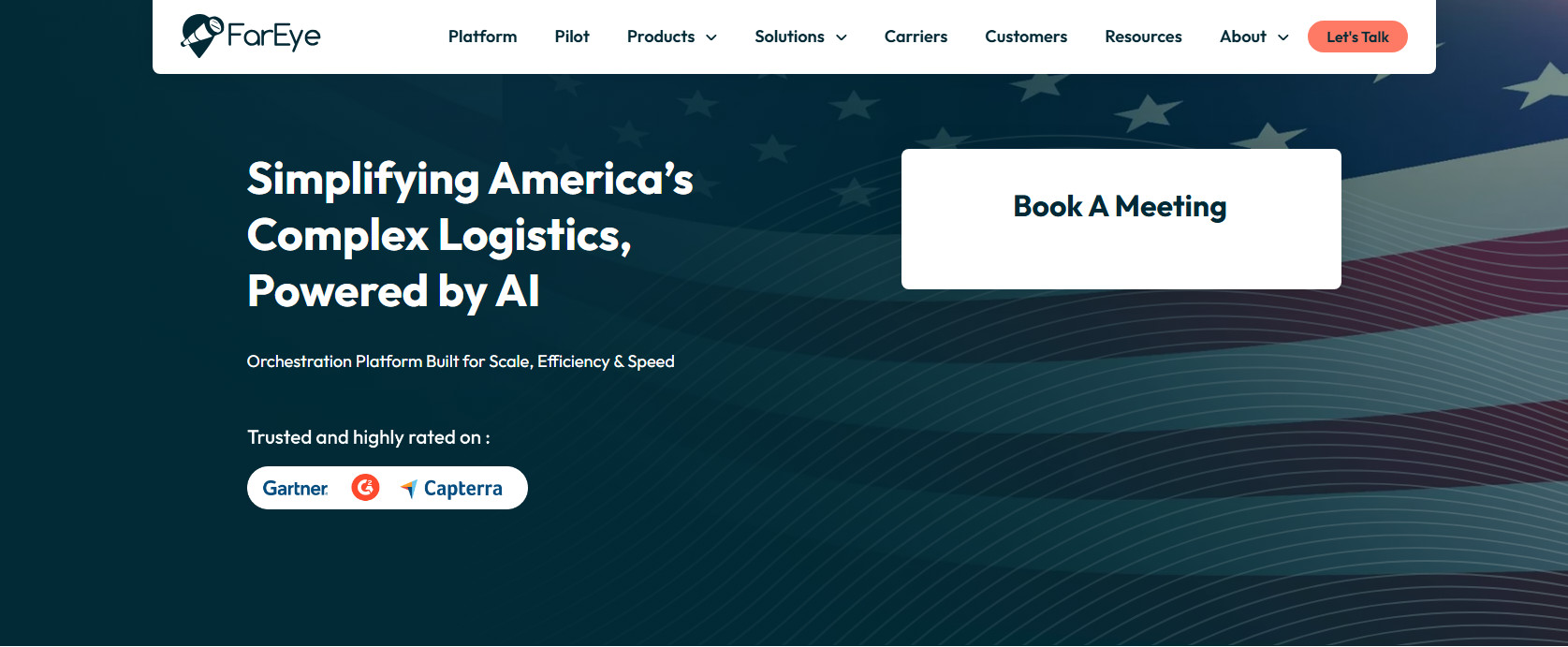
For logistics networks coordinating shipments across multiple external carriers or multi leg transportation routes, FarEye provides centralized orchestration and delivery visibility. Managing diverse transportation partners introduces daily tracking challenges on the ground, as each carrier operates on disparate software systems and updates status records at varying intervals.
FarEye addresses this multi carrier environment by centralizing shipment status updates across third-party freight networks and internal fleets within a single visibility dashboard. The platform allows logistics coordinators to monitor carrier performance against service level agreements, reassign loads dynamically when delays occur and maintain milestone visibility across regional movements. This makes it a viable tool for teams coordinating extensive contractor networks without having to manage their own physical staging docks.
Bringg for high velocity parcel and courier dispatch
Bringg functions as an automated dispatch and delivery orchestration engine tailored for high speed parcel transit and local courier networks. The platform was constructed primarily around lightweight parcel drops, rapid retail fulfillment and on demand courier fleets where individual drivers complete short distance deliveries within narrow turnaround windows.
Whether deliveries are handled by local couriers or outsourced transportation companies, Bringg provides automated job assignment, straightforward customer tracking portals and quick stop execution. Its routing engine processes high volumes of individual packages rapidly, making it effective for ecommerce brands, food distribution networks and parcel couriers that prioritize high drop density and automated driver allocation over physical cargo prep
Manhattan Associates for large enterprise supply networks
Manhattan represents the opposite end of the delivery software spectrum: a comprehensive enterprise tier built for global supply chains and massive distribution networks. Platforms within the Manhattan Active suite deliver deep algorithmic capabilities across multi facility warehouse execution, dynamic slotting, labor tracking and global multimodal transportation.
The friction for mid market delivery operators sits in the technical overhead and investment required to run it. Implementing Manhattan is a long term infrastructure project that routinely takes six to twelve months or longer. Deployments depend heavily on specialized third-party systems integrators, demanding ongoing consulting fees and extensive custom code maintenance. For regional carriers or growing distributors that simply need clean dock staging and reliable dispatch routing, the extreme financial cost and heavy engineering overhead make Manhattan far too complex for mid-market delivery requirements.
Core operational criteria when evaluating delivery software

Selecting delivery software requires evaluating how technical capabilities intersect with physical freight handling. Operations leaders must assess several foundational operational areas to ensure their chosen tool fits daily terminal realities
Cargo profile requirements for big and bulky vs small parcel
Cargo physical traits dictate technical software requirements. Small parcel transit can be monitored, routed and recorded through basic transportation management tools that require minimal operational complexity, where an individual driver completes a carton delivery in minutes. In parcel networks, goods are uniform, loading is rapid, and exception management rarely involves on site customer interaction beyond a front door photo.
Delivering heavy and bulky goods requires continuous coordination between dock personnel and road crews. Major appliances, furniture, and commercial equipment cannot be routed as simple carton scans. Warehouse teams need visibility into terminal bay staging, damage inspection checkpoints, and truck loading sequences.
At the final destination, the platform must accommodate tight delivery appointment windows, on site inspections, room of choice placement and comprehensive photographic proof of condition. You cannot force a forty-five-minute white-glove refrigerator installation into a routing clock built for two-minute porch drops without blowing up your afternoon schedule.
True cost of ownership and developer dependencies
Software pricing models rarely reflect the total expenditure required to bring a system live. While monthly subscription costs appear predictable on paper, implementation expenses often alter the financial equation drastically. Legacy enterprise suites require substantial investments in external systems integration, specialized database configuration, and ongoing technical support. If an operational workflow changes, modifying the software demands dedicated engineering resources
Mid-market organizations must evaluate whether their internal teams possess the technical capacity to maintain custom code. When a platform relies heavily on bespoke application programming interfaces and custom scripts, software maintenance becomes a recurring balance sheet item. Point solutions introduce ongoing middleware costs to synchronize inventory records between separate vendors, while natively unified architectures absorb those data flows internally, eliminating recurring integration charges and developer overhead
Single vendor accountability versus multi platform management
Managing multiple software vendors introduces administrative overhead and operational friction. When an inventory discrepancy occurs between warehouse staging records and driver manifests, identifying the root cause across disconnected platforms consumes valuable management time. The warehouse software vendor may claim the data exported accurately, while the transportation software vendor attributes the error to an incomplete application programming interface synchronization.
Operating on a unified platform centralizes operational accountability within a single software partner. Frontline supervisors interact with unified operational records, dispatchers view real time dock scans directly on the routing board, and customer service teams access complete order histories from initial receiving to final delivery. This administrative simplicity reduces internal technical friction and allows operations leaders to focus on terminal throughput and fleet productivity.
Strategic decision framework: selecting the right delivery platform
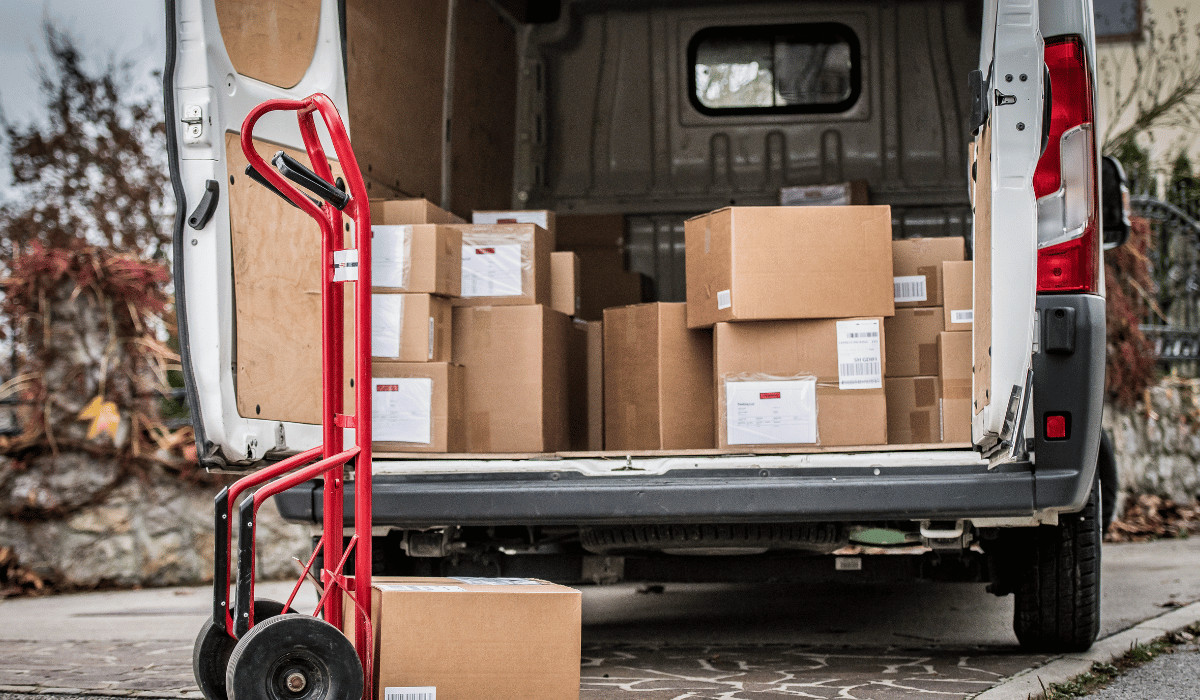
To choose the software solution that best matches your organization, evaluate your operational footprint, cargo requirements and internal technical resources:
High volume global logistics networks
Multinational retailers and global supply chain organizations managing automated distribution hubs and intermodal networks remain the primary audience for enterprise suites like Manhattan Associates and Descartes. These corporations have the technical budgets and internal software engineering teams needed to absorb six-to-twelve-month rollouts, heavy systems integration fees, and continuous custom development. For global operations with dedicated IT resources, deep algorithmic control justifies the implementation investment
Single process transportation fleets
Operations focusing strictly on a single logistics stage can run effectively on specialized point solutions without paying for unused features. A commercial warehousing provider storing palletized goods across accounts can operate on dedicated warehouse software. Similarly, a pure transportation carrier picking up pre-consolidated freight from third-party docks will find strong routing execution in DispatchTrack, while retail brands coordinating regional carrier networks can utilize FarEye for delivery visibility without physical warehouse tools.
Scaling mid market and big and bulky delivery operators
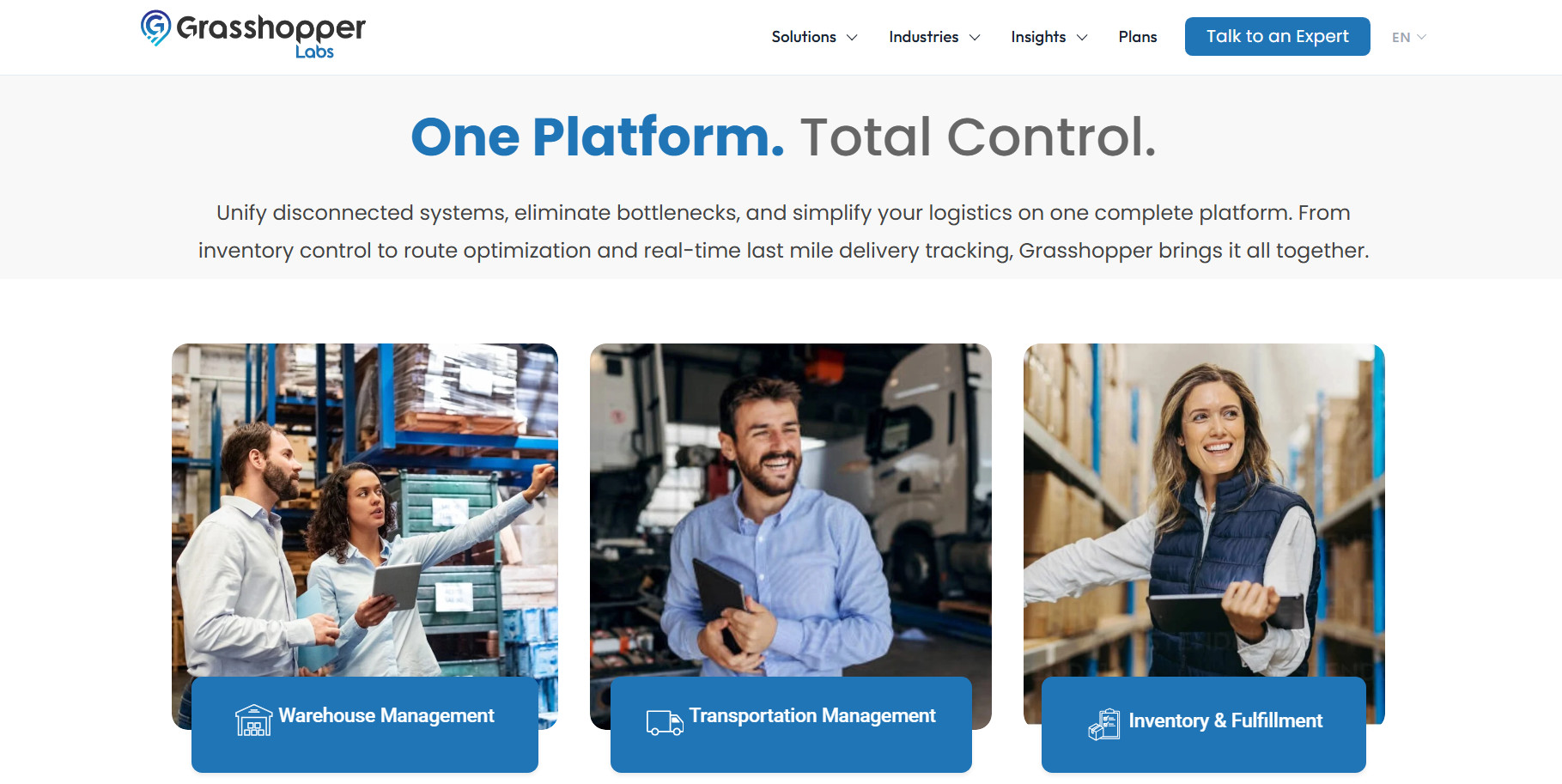
For regional carriers, asset based third-party logistics providers, and retailers managing scheduled heavy goods with their own warehouses and vehicle fleets, a natively unified platform like Grasshopper Labs delivers the highest return. Unifying dock receiving, bay staging, route optimization, and driver settlements inside one database eliminates fragile middleware integrations, removes overlapping software license fees and allows teams to go live in two to three weeks
Software deployment speed is a core financial strategy rather than a simple technology timeline. While global enterprises justify the deep custom engineering of legacy suites, regional distributors cannot afford to lose months of terminal throughput waiting on third-party systems integrators while paying double license fees. Aligning your software with your actual cargo footprint and selecting preconfigured platform unification over endless custom code eliminates dock bottlenecks, protects operating margins, and secures a dependable base for long term growth