


Last Updated on November 11, 2026 by The Digital Merchant Team
If you sell a product that customers often buy more than once, I hate to tell you, but there’s likely a hole in your affiliate data. Say a partner drives a sale to a new customer, and then that customer reorders four more times over the next year. Your affiliate dashboard only shows one sale, which means your data is incomplete.
In a typical click-based affiliate tracking program, a conversion is tied to the click, but a customer placing a repeat order rarely clicks the original affiliate tracking link again. Someone might renew a subscription they started originally from the affiliate link, they might reorder through an email or SMS from the brand, or they might just navigate directly to the brand website.
Decisions to Make Before You Make Any Changes

First, ask yourself why this is important to your brand at this stage, because tracking repeat revenue and paying commission on it are two separate decisions. Is it that you want to track the origin of repeat customers or that you want to reward your best affiliates?
Depending on the answer to that question, you’ll want to make some additional decisions:
- Will you seek reporting only? Reporting on its own can still be a valuable tool for measuring affiliate performance, offering rewards, and informing partner recruiting.
- Will you pay a lifetime rate or trailing commissions? The difference is how your partner continues earning. With lifetime commissions, the partner keeps earning as long as the customer continues ordering, making this the more generous option. With trailing commissions, the partner earns for a set window of time, like 6 or 12 months. Many brands see it as a middle ground between generosity and overpayment.
- Will you pay a different commission rate on repeat orders? With trailing commissions, some programs reduce the commission rate over time.
- Who internally will be responsible for any credit disputes? This is important to determine from the outset, so there is someone who has the final word.
Making these choices proactively will prevent any delays or misunderstandings as you proceed, and will also guide you on what infrastructure you need to have in place to achieve your goals.
The Fix, Step by Step
In order to attribute sales to affiliates long past that first click, you must have a few important pieces in place in order to see how a referred customer moves through their lifecycle.
- Tie the customer to the referring partner at the first conversion. Decide what identifier you’ll use, such as a customer ID or email address. A stable internal customer ID is generally preferable because it can continue identifying the same customer even if their email address changes. If your affiliate platform and ecommerce or subscription systems use different IDs, you’ll also need a way to map them.
- Decide how you will send later orders back as events tied to that customer. You could do this server-side, as a postback from the store or subscription platform, or as an API. This step will usually involve a developer or specialty integration. You’ll also need to decide how to handle subsequent affiliate interactions. For example, will the original referring partner retain credit, or can another partner receive credit for influencing a repeat purchase?
- Set the payout rule that you decided on in the previous section. And turn it on. Test first with a few orders before pushing the change to the entire program.
Everflow is one affiliate platform that supports this type of setup. It offers integrations with ecommerce, subscription, and CRM platforms, and can receive purchase and renewal events through server-to-server postbacks.
Its Customer Value feature lets brands associate multiple conversions with the same customer ID and use data they provide, such as purchase activity or revenue, to create rules that adjust partner payouts. This can give brands greater visibility into the full customer journey, helping them identify partners who generate meaningful revenue beyond the initial sale. These capabilities form part of Everflow’s broader full-funnel attribution and partner management platform.
If you go with a DIY option, you will want to export the list of referred customers from your affiliate tracking software and the list of orders from your ecommerce or order-management system. Then match the two by customer ID or another consistent identifier to find customers who ordered again.
What to Review Once the Data Starts to Flow

Once you have visibility into the full customer journey, you can decide which metrics you want to track. For example:
- Repeat rate by partner. This can clearly show which partners are driving repeat purchases and which are only driving initial sales.
- Revenue per referred customer over time. This is an interesting insight into what percentage of your revenue comes from repeat customers as compared to new customers, which could change your marketing strategy.
- Time from first to second order. Another statistic that could influence marketing strategy, including follow-up emails or suggestions for your partners to drive additional orders.
- Lifetime value for each partner. This becomes much clearer when you can see the entire lifecycle of each customer a partner refers.
Based on this new data and these metrics, you may decide to change partner tiers, commission structure, or even recruiting focus to bring in more profitable partners.
For example, you may find you have a partner with relatively few attributed first-time sales, but whose referred clients become repeat customers at a much higher rate than average. In that case, you might choose to reward them by moving them to a higher affiliate tier, increasing their commissions, or offering them a lifetime or trailing commission rate on their repeat sales. In response, that partner might be able to identify what types of content they create that encourages repeat customers and generate more repeat sales overall.
This data might also change how you recruit partners and the types of partners you look for, including those statistically more likely to drive repeat sales. The only way to understand these use cases is to have visibility into the data.
Common Mistakes

Changing how you track repeat sales can come with unexpected pitfalls. When you choose to move to a system that tracks affiliate referrals beyond the first click, you should watch out for these common mistakes.
- Counting cancelled, refunded, or partially refunded orders toward affiliate lifetime value. Be sure your system can account for cancellations, full refunds, and partial refunds so that reported revenue and any associated commissions are adjusted accordingly.
- Counting credit twice through email attribution. Your affiliate program will attribute a click to a partner; then the customer joins your email list and your email system may take credit for the subsequent sales. Be sure to have a way to dedupe the attributions so a sale isn’t counted twice in two different places.
- Turning on lifetime commission without understanding the business case. If you don’t have a clear business case for offering lifetime commission, you may end up paying out a lot of money with no clear return.
- Backdating expectations. Historical repeat orders may be difficult to recover or verify. Start with a clean date and move forward.
Your Next Move
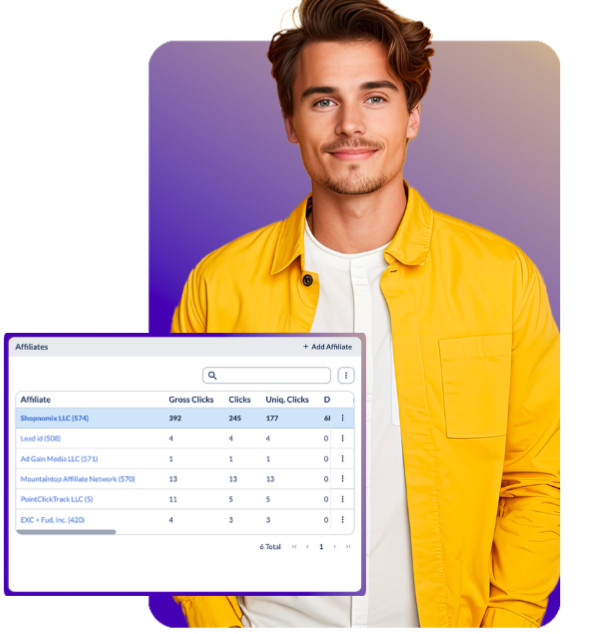
As you’re deciding whether or not you have a business case for tracking repeat customers driven by affiliate partners, you might even take it a step back and audit one partner’s first-order customers, and how many of them have become repeat customers over time. This sort of spot-audit may give you a sense of whether pursuing the data from repeat referral customers will be worth it for your brand.
If you decide to move forward with tracking repeat purchases as part of your affiliate program, whether you decide to build your own system or use an out-of-the-box system like Everflow, start by making the decisions described above with your leadership team. Once these decisions have been made, you should be in a better position to decide how to proceed.