


Last Updated on November 6, 2026 by The Digital Merchant Team
There are dozens of platforms out there promising to help e-commerce brands launch and grow an influencer, creator, and affiliate marketing strategy, and each one comes with its own advantages. Before collapsing under the weight of decision paralysis, start with two questions: Where is your business today, and where do you want to take it?
First, consider the size and complexity of your marketing operation. Are you new to the game, or are you running a multi-channel system with a sophisticated understanding of data-informed marketing strategy? Second, where do you envision taking your company in the future? Do you approach online sales as a “set it and forget it” revenue stream, or do you intend to grow your brand into an e-commerce powerhouse?
To make that decision easier, let’s compare Levanta and Coral: their features, pricing, and approach to creator and affiliate marketing, so you can assess which platform best aligns with your business.
Levanta vs. Coral At a Glance
Features | Levanta | Coral |
Pricing model | Paid plans; contact Levanta for current pricing and eligibility | Free Starter plan with a 5% platform fee on attributed sales; Pro at $99/month with no percentage fee |
Fee structure | Platform fees are charged to the brand; confirm the applicable plan and terms | Starter fees are based on attributed sales; Pro uses a flat monthly fee |
Best fit | Brands building or expanding creator and affiliate programs on one or more sales channels | Amazon brands seeking tools to manage their own affiliate programs |
Sales channels | Amazon, Shopify, Walmart, Wayfair, TikTok Shop | Amazon |
In-platform creator marketplace | Marketplace of 90,000+ vetted creators, plus the ability to recruit creators independently via AI-powered Social Discovery across TikTok, Instagram and Facebook | No in-platform creator marketplace; brands bring in their own creators |
Reporting | Campaign and product-level reporting, with metrics available depending on channel and integration | Amazon-focused affiliate tracking and reporting |
Coral: Simple, Affordable Affiliate Management for Amazon Brands
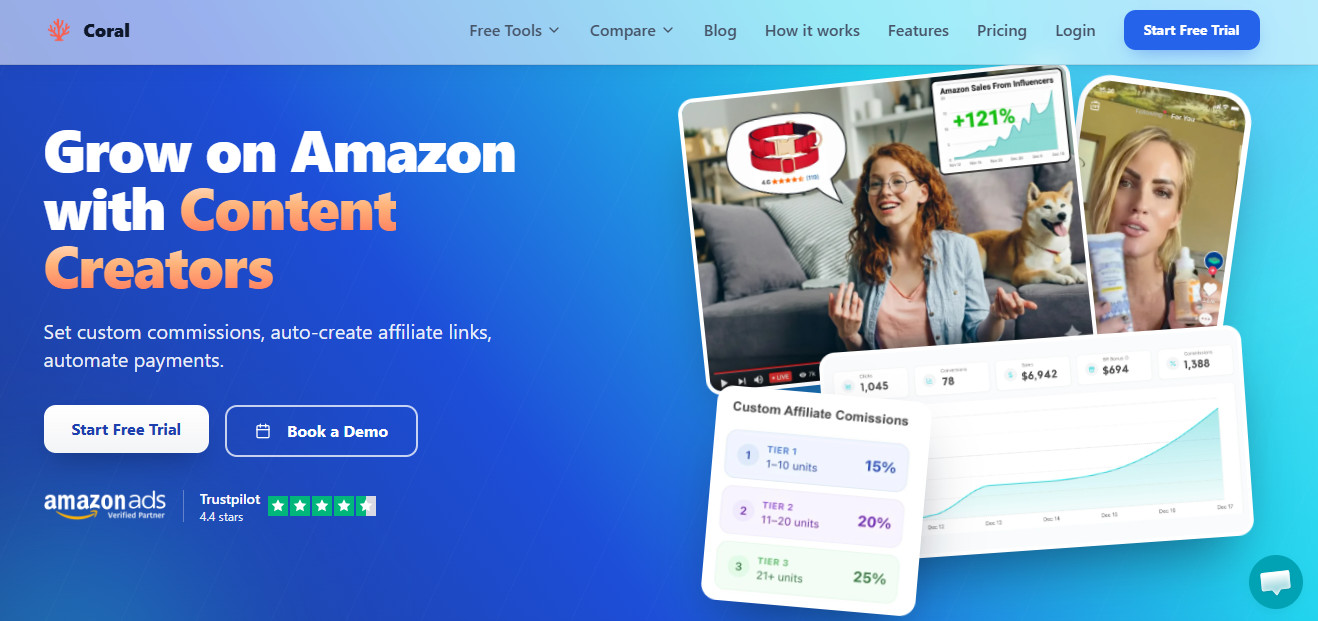
Coral is a self-service platform for Amazon brands that want to build and manage their own creator affiliate programs without investing in a broader, multichannel marketing platform. If you’re starting to experiment with affiliate marketing, already have relationships with creators and brand ambassadors, or want a more organized way to track referrals, manage commissions, and pay partners, Coral offers a direct way to bring those activities together.
Its appeal is the combination of accessible entry-level pricing and practical program-management tools. Brands can create a branded signup page, generate Amazon Attribution links for creators, track attributed sales, and manage commission payments. More advanced features, including squeeze pages, creator referrals, and customizable affiliate terms, give growing programs additional ways to manage and develop their partnerships.
Coral isn’t just for beginners, then. It’s particularly well suited to brands that want to maintain direct relationships with their creators, focus on Amazon, and manage the affiliate program themselves.
Plans and Pricing
Coral offers two plans.
Starter is free to launch: you pay a 5% platform fee only when your creators drive sales, and there’s a 7-day free trial with no credit card required.
Pro is a flat $99 per month with no percentage taken from your affiliate sales, and it adds multi-user teams, squeeze pages, a creator referral system, and customizable affiliate terms. For a brand that wants to test the waters before committing real budget, that structure removes most of the financial risk, and the flat fee on Pro is easy to forecast as a program grows.
Setup and Amazon Attribution
Connect your Amazon Seller Central account, customize a single branded signup page where your affiliates apply, and each creator automatically receives a unique Amazon Attribution link. Clicks, conversions and sales are visible to you and your creators in real time, and Coral reports affiliate conversion rate and ACoS, a familiar metric for anyone who already runs Amazon ads.
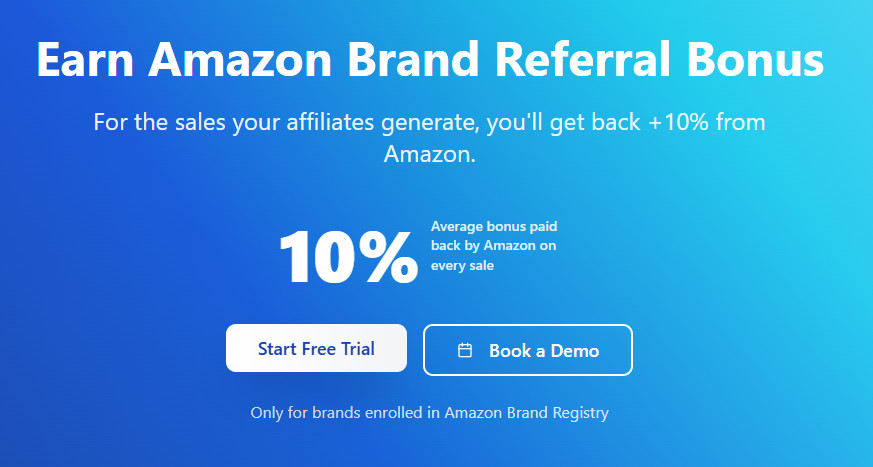
Eligible sales attributed through Amazon Attribution may qualify for Amazon’s Brand Referral Bonus, subject to Amazon’s program terms and eligibility rules. Any resulting credit may help offset customer acquisition costs, but brands should verify how the bonus is calculated for their activity rather than assume a fixed percentage of every referred sale. Both platforms should be evaluated against the same assumptions when comparing the overall cost of an affiliate program.
Payments and Commission Controls
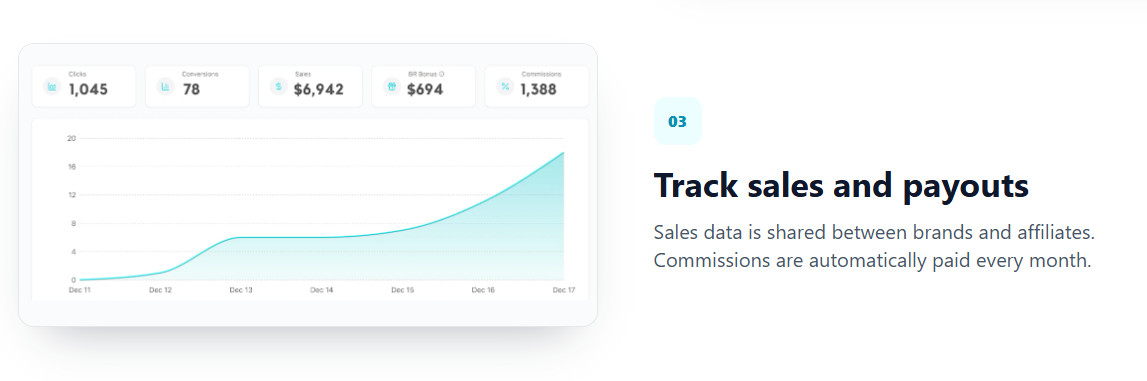
Payments are automated. Coral reconciles clicks, attributed sales, and commission amounts. You approve them, and creators are paid monthly through PayPal or Venmo, which most already have set up. You set a default commission rate for each product and then override it for individual creators, so a top performer can earn more than a newcomer.
Creators accept your terms before they can access their links, and the built-in referral system lets creators earn a commission when someone they bring in makes sales. That’s a handy way to grow your roster without doing all of the outreach yourself.
Squeeze Page
Coral’s squeeze pages offer an additional way to capture customer information and support follow-up marketing.
However, inserting an extra step into the purchase journey can introduce friction, so brands should test whether the additional lead-generation opportunity outweighs any potential impact on conversion rates. For brands focused on direct sales, it might be prudent to evaluate this feature against their existing customer acquisition and retargeting strategy.
Levanta: Creator Discovery, Deeper Analytics, and Multichannel Growth
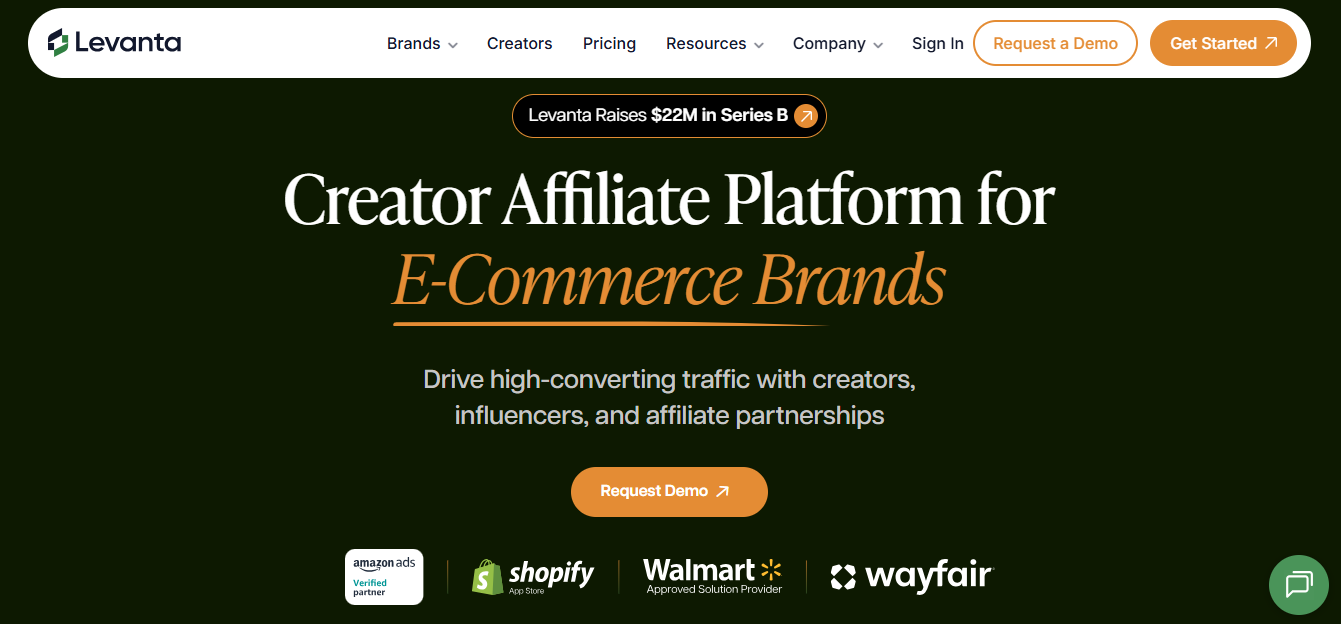
Comparatively speaking, Levanta is a more comprehensive creator and affiliate management platform for brands that want to grow beyond a handful of partnerships and build a measurable, scalable marketing channel. Alongside its creator marketplace, Levanta offers performance analytics, commission management, product gifting, and automated payments, helping brands recruit partners, manage campaigns, and understand which relationships are driving results.
Levanta supports brands selling on Amazon, Shopify, Wayfair, TikTok Shop, and Walmart, whether they operate on one channel or across several. Its marketplace of more than 90,000 vetted creators gives brands another way to find potential partners beyond their existing networks, while performance reporting helps teams assess campaign and product-level results. These capabilities can support brands at different stages, from establishing an affiliate program to managing partnerships across channels as their business evolves.
Creator Discovery
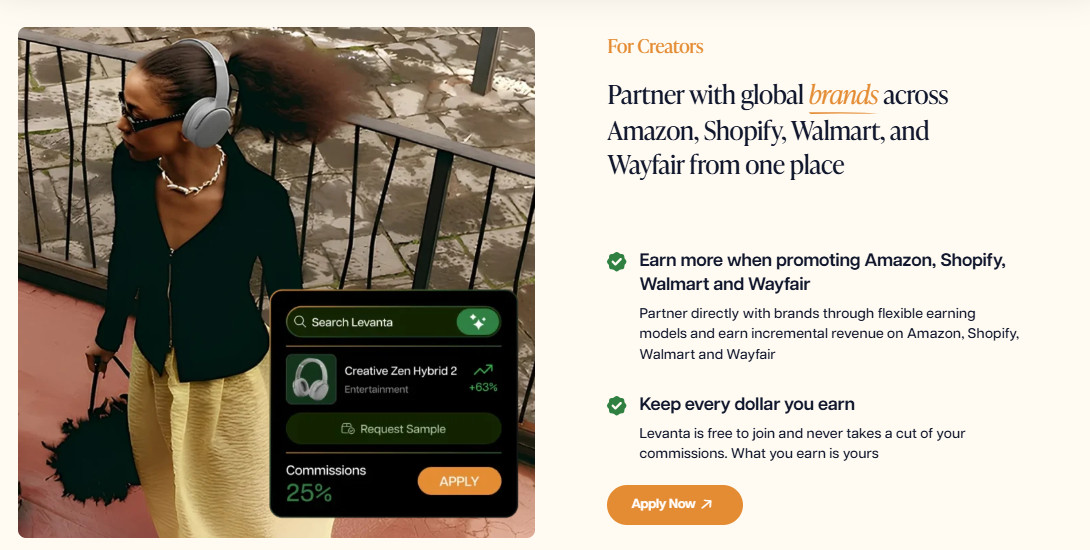
Levanta offers a marketplace of more than 90,000 vetted creators, giving brands a way to discover potential partners within the platform. Brands can also recruit creators through their own outreach and existing relationships.
Coral, by contrast, does not offer an in-platform creator marketplace, so brands generally source creators through their own networks and recruitment efforts. The distinction is primarily about how brands find partners; Levanta combines discovery tools with independent recruitment, while Coral focuses on helping brands manage their affiliate relationships.
For teams looking to expand beyond their existing creator network, an integrated marketplace may simplify the discovery process. Its value will ultimately depend on how well available creators align with a brand’s products, audience, and campaign goals.
Performance Analytics
Levanta doesn’t just report on clicks, orders, and sales; it provides clear metrics on your ROAS (return on ad spend), arguably the most valuable metric to pay attention to when you are managing outcomes-based partnerships. You can also see the number of times your product was added to a shopping cart.
Remember how we talked about removing the friction from your sales process? When you can see how many people are putting your product into their cart but failing to click “buy” in the end, you have actionable data you can use to make changes to your listings and track the impact of those changes.
Levanta also tracks new-to-brand sales, giving you visibility into whether your affiliate traffic is bringing in new people or just cannibalizing your existing customer base. And with Levanta, you can see the halo effect of affiliate representation across your entire product catalog, as well as track your movement in Amazon’s Best Seller ranking.
Integrations and AI Tools
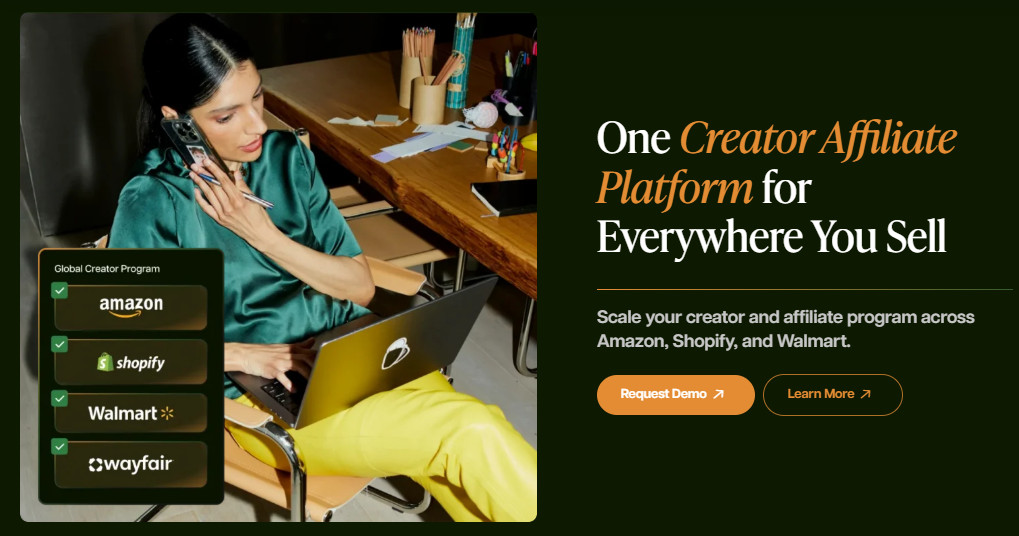
Levanta is the platform for tech-savvy brand managers running cross-platform campaigns. Amazon might be the giant at the table and the first marketplace that comes to mind when we discuss e-commerce, but as most people running a business are aware, it’s risky to put all your eggs in one basket.
Growing operations across multiple sales channels (Shopify, Walmart, and social integrations) protects against the vulnerability that a single-channel approach can create. Levanta allows brands to launch an affiliate sales program with Shopify, Wayfair, TikTok Shop, or Walmart just as easily as on Amazon, and to expand to all five channels when they are ready, in whatever order they prefer, and all with unified reporting.
Levanta’s MCP integration connects program data to Claude or ChatGPT, allowing users to ask questions about creator performance, product results, and affiliate program trends in natural language. The connection is read-only: it can help teams explore performance data and identify patterns, while decisions and changes to the program remain under the team’s control.
Levanta also offers an iOS app, allowing users to review program activity and performance while away from their desks.
Commission Flexibility and Program Management
While all of these features might sound exciting to some, I realize they might sound intimidating to others. Levanta is a robust and powerful tool, but it also adds simplicity into the affiliate management workflow, and it does take the needs of emerging brands into consideration as well.
For example, Levanta allows brands to develop performance-based campaigns where their influencers are only paid as a commission off the sales they make from their content – this is crucial for brands with small marketing budgets who can’t afford to take chances on an unproven partnership.
Levanta’s flexible commission structure allows brands to negotiate compensation and to set customized rates per product, per creator, or creator type; the platform also manages influencer gifting, so if you want to send free products, you can ship and track what you’ve sent in your account dashboard. Payments to creators are automated, and Levanta takes care of the paperwork, managing and filing 1099s for you.
Final Thoughts
I have spent several years developing data-informed business and marketing strategies for some of the world’s leading consumer brands before leaving agency life more than a decade ago to work with startups and smaller businesses. One lesson has stayed with me: the best platform isn’t necessarily the one with the most features, but the one that fits your business today and supports where you want to take it.
This isn’t about choosing the platform with the longest feature list. It’s about choosing the one that matches your ambitions. If simplicity is part of your strategy, Coral is a reasonable choice. If you’re ready to expand your creator network, dig deeper into performance data, and grow across sales channels, Levanta may be the stronger long-term fit.