


- When Should You Consider an UpPromote Alternative?
- Bottom Line Up Front
- Refersion: The Established Affiliate Default
- Tapfiliate: Subscription Pricing Without Revenue Share
- Impact: The Enterprise Partnership Platform
- Social Snowball: Turns Customers Into Affiliates Automatically
- Levanta: Creator Attribution Across Marketplaces and Storefronts
- Choosing the Right UpPromote Alternative
Last Updated on November 5, 2026 by The Digital Merchant Team
UpPromote helps brands launch and manage affiliate programs. However, as a business expands beyond one storefront, it may need to track sales across more channels, connect different platforms, or manage more complex commission structures. A tool that works well for one store likely won’t cover every part of a growing affiliate program.
While some alternatives focus on affiliate management and predictable subscription pricing, others help brands recruit partners, turn customers into affiliates, or attribute creator-driven sales on marketplaces.
Below, we compare five alternatives and explain which business needs each one is best suited to.
When Should You Consider an UpPromote Alternative?
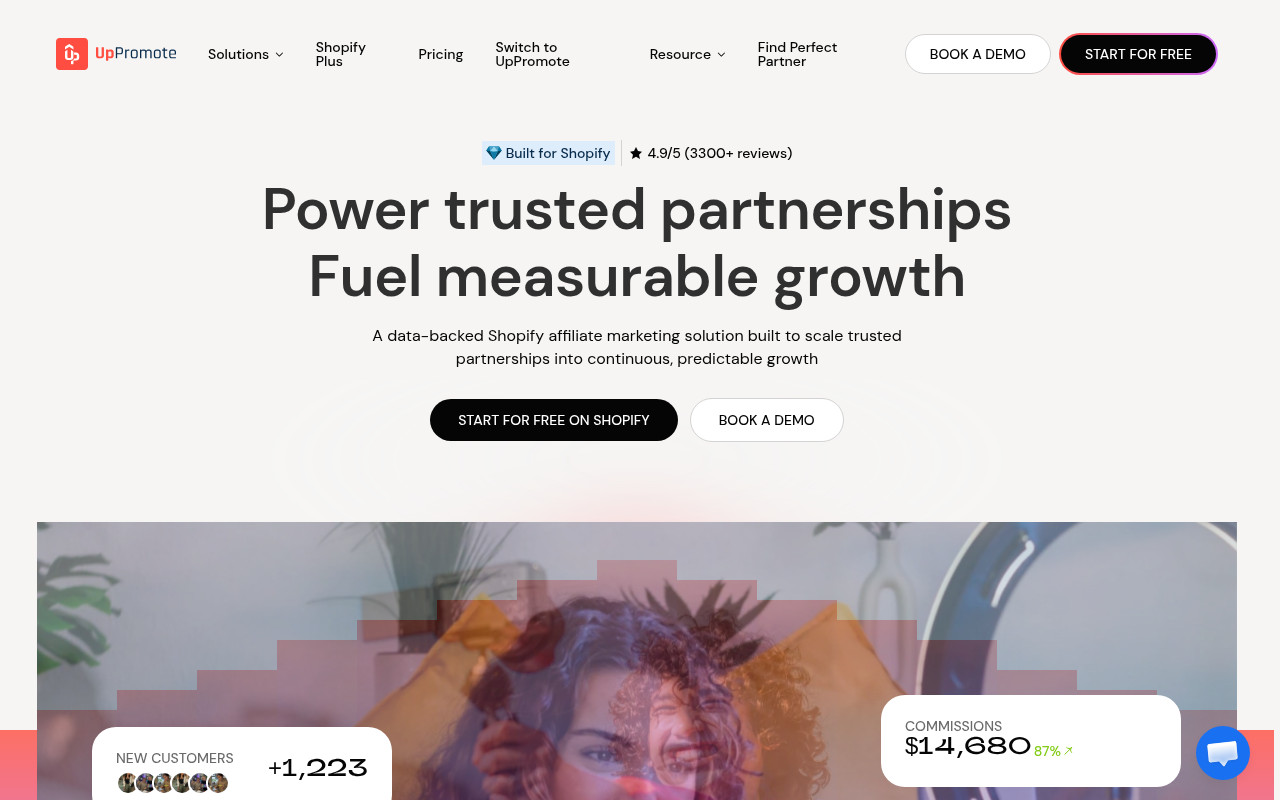
UpPromote covers more than basic affiliate link tracking. Shopify merchants can run multiple affiliate programs with different rules, set up customer referrals, offer store credit, and recruit creators through its marketplace. It also supports multi-level commissions, making it possible to reward affiliates for sales generated by partners they recruit.
You may not need to replace it just because your program is growing. Instead, assess whether it fits your current sales channels and how you manage partnerships. Brands selling across Amazon or Walmart, for example, may need more specialized marketplace attribution. Others may prefer a platform built around enterprise partnership management, simpler fee structures, or automated customer referrals.
Bottom Line Up Front
Ultimately, you’ll want to choose an affiliate platform based on your sales channels, partnership strategy, and budget. Refersion suits single-storefront brands, Tapfiliate offers predictable subscription pricing, Impact serves larger partnership programs, Social Snowball automates customer-to-affiliate referrals, and Levanta tracks creator-driven sales across Amazon, Shopify, Wayfair, TikTok Shop and Walmart.
- Refersion: Best for brands that primarily need affiliate management for their own ecommerce storefront.
- Tapfiliate: Best for teams that want flat monthly pricing without a percentage of affiliate revenue.
- Impact: Best for larger brands managing affiliates, influencers, and referral partnerships at scale.
- Social Snowball: Best for Shopify brands that want to turn customers into affiliates automatically.
- Levanta: Best for brands that need accurate creator sales attribution across Amazon, Shopify, Wayfair, TikTok Shop and Walmart.
Refersion: The Established Affiliate Default
Refersion is an established affiliate platform for ecommerce brands. Its features include first-party tracking, SKU-level and custom commission structures, automated payouts with 1099 handling, and integrations with Shopify, BigCommerce, and WooCommerce. Its affiliate marketplace also gives brands another channel for recruiting partners.
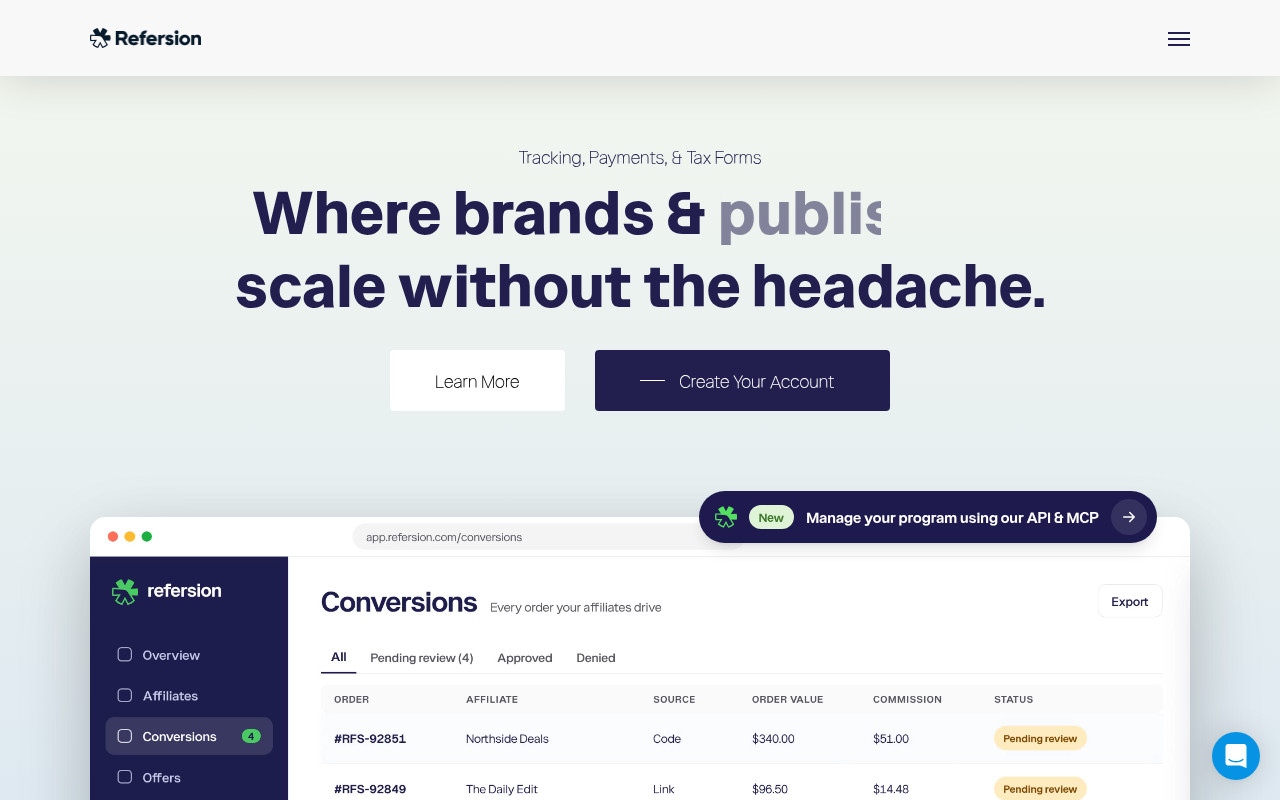
Refersion uses a monthly subscription plus a percentage of affiliate-driven sales. Its Launch plan costs $39 per month plus 3% of affiliate-driven sales, while Growth costs $199 per month plus 2%. Annual billing lowers those subscription prices to $29 and $159 per month, respectively. The Scale plan uses custom pricing for brands doing more than $1 million in annual gross merchandise volume (GMV). As a program grows, compare both the subscription and the sales-based fee when estimating total costs.
Refersion may suit multichannel brands that primarily need to manage affiliate sales through their own ecommerce storefront. However, brands that need to attribute creator-driven purchases on Amazon or Walmart should confirm whether Refersion supports their specific channels and tracking requirements before choosing it.
Tapfiliate: Subscription Pricing Without Revenue Share
Tapfiliate offers more than 30 pre-built integrations, including Shopify, WooCommerce, and Stripe. It also supports REST API connections and server-to-server tracking for more customized setups. Depending on the store and integrations involved, implementation can be relatively quick.
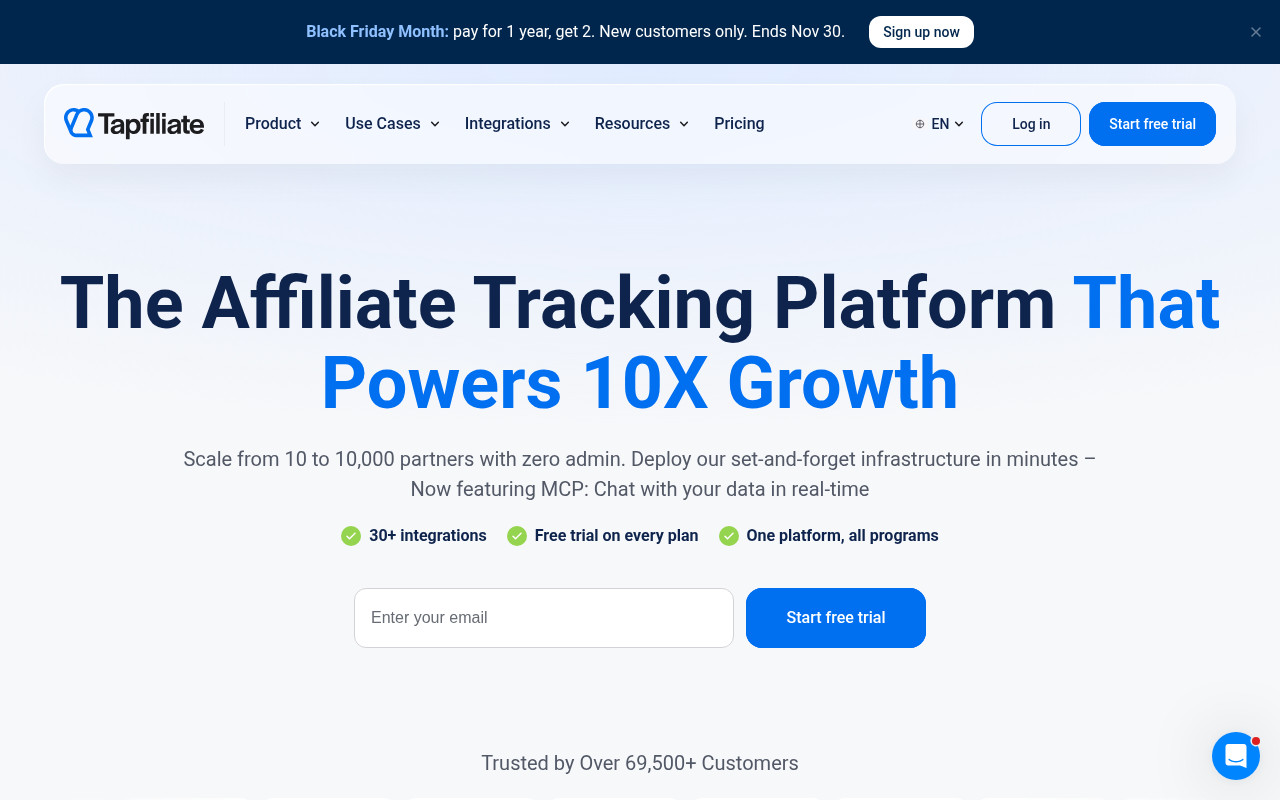
Its commission tools support recurring, lifetime, and multi-level commissions without requiring custom code. However, Tapfiliate does not offer a built-in partner marketplace like Impact, so brands generally need to recruit affiliates through their own channels.
Tapfiliate charges a subscription rather than taking a percentage of affiliate revenue. Launch costs $89 per month, or the equivalent of $74 per month with annual billing. Scale costs $179 per month, or $149 per month with annual billing. Enterprise pricing is custom. The plans include monthly click and conversion allowances, and overage fees can apply if those limits are exceeded, so compare the full cost against your expected usage.
Impact: The Enterprise Partnership Platform
Impact brings affiliate, creator, and referral partnerships together in one platform. Its marketplace gives brands access to a large pool of potential partners, while its discovery tools, fraud protection, and reporting support programs that involve more complex recruitment and management workflows. Brands including Target, Adidas, Uber, and Airbnb have used Impact for their partnership programs.
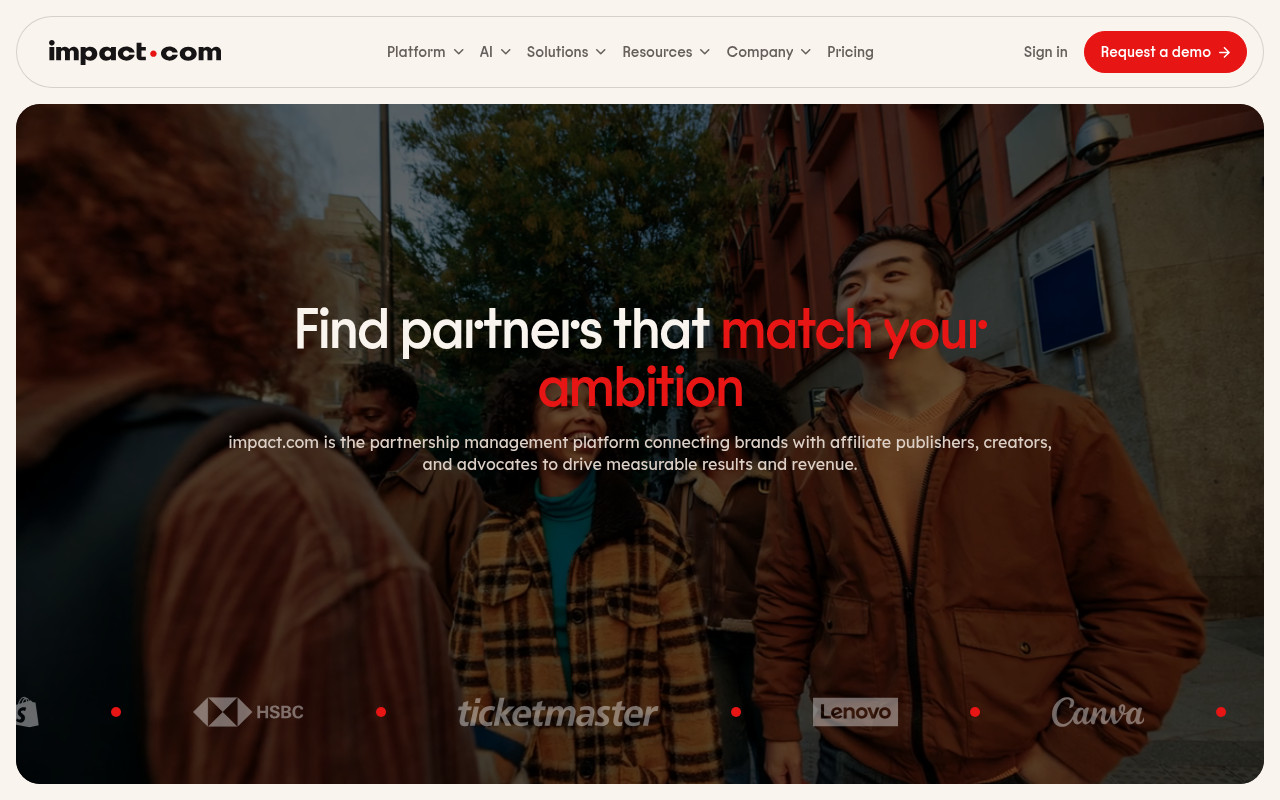
Impact’s public pricing starts at $30 per month plus 2.5% of revenue for its Starter plan. Essentials costs $500 per month, Pro costs $2,500 per month, and Enterprise costs $10,000 per month. Higher tiers include broader partnership-management features and different allowances for partner payouts. Setup and onboarding services may also add costs, so confirm the full proposal, included payout allowance, and any implementation fees before comparing plans.
Impact may be more platform than a small team needs if it cannot dedicate time to partner recruitment, reporting and program management. Before committing, confirm which capabilities are included in the proposed contract and estimate the internal resources needed to run the program.
Social Snowball: Turns Customers Into Affiliates Automatically
Social Snowball focuses on making customer referrals and affiliate recruitment part of the post-purchase experience. Shopify brands can use it to turn existing buyers into advocates without relying entirely on manual partner recruitment.
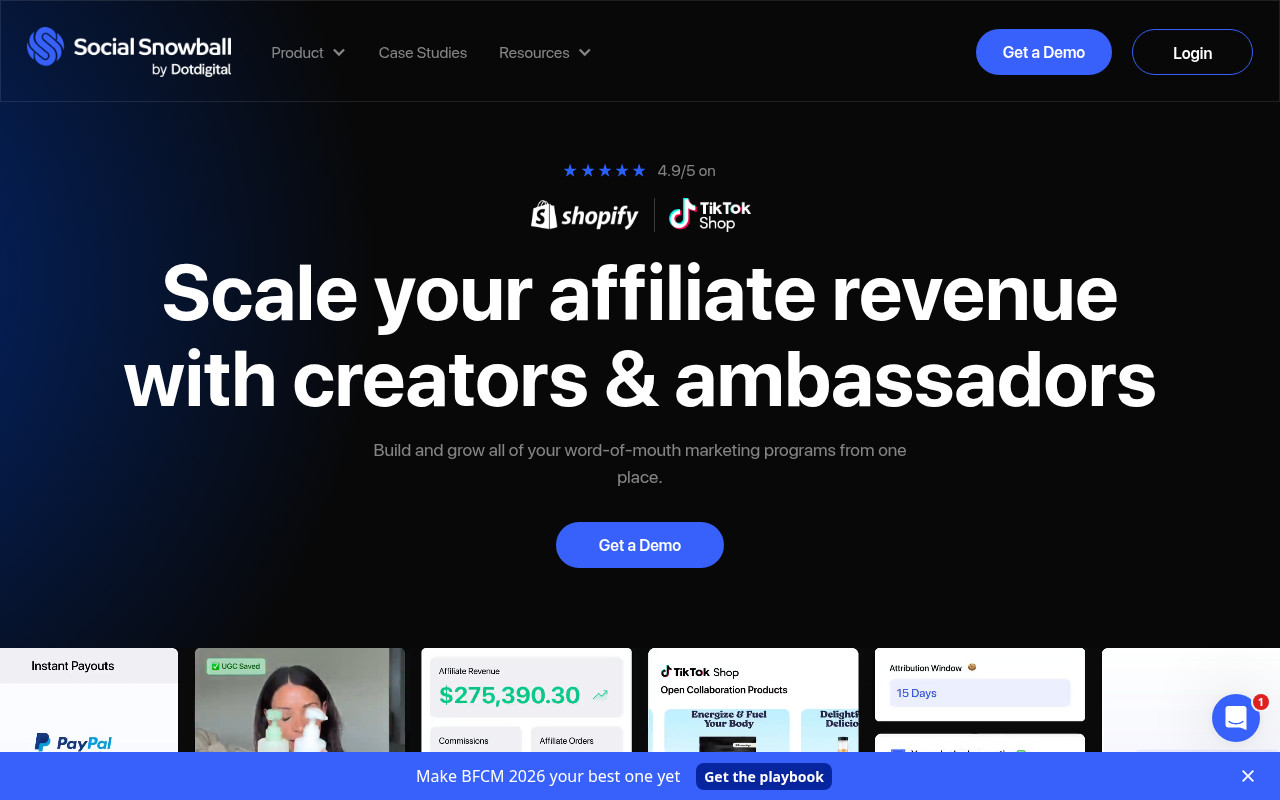
UpPromote also supports customer referrals, but gives merchants several ways to structure their programs, including multiple sets of commission rules, multi-level commissions, and store credit rewards. It also offers affiliate chat and a creator marketplace.
Social Snowball is worth considering if automated customer-to-affiliate referrals are central to your strategy. If you want to experiment with different program structures or encourage repeat purchases through store credit, compare UpPromote’s available features and pricing before switching.
Levanta: Creator Attribution Across Marketplaces and Storefronts
Levanta focuses on creator and affiliate sales attribution across supported marketplaces and storefronts, including Amazon, Shopify, Wayfair, TikTok Shop and Walmart. Its native Amazon integration and ASIN-level tracking help brands connect creator activity to marketplace sales. Shopify and Walmart capabilities provide additional options for brands selling across channels, although available features vary by plan. Confirm that the platform supports your specific sales channels and attribution requirements before signing up.
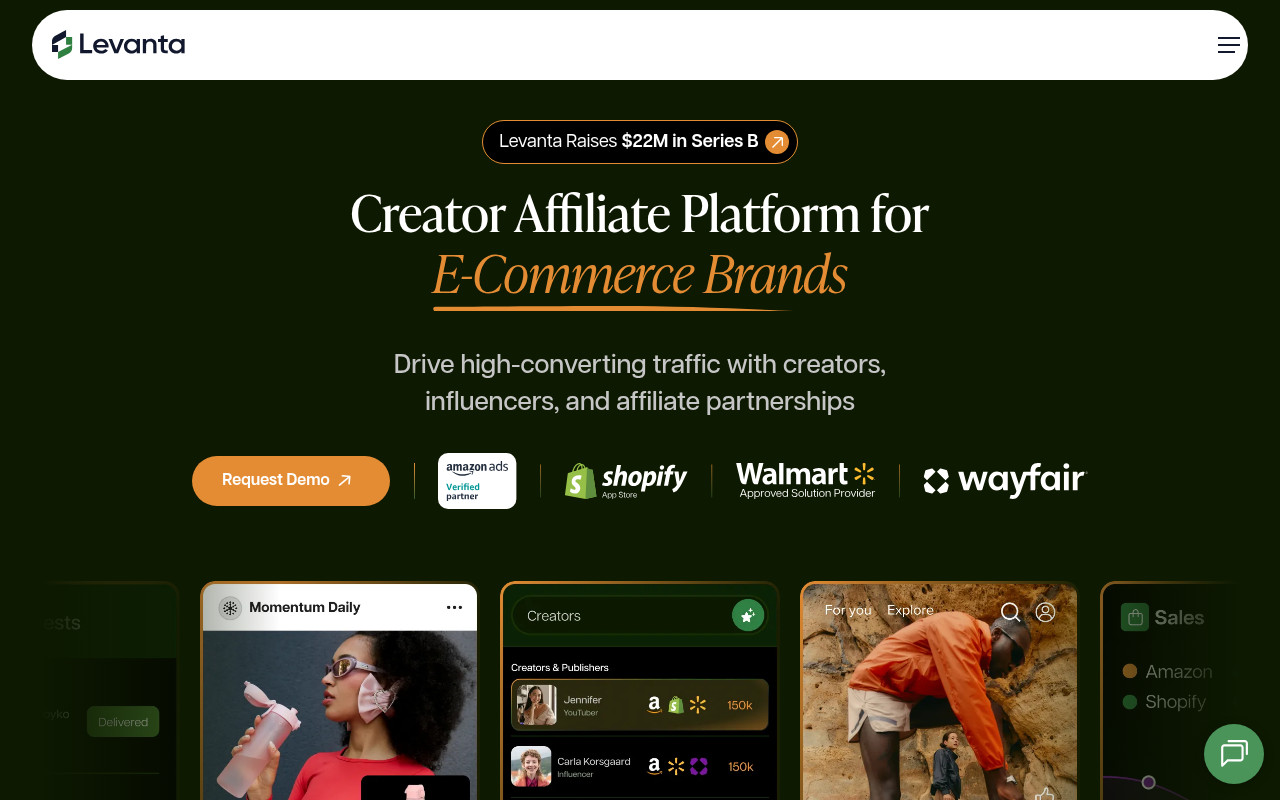
Brands can set commissions by ASIN or SKU, and eligible accounts can track Amazon’s Brand Referral Bonus, which may offset part of the commission cost. Levanta also offers creator tools without a creator-side fee or revenue share, alongside a network of vetted creators that brands can use for recruitment.
Levanta’s public Gold plan is listed at $750 per month plus 3.5% of affiliate-driven sales and covers one marketplace. Enterprise pricing is custom, with the rate tailored to the brand’s program size, marketplace mix, and support needs. Because plan coverage and pricing differ by channel and eligibility, brands should confirm the appropriate option directly with Levanta before comparing costs.
Choosing the Right UpPromote Alternative
Start by identifying whether your biggest limitation is affiliate program management or sales attribution across channels. If you mainly need to manage partners, commissions, and referrals, compare platforms based on their recruitment tools, integrations, and total cost. If creators drive purchases across Amazon, Walmart, and your own storefront, prioritize channel-specific attribution and confirm exactly which sales each platform can track.
Before switching, ask shortlisted vendors to demonstrate your actual customer journey and confirm any channel restrictions in writing. The best alternative is the one that solves your current tracking or management problem without adding unnecessary cost or complexity.