


- What Running Affiliate & Creator Partnerships on Walmart Involves
- Walmart Creator vs. Dedicated Affiliate Platforms
- Comparing Software Tools
- Multi-Channel Management: Managing Amazon, Shopify, and Walmart in One Place
- Best Practices for Scaling a Walmart Affiliate Strategy
- Conclusion: Unlocking Incremental Growth Through Omnichannel Partnerships
Last Updated on September 14, 2026 by Ewen Finser
For years, multi-channel e-commerce centered predominately on a seller’s direct-to-consumer presence on Shopify or Amazon, and treated external traffic—affiliates, editorial publishers, and creators—as a growth lever reserved almost exclusively for their own website or Amazon listings. Over the last several years, Walmart has made a concerted effort to change that landscape.
Once viewed as an invite-only afterthought, Walmart Marketplace has surged past 200,000 active sellers, driven by rapid catalog expansion, Walmart Fulfillment Services (WFS), and double-digit digital sales growth. Today, Walmart has become an essential, high-priority retail channel for modern consumer brands. That said, as more operators crowd the platform, native pay-per-click ads (Walmart Sponsored Products) are becoming significantly more expensive and competitive—leading forward-thinking brands to defend category share, scale new SKU launches, and drive sustainable growth by turning to external traffic, affiliate networks, and creator partnerships.
It is important to note, however, that driving and measuring creator traffic on Walmart is fundamentally different from running an affiliate program on Shopify or Amazon. Attribution mechanics differ, publisher discovery requires specialized tooling, and managing isolated creator programs for every retail channel creates heavy operational overhead.
This article walks through what running creator partnerships on Walmart requires, evaluates the tooling landscape, and shows how high-growth brands are consolidating their affiliate strategy across Amazon, Shopify, and Walmart into a unified set of channels.
What Running Affiliate & Creator Partnerships on Walmart Involves

Affiliate marketing on a retail marketplace is not simply handing an influencer a promo code. In standard D2C setups, a creator shares a discount code or tracking link pointing to a standalone web store. If a customer converts, the affiliate software fires a pixel, records the order, and assigns commission.
Marketplaces operate inside closed environments. Brands do not own the checkout page, cannot install custom tracking scripts onto Walmart’s checkout flow, and third-party cookie restrictions can make traditional redirect links prone to breakage.
When building an affiliate program on Walmart, a seller needs to consider three major factors:
1 – The “Discovery-to-Cart” Consumer Journey
In a recent consumer study conducted by Levanta, 87% of respondents reported that they often or occasionally discover a product on social media, Reddit, or editorial blogs, and then intentionally search a marketplace to make the purchase. Furthermore, nearly 3 in 4 consumers view creator product content as helpful and informative rather than salesy.
Consumers rely on creators (video demonstrations, in-depth reviews, unboxings) for product validation, but turn to marketplaces like Walmart for trusted checkout, familiar payment methods, and fast fulfillment. Running an affiliate program on Walmart capitalizes on this behavior by compensating creators for the high-intent demand they direct to your Walmart listings.
2 – Marketplace Attribution and Tracking
Because custom tracking pixels cannot be installed on Walmart.com, affiliate tracking depends on direct API integrations and server-side tracking. Brands require tooling that can:
- Generate unique, trackable links for creators, influencers, and media publishers.
- Accurately attribute conversions at the SKU level within defined attribution windows.
- Automatically adjust for order cancellations and returns.
- Protect against click fraud and duplicate attribution across overlapping marketing campaigns.
3- Flexible Compensation Models
A balanced affiliate mix requires engaging multiple creator tiers:
- Micro- and Nano-Creators: Drive visual discovery across TikTok and Instagram Reels.
- Reviewers & Subject-Matter Experts: Deliver long-form video demonstrations on YouTube (86% of consumers cite YouTube reviewers as top trust signals).
- Editorial Publishers & Deal Hubs: Digital publications and deal aggregators that drive volume during peak retail events like Walmart Deals and holiday shopping periods.
Managing these partners effectively requires flexible compensation models—ranging from Cost-Per-Sale (CPS/CPA) revenue shares to hybrid agreements combining product gifting with Cost-Per-Click (CPC) incentives for top publishers.
Walmart Creator vs. Dedicated Affiliate Platforms
When exploring external partnerships for Walmart, brands often ask: Should we rely solely on Walmart’s native creator tools, or do we need dedicated software?
Walmart Creator (Native Portal)
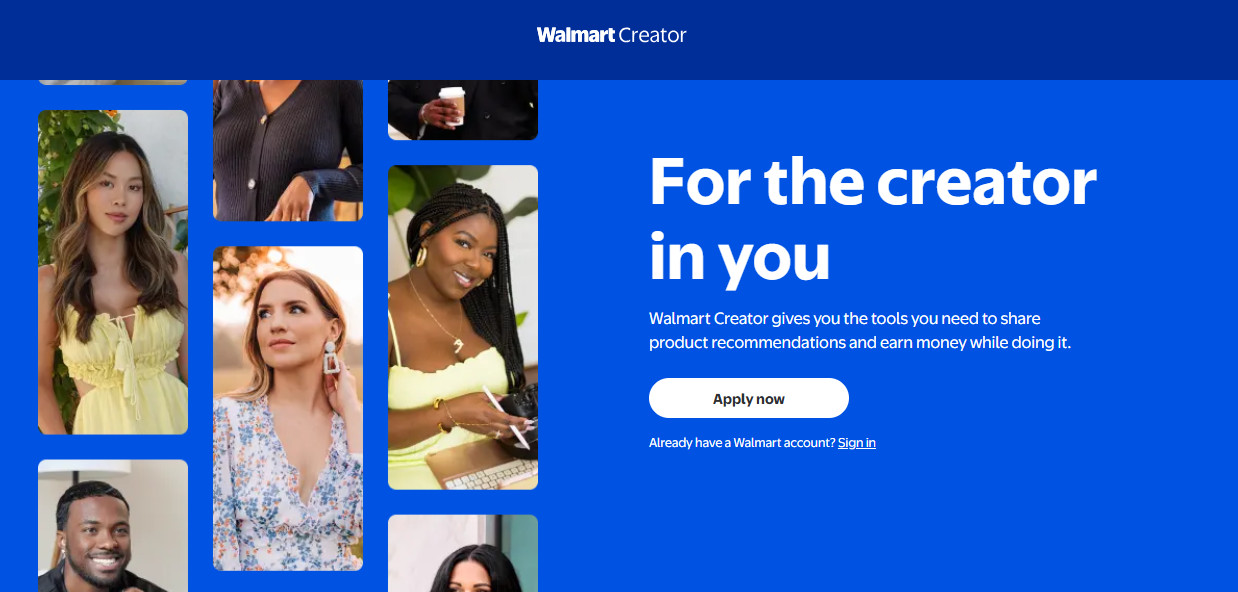
The Walmart Creator portal allows influencers to curate storefronts, generate affiliate links to products across Walmart’s catalog, and earn standard commissions paid out directly by Walmart.
- The Advantage: Low barrier to entry for content creators wanting to monetize recommendations without negotiating individual brand contracts.
- The Limitation for Brands: It is creator-facing, not brand-centric. Brands cannot control commission rates on high-margin SKUs, cannot negotiate custom performance incentives in-platform, cannot automate product sample delivery, and gain minimal direct relationship management with creators.
Dedicated Affiliate & Creator Software

A dedicated marketplace affiliate platform gives the brand direct control over its partner ecosystem, enabling operators to:
- Recruit and Vet Partners Directly: Partner with creators who align specifically with your category.
- Set Custom Commission Structures: Allocate higher rev-shares (e.g., 15–20%) to high-margin anchor items, lower rates on accessories, or activate dynamic commission boosts during key retail events.
- Automate Creator Gifting: Manage sample fulfillment so creators have physical inventory in hand ahead of campaigns.
- Automate Payments and Tax Compliance: Eliminate manual invoice processing and avoid managing individual annual 1099 tax forms.
Comparing Software Tools
Brands evaluating affiliate software for marketplace expansion have several categories of solutions:
Category | Leaders | Primary Strength | Key Limitation for Marketplace Brands |
Traditional Enterprise Networks | Deep enterprise publisher networks and corporate contracting. | High platform minimums, heavy implementation, and legacy interfaces unsuited for agile creator workflows. | |
D2C Affiliate Software | Native Shopify checkout tracking and referral loops. | Cannot track or attribute sales occurring inside closed marketplace funnels on Walmart or Amazon. | |
Influencer CRMs & Databases | Top-of-funnel discovery, campaign workflows, and brand awareness. | Expensive enterprise contracts; focused on vanity reach over verified marketplace sales. | |
Amazon-Only Tools | Single-channel focus for brands selling exclusively on Amazon. | No support for Walmart listings or unified Shopify tracking; locks brands into one channel. | |
Multi-Channel Marketplace Platforms | Purpose-built for commercial brands scaling external traffic across Amazon, Shopify, and Walmart. | Designed for established retail brands with validated catalogs, rather than pre-revenue stores. |
- Traditional Enterprise Networks: Excellent for legacy media conglomerates, but carry steep platform fees and rigid setups unsuited for social creator collaborations.
- D2C-Centric Platforms: Reliable coupon-code tracking for Shopify, but blind to purchases completed within Walmart or Amazon checkouts.
- General Influencer CRMs: Built for PR awareness campaigns, prioritizing vanity reach over direct revenue and lacking performance-based Cost-Per-Sale (CPS) marketplace integrations.
- Amazon-Only Tools: Useful for single-channel sellers, but lack multi-channel capabilities, creating data silos when expanding to Walmart or Shopify.
- Multi-Channel Marketplace Platforms: Provide plug-and-play integrations, SKU-level tracking, and automated payouts, but many charge monthly fees that are a risk for unproven brands.
Multi-Channel Management: Managing Amazon, Shopify, and Walmart in One Place
Leading e-commerce brands rarely operate on a single channel; they run a diversified commercial business across Amazon, Shopify, and Walmart. Managing separate software, isolated creator pools, and disjointed payout workflows creates operational friction.

Why Centralizing Across Channels Matters:
- Unified Creator Relationships: Professional creators rarely recommend a single storefront. If an audience member prefers Walmart+ for local delivery or Amazon Prime for convenience, creators want to provide both options. Managing partnerships through a single platform enables multi-destination links while maintaining unified messaging, contract terms, and payout schedules.
- SKU-Level Margin Control: Every channel has distinct unit economics. Amazon charges category referral fees; Walmart has its own fee schedules; Shopify yields higher gross margins but requires absorbing fulfillment costs. A multi-channel platform enables operators to adjust commission rates dynamically by channel and SKU to protect contribution margins.
- Cross-Channel Performance Visibility: Disjointed tools obscure aggregate trends. Brand operators need immediate visibility into whether traffic is lifting Walmart volume, expanding brand search, or shifting demand across channels.
Best Practices for Scaling a Walmart Affiliate Strategy
To build an efficient affiliate and creator program on Walmart, brands should follow a four-step execution framework:
- Establish Commission Architecture: Maintain a 10% to 15% CPA baseline on core catalog items, increase rates to 18% to 25% on high-margin anchor products, and offer hybrid CPA + CPC incentives for vetted top-tier publishers.
- Seed Products for Authentic Content: High-performing creators evaluate items firsthand. Gift samples of your top 20% converting Walmart listings to reviewers across YouTube, Instagram, and TikTok.
- Align with Walmart’s Promotional Calendar: Shoppers are highly responsive to major savings events. When Walmart launches platform-wide rollbacks or seasonal promotions, give creators advance notice, tailored assets, and temporary commission boosts to secure placement in shopping guides.
- Engage with the Operator Community: Marketplace dynamics evolve constantly. Participating in practitioner groups for brand operators and affiliate managers—helps e-commerce leaders exchange tactical insights, benchmark conversion rates, and stay ahead of platform updates.

Conclusion: Unlocking Incremental Growth Through Omnichannel Partnerships
As marketplace advertising costs rise, relying exclusively on on-platform pay-per-click ads creates diminishing returns. The most resilient brands are building sustainable competitive advantages by driving targeted, high-intent traffic from trusted creators and editorial publishers directly to their marketplace listings.
By combining Walmart’s expanding customer base with purpose-built affiliate software, brands can unlock incremental marketplace revenue, improve organic search positioning, and manage their entire partner ecosystem across Amazon, Shopify, and Walmart from a single platform.
Key Takeaways for Brand Operators
- Marketplace Discovery Begins with Creators: Over 87% of consumers discover products across creator channels and review sites before completing purchases on marketplaces.
- Marketplace Ecosystems Require Dedicated APIs: Traditional D2C tracking pixels fail within marketplace checkouts; brands require dedicated platforms integrated directly with native retail APIs.
- Centralization Reduces Overhead: Managing partner discovery, commission tiers, sample gifting, and 1099 compliance across Amazon, Shopify, and Walmart within a single platform protects margins and saves team bandwidth.