


Last Updated on August 25, 2026 by Ewen Finser
Shopify makes it deceptively easy to sell but deceptively hard to account for what you sold. What’s not immediately clear to new sellers is that a single payout hitting your bank account is not revenue — it’s gross sales, minus discounts, minus refunds, plus shipping income, plus sales tax you collected on behalf of a dozen jurisdictions, minus gateway fees, minus chargebacks, and adjusted for whatever sat in transit when the settlement period closed.
Book that deposit as one line of income, and your gross margin is wrong, your sales tax liability is totally misaccounted for, and your P&L tells you a very misleading story.
That reconciliation problem is the whole ballgame when you’re choosing accounting software for Shopify sellers. Most of the platforms you’ll evaluate simply were not built for it. The legacy general ledgers handle it through a connector layer, which is a second subscription whose entire job is translating Shopify settlements into journal entries. The ecommerce-native services handle it in-house and charge accordingly. Meanwhile, the AI-native ledgers handle the modern payments stack directly and ask you to think differently about what your general ledger is for.
All three approaches work. They just fit different businesses, and the cost difference between them runs into the thousands of dollars a year.
The Bottom Line Up Front

Puzzle is the pick if you want a real-time, AI-native ledger on a single subscription, particularly if Stripe is carrying part of your revenue, which is where its automation is strongest. If you want the ledger your CPA already knows, QuickBooks Online plus A2X is the default that no one will have a problem with. If you want the same architecture for less investment, Xero plus Link My Books does it at nearly half the price with unlimited users. If you’d rather not own the bookkeeping at all, Finaloop replaces the software and the bookkeeper entirely. And finally, Wave is the answer for a store doing a few dozen orders a month.
Puzzle

Puzzle approaches the problem from the payments side rather than the storefront side, and where that pays off most visibly is Stripe.
Puzzle’s Stripe integration reads gross charges, processor fees, refunds, and payout timing directly from the source. Revenue, fees, and the in-transit clearing dollars separate themselves automatically, which is the exact decomposition that A2X and Link My Books exist to perform — but with Puzzle, it’s happening natively without a connector in between.
For a Shopify seller, that matters whenever Stripe carries part of the revenue: subscription billing apps, B2B and wholesale invoicing, headless checkouts, and any gateway activity running outside Shopify Payments. The rest of the stack connects the same way, and the ledger uses AI to keep the books as autonomously as possible.
Starter is $30/month for a single user, Core is $72/month, Complete is $120/month, and Scale is $360/month. There are no per-seat charges above Starter, and Complete carries a guarantee tied to cutting month-end close time in half. There’s also a 14-day trial with full Complete access.
Pros:
- One subscription replaces the ledger-plus-connector architecture for stores whose revenue runs through Stripe.
- Books stay current continuously with auto categorization running the vast majority of transactions, so month-end is a review rather than a rebuild.
- Simultaneous cash and accrual books plus a real revenue recognition module give you something QuickBooks cannot do at any tier.
Cons:
- There’s currently no direct Shopify integration, so order-level storefront data and Shopify Payments payouts arrive through the bank feed and need a summary entry or a separate bridge, which is a real limitation if Shopify Payments is your only gateway.
- There’s no inventory or COGS module, so you’ll need to use the Shopify platform to track those and then push that data to your books.
- It’s U.S.-focused with no multi-currency support, and payroll and AP live in other tools rather than in the ledger.
Best For: Operators running a lean, modern finance stack who want a real-time general ledger on one subscription, instead of a ledger plus a connector plus a reconciliation habit.
QuickBooks Online + A2X
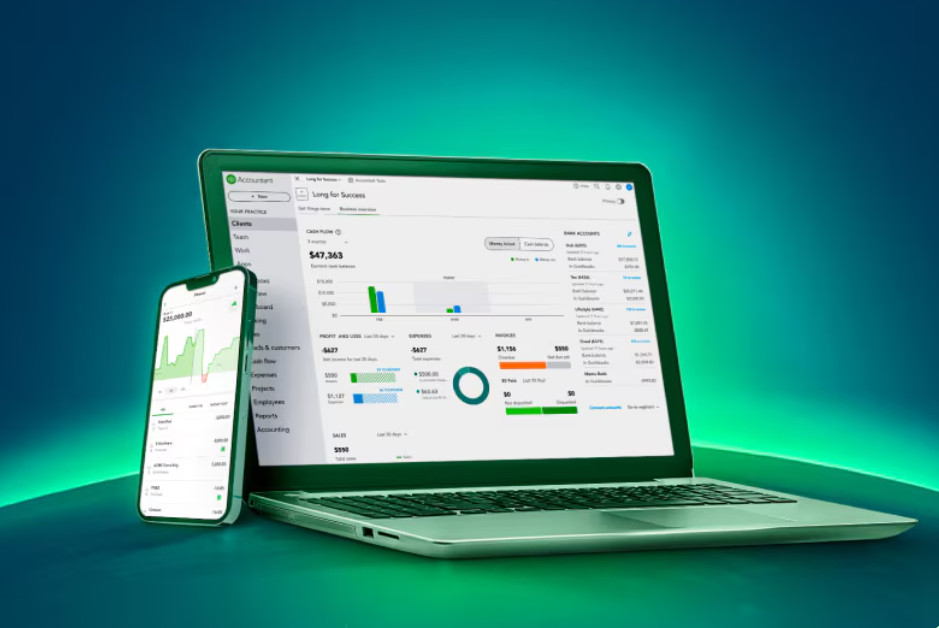
QBO’s own Shopify integration has never been the strong part of the product, which is why A2X exists as a category standard.
A2X reads each Shopify payout settlement and posts a single summary journal entry of gross sales, discounts, refunds, shipping income, sales tax collected, and gateway fees, and then reconciles that entry against the deposit that hit your bank.
It handles Shopify Plus and Shopify POS the same way, and it interprets deposits regardless of which gateway processed them, so PayPal, Amazon Pay, and Afterpay activity still lands correctly.
QuickBooks Online runs about $38/month for Simple Start and roughly $115/month for Plus, which is the tier most product sellers need because inventory and class tracking live there. Intuit has raised prices more than once in the past two years, so verify before you budget.
A2X for Shopify starts at $29/month for 200 orders, $45/month for 500, $79/month for 2,000, and climbs into premium tiers above that. Selling on a second channel means either a second A2X subscription or an A2X Multi plan starting around $89/month.
Pros:
- Nearly every CPA, bookkeeper, and lender in the United States can open your file and work in it immediately.
- A2X is the reference implementation for settlement-to-ledger accounting and produces entries that survive an audit or a diligence review.
- QBO Plus gives you inventory tracking, class tracking, and project profitability inside the same ledger, so you aren’t adding on another tool for basic segmentation.
Cons:
- You are managing two vendors, two subscriptions, and two support queues to accomplish what feels like should be one thing.
- A2X prices per sales channel and per order volume, so a brand growing across marketplaces watches that line item compound.
- QBO is architecturally a month-end product; the books are current when someone makes them current, not continuously.
Best For: Sellers who want the most widely supported general ledger possible and an accountant who can pick it up without a learning curve.
Xero + Link My Books

Link My Books works on the same principle as A2X: settlement in, clean summary entry out, matched to the bank deposit.
This covers Shopify, Amazon, eBay, Etsy, Walmart, TikTok Shop, Square, and WooCommerce under a single subscription. It applies tax and VAT logic automatically rather than making you map rates by hand, which is the feature that wins it most of its international customers. Entries can be rolled back and reposted, so a mapping mistake made in month one isn’t a permanent error on the ledger.
Xero’s U.S. plans are $25/month for Early, $55/month for Growing, and $90/month for Established, and every plan includes unlimited users rather than charging by seat.
Link My Books runs about $21/month at 200 orders, $41/month at 1,000, $60/month at 5,000, $100/month at 10,000, and $136/month at 15,000, and a typical Shopify seller lands around $95 to $155 a month for the pair.
Pros:
- Unlimited users on every Xero plan removes the seat math entirely, which is important once a bookkeeper, a fractional CFO, and an inventory manager all need access.
- Link My Books includes multiple sales channels in a single subscription instead of charging per connection, so multichannel growth doesn’t repeatedly reprice you.
- The combined subscription typically runs 30% to 50% below the QuickBooks and A2X equivalent at matched order volume.
Cons:
- It’s still two vendors and two integration points that can each break independently.
- Xero leans on its app marketplace for things QBO includes natively, so U.S. payroll routes through Gusto and inventory management means Cin7 or Unleashed at a meaningful additional cost.
- The U.S. accountant bench for Xero is thinner than for QuickBooks, which can complicate handing the file to a new firm.
Best For: Sellers who want the same connector-plus-ledger architecture at a materially lower price, especially if the team has several people who need access.
Finaloop

Finaloop is not a general ledger you operate; it’s an e-commerce accounting platform with accountants attached.
It connects directly to Shopify, Amazon, Stripe, PayPal, your banks, your payroll, your ad platforms, and your inventory systems, then produces updated financials without you having to categorize anything.
Inventory sync calculates COGS from your actual source systems rather than from a manual periodic adjustment, which is the single hardest thing for a product business to get right and the reason many brands buy it.
Pricing is banded by gross annual revenue. The Core plan runs about $245/month under $1.5M, $415/month at $1.5M to $3M, $745/month at $3M to $6M, and $995/month at $6M to $10M, with roughly 10 percent off for annual prepayment. There is a one-time implementation fee around $850, a Premium track starting near $850/month that adds controllership and CFO calls, and tax filing sold separately at roughly $1,000 a year.
It’s really good, but really expensive.
Pros:
- Automated COGS and inventory tracking sourced from your actual systems solves the problem that most Shopify sellers get wrong for years.
- Replacing software, connectors, and a bookkeeper with one line item is often cost-neutral or cheaper than assembling the pieces once you’re past a few hundred orders a month.
- Financials are current continuously rather than arriving three weeks after month-end.
Cons:
- You have limited control over the chart of accounts and comparatively shallow custom reporting, which frustrates anyone who wants to slice the data their own way.
- Wholesale, B2B, and non-ecommerce transactions are handled less gracefully than the DTC core.
- It’s the most expensive option on this list by a wide margin, and the value proposition weakens considerably below roughly $250K in revenue.
Best For: Established DTC and multichannel brands, roughly $250K to $10M in revenue, that want to stop owning the bookkeeping function entirely.
Wave

There’s no direct Shopify connector with Wave, so you’re either importing payout data manually and booking your own summary entries, or adding a third-party bridge such as Taxomate — which supports Wave where most connectors do not.
For a store with 30 orders a month and a single gateway, a monthly manual entry off the Shopify payout report is entirely workable. At 300 orders, it stops being workable fast.
The Starter plan is free but restricts you to manual bank imports. Pro is $19/month, and that’s the tier that unlocks automatic bank feeds and multiple collaborators. Receipt scanning is an $8/month add-on, and payroll is a separate $40/month plus $6 per active person.
Notably, service is limited to the U.S. and Canada.
Pros:
- It is genuine double-entry accounting with real financial statements at a price no other option on this list approaches.
- Invoicing and expense tracking are included, which covers a small store’s non-Shopify billing without another subscription.
- There’s no contract and nothing to implement, so the cost of being wrong about it is close to zero.
Cons:
- Features that used to be free moved behind the Pro tier in 2024, including bank feeds — so the “free accounting software” reputation no longer reflects what you’ll actually need.
- There’s no inventory or COGS functionality, which is disqualifying for most product businesses past the earliest stage.
- You’ll outgrow it sooner or later, and migrating a year of hand-entered Shopify summaries into a real ledger is unpleasant work.
Best For: Side-hustle and early-stage stores doing a few dozen orders a month, where the accounting problem is still small enough to solve by hand.
Choosing The Right Software

The question is less which product is “best” than which problem it is you’re solving.
Need books your CPA and your bank will accept without argument? QuickBooks Online with A2X, and boring is worth paying for. Same requirement on a tighter budget or with a team that needs access? Xero with Link My Books. Don’t want to think about it again? Finaloop is the only option here that takes the work off your desk, and its COGS automation alone justifies the price for an inventory-heavy brand. At 30 orders a month, Wave and a monthly summary entry is a perfectly respectable accounting function. Puzzle is worth a look if the connector-stack model isn’t for you and you want a real-time, AI-native ledger that supports native Shopify order sync and inventory tracking. Simple inventory and Stripe carrying the revenue makes that a good trade at a fraction of the total cost.