

- 1. The Reality of the Mobile App M&A Landscape
- 2. How Mobile Apps Are Valued
- 3. The Metrics Buyers Scrutinize
- 4. App Store Accounts and IP Transfer Mechanics
- 5. The Mobile App Sales Process Step-by-Step
- 6. How to Maximize Your Valuation Before You Sell
- Your Next Steps
- Navigating Your Exit with a Trusted Advisor
Last Updated on August 3, 2026 by Ewen Finser
You built your mobile app from scratch. You lived through the late-night debugging sessions, navigated the unpredictable app store review guidelines, and personally responded to early user reviews. Now, you have a profitable mobile app business, and you are starting to think about an exit.
But while you know your codebase and monetization funnels like the back of your hand, you have likely never sold a business.
With my background in business brokering, I hope to explain the steps you can take to prepare to sell your mobile app business.
Selling an app is fundamentally different from selling an e-commerce storefront or a traditional B2B SaaS platform. The legal frameworks, technical dependencies, store-account handovers, and buyer profiles are highly unique. This guide serves as a realistic roadmap for you as an app founder whot’s weighing a potential exit. I’ll give you details on how the process actually works.
1. The Reality of the Mobile App M&A Landscape

When you decide to sell your app, you will discover that the market is divided into distinct paths. Understanding where your asset fits in this landscape is the first step to avoiding a frustrating, prolonged listing.
Please remember that getting things in order early is a key step that will save valuable time down the road.
Clean things up. Platform-agnostic data is the foundation of any successful mobile app valuation. Before you approach any buyer, you need to ensure your store analytics, subscriber retention metrics, and download volumes are aggregated and ready for inspection. This is a major time-saver and could help seal the deal and get you top dollar.
Buyers generally shop in three primary arenas, depending on your app’s size, complexity, and profitability:
Self-Serve Online Marketplaces
For utility apps, indie games, or side projects generating less than $50,000 in annual profit, self-serve marketplaces are the default choice. Their processes are very simple but effective if you are in the lower end of the market sales-volume wise.
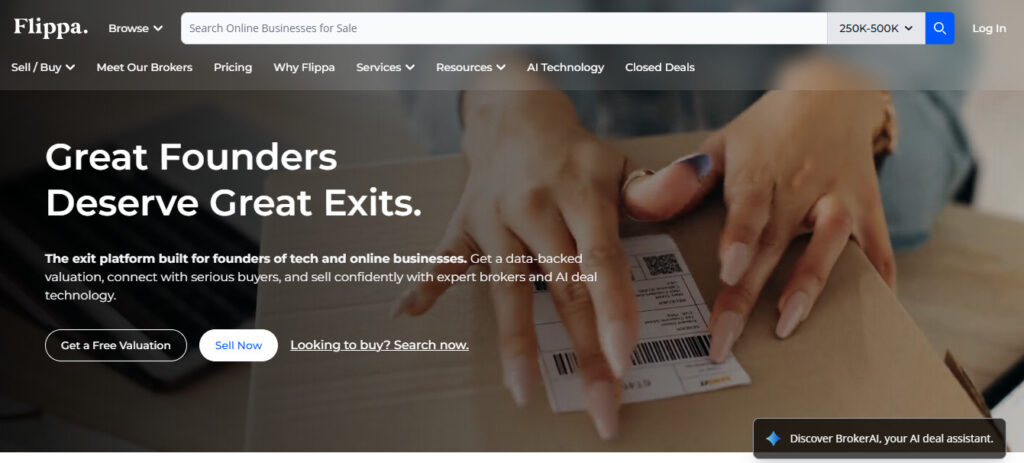
- Flippa: A high-volume platform where you can list your app directly to thousands of individual buyers. It is excellent for smaller assets, though you will need to handle your own negotiations, filter out lowball offers, and manage the transfer process.
- Acquire.com: An active marketplace focusing largely on bootstrapped software and startups. It offers excellent visibility for modern, tech-forward mobile apps, but you are still responsible for driving the deal across the finish line yourself.
Strategic Buyers
These are larger mobile publishers, private equity firms, or direct competitors. They rarely buy from public listings. Instead, they seek apps that fill a gap in their existing portfolio or offer immediate cross-selling opportunities to their current user base. While strategic sales can yield premium valuations, they are highly selective, notoriously difficult to close, and can fall through at the last minute if corporate priorities shift. In my experience, though, they are still worth exploring.
Advisor-Led Brokerages Like Quiet Light
Once your mobile app crosses into the “broker-worthy” range, typically generating $100,000 or more in annual net profit or valued at $250,000 and above, the selling dynamic changes. At this level, you need more than a listing; you need structural guidance and expertise.
Quiet Light operates as an advisor-led brokerage, meaning you work one-on-one with an experienced broker who has personally built, bought, or sold an online business. For an app founder, this advisory approach is critical. A broker helps structure the transaction, filters out unqualified buyers, keeps the process confidential, facilitates the legal complexities, and ensures your unique intellectual property (IP) is protected during due diligence.
2. How Mobile Apps Are Valued
Like most digital businesses, profitable mobile apps are valued using a multiple of their earnings. For apps in the sub-$10 million range, this is typically based on seller’s discretionary earnings (SDE).
The formula for SDE is simple: Net profit + owner’s salary + discretionary or personal benefits + qualifying one-time or nonrecurring expenses, also known as owner add-backs.
Your baseline valuation is calculated by multiplying your annual SDE by a market multiple. While SaaS businesses or large tech enterprises sometimes command multiples based on top-line revenue, mobile apps are heavily scrutinized on their bottom-line cash flow. Multiple ranges typically fall between 2.5x and 5.5x SDE, but where your app lands depends heavily on your monetization model and operational stability.
Why Monetization Architecture Dictates Your Multiple
Not all app revenue is treated equally. Buyers value predictability and recurring cash flow above all else.
- Subscriptions (Highest Multiple): Subscription apps enjoy the highest multiples (typically 4x to 6x+ SDE) because of their predictable recurring revenue. Buyers can model future cash flows with reasonable accuracy. That predictability can create a real valuation premium.
- In-App Purchases (IAPs): Non-subscription IAPs (like purchasing virtual goods or unlocking specific features) command mid-tier multiples. While highly profitable, they rely on a constant influx of active users or “whales” to buy consumables, making the revenue less predictable.
- Advertising (Lowest Multiple): Apps that rely entirely on ad networks (like AdMob or Unity Ads) generally get the lowest multiples. Ad rates (eCPMs) fluctuate constantly, and ad-based apps often require high volumes of daily active users just to maintain baseline profitability.
3. The Metrics Buyers Scrutinize
A sophisticated buyer will not simply look at your profit-and-loss (P&L) statement. They will request access to your mobile analytics platform (such as RevenueCat, Adapty, or App Store Connect) to assess the underlying health of your user base.
Metric | What It Tells the Buyer | Healthy Benchmark Target |
LTV / CAC Ratio | The efficiency of your user acquisition funnel. Compares customer lifetime value with customer acquisition cost. | 3:1 or higher (You make $3 for every $1 spent on marketing) |
Churn Rate (Monthly) | How fast users are abandoning your app. High churn indicates a leaky bucket. | Under 5% for consumer apps; lower for business tools |
DAU / MAU Ratio | Stickiness. Divides daily active users by monthly active users to measure engagement frequency. | 20% or higher (excellent sign of daily habit formation) |
Store Rating & Reviews | Brand health, discoverability, and organic App Store Optimization (ASO) standing. | 4.5+ Stars with consistent, positive recent history |
The Churn Warning
If your app has high growth but also high churn, your multiple will suffer. Buyers know that if you stop spending money on paid user acquisition, a high-churn app will rapidly shrink. They prefer stable, low-churn apps where organic discovery or word-of-mouth keeps the user base steady with minimal ongoing ad spend. Don’t attempt to hide churn if you have it. It will be found in due diligence.
4. App Store Accounts and IP Transfer Mechanics

Transferring a mobile app business is uniquely complex due to the rigid rules of Apple and Google. Unlike a traditional website where you can simply change domain registrars and hand over server logins, mobile apps are tied to centralized developer accounts.
Initiating a clean, direct app transfer within App Store Connect or the Google Play Console is critical. Doing this incorrectly can interrupt billing, analytics, or linked services and create avoidable data gaps.
There are two primary methods to handle an app transfer, and choosing the wrong one can destroy your app’s value overnight.
Option A: App-Level Transfer (The Preferred Method)
Both Apple and Google allow you to transfer an individual app from your developer account directly to the buyer’s developer account.
- The Benefit: Your existing users, ratings, reviews, and App Store rankings remain intact. The transition is completely invisible to your active users.
- The Catch: Both stores have strict eligibility requirements. For example, on iOS, you cannot transfer an app if it uses certain iCloud features, has active TestFlight beta builds, or uses shared App Group capabilities. Additionally, if the app uses Apple’s native auto-renewable subscriptions, you must meet specific criteria to ensure the active billing tokens transfer over to the buyer’s account without interrupting your recurring revenue.
Option B: Account-Level Transfer (The Business Transfer)
If your app does not meet the strict individual transfer criteria, you must transfer the entire developer account.
- The Process: The buyer acquires your entire Apple Developer or Google Play Console account. This is done by legally changing the legal entity, organization name, D-U-N-S number, and banking details associated with the account.
- When It’s Necessary: This is often the only viable path if your app relies heavily on active, legacy subscriptions that would break during an individual app transfer, or if you have deep system integrations (like iCloud databases) that cannot be detached.
- The Risk: This method only works cleanly if you are selling a single-app business. If you have multiple unrelated apps on the same developer account, you cannot use this option without selling those apps too. If you plan to sell one day, always host separate app projects on separate accounts or otherwise keep them transfer-ready.
Transitioning the Tech Stack and Core Intellectual Property
Beyond the store accounts, you must prepare to transfer the supporting infrastructure:
- Push Notifications and Analytics: You must hand over or migrate accounts like OneSignal, Firebase, and RevenueCat.
- Code Repositories: You must transfer ownership of your GitHub, GitLab, or Bitbucket repositories, along with all associated documentation, development history, and deployment pipelines.
- Alternative Billing Rails: If your app uses web-based checkout flows to bypass the standard 15-30% store commissions, you must transfer the associated Stripe or PayPal merchant profiles to the new owner.
5. The Mobile App Sales Process Step-by-Step
A successful exit requires structure. Below is the standard timeline for preparing, listing, and closing a mobile app business sale.
- Step 1: Clean Up the Code and Financials (1 to 3 Months Before Listing)
Standardize your financials using accrual-based accounting. Remove any personal expenses from the P&L. On the technical side, ensure that your code is well commented, remove dead code, and verify that you legally own all IP (including contractor-written code, assets, and custom libraries). - Step 2: Build the Marketing Materials (2 to 4 Weeks)
If working with a broker like Quiet Light, you will build a detailed prospectus or confidential information memorandum. This document outlines your operational history, traffic channels, customer acquisition costs, tech stack details, and growth opportunities for the next owner. - Step 3: Go to Market and Field Buyer Calls (4 to 8 Weeks)
Your listing goes live to qualified buyers. Buyers who are fully vetted will review your financials and app metrics. You will participate in Q&A calls to explain your operations, tech infrastructure, and your reason for selling. - Step 4: Accept an Offer and Enter Due Diligence (30 to 45 Days)
Once you sign a letter of intent (LOI) with a buyer, you enter the due diligence phase. The buyer’s team, often including a technical advisor or CTO, will review your codebase, run security audits, and verify your actual bank deposits against your stated financial metrics. - Step 5: Execute the Asset Transfer and Close (1 to 2 Weeks)
Attorneys draft the final asset purchase agreement (APA). Funds are placed in a secure escrow account. You initiate the App Store and Google Play transfers. Once the buyer verifies that the assets have arrived safely in their developer accounts, escrow releases the funds to you.
6. How to Maximize Your Valuation Before You Sell
If you have six to twelve months before you plan to list your app, you have a massive opportunity to deliberately increase its final exit value. Starting now is the key, so don’t wait.

Diversify Your Acquisition Channels
If 90% of your downloads come from paid Meta ads, a buyer will view your app as a high-risk asset. Work on building organic app store optimization (ASO), launching content marketing, or setting up a referral loop inside the app to prove that you can acquire users organically without a constant ad spend. Diversifying your acquisition channels helps support the value of the business.
Build an “Owner-Independent” Operation
A buyer does not want to purchase a second full-time job where they have to act as the lead developer. You can prevent this by documenting all of your core processes. If possible, hire a reliable freelance developer or agency to handle updates, bug fixes, and maintenance. Showing that the app can run smoothly with only a few hours of owner oversight per week instantly commands a premium multiple. Definitely worth the effort to do this.
Implement a Subscription Win-Back Flow
Many app owners lose 40% to 60% of their trial users before they ever convert to a paid tier. Setting up simple, automated win-back flows such as offering a discount immediately upon trial cancellation can recover a substantial portion of lost revenue. This directly lifts your MRR and boosts your bottom-line SDE right before you go to market. Tricks of the trade but worth noting.
Your Next Steps
Selling your app is a major milestone. By understanding your true operational metrics, organizing your technical assets early, and choosing the right path for your specific business size, you can secure an exit that rewards years of hard work.
If your app is generating consistent profits and you want to understand what it is worth in the current market, reaching out for a professional, no-obligation valuation is the best place to start.
Navigating Your Exit with a Trusted Advisor
If you are realizing that your app is in that “broker-worthy” range of $100,000 or more in annual profit or over $250,000 in value, you do not have to navigate this complex terrain alone.
This is where Quiet Light could fit into your exit journey. Quiet Light is an advisor-led brokerage built on a unique principle: every advisor on the team has personally built, bought, or sold an online business. They are not career salespeople reading from a script; they are fellow founders who understand the stress of App Store transfers, the nuances of subscription churn, and what it actually takes to get a deal across the finish line.
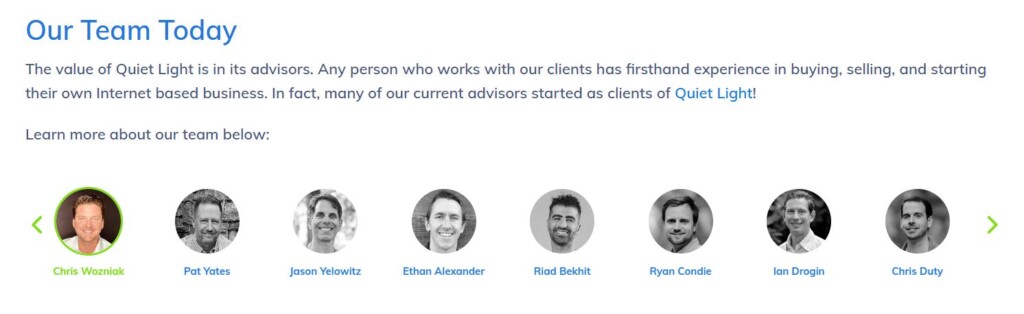
When you are ready, you can contact the team at Quiet Light for a completely free, low-pressure valuation. Whether you plan to sell next month or two years from now, they will help you identify the specific value drivers in your mobile app, pinpoint potential transfer bottlenecks, and map out a realistic path to a successful exit.
I would highly recommend reaching out to them to see what your options may be and gather some valuable information along the way.