


- Levanta Vs. Rakuten At a Glance
- How to Compare the Two Based on Your Brand’s Needs
- Levanta: Overview (Who It’s Built For + Quick Pros & Cons)
- Rakuten Advertising: Overview (Who It's Built For + Quick Pros & Cons)
- Levanta Vs. Rakuten Based on Specific Features and Fits
- Your Daily Workflow Reality Check
- Final Decision: How to Choose Between Levanta and Rakuten Advertising
- Final Thoughts
Last Updated on August 20, 2026 by Ewen Finser
Levanta and Rakuten Advertising both operate in the affiliate marketing space, but they are built for fundamentally different types of programs and teams with specific growth and marketing goals.
Depending on where your business sits right now (how much volume you’re doing, how many partners you manage, and whether you’re Amazon-only or omnichannel through Shopify and Walmart) you may prefer Levanta or Rakuten.
Let’s talk about what makes them different and who they’re each best for:
Levanta Vs. Rakuten At a Glance


Levanta is designed for e-commerce-driven affiliate and creator programs, especially brands selling across Amazon, Shopify, and Walmart that want tighter control over recruiting, tracking, payouts, and performance in one system.
Rakuten Advertising has recently been folded into Impact.com, one of the largest partnership management platforms in the industry. For brands currently running on Rakuten, this means potential changes to how things are tracked, reported, and the overall infrastructure of your brand’s affiliate marketing process – including payouts and contracts.
If you were thinking about working with Rakuten for the first time, we’ll help you better understand what this all means.
How to Compare the Two Based on Your Brand’s Needs

Before comparing features, it helps to evaluate both platforms through a few practical lenses:
- Channel mix: Where your revenue actually comes from today (Amazon, Shopify, Walmart, or global publisher traffic)
- Partner model: Whether you rely on direct creator recruitment or large-scale affiliate networks
- Operational capacity: Whether your team can manage a lean, focused workflow or a more complex network structure
- Reporting needs: Whether you need product-level commerce visibility or broader network reporting across publishers and regions
- Program maturity: Whether you are scaling a focused affiliate channel or managing a mature enterprise partnership ecosystem
Once you view both platforms through these lenses, you’ll have a better idea of what you need and which platform is going to give it to you.
Levanta: Overview (Who It’s Built For + Quick Pros & Cons)
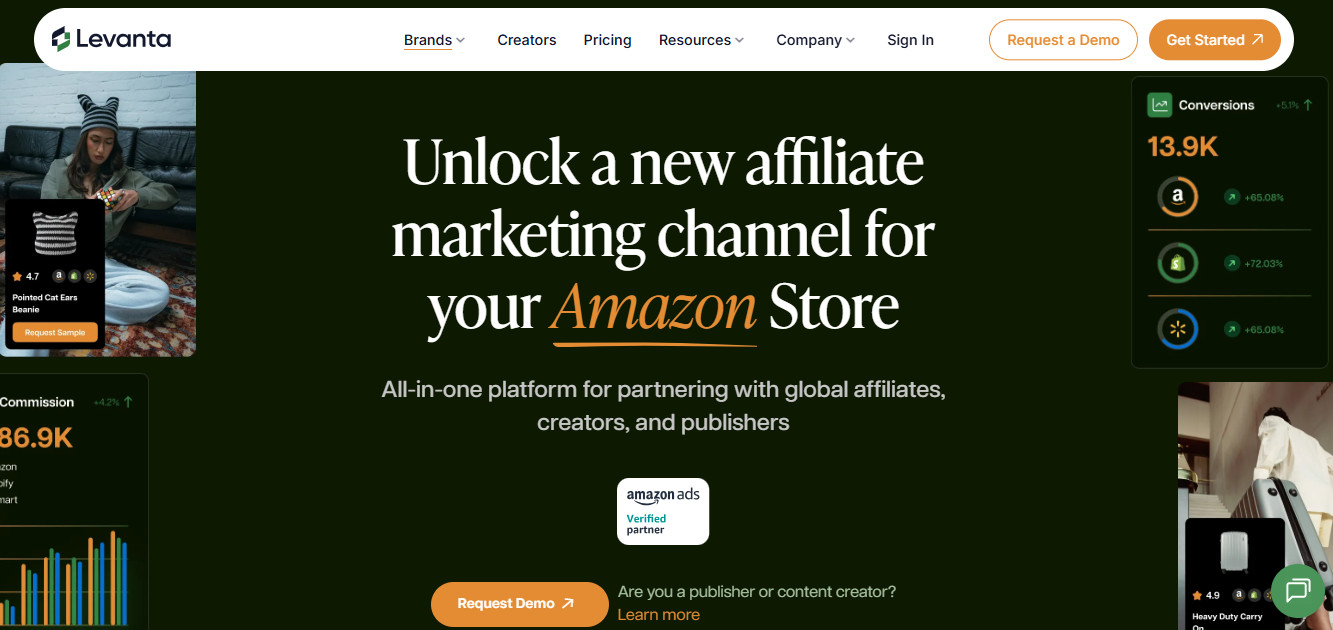
Levanta is built for brands that want affiliate and creator partnerships tied directly to measurable e-commerce outcomes, especially across Amazon, Shopify, and Walmart.
Instead of acting as a broad affiliate network, it is designed to help teams run a more operational, commerce-focused program in one place. That includes partner recruiting, product seeding, performance tracking, payouts, and campaign workflows like samples and paid placements.
A defining part of Levanta’s positioning is its Amazon-first depth. Its materials consistently emphasize:
- Amazon account connections
- Amazon Attribution workflows
- Creator Connections support
- Brand Referral Bonus support
- Product- and creator-level reporting tied to sales outcomes
I would argue that Levanta works best for brands that want a modern e-commerce affiliate system focused on execution and revenue impact, rather than a traditional network model.
Another advantage of Levanta is speed. Because of the relative ease of use in setting up the platform, and its integration with major retailer data, it’s a snap to get set up and running without hang-ups, clumsy API, or missing out on valuable reporting features.
Keep reading: My Honest Levanta Review

Pros
- Strong Amazon, Shopify, Walmart alignment
- Product-level and creator-level attribution
- Built-in recruiting, seeding, and payouts
- Fast setup and onboarding
- Single streamlined workflow
- Built for revenue-focused teams
Cons
- Not a broad global affiliate network
- Limited non-ecommerce partnership reach
- Best value requires active affiliate/creator usage
Rakuten Advertising: Overview (Who It’s Built For + Quick Pros & Cons)

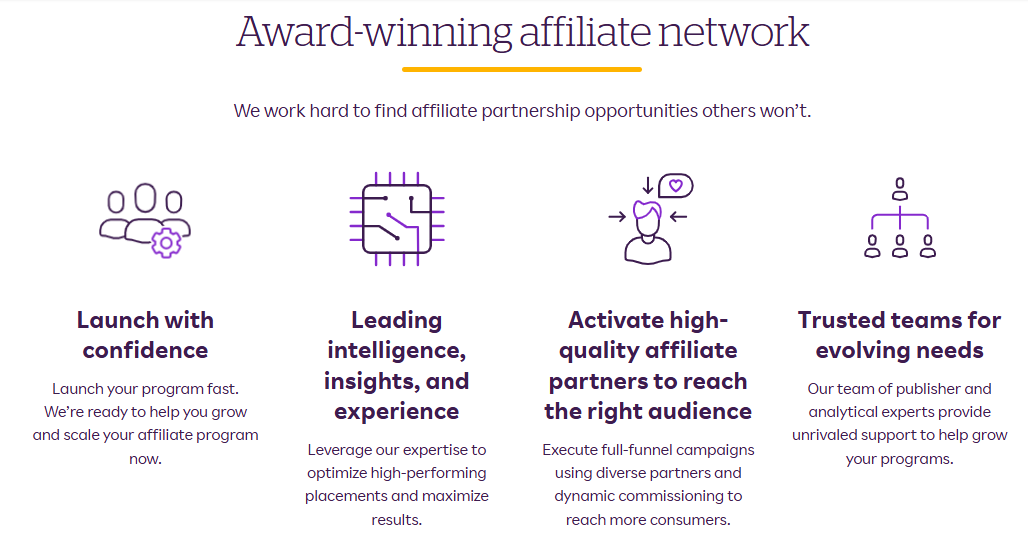
Rakuten Advertising is built for brands that want access to a large, established global affiliate network with deep publisher relationships and international reach.
It’s first important for me to mention that Rakuten’s affiliate technology is moving to Impact’s platform. Rakuten Advertising still exists and continues to provide strategy, account management, publisher relationships, and campaign support. However, the software that powers affiliate programs, including tracking, reporting, contracting, and payments, is transitioning to Impact.
For brands already using Rakuten, this migration is happening in planned phases over time. During the transition, Rakuten account teams remain the main point of contact while programs are moved to Impact’s technology.
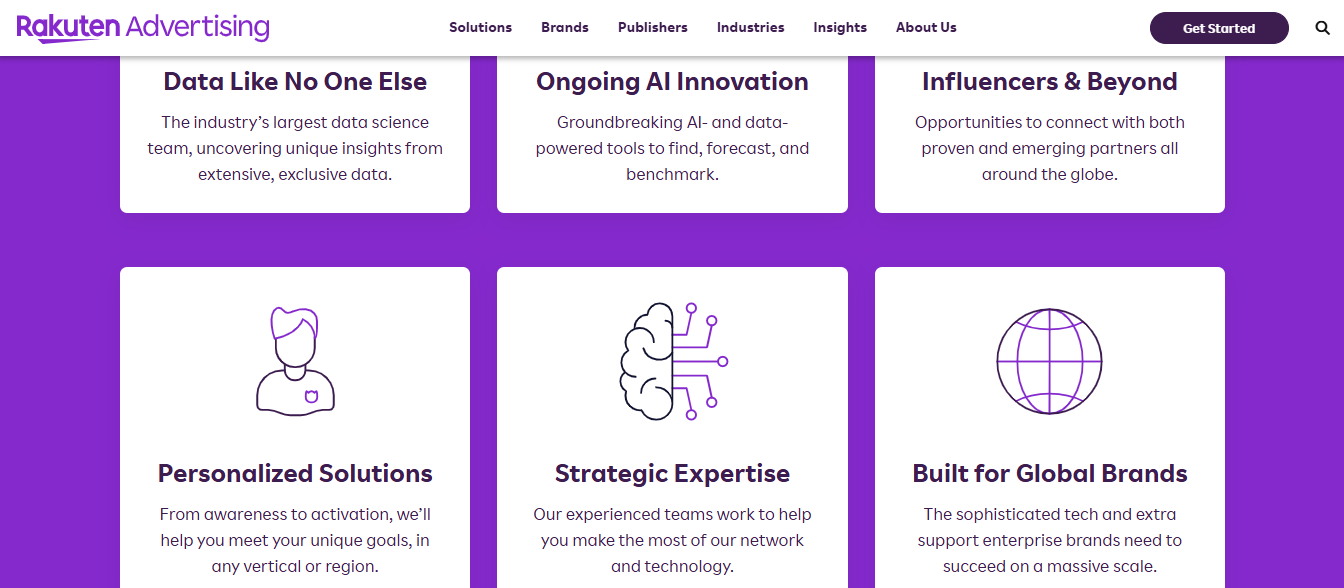
Anyway, as for Rakuten itself, its biggest strength is its scale. It gives brands access to a mature global publisher network and long-standing relationships across many industries and regions. It’s also well known among enterprise companies that want an established affiliate network with international reach.
Overall, Rakuten Advertising is best suited for established and enterprise brands running large affiliate programs, especially those looking for global publisher relationships and strategic account support. If you’re considering Rakuten today, it’s worth knowing that your affiliate program will ultimately run on Impact’s technology while still being supported by the Rakuten Advertising team.
Pros
- Global publisher network
- Enterprise and brand recognition
- Established infrastructure and relationships
- Good fit for multi-market programs
- Broad reach across categories and regions
Cons
- Less e-commerce or product-level focus
- Slower, more structured onboarding process
- More complex reporting and setup
- Less streamlined for lean or fast-moving teams
- Built more for networks than direct commerce execution
Levanta Vs. Rakuten Based on Specific Features and Fits
The differences between an e-commerce signaled brand and a large, global and regional network can sound small, but these distinctions change onboarding, daily management, and even what success looks like for brands.
1. Onboarding and Setup
Levanta’s setup connects a brand’s systems and gets creator and affiliate workflows moving quickly. Its support documentation points to Amazon account integration, brand profile setup, reporting configuration, commission settings, samples, paid placements, and Creator Connections as core areas of setup. For brands already selling in the places Levanta supports, that suggests a fairly direct path to getting started.
Rakuten’s tracking relies on network-to-advertiser integration, and its support content discusses server-based tracking, reporting pipelines, dashboard tools, and multiple reporting interfaces. Brands should generally expect more coordination and more process. That isn’t automatically a bad thing. Larger companies often prefer exactly that structure.
Still, it usually means the program comes online more slowly than it would with a platform designed around e-commerce activation. A lean ecommerce team might get momentum faster with Levanta. A larger org looking less for personalized, team attention and more for legacy structure may benefit less from Rakuten Advertising.
2. Tracking and Attribution
This is one of the clearest separators. Levanta’s core strength lies in how closely it aligns with Amazon, Shopify, and Walmart native workflows, which is important when a brand wants to know exactly which creator, partner, or product is generating revenue sales channels. Clicks are no longer enough.
Rakuten operates on the traditional network pattern: the network sits between the advertiser and the publisher to handle tracking, with options including server-based, batch, and real-time methods, plus advertiser-reported transaction data. It’s a strong approach, but it also means you’re working through the logic and rules of a general affiliate network rather than an e-commerce-oriented tool. So the tradeoff is pretty straightforward. Rakuten’s model is broad and seasoned. Levanta’s is narrower, but tuned for Amazon, Walmart, Shopify, and ecommerce operator workflows.
3. Reporting and Analytics
Levanta’s reporting is framed around improving the program through creators, products, clicks, conversions, and sales. Support reporting language describes the dashboard as a way to judge campaign effectiveness and creator performance. That tends to suit brands that want quick clarity on who to back, who to cut back on, and which products respond to partner activity.
Rakuten offers a bigger reporting environment: dashboards, scheduled reports, graphing, analytics portals, and multiple report types. The upside is flexibility. The downside is that some brands need more internal assistance to pull answers quickly.

Levanta assembled this report to help digital merchants navigate the new AI-shaped buying journey. Discover why creators now drive the clicks AI can’t and how to turn that into revenue.
4. Payments and Payout Structures
Levanta places a lot of emphasis on simplifying payment operations. It covers invoicing, payment methods, creator commission payments, and tax workflows, and it uses Stripe to manage payment and tax documentation. It also notes that invoices can be adjusted if conversions are later rescinded. For brands, that often means less manual work and fewer stitched-together tools.
Rakuten also handles payments, but in a more standard network way. Publisher documentation notes that Rakuten pays publisher commissions and supports payout methods such as PayPal, ACH/direct deposit, or check, depending on the country and network.
5. Ease Of Use and Interface Clarity
Levanta’s promise is reduced friction. Its public messaging focuses on keeping recruitment, samples, tracking, collaboration, and payouts in a single workflow, and recent announcements point to reducing off-platform coordination. That usually reads as a more modern UX approach, built for activation and execution.
Rakuten is more likely to feel institutional. For many established brands, that’s the appeal. But for teams that care most about intuitive tooling and moving quickly with creators, Rakuten can come across as more network-administrator oriented than operator-oriented
6. Network Vs. Platform
Rakuten’s biggest advantage is its network. If you need access to a large pool of publishers in a global marketplace with established relationships, Rakuten is playing a different game than a specialized e-commerce platform. That reach can be a major advantage for enterprise brands, especially where regional complexity and publisher variety are desirable.
Levanta’s biggest advantage is specialization. It isn’t trying to cover everything. It’s trying to make affiliate and creator commerce easier for brands.
Your Daily Workflow Reality Check
With Levanta, day-to-day work tends to feel hands-on and execution-focused.
Teams are usually spending time identifying creators or publishers, sending invitations, approving partners, setting commissions, managing product samples or paid placements, and then reviewing performance at the creator and product level to see what is actually driving revenue.
With Rakuten, daily operations more closely resemble traditional affiliate network management. The focus shifts toward managing publisher relationships at scale, negotiating offer terms, reviewing network reporting, ensuring compliance, and optimizing performance within a broader marketplace of partners.
Keeping that in mind, Rakuten’s structure often fits experienced affiliate managers who are comfortable operating inside a formal network environment with established processes.
Levanta, by contrast, tends to align more naturally with ecommerce operators and growth teams who want direct control over creators, products, and revenue outcomes without as many intermediary layers.
Final Decision: How to Choose Between Levanta and Rakuten Advertising
The right choice here comes down to how you actually plan to run your affiliate program day to day.
Choosing Levanta

Choose Levanta if your affiliate program is meant to function as an active e-commerce growth engine tied directly to Amazon, Shopify, and Walmart performance.
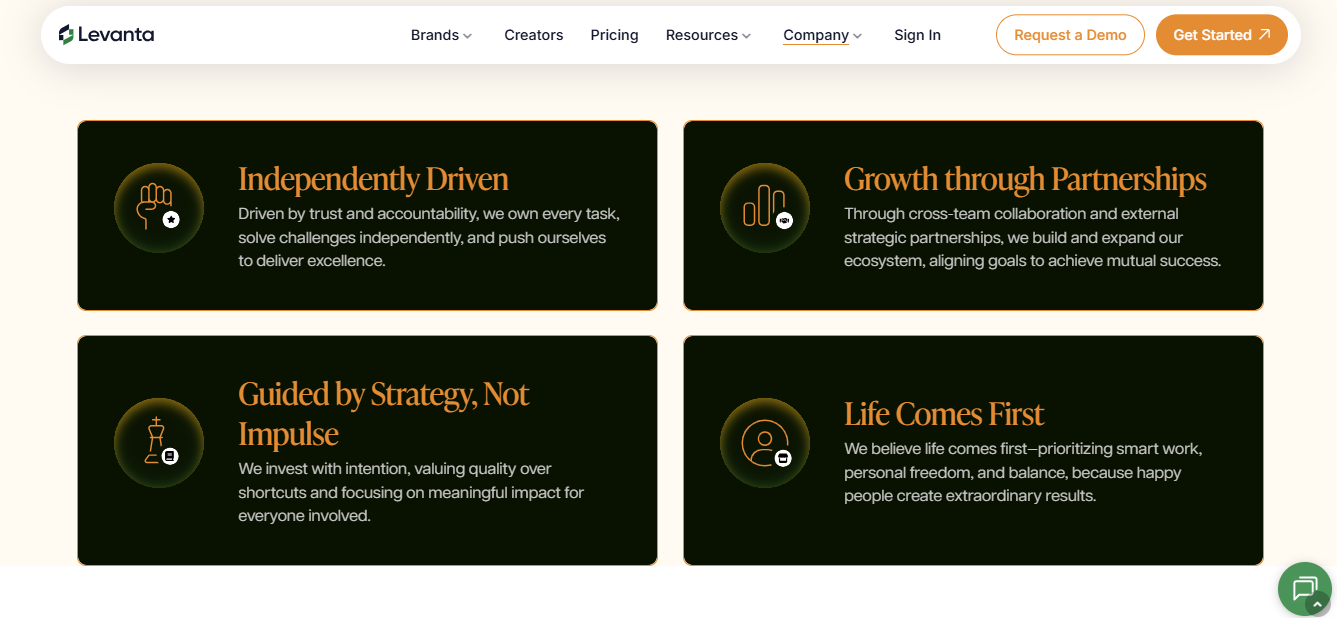
Levanta is the better fit when your team needs to stay close to execution (recruiting creators, sending products, setting commissions, and optimizing based on SKU-level and creator-level revenue data).
It’s especially strong for brands that want faster activation, tighter feedback loops, and clearer visibility into what is driving actual sales across commerce channels.
Choosing Rakuten

Choose Rakuten Advertising if your affiliate strategy is closer to a global publisher and enterprise partnership program. This is the better fit when your priority is access to a large, established network of publishers across regions, structured program management, and broad-scale reach rather than hands-on creator execution.
It also tends to work best for teams that already operate within traditional affiliate network systems and are comfortable managing relationships through a more standardized, process-driven model.
Final Thoughts
Overall, if you want your team actively managing creators and optimizing commerce performance in real time, Levanta will feel more aligned with how you work.
If you want scale, publisher access, and a more traditional enterprise affiliate structure that operates through a global network, Rakuten is the more natural fit.