


Last Updated on June 28, 2026 by Ewen Finser
FTC Disclaimer: We do make money from this blog and may receive compensation for this work in the form of commissions, fees and complimentary product access. Review our full FTC disclosure here.
Shipping costs are getting harder for small businesses to absorb. FedEx and UPS both announced average 2026 rate increases of 5.9%, and that’s before you factor in packaging, fuel surcharges, returns, and the time spent managing it all.
Today we’ll cover how to reduce shipping costs for small businesses, while ensuring a good shipping experience for your customers
I’m here to highlight some tactics that I’ve used to reduce shipping costs in my own small eCommerce business. I also want to cover the shipping tools that can actually help and how to work out which one is right for your business.
Understand Your Shipping Charges

Before you invest in shipping software, you need to understand all the shipping terminology and how you are actually being charged. Shipping costs are not just the label price.
They are also affected by:
- Weight
- Box size
- Destination
- Surcharges
- Whether the parcel gets delivered properly the first time.
Once you understand those charges, it becomes much easier to see where you can cut costs.
Actual Weight vs Dimensional Weight
Actual weight is what the parcel weighs on a scale. Whereas dimensional weight is based on how much space the parcel takes up. So a large, lightweight box can cost more than you expect, even if the item inside barely weighs anything.
Residential Surcharges
If you sell directly to consumers, most orders are going to home addresses. Private carriers often add residential delivery fees because these deliveries take more time and are less efficient than business deliveries.
Fuel Surcharges
Fuel surcharges change regularly, which means your shipping costs can rise even if your products, boxes, and destinations stay the same.
Delivery Area Surcharges
Delivery area surcharges apply when a parcel goes to a harder-to-reach location, such as a rural or remote address. These fees are easy to miss, especially if you offer free or flat-rate shipping, but they can end up making a sale unprofitable.
Optimize Packaging and Materials

Once you understand your shipping charges, look at your packaging. This is often one of the easiest places to save money.
Reduce Packaging
Oversized packaging means you are paying to ship empty space. It can increase dimensional weight, add material costs, and make a light product more expensive to send.
Not every product needs a box. For clothing, books, soft goods, accessories, and other non-fragile items, poly mailers or bubble mailers can cut weight and reduce package size. Just make sure the product is still protected, because damaged items cost more in returns and replacements.
Consider Free Carrier Packaging
USPS Priority Mail flat-rate boxes and envelopes can be useful, especially for heavier items travelling longer distances. Just note that free packaging doesn’t always result in cheaper shipping costs particularly for lightweight items.
Consider USPS Ground Advantage
For lightweight domestic parcels, USPS Ground Advantage can be a cost-effective option, especially for items under 1 lb. This could be a good option if you ship small items like accessories, samples, or cosmetics that do not need express delivery.
Set Your Shipping Pricing Strategy

You need to get clear on your total shipping cost (including extra fees and packaging), product margins, and average order value to work out shipping strategies that keep your customers happy while managing your costs.
Free Shipping Thresholds
Free shipping can work well, as long as you set it at a rate that protects your margins. Instead of offering free shipping on every order, use a threshold such as “Free shipping over $50”.
Flat-Rate Shipping
Flat-rate shipping keeps things simple for customers. For example, you might charge $4.99 or $6.99 for standard shipping, even if the real cost changes slightly from order to order. This strategy works best when your products are similar in size and weight.
Live Rates
Live rates show customers the real shipping cost at checkout based on their order, address, and delivery speed. This is useful if your shipping costs vary a lot. It can also help avoid undercharging for heavy, bulky, or long-distance orders.
Product Pricing Adjustments
Sometimes the best option is to absorb some of the shipping cost into your product price. For example, if a product usually costs $6 to ship, you might increase the product price slightly and offer cheaper or free shipping at checkout.
This can work well because customers often prefer a higher product price with simple shipping over a cheaper product with a large shipping fee added at the end.
Compare Carriers

A lot of small businesses default to using the same carrier for every order, but it’s not always the cheapest option.
USPS, UPS, FedEx, and DHL all have different strengths. USPS is ideal for lightweight domestic parcels, while UPS and FedEx can be good options for heavier boxes or certain business deliveries. It’s important to do your research and look at your delivery trends.
The best way to compare carriers is to use a shipping software such as Shippo or Shipstation (more on that below).
Domestic vs International
Domestic shipping and international shipping should be treated differently. For domestic orders, you are usually comparing speed, cost, package weight, and delivery zone.
For international orders, you also need to think about customs forms, duties, taxes, tracking quality, and whether the carrier is reliable in that destination country.
The cheapest international label is not always the best option if it leads to delays, missing tracking, or surprise charges for the customer.
Regional Carriers
Are you sending a lot of deliveries to the same area? If so, regional carriers are also worth considering and sometimes they offer better rates than national carriers.
Use Shipping Software
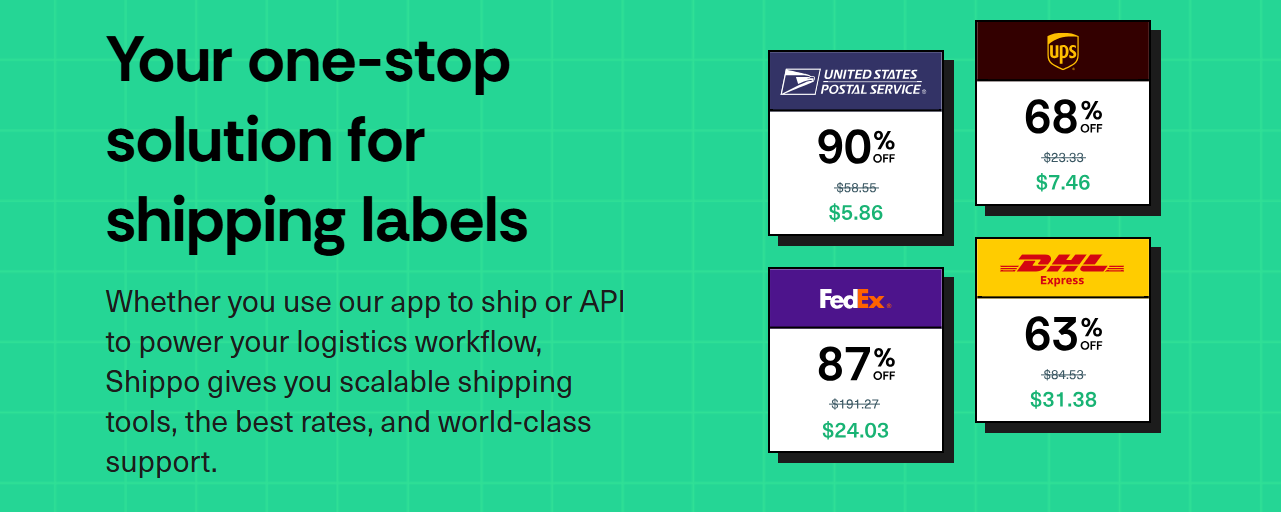
All the tactics I’ve discussed in this article can be implemented straight away to reduce shipping costs, but you’ll find it a lot easier to do with the help of shipping software.
It’s still important to optimise your packaging and get clear on your shipping strategy, but the right shipping software can save you a lot of time and money in a range of ways such as:
- Enabling you to compare courier rates in one dashboard
- Giving you access to discounted carrier rates
- Validating customers addresses
- Batch printing labels
- Providing tracking updates for customers
- Making the returns process easier
- Creating automations to save time
- Integrating your shipping process with other systems in your business
For most small businesses, I would recommend starting with Shippo. It gives you the core features that reduce shipping costs, such as discounted rates, integrations, and tracking, but it’s easy to use and set up so you can focus on running your business.
It also gives you access to discounted carrier rates, lets you compare services side by side, and connects with major platforms like Shopify, WooCommerce, Etsy, Amazon, eBay, Wix, and Squarespace.
What I like about Shippo is that it keeps the workflow simple. The dashboard is clean, orders sync in automatically, and the automation rules are easy to understand. For example, you can create a rule that all orders over a certain value have added insurance.
Shippo also supports batch label printing, which is useful once you are processing orders regularly.
While there are more advanced tools on the market, Shippo has all the features that I need to keep my shipping costs down while still being easy to set up and use day to day.
Reduce Manual Work
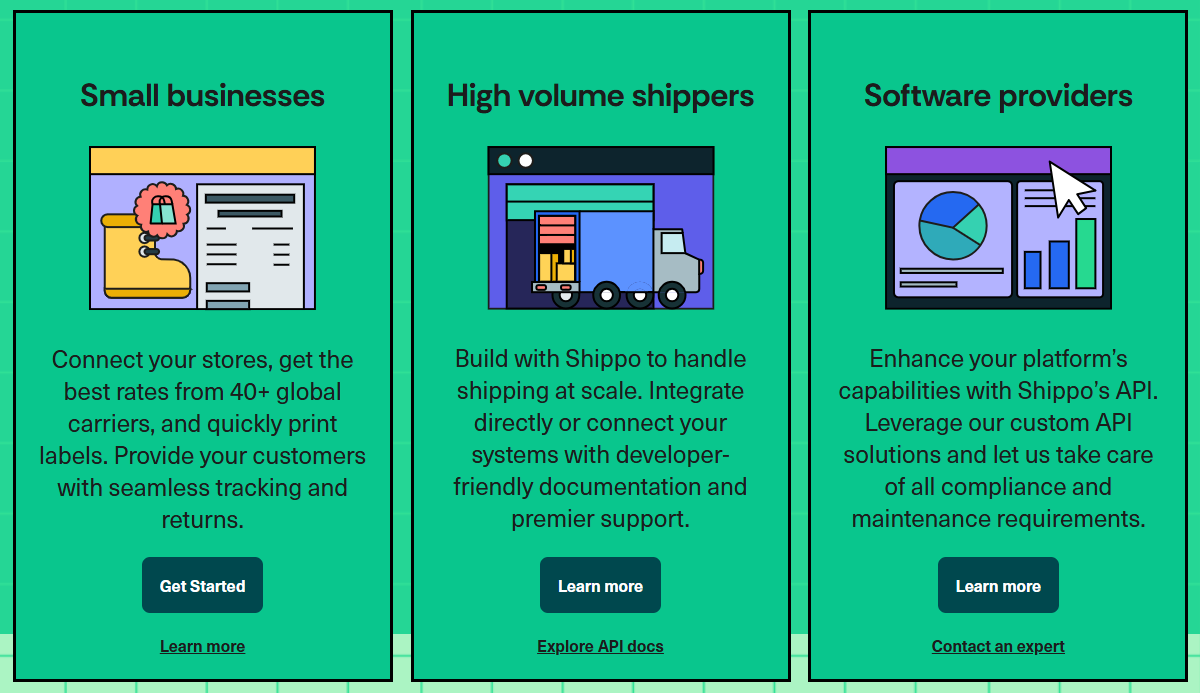
Shipping costs aren’t just about carrier fees. If you or your team are spending hours comparing rates, weighing parcels, printing labels, and driving to drop-off points, that is a real cost to the business.
Here are some tactics I’ve used in my own business to reduce the labour intensiveness of shipping:
Batch Packing
Instead of packing orders one at a time throughout the day, batch similar orders together. For example, pack all small accessories first, then clothing orders, then fragile items. This makes it easier to use the right packaging and avoid mistakes while speeding up the process.
Software automations and Batch Printing Labels
Creating labels on individual orders can be ok when you only have a few orders a week, but once you start getting lots of orders then automations in your shipping software can save a huge amount of time and money.
Pre-Weighed Products
If you sell the same products regularly, weigh them once with their usual packaging and then save those details. This means you are not weighing the same product every time it sells.
Use a Label Printer
If you are still printing labels on normal paper, cutting them out, and then taping them to boxes, a label printer could save you a surprising amount of time.
It is not essential on day one, but once you are shipping regularly, it makes the whole process faster and you can pick them up very cheaply.
Pickups and Drop-Offs
Daily post office or carrier drop-off trips can waste a lot of time. If you only ship a few orders a week, drop-offs are fine. But once you are shipping every day, carrier pickups may be worth it, even if there is a small fee.
Minimize Mistakes and Returns

Shipping optimization does not stop once the parcel leaves your hands. The checkout and return process matter too.
Address Validation
It’s essential to check addresses before shipping. A missing apartment number, wrong ZIP code or typo can lead to failed deliveries, extra fees and disappointed customers. Address validation helps you catch those problems before the label is created.
Scan-Based Return Labels
Returns are inevitable, but there is no need to pay for return labels that customers never use. By using scan-based return labels, you only pay when the carrier scans the label. This gives customers a smoother return experience while also saving you money.
Reduce Avoidable Returns
Make sure your product photos, sizing, product descriptions, and delivery information are accurate and up to date, so customers know exactly what they are getting. Not only will this reduce returns but it will also keep your customers happy.
My Practical Shipping Cost Reduction Checklist
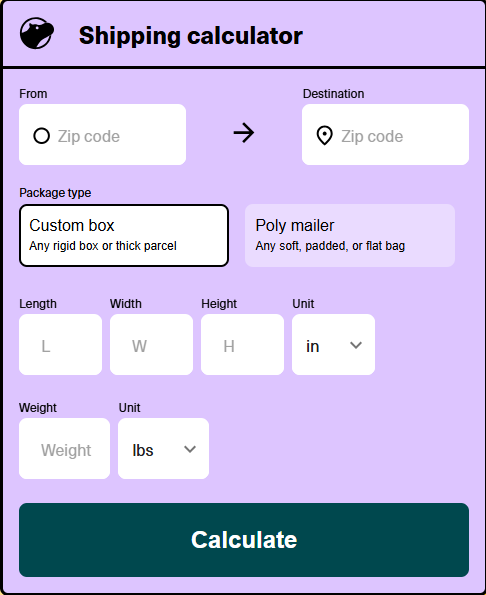
If you want to take action this week, start here:
- Export your last 30 days of shipping labels.
- Calculate your average shipping cost per order.
- List your top five package types.
- Check whether any boxes are too large.
- Test mailers for non-fragile products.
- Compare your common orders across at least two carriers.
- Review your free shipping threshold or flat-rate shipping price.
- Check for avoidable address mistakes.
- Pre-weigh your most common products.
- Batch pack similar orders together.
- Set up discounted rates through a shipping platform or carrier account.
- Add automation rules for your most common shipping decisions.
- Review returns and look for patterns you can fix.
That might sound like a lot but you don’t need to fix everything at once. The main thing to do is review your packaging, get clear on your shipping strategy and then sign up for shipping software to support you with the day to day shipping tasks.