

- First, What Are Levanta and Superfiliate?
- Channel Support: Amazon, Shopify, and Walmart
- Creator Marketplace Comparison: Scale, Discovery, and Reach
- Attribution and Tracking: Measuring Performance Across Channels
- Commission Structures and Flexibility
- Levanta Strengths: Where It Excels for Omnichannel Brands
- Superfiliate Strengths: Where It Excels for DTC Brands
- What About Shopify-Only Brands?
- How Levanta and Superfiliate Fit Into the Affiliate Platform Landscape
- Levanta Vs Superfiliate: Which Should You Choose?
Last Updated on August 20, 2026 by The Digital Merchant Team
If you’re comparing Levanta and Superfiliate, you’re already thinking about creator-led affiliate growth. While both platforms help brands build creator programs and track commissions, they were built with different businesses in mind, and choosing the wrong one might create real operational gaps.
Let’s talk about how each platform handles channel support, attribution, creator access, and commission structure so you can match the right tool to how your business actually runs.
Feature | ||
Primary Focus | Omnichannel affiliate & creator marketing | Shopify-focused creator-led growth |
Supported Channels | Amazon, Walmart, Shopify | Shopify only |
Amazon Support | Native Amazon Attribution integration | No Amazon support |
Walmart Support | Native Walmart integration | No Walmart support |
Shopify Support | Yes | Yes (deep Shopify integration) |
Creator Marketplace | 70,000+ vetted creators | Unified Creator Hub; smaller, relationship-focused approach |
Attribution | Unified tracking across Amazon, Walmart, and Shopify | Shopify-only attribution |
Commission Management | Channel-specific commissions for Amazon, Walmart, and Shopify | Tiered, product-level, and custom commissions within Shopify |
Standout Feature | Single dashboard for managing affiliate programs across all three channels | Co-branded creator landing pages and personalized storefronts |
Best Fit For | Brands selling on Amazon, Walmart, Shopify, or a mix of channels | Shopify-only DTC brands focused on creator relationships |
First, What Are Levanta and Superfiliate?
Superfiliate is a direct competitor to Levanta and one of the more frequently compared alternatives in the affiliate and creator platform space. Both target brands looking to grow through creator partnerships, which makes the comparison feel closer than it actually is.
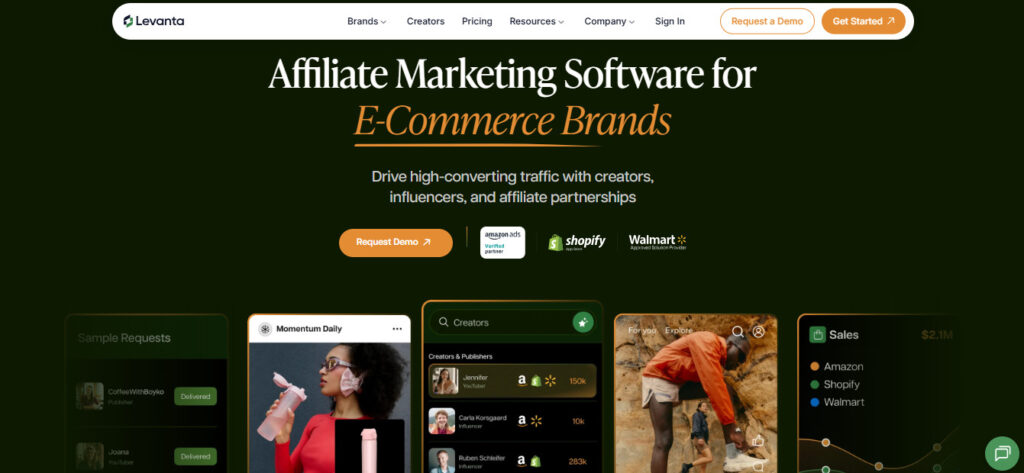
Levanta is an affiliate and creator marketing platform built for omnichannel brands selling on Amazon, Walmart, and Shopify. It gives brands a single place to recruit creators, generate affiliate links across all three channels, track performance, and pay commissions on verified sales. Its creator marketplace includes over 70,000 vetted creators who can drive traffic to whichever channel or combination of channels your brand uses.
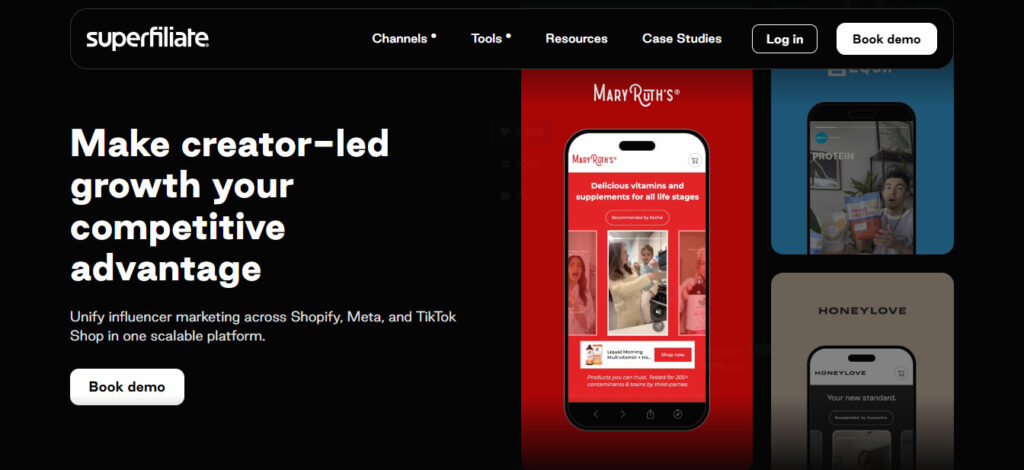
Superfiliate is a creator-led growth platform founded in 2021 and built for direct-to-consumer brands running on Shopify. Its standout feature is co-branded landing pages that turn standard affiliate links into personalized storefronts for each creator, which improves conversion rates on social traffic.
It also offers a unified dashboard for managing influencer, ambassador, and affiliate relationships alongside automated gifting and commission tools. Brands like Everyday Dose, MudWtr, Boll and Branch, and Allbirds have used it to run creator programs within their Shopify ecosystem.
What Are the Core Differences Between Them?

The most important difference between Levanta and Superfiliate is not pricing or creator network size. It is the set of channels each platform was built to support.
Levanta was designed as a multi-channel affiliate platform. Its integrations with Amazon, Walmart, and Shopify are core to how the platform operates. Brands can manage creator relationships, generate affiliate links, and track attributed sales across all three channels from one dashboard.
Superfiliate was designed for Shopify-native, DTC-focused brands. It has strong tooling, a clean interface, and deep Shopify integration. For brands running their entire business through Shopify, it performs well. The platform does not support Amazon or Walmart.
Channel Support: Amazon, Shopify, and Walmart

Amazon:
Levanta has a native Amazon integration that connects directly with Amazon Attribution, Amazon’s own tracking system for external traffic. This gives sellers accurate ROI data on creator-driven traffic, access to higher commission structures tied to Amazon’s Brand Referral Bonus program, and visibility into how affiliate activity affects sales velocity and organic rank. Superfiliate does not support Amazon affiliate programs.
Shopify:
Both platforms support Shopify. Superfiliate’s Shopify integration is deep and purpose-built, making it a strong choice if Shopify is your only channel.
Levanta’s Shopify integration gives brands a connected view of their Shopify sales alongside Amazon and Walmart performance in a single dashboard, which simplifies reporting and decision-making.
Walmart:
Levanta supports Walmart natively, enabling brands to run affiliate programs for their Walmart.com listings the same way they do for Amazon. As Walmart’s marketplace continues to grow, this integration is increasingly relevant for brands diversifying beyond Amazon.
With that in mind, it’s important to note that Superfiliate does not support Walmart.
If your brand sells only through Shopify today, the Amazon and Walmart integrations may not be your immediate priority. But for most product brands growing at scale, operating on a single channel is the exception rather than the rule.
Creator Marketplace Comparison: Scale, Discovery, and Reach
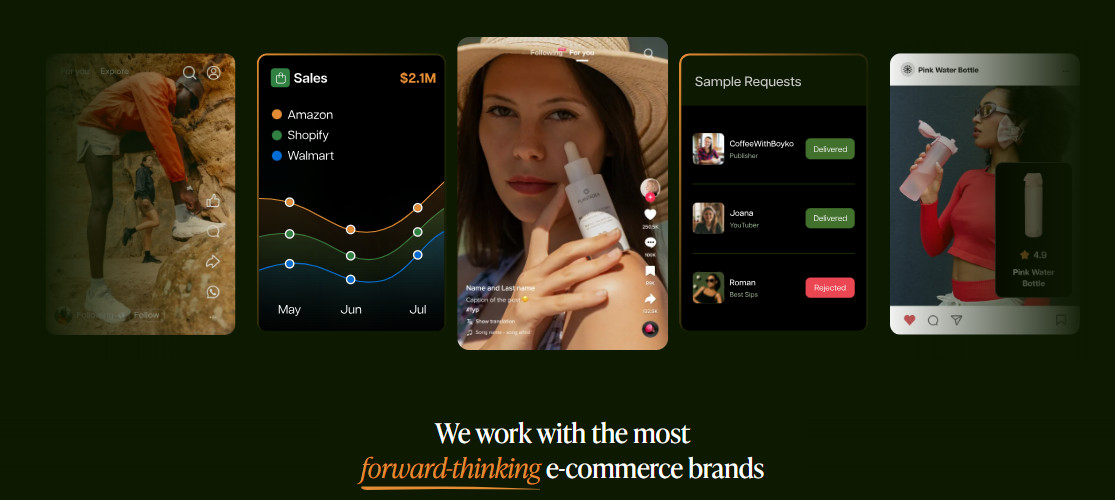
Levanta operates one of the largest affiliate creator marketplaces available, with over 70,000 vetted creators. These creators drive traffic across Amazon, Shopify, and Walmart, meaning they understand marketplace purchasing behavior, not just social engagement.
For brands looking to launch or scale a program, access to Levanta’s large, categorized pool means you can test across multiple niches quickly without spending months on manual outreach.
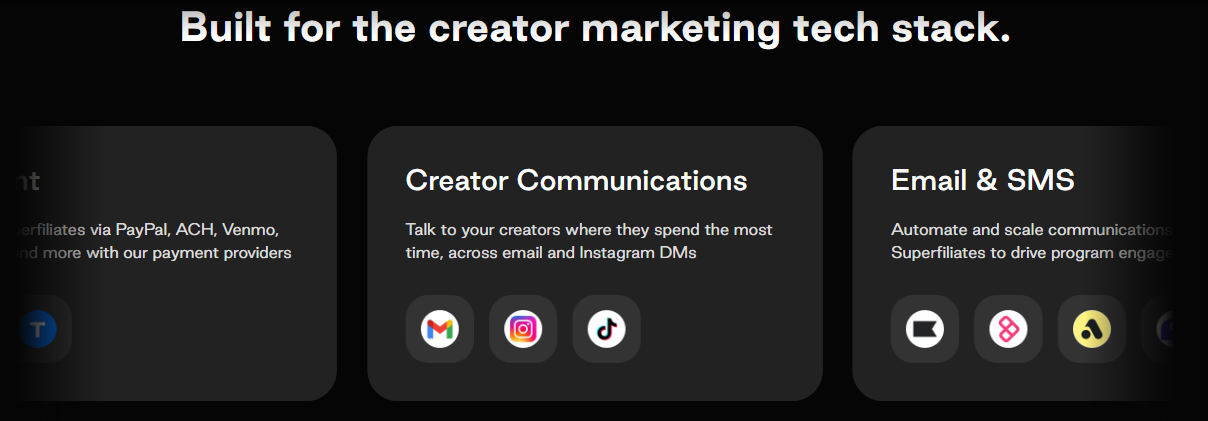
Superfiliate takes a relationship-depth approach. Its Unified Creator Hub consolidates influencer, ambassador, and affiliate management into one place, with co-branded landing pages, automated gifting workflows, and personalized storefronts for each creator. The tradeoff is scale.
To be honest, if you need to recruit across multiple categories or rapidly test new creator segments, Superfiliate’s pool can be more limited than Levanta’s.
Attribution and Tracking: Measuring Performance Across Channels
Attribution is where the rubber meets the road for any affiliate program. It doesn’t matter how good your creators are or how compelling your offers are if you can’t accurately measure what’s driving sales and where.
Levanta provides unified attribution across Amazon, Shopify, and Walmart in a single dashboard. You can see which creators are driving Amazon conversions, which are generating Shopify sales, and which are producing results across multiple channels. That visibility changes how you structure commissions and which creator relationships you invest in.
Superfiliate tracks conversions accurately within Shopify. Its reporting is solid for DTC brands operating within that channel. However, it has no visibility into Amazon or Walmart sales. For brands where those channels exist, a creator who drives significant Amazon volume will appear underperforming in Superfiliate’s reporting.
Commission Structures and Flexibility

Levanta’s commission logic is built for multi-channel complexity. Brands can set independent commission rates for Amazon, Shopify, and Walmart, and create custom agreements with individual creators or creator tiers. This matters because margin structures typically differ by channel. Amazon’s fee structure produces different economics than a direct Shopify sale, and your commission rates should reflect that.
Superfiliate’s commission tooling is strong within Shopify. You can build tiered structures, set product-level rates, and create custom deals. The limitation is that these tools do not extend beyond Shopify. If you are also selling on Amazon and want commission logic that reflects your actual blended economics, you would need to manage that separately with a different tool.
Levanta Strengths: Where It Excels for Omnichannel Brands
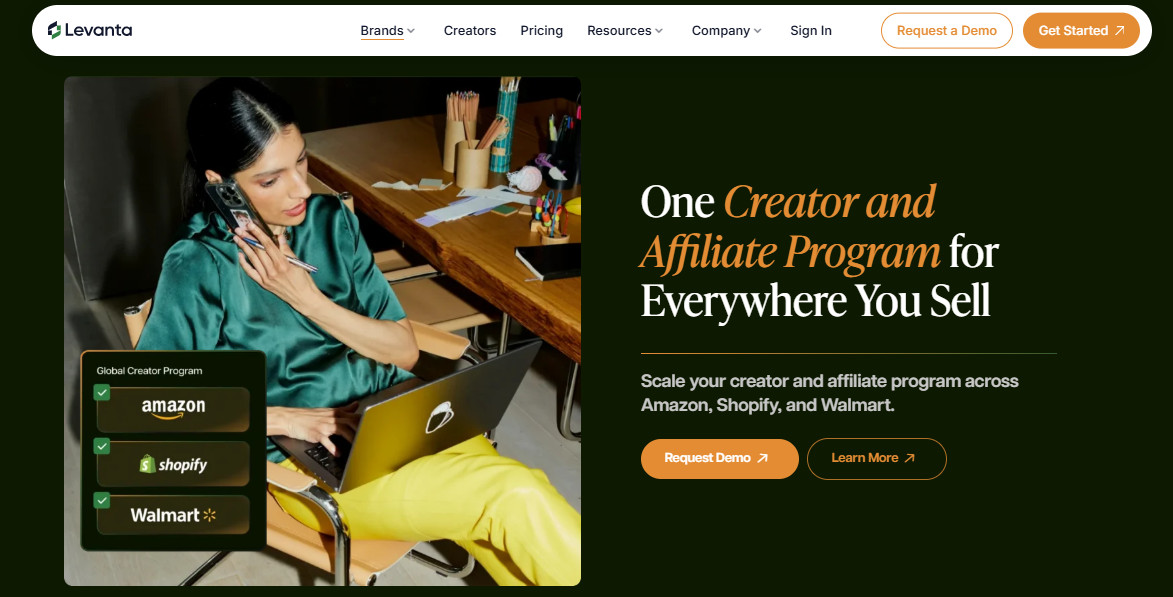
Levanta’s core advantage is coverage. For brands selling on Amazon, Walmart, and Shopify, it’s the only platform that connects all three channels under one affiliate program. Creators get a single link experience, brands get unified attribution, and commissions are tracked and paid regardless of where the sale happens.
The Amazon Attribution integration is a particular standout. Unlike generic affiliate software that simply drives traffic and hopes for the best, Levanta routes through Amazon’s own tracking system. This gives sellers accurate ROI data, higher commission structures, and visibility into how creator activity affects their Amazon rank and sales velocity.
At 70,000+ vetted creators, the marketplace scale is also a genuine strength. These aren’t anonymous publisher traffic sources. They’re named creators who understand marketplace purchasing behavior, which makes them meaningfully more effective for Amazon and Walmart sellers than a traditional affiliate network.
For brands that have outgrown a single-channel approach, or that were never DTC-first to begin with, Levanta removes the need to stitch together separate tools for separate channels. That operational simplicity compounds over time.

Levanta assembled this report to help digital merchants navigate the new AI-shaped buying journey. Discover why creators now drive the clicks AI can’t and how to turn that into revenue.
Superfiliate Strengths: Where It Excels for DTC Brands
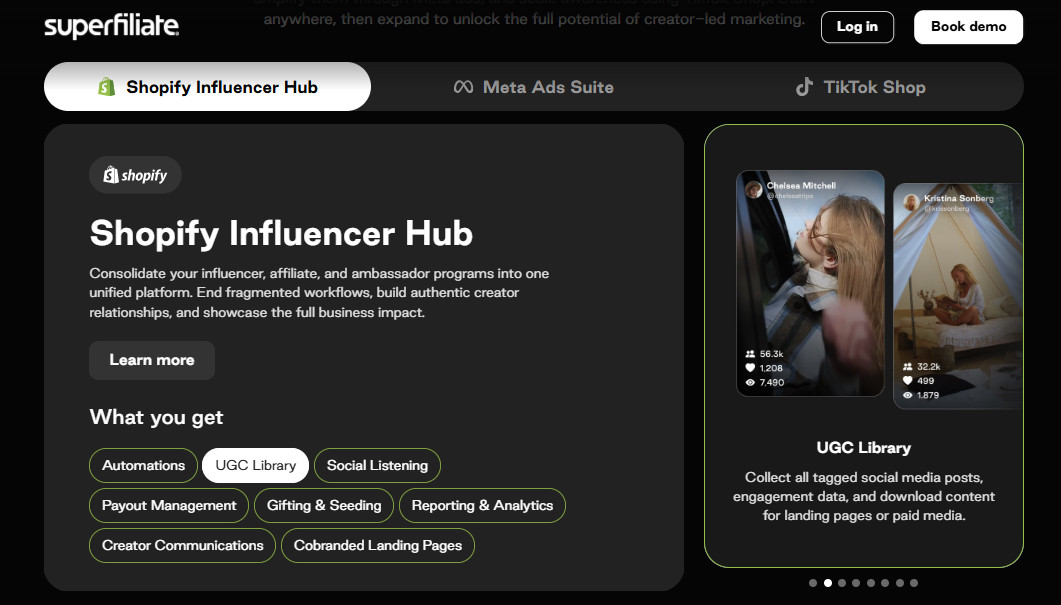
For pure-play Shopify and DTC brands, Superfiliate offers a genuinely differentiated product.
Its co-branded landing page feature is one of its strongest calling cards: rather than sending affiliate traffic to a generic product page, Superfiliate transforms each creator’s link into a personalized, branded landing page featuring the creator alongside the brand, which meaningfully improves conversion rates. It’s a smart solution to the perennial problem of social traffic bouncing off impersonal storefronts.
The platform also integrates well with the Shopify ecosystem, connecting with Klaviyo, Recharge, and Postscript, and includes automated gifting workflows, UGC embedding for social proof, and tools for Meta partnership ads (whitelisting). Brands like Everyday Dose, MudWtr, Boll & Branch, and Allbirds have used Superfiliate to build creator-led growth programs that feel native to their DTC brand experience.
The platform also tends to appeal to brands that prioritize a curated, community-first approach to creator partnerships: a smaller number of tighter relationships rather than a high-volume affiliate network. For that use case, Superfiliate’s relationship-forward tooling is well suited.
Superfiliate isn’t a lesser platform. It’s a specialized one. Specialization is only a problem when your needs are broader than what the specialization covers.
What About Shopify-Only Brands?
Superfiliate is a natural fit for brands living entirely on Shopify. But it is worth asking whether a Shopify-native tool built around the DTC use case is the only option, or just the most obvious one.
Levanta supports Shopify fully and brings modern affiliate and creator tooling to that channel as well. Features like the Social Suite and the iOS app are available to Shopify-only brands on Levanta, not just multi-channel ones. The platform’s creator marketplace can drive traffic directly to your Shopify store. And because Levanta is continuing to build new capabilities, a brand using it today is not locked into what the platform could do a year ago.
The practical question for a Shopify-only brand is whether being on a multi-channel platform creates any meaningful downside. In most cases, it does not. You get the same Shopify affiliate functionality, access to a larger creator pool, and a platform with room to grow with you if your channel mix ever changes.
How Levanta and Superfiliate Fit Into the Affiliate Platform Landscape

Levanta operates in a market alongside legacy affiliate networks like Impact, CJ Affiliate, Awin, Rakuten, Partnerize, and Refersion. Those platforms were built for the affiliate model that existed a decade ago: anonymous publisher traffic, coupon sites, and deal aggregators. They were not designed for marketplace-native commerce, and most still are not.
Levanta was built for what affiliate marketing looks like today. Named creators with real audiences. Attribution that follows the customer to wherever they actually buy, including Amazon and Walmart. Superfiliate occupies a different space in that landscape. It is a specialized DTC tool focused on making Shopify creator programs more effective, and it does that well within its scope.
Superfiliate sits in a different part of that landscape. It’s not trying to replace Impact or Rakuten. It’s a specialized DTC tool focused on making Shopify-based creator programs more effective. That’s a legitimate niche. But brands evaluating Superfiliate against Levanta are really making two different decisions: one about channel coverage, and one about whether a DTC-first approach is sufficient for where their business actually operates.
Levanta Vs Superfiliate: Which Should You Choose?
The most useful filter you should be going by when you choose an affiliate platform is channel coverage. Ask yourself: Where do your customers actually buy?
- If your business runs entirely on Shopify and you have no plans to expand to Amazon or Walmart, Superfiliate is worth serious consideration. It was purpose-built for that use case and performs well within it.
- If your brand sells on Amazon, Walmart, or Shopify, or uses any combination of those channels, Levanta is the platform built to support that reality.
The risk of choosing a single-channel tool when your business spans multiple channels can make decisions about creators, commissions, and budget allocation based on incomplete data.
When your attribution has blind spots, you underpay your best creators, overpay the wrong ones, and misallocate budget in ways that compound over time. If your business spans more than one channel today, or you expect it to, make sure your platform can see all of it.