


Last Updated on August 25, 2026 by Ewen Finser
Folderly and InboxAlly seem interchangeable on the surface. From the outside, they indeed look like two tools competing for the same buyer, the same problem, and the same shelf.
But they’re quite different once you dig into them a bit deeper. There’s certainly some overlap, but one of them focuses more on showing you what’s wrong with your email and which concrete changes to make, while the other focuses on actively changing how inbox providers evaluate you as a sender.
At a Glance: Folderly vs InboxAlly
Folderly | InboxAlly | |
Primary Use Case | Monitor, diagnose, and help fix deliverability | Repair and strengthen sender reputation |
How It Works | Automated checks, spam tests, remediation guidance, and authentication audits, plus warmup and blacklist/health monitoring | Engagement that retrains inbox providers to trust your email using seed inboxes that open, move, click, and reply like real users |
Includes Expert Support? | Yes, hands-on guidance | Self-serve with support available |
Billing | Per mailbox (monthly or annual) | Per sender profile (monthly) |
Best For | Ongoing visibility even in complex email setups, plus structured fixes over time | Recovering from spam placement and rebuilding reputation |
What Folderly Is
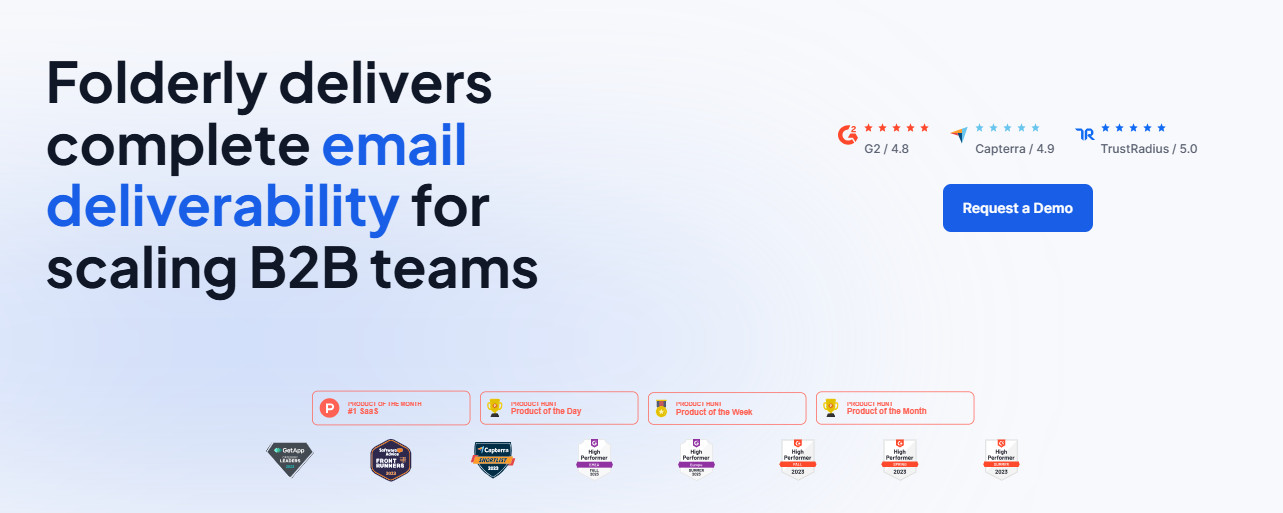
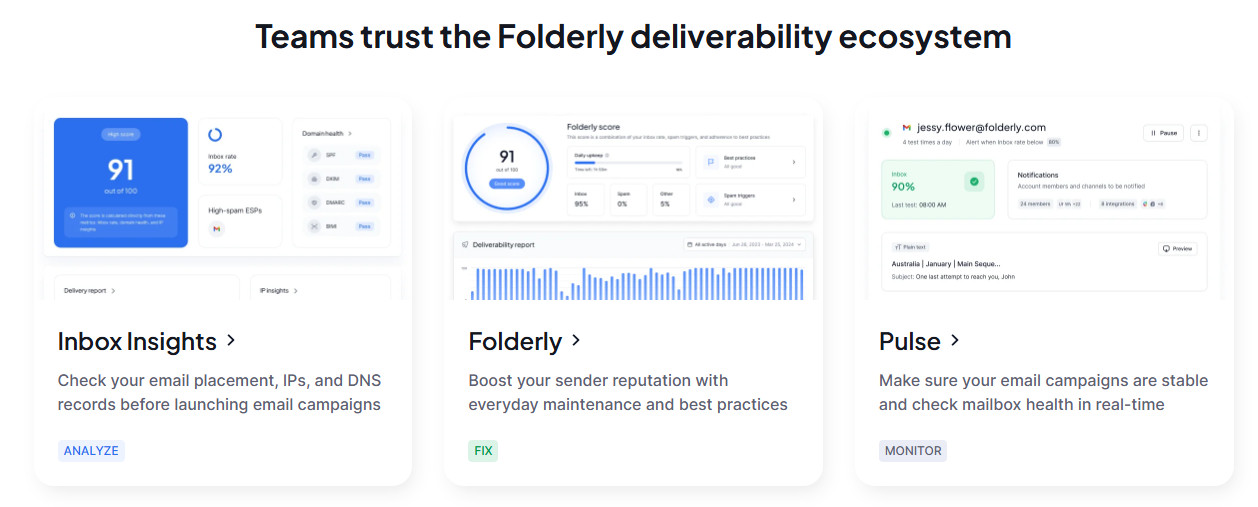
Folderly is primarily a monitoring and diagnostics platform with remediation features. Its strength is helping you see the full picture and then work through the concrete fixes, and it accomplishes this by running automated checks around the clock, including:
- Content scans that flag spam triggers before you send
- Placement tests that show where your email lands for each provider
- Authentication audits for SPF, DKIM, and DMARC (the behind-the-scenes signatures that prove your mail really comes from where it says)
- Reputation monitoring across the domains and IPs you send from
- Blacklist monitoring and domain/IP health checks that surface when you’ve been listed and how to get delisted
- Warmup and related deliverability guidance aimed at fixing root-cause setup issues
Want a detailed, always-on read on your email setup? Folderly gives you a mountain of it, and it’s one of the main reasons deliverability experts are happy to open it every morning.
It’s also a more hands-on service, with real people helping you make sense of what all the numbers mean and what changes to make. Inside the product, this often shows up as “How to Resolve” guidance attached to each issue so that you’re not just staring at a red score — you get specific next steps.
For big companies with messy dozen-domain email setups and a huge sales team, that mix of deep monitoring, expert help, and structured remediation is right on the money. If your honest problem is “something’s happening to my email, and I don’t really get what,” Folderly was built for you.
Pricing Model
Folderly prices per mailbox, and you can pay monthly or annually at a discount. The model makes sense for the use case: You’re paying to have each inbox individually monitored, scanned, and reported on, which is great since most email setups with serious email programs have more than a couple of inboxes that need eyes on them.
The discounted annual commitment makes sense for the same reason. Deliverability isn’t a one-and-done project; it’s something you want to keep watching every week, every quarter, every year. At a small scale, it can still feel rather pricey per inbox, but the per-mailbox model lines up with how many teams think about individual senders and roles.
What InboxAlly Is
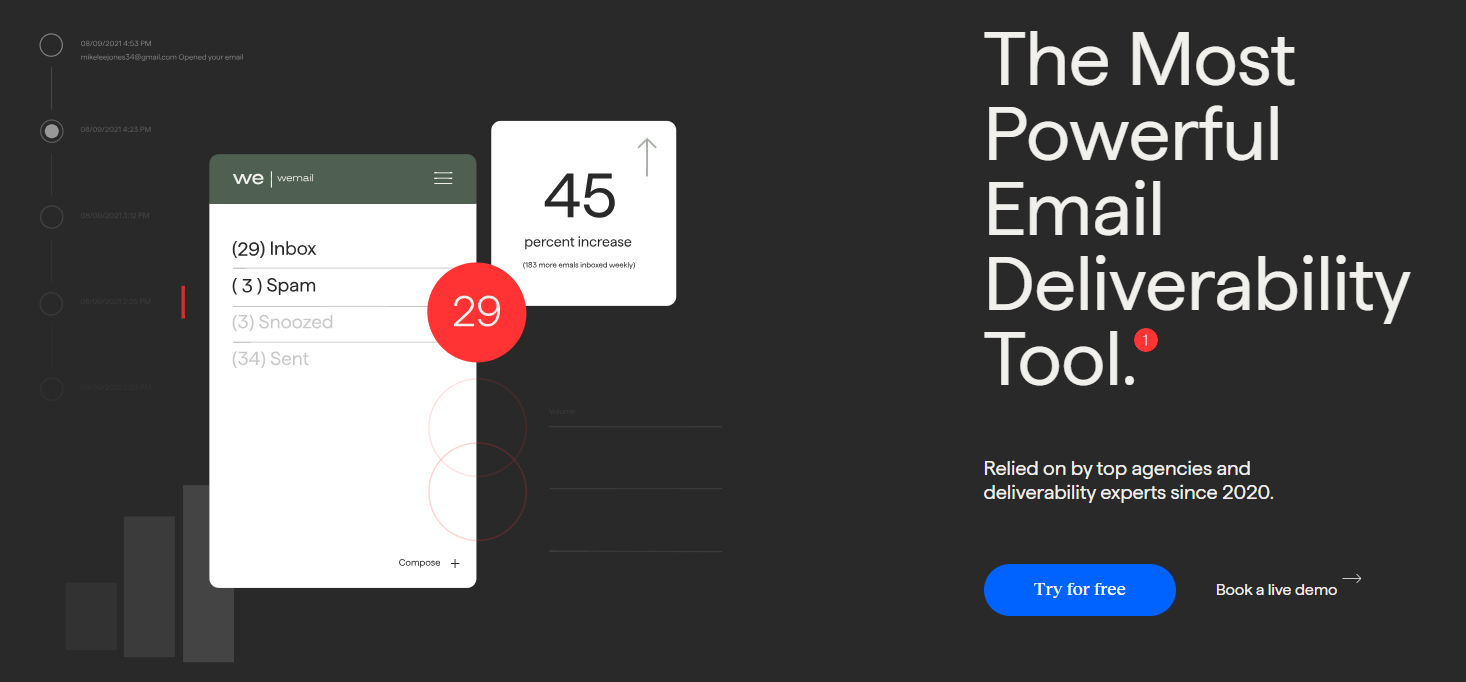
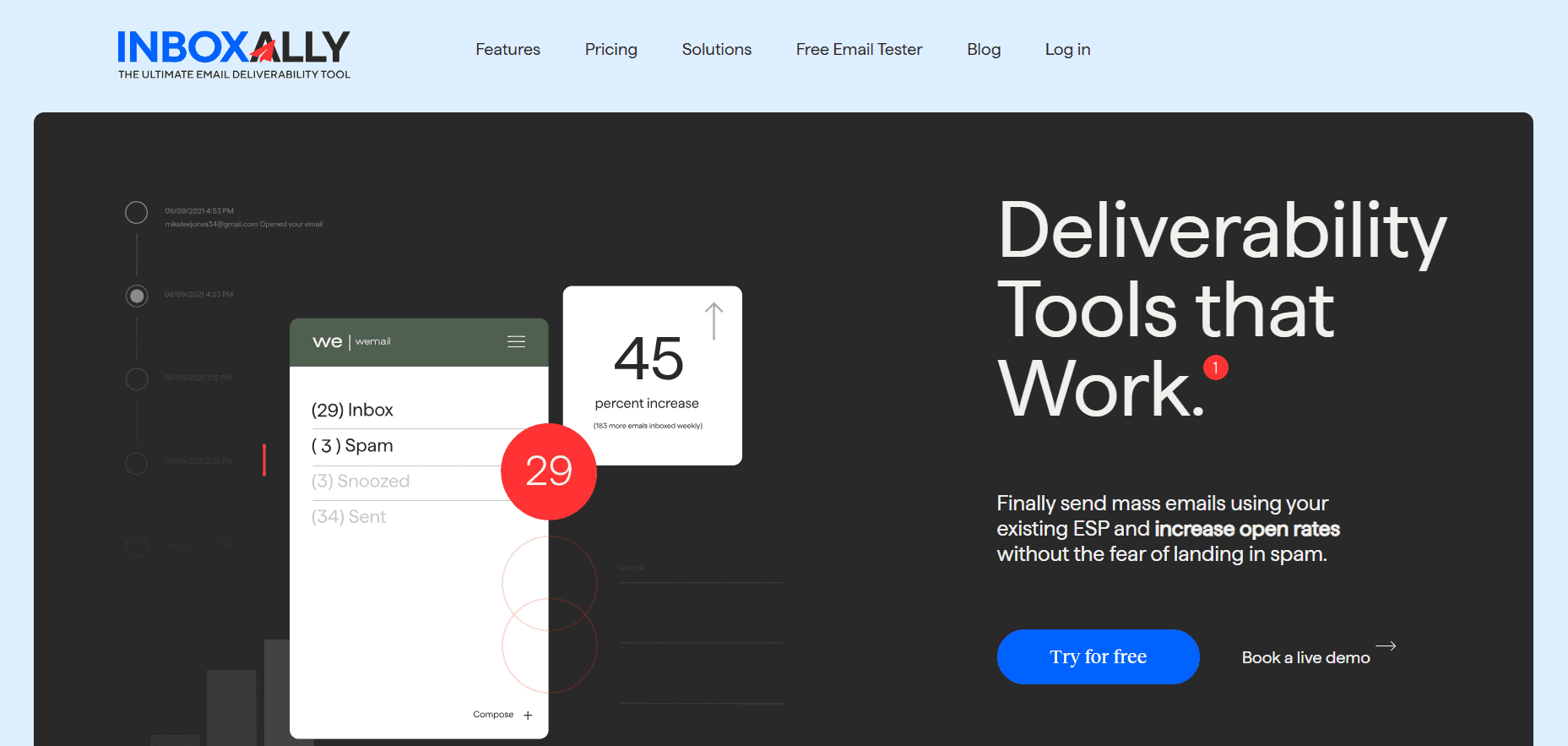
InboxAlly is an engagement-based deliverability and reputation repair tool. Where a monitoring platform focuses on your technical setup and diagnostics, InboxAlly focuses on the behavioral signals inbox providers care about most: how recipients interact with your emails.
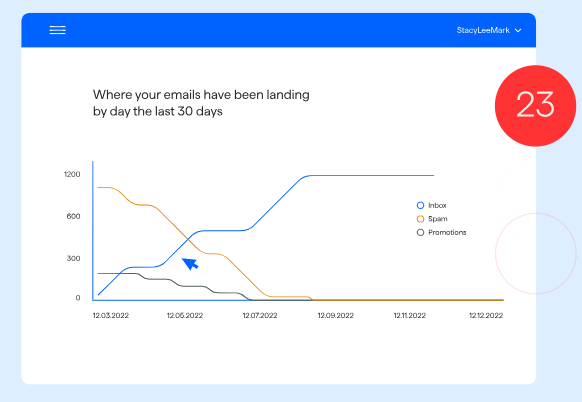
Instead of relying only on automated checks, it uses real, human-style engagement to teach the providers to see your domain differently, feeding the inbox the kind of positive activity that rebuilds a beaten-up reputation from scratch. This is valuable because Gmail and Outlook decide where your email lands mostly by how people treat it. And when enough positive signals fire on your domain, Gmail slowly but surely changes its mind and starts sending your emails back to the main inbox where they belong.
Here’s what it does in a nutshell:
- Adds your sender to seed inboxes across major email providers.
- Opens your campaigns from those inboxes in a human-like way (timing, scrolling, etc.).
- Moves emails out of spam and into the primary inbox when they land incorrectly.
- Marks messages as “not spam” or “important” to generate strong positive signals.
- Clicks links inside your emails to show engagement beyond opens.
- Sometimes replies from seed inboxes to simulate real conversations.
- Lets you configure engagement rules by campaign/profile, so you control how aggressive the repair should be.
This is crucial because email providers stopped trusting machines a long time ago. They’ve gotten really good at catching empty activity, the opens that go nowhere, and the clicks that lead to nothing. These days, they trust real human behavior more than anything else because it’s the hardest thing to fake. As a result, a tool that creates actual engagement is speaking the one language the inbox still believes.
And because it works on the cause at the engagement layer instead of just describing the symptoms, it can work very quickly, bringing results in weeks instead of months. Of course, how fast you see change still depends on your sending volume, list quality, and how bad the starting reputation is. If you’re watching your pipeline dry up, that difference is everything.
InboxAlly is the comprehensive suite I need to solve challenging deliverability problems across the board. It's like a triage hub for diagnosing and fixing email deliverability rates in one dashboard. I've tried a lot of tools, but this is the one I've stuck with.
Pricing Model
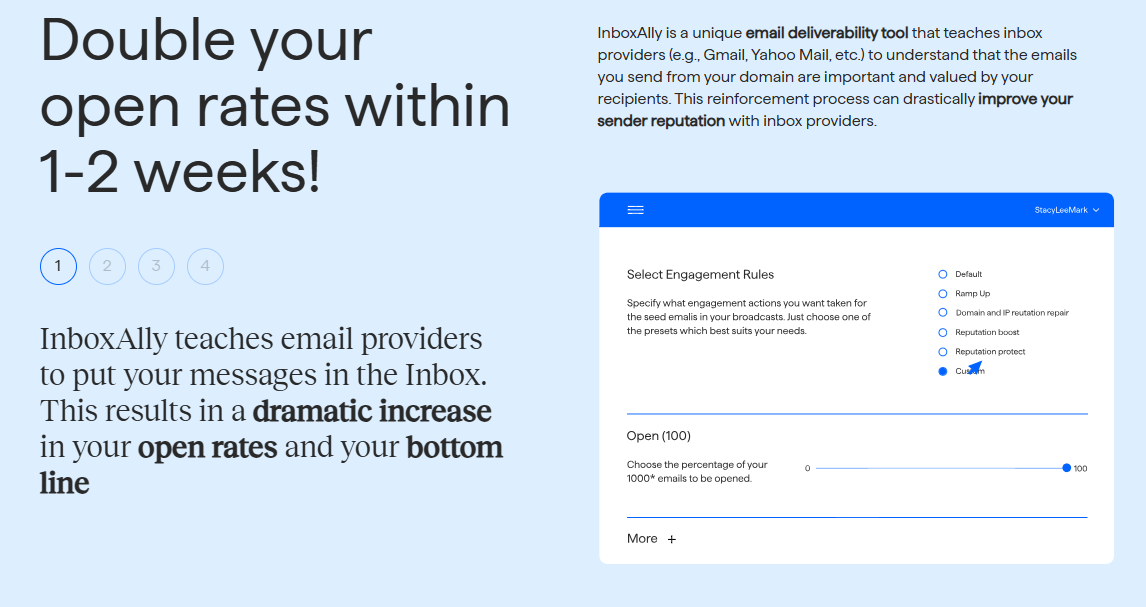
Because InboxAlly is there primarily to fix a problem, and not to provide broad infrastructure monitoring, it runs month to month and feels much more like an ad-hoc, on-demand service that can get you out of a tough situation pretty quickly. You pick a sender profile tier and can dial engagement up or down without renegotiating a contract.
That’s a lot like how deliverability trouble often feels in practice. Your reputation falls off a cliff, you bring InboxAlly in, you run it as long as the recovery takes, and once your email is landing again, you can scale it down or walk away with no contract clause glaring at you. You pay for the fix and any ongoing protection you actually want, not for eleven extra months of furniture nobody’s using.
Some senders still keep InboxAlly running in the background as a kind of reputation insurance, but the key is that you’re not locked in to anything.
Folderly vs. InboxAlly: Which One Is Right for You?
Where you’d pick each platform should be relatively clear by now, but if you want the short answer, here’s what I’d say:
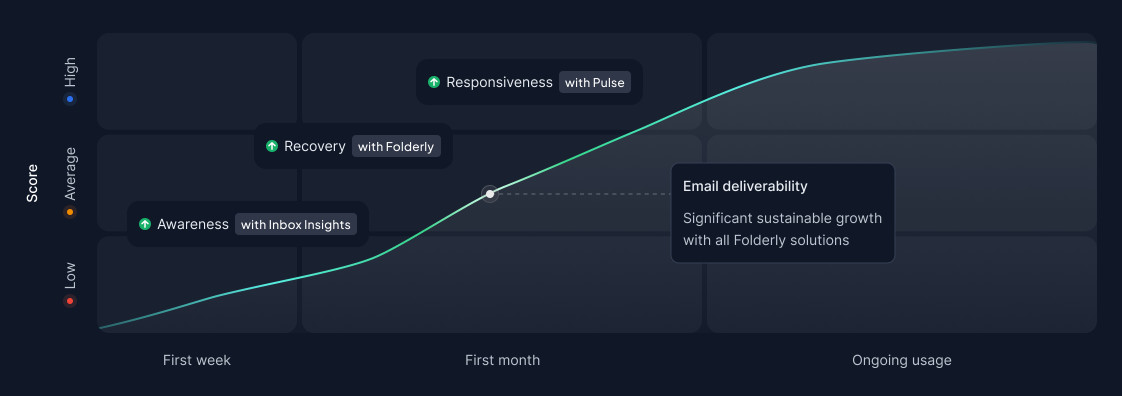
- Pick Folderly when you’re running a complicated email operation and you want constant eyes on a bunch of domains, plus experts on hand to read the numbers with you and guide fixes. The core value of Folderly is understanding and control, keeping you in the loop on the health of your setup at all times. For the right team, that’s worth paying for. It’s especially strong if you suspect issues with authentication, content, or domain health — not just rotten luck with spam filters.
- Pick InboxAlly when your mail just can’t crawl out of spam and you need it fixed ASAP, when you’re digging out of one specific mess rather than watching everything around the clock, and when you want active reputation repair instead of a detailed report confirming what you already painfully know. If your infrastructure is already in good shape and the main gap is positive engagement, InboxAlly is built for that stretch of the journey.
These aren’t strict rivals so much as different tools for different days. Plenty of smart senders could happily own both for completely different reasons. One keeps the machine tuned, and the other steps in when you need inbox providers to forgive and forget.
Final Verdict
Folderly earns every dollar it asks for as a permanent early-warning and improvement system with expert help attached.
However, most people reading this probably aren’t doing calm research and proactively preparing for the year ahead. They’re likely panicking as they watch good emails go to waste. For that person, InboxAlly’s engagement-based repair is the better fit for the day you’re having.
Match the tool to the problem in front of you. When there’s a fire, grab the extinguisher. When the smoke clears and you’re rebuilding the house, keep an eye on the wiring.