


- Five Types of Tools for Reducing False Declines
- The Best Payment Stack for Reducing False Declines (At a Glance)
- Luqra: Best for Payment Processing
- Wyllo (NoFraud): Best for Fraud Detection
- Auth0: Best for Customer Authentication
- Bridger Retry: Best for Smart Retries and Revenue Recovery
- Tableau: Best for Analytics
- So, What’s the Best Payment Stack for Reducing False Declines?
Last Updated on March 30, 2026 by Ewen Finser
False declines (when legitimate customer transactions get blocked) can silently drain your revenue and hurt customer trust. You’re working hard to attract and retain customers, only for your payment processor or bank to flag a real purchase as suspicious.
The most obvious impact is lost revenue, but the ripple effects go further. False declines can disrupt the customer experience, damage loyalty, and even push customers toward competitors. Over time, these small blocks add up, creating a noticeable hit to your bottom line and your brand reputation.
The challenge is that there is no single tool that can prevent false declines entirely. Instead, reducing false declines effectively requires a curated payment stack: a combination of tools that work together to keep fraud detection accurate without blocking real purchases.
Using multiple payment tools in tandem reduces the chances that your fraud prevention systems go overboard, helping you recover more revenue while keeping your customers happy.
Five Types of Tools for Reducing False Declines
There are a few different categories of payment tools that you should use in tandem to reduce false declines:
1. Payment Processing:
Your choice of payment processor significantly impacts how often you’ll have to deal with false declines. It’s possible that your processor’s fraud detection algorithms are overly aggressive and are blocking legitimate transactions. Some of the most common reasons causing a transaction to get flagged include large purchases or frequent purchases made in a short amount of time. There can also be issues with international purchases. Plus, simple technical errors can flag transactions, too.
2. Fraud Detection:
While pretty much all payment processors already have built-in fraud detection capabilities, adding another layer can help with fine-tuning and reduce false declines. Many of these types of tools use AI to refine the decision-making process and improve payment outcomes.
3. Customer Authentication:
Integrating authentication tools, such as multi-factor authentication (MFA), into the checkout process is another strategy for preventing false declines. Relying on more than just an email and password, especially for risky transactions, increases confidence that a transaction is legitimate. Many MFA tools use SMS, email, or authentication apps to add another layer of verification.
4. Smart Retries and Revenue Recovery:
A smart retry is when the transaction is automatically retried after it was declined. Retrying transactions can increase the likelihood that it eventually goes through. Often, businesses will use more than one payment processor, so if one fails, the transaction can be retried through another.
5. Analytics:
While not directly reducing false declines, a strong analytics platform can track them and give you an idea of what’s working and what isn’t. You can narrow down the causes of false declines and hone in on potential triggers.
The Best Payment Stack for Reducing False Declines (At a Glance)
Software | Features | |
Payment Processing | Online payment processing In-person payment processing Customizable fraud detection rules | |
Fraud Detection | Wyllo (NoFraud) | AI fraud screening Customizable fraud detection rules Manual review by fraud analysts |
Customer Authentication | Adaptive MFA Universal login Single sign-on (SSO) | |
Smart Retries and Revenue Recovery | AI retries Subscription retries Links to an endless number of processors | |
Analytics | Data visualizations Dashboards KPI tracking |
Luqra: Best for Payment Processing
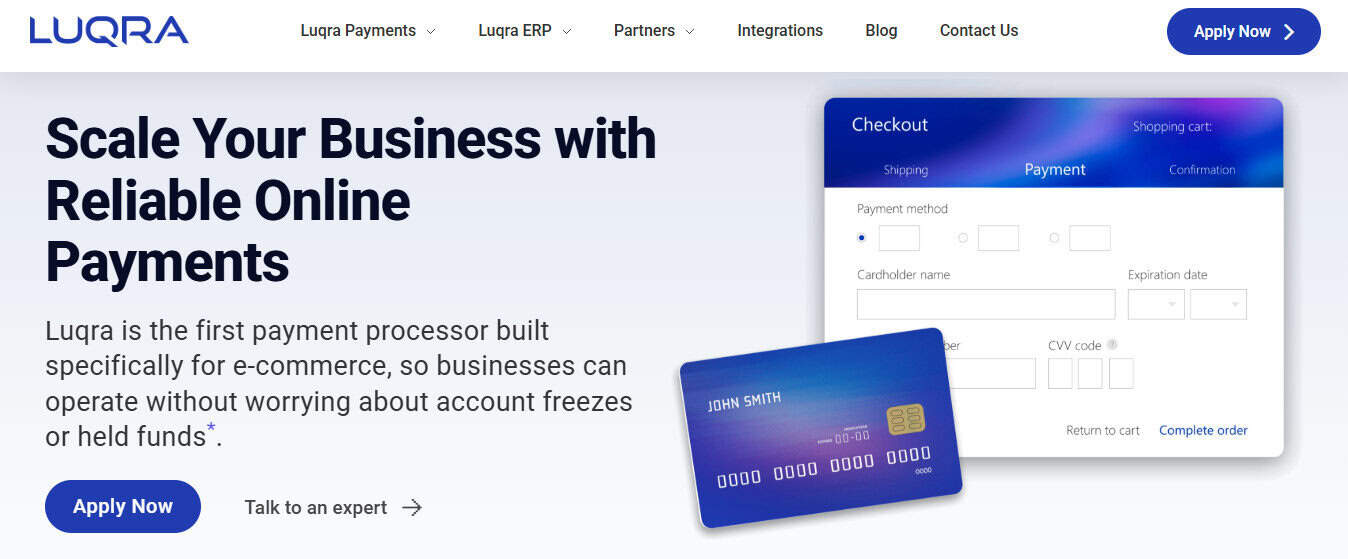
While not as well-known as some of its competitors, Luqra is a smart choice of a payment processor, particularly for e-commerce. However, it’s an appropriate solution across industries, and you can use it to collect either online or in-person payments from customers.
When selecting a payment processor with the intention of reducing false declines, what you need to look for is something that has adequate fraud protection tools. Most processors come with fraud protection already, since payment fraud and chargebacks can significantly cut into profits.
The issue is that prevention and detection tools can sometimes go overboard, leading to the issue of false declines. The processor you choose should have a sophisticated fraud detection system to ideally prevent this from occurring. It should be able to distinguish between real customers and fraud attempts. Fortunately, this is the case with Luqra.
Features
Luqra’s fraud features are highly customizable, allowing you to establish rules that fit your business’s needs. You can set minimum transaction rules, payment velocity settings, geographic limitations, and IP address restrictions, among others.
The platform’s automated fraud protection capabilities help to distinguish between fraud attempts and legitimate customers, preventing lost revenue. You can manage fraud protection via Luqra’s unified online portal, and you can opt to receive real-time, per-transaction notifications to stay up to date on what is happening.
If there’s an issue, it’s easy to get in touch with someone at Luqra, since they have U.S.-based phone support available 24/7/365. Another bonus for e-commerce businesses is that much of Luqra’s staff has experience working in the field, so they understand the unique issues that can arise.
Pricing
Regarding pricing, here’s what you’ll be looking at:
- Online Payments: Starting at 2.3% + $0.20
- In-Person Payments: Starting at 2.0% + $0.10
There is also a cash discount program you can enroll in for $99 monthly, which passes card fees on to your customers. Luqra guarantees that its prices will never increase and has “meet or beat” rates, so it’s committed to keeping costs low on your end.
Wyllo (NoFraud): Best for Fraud Detection

While Luqra has built-in fraud protection features, it’s generally a good idea to add another layer of fraud detection beyond what your payment processor offers. This is where Wyllo comes in.
Wyllo, previously known as NoFraud, is an e-commerce risk intelligence platform that helps with accurate fraud detection. Its capabilities span several areas of fraud, including bot detection, return fraud and abuse prevention, claim and policy abuse prevention, and chargeback management. But the main focus here is on its payment fraud protection features.
Features
Like Luqra, you can customize your own fraud prevention rules to help flag suspicious transactions. This is particularly beneficial since each business faces different risks, and fraud prevention isn’t something that should be standardized.
Wyllo uses AI to screen for fraud, and it performs instant order screening to determine fraud risk. While its screening process is AI-powered, the company also has human fraud experts on staff.
When you encounter riskier orders, you can escalate them to Wyllo’s fraud analysts for manual review. Having these orders reviewed by fraud experts can aid in maximizing approvals, reducing false declines.
Pricing
Wyllo doesn’t disclose pricing information on its site. Instead, it customizes costs based on business-specific factors like revenue, order volume, and risk profile. Additionally, signing up for Wyllo’s optional chargeback guarantee also affects the amount you’ll pay.
Auth0: Best for Customer Authentication

Customer authentication, especially multi-factor authentication, provides another layer of security, decreasing the chances of false declines. One effective way that you can enable MFA for customers is to require them to enter a code, such as one sent via SMS or email, when they log in to their account. This improves the likelihood that the person making purchases with the account is the actual customer and not a bad actor.
You do need to be careful with implementing MFA, though. If the process is cumbersome and time-consuming, customers will abandon their carts, and you could end up losing more money than whatever you’re already losing through false declines. One way to work around this would be to only require MFA when a login seems risky.
Features
Auth0 is an authentication and authorization platform, and its capabilities include universal login, single sign-on (SSO), and multifactor authentication, among others. One of Auth0’s major selling points is its efficacy with consumer applications. Many other authentication platforms aren’t consumer focused and instead hone in on access to internal systems.
Auth0 positions itself as being easy to implement, claiming that it only takes a few lines of code to implement in any app. Auth0 is extremely adaptable, so you can boost security while maintaining your optimal customer experience.
One of its most popular features is its adaptive MFA, which only pops up for users when a transaction seems risky. Auth0 considers logins from new devices, geolocation issues, and suspicious IP addresses when determining whether to prompt users.
Pricing
Pricing depends on your number of active monthly users and on the specific features you want in your plan. However, there is a free plan you can use to get started.
Bridger Retry: Best for Smart Retries and Revenue Recovery
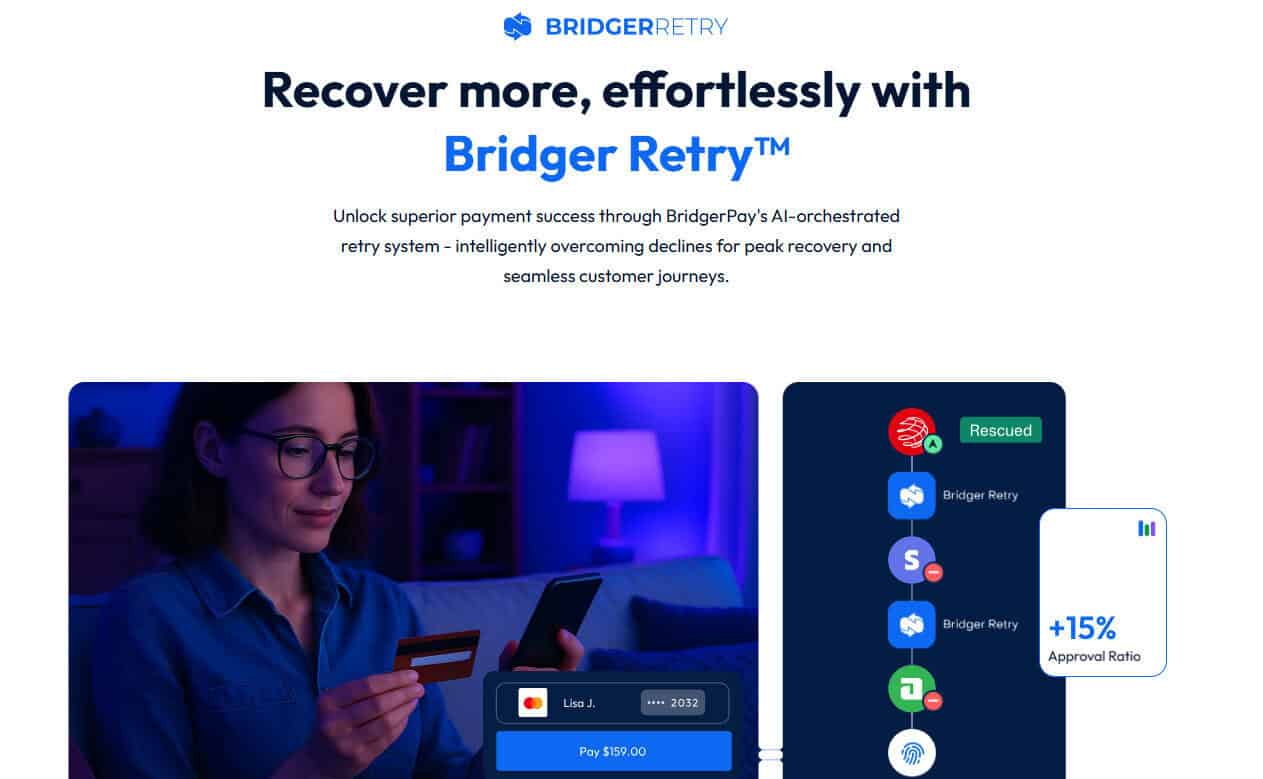
Bridger Retry, which is part of BridgerPay’s suite of products, is a commonly used tool for reducing false declines. It uses AI to evaluate declined transactions and determines the optimal retry path by considering decline codes, payment types, and user patterns. Then, it retries the transaction, with the goal being that for legitimate transactions, the end result will be acceptance rather than decline.
Features
You can choose which payment processors you want Bridger Retry to try out and in what order, and you can link to an endless number of processors. Using more than one payment provider means that Bridger Retry will have other options it can use for retrying payments, ideally boosting acceptance rates.
For example, you could use Luqra as your main payment processor but also have backups. So, if Luqra doesn’t work, you can set it up so that Bridger Retry tries Stripe next, and then Adyen, and so forth.
Bridger Retry states that it can recover between 15% and 30% of your revenue, which is significant. Its AI operates in real time, and while false declines are generally thought of in the context of credit cards, Bridger Retry can also retry failed Apple Pay and Google Pay transactions. Additionally, if your business operates off monthly subscriptions, Bridger Retry can retry those transactions as well.
Pricing
Bridger Retry doesn’t disclose pricing information on its site, so you’ll have to contact the company for a quote. You can book a demo first to get a feel for the platform.
Tableau: Best for Analytics

While business analytics isn’t directly part of the payment stack, it’s critical for understanding how your payment stack is working. You’re likely already familiar with Tableau, which is highly customizable and has applications across several industries, including finance, healthcare, retail, communications, and the public sector.
Features
By importing your payments data into Tableau, you can create custom dashboards to analyze false declines by payment method, geography, device type, time of day, and transaction amount.
That way, you can hone in on the potential triggers of false declines and which of your fraud prevention tools may be a little too overzealous. Then, you can go back into your payment processor or fraud detection system to make the desired changes.
Also, the counterpart of false declines is approvals, so you can create visualizations for those, too. You can take a look at your approval rate and the characteristics that approved transactions have in common.
Pricing
Tableau’s price depends on a few different factors. First, you’ll have to choose whether you want to host it in the cloud (Tableau Cloud) or within your organization’s own infrastructure (Tableau Server).
Then, you’ll select which edition you want to use: Tableau Standard or Tableau Enterprise.
Tableau Standard is the base analytics package, while Tableau Enterprise has advanced analytics. Lastly, you’ll pick out the licenses you need, such as whether you’ll be creating visualizations or viewing them.
So, What’s the Best Payment Stack for Reducing False Declines?
Instead of searching for one magic tool that doesn’t exist, you’ll need to build a payment stack, combining multiple tools that work in tandem to boost approvals and recover lost revenue.
While there are several categories of tools to consider, you’ll want those trustworthy payment processors, fraud detection tools, authentication tools, and tools for smart retries. Each piece plays a specific role: your processor handles transactions, fraud tools refine risk decisions, authentication verifies users, and retries recover revenue that would otherwise be lost.
False declines will never disappear entirely, but with the right stack in place, you can significantly reduce them, improve approval rates, and protect both your revenue and your customer experience.