


Last Updated on April 2, 2026 by Ewen Finser
If you’ve been trying to figure out how to hire the right marketing help, you’ve probably realized it’s not as simple as it sounds. While today, companies can hire traditional agencies, build their own in-house teams, work with freelancers, or bring in fractional specialists, each option comes with myriad pros and cons related to cost, speed, expertise, and flexibility. For many startups and growing companies, the problem is not just finding marketing talent; the bigger challenge is building a team that can grow with the business. Early-stage companies often need experienced strategists but cannot afford to hire them full time. At the same time, larger companies may only need specialists for certain channels and do not want to commit to long-term agency contracts.
This is where newer models come in. Some companies now work with marketing talent platforms that sit somewhere between agencies and freelance marketplaces. Instead of offering just one type of service, a Growth Marketing Talent Platform can combine vetted consultants, flexible engagement, and in some cases embedded teams that take ownership of both strategy and execution, along with recruiting support. For companies looking for marketing partners, understanding how hybrid models work can help them decide how to most effectively optimize their stage of growth and internal team structure.
Factors to Evaluate When Choosing a Marketing Talent Platform
Before you begin comparing providers, it helps to first understand the key factors that tend to matter most when businesses evaluate marketing talent platforms or growth partners.
Talent Quality and Vetting
Marketing results often depend on the skill of the person doing the work. Two consultants can use the same tools or channels and still get very different results. Platforms and agencies also can differ in how they choose their talent. Some work, like open marketplaces, allow anyone to join and clients have to evaluate candidates themselves, while others focus on curated networks where professionals are screened for experience and past performance before they are allowed onto the platform. For companies that do not have strong marketing leadership in-house, stricter vetting can lower the risk of hiring the wrong consultant or agency partner.
Speed of Hiring
Traditional hiring can take several months. Agencies can sometimes move faster, but they still need time to understand the project and put the right team together. Many talent platforms try to speed this up by quickly matching companies with available consultants. Some networks say they can recommend candidates within just a few days. Speed can be especially important for startups that are launching new products, trying to grow their acquisition channels, or suddenly need new marketing skills on their team.
Flexibility of Engagement

Different businesses need different levels of marketing support. Some companies may need a full growth team, while others only need a specialist for a specific channel like paid search or lifecycle marketing. Flexible working models make it easier for companies to adjust over time. They can increase or reduce hours, bring in new specialists, or shift roles as their needs change. This is especially helpful during periods of fast growth, when marketing priorities can change quickly.
Breadth of Marketing Capabilities
Marketing today covers many different functions, including:
• Paid social and paid search
• Lifecycle marketing and email
• SEO and content marketing
• Product marketing
• Growth strategy and experimentation
• Analytics and attribution
• Creative production
When a platform offers a wide range of these skills, it becomes easier for companies to build cross-functional teams without having to manage several different vendors.
Integration With Internal Teams
Some companies prefer agencies that work independently and handle campaigns with very little involvement from the internal team. Others prefer consultants who work closely with their team and become part of their existing workflow. Understanding how a platform’s consultants collaborate with internal teams can help companies decide if that model fits the way they like to operate.
Long-Term Team Building
Many companies start by working with fractional or contract marketers, but over time they move toward building their own in-house teams. Platforms that also offer recruiting services, or allow consultants to transition into full-time roles, can make this process much easier. As the marketing talent ecosystem has evolved, some platforms have started combining several of these approaches. Instead of operating only as agencies or freelance marketplaces, they bring together curated networks of consultants, agency-style execution, and recruiting support. One example of this hybrid model is Right Side Up, a growth marketing partner that connects companies with experienced marketing consultants while also helping with execution and hiring.
Right Side Up
Right Side Up is a growth marketing partner that operates through a talent platform model. Instead of working only like a traditional agency, the company connects businesses with experienced marketing consultants while also offering embedded agency-style teams that take ownership of both strategy and execution, alongside recruiting services.
The platform provides marketing support in several ways:
• Fractional consultants who work directly with clients
• Custom agency teams that take end to end ownership of strategy and execution, working as an extension of the internal team
• Recruiting services for companies hiring full-time marketing roles
This structure allows businesses to work with marketing talent at different levels depending on their needs. Right Side Up works with companies in several industries, including software, marketplaces, and consumer brands. Its clients have included companies like Coinbase, DoorDash, Stripe, and Instacart. Instead of long-term agency contracts, most engagements are set up around flexible consulting hours or project-based work.
Strengths

Flexible Engagement Model
One of the main advantages of the Right Side Up model is flexibility. Companies can work with individual consultants for specific needs like lifecycle marketing or paid acquisition. They can also build larger teams when they want to run multi-channel growth campaigns. This approach allows businesses to grow their marketing step by step instead of committing to a large agency retainer from the start.
Access to Experienced Growth Marketers
Right Side Up mainly works with experienced marketing professionals, many of whom have previously worked in-house at technology companies or fast-growing startups. For companies that do not have strong marketing leadership internally, having access to senior operators can help speed up decisions and improve channel strategy.
Multiple Service Paths
Unlike many marketing networks that focus only on freelance talent, Right Side Up also offers agency-style teams and recruiting services. This allows companies to work with the same partner through different stages of growth, from fractional consulting to hiring full-time marketing roles.
Faster Access to Talent
According to the company, businesses can often receive talent recommendations within a few days and start projects within a couple of weeks. Compared to traditional hiring processes, this can significantly reduce the time needed to fill important marketing roles.
Limitations
Cost Compared With Open Marketplaces
Curated talent networks usually cost more than open freelance platforms where clients handle the vetting themselves. When businesses pay for curated talent, they are also paying for the platform to screen candidates, match them with the right projects, and provide ongoing support. For companies that already have strong internal hiring processes, open marketplaces can sometimes be a lower-cost option.
Requires Internal Collaboration
Right Side Up consultants usually work closely with internal teams instead of operating like a fully outsourced agency. Companies that want a partner to handle all marketing execution without much internal involvement may prefer a more traditional agency structure.
Not Designed for Very Small Projects
Because the platform focuses on experienced marketing professionals, it may not be the best option for businesses looking for short-term or entry-level marketing support. Smaller projects may be a better fit for freelance marketplaces where hourly rates are often lower.
Best Fit

Right Side Up tends to work best for companies that:
• Are scaling their marketing capabilities quickly
• Need experienced operators who can contribute to both strategy and execution
• Want flexible access to specialists without hiring full-time employees right away
• Plan to build internal marketing teams over time
This model works especially well for startups and growth-stage companies that need senior strategic support and hands-on execution, without fully outsourcing the function.
MarketerHire
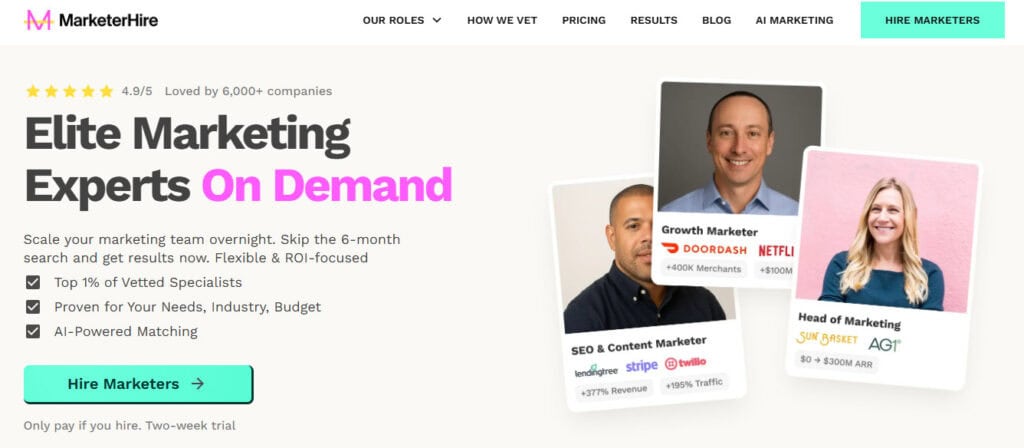
MarketerHire is a curated network that connects companies with freelance marketing professionals. The platform focuses on matching businesses with vetted marketers for roles such as paid acquisition, lifecycle marketing, SEO, and growth strategy. Unlike open freelance marketplaces, MarketerHire screens candidates before they are accepted onto the platform. Companies usually explain their needs, and the platform matches them with marketers who can start working relatively quickly.
Strengths
MarketerHire focuses on fast matching and access to specialized marketing talent. Businesses can hire marketers for part-time or full-time contract roles without committing to long-term agency agreements. Because the network focuses only on marketing professionals, companies can often find specialists with experience in specific channels or industries.
Limitations
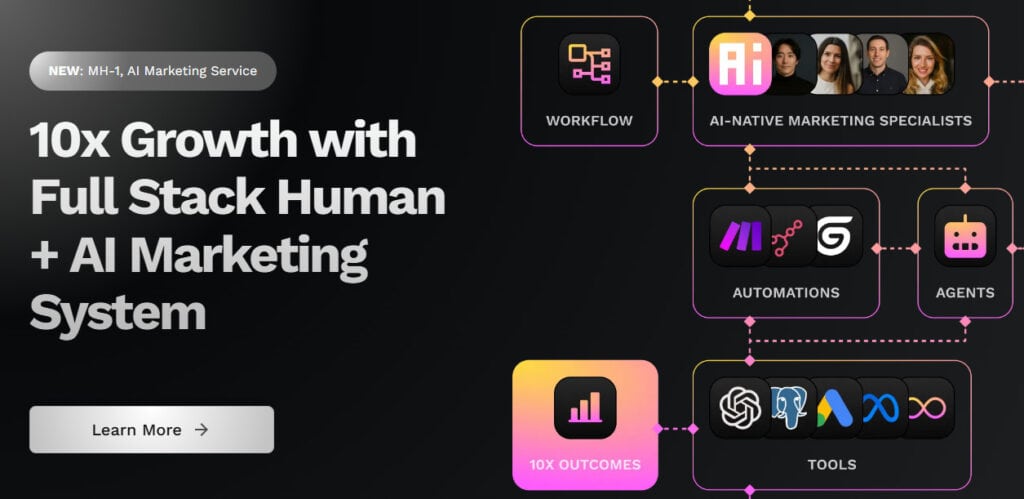
The platform mainly focuses on individual freelancers instead of building full teams. Companies that need support across multiple marketing channels may have to hire several freelancers and manage them internally. MarketerHire also usually does not offer the same recruiting services or organizational support that some hybrid platforms provide.
Best Fit
MarketerHire is often a good fit for companies that:
• Need a marketing specialist quickly
• Already have internal marketing leadership
• Prefer working directly with freelancers instead of agencies
Upwork
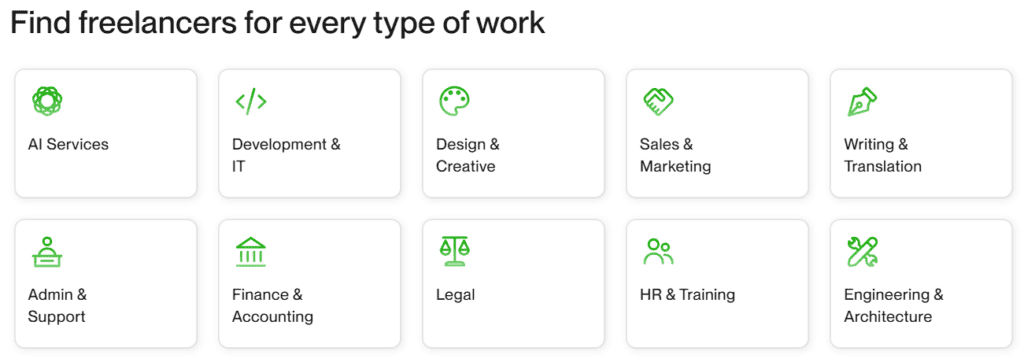
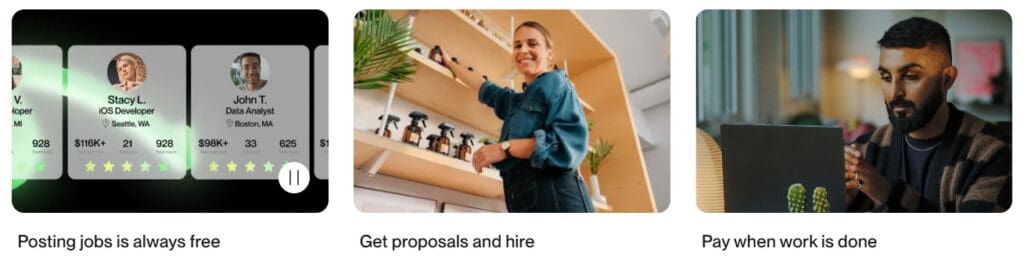
Upwork is one of the largest global freelance marketplaces. It connects businesses with independent professionals across many industries, including marketing, design, development, and writing. Companies can post projects, review proposals from freelancers, and hire professionals directly through the platform. Unlike curated networks, Upwork works as an open marketplace where businesses are responsible for evaluating and selecting candidates themselves.
Strengths
Upwork has a very large talent pool that covers many different skills and experience levels. Because freelancers set their own rates, companies can often find more affordable options for smaller projects or ongoing tasks. The platform also includes built-in payment systems, contract management tools, and freelancer reviews to help companies manage their work and evaluate freelancers.
Limitations
Because Upwork is an open marketplace, the quality of freelancers can vary a lot. Companies usually need to spend time reviewing proposals, interviewing candidates, and looking through portfolios before making a hiring decision. For businesses without marketing experience, this process can take time and increases the risk of choosing the wrong person.
Best Fit
Upwork works best for organizations that:
• Have clear project scopes
• Are comfortable managing freelancers directly
• Want lower-cost options for short-term work
How to Compare Marketing Talent Platforms
Businesses evaluating marketing partners can benefit from approaching the comparison process methodically.
Test initial engagements
If possible, start with a small project or short-term engagement before committing to a long-term partnership. This gives companies a chance to see how well a consultant or platform works with their internal team.
Compare pricing structures
Different providers charge in different ways, such as:
• Hourly consulting rates
• Project-based fees
• Monthly retainers
• Platform subscription fees
Understanding how these costs grow over time can help companies avoid unexpected expenses.
Evaluate how talent is matched
Some platforms use algorithms to match companies with talent, while others rely on human screening and recommendations. Businesses may want to ask how candidates are vetted and how the matching process works.
Think about long-term team structure
Companies that plan to build internal marketing teams later should check whether the platform also supports recruiting or allows contractors to move into full-time roles. This can make the transition easier.
Review documentation and support
Good onboarding materials, documentation, and account support can make it much easier to start working with a new platform. Businesses should consider how much help they may need in the early stages.
Closing thoughts

There is no one perfect way to build a marketing team. Traditional agencies, freelance marketplaces, and curated talent platforms all have their advantages depending on a company’s size, budget, and internal resources. Platforms like Right Side Up represent a newer model that sits between agencies and freelance networks. For many companies, the most important thing is not choosing the biggest or most well-known platform, the real goal is finding a partner that fits the company’s workflow, stage of growth, and team structure. A setup that works well for a fast-growing startup may look very different from what an established company needs and taking the time to test platforms, compare engagement models, and experiment with how each option fits your organization can help make sure the decision supports long-term growth.