


Last Updated on March 25, 2026 by Ewen Finser
As someone who travels regularly and has tested different phone plans over the years, I can attest that finding the right mobile coverage for trips doesn’t have to be complicated or expensive. I’ve been using AT&T for years, as their International Day Pass makes it incredibly easy to keep my same plan active when I’m abroad. No SIM card swapping, no complicated setup, just a straightforward daily fee.
Still, what works for me might not work for everyone. The best phone plans for travelers really depends on the types of trips you take. Are you taking a road trip cross country? Hopping on domestic flights? Heading abroad for a week or two? After testing dozens of plans across different travel scenarios, I’ve learned that each has different needs, and understanding these differences is key to avoiding surprise charges and connectivity headaches.
I’ll walk you through what actually matters when choosing a travel-friendly phone plan, breaking it down by the types of trips most of us take. Whether you’re looking at premium carriers or budget-friendly prepaid options like Visible and Total Wireless, you’ll know exactly what to expect and what tradeoffs you’re making.
Understanding What You Actually Need in a Travel Plan
Before diving into specific plans, let’s talk about what really matters when you’re on the road. I’ve made the mistake of choosing plans based on features I never used, and I’ve also been caught off guard by limitations I didn’t know existed.
For domestic travel, whether this means road trips or flights, the likely main concern is coverage reliability. You want a plan that works in rural areas between cities, not just in major metropolitan areas. Strong network coverage in the middle of nowhere can be a lifesaver when you need directions or have to make an important call.
International travel is different. You need to think about data roaming, texting capabilities, and whether you can make calls without racking up astronomical charges. Some plans include international features right out of the box, while others require add-ons or will hit you with per-minute rates. Don’t forget hotspot capability—when traveling for work, turning your phone into a Wi-Fi hotspot for your laptop can be essential.
Best Plans for Road Trips and Domestic Travel
When you’re driving across the country or taking weekend getaways, network coverage is everything. There’s nothing worse than losing service when you really need GPS or can’t reach roadside assistance.
The major carriers, namely Verizon, AT&T, and T-Mobile, all have extensive domestic coverage but come with premium pricing. If you’re already on one of these networks and happy with the coverage, there’s no real reason to switch just for domestic travel.
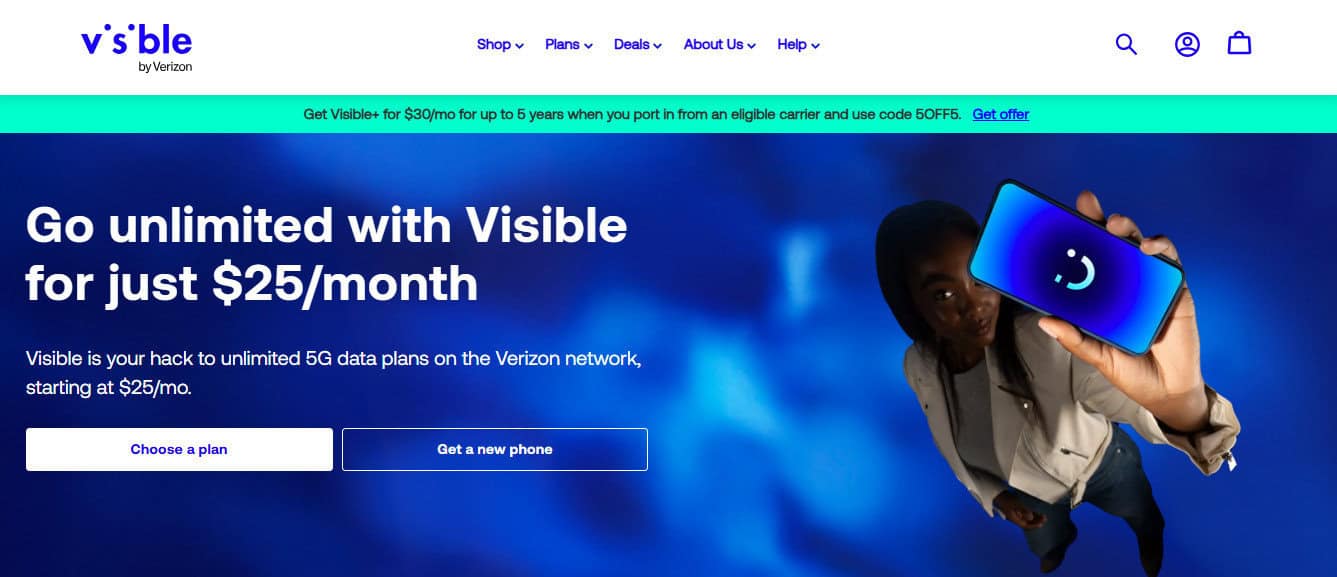
But here’s where it gets interesting: Visible and Total Wireless are both Verizon-powered networks, meaning you get access to Verizon’s extensive coverage at a fraction of the cost. I’ve recommended these to friends and family who primarily travel domestically, and they’ve been really happy with the tradeoff.
Visible offers unlimited data, talk, and text for a straightforward monthly price. No contract, no hidden fees, and you’re using the same network infrastructure that Verizon’s premium customers use. The main tradeoff? During peak times, you might experience slower data speeds if the network is congested and Verizon prioritizes its direct customers first. In practice, this is rarely an issue unless you’re in a packed stadium or downtown during rush hour.
Total Wireless offers similar value with different plan structures, including multi-line family plan options. Both are prepaid, so you pay upfront with no surprise charges.
The real question: are you willing to potentially deal with slower speeds during congestion in exchange for saving $30-50 per month?
What About Domestic Flights?
Flying domestically doesn’t change much in terms of what you need from your phone plan. Your phone works the same in Denver as it does in Miami—network coverage at your destination is what matters.
Where things get interesting is in-flight connectivity. T-Mobile’s higher-tier plans include free in-flight Wi-Fi and texting on certain airlines, which is useful for frequent flyers. I have colleagues who swear by this feature for working during long flights.
Budget carriers and MVNOs like Visible and Total Wireless don’t include these perks. But here’s my take: most airlines now offer their own Wi-Fi packages you can purchase trip by trip, and some are even free with limited features. If you fly once or twice a year, buying Wi-Fi as needed is far more cost-effective than paying an extra $20-30 monthly for a premium plan.
Think about your actual usage. Flying every week for business? Premium perks might make sense. Taking a few trips yearly for vacation? Stick with the budget option and buy Wi-Fi when needed.
Short International Trips: What Actually Works

This is where phone plans differ most significantly. International roaming can either be seamless or a nightmare depending on what you’ve set up before you leave.
I use AT&T’s International Day Pass, and here’s why it works for my travel: When I land in another country, my phone automatically connects and I get a text confirming the pass is active. I pay $12 per day and use my regular plan’s talk, text, and data like I’m home. For a week-long trip, that’s $84, which is not exactly cheap, but has the benefit of being predictable and hassle-free.
Verizon’s TravelPass works the same way with identical pricing. Both options are ideal if you take occasional international trips and value convenience over getting the absolute cheapest option.
If you’re on a tighter budget or travel internationally more frequently, the math changes. T-Mobile’s mid-tier and premium plans include international data and texting in over 200 countries as part of your regular monthly rate. Data speeds are slower (usually 2G or 3G), but fine for checking maps, messaging, and light browsing. This is a great deal for multiple international trips yearly.
This is where prepaid options like Visible and Total Wireless show their limits. Neither includes full international roaming in base plans. Visible offers international calling and texting from the U.S. and has begun rolling out limited roaming in select countries, but coverage isn’t as broad as premium carriers. Total Wireless supports international calling to certain countries, which is different from using your phone abroad.
So what if you want a budget carrier but need international connectivity? You have options. Buy a local SIM card at your destination, usually the cheapest route at $20-40 depending on the country. Many airports have vendors right in arrivals.
Alternatively, use an eSIM service like Airalo or Holafly. These let you download a data plan directly to your phone without physically swapping cards. They’re increasingly popular because they’re convenient and competitively priced. The tradeoff is managing multiple phone services.
For short international trips, the day pass approach makes the most sense. It’s simple, works immediately, and you’re not dealing with technical complexity. For longer trips or frequent international travel, carriers with built-in international features or local SIMs become more cost-effective.

Try Visible for FREE with their 15-day offer before you switch. No commitment or credit card needed. Terms apply.
The Tradeoffs You Need to Understand with Prepaid Plans
Prepaid plans and budget carriers aren’t worse than premium plans, they’re just different, and the differences matter depending on your needs.
The biggest tradeoff with services like Visible and Total Wireless is network prioritization. Even on Verizon’s network, you’re at the back of the line when it gets crowded. In dense urban areas during peak hours or at major events, your data speeds might slow. For everyday use, you won’t notice. But streaming HD video in Times Square at 6pm might show the difference.
Second is customer service. Premium carriers have retail locations and robust support infrastructure. With prepaid services, you’re dealing with online chat or phone support—no store to walk into if something goes wrong. For tech-savvy travelers, this isn’t an issue.
Third is international features, already covered. My honest take: for 70-80% of travelers, especially those traveling domestically with occasional international trips, prepaid plans from Visible or Total Wireless make excellent financial sense. You save real money monthly, and the limitations are manageable with planning.
Making Your Decision: Questions to Ask Yourself

Choosing the right plan comes down to honestly assessing your travel patterns and priorities. Here are the questions I’d ask:
- How often do you travel internationally? More than three or four times yearly? A plan with built-in international features probably makes sense. Once or twice? You’re better off with a budget plan and handling connectivity trip by trip.
- Do you need hotspot functionality regularly while traveling? If you’re working on the road connecting a laptop, ensure your plan includes sufficient hotspot data. Visible includes mobile hotspot, though speeds are capped.
- How important is customer support accessibility? Want to walk into a store when something goes wrong? That points toward major carriers. Comfortable troubleshooting online? Prepaid works great.
- What’s your monthly phone budget? Paying $80 monthly for premium unlimited but using a fraction of features? You could save close to $500 yearly switching to a $35 monthly prepaid plan. That’s real money for actual travel.
The Bottom Line
There’s no single “best” phone plan for everyone. What matters is matching the plan to your actual travel patterns and being honest about features you’ll really use.
For domestic travel (like road trips or flights between cities) both premium and budget carriers serve you well. Services like Visible and Total Wireless give you top-tier network infrastructure at a fraction of the cost. The tradeoffs are minor inconveniences compared to monthly savings.
International travel is where your choice matters more. If you travel abroad frequently, paying extra for built-in international features saves hassle and often money long-term. T-Mobile’s included international data and texting, or AT&T and Verizon’s day passes, provide seamless connectivity.
But if you’re an occasional international traveler or comfortable with trip planning, sticking with a budget carrier and handling connectivity separately makes perfect sense. Local SIMs and eSIM services are so easy to use that the hassle factor is minimal.
My personal setup, AT&T with the International Day Pass, works for my travel style with occasional international trips where I value seamless service. But I regularly recommend Visible to friends and family traveling primarily in the US, because the value proposition is too good to ignore when international features aren’t a priority.
Be intentional about your choice. Look at your travel over the past year, estimate the year ahead, and choose accordingly! The good news is that you’re not locked in forever and prepaid plans especially give you flexibility to try something and switch if needed. Whatever you choose, make sure your phone plan supports your travel rather than creating stress or racking up surprise charges.
Related read