


- Where Refersion Shines, and Where It Starts to Struggle
- How I Evaluate Refersion Alternatives
- The Top 6 Refersion Alternatives I’ve Used or Seen in Action
- Refersion vs. Leading Alternatives
- Quick Recommendations by Scenario
- My Verdict: Everflow Comes Out Ahead Everytime
- Key Metric to Track in Any Affiliate Platform
- Questions I Often Get Asked Before Switching from Refersion
- Wrapping Up
Last Updated on April 16, 2026 by Ewen Finser
I’ve worked with affiliate programs long enough to see a pattern. Refersion is often where teams start, and for good reason. It’s clean, easy to launch, and gets an affiliate program off the ground fast.
But most people searching for Refersion alternatives aren’t unhappy. They’re growing.
The real question usually isn’t “Is Refersion bad?” It’s “What works better now that my program is more complex?” As traffic sources diversify, lead funnels replace simple sales, and attribution starts to matter, the tools that once felt “good enough” can begin to feel limiting.
Refersion is frequently recommended as an all-in-one solution for affiliate and lead generation management. In practice, it works best for straightforward e-commerce and influencer-driven sales. Once lead quality, validation, and multi-touch journeys enter the picture, many teams start exploring other platforms.
This guide isn’t a feature dump or a sales pitch. I’m sharing what I’ve personally tested, what I’ve seen clients and partners rely on, and where each platform realistically fits. Some tools are built for e-commerce and influencer sales. Others are far better for lead generation and performance marketing. A few are designed for high-volume teams that need precision, not simplicity.
My goal is to help you choose the right platform for where you are now, and where you’re heading next.
Where Refersion Shines, and Where It Starts to Struggle
It’s quite easy to see why Refersion is the go-to tool for many e-commerce teams. It manages daily tasks smoothly, making it easy for small programs to get off the ground quickly. But like any tool, it has limits.
Where Refersion Makes Sense
Refersion works best when the goal is to launch quickly and keep things simple. I’ve seen e-comm teams get an affiliate program live in hours, not days, especially when Shopify is already part of the stack.
What Refersion does well:
- Fast setup for Shopify and e-commerce brands
- Clean, beginner-friendly interface
- Covers the core essentials:
- Affiliate links
- Commission tracking
- Payout management
For many early-stage programs, that’s enough.
Refersion tends to work well for:
- Small teams with limited technical resources
- Early-stage affiliate programs
- Influencer and content-driven sales models
If affiliates are sending traffic directly to product pages and conversions are straightforward, Refersion does its job without getting in the way.
Where I’ve Seen Teams Outgrow It
As programs grow, complexity creeps in. That’s where Refersion can start to feel limiting.
Common friction points I’ve seen:
- Limited flexibility for complex lead funnels
- Less control over:
- Attribution windows
- Multi-touch journeys
- Event-based tracking
Reporting is another issue. The data is there, but it often stays high-level. You can see totals and trends, but it’s harder to dig into why performance changes.
Refersion is usually not ideal when:
- You’re managing multiple offers or funnels
- Paid or external traffic sources drive conversions
- Lead quality and validation matter as much as volume
Why People Start Searching for Alternatives
Most teams don’t leave Refersion because something breaks. They leave because growth exposes limitations.
Typical reasons include:
- Scaling reveals tracking blind spots
- A growing need for control and transparency
- A shift from e-commerce sales to lead generation
- Demand for deeper reporting and automation
At that point, teams start looking for tools built for complexity, not just convenience.
How I Evaluate Refersion Alternatives
When I look at alternatives to Refersion, I don’t start by comparing feature lists or marketing claims. For me, what truly holds importance is how a platform performs in the day-to-day of a growing affiliate program.
Things that Actually Matter When You Scale
When I evaluate alternatives, I don’t chase long feature lists. I focus on how a platform performs in real workflows.
Here’s what I consistently look for:
- Lead-level tracking accuracy
- Custom events and postbacks
- Attribution flexibility
- Fraud prevention and lead validation
- Reporting depth I can actually use
- Partner onboarding experience
- Access to demos, documentation, and support
If these pieces aren’t strong, the platform won’t scale well, no matter how polished the interface looks.
Why Lead Generation Changes the Equation
Lead generation changes how affiliate software needs to work.
With leads:
- Validation matters more than raw counts
- Timing affects payouts and trust
- Attribution decisions impact budgets
Many e-commerce-first tools track conversions, but struggle to explain lead quality or performance differences between partners.
That gap becomes obvious once lead data starts driving real business decisions. At that stage, clarity matters more than simplicity.
The Top 6 Refersion Alternatives I’ve Used or Seen in Action
I’ve either used these platforms directly or worked closely with teams that rely on them on a daily basis. Each one solves a slightly different problem, which is why there’s no single “best” replacement for Refersion. The right choice depends on how complex your program really is.
#1. Everflow
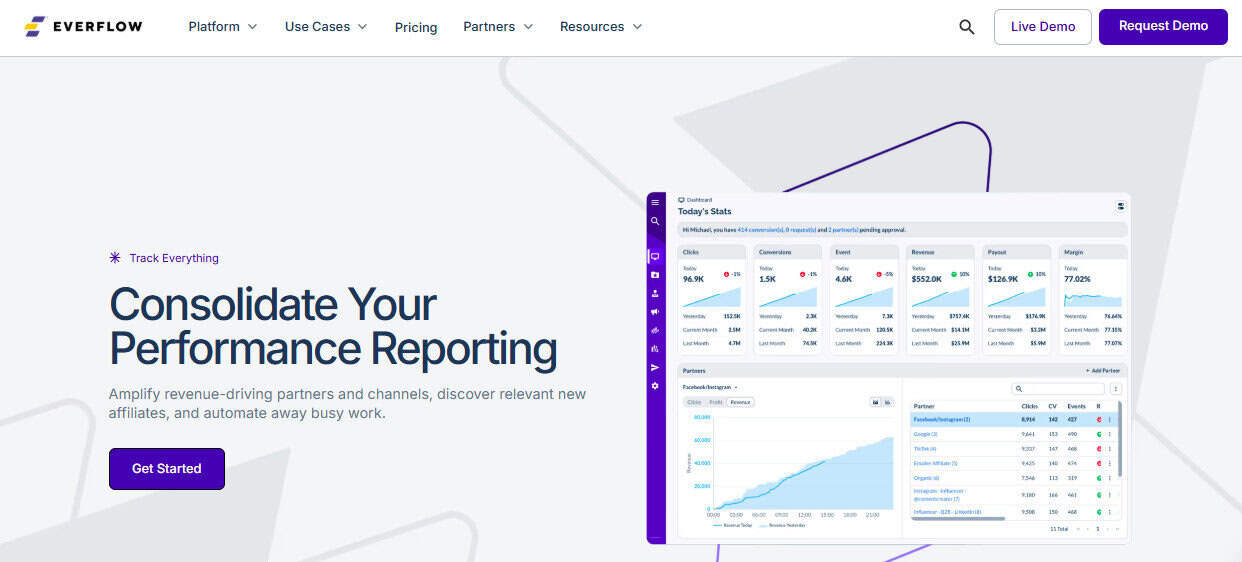
Everflow is the platform that comes up most often once teams move past basic affiliate setups. I usually see it introduced when reporting questions become harder to answer, or when lead quality starts affecting real revenue decisions.
It’s not the simplest tool on this list. That’s intentional. Everflow is built for clarity, not shortcuts. Where simpler platforms smooth over complexity, Everflow exposes it. For growing programs, that’s often exactly what’s needed.

Everflow makes partner management simple, fast, and transparent. Real-time data, clean reporting, and tools built for affiliate managers who want to scale with confidence.
Where Everflow Stands Out:
- Strong lead and event-level tracking: You’re not limited to one conversion event. You can track what actually matters.
- Flexible attribution models: Works well when traffic sources overlap or journeys aren’t linear.
- Real-time reporting with depth: Data updates quickly, and you can drill down without exporting everything.
- Designed for performance and lead-driven programs: Feels purpose-built for paid traffic and serious affiliate operations.
Limitations to be Aware of:
- There is a learning curve, especially for non-technical teams
- It can feel like more than you need if your program is still very small
Best for:
- Growing affiliate programs
- Lead generation businesses
- Performance marketing teams that need control and transparency
#2. Impact
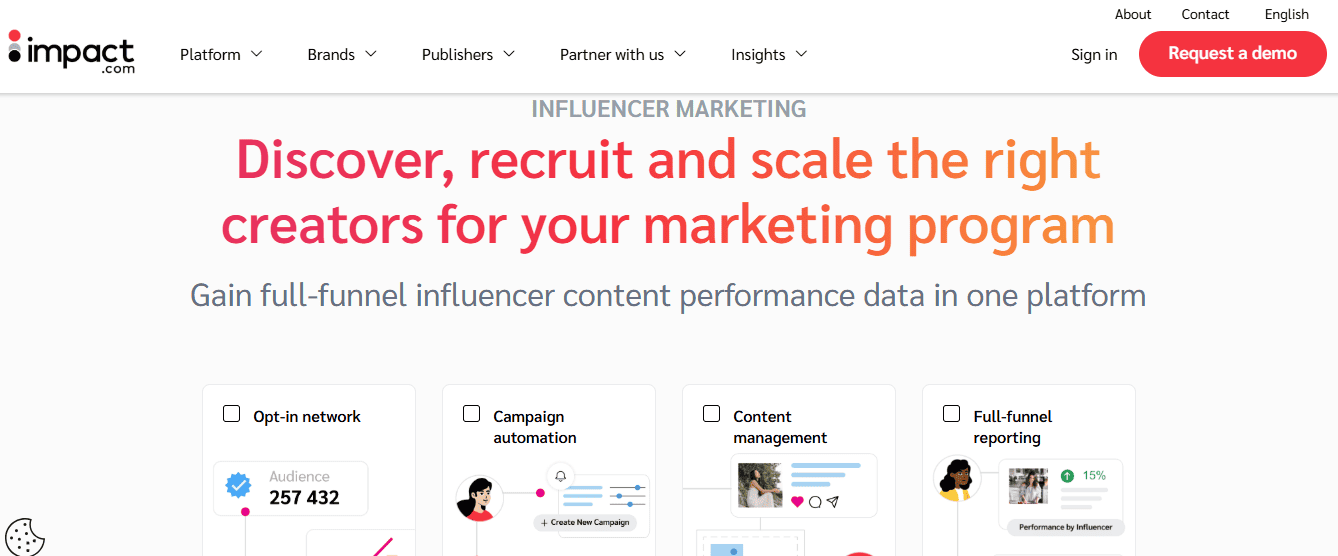
Impact is a strong, enterprise-focused platform that excels at partnership management. I’ve mostly seen it used by large brands with established affiliate or influencer ecosystems.
It’s powerful, but it assumes you already know what you’re doing. The learning curve is real, and so is the cost.
Where Impact Stands Out:
- Robust tools for managing brand partnerships
- Strong automation and compliance features
- Well-suited for large-scale influencer programs
Limitations to be Aware of:
- Complex setup and workflows
- Pricing can be prohibitive for smaller teams
- Less intuitive for lead-heavy performance marketing
Best for:
- Large brands
- Influencer-heavy and partnership-driven ecosystems
#3. Partnerize
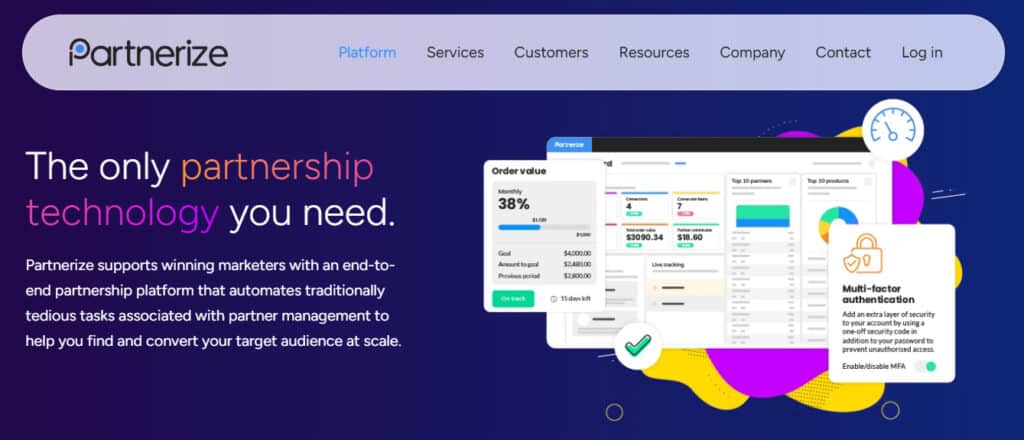
Partnerize feels similar to Impact in many ways, but with a stronger focus on automation and structured workflows. I’ve seen it work well for global brands managing multiple regions and partner types.
It shines when processes need to be standardized across teams.
Where Partnerize Stands Out:
- Clean, automation-focused workflows
- Strong tools for managing large partner networks
- Scales well across regions
Limitations to be Aware of:
- Less flexible for lead-driven performance marketing
- Can feel rigid when custom tracking is required
Best for:
- Global brands
- Partnership-led affiliate programs
#4. Tapfiliate
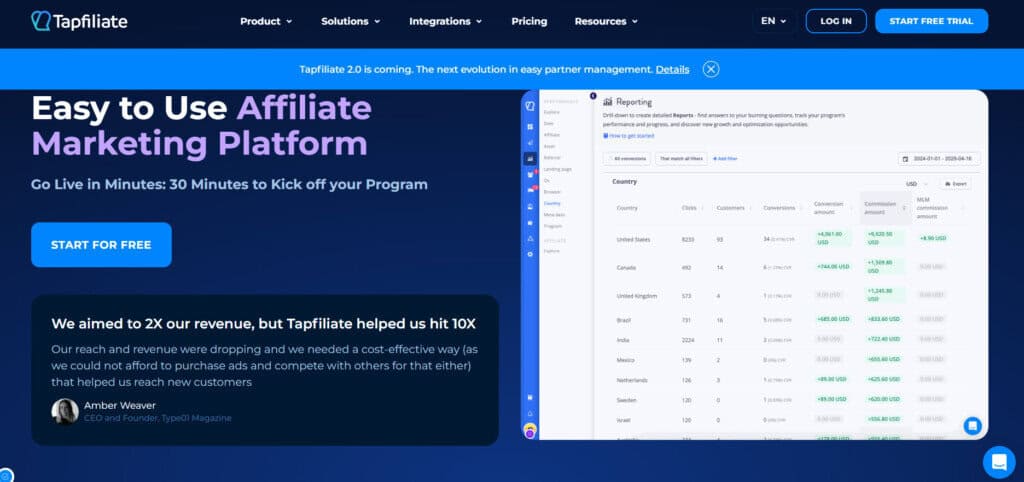
Tapfiliate often comes up as a lighter alternative to Refersion. It’s easy to set up, affordable, and approachable, which makes it attractive to smaller e-commerce brands.
It does what it’s meant to do, but it doesn’t try to be more than that.
Where Tapfiliate Stands Out:
- Simple setup
- Affordable entry point
- Clean, easy-to-navigate interface
Limitations to be Aware of:
- Limited lead tracking capabilities
- Not designed for complex attribution or validation
- Better suited to sales than leads
Best for:
- Small ecommerce brands
- Teams replacing Refersion with minimal added complexity
#5. CAKE
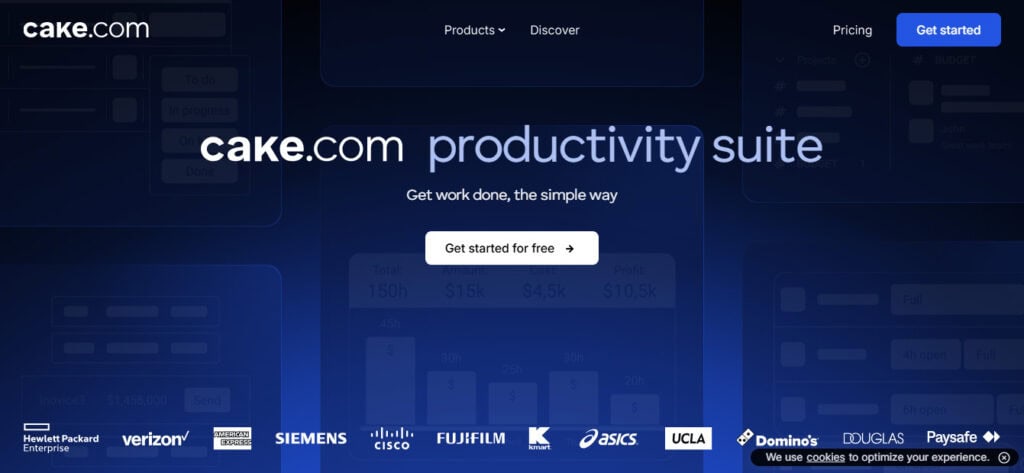
CAKE has been around for a long time, and it shows. It’s extremely powerful, but also very technical. I’ve mostly seen it used by agencies or teams with dedicated technical resources.
This is a platform you shape to your needs, not the other way around.
Where CAKE Stands Out:
- Extremely customizable
- Deep tracking and attribution options
- Built for complex, high-volume environments
Limitations to be Aware of:
- Steep learning curve
- Dated interface
- Requires technical expertise
Best for:
- Agencies
- Advanced teams with complex tracking requirements
#6. Post Affiliate Pro
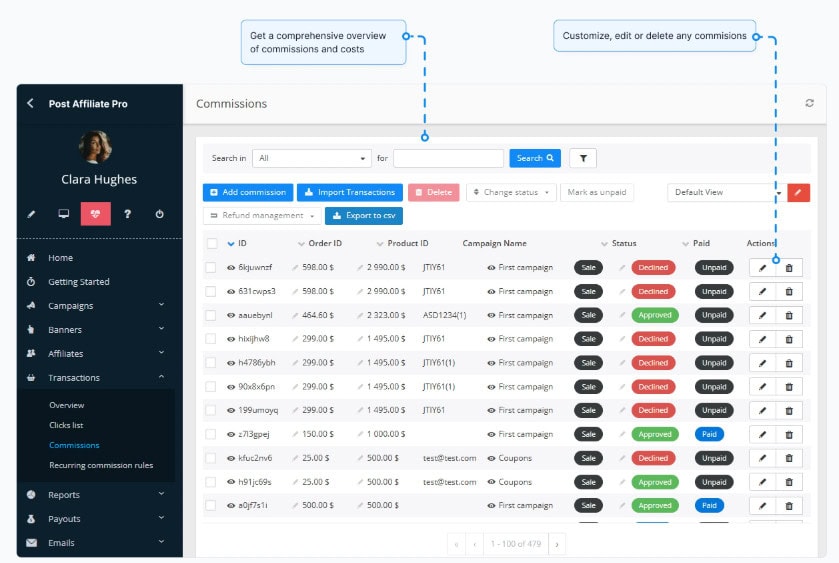
Post Affiliate Pro sits comfortably in the middle of the market. It’s reliable, fairly flexible, and doesn’t overwhelm users right away. I’ve seen it work well for teams that need more than basics, but not full enterprise tooling.
Where Post Affiliate Pro Stands Out:
- Balanced feature set
- Reliable tracking
- Easier to manage than more complex platforms
Limitations to be Aware of:
- Limited depth for advanced lead validation
- Less suited for performance-heavy programs
Best for
- Mid-market affiliate programs
- Teams that want stability without complexity
Refersion vs. Leading Alternatives
Here’s a table that reflects how these platforms behave in real-world use, not just how they market themselves. Ease of use often comes at the cost of control, and depth usually introduces complexity.
Platform | Best For | Lead Tracking Depth | Attribution Flexibility | Ease of Use |
|---|---|---|---|---|
Refersion | E-commerce beginners | Low–Moderate | Limited | Very Easy |
Everflow | Lead & performance marketing | High | Very Flexible | Moderate |
Impact | Enterprise partnerships | Moderate | Flexible | Complex |
Partnerize | Global partnerships | Moderate | Moderate | Moderate |
Tapfiliate | Small ecommerce brands | Low | Limited | Easy |
CAKE | Agencies | Very High | Very Flexible | Complex |
Quick Recommendations by Scenario
If you’re in a rush and need to make a quick decision, here’s how I’d break it down:
- E-commerce + influencers
Refersion or Tapfiliate works well when sales are simple. - Lead generation + scaling
Everflow offers the visibility and control most teams eventually need. - Enterprise partnerships
Impact or Partnerize makes sense for structured, large-scale programs. - Agencies and advanced teams
CAKE remains a strong option if you have the resources to manage it.
My Verdict: Everflow Comes Out Ahead Everytime
Everflow isn’t the right choice for everyone, and it’s not trying to be. It doesn’t win because it’s flashy or easy. It wins because it adapts as programs grow.
What I’ve seen is that teams rarely outgrow Everflow. Instead, they grow into it. As traffic becomes more complex and reporting questions get harder, the platform continues to provide answers.
The biggest difference is clarity. Everflow doesn’t just show numbers. It helps explain what’s happening behind them. That makes decision-making easier, payouts fairer, and partner conversations more grounded.
For programs focused on performance and lead-driven growth, that clarity matters more than convenience.
Key Metric to Track in Any Affiliate Platform
When I evaluate or manage an affiliate program, I’ve learned that looking at raw conversions alone isn’t enough. You need to track metrics that actually tell you what’s working, where, and why.
Here are the key metrics I focus on:
- Lead quality: Not every lead is created equal. I pay attention to source, engagement, and how likely each lead is to convert.
- Traffic source performance: Organic, influencer, and paid traffic behave differently. Understanding where the best leads come from helps optimize spend and incentives.
- Partner ROI: Which affiliates drive the most value relative to their commissions? This helps me reward top performers and adjust underperformers.
- Conversion timing & multi-touch attribution: Knowing when leads convert and which partners influenced the journey is critical for crediting and planning campaigns.
- Attrition and retention rates: Are affiliates staying active? Are leads returning or dropping off? These numbers reveal long-term program health.
- Payout accuracy: Late or incorrect payments damage relationships. Tracking this ensures reliability.
Platforms like Everflow make this tracking straightforward and flexible. Simpler tools like Refersion provide basics, but when I want granular visibility (especially across multiple offers or lead-heavy campaigns), having these metrics front and center makes decision-making much easier.
Questions I Often Get Asked Before Switching from Refersion
Question: Is Refersion Good for Lead Generation?
Answer: Refersion can handle lead generation at a very basic level. If you’re tracking a single conversion point and don’t need much validation, it may be enough early on. The issues usually appear as volume increases. Lead quality, timing, and attribution become harder to measure, and the reporting often doesn’t provide enough detail to diagnose performance changes. For simple use cases, it works. For scaling lead-driven programs, it tends to feel limiting.
Question: What’s the Best Refersion Alternative for Lead Tracking?
Answer: From what I’ve seen, platforms built with performance marketing in mind handle lead tracking more effectively. Tools like Everflow and CAKE offer stronger lead-level visibility, more flexible event tracking, and better attribution control. The key difference is not just tracking leads, but understanding where they come from, how they behave, and which partners consistently deliver quality.
Question: Should I Switch Platforms Now or Wait?
Answer: I usually recommend switching when decisions start feeling uncertain. If reports feel shallow, attribution is unclear, or you’re relying on workarounds to answer basic questions, that’s a sign the platform may no longer fit. Many teams wait too long because nothing is technically broken. In reality, the cost shows up as missed insights, misallocated budgets, and strained partner relationships.
Question: Do I Need a Technical Team to Use These Tools?
Answer: Not always, but it depends on the platform. Some tools are designed to be accessible for non-technical users. Others trade simplicity for flexibility. This is where demos matter. A short walkthrough usually makes it clear whether a platform fits your team’s skill set or requires additional support.
Question: What’s the Biggest Mistake Teams Make When Choosing an Alternative?
Answer: The most common mistake is choosing based on features instead of workflows. A platform might look powerful on paper, but if it doesn’t match how your program actually operates, it won’t help. The goal isn’t more data. It’s clearer answers.
Everflow makes partner management simple, fast, and transparent. Real-time data, clean reporting, and tools built for affiliate managers who want to scale with confidence.
How to Make the Switch without Losing Data
Switching from Refersion (or any other platform) can feel intimidating. From my experience, the key is planning and being methodical. Here’s how I usually approach it:
1. Export your data
- Pull all leads, conversions, commission rules, and historical performance.
- Don’t just export totals, get event-level data if the platform allows it.
2. Map fields to the new platform
- Each tool handles data differently. I spend time matching leads, offers, and affiliate IDs to ensure nothing breaks in migration.
3. Validate historical data
- Before fully launching, I cross-check sample records to make sure leads, conversions, and payouts align with the old system.
4. Communicate with affiliates
- I notify partners in advance about the switch. Clear instructions and timelines reduce confusion and prevent lost commissions.
5. Run parallel tracking if possible
- Some teams keep Refersion active for a short overlap period while testing the new platform. This ensures accuracy and reduces risk.
6. Use demos and support
- Platforms like Everflow provide migration guidance and live support. I always take advantage of these resources; it saves time and headaches.
Following these steps has helped me migrate programs smoothly without losing critical data or disrupting affiliates. Proper planning makes the transition feel much less risky and keeps the program running efficiently from day one.
Wrapping Up
Refersion isn’t a bad platform. For many teams, it’s a practical place to start. It’s easy to launch, simple to manage, and works well for straightforward affiliate programs. That’s why it’s often the first tool people adopt.
Most teams don’t move away from Refersion because something breaks. They move because their questions change. As programs grow, surface-level reports stop being enough. Teams want to understand lead quality, attribution paths, and performance differences between partners. That’s when the need for clearer data and more control becomes obvious.
If your program is still small, sales-driven, and relatively simple, staying with Refersion can make sense. But once leads, multiple offers, or paid traffic become part of the picture, tools built for performance marketing tend to fit better. In those situations, I consistently see Everflow come out ahead.
Not because it’s flashy or easy, but because it scales with the program. The tracking adapts as traffic becomes more complex, and the reporting helps explain what’s actually happening, not just what converted. That clarity makes decisions easier and conversations with partners more grounded.
In the end, the best platform is the one that gives you confidence in your decisions. For lead-driven, performance-focused affiliate programs, Everflow is the tool I’d choose and recommend to all.