


Last Updated on February 19, 2026 by Ewen Finser
If you’re looking to buy a blog or YouTube channel, there are two main different types of platforms to consider using: brokerages and open marketplaces.
Within both of these categories, there are dozens of companies that can help you to reach your goal (or, at least, that claim they can). Picking between them can be a job all of its own.
To help you make an informed decision on where to buy a content website, I’ve broken down all the relevant information and examined all the key players here, so you don’t have to.
Marketplaces vs. Brokers: How the Buying Process Works
Online Marketplaces

These are open platforms where sellers list websites for sale (often alongside other digital assets). Marketplaces will typically allow anyone to create a listing for their content site (though some have stricter vetting protocols than others when it comes to deciding what listings actually get published).
As a buyer, you can browse these listings freely, filter by niche or price, and reach out or bid when you find a site you like. The process is usually DIY: you may need to bid in an auction or negotiate directly with the seller, and perform your own due diligence on the site’s claims. Marketplaces typically provide some tools (for example, Flippa offers integrated escrow services and templates for contracts), but the onus is on you to vet listings and handle communications.
In essence, buying through a marketplace is similar to using eBay: you get a wide selection (including many small websites) and potentially lower prices, but you must sift through the listings yourself.
Website Brokers

In contrast, a broker is a professional intermediary that curates and manages the sale of established websites (typically on behalf of sellers).
Brokers like Quiet Light, Empire Flippers, and FE International operate like real estate agents for online businesses. You must sign up as a buyer on the brokerage’s website (you may need to show proof of funds or agree to sign an NDA) before accessing full listing details.
Once you’re qualified, you’ll be able to access detailed summaries of available companies through the brokerage. The broker helps coordinate the steps from offer acceptance to closing: they assist with due diligence (verifying finances, traffic, etc.), escrow/payment setup, and migration of the site to you.
Much of the heavy lifting is handled by the broker’s team, ensuring paperwork and technical transfers are done correctly. Throughout, the listing remains fairly private – brokers only share the site’s identity and sensitive info with serious potential buyers under NDA.
Best Content Website Brokers
If you decide to work with a broker, you’ll want to choose a firm with a strong track record in content websites. The content industry comes with a distinct set of challenges, so it’s a good idea to work with someone who understands these intimately.
Here, I look at some of the best content website brokers, what they offer, and why they stand out.
Quiet Light Brokerage

I think Quiet Light is the best broker of midmarket company sales, and it’s particularly adept when it comes to content exits.
Founded in 2007, Quiet Light is staffed entirely by entrepreneurs who have bought and sold businesses themselves. When you deal with one of the company’s advisors, you’re talking to someone who understands the nuances of content website exits from first-hand experience; this adds a layer of credibility you won’t find everywhere else.
Another advantage from the buyer perspective is that Quiet Light’s team is very selective about the listings they take on. For buyers, this translates to high-quality deal flow.
I would note that the buyer onboarding process can be a little demanding with Quiet Light (although it doesn’t set as high a bar as some other brokers). However, this isn’t all bad; once you qualify, you’ll automatically benefit from a high level of buyer trust.
If you’re looking for a content business with a valuation of between $500k – $25mn, Quiet Light could be the place to start your search.
FE International

FE International handles a lot of larger-cap content business sales. Founded in 2010, the firm has completed over 1,500 deals worth more than $1 billion overall.
If you’re considering larger content sites or more complex content portfolios, FE might be able to help. However, it won’t work with just anyone; its listings are only visible to registered buyers, and getting your name on the list can be a process. A lot of buyers on the platform are institutional investors; if you’re acting as an individual, be prepared to move quickly and show your qualifications when pursuing an FE International listing.
If you do qualify, you’ll have access to a lot of high-quality listings and a highly professional brokerage experience. FE International boasts a success rate of 94%; agents are laser-focused on successful completions, which means less wasted time for you as a buyer.
I would note that FE International’s focus in recent years has shifted somewhat toward SaaS and e-commerce businesses (these tend to offer higher multiples), but the firm still brokers content sites, especially those that are on the larger side or have unique value.
Empire Flippers
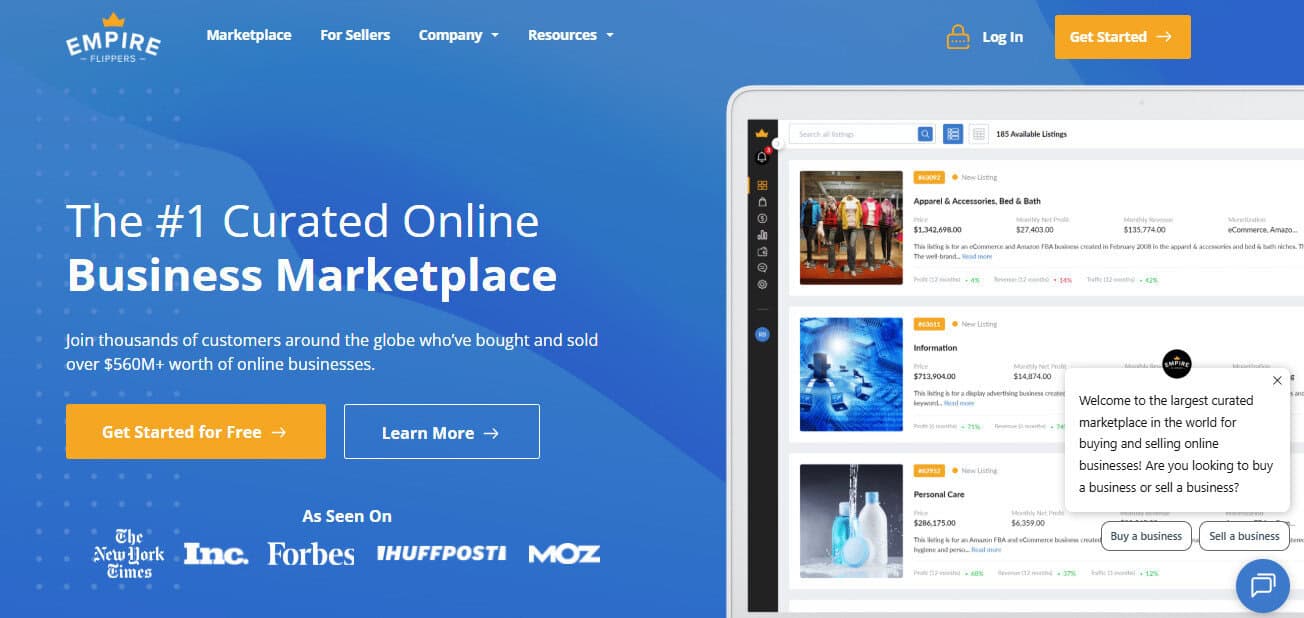
A number of years ago, I’d have listed Empire Flippers as a marketplace rather than a broker; these days, though, it really serves as a blend of the two.
Launched in 2010, Empire Flippers has grown to facilitate over $500 million in transactions to date, with a lot of this deal volume arising from the content space.
The platform has a reputation for strict vetting: Empire Flippers only lists businesses that are profitable and at least 12 months old, so you won’t be looking at brand-new or unproven sites. They require sellers to verify their financials and often provide unlockable Google Analytics, P&Ls, and other data for buyers to inspect.
However, the stringent vetting protocols apply to buyers, too. If you want to browse the EF marketplace, you’ll need to create an account and show proof of funds to unlock detailed listings.
The main attraction of Empire Flippers, as far as buyers are concerned, is the breadth of content listings in the mid-market range. If you want something in the five- to seven-figure price range, you’ll find a lot to choose from here.
Buyers also appreciate that EF provides a lot of support and transparency; it will do valuation work upfront and assist with the migration process after a sale.
Despite all this, though, Empire simply won’t offer the level of service you’d expect from a longstanding brokerage. This is a bigger deal for sellers, but it can make life more difficult for buyers too.
Best Content Website Marketplaces
Many content buyers prefer marketplaces to brokerages because of the low barrier to entry and the wide variety of businesses on offer. I’ve looked at some of the leading ones here.
Flippa
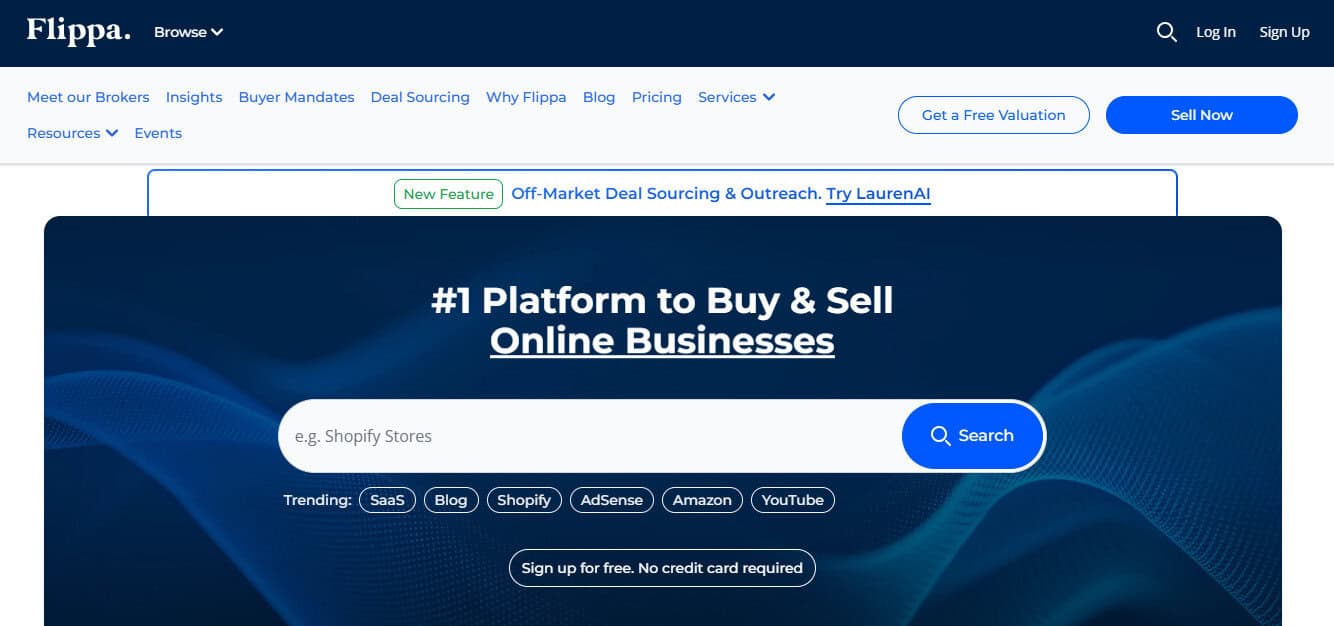
Flippa is the largest and best-known marketplace for the purchase and sale of content companies. Its size and breadth are both an advantage and a disadvantage, however.
On the plus side, it’s active all over the globe, and it’s big enough that it has something for everyone. You’ll find content websites, blogs, affiliate sites, SaaS businesses, e-commerce stores, apps, domains – you name it. This diversity is one of Flippa’s biggest strengths: it doesn’t matter if you’re searching for a $2,000 niche blog earning from AdSense or a $200,000 content site with an email list and courses, chances are Flippa will have some listings for you.
Conversely, of course, this means finding a company you’re interested in can often feel like searching for the proverbial needle in the haystack. There are a LOT of companies on Flippa, and finding the good ones can be tough.
To Flippa’s credit, it maintains a feature-rich platform that can help to streamline things. However, this is very much the DIY option. If you’re looking for a four- or five-figure content company, or if you’re on the hunt for something very niche, Flippa is the place to start your search. However, if you’re looking to acquire an established, mainstream content business, I’d recommend talking to a broker.
Investors Club
Investors Club is a newer entrant in the website marketplace space, but it has gained traction as a premium marketplace specifically for content websites.
Though it operates as a marketplace, things are different here than on Flippa. Investors Club is a private, members-only platform that restricts general access in the pursuit of quality and transparency. Only vetted buyers get in, and sellers benefit from a pool of genuinely interested investors.
This system is accompanied by a forensic due diligence process. Every content site listing undergoes a 24-point vetting procedure conducted by the Investors Club team before it goes live. This is great news for buyers.
What isn’t great news for buyers is the Investor Club revenue structure. Unlike most marketplaces, it makes its money from buyers, not sellers; sellers keep 100% of their sale prices, and buyers must pay premiums and membership fees.
If you like Investor Club’s approach, you may find some good deals there; personally, though, I don’t see why you’d pay for something you can get free of charge elsewhere.
Tracking Down the Listings You Really Want to See
Choosing between brokerages and marketplaces as a content website buyer really boils down to the kinds of publications you want to pursue. There’s something out there to cater to every level and niche.
However, if you’re looking to buy a six-, seven-, or eight-figure site from a full-service broker, I think Quiet Light is the first place to look. It’s more approachable than the likes of FE International, but much higher-caliber than the likes of Flippa or even Empire Flippers. Plus, it’s got a strong track record in the content sector, and it does all the basics well.