

- Your CPA-Approved Guide to Helcim and Its Top Alternatives
- 1. Luqra: Best for Payments Plus ERP and Analytics
- 2. Stripe: Best for Developers and Global E-Commerce
- 3. Square: Best for In-Person Retail and Small Local Businesses
- 4. Stax: Best for High-Volume Merchants Who Like Subscriptions
- 5. Payment Depot: Best for Wholesale Pricing Plus a Membership Model
- How to Choose Between Helcim and These Five Alternatives
- This CPA’s Takeaway on the Top Helcim Alternatives
Last Updated on December 18, 2025 by Ewen Finser
If you like Helcim, you’re already ahead of most merchants. It shows that you care about interchange-plus pricing, clear margins, and not getting rinsed by mystery fees. Helcim does a lot right on that front, with transparent pricing, no monthly fee, and solid all-in-one tools for in-person and online payments.
It’s a fine platform, and depending on your business segment, there’s nothing wrong with using it. But depending on your volume, risk profile, and tech stack, other processors may fit better. Some wrap in ERP and analytics. Some use subscription pricing that can slash effective rates at scale. Others bring stronger dev tools or big-box POS hardware.
Let’s take a look.
TL;DR: If you like Helcim’s transparent interchange-plus pricing but your needs have outgrown a basic merchant account, your best next options are Luqra, Stripe, Square, Stax, and Payment Depot. Luqra fits merchants and portfolios that want payments, ERP, fraud, and analytics in one stack. Stripe wins for API-heavy SaaS and global e-commerce. Square is the easiest path for small in-person retail and service businesses. Finally, Stax and Payment Depot shine for higher-volume merchants that can use subscription-style pricing to grind effective rates down.
Your CPA-Approved Guide to Helcim and Its Top Alternatives

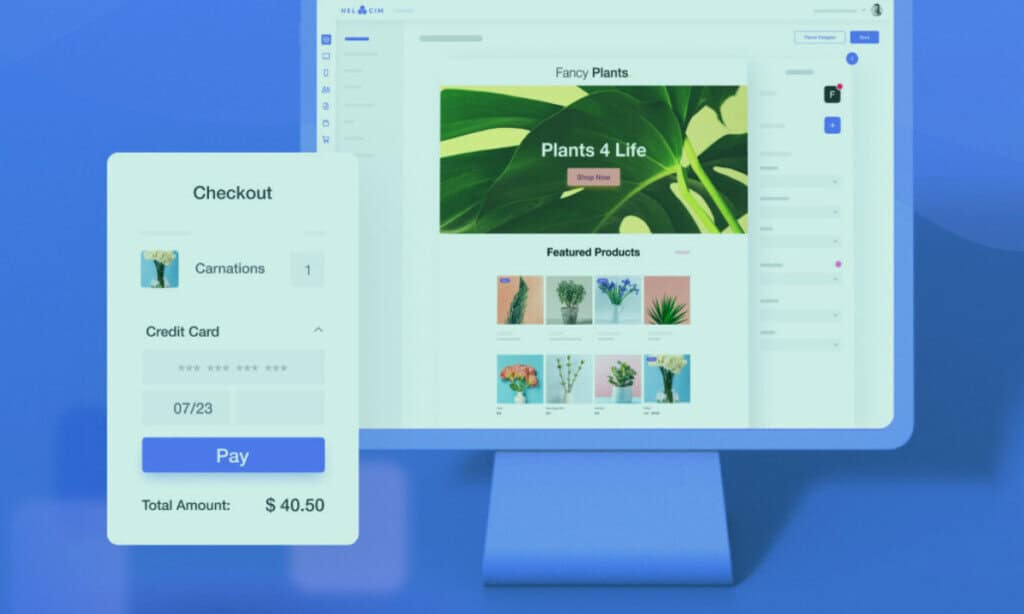
Helcim is a merchant services platform that offers:
- Interchange-plus pricing: You pay the wholesale interchange cost plus a fixed markup (for example, interchange + 0.15% + 6¢), rather than a flat 2.9% + 30¢ on everything. This often saves money as volume grows and card mixes improve.
- No monthly fee and no long-term contracts: This is ideal for small and variable-volume businesses that do not want subscription risk.
- All-in-one tooling: Online invoices, virtual terminal, basic POS, customer manager, and inventory tools are included at no extra charge.
It’s definitely a robust platform, so why would anyone bother to switch? In my experience as a CPA, merchants start shopping for alternatives when they run into a few specific pain points:
- Higher volumes: At higher volumes, a subscription model or more aggressive markup can beat Helcim’s standard spread.
- Heavy platform needs: You may want deeper ERP capabilities, portfolio-level analytics, or ISO tools that Helcim does not focus on.
- Special risks or business models: High chargeback environments, marketplaces, or platform payouts often push you toward Stripe-style infrastructure or bespoke setups.
With all this in mind, let’s go through the top five alternatives to Helcim.
1. Luqra: Best for Payments Plus ERP and Analytics

While Helcim is a clean merchant account with nice bundled tools, Luqra is more of a payments-first ERP and analytics stack that also handles day-to-day processing.
- Full spectrum of payment processing services: Payment processing and gateway, fraud and chargeback protections, and reporting and analytics across merchants and channels.
- Use cases beyond processing: This is a portfolio-grade ERP for ISOs, processors, and acquiring banks.
- Meet-or-beat rates: Luqra promises to match or beat your current rates, as well as offering a guarantee that they will never increase.
To me, Luqra is like a payment processing center with a back office built in.
Where It Beats Helcim
- A unified stack: With Luqra, your payments, disputes, fraud, analytics, and gateway all sit in one place. For operators managing many merchants (ISOs, payment facilitators, acquiring banks), the ERP layer gives one source of truth across underwriting, boarding, and processing.
- Rate-match posture: One really attractive thing about Luqra is that they promise to match your current rate and/or beat it. That positions them as aggressive on pricing, especially for merchants coming off Stripe, Square, or a flat-rate ISO.
- Portfolio-level analytics: Their ERP and reporting tools are built for people running a portfolio of merchants, not just one store. You can correlate sales, risk, and operational metrics across hundreds of accounts.
- Built-in fraud protection: Luqra markets advanced fraud protection as part of their core stack, not an add-on. That matters if you are in e-commerce segments plagued by card testing and chargebacks.
Where It Falls Short
- Not a bare-bones “just give me a terminal” play: If you’re a tiny coffee shop doing a few thousand per month and you want something as simple as Square, Luqra’s broader platform is overkill.
- Less tenure than Stripe/Square: You may need to educate your team, bank, or board on what Luqra is to get them on board; it’s not yet a household name outside payments circles.
Best for: Operators who want portfolio-wide analytics and ERP (not just merchant-level reporting), and e-commerce merchants who want integrated fraud protection and ERP-style insight without tying five different tools together.
If Helcim is the clean, simple checking account of payments, Luqra is the operating system you reach for when the business gets bigger, riskier, or more complex.
2. Stripe: Best for Developers and Global E-Commerce
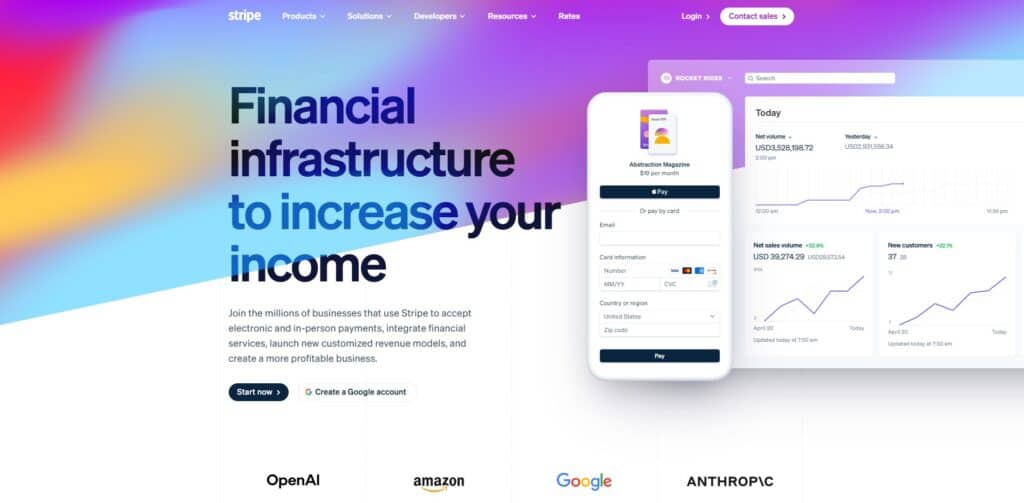
Stripe is still the default for many online businesses for a reason: It’s a developer-centric payments platform with deep APIs, a large ecosystem, and support for many payment methods and currencies.
- Flat-rate starting point: Standard U.S. online pricing often starts around 2.9% + 30¢ per successful domestic card transaction, with extra on top for international and currency conversion.
- Huge product surface: Billing, invoicing, subscriptions, tax, Radar fraud tools, Connect for marketplaces, Issuing for cards, and more.
- Global reach: Supports 100+ currencies and a long list of alternative payment methods.
Where It Beats Helcim
- APIs and developer experience: Stripe’s docs, SDKs, webhooks, and libraries just can’t be beat. And if your product team lives in API diagrams, Stripe is usually the first stop.
- Complex business models: Marketplaces, platforms, on-platform wallets, multi-party payouts, and global SaaS subscriptions are Stripe’s home turf. Connect and Billing cover a lot of complexity that traditional merchant accounts do not try to solve.
- Ecosystem and integrations: Stripe connects to a long list of SaaS tools, from billing platforms to analytics to accounting.
Where It Falls Short
- Effective cost can drift high: The headline 2.9% + 30¢ is not the full story. International cards, disputes, extra products, and feature-level fees can push effective cost into the 4–7% of revenue range for some merchants.
- Risk posture is strict and automated: Depending on your business segment and typical volumes, you can have holds or terminations when an algorithm dislikes your risk profile.
Best for: Stripe works well if you’re selling internationally and willing to trade pricing transparency for speed and flexibility — or if you’re a software company or marketplace and your dev team needs deep APIs.
If Helcim is the honest, transparent merchant account, Stripe is the payments platform as a service that powers more complex digital models.
3. Square: Best for In-Person Retail and Small Local Businesses
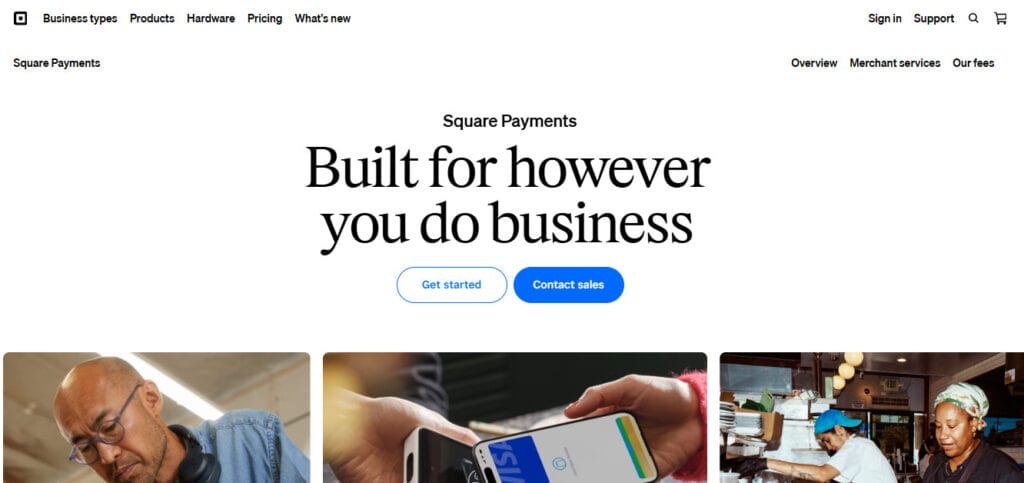
Square started with its infamous white card reader that you’d see at farmers’ markets. Today, it’s a full POS and payment platform for small retail, food, and service businesses.
- Flat-rate pricing: Most in-person transactions land around 2.6% + 10–15¢ per swipe or tap, while online and invoice payments often sit near 2.9% + 30¢.
- Hardware ecosystem: This includes registers, handhelds, stands, card readers, kiosks, and even handheld devices for servers and retail staff.
- Software layers: POS for different verticals, inventory, appointments, loyalty, marketing tools, and online store features.
Where It Beats Helcim
- Fast, simple setup: You can sign up online, get hardware shipped, and start taking payments with little friction. Good for brand-new merchants without a bank relationship or underwriting history.
- Hardware-plus-software bundle: For small retailers and restaurants, having POS, inventory, and payments in one vendor is hard to beat.
- Ecosystem for small businesses: Square offers appointments, payroll (in some regions), invoices, loyalty, and marketing. This helps non-technical owners keep everything under one roof.
Where It Falls Short
- Flat-rate costs. You trade simplicity for higher effective rates here, especially once your volume grows and your card mix skews debit or basic rewards.
- Risk and support complaints. Like Stripe, you’ll hear plenty of stories about frozen funds and support frustrations with Square. These large platforms will freeze your account at the drop of a hat if it means protecting their interests.
- Less ideal for B2B and high-ticket. Flat rates on large invoices can get expensive fast.
Best for: Brick-and-mortar retailers, cafes, and salons that just need a POS. Ideal for those who value ease and hardware over squeezing every basis point out of their effective rate.
While Helcim tends to win on raw processing cost and transparency, Square wins on hardware, setup speed, and small-biz usability.
4. Stax: Best for High-Volume Merchants Who Like Subscriptions
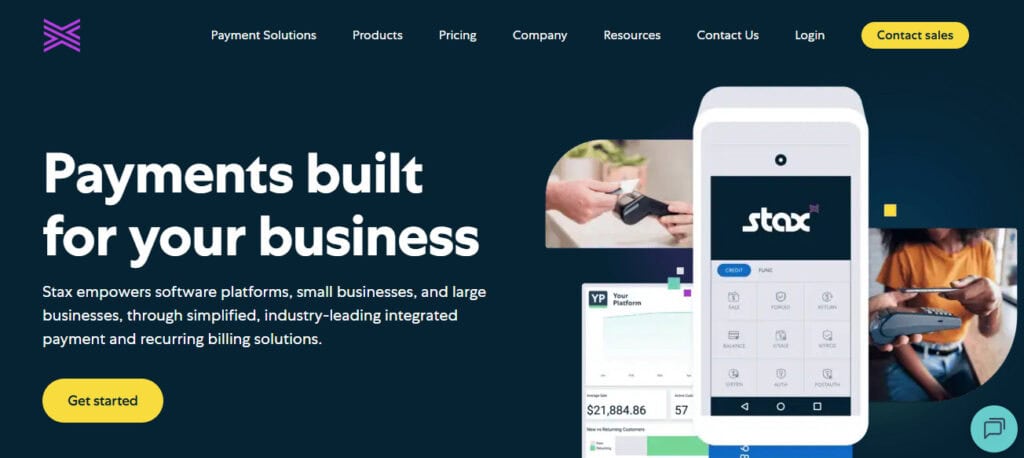
Helcim’s superpower is no monthly fee and a fair markup. Stax, on the other hand, leans into subscription-based pricing: Instead of taking a big percentage on each transaction, Stax charges a monthly membership and then passes through interchange with little or no markup.
The typical pricing structure is:
- Monthly fee: Starting around $99 per month for lower volumes, scaling up to $199+ for higher volumes.
- Per-transaction fee: Often interchange plus a small fixed cents fee (for example, 10–15¢) but 0% percentage markup on interchange itself.
If your business processes a lot of volume, that can drive your effective blended rate down relative to flat-rate processors and even some interchange-plus setups.
Where It Beats Helcim
- High-volume economics: For merchants doing tens of thousands per month, the fixed subscription can spread out quickly, leaving you with very tight spreads over interchange.
- Broad support and features: Stax can be used across many POS systems and offers tools like analytics dashboards, recurring billing, and virtual terminals.
- Clear savings story: Stax’s marketing claims “up to 40 percent savings” thanks to its subscription model. It’s up to you to compare the last 12 months of transactions in an Excel sheet and find out what your real-world cost would be.
Where It Falls Short
- Monthly nut to cover: If your volume swings or shrinks, the subscription can become a real drag on your margins.
- Not ideal for micro-merchants: If you only process a few thousand per month, it’s hard to justify paying $99–$199 just to access a low per-transaction spread.
Best for: Those processing consistently high volumes each month and who want to grind fees as low as possible. If you’re comfortable committing to a monthly membership in exchange for better unit economics, Stax works well.
Helcim is like a flexible, low-fee checking account; Stax is more like a Costco membership for card processing.
5. Payment Depot: Best for Wholesale Pricing Plus a Membership Model
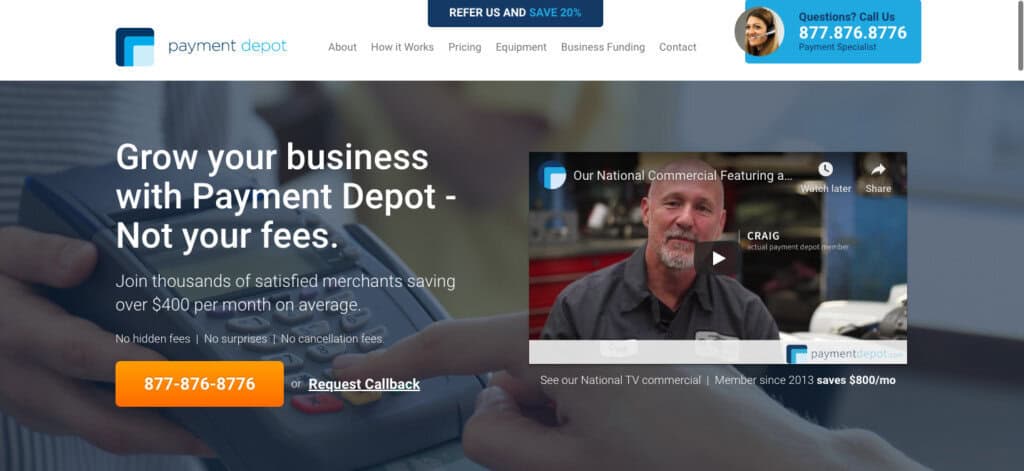
Payment Depot sits in a similar camp to Stax. It focuses on wholesale, membership-style processing and uses an interchange-plus or wholesale-plus subscription model. Plans start at around $59 per month, with per-transaction fees as low as 7–15¢ above interchange.
- All-in-one software tools: Including Text2Pay/mobile payments, hosted payment pages, and virtual terminals.
- Omnichannel acceptance: In-person, online, and keyed-in processing, plus support for POS hardware from brands like Clover, Dejavoo, and SwipeSimple.
- Integrations and B2B optimization: Integrations with major shopping carts and a gateway that can optimize B2B interchange to secure lower Level II/III rates (where applicable).
Where It Beats Helcim
- Cheaper at scale: Once volume gets high enough, wholesale fees plus a subscription can undercut Helcim’s percentage markup.
- Transparent interchange-plus framing: Payment Depot leans into “wholesale plus small margin” and markets clear interchange-plus structures.
- High-volume features: Plans often include dashboards, analytics, payment gateway access, and support for both card-present and card-not-present environments.
Where It Falls Short
- Monthly membership risk. Again, you carry a fixed monthly cost here, which makes this model unfriendly to low-volume or seasonal businesses.
- Custom quotes and less published detail. Markups can vary by business type and volume. You often have to get on the phone to know your real spread.
Best for: Payment Depot is worth considering if you’re comfortable with a subscription in exchange for lower effective rates, if you like Helcim-style transparency but want more leverage at larger volumes, or if you’re processing high volume and want wholesale pricing.
How to Choose Between Helcim and These Five Alternatives
If you strip away brand names, most decisions come down to three things: pricing model, risk posture, and platform fit.
Pricing Model
- Interchange-plus with no monthly fee (Helcim): Ideal for low to mid-volume merchants, or those who want simple, transparent pricing that scales with volume.
- Flat-rate pricing (Stripe’s default plan, Square’s core pricing): Ideal for small or new merchants who value predictability over the last few basis points.
- Subscription + wholesale (Stax, Payment Depot): Ideal for high-volume, stable merchants who can amortize the monthly fee.
- Hybrid, ERP-centric stack (Luqra): Ideal for ISOs, acquirers, and e-commerce operators who need portfolio-level control and analytics.
Risk Profile and Support
- Stripe and Square lean on automated risk systems and can feel blunt if your chargeback profile is noisy. That approach is “I have a hammer, and everything is a nail,” which I don’t love because it can really put businesses in a pickle if their account is temporarily frozen.
- Helcim, Luqra, Stax, and Payment Depot lean more into traditional merchant underwriting and relationship-driven support, which can be a better fit for B2B, high-ticket, or quirky businesses.
Platform and Workflow
Ask yourself:
- Do you need ERP-grade analytics and portfolio tools, with a meet or beat rate guarantee (Luqra)?
- Do you need deep APIs and global rails (Stripe)?
- Do you need retail POS and hardware (Square)?
- Do you need the absolute lowest cost at high volume and are willing to pay a subscription (Stax, Payment Depot)?
- Do you prefer a simple, honest merchant account with no monthly fee and clean interchange-plus (Helcim)?
This CPA’s Takeaway on the Top Helcim Alternatives
If Helcim works and your volume is modest, you can stay put. If you’ve outgrown it, here is the quick map:
- Luqra for payments plus ERP and analytics
- Stripe for complex SaaS and marketplaces
- Square for small brick-and-mortar with POS needs
- Stax or Payment Depot if you run high volume and want the lowest possible effective rate with a subscription.
Whatever you choose, get real quotes and compare them against your actual volumes and card mix before you move.
Just don’t pick a processor because your bank rep was nice on the phone or because the website looked clean. Pull quotes, map them to your volumes and mix, and compare effective rates and terms across these options. Once you do that, one or two of these Helcim alternatives may become the apparent choice.