


- Understanding the Basics: Traditional Postpaid vs. MVNO
- Bandwidth Quality: Premium vs. Deprioritization
- Hotspot Usage
- 5G Access and Coverage
- Network Reliability and Real-World Performance
- Network Investment & Future Proofing
- Perks and Added Benefits
- Device Deals and Financing
- Customer Support Experience
- Comparing Costs
- Who Should Pick Which?
Last Updated on January 12, 2026 by Ewen Finser
These days, choosing a wireless plan isn’t just about picking the cheapest option. Between premium data, hotspots, 5G access, perks, device deals, and customer support, the decision can feel overwhelming.
So today, we’re pitting an MVNO (Straight Talk) against an industry giant (Verizon). While both offer nationwide coverage, they serve very different types of users, so we’re going to break down the details so you can decide which plan is right for you.
Understanding the Basics: Traditional Postpaid vs. MVNO
Before diving into specific features, it’s important to understand the fundamental difference between these two types of plans.
Traditional Postpaid:
Postpaid plans often require a credit check, allow device financing, and come with premium features like priority data. You pay at the end of the month for the services you used, usually with flexible options to upgrade your plan or device.
Under these plans, there is no need to top up as you go. Plus, you gain access to extras usually not available on prepaid plans, such as consistent connectivity, lower roaming costs, and add-ons.
Additionally, these plans typically accommodate multiple users, such as family members or business associates. So, in short, if you find a postpaid plan that works for you and has all the benefits you need, it’s usually best to stay on a postpaid plan for that added consistency of service.
MVNOs:
MVNOs (mobile virtual network operators) lease network access from major carriers like Verizon, but they typically cost less than their postpaid counterparts. However, this reduced price comes with trade-offs like deprioritized data during congested periods. Plans like Straight Talk use prepaid pricing, so you pay upfront for your service with no surprises at the end of the month.
Takeaway: Verizon is a premium airline seat with priority boarding and perks, while Straight Talk is a reliable budget airline — it’ll get you there, but the extras are limited. It’s also important to note that Verizon does offer prepaid plans as well, but their postpaid offerings (which we’re comparing today) are far more popular.
Bandwidth Quality: Premium vs. Deprioritization

For most people, how their data performs is the most important aspect of any plan. Whether you’re streaming shows, participating in Zoom calls, or navigating with maps, the quality of your connection matters.
Verizon:
Verizon’s postpaid customers benefit from premium data, meaning they get top priority during network congestion. For example, if you’re at a crowded event, everyone will be on their phones in the same area, which means that data speeds will slow down. During these times, Verizon users typically maintain faster connections, while MVNO users might experience lag or buffering.
Verizon plans also allow higher sustained speeds even during normal usage. If you stream 4K video, play online games, or use cloud storage, you’ll enjoy performance that doesn’t affect your ability to do these activities.
Also, if there are technical issues with the service, postpaid customers have a significantly lower chance of latency being affected when the servers are under more stress.
Straight Talk:
Straight Talk users experience deprioritization, which means their data may slow during high-traffic periods. On most days, this isn’t noticeable, and browsing social media, sending messages, or streaming in standard HD works fine. But during peak usage, speeds can drop.
This can lead to loss of service in crowded areas, spotty hotspot performance, lower speeds during on-peak hours, and an inability to partake in activities that require fast speeds like gaming, livestreaming, and large downloads.
Takeaway: Verizon’s premium data is crucial for high-bandwidth users, while Straight Talk works well for light to moderate data needs. However, even these moderate data needs can be negatively affected during peak times due to the limits of a prepaid plan.
Hotspot Usage
Mobile hotspot usage is increasingly important in the days of remote work, so if you plan on accessing a lot of data from a secondary device, this factor is of extra importance.
Verizon:
Many Verizon plans include generous hotspot allowances — some offer 15–30 GB of full-speed hotspot data, and higher-tier plans even allow unlimited hotspot use (at slightly reduced speeds). Premium data prioritization applies here too, so your hotspot connection remains reliable even in busy areas.
When on this plan, it’s very unlikely that you will need to purchase any additional add-ons or incur any extra costs. Plus, when using your hotspot for more demanding tasks, or even tasks across multiple devices, you can expect smoother performance overall.
Straight Talk:
Straight Talk’s hotspot access is more limited. Some plans allow 5–10 GB of hotspot data, but speeds may be throttled, and once you exceed the limit, you’ll need to buy an add-on or wait until the next billing cycle. For occasional tethering, this is fine, but if you rely on your phone for work or streaming on multiple devices, it may fall short.
Takeaway: If you frequently need to use a hotspot, Verizon offers more flexibility and fewer surprises. Straight Talk is better for casual hotspot use or light work-from-home needs. However, this hotspot performance on prepaid may be negatively affected by congestion and during on-peak times.
5G Access and Coverage

5G is the name of the game these days, but it’s important to note that not all 5G is created equal…
Verizon:
Verizon users have access to 5G ultra wideband (UW) in select areas. This is the fastest consumer 5G network in the U.S., offering extremely low latency and high speeds. But even outside UW areas, Verizon’s standard 5G is reliable and fast.
This Ultra Wideband often isn’t under as much strain in dense and congested areas, leading to more consistent speeds. Plus, UW availability is constantly expanding, so you’ll witness a gradual uptick in the areas where you can make use of this feature.
Straight Talk:
Straight Talk piggybacks on the 5G offered by Verizon, AT&T, or T-Mobile networks, depending on your SIM and location. This means you may gain access to the same high-speed networks as the country’s biggest providers. However, note that MVNOs typically get access to sub-6 GHz 5G, which is faster than LTE but slower than ultra-wideband. And during network congestion, deprioritization may reduce speeds further.
Takeaway: For users prioritizing cutting-edge speed and low latency, Verizon is the better option. Straight Talk’s standard 5G can be good, but it’s not always reliable, and it can switch to the far inferior sub-6 GHz 5G at any given moment.
Network Reliability and Real-World Performance
While specs and perks are important, the real test of a wireless plan is how it performs in everyday life. Network reliability goes beyond 5G speeds — it’s about whether your calls stay connected, whether videos stream without buffering, and whether you can use your device when you need it most.
Verizon:
Verizon is consistently ranked among the top carriers in the U.S. for network reliability. And because postpaid customers get priority access to network resources, the chances of slowed data or dropped calls are much lower (even during high-traffic periods).
- Urban performance: In crowded cities, Verizon users generally experience fast, stable connections, whether they’re streaming 4K videos or using multiple apps simultaneously.
- Rural coverage: Verizon’s extensive network infrastructure means users in rural areas often enjoy better LTE and 5G coverage than MVNO customers. This is critical if you travel or live outside major metro areas.
- Consistency: Even in network congestion, postpaid users benefit from fewer interruptions, which is a big plus for business calls, GPS navigation, or mobile hotspot work. Postpaid users will experience more consistent day-to-day service
- Ease of Use: Postpaid users will be able to use multiple devices simultaneously with minimal fuss, and will also witness better upload speeds, meaning less dropped video calls.
Straight Talk:
Because Straight Talk operates as an MVNO, network performance can vary based on the underlying carrier network, your location, and congestion.
- Urban performance: In most cities, Straight Talk works well for basic browsing, social media, and standard video streaming.
- Rural coverage: Straight Talk’s coverage outside of the city will depend on which network your SIM uses. For example, a Verizon-backed SIM in rural areas might provide coverage comparable to Verizon, with deprioritization still affecting speeds.
- Consistency: Generally, your speed and reliability will mirror that of the major carrier your MVNO is tied to. Of course, as stated, you may experience occasional lag during heavy network usage as your traffic is deprioritized.
- Ease of Use: Prepaid users will struggle to multitask across apps and devices, may struggle to use various services such as video calls, maps/navigation & mobile payments.
Takeaway: If you need rock-solid reliability for work, travel, or heavy streaming, Verizon is the safer choice. Straight Talk is a solid option for users who are comfortable with occasional slowdowns and prioritize cost savings over maximum performance. However, the inconsistency of service may be a regular pain for prepaid users to endure.
Network Investment & Future Proofing
One thing that a lot of potential customers fail to consider is how dedicated your provider is to consistently improving their network infrastructure. Here’s how Verizon and Straight Talk measure up in that department:
Verizon:
Verizon consistently invests in new tech and infrastructure that expands its network’s reach. This is through the expansion of Ultra Wideband in new areas, the improvement of existing sites, expansion into more rural areas, and a dedication to exploring new avenues of connectivity to ensure the service is ready for the newest advancements in technology across all devices.
Additionally, if you’re a postpaid Verizon customer, you are infinitely more likely to gain access to these new and improved services as they rollout, meaning you are never on the outside looking in as other customers reap the rewards.
Straight Talk:
Straight Talk does not maintain its own networks and infrastructure, but instead piggybacks on the wireless infrastructure of others. Which means that Straight Talk customers cannot be guaranteed access to new rollouts and improvements as they become available.
Plus, even when these upgrades and improvements become available, due to the low priority of Prepaid customers, you’ll likely be placed in a lower performance band, heavily limiting the access to these new features even when they are technically available to you.
Takeaway: Customers under the Verizon umbrella are consistently supported, with new connectivity and coverage enhancements delivered as quickly as possible by Verizon, which spends billions annually on service enhancements. StraightTalk customers will get a slice of this pie, but usually at a much later date, and with the caveat that access to these upgrades is provided inconsistently.
Perks and Added Benefits
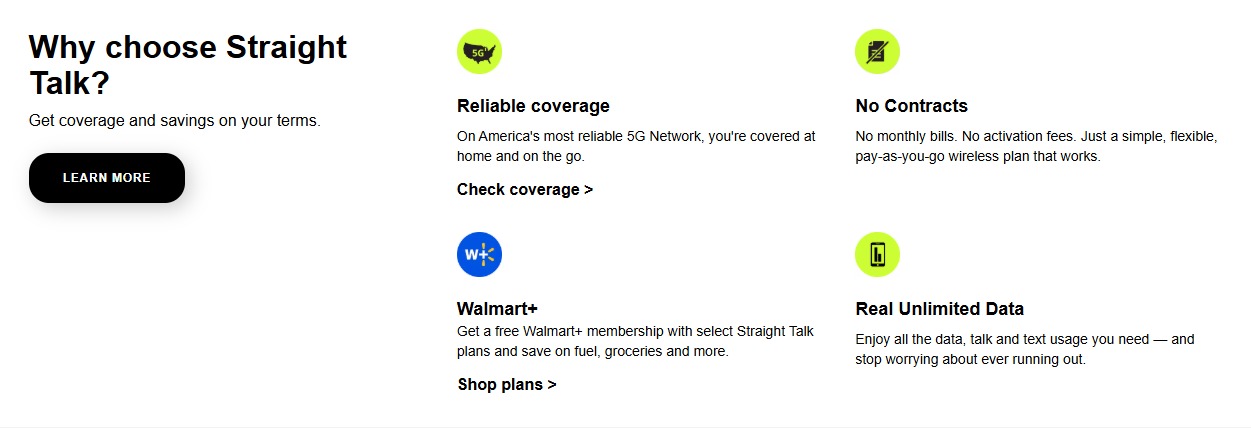
Perks aren’t just flashy extras — they can save money, enhance your entertainment experience, and make your plan feel like a better deal than just the base price suggests.
Verizon:
Verizon offers a variety of perks depending on the plan tier, which can include:
- Streaming subscriptions: Some plans include Disney+, Hulu, or Apple Music, allowing you to save extra for entertainment you likely would have already paid for. For example, a family could save $50–$60 per month by not paying for these subscriptions separately.
- Device discounts and promotions: Trade-in deals, bundle offers, and seasonal promotions can reduce the upfront cost of a new smartphone by hundreds of dollars. Trading in an older iPhone, for instance, could knock $200–$300 off a new device, plus financing spreads out the remaining cost.
- Family and multi-line perks: Multiple lines may unlock extra data, shared streaming subscriptions, or discounts on additional lines. This is particularly valuable for households who want convenience and savings rolled into one plan.
Straight Talk:
Straight Talk’s top plans (Gold and Platinum) now include several perks beyond basic data, including a Walmart+ membership, 100 GB of cloud storage per line, annual device credits, optional home internet discounts, and international calling/texting features on select plans. Gold plans include 30 GB of hotspot data, while Platinum plans offer unlimited hotspot (often capped around LTE‑equivalent 5 Mbps).
Takeaway: Perks add measurable value for users who already spend money on entertainment or want additional flexibility with hotspot data. Verizon continues to excel with customizable perks and family‑friendly benefits through add‑ons like streaming bundles and device discounts. Straight Talk’s enhanced plans now deliver perks like Walmart+ and cloud storage at no extra charge, offering value for budget‑conscious users who want more than just basic service. However, if you want the most bang for your buck possible, the perks of Postpaid far outweigh those offered on a prepaid service.
Device Deals and Financing
How you get your device can significantly impact your total cost of ownership.
Verizon:
- Device financing over 24 or 36 months
- Trade-in credits for old phones
- Regular promotions, such as buy-one-get-one offers on flagship devices
Straight Talk:
- Mostly BYOD (bring your own device)
- Limited financing or promotions
- Occasional hardware discounts, but deals are rare
Takeaway: If you want the latest phone with manageable monthly payments, Verizon is the way to go. Plus, if you want to get more value per dollar, and add more lines to your plan, you can really get the most out of these Postpaid perks. Straight Talk is better for people who already have a device or prefer buying outright to avoid long-term payments. However, you may be priced out of these deals as the price of entry buying a device outright can be steep.
Customer Support Experience
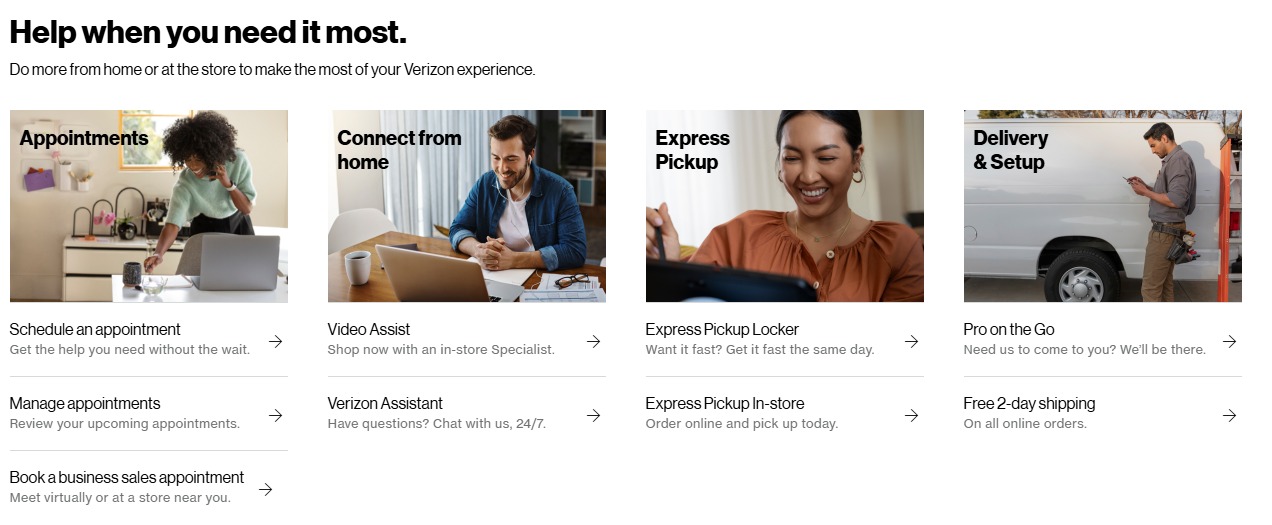
Support is crucial if something goes wrong with your phone, billing, or service.
Verizon:
- Physical stores that offer hands-on help and troubleshooting
- 24/7 support via phone, chat, and online resources
- Dedicated support for premium customers, which means faster resolution and escalation paths
- Better support for multi-line customers
- More robust self-service for those aiming to avoid dealing with customer services
- Easier process when disputing billing issues, or account issues
Straight Talk:
- Support is mainly online or over the phone
- No physical store presence
- Wait times can vary, and some users report less personalized experiences
- Requires a more knowledgeable and proactive approach on your end
Takeaway: If you value robust customer support, Verizon has a clear advantage. Straight Talk is sufficient for tech-savvy users who are comfortable managing issues online.
Comparing Costs
Verizon:
- Typically ranges from $70–$90 per line for unlimited plans, depending on features and perks
- Multi-line discounts and promotional offers can reduce costs
- Can recoup thanks to device promotions, trade-in credits, subscription expenses, and more.
Straight Talk:
- $30–$50 per line for unlimited data
- Lower costs come with trade-offs like deprioritization, limited perks, and hotspot caps
Takeaway: Straight Talk is good for budget-conscious users, while Verizon is worth the extra cost for performance, perks, and support.
Who Should Pick Which?
Straight Talk vs Verizon.. Truthfully, these serve very different audiences.
Verizon is best for:
- Heavy data users who stream, game, or work remotely
- Users who need reliable hotspot connections
- Those who want 5G ultra wideband and cutting-edge speeds.
- People who value perks like Disney+, Hulu, or Apple Music
- Anyone wanting device financing, trade-ins, and upgrade options
- Those who want robust customer support and physical store access
Straight Talk is best for:
- Budget-conscious users who want low monthly costs
- People who don’t need heavy hotspot use or premium data
- Users who are okay with standard 5G speeds
- Individuals comfortable managing support online or over the phone
- Those who already own their device or prefer to buy outright
By understanding your usage habits, budget, and priorities, you can pick the plan that fits your lifestyle — without overspending or sacrificing the features you need.
However, overall, it’s very clear that Verizon offers the superior service of the two when weighing up all aspects. It is a little more expensive, but thanks to the perks that can offset other costs, it’s not as large a price gap as it first appears. Plus, what you get in terms of higher quality, more consistent service, more than makes up for the elevated price.