


Last Updated on February 24, 2026 by Ewen Finser
If you’re comparing Rollo and Shippo, you’re probably past the point of printing a label on your home printer every time an order comes in.
Rollo and Shippo are both shipping solutions that let you create shipping labels and automate your workflows. They’re both popular with small eCommerce sellers, are often recommended as upgrades from very basic tools, and help you manage orders, choose carriers, and run your business quickly and efficiently.
Where They Differ Is in Emphasis:
Rollo focuses on speed, simplicity, and reliability at the moment you hit “print” with the added benefit of its highly popular thermal label printer hardware.
Shippo, on the other hand, leans more heavily into shipping management, pulling orders together from multiple sales channels, comparing carrier rates, and automating shipping decisions at scale.
Before going into more detail, here’s a quick side-by-side overview to help understand the rest of the article:
Quick Comparison: Rollo vs Shippo
Feature | Rollo | Shippo |
Primary Focus | Label printing hardware | Shipping software platform |
Core Strength | Fast, reliable label printing | Automation, order management, and easy label generation |
Setup Time | Minutes | Minutes |
Store Integrations | Shopify, WooCommerce, Amazon, eBay + | Shopify, WooCommerce, Amazon, Etsy, eBay + |
Automation Rules | Shipping preset options and an automatic inventory sync | IF / THEN shipping logic, like “if order contains 1x small t-shirt, automatically apply small box package template” |
Bulk Printing | Bulk printing and label creation | Up to 100 labels at once |
Carrier Support | 5, including USPS, UPS, and FedEx | 40+ carriers, including USPS, UPS, FedEx, DHL + lots more |
International Shipping | Simplified customs declarations and landed-cost estimates | Simplified customs generation and commercial invoices |
Best For | Small sellers, manual shipping | Growing eCommerce brands |
Platform Overview
What Rollo Is:
Rollo is first and foremost a thermal label printer company. The printer is the product. Everything else exists to support that.
Rollo printers are popular because they give you a clean, correctly sized label printed as fast as possible. There’s no messy and expensive ink and no fiddling around with print settings every time. Rollo also offers a basic shipping interface so you can buy labels and print them directly.
What Shippo Is:
Shippo is an all-in-one shipping platform built for eCommerce businesses that want shipping to run smoothly.
You connect your store, your orders sync automatically, and Shippo becomes the place where shipping decisions are made. It handles rate comparison, automation rules, label generation, international paperwork, tracking updates, and returns all in one easy-to-use dashboard.
Shippo isn’t trying to replace your printer. It’s trying to replace copy-pasting and repeated manual decisions, making your shipping more streamlined.
Label Printing
What Rollo Offers:
Label printing is what Rollo does best. It’s fast, consistent, and extremely easy to use. Once you set up their thermal label printer, the actual printing process feels instant. If you’ve ever dealt with slow inkjet printers or misaligned label sheets, Rollo feels like a huge quality-of-life upgrade.
Rollo’s thermal printer produces sharp, easy-to-scan labels, while the shipping platform supports cost control and efficient daily workflows. For sellers who mostly ship manually and just want labels printed quickly and reliably, Rollo alone can solve a very real pain point.
Rollo’s printer is so good actually, that a lot of people use Rollo for their printer and Shippo for their management needs.
What Shippo Offers:
Shippo doesn’t have printing hardware. Instead, it generates digital, standard label files that work with almost any printer, including Rollo printers. As I mentioned above, many sellers use Shippo alongside a Rollo printer.
Shippo focuses on making sure labels are created quickly, affordably, and easily, not on how fast they physically print like how Rollo does.
Both offer bulk label creation, which means once you start getting a lot of orders you can create labels for them all in one go and print the labels in bulk. This is a big time saver.
Ease of Use & Setup
What Rollo Offers:
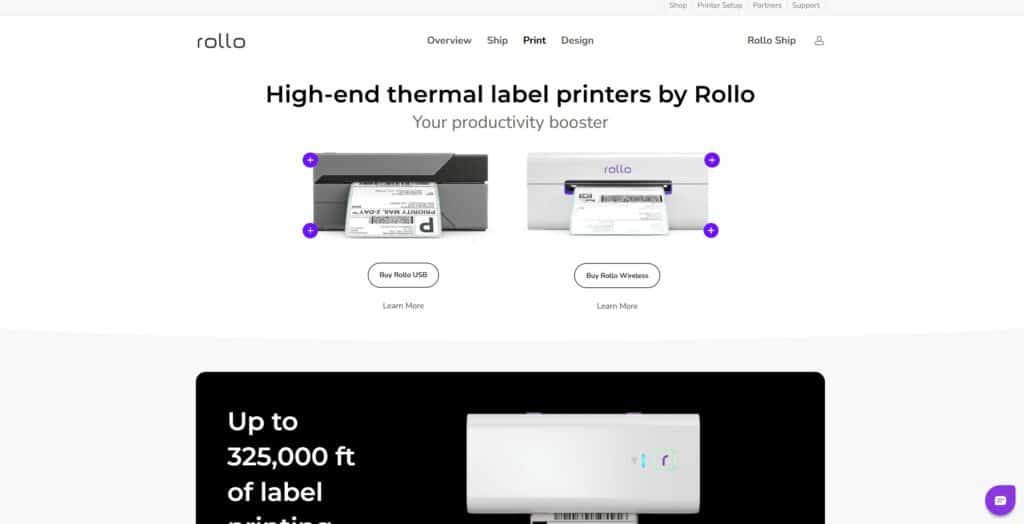
Rollo is extremely quick to get going. You plug in the printer, install the driver, and you’re printing labels within minutes. The shipping interface is simple because it doesn’t require much configuration.
With very little to learn upfront, Rollo is appealing if you want something that “just works”.
They have two types of printers, wireless and wired. Each has a few settings and alerts you’ll need to understand. A green light means ready to print, a blinking light will occur during set up, etc.
The software is straightforward too:
- Connect sales channels: Log in to your Rollo Ship account and connect any sales channels you use, such as Amazon, Shopify, etc.
- Import your orders: Go to the ‘Shipping’ tab, your orders should have been imported automatically.
- Print shipping label: Select an order, enter package details, choose your carrier, pay, then print the label.
What Shippo Offers:
Shippo’s setup process is straightforward and comparable to other leading shipping platforms.
After connecting your store, you can quickly access built-in discounted carrier rates and start generating labels right away – no complicated configuration required.
From there, you can layer in automation rules to streamline fulfillment even further, whether that’s automatically selecting services, applying specified package templates, or organizing orders for faster processing.
Day-to-Day Shipping Workflow
What Rollo Offers:
Orders sync automatically from your connected sales channels into Rollo’s dashboard, where you can apply saved presets, automation rules, and carrier preferences to streamline fulfillment.
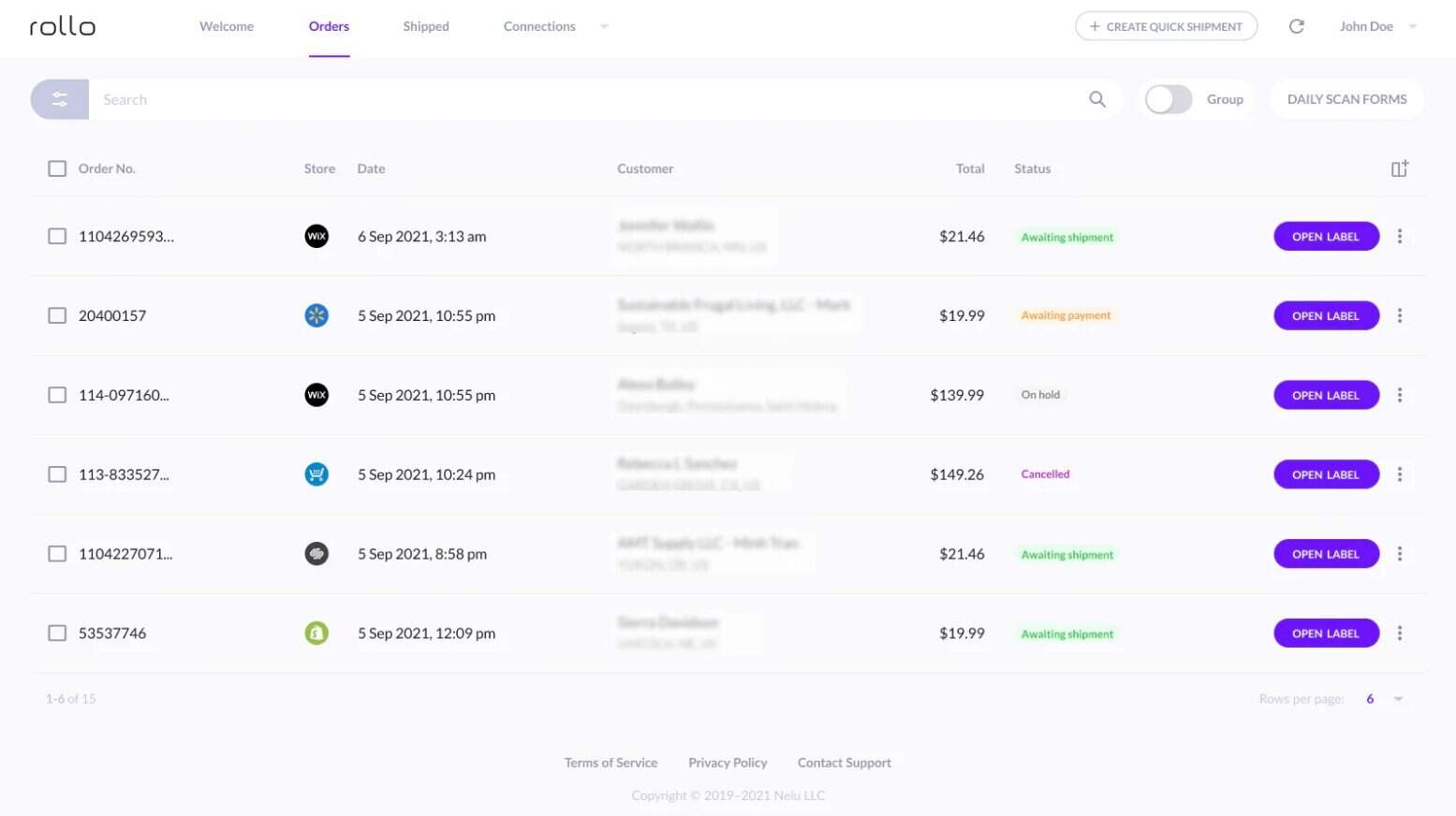
Rollo also supports bulk label creation and printing, allowing you to process multiple orders at once rather than handling them individually. You still have the flexibility to review or adjust shipments as needed, but routine orders can move through a more automated workflow.
This combination of automation tools and batch processing reduces repetitive decision-making, speeds up fulfillment, and helps maintain accuracy as order volume grows.
What Shippo Offers:
Shippo is designed to make shipping faster, more flexible, and easier to scale. Orders flow in automatically from your connected stores, and configurable automation rules apply the right service and package templates to each order. From there, you can print labels in bulk and manage everything from a single dashboard–like tracking, returns, and pickups– minimizing manual decision-making and saving time every day.
Shippo stands out for its flexibility and choice. With access to the best rates for more than 40 carriers, including domestic, international, and regional options, you have more control to select the best rates and services for your business needs.
Shippo also integrates with key marketplaces such as Etsy, which makes it a strong fit for sellers who rely on that channel.
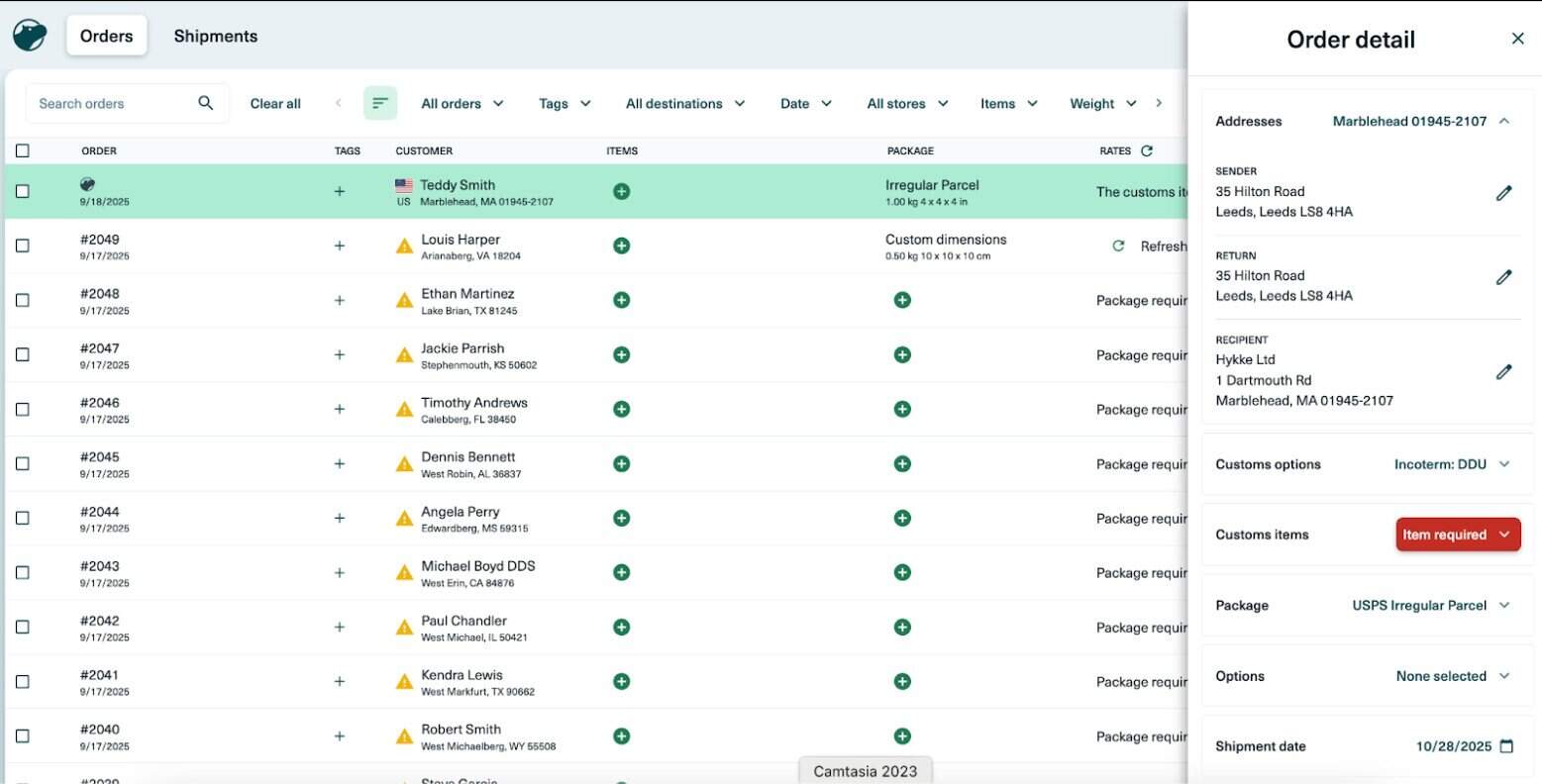
For businesses that need more customization, Shippo offers a robust shipping API. You can start with the web app and transition to a more tailored, API-driven setup without switching platforms. Day to day management is very easy, especially if you compare it to other similar tools like Shipstation and EasyShip.
Integrations & Order Management
Rollo and Shippo both support a wide range of ecommerce integrations, covering most major platforms and marketplaces. Rollo supports Lightspeed, PayPal, BigCartel, and Shift4Shop, while Shippo offers additional Etsy integration that Rollo does not.
The right choice ultimately depends on where your business sells. If you rely on a particular marketplace or ecommerce platform, that compatibility will matter more than the overall integration list.
In either case, both tools are designed to centralize orders and simplify fulfillment across your sales channels.
What Rollo Offers:
Rollo does support native integrations with the major eCommerce platforms listed above, as well as several marketplaces and order sources. This allows orders to flow into Rollo so you can create labels without manually re-entering addresses or order details.
Rollo’s integrations work very well for straightforward order import and label creation, especially if you’re selling on one or two channels and want everything tied closely to printing labels quickly. Combined with Rollo’s built-in inventory visibility and bulk-printing tools, this makes it a solid all-in-one setup for small sellers who want to keep things simple.
Where Rollo feels nice and easy is with its automations. You don’t need to run complex shipping logic across multiple stores, carriers, or fulfillment rules. If you’re a small (or hobby) store, that’s exactly what you want: less setup, fewer decisions, and faster printing.
What Shippo Offers:
Shippo also integrates directly with major platforms including Amazon, Shopify, Walmart, WooCommerce, Wix, BigCommerce, Magento, and Squarespace.
Through these integrations, orders sync automatically, tracking updates push back to your store, and customers are notified without extra steps. Plus you can create strong automations, allowing order details to be pre-filled based on logic (eg, shipping weight, service level, package template, etc).
Shippo also offers a developer-friendly API, letting businesses build custom integrations or embed shipping and label functionality into bespoke systems, marketplaces, or checkout experiences.
If you’re a growing business, this removes entire parts of the fulfillment decision-making process.
Automations & Shipping Logic
Once daily volume increases, repeating the same carrier and service selections slows fulfillment and increases the chance of mistakes. Automation is what turns shipping from a repetitive task into a scalable workflow.
What Rollo Offers:
Rollo includes automation tools and shipping presets that reduce repetitive decision-making. Orders sync automatically from connected sales channels, and predefined rules can apply preferred carriers, service levels, and package settings based on order details. This creates a more standardized workflow and minimizes manual input as volume increases.
Key capabilities include:
- Shipping presets and rule-based service selection
- Bulk label creation and batch printing
- Automatic tracking updates to connected stores
- Carrier integrations with commercial pricing access
- Pickup scheduling within the platform
- Barcode scanning to speed processing and reduce errors
What Shippo Offers:
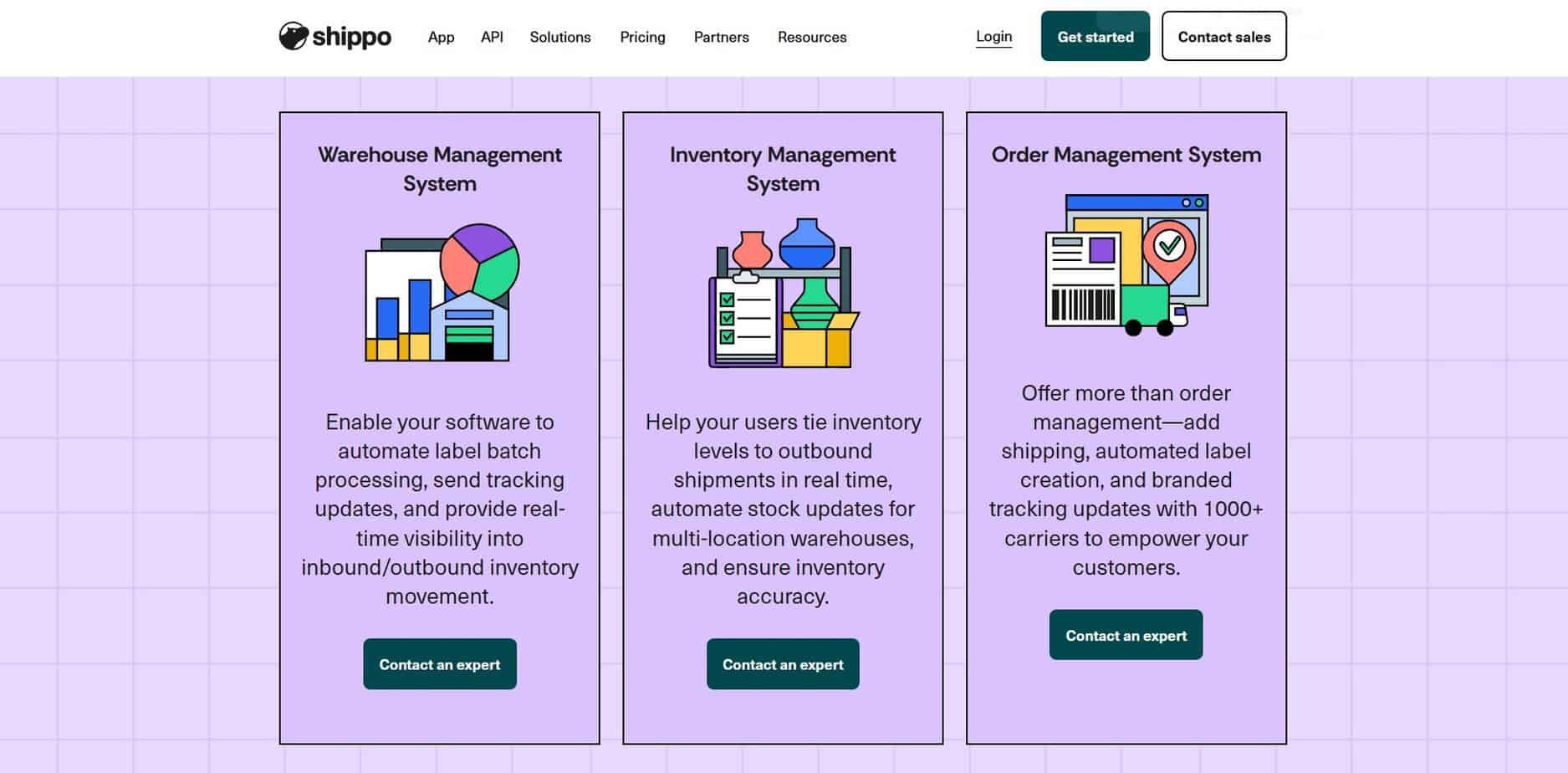
Shippo is built around simple IF / THEN automation rules that let you define how shipping should work ahead of time. The logic is very simple to set up, I did it easily without using a developer because it is based on logical decisions.
Instead of deciding everything at the point of shipping, you can tell Shippo what to do in common situations. For example:
- IF the order weight is under 1 lb THEN use USPS First-Class
- IF the order is international THEN use DHL Express
- IF the item name contains “poster” THEN use a tube mailer
- IF the order value is over $50 THEN require a signature
Once these rules are in place, Shippo applies them automatically as orders come in. This removes a lot of small, repetitive decisions, reduces the chance of mistakes, and makes shipping much easier to hand off to a team member or VA.
For stores shipping regularly, this is often the point where Shippo starts saving hours each week, rather than just minutes.
Inventory Management
Inventory management often gets overlooked, but even basic questions like “How many units do I actually have left?” or “Which products are close to selling out?” can quickly cause problems if there’s no visibility.
Rollo and Shippo approach inventory very differently, and neither is trying to be a full inventory management system.
What Rollo Offers:
Rollo includes inventory visibility tools designed to support multi-channel sellers. When connected to platforms like Shopify, Amazon, Etsy, or eBay, inventory levels sync in real time.
Within Rollo, you can:
- Sync inventory levels in real time across connected sales channels
- Automatically deduct stock when orders are processed or labels are generated
- Bulk-edit product quantities, status, and labels
- Manage inventory visibility across USD and CAD regions
- Receive low-stock alerts for key SKUs
These tools are useful for operational control, especially if you’re shipping manually or running a smaller catalogue. As orders are processed or shipping labels are generated, stock counts update automatically across channels to reduce the risk of overselling.
However, Rollo’s inventory features are closely tied to shipping activity. Again, it is designed for a small seller to have basic inventory tracking, not a full scale warehouse operation. Instead, it acts as a lightweight layer of visibility to support label creation and fulfillment.
What Shippo Offers:
Shippo does not offer native inventory management.
There’s no inventory dashboard, stock level editing, or low-stock alerts inside Shippo itself. Instead, Shippo assumes that inventory is managed by your eCommerce platform, such as Shopify, WooCommerce, or Amazon.
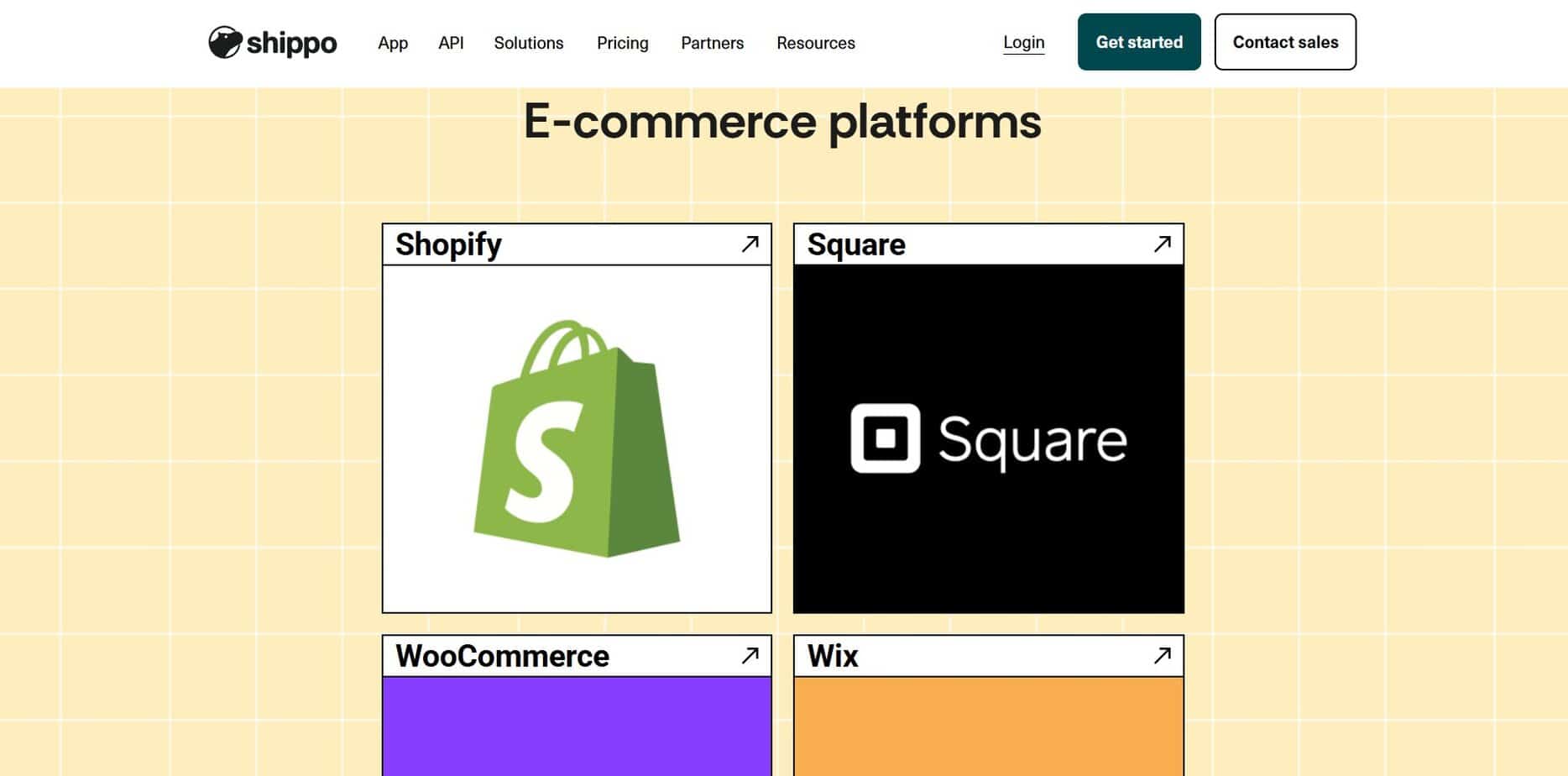
Where Shippo adds value is in how it integrates with those systems. Because it pulls order and SKU data directly from your store, Shippo trusts existing inventory logic and keeps fulfillment status in sync. When an order is shipped, the integrated systems are updated.
For example, if you ship an order with Shopify, once the order is shipped then Shopify is updated, so it can update inventory status. This means Shippo doesn’t manage inventory directly, but it supports inventory accuracy by:
- Preventing duplicate shipments
- Keeping fulfillment and stock levels aligned
- Reducing errors caused by manual shipping workflows
For many growing stores, this separation works well: inventory lives in the commerce platform, shipping lives in Shippo.
Carrier Support & International Shipping
Both tools offer the main US and Canada shipping options, though Shippo has a wider selection of 40+ carriers as opposed to Rollo’s 5.
What Rollo Offers:
Rollo mainly supports USPS and UPS. For U.S.-only sellers, but it also works with FedEx, USPS or UPS in the USA and UPS, FedEx, Purolator and Canada Post in Canada.
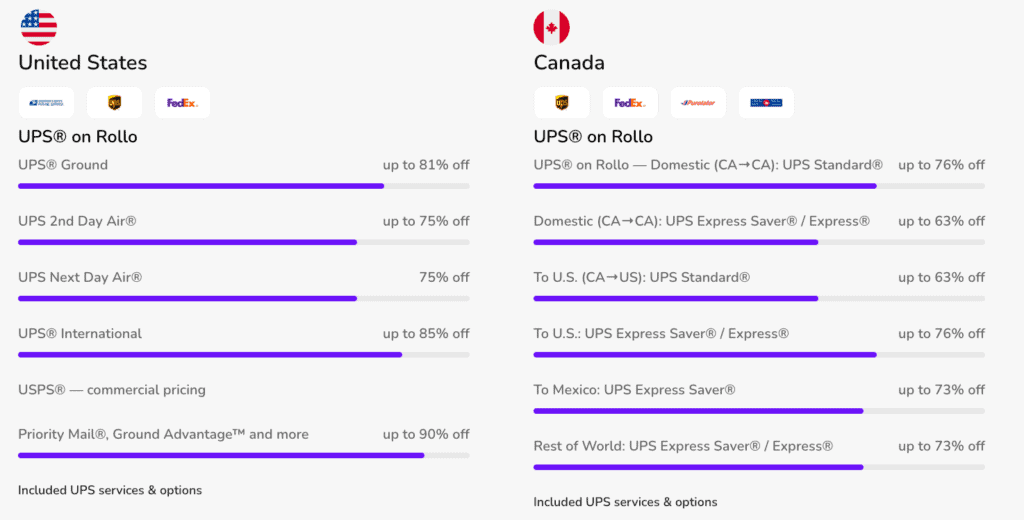
Rollo also offers international shipping with USPS, but like its US shipping, it is mostly for one-off shipments. It also doesn’t help with customs forms, so you need to add these in yourself.
What Shippo Offers:
Shippo supports a wide range of domestic and international carriers, which makes it much easier to choose the right service depending on destination, delivery speed, and cost. Instead of treating international shipping as a completely separate task, Shippo keeps it within the same workflow you use for domestic orders.
When you ship internationally through Shippo, a lot of the manual work is handled for you. For example:
- Customs forms are generated automatically during label creation
- HS codes are supported and easy to apply to products
- Duties and taxes are handled by the carrier, depending on the service level
- You can access international carriers like DHL alongside USPS, UPS, and other local shipping options
In practical terms, this means international orders don’t slow you down. You’re still selecting orders, printing labels, and moving on, rather than stopping to fill out paperwork or double-check requirements for each country. For stores shipping outside their home country even a few times a week, this alone can save a surprising amount of time and reduce mistakes.
Final Verdict: Rollo vs Shippo
This isn’t really a direct comparison, because Rollo and Shippo aren’t trying to do the same job.
Rollo is a great label printer with a streamlined shipping system interface.
Shippo is an all-around shipping system designed to make fulfillment repeatable and scalable.
If you’re shipping occasionally and mainly want fast, reliable label printing, Rollo is a solid choice. But if you’re running a growing eCommerce business and want shipping to feel organised instead of reactive, Shippo is the better long-term tool.
For many sellers, the best setup is when Rollo and Shippo each do what it does best for their store.