


Last Updated on February 21, 2026 by Ewen Finser
Brand visibility is no longer about “simply” ranking on the first page of Google (like that was ever really simple), it’s about relevance in AI-generated answers and results. LLM (large language model) tools like ChatGPT and Google AI Overviews (AIO) have become the first stop for consumer research, recommendations, and buying decisions, so AI-first discovery has become more important than ever before.
Peec AI tracks brand presence, citations, and sentiment across AI search and answer engines to help marketing teams understand exactly how (and where) their brand is appearing.
A Quick Peek At Peec
Considerations | Peec AI |
What It Does | Shows how often and where your brand appears in AI-driven search environments, as well as positioning and brand sentiment, and how it compares with competitors. |
Biggest Strengths | Easy to use, deep data monitoring, tangible insights into AI search results with side-by-side visibility against competitors, and source analysis. |
Biggest Limitations | Does not provide historical data; insights are only available from the moment tracking begins and not before. |
Best For | Brand content strategists, SEO/GEO specialists, agencies. |
Pricing (monthly) | €89 / ~$105 (Starter); €199 / ~$234 (Pro); €499+ / ~$587 (Enterprise) |
In this review, I’ll take you on a tour of how Peec AI works, what features it offers and the insights it delivers, and everything to consider (including pros, cons, and pricing) if you’re thinking about adding another analytics platform to your stack.
Spoiler Alert: I definitely think it’s worth it, and Peec AI offers a 7-day free trial so you can try it out before pulling the trigger for real.
What Is Peec AI?
Peec AI is a generative search analytics and brand visibility platform that provides insight on where and how often a brand is appearing in AI-based search environments, particularly against your competitors. These include Google AI Overviews, ChatGPT, Claude, and Perplexity.
It also shares vital information about brand sentiment (how AI perceives your brand) based on the results.
Peec AI takes a unique approach to collecting data because it doesn’t rely on APIs. Instead, it employs advanced UI scraping technology to interact directly with AI models through their actual web interfaces the same way a person would.
This ensures that the results being gathered are completely authentic and based on real user experience.
After setting up prompts (which are basically keyword strings or queries you want to rank for), adding competitor brands in your niche (that you want to outrank), and selecting the models you want to track (the places where people are using AI for research), Peec AI finds all the citations that frame your brand within AI-powered searches.
Peec AI helps you to understand your brand’s positioning and sentiment so you can find opportunities to refine and improve your ranking and visibility, and it also provides actionable metrics in a space that’s notoriously hard to track.
Peec AI Standout Features
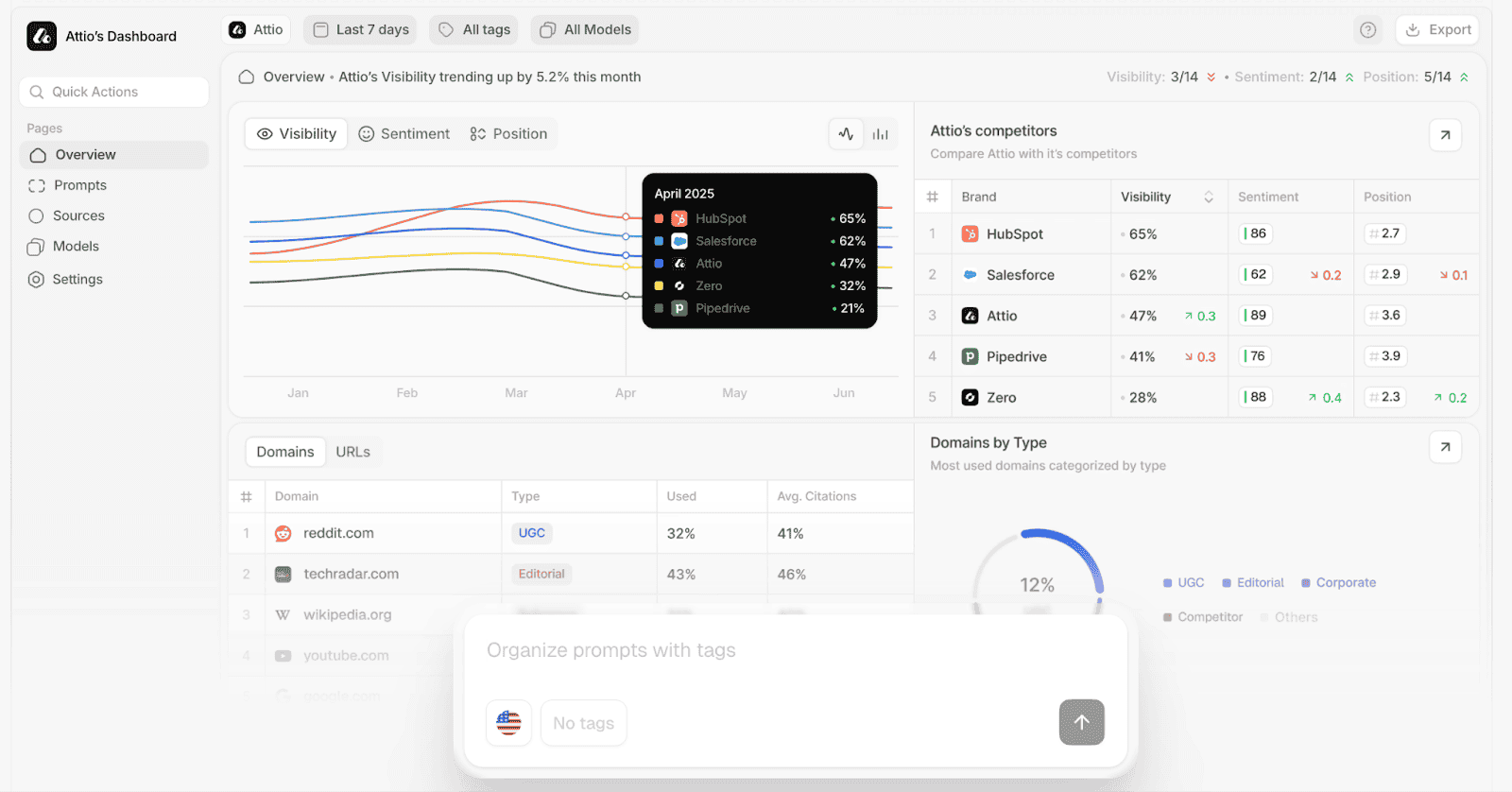
Peec AI is an analytics platform that provides tangible metrics where AI-search visibility is concerned, and it offers a lot to entrepreneurs, brands, marketing teams, and even agencies.
I’ll take you through the most valuable features you’ll have on hand with Peec AI.
AI Visibility Tracking And Position
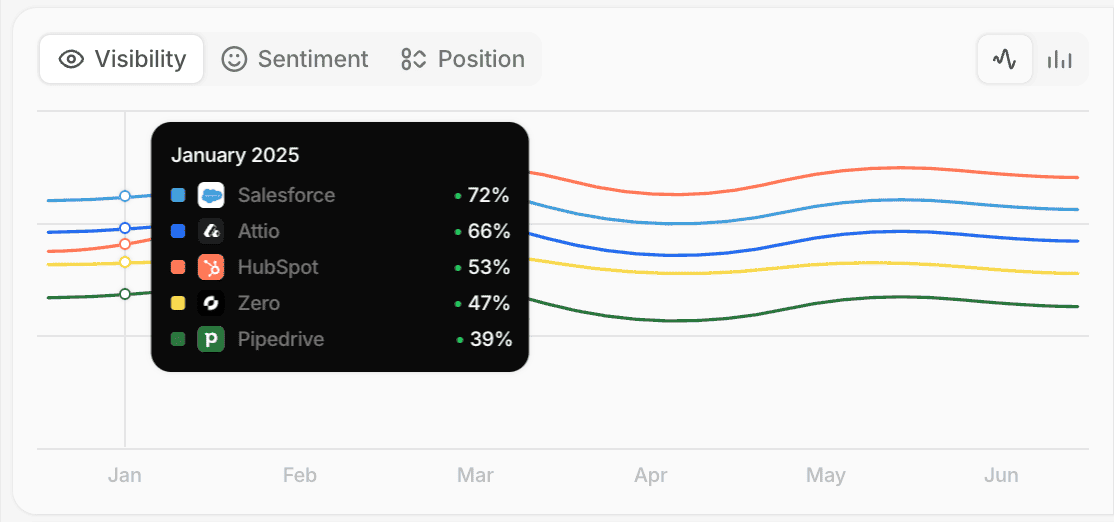
The primary focus of Peec AI lies in monitoring where, when, and how your brand is appearing in results from AI search engines and generative answers. It offers data on answer positioning, which is essentially where your brand ranks in AI-generated responses (or doesn’t), so you can assess its presence.
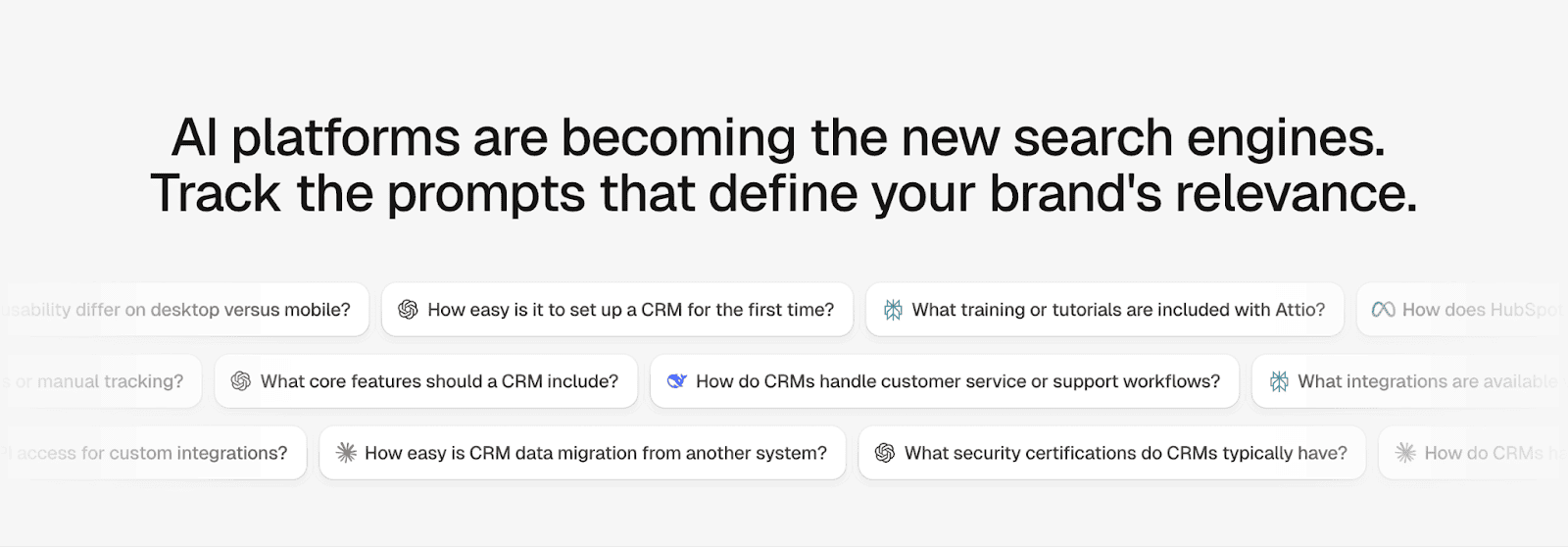
AI tools and generative searches don’t show “everything” the way traditional search engines do. If you search for “best running shoes” on Google, for instance, you can then click through page after page of results to see all of them.
AI tools, on the other hand, only select a small set of brands or sources to include in any given answer. If your brand isn’t visible in those results, it isn’t part of the consideration set.
Positioning matters too. Just like with traditional search results, brands mentioned first are perceived as being more important, trustworthy, or endorsed. And even if you’re visible in AI-generated results and answers, your brand might be framed as an alternative and not the default, it might be mentioned only after competitors, or it might only appear if a user asks follow-up questions.
Visibility lets you know if your brand is a part of the conversation, while positioning lets you know if your brand is being presented as the right answer.
Peec AI gives you information on both.
Brand Sentiment Insight
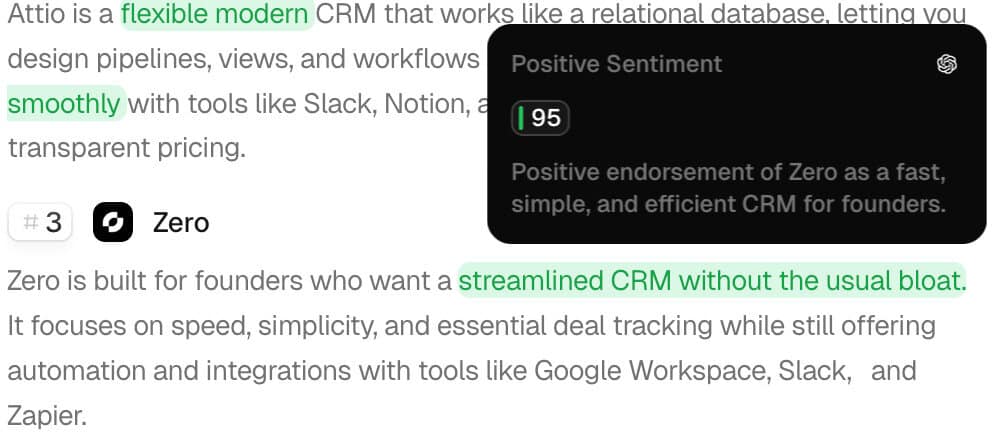
Beyond visibility tracking, Peec AI also provides insight on brand sentiment: how your brand is being described within AI-generated results, and whether it’s being presented in a positive, negative, or neutral light. This is important because being mentioned is not the same as being recommended.
Whenever an AI model mentions a brand in search results, it normally adds some sort of qualifier or “judgment” associated with it, and that information can impact the user immediately, for better or worse.
A negative or even neutral framing can steer users away from your brand, so understanding the ways that AI results are describing it can help you to steer your brand’s narrative in a better direction if needed.
Prompt-Level Insight
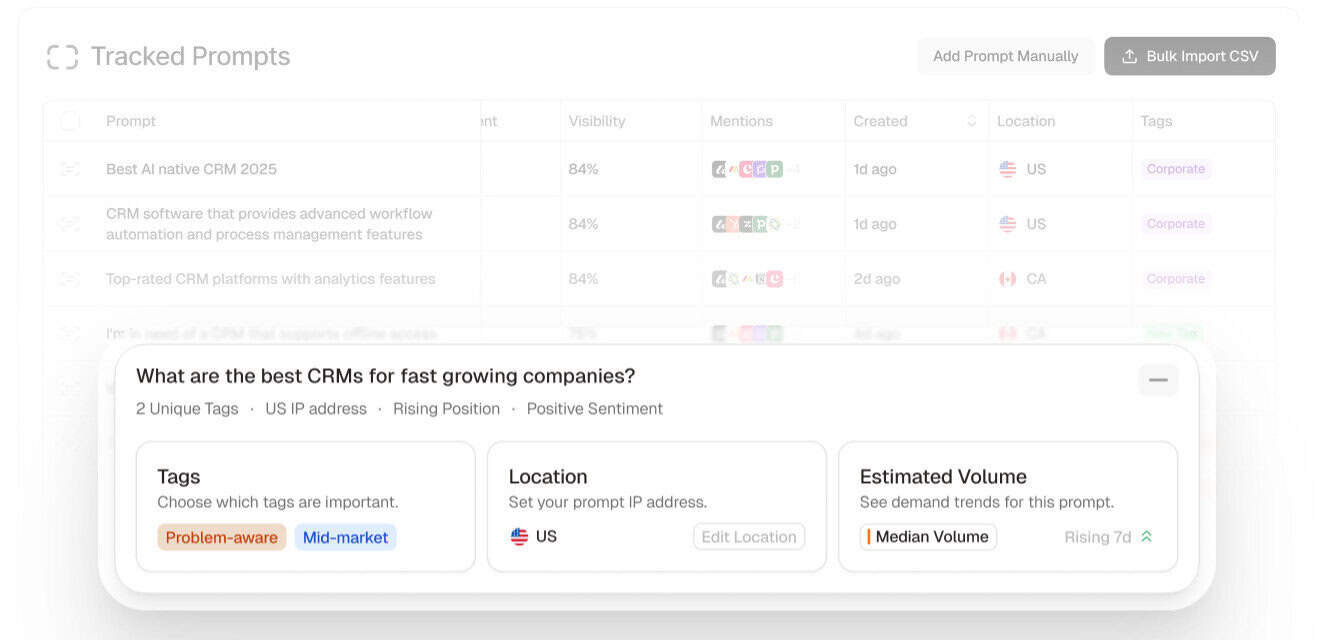
This is similar(ish) to SEO (search engine optimization), but not exactly the same because users search with different language compared to traditional keyword structures. Users of AI tools generally ask questions or seek information using natural conversational terminology, and that matters. A lot.
Going back to our running shoes example, an SEO keyword might be “best running shoes.” But in AI search, a user might ask, “what are the best running shoes for marathons on pavement,” or “what are the most comfortable running shoes for trail running,” for instance.
AI models are extremely sensitive to nuance, and the exact search phrasing changes which brands are selected and how they’re described.
Visibility at the prompt-level tells you which prompts you (or your competitors) are winning, how things are framed within each result, and what positioning the AI model associates with each.
Prompt-level tracking lets you spot visibility wins (or losses) earlier and detect when new competitors are emerging in the queries you want to rank for, but it also lets you know when your brand needs stronger authority signals.
Competitive Benchmarking
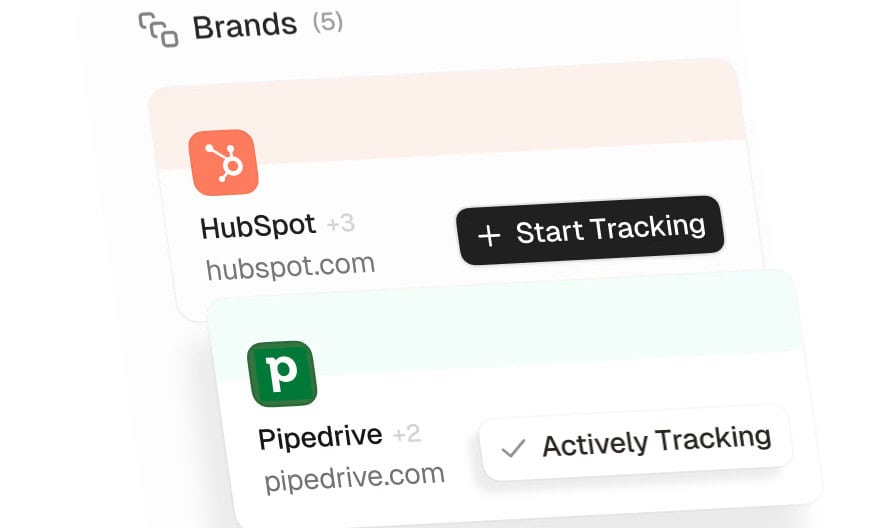
Peec AI helps you to understand what brands AI models prefer, who they trust, and who they recommend, but also under what conditions.
It lets you analyze AI responses side-by-side so you’re not just tracking your own brand’s visibility, but that of your competitors. This lets you understand which brands are appearing most (or dominating your high-intent prompts), who is being mentioned first (or being framed as the best recommendation), how sentiment differs among brands, and who disappears (or appears) when prompts get super specific.
Like I mentioned earlier, AI answers usually include only a few brands (3 to 5, or so); competitive benchmarking lets you see exactly where displacement is happening and which competitors actually matter most so you can prioritize the right ones.
Source Analysis
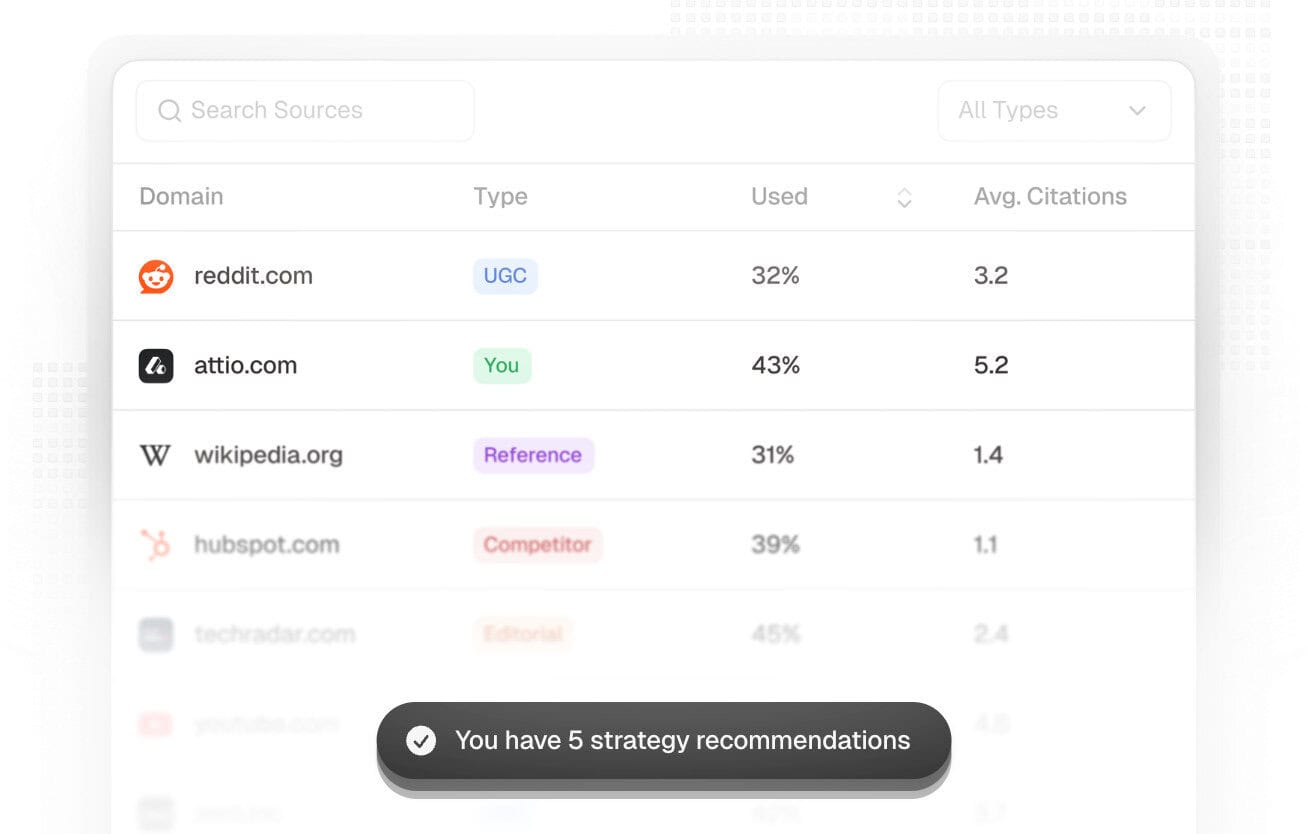
Peec AI maps generative answers and AI responses back to their underlying sources so you can understand which sites it’s consistently referencing for a given topic, what sources are being used when your brand is being mentioned (or your competitors, for that matter), and what types of content are being used for sourcing (like reviews, editorial guides, or forums, for instance).
AI doesn’t necessarily turn to your brand’s website or marketing (although that might be cited depending on the prompt). Instead, it largely relies on third-party reviews, editorial content, and even forums or discussions (on Reddit, as an example).
If you’re finding any misinformation or negative framing about your brand, source analysis lets you identify the origins so you can take steps to update information or shift the narrative.
Multi-Engine Coverage
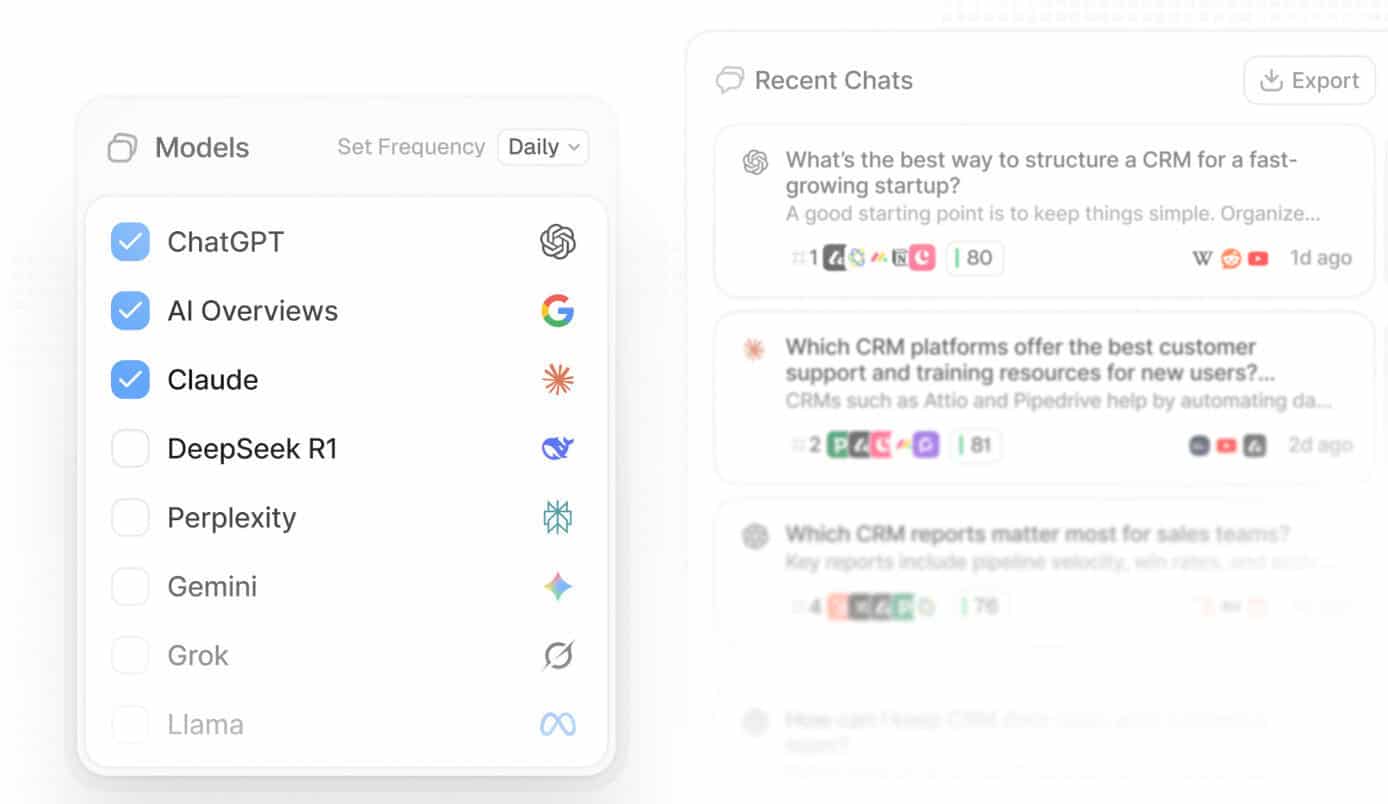
AI is everywhere, and although ChatGPT is probably the most well-known generative answer engine, it’s far from the only one. Each AI model weighs sources differently, frames answers in its own way, and recommends different brands for the same question or prompt.
Peec AI lets you run the same prompts across multiple search engines so you can see exactly how the results vary across models that include Google’s AI Overviews, ChatGPT, Perplexity, Gemini, and Claude.
Using Peec AI: A Hands-On Tour
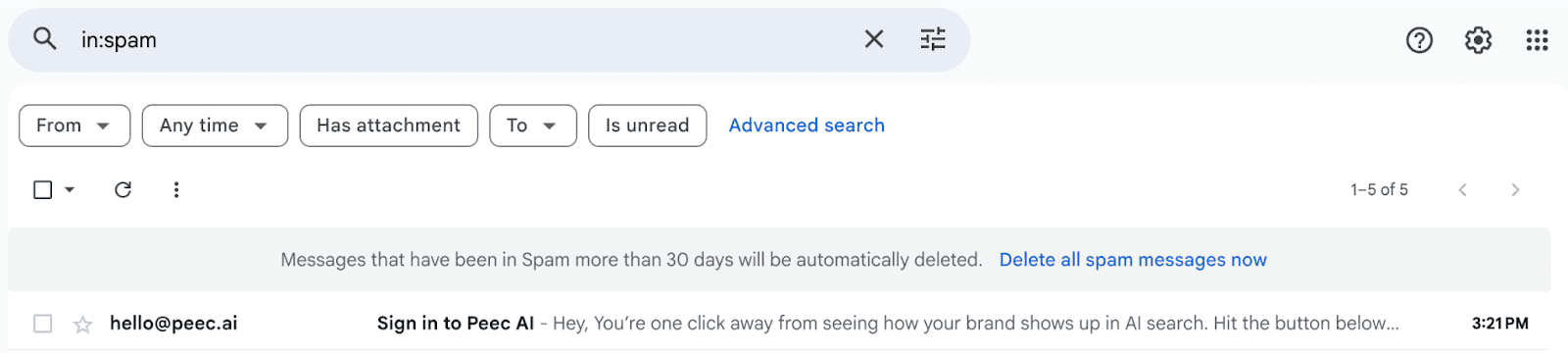
So before we get into the full hands-on tour of Peec, signing up is really easy: simply enter your email and a “magic link” gets sent to it. You should use your work email for this, but if you don’t see the email in your inbox within a minute, check your spam folder because, in my case, that’s where it filtered when it arrived:
The initial Peec AI onboarding is as simple as can be. You’re led into a series of a few short steps that involve adding your business type (agency or in-house/single brand), brand name, URL, and country/location, before getting to where you’re establishing “starter” topics for targeted prompts:
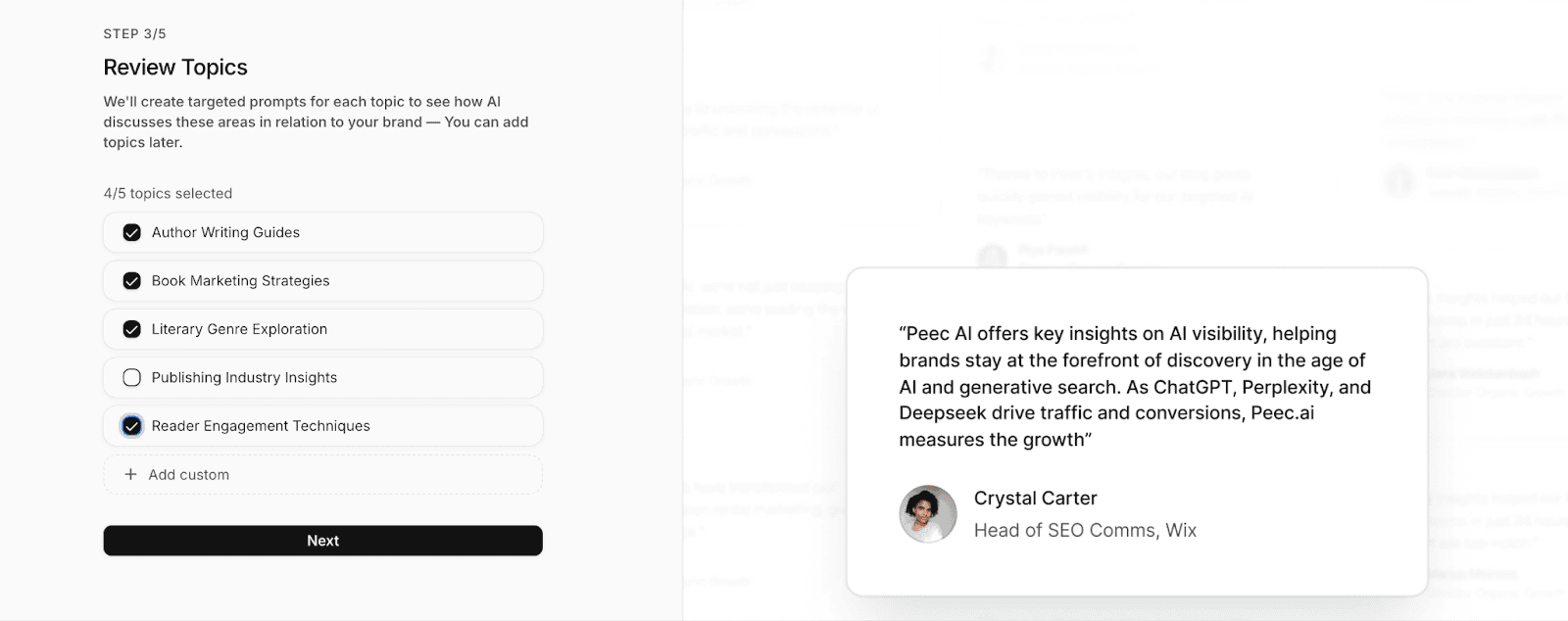
My demo brand is in the literary niche, so the topics were all related to author writing, book marketing, reader engagement, and the like.
The Peec AI dashboard is incredibly easy to navigate, which is something I appreciate a lot because, as far as I’m concerned, the simpler something is, the better.
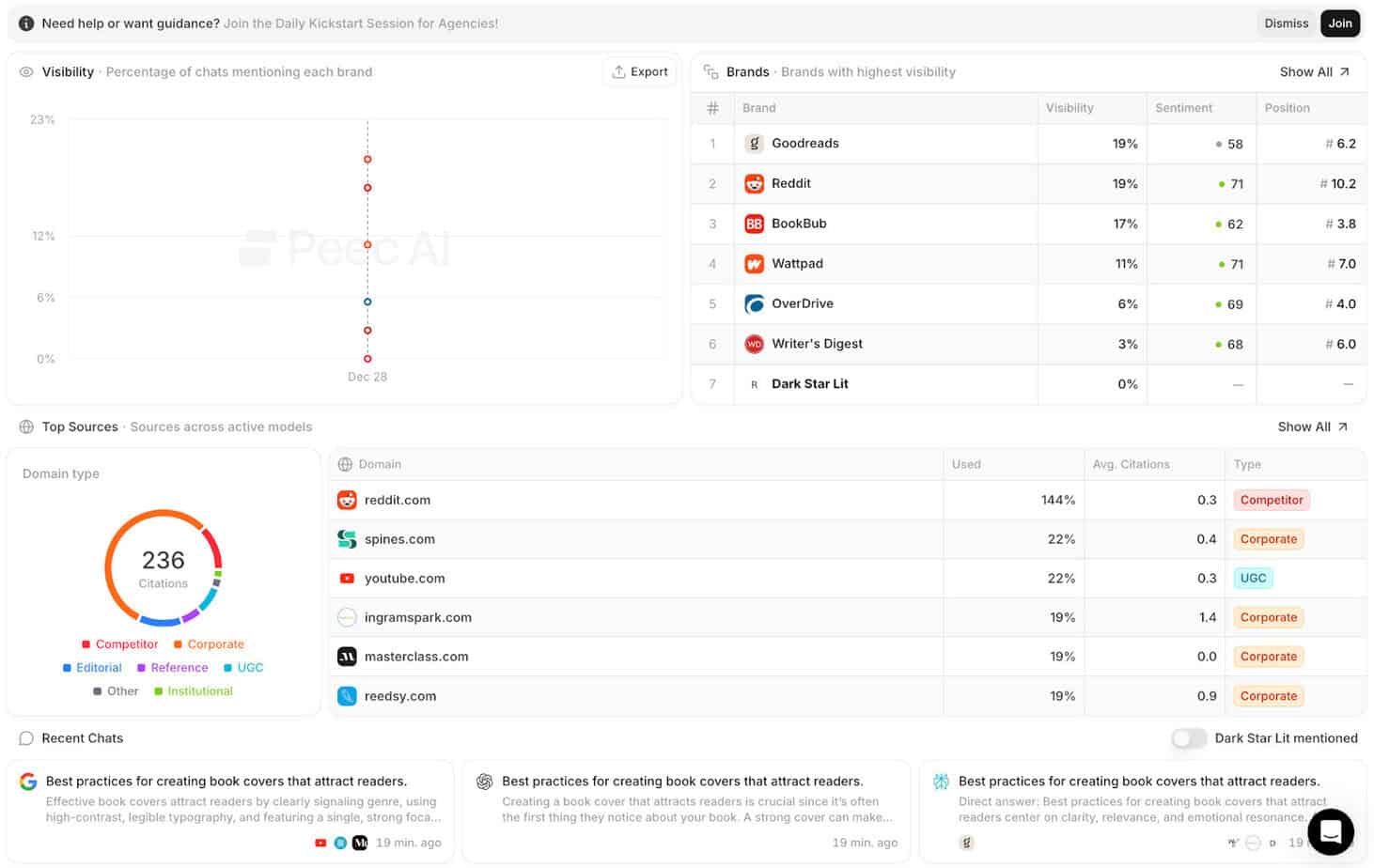
The main overview dashboard gives you everything at a quick glance, including the brands with the highest visibility and the top sources across active models, which in this case (and my lower tier account), include ChatGPT, Perplexity, and Google AI Overviews:

The dashboard also includes a list of top sources being used in AI-assisted or generated searches so you can see right away which domains are dominating prompts in your particular niche. In my demo, those are conversations or websites in the literary space, namely Reddit, Spines, YouTube, IngramSpark, MasterClass, and Reedsy:
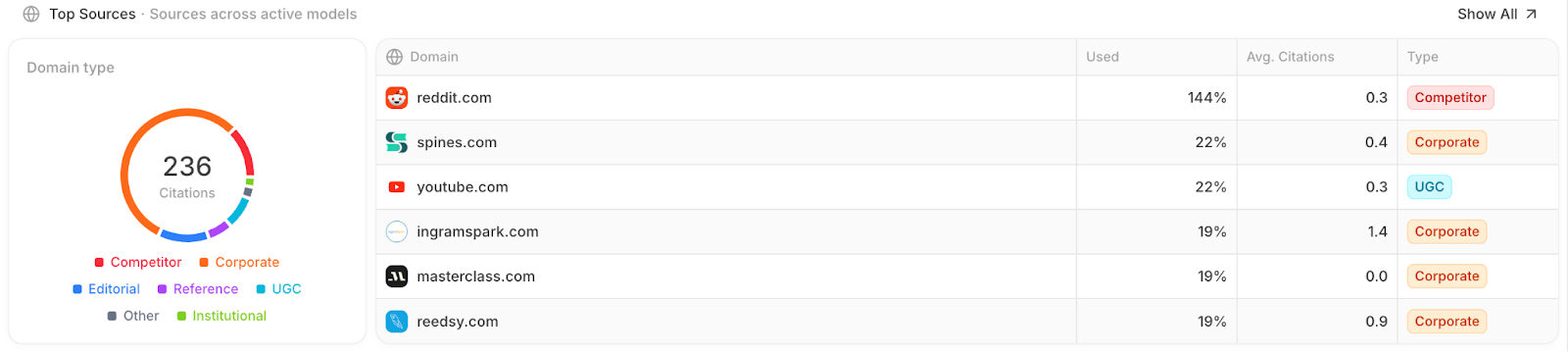
Although the image above is displaying results across “all models”, you can also drill down into any model individually by selecting it from the list.

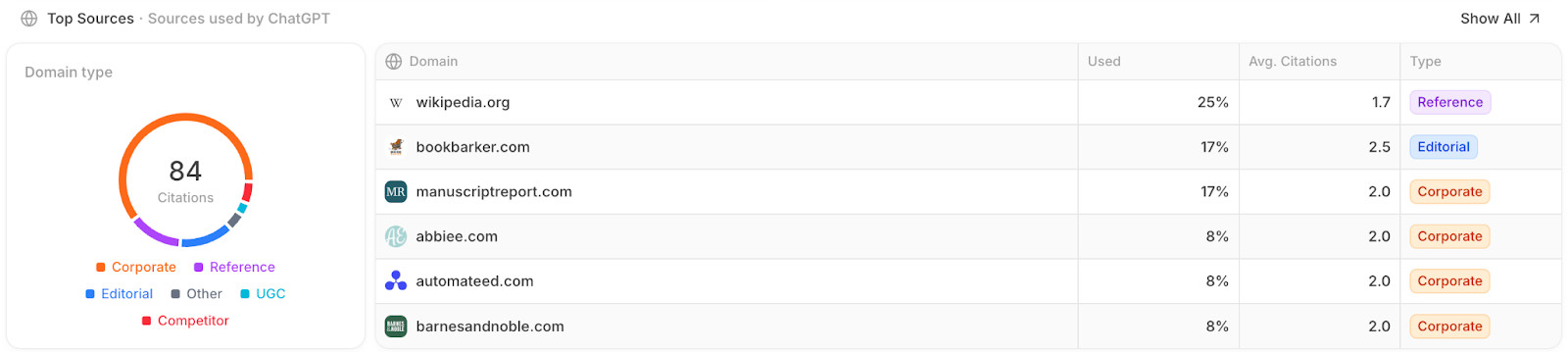
This is particularly helpful when you’re trying to increase brand visibility or sourcing within a specific AI model like ChatGPT, Perplexity, or Google AI Overviews. And as you can see, the sources ARE different based on the model chosen. Where Reddit was initially a top source when looking at all AI models, it isn’t even mentioned in the top six for ChatGPT.
Google AI Overview, on the other hand, relies on it heavily:

But that’s why Peec AI is such a vital part of tracking brand visibility and sourcing. It’s clear that if I want my demo brand to be mentioned in Google AI overviews, Reddit is a major player.
Beyond these highlights, Peec AI also lists recent queries within my niche and what sources (if any) are being cited:
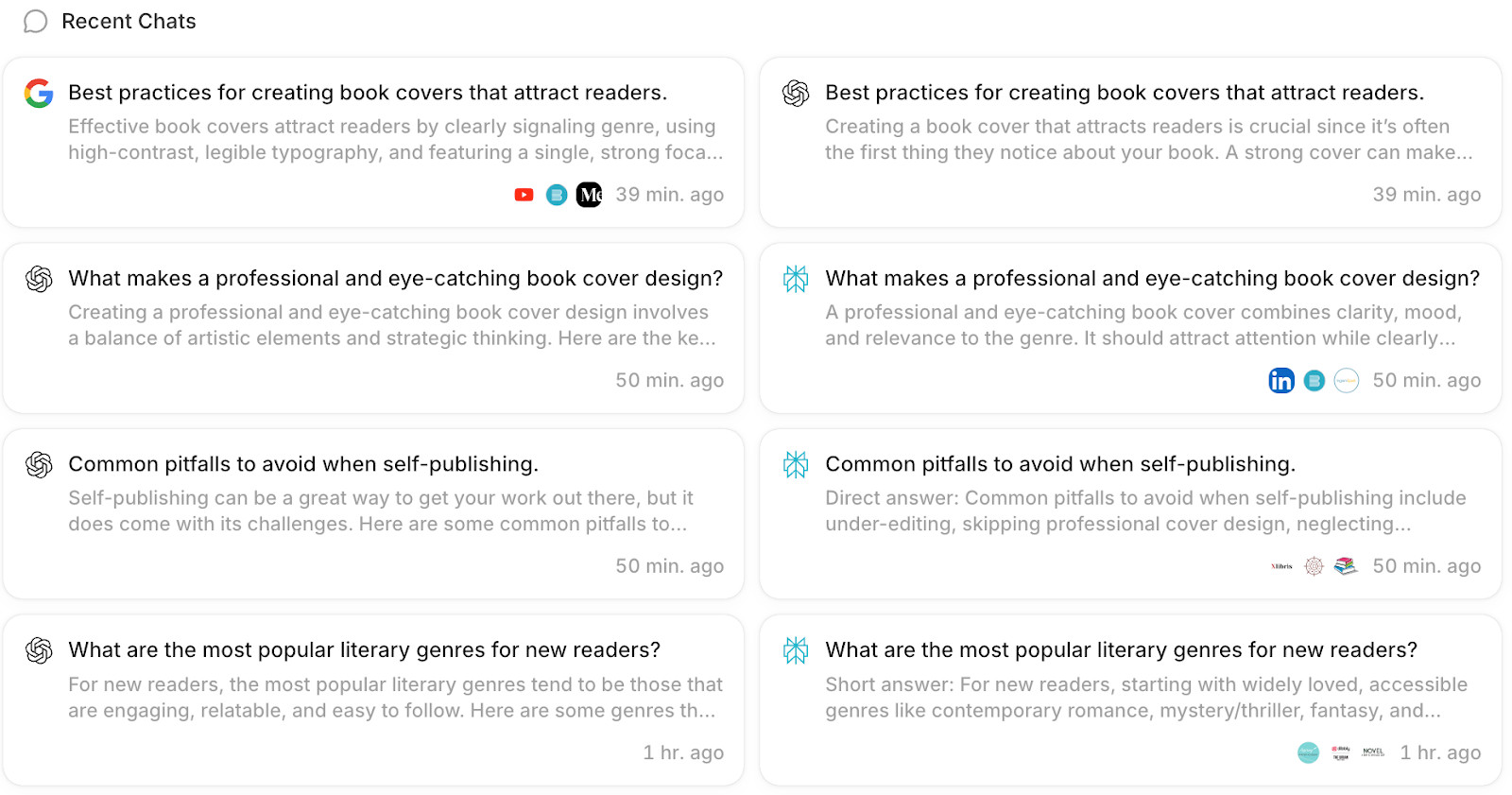
I can click on any result to not only see the query, but everything I need to know about it, including brands mentioned and sources being provided:
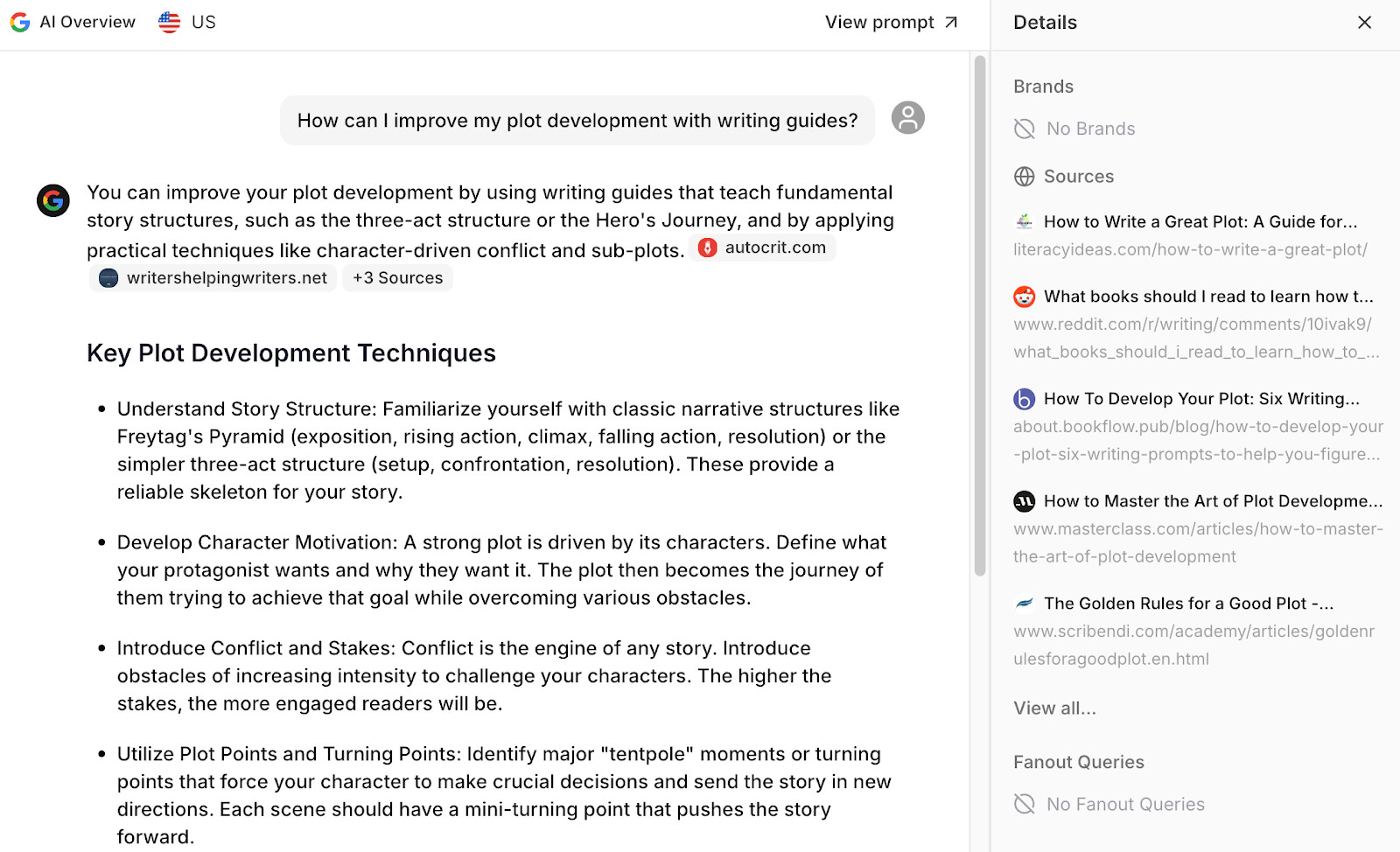
In this particular example of a US-based Google AI Overview, no brands are mentioned because the query is more of a “how to” than a “best X” type of prompt. So let’s take a look at one of those:
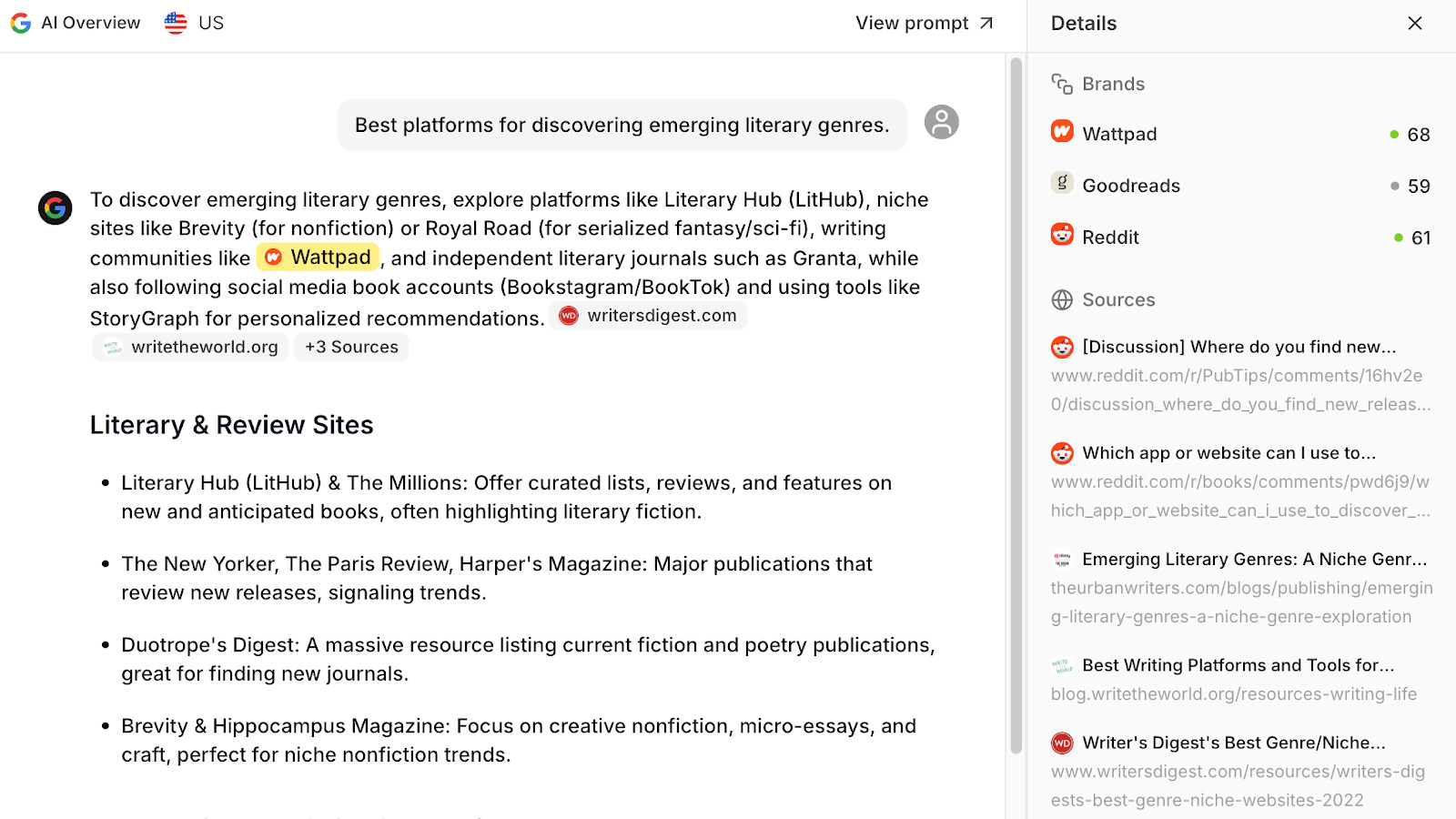
We can see right away that the top brands include Wattpad and Goodreads, with the top two sources coming from Reddit.
This is powerful insight for any brand.
Beyond the overview, however, you can also set specific prompts to track your brand’s visibility (and/or sourcing):
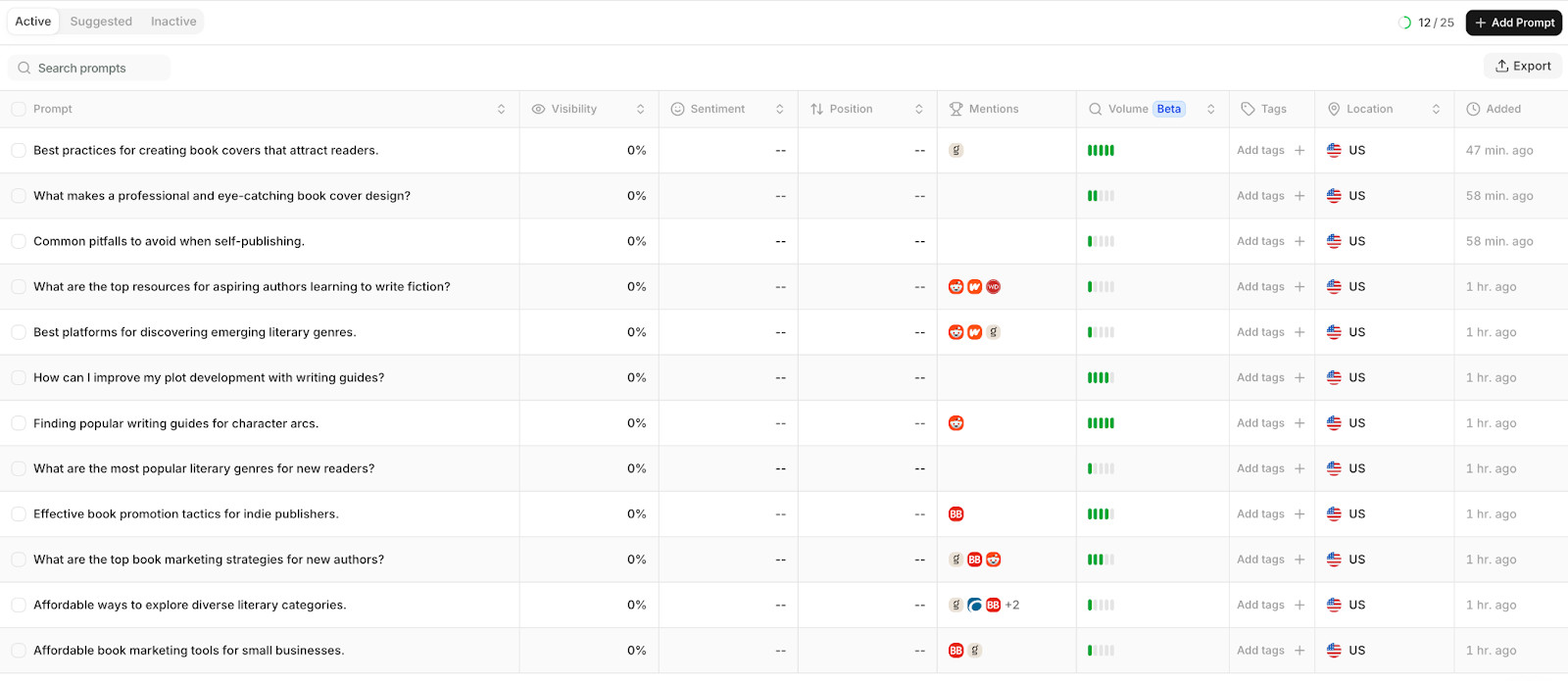
My demo brand has zero visibility, but I can see all the prompts I have added, the visibility, sentiment, and position my brand has (or rather, doesn’t have), along with the brands that are getting mentioned for each.
I can add new prompts:
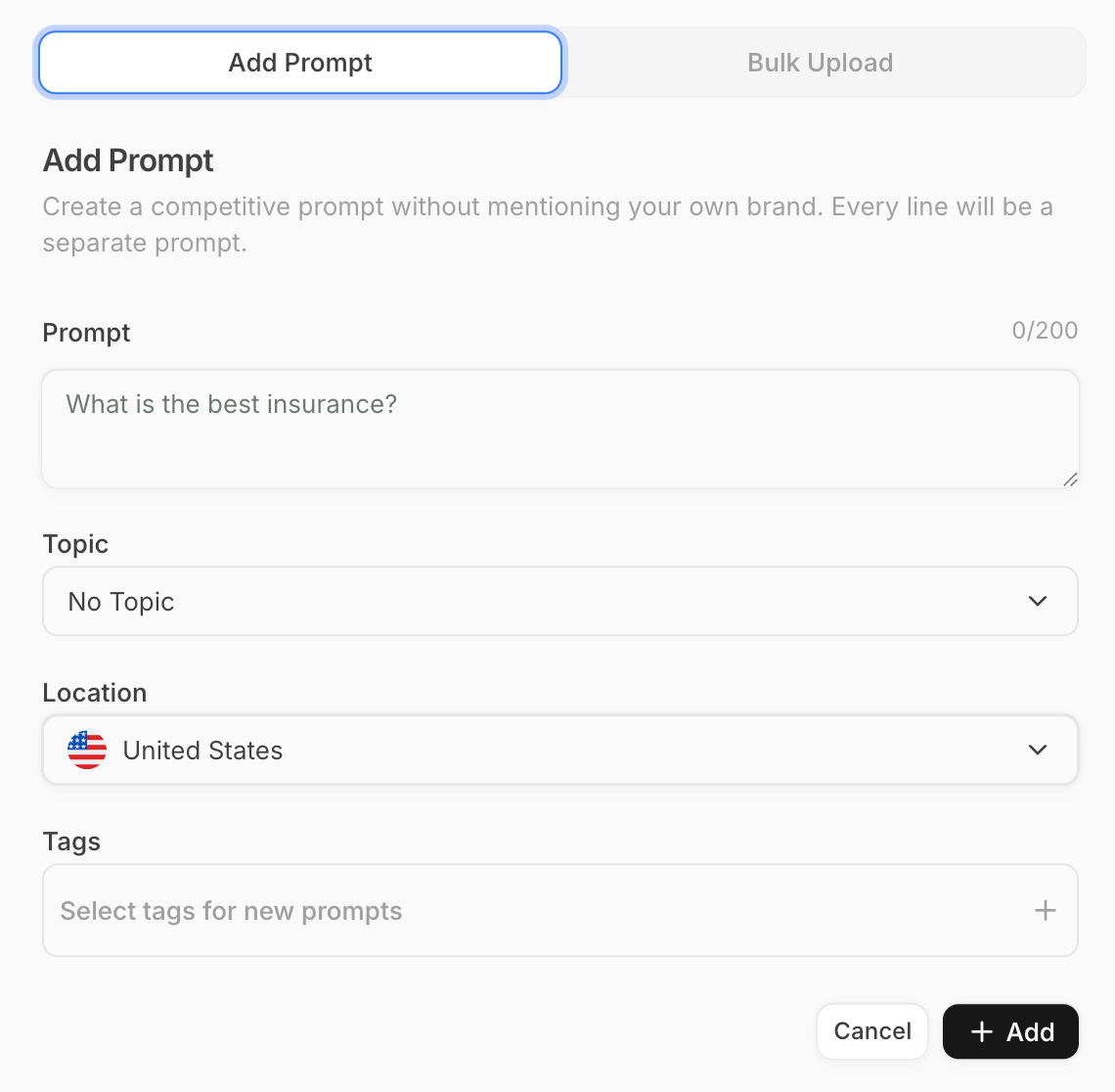
But if I have no idea what types of prompts might be a good fit, the “Suggested” tab will provide those in a flash:
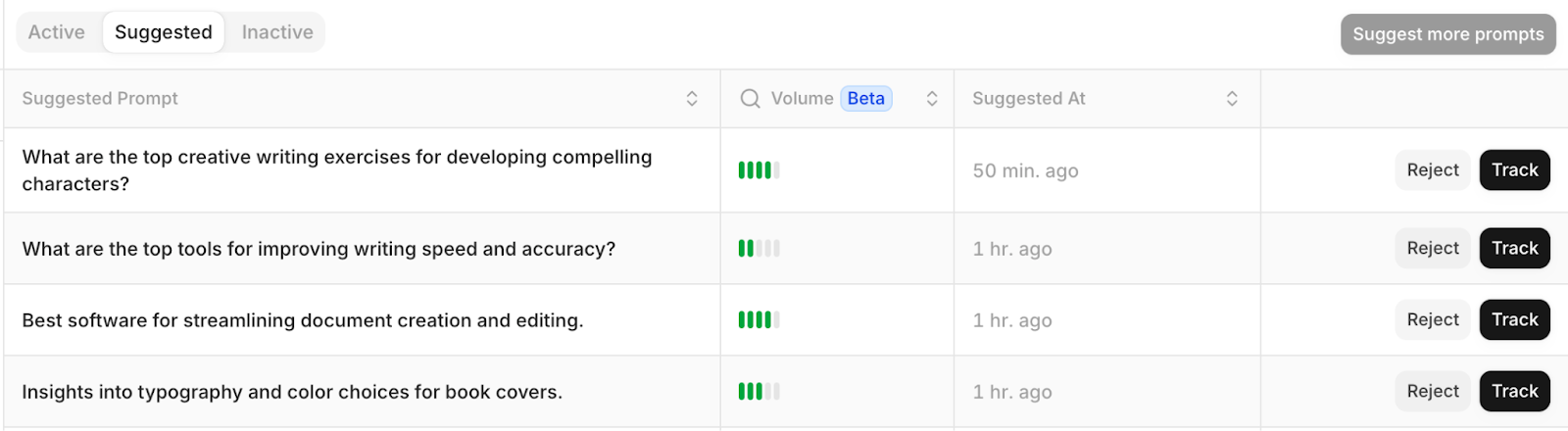
I can choose to “Track” a prompt, which will add it to my list, or “Reject” a prompt if it’s not something I care about following.
This helps to automate things if you’re not sure what to track. And you can absolutely add and remove prompts from your tracking list at will, so you can adapt your setup over time. My own Peec AI access provides up to 25 prompts that can be tracked at any given time.
The Sources dashboard breaks down all of the sources and you can opt to filter with a gap analysis that helps you to identify opportunities where competitors are being mentioned (but your brand is not):
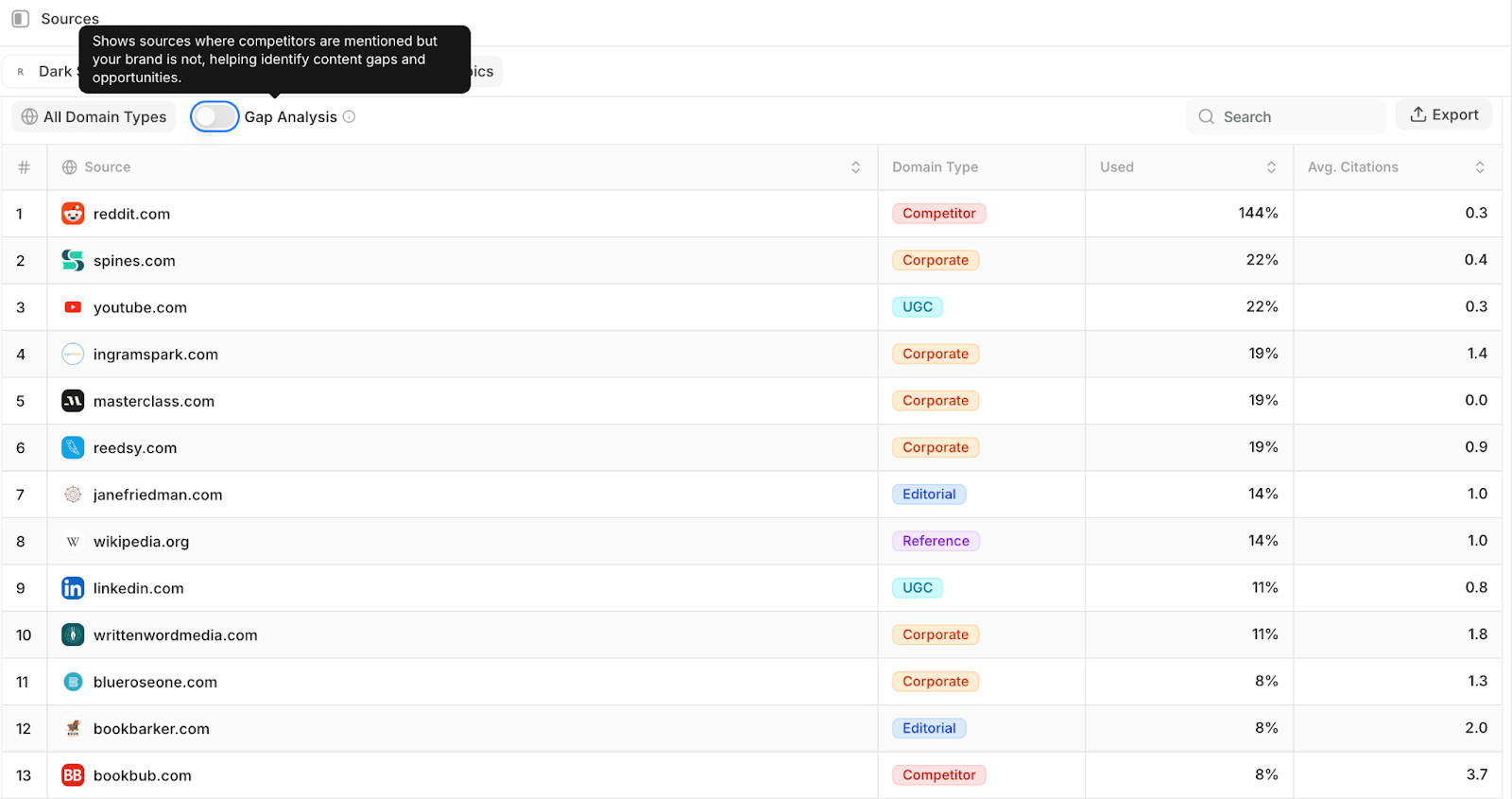
What I love about this is that you can filter by domain type, but you can also click on any single domain to see a full report, like this one for YouTube:
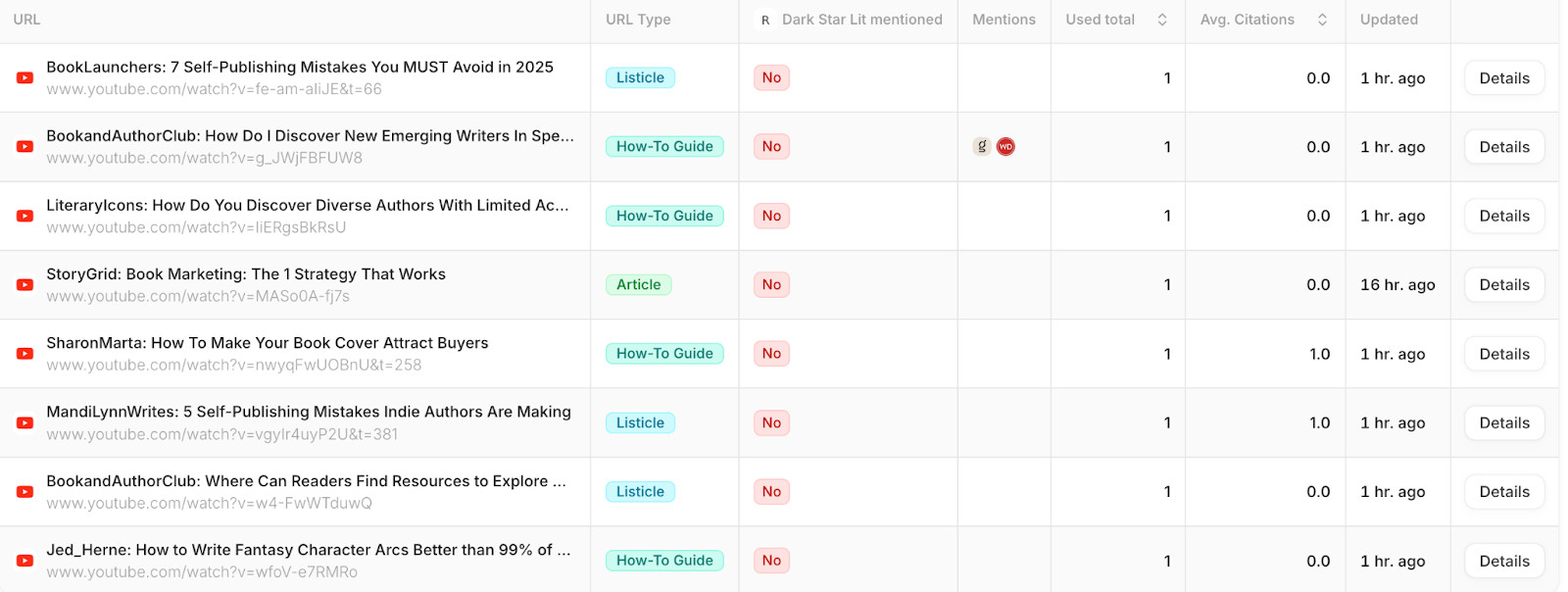
You can add competitor brands to track in Peec AI, add tags that make it easier to filter, search, and group prompts together, and you can also filter and export reports.
I’ve shared a lot of information, but I’m barely scratching the surface of what Peec AI can do. It’s that powerful.
While SEO is still important, Peec AI gives you so much more insight into AI-driven searches and answers compared to any other platform. And because it uses an advanced UI scraping technology that accesses data directly from web interfaces, the results are as accurate as they would be if you were running the searches yourself, one by one, in person.
Peec AI Pros & Cons
Peec AI is best for those seeking insight into multi-engine searches without a major technical setup, and it’s ideal for brands, marketing teams, and agencies looking to measure AI visibility.
Peec AI Pros:
- Offers tangible data about frequency, where, and how your brand appears in AI-driven answers and search.
- The dashboard and UI is really clean and intuitive, even if you’re an absolute beginner.
- Provides built-in competitor benchmarking and gap analysis.
- Covers multiple AI engines, including the most frequently-used (ChatGPT, Google AI Overviews, and Perplexity).
- Prompt-level and source insights help content teams to plan what (and where) to publish content.
- Offers a seven-day free trial so you can test it out before committing to a plan.
Peec AI Cons:
- Is largely a monitoring tool, although improvements are being made to provide more actionable insights.
- Not all AI engines are included; some (like Claude) require an add-on upgrade to access.
- Does not provide any historical data from the date you start tracking. Visibility data begins only from the moment you begin tracking a prompt.
- Doesn’t inherently connect AI mentions to your brand’s traffic, conversions, or ROI.
Peec AI Vs. The Competition
Peec AI is ideal if you want easy visibility and competitor tracking without the hassle of a super-technical setup, especially if your brand isn’t enterprise-level, but there are a few other options to consider.
Passionfruit Labs provides ROI linkage from AI-driven search results (which is something that Peec AI currently doesn’t offer), but Passionfruit has less focus on basic monitoring. Peec AI is the better watchtower of the two.
Profound is a powerful competitor, offering enterprise-grade AI visibility insights with deep analytics, but at a hefty price tag if you want more than just ChatGPT tracked. While $99 a month gets you prompt tracking for that single platform, the next tier is $399 per month for tracking on three answer engines.
Scrunch AI is another option that offers deep monitoring like Peec AI, but similar to Profound, ChatGPT-only tracking starts at $100 a month and the next tier, which provides monitoring for “all LLMs,” runs $500 per month.
Peec AI Pricing
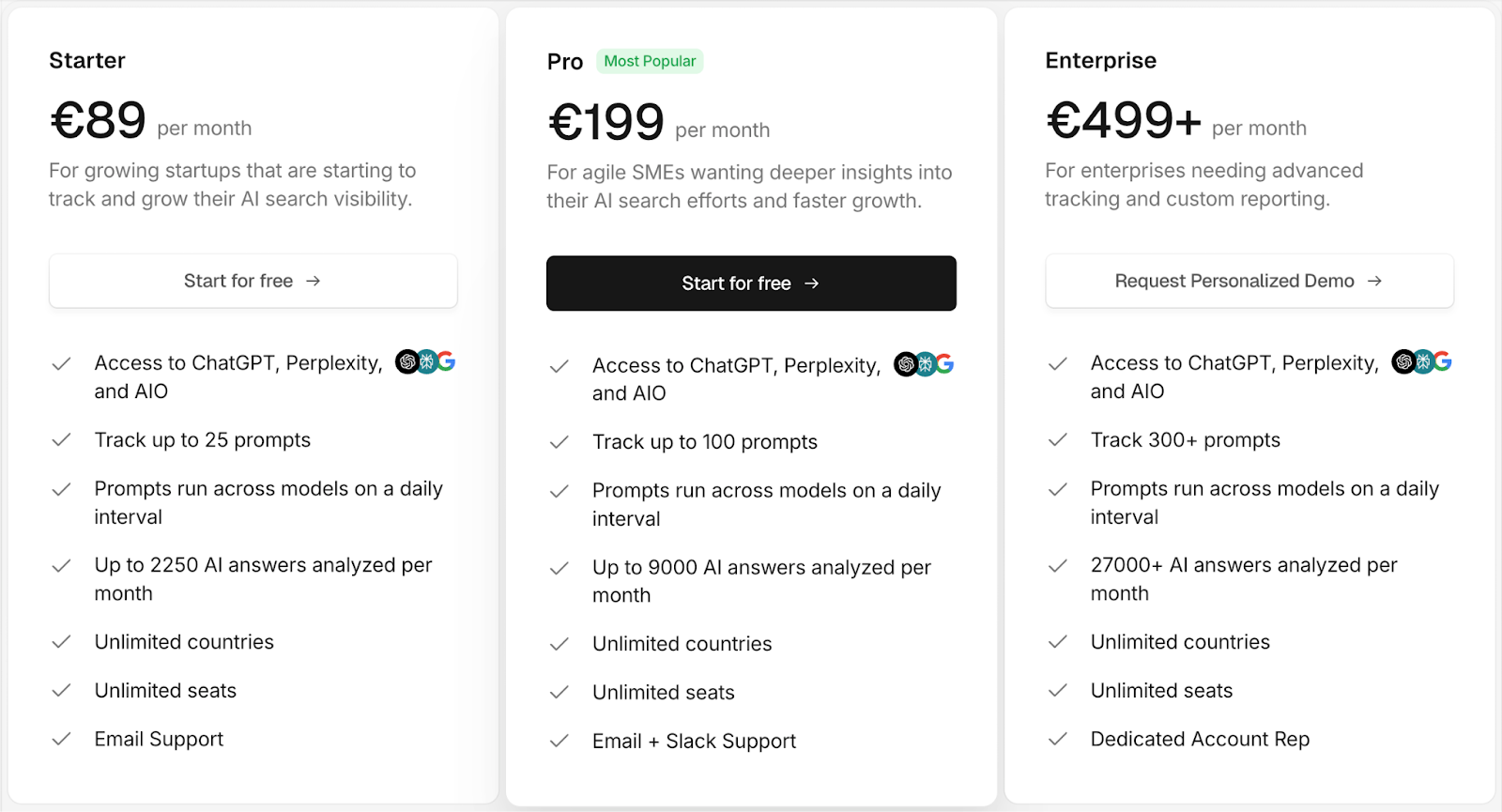
For startups or smaller brands that are just beginning to track their AI visibility the Starter tier runs €89 (~$105) per month, and that includes access to ChatGPT, Google AI Overviews, and Perplexity, with tracking up to 25 prompts.
The next tier, Pro, costs €199 (~$234) monthly and provides tracking up to 100 prompts and up to 9,000 AI answers analyzed.
Enterprise is the highest tier and starts at €499 (~$587) per month, tracking 300 or more prompts. This access point includes a dedicated account representative.
All of Peec AI’s tiers include unlimited seats. Gemini, Claude, DeepSeek, Llama, Grok, and AI Mode are available for an additional fee.
The Final Verdict
AI search isn’t a trend; it’s become a primary discovery channel. And while it won’t completely replace your SEO stack (search engine optimization is still important!), Peec AI sheds a lot of light on a major blind spot, delivering deep insights with a minimal learning curve.
Even if you’re just starting out in GEO (generative answer optimization), you’ll be able to make better strategy and optimization decisions that keep your brand in the conversation, wherever it’s happening.