

Last Updated on February 10, 2026 by Ewen Finser
The ability to track AI visibility became important the moment answer engines turned into primary discovery channels, and “basic” monitoring tools like Peec AI are a perfect starting point for marketing teams.
While it’s vital to know when and where your brand is appearing in AI-generated responses, the why and the what-to-do-next are much bigger questions that require a far more robust toolset.
Alternatives To Peec AI (At A Glance):
Compare | Focus | Best For | Price/Mo. |
Emberos | Brand visibility monitoring and optimization with predictive forecasting and workflow automation | Brand and marketing teams that need a more orchestrated approach and ROI metrics | Custom |
Profound | Brand visibility monitoring, optimization, agent analytics | Brand and marketing teams that want deeper reporting and competitive modeling for content strategy | Starts at $99 |
Relixir | Brand visibility monitoring, optimization, automation | AI-first teams that need content action and automation built in | Contact Sales Dept. |
AirOps | Brand visibility, content prioritization, no-code content generation | Brand visibility tracking, fact-checking, and hallucination monitoring, actionable insights | Custom |
Waikay | Brand visibility tracking, fact-checking and hallucination monitoring, actionable insights | Brands prioritizing AI visibility with narrative control + reputation management | Starts at $69.95 |
Peec AI has helped to make AI visibility measurable, but that’s really only the first step toward optimization and improvement. When leadership or decision-makers ask about how AI visibility ties into demand, revenue, or even future performance, marketing teams need platforms that dive deeper than Peec AI can.
What Peec AI Is & Why Someone Might Seek An Alternative
Peec is a relatively “simple” AI visibility analytics tool that helps marketing teams monitor brand presence in AI-driven search environments like ChatGPT, Perplexity, and Copilot. Essentially, you set up prompts (topics you want your brand to be visible for), and it tracks mentions, citations, and performance alongside competitor presence.
Peec AI excels at what it does: providing a quick overview of visibility, positioning, and sentiment in a way that’s very beginner-friendly. That said, it may not necessarily be enough for more advanced marketing teams that need greater analytic depth, ROI measurement, or workflow integrations.
You might seek an alternative to Peec AI if:
- You need deeper diagnostics beyond visibility and citations: It doesn’t provide root-cause analysis, channel-level influence beyond pages, or prompt-demand intelligence that provides search volume on prompts or how demand is trending.
- You need to account for ROI attribution: Especially if you have stakeholders or decision-makers to report to, a team might need a platform that makes it easier to understand (and present) which actions are driving lift, how it all connects to revenue, or what the forecast might look like if more (or less) investment is made.
- You need an execution layer: Some platforms provide actionable recommendations with the means to implement them into your team’s workflow, including content updates, knowledge corrections, distribution, and overall governance.
- You want something that’s predictive: This one is more of a rare find, but some platforms (like Emberos, which we’ll talk about in a moment) can forecast outcomes and business results in a predictive way.
Peec AI Alternatives To Consider First
If you’re looking at alternatives to Peec AI because you need a lot more than what it can offer, the recommendations below are the options I consider worth a first look.
Emberos
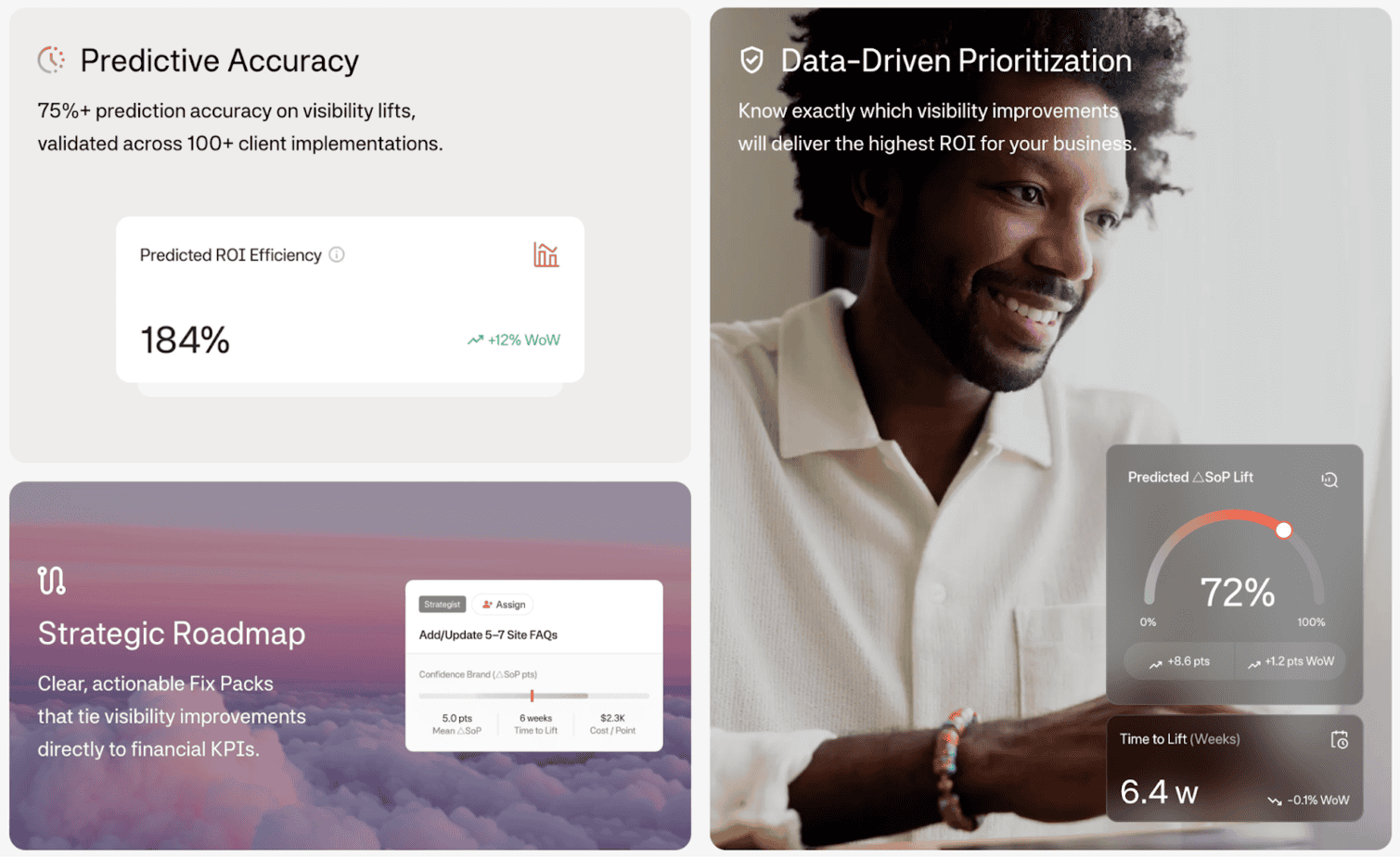
As the first “operating system for AI brand visibility,” Emberos is designed for companies and brands who want to control the narrative and optimize the way they appear inside AI-generated answers.
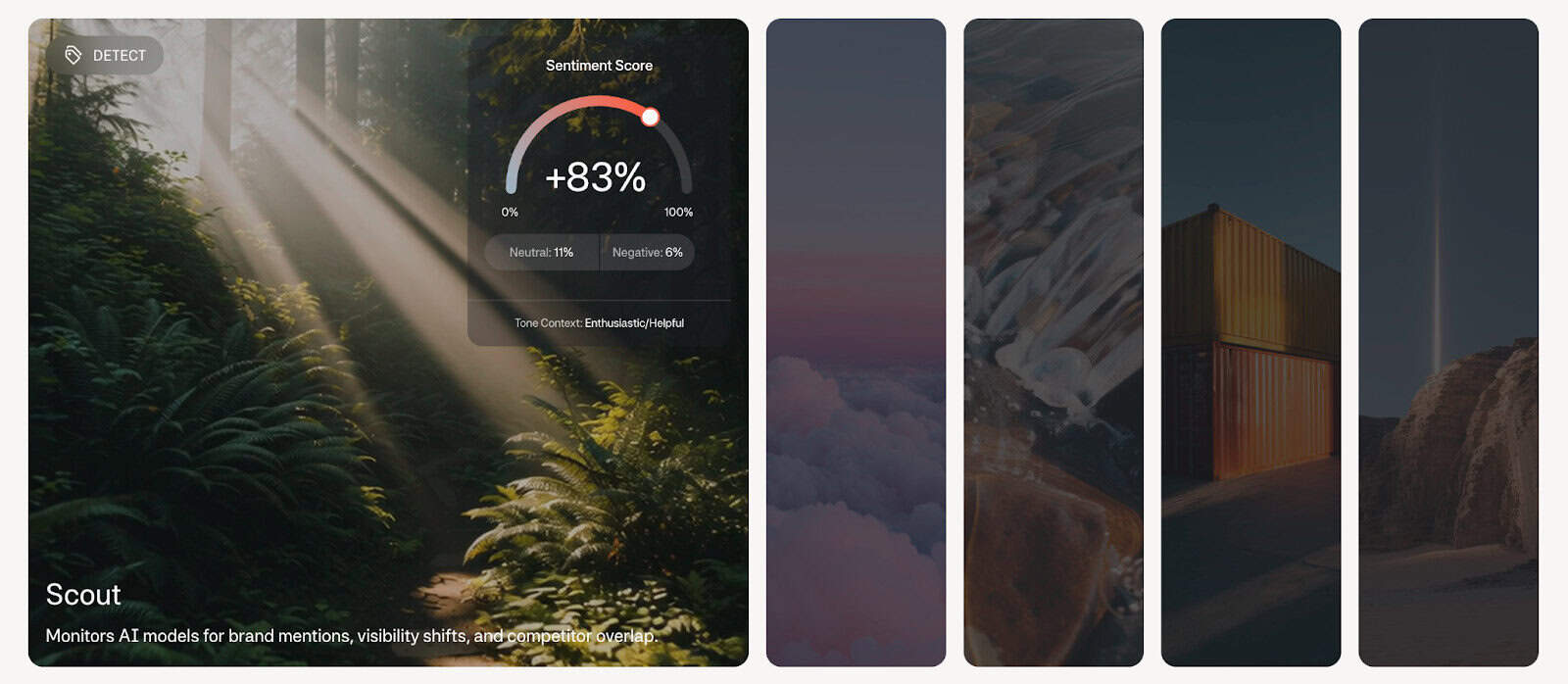
Emberos offers LLM monitoring in real-time, tracking mentions, citations, and positioning across all major platforms, including ChatGPT, Claude, and Google AIO. But it also illuminates areas of concern, namely inaccuracies and misinformation (or AI hallucinations) that put your reputation at risk.

And while most tools only show you what’s happening as it relates to visibility or narrative in AI search right now, Emberos has the ability to predict future performance. So if changes are needed to correct misinformation, as an example, this platform will also predict how those changes could influence brand visibility and even real business outcomes in the end with startling accuracy.

Emberos also integrates with tools like Slack, Jira, and HubSpot to push recommended actions into your team workflow seamlessly, so you get the insights and the means to execute them easily.
And for those who need to report to executives or decision-makers, Emberos offers dashboards and exec-ready views that simplify visibility, risk, and predictive outcomes for planning or ROI discussions.
Emberos Pros
- Predictive analytics can forecast outcomes earlier than any other Peec AI alternative on this list.
- Real-time multi-LLM monitoring gives a broad and current picture of brand representation within AI conversations and responses.
- Built-in integrations (Slack, Jira, CRMs) for easier workflows and implementation.
- Detects misinformation produced by AI systems, including incorrect or outdated information and hallucinations that impact brand safety, compliance, or narrative.
- C-suite reporting provides a high-level view for marketers or leaders to see trends, risks, or forecasts without needing deep technical knowledge.
Emberos Cons
- Pricing at any level is customized and tailored to the scale needed by a brand or company.
- The learning curve can be steep compared to other platforms, particularly with workflow integrations.
- May be excessive or overly-sophisticated for smaller brands or startups that are new to tracking AI visibility or just beginning to explore AI discovery.
Profound
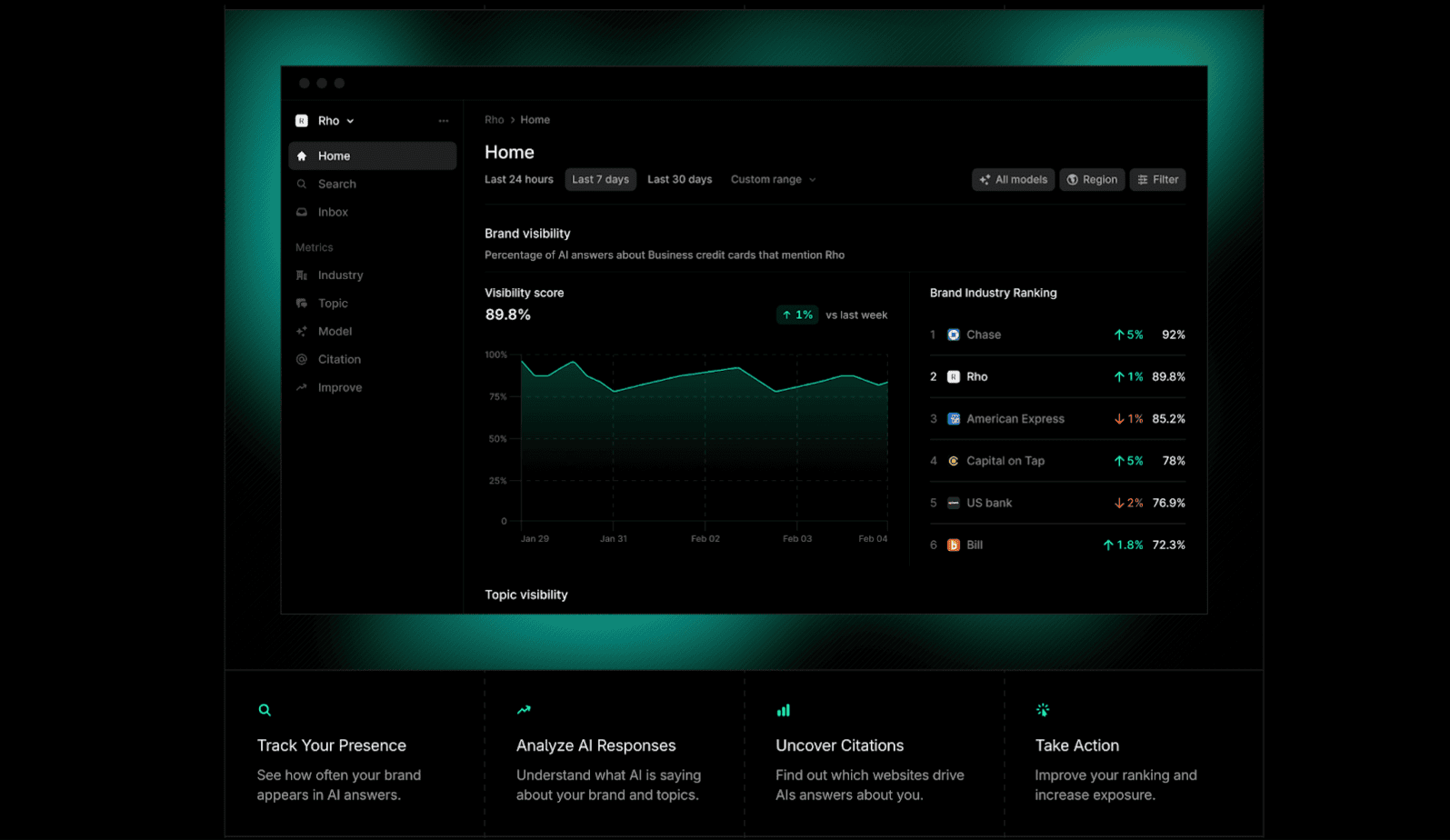
Profound is (as its name might suggest) a really powerful AI visibility tool that is leaps and bounds beyond Peec AI. Although it tracks brand presence in AI-generated answers, it gives metrics that go far deeper, including visibility scores, share of voice, and citations.
But that’s really just the tip of the iceberg.
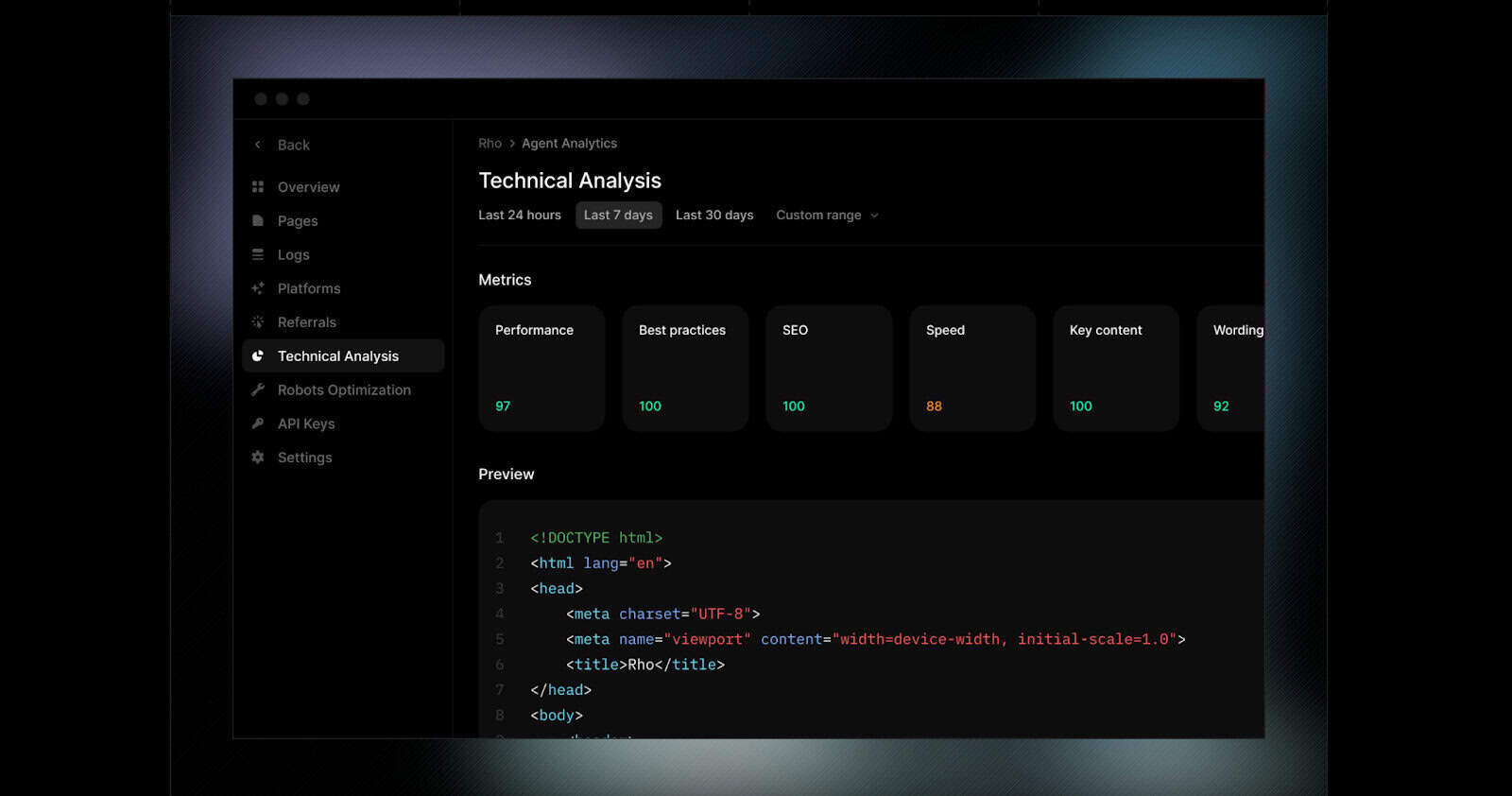
Profound also tracks how your site is crawled and interpreted by AI agents, which lets you better optimize for AI-driven search. It tells you when and how often bots are accessing your content, measures how many visitors are arriving from AI search environments, and shows you which pages are being referenced most often in AI-generated responses.
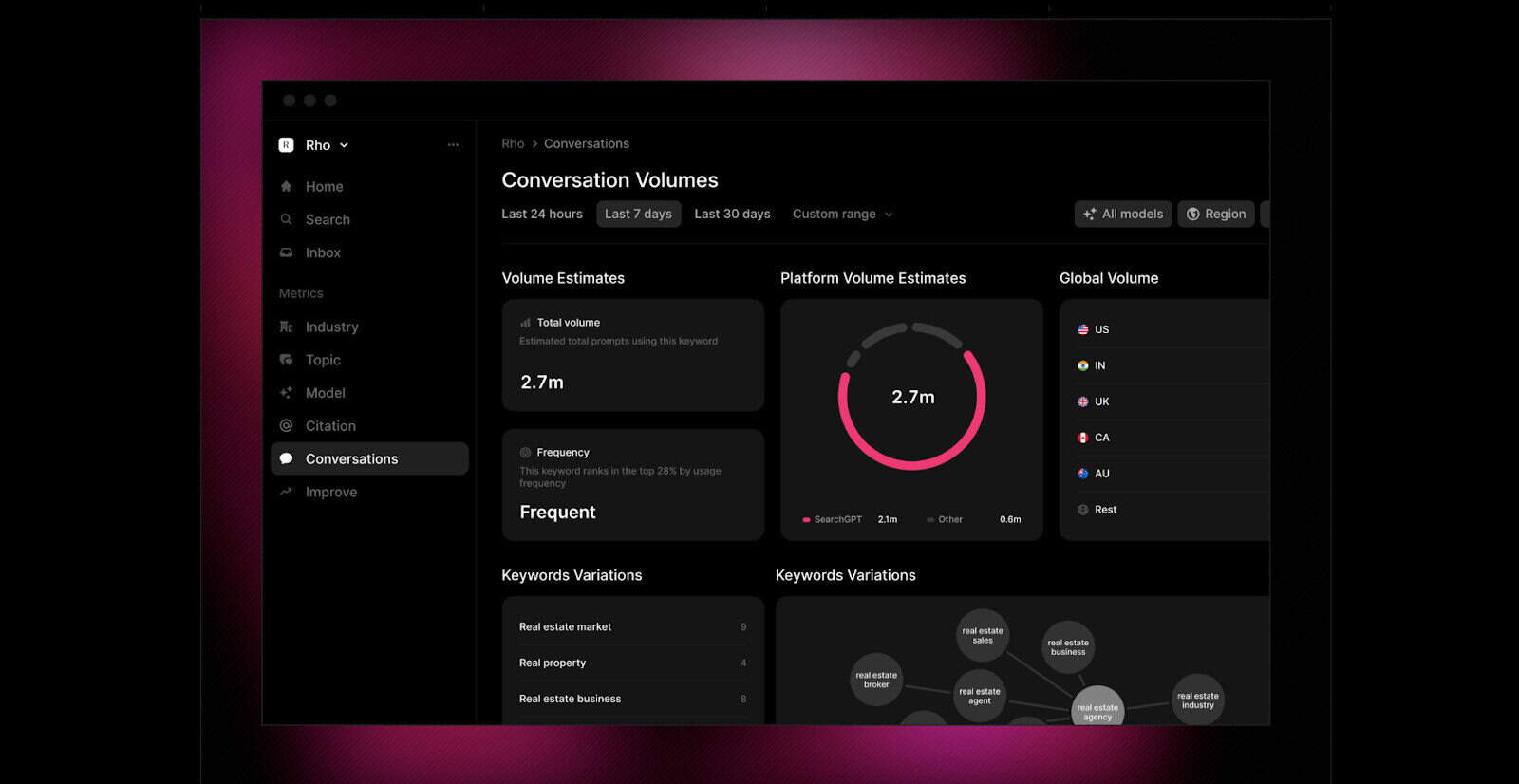
It also helps you to strategize content based on demand within AI search engine queries. Prompt Volumes, which is a tool that works similarly to “old school” SEO keyword research, finds relevant topics being discussed in AI conversations so you can get insights into current trends and the content you should prioritize for optimal visibility in those spaces.
Speaking of content, Profound gives you the means to optimize existing content or generate new content specifically built for answer engines.
Profound Pros
- Enterprise-grade AI visibility tracking and monitoring for mentions, citations, sentiment, share of voice, and competitor benchmarking.
- Actionable insights with strategic recommendations for topics or prompts that could improve visibility, including prompt search volumes within AI search and conversations.
- Enterprise-ready security integrations if needed (SOC 2 Type II compliance).
- AI agent analytics show how and when your site is crawled, but also how much traffic flows to you from AI-powered search environments.
- Strong UX and support.
Profound Cons
- The starter tier is just $99 a month, but only tracks ChatGPT. The next tier, Growth, is $399 per month for three answer engines.
- Can have a steep learning curve, as it’s a powerful and complex tool set.
- While the Enterprise tier offers the most flexibility in terms of answer engines tracked, pricing at that level is custom and might be overkill for small businesses or startups.
Relixir
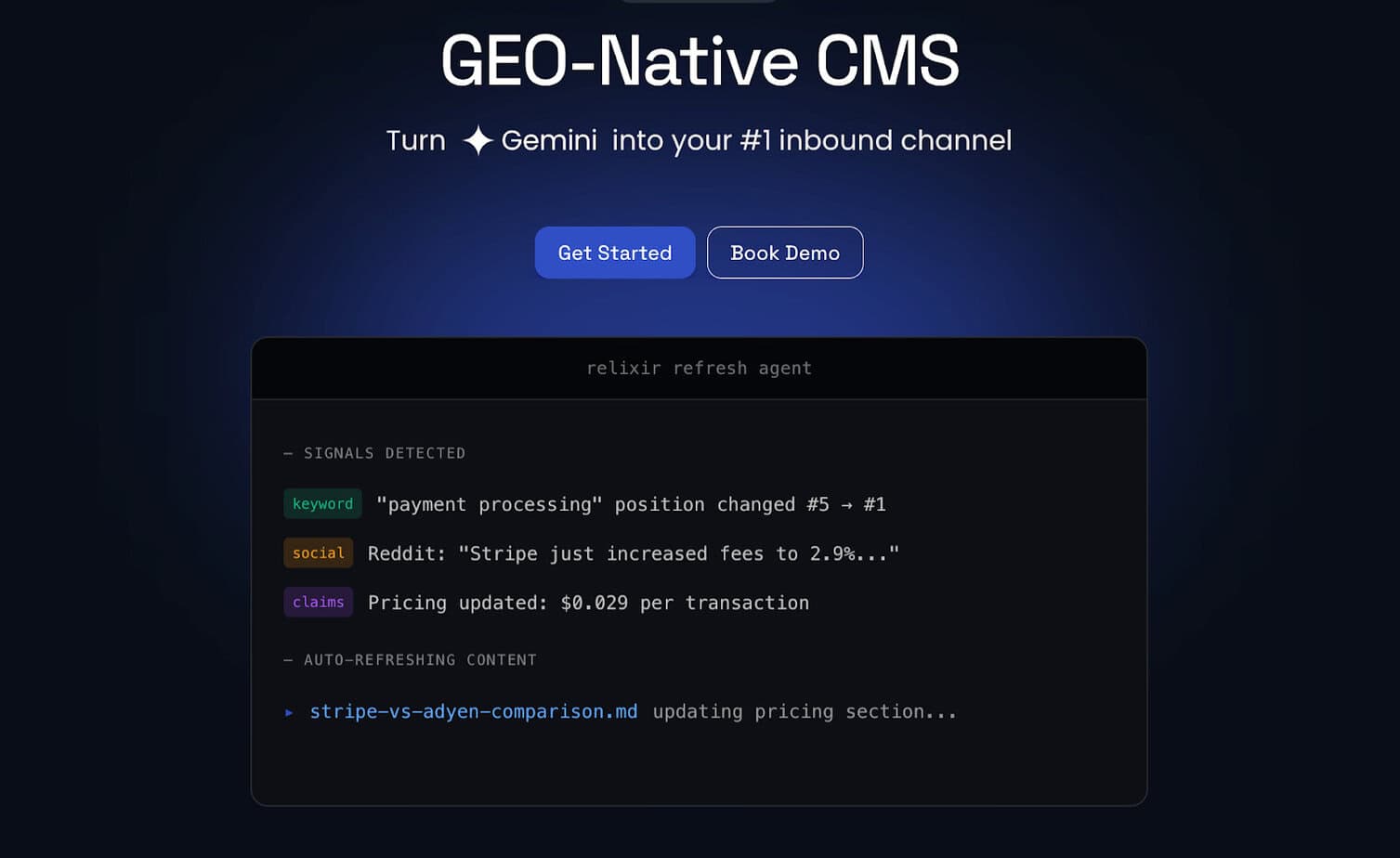
A powerful tool for teams who want AI visibility monitoring and content automation, Relixir helps brands to close gaps without a heavy developer lift. While it monitors AI search and citations, it also identifies exactly where your brand’s competitors are winning (and where you are absent) so you can prioritize the most strategic opportunities.
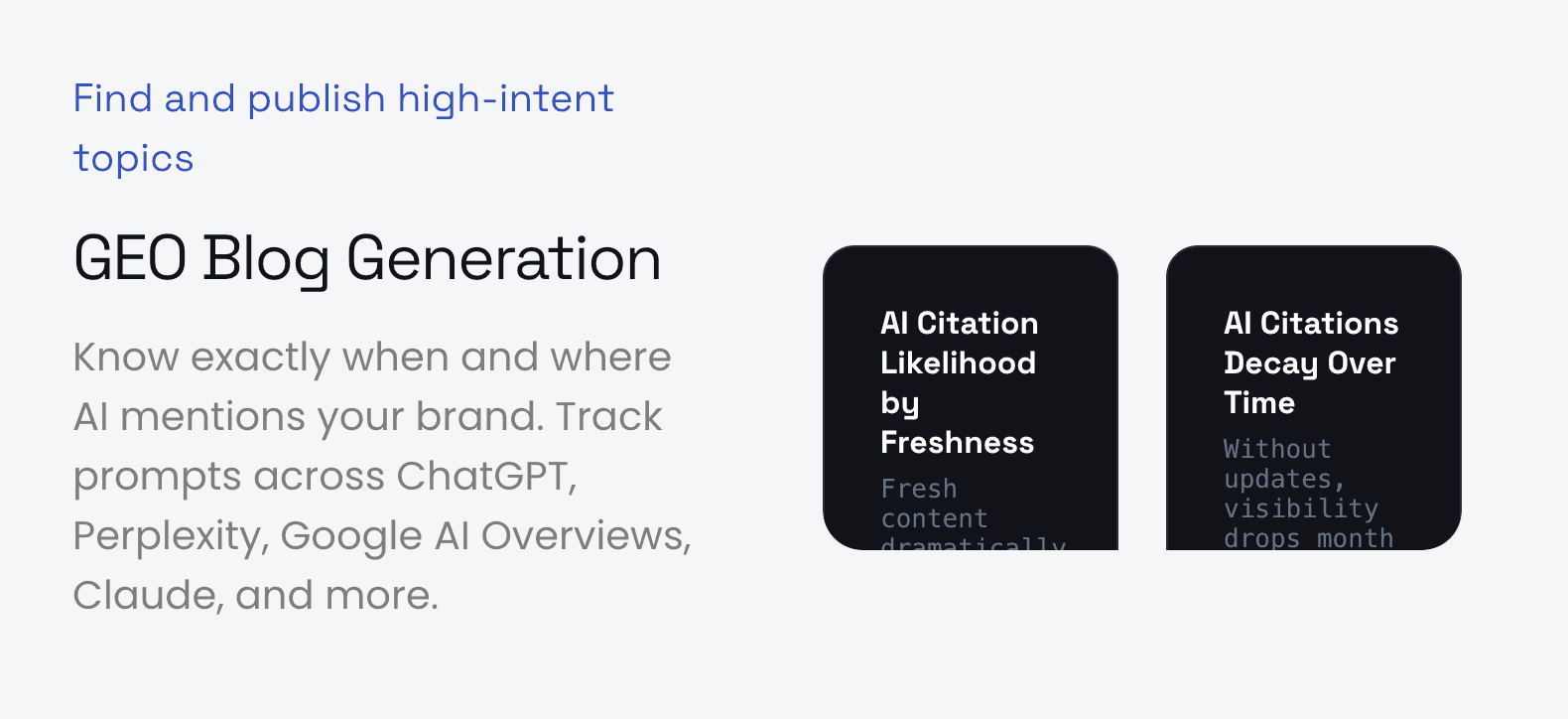
But more than just showing you the opportunities, Relixir can also generate and even publish AI-optimized content. It uses large-scale query simulation to uncover gaps in your content strategy and topics that AI considers relevant but that your site doesn’t already cover.
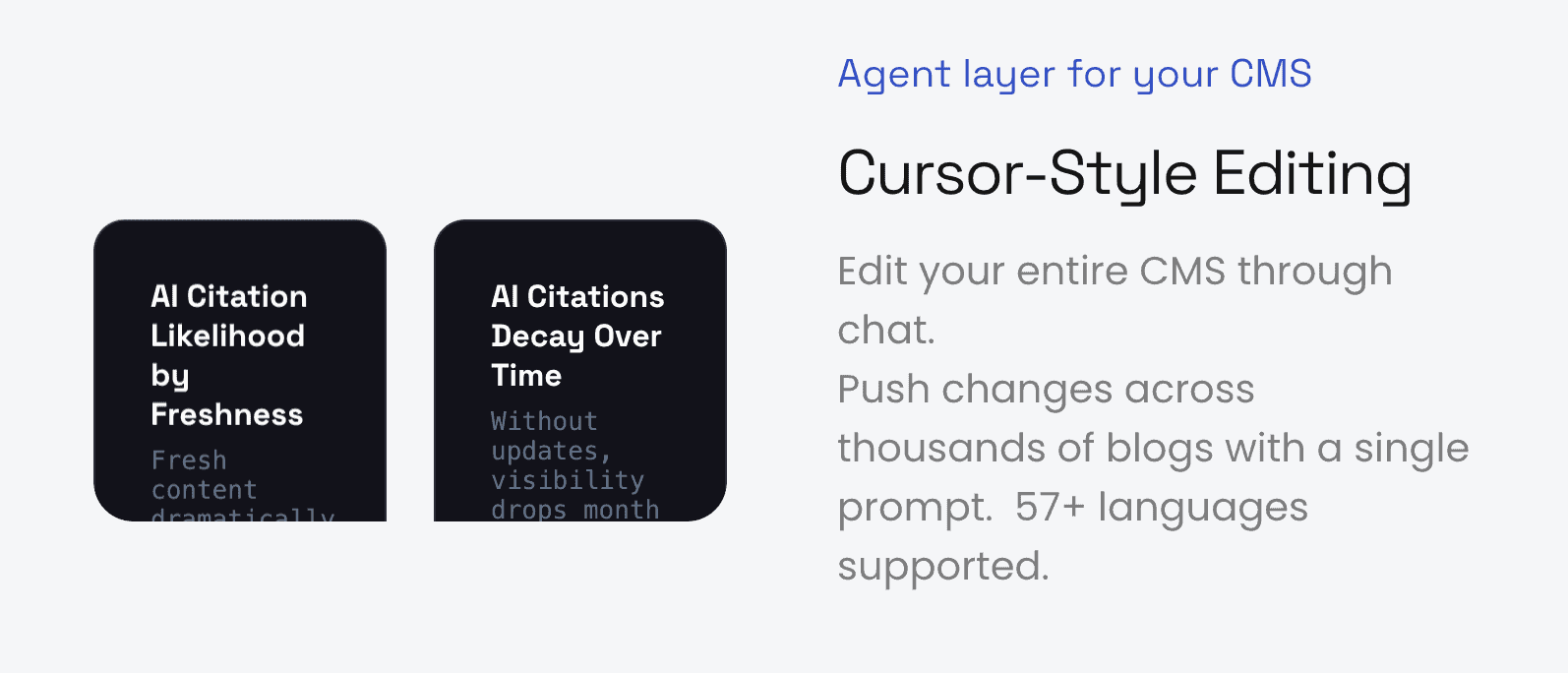
While some Peec AI alternatives give you insights, Relixir helps you to execute them through an end-to-end workflow that includes an agent layer for your CMS so you can push changes out immediately.
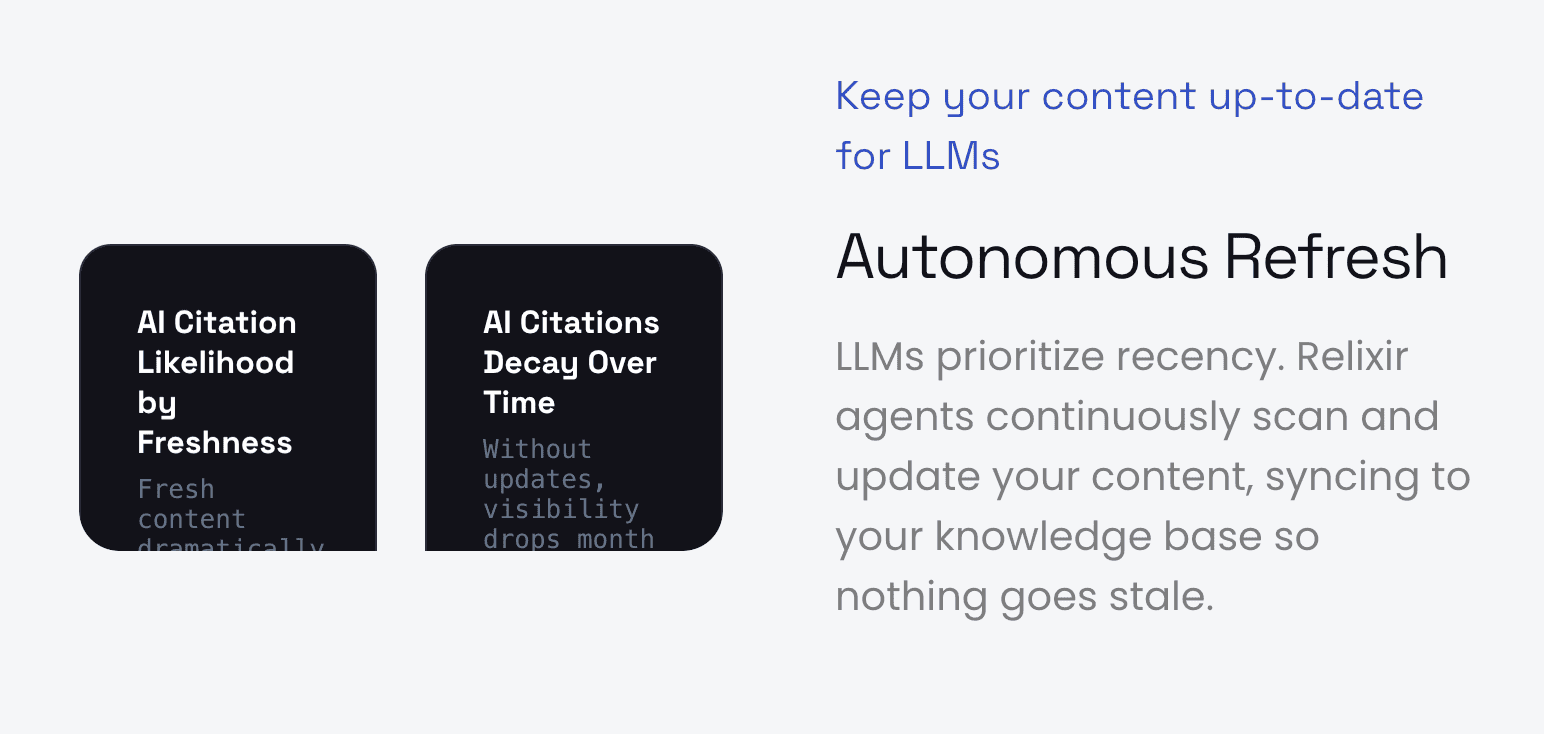
Speaking of agents, Relixir offers autonomous refresh, with agents scanning and updating content synced to your knowledge base so content stays fresh and up-to-date, which is something LLMs love.
(Assuming LLMs can “love” something, of course.)
Relixir Pros
- Complete end-to-end GEO/AISEO automation to improve visibility with ongoing updates.
- Competitive gap and content gap detection, with automated brand-aligned content generation to reduce manual team lift.
- Tracks visibility across multiple engines, including ChatGPT, Perplexity, Gemini, and Google AIO.
- Enterprise-level workflows with guardrails and approvals for brands with compliance needs.
Relixir Cons
- Higher pricing and customized plans may not be small-business or startup-friendly.
- Heavy learning curve with a reliance on automations, which can be a hurdle for smaller teams.
- Newer and less mature since it’s a relatively new platform.
AirOps
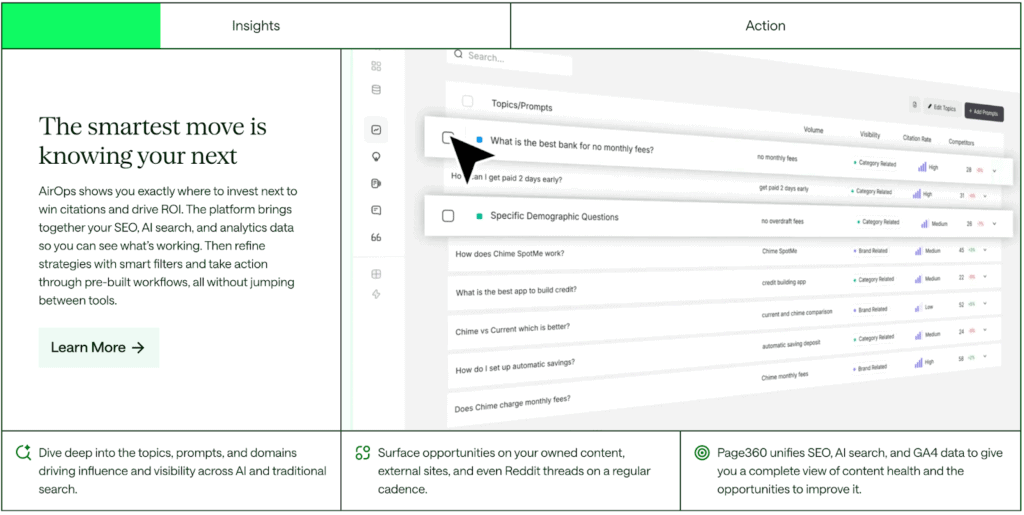
Offer a full suite of tools, AirOps is probably closest to Relixir in terms of what it offers, which includes workflow automation and content operations, but without the use of code or agents.
So if the idea of working with a fully automated platform like Relixir is a little scary, AirOps is probably the more approachable option.
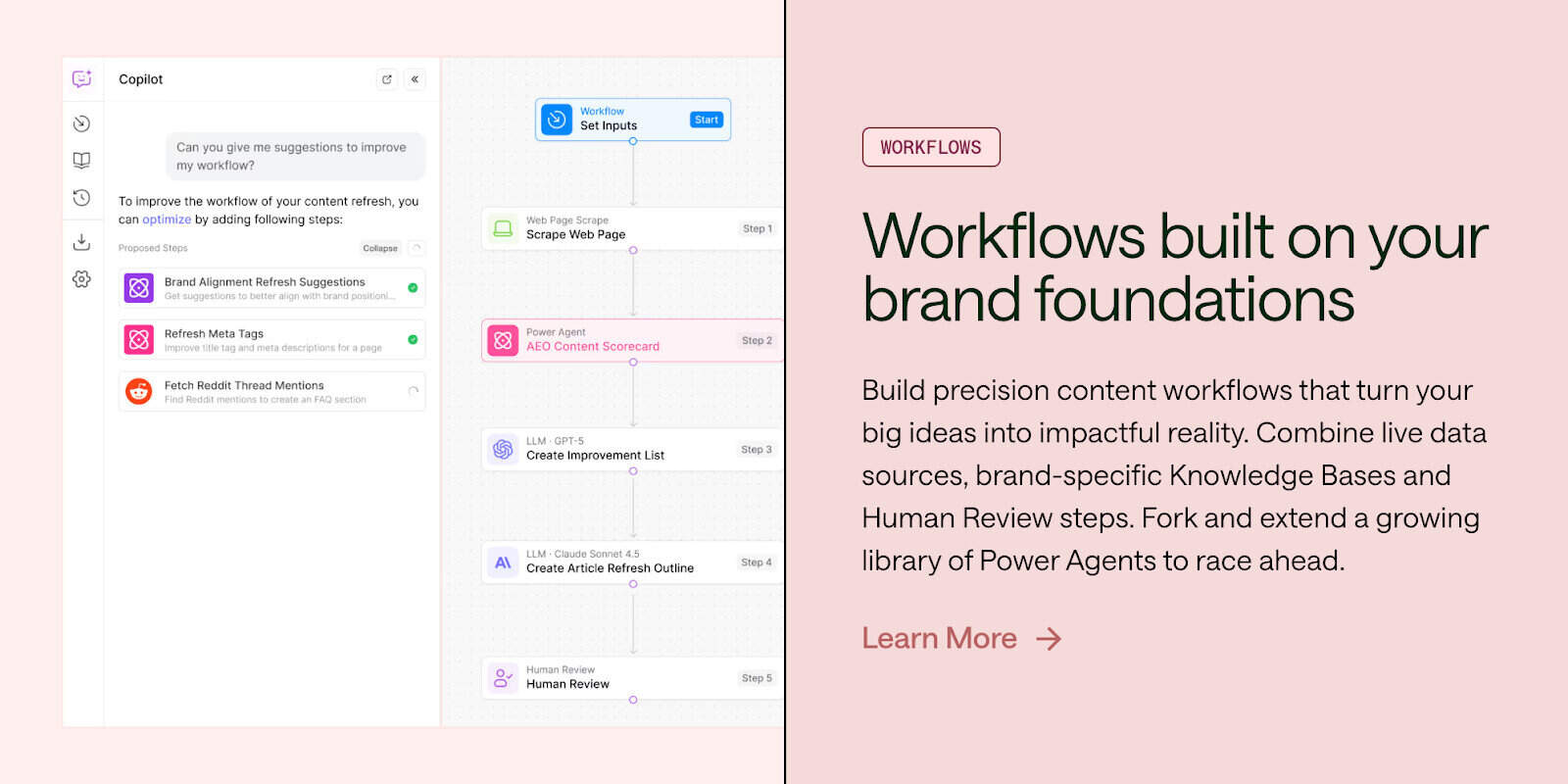
It provides analytics into AI search and SEO visibility tracking, so you can monitor brand mentions, citation rates, share of voice, performance across different AI environments, and see where stack up against your competition.
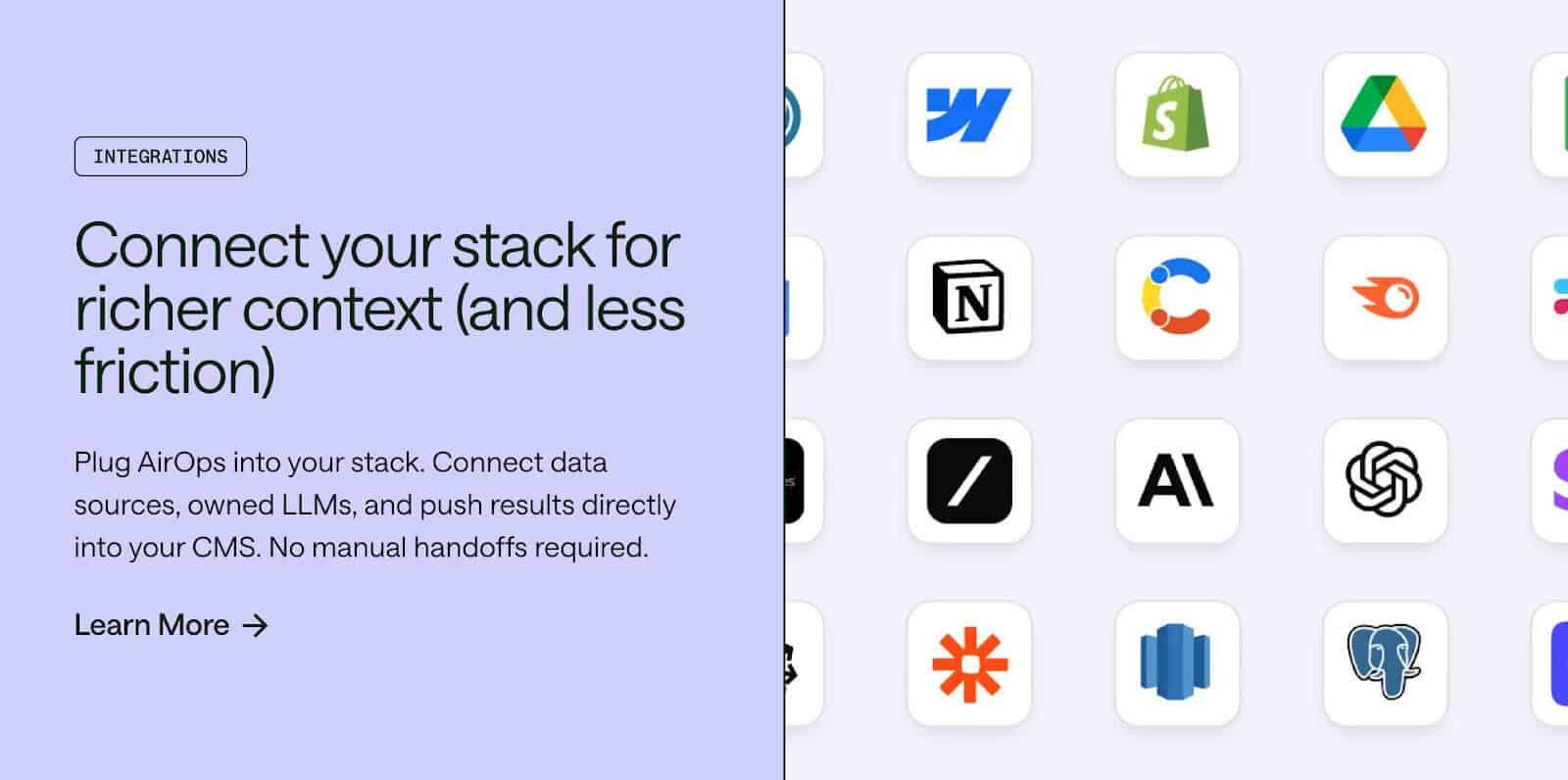
But rather than just telling you where you’re ranking (or where content gaps or underperforming pages are occurring), it lets you create code-free workflows for research, content optimization or generation, editing, and publishing.
AirOps Pros
- AI visibility and traditional SEO support so you can track how content is performing everywhere.
- No-code workflows for complex content creation tasks (including research and drafting to editing and publishing) so teams can scale quickly.
- Integrates with CMS and other tools, including WordPress, Shopify, and Webflow.
- Automations have human review checkpoints, so AI-generated content maintains your brand’s voice and quality.
AirOps Cons
- AI visibility data and insights are more surface-level compared to others on this list that offer deeper AI search analytics.
- Steep learning curve; this is not really a plug-and-play kind of setup, and getting workflows established can take some time (or require additional support).
- Pricing is customized and may be on the high end for smaller brands or startups.
Waikay
Designed to help brands take control of the narrative and manage their reputation, Waikay (What AI Knows About You) gives you total transparency into what AI knows about your brand…or thinks it does.
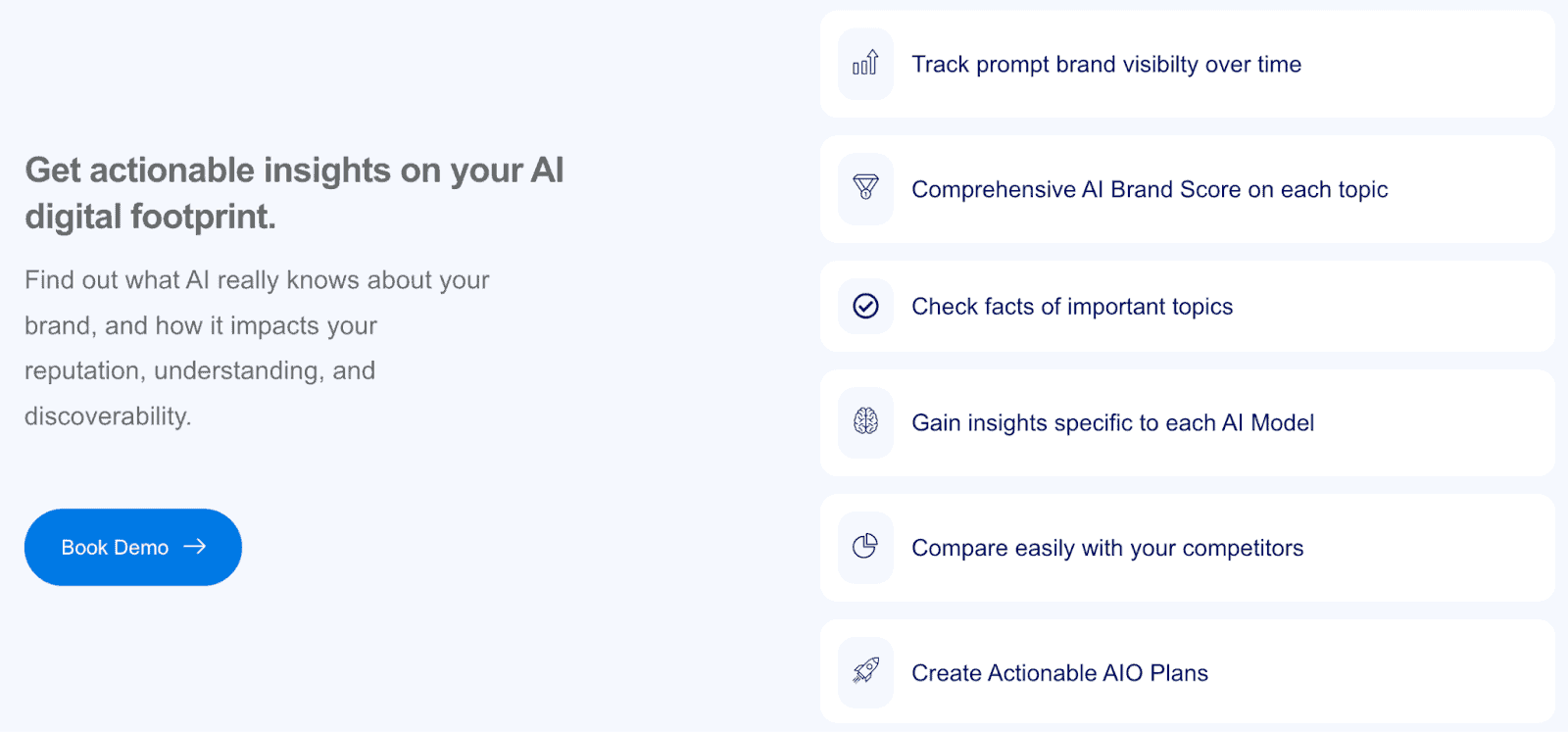
While it offers insights so you can take action where needed, what really sets Waikay apart from most other AI visibility tools is the fact that it not only tracks prompts and brand visibility, giving a comprehensive “AI Brand Score” for each topic, but it also checks the facts on topics that are most important to your brand.
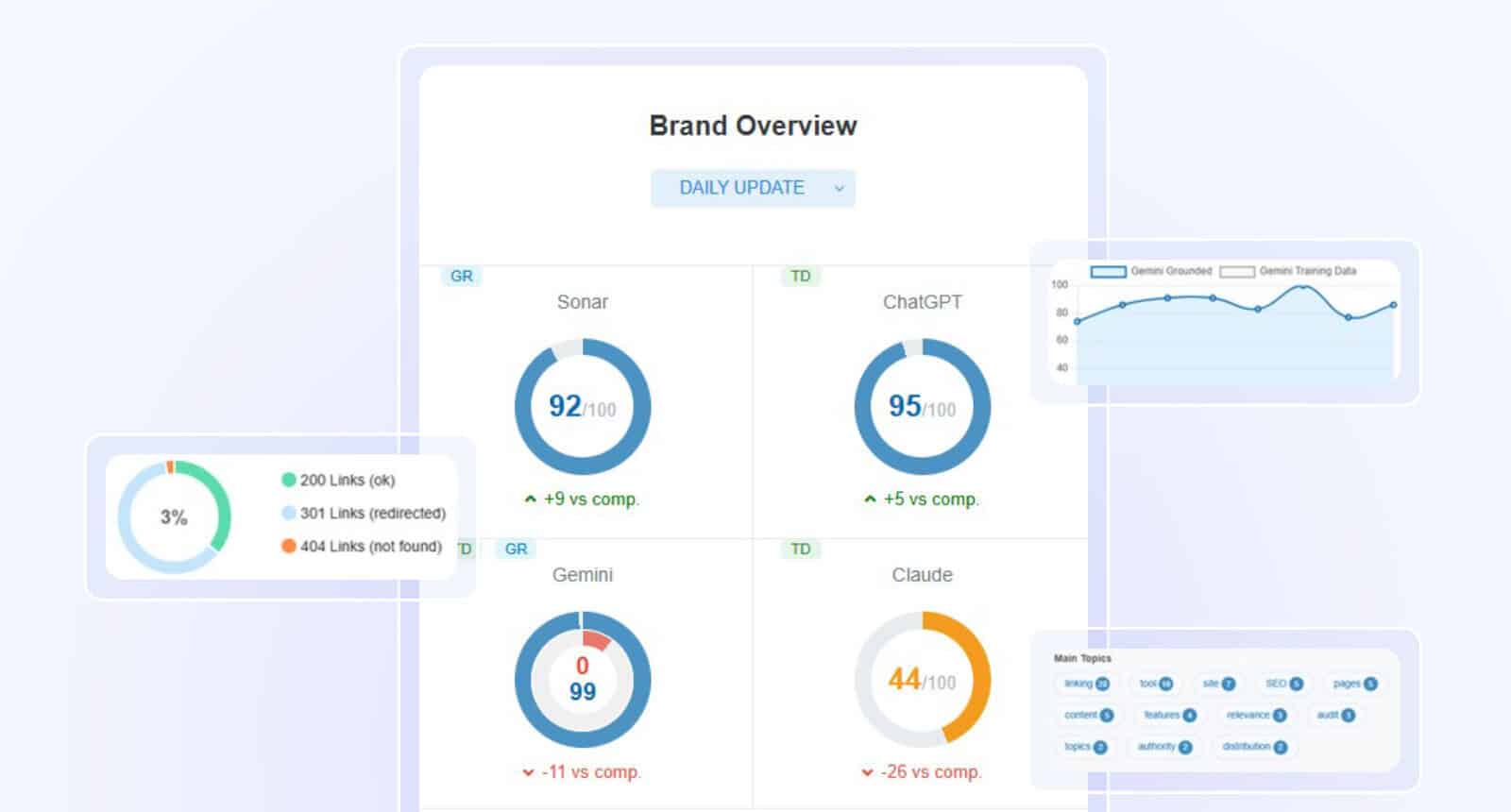
Yes, you read that right: like Emberos, it handles fact-checking on your brand’s behalf, analyzing AI responses to spot hallucinations, missing knowledge, and competitive gaps.
Like other AI visibility tools (including Peec AI), Waikay tracks your brand’s visibility across various prompts and lets you compare yourself against your competitors. But Waikay takes things a step further, giving you insights specific to each model and actionable AIO plans.
The onboarding at Waikay is pretty simple, so you’re able to start using it almost immediately, and if you’re not sure what topics or prompts to track, it will make the best suggestions for you.
Waikay Pros
- Fact and source tracking lets you know what AI models are saying and where they’re getting their information from (citations) so you can identify errors and take steps to fix them.
- Tracks brand visibility, topics, and gaps, and also generates structured action plans that help marketing teams to understand what (and how) to implement improvements that reshape AI responses.
- Provides competitor benchmarking for strategizing.
- Supports ChatGPT, Gemini, Claude, and Perplexity.
- Relatively affordable compared to other options, with the starter tier costing about $70 per month.
Waikay Cons
- It’s still pretty new and (at least as of this writing) in active development.
- The UX and reporting could stand some improvement, but again, things are being actively refined and developed.
- Can have a steeper learning curve compared to more basic tools like Peec AI.
Closing Thoughts
Peec AI serves as a great entry point into AI visibility tracking, and it is a solid option for marketing teams that only want to understand whether they’re showing up in AI-generated answer environments.
But with AI visibility becoming more and more commercially important, it doesn’t take long for brands to reach the limits of surface-level monitoring.
If you need deeper insights, actionable steps, demand intelligence, or even predictive signals, more advanced strategic platforms like Emberos and others on this list are worth serious consideration.