


- Why Influencer Gifting Still Works for Product Launches
- Step 1: Get Clear on the Goal of the Gifting Campaign
- Step 2: Choose the Right Creators (Not Just the Biggest Ones)
- Step 3: Set Clear Expectations Without Killing Authenticity
- Step 4: Make Tracking Part of the Strategy From Day One
- Step 5: Design the Gifting Flow to Scale, Not the Launch
- Step 6: Budget for Gifting Like a Performance Channel
- Step 7: Use Launch Momentum to Improve Organic Performance
- Common Mistakes to Avoid in Influencer Gifting Campaigns
- Where Levanta Fits into an Influencer Gifting Launch Strategy
- Why You Should Be Treating Influencer Gifting Like A System, Not a Shortcut
Last Updated on March 25, 2026 by Ewen Finser
Influencer gifting gets talked about a lot, but it’s still one of the most misunderstood parts of a product launch.
On the surface, it sounds simple. You send products to creators, hope they post, and wait for awareness to turn into sales. In reality, that approach sets up these kinds of campaigns for failure. Sure, your products get sent and content trickles in, but can you really tell what worked, what didn’t, or whether the effort was worth repeating?
Your strategy shouldn’t be about sending free products and crossing your fingers. Instead, you’ll want to learn how to design a launch system that creates momentum, tracks performance, and gives you a clear path to scale if something starts working.
Running an influencer gifting product launch strategy the right way includes proper planning, informed creator selection, tracking ROI, and turning early traction into long-term growth.
Why Influencer Gifting Still Works for Product Launches
When done intentionally, influencer gifting solves a few problems that paid media alone often can’t during a launch window.
First, it creates early social proof. New SKUs don’t have reviews, history, or context yet. Seeing real people interact with your product helps fill in that early gap.
Second, gifting helps brands reach niche audiences quickly. Creators already have trust with their audience, especially in categories like beauty, wellness, home, food, and lifestyle.
Third, influencer content is reusable. Even if a post doesn’t immediately convert, the content itself can be repurposed across ads, product pages, and email campaigns. Levanta, for example, lets you license content directly from creators through Paid Placements, so you can negotiate with the creator and then use that licensed content on editorial or social media platforms, in ads, and throughout other campaigns.
So, really, the issue here isn’t whether gifting works or not. The issue is how often gifting is treated like a one-off tactic instead of a launch system.
Step 1: Get Clear on the Goal of the Gifting Campaign

Before you send a single product, you need to decide what success actually looks like. What do you want out of your campaign? What targets do you want to hit? What results are you hoping for?
For a product launch, influencer gifting is usually used for one or more of the following:
- Awareness and discovery for a new SKU
- Early content creation
- Driving qualified traffic to a product page
- Testing creator performance before scaling partnerships
- Supporting affiliate or paid efforts
Problems start when brands try to do all of this at once without prioritizing. If your primary goal is discovery and awareness, the type of content creator you choose will be very different from the one you would choose to drive measurable revenue.
Be honest about what you’re optimizing for in the first phase and let your expectations reflect that.
Step 2: Choose the Right Creators (Not Just the Biggest Ones)

One of the biggest mistakes brands make with influencer gifting is focusing too heavily on follower count. For product launches, relevance matters more than reach.
When selecting creators, consider:
- How closely their audience matches your ideal customer
- Whether they have created content around similar products
- How often they post, not just how many followers they have
- The quality of their engagement, not just the volume
A lot of people don’t realize that micro and mid-tier creators often outperform larger creators at launch because their audiences tend to be more engaged and trusting.
It’s also important to think about the creator mix. A healthy gifting campaign usually includes a range of creators, rather than betting everything on one or two big names.
Step 3: Set Clear Expectations Without Killing Authenticity

Influencer gifting should feel natural, but that doesn’t mean unstructured.
Creators need understanding around:
- What the product is
- Why you’re sending it
- Any key talking points or usage guidance
- Whether posting is required or optional
- Disclosure requirements
What you don’t want to do is over-script content. It’s strategic to give creators enough information to understand the product, while still allowing them to communicate in their own voice.
Ambiguity here often leads to either no content, or content that totally misses the mark.
Step 4: Make Tracking Part of the Strategy From Day One
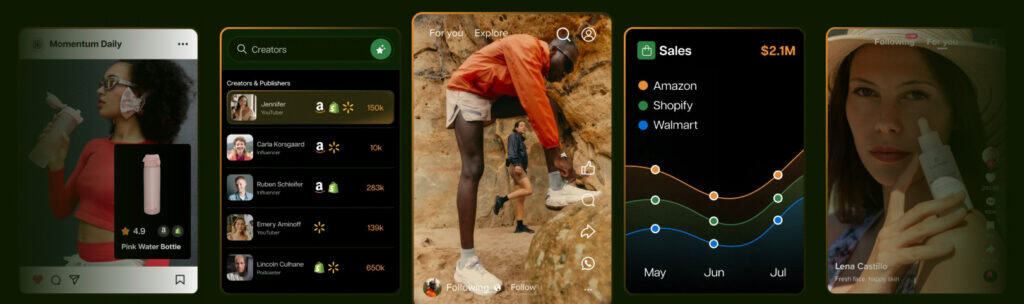
Neglecting to track your launch’s traffic and engagement is where most gifting strategies break down.
If you can’t track engagement, traffic, or conversions in a meaningful way, it’s going to become very difficult to justify your efforts or to improve the process for next time.
At a minimum, you should be able to see:
- Which creators drove traffic
- What content performed best
- Whether traffic converted
- How results compare across creators
This is where affiliate-style tracking becomes especially useful, even during gifting campaigns. Tools like Levanta let brands combine product seeding with performance tracking, so creators can earn through tracked links while brands get visibility into what’s actually driving results.
This hybrid approach helps bridge the gap between awareness and measurable impact.
Step 5: Design the Gifting Flow to Scale, Not the Launch

One common mistake that keeps getting made is when brands treat influencer gifting as a one-time launch activity. Instead, think of your launch campaign as a testing phase.
Pay attention to:
- Which creators naturally convert
- What types of content perform best
- Which platforms drive the most qualified traffic
- How messaging resonates across audiences
From there, you can:
- Invite top performers into an affiliate program
- Increase commission rates for high-impact creators
- Repurpose top content into ads
- Expand creator outreach using what you learned
This is where platforms that support both gifting and affiliate workflows become valuable. Levanta’s product seeding and affiliate hybrid model is designed for exactly this transition, allowing brands to move from testing to scaling without rebuilding the entire program.
Step 6: Budget for Gifting Like a Performance Channel
Even though product gifting doesn’t look like paid media, it still requires a budget mindset.
You should account for:
- Product cost
- Shipping
- Time spent managing creators
- Platform or tooling costs
What matters is not minimizing cost, but understanding return.
When gifting is paired with proper tracking, brands can evaluate:
- Cost per click
- Cost per acquisition
- Long-term value of creator partnerships
- Content reuse potential
This turns gifting from a sunk cost into a strategic investment.
Step 7: Use Launch Momentum to Improve Organic Performance
One underrated benefit of influencer gifting during launches is its impact on organic visibility.
Increased traffic, engagement, and conversions can:
- Improve product page performance
- Support organic ranking on marketplaces
- Provide data for optimizing listing and ads
When paired with CPC and CPA tracking tools, brands can better understand how creator-driven traffic impacts overall channel performance over time.
Common Mistakes to Avoid in Influencer Gifting Campaigns
Even strong brands make these mistakes:
- Sending product without putting a plan in place
- Skipping performance tracking altogether
- Fixating on follower count instead of fit
- Expecting guaranteed posts without clear agreements
- Treating gifting as separate from the rest of the launch strategy
Avoiding these pitfalls is often more impactful than adding more creators or budget.
Where Levanta Fits into an Influencer Gifting Launch Strategy
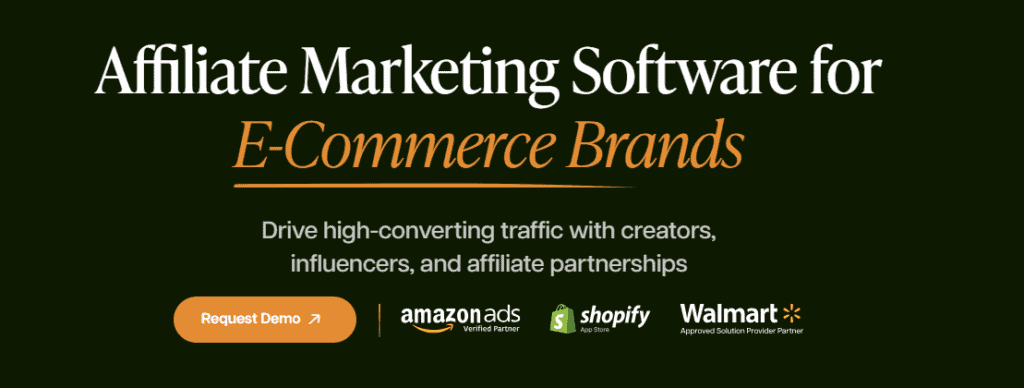
While Levanta isn’t a replacement for strategy, it is a tool that supports execution and measurement
For brands launching new products on Amazon, Shopify, and Walmart, Levanta helps by:
- Discovering and connecting you with the most relevant influencers in its AI-powered Creator Marketplace, which uses social listening to find high-performing creators who are already talking about your products or brand
- Supporting product seeding workflows and automation
- Enabling affiliate tracking or gifting creators
- Allowing CPC and CPA experimentation
- Facilitating paid placements, flat-fee partnerships, and content licensing
- Managing all creator and affiliate programs from one unified platform
- Providing deeper visibility into incremental performance to optimize creator spend
- Making it easier to scale what works
This is especially useful for brands that want to go beyond the “send and hope” strategy and move toward repeatable launch systems.
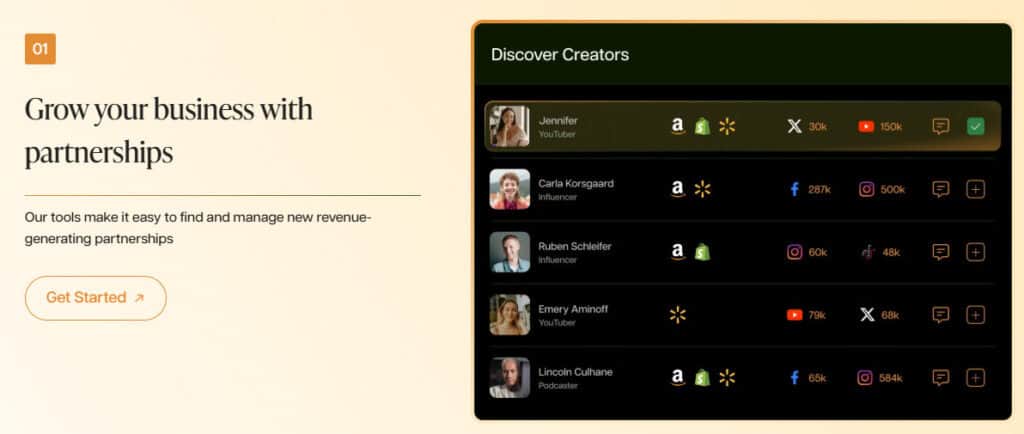
Beyond product launches, Levanta can even help to aggregate your roster through sample distribution. Influencers and creators often send social media DMs to request a product sample for review. You can reply with a sign-up link for Levanta, they follow through with signing up to request the sample, and not only have you automated the product seeding, but you’ve gained an affiliate partner all in one go.
And once they’ve joined, you can add them to future launch campaigns, but they can also reach out to your brand directly to request samples; with one click, you can approve (with automated send out) or reject them.
If your brand is operating across Amazon, Walmart, and Shopify and you want to streamline management and influencer gifting, Levanta has one-click native integrations for all three programs and it takes just minutes to set up.
This lowers overhead costs associated with using separate tools to run multiple programs and saves valuable time (and effort) on the management side, too.
Why You Should Be Treating Influencer Gifting Like A System, Not a Shortcut
Influencer gifting works best when it’s intentional, measurable, and connected to the rest of your launch strategy.
The brands that win with gifting aren’t the ones sending the most product. They’re the ones who treat creators as partners, track performance honestly, and use early data to guide smarter decisions.
A product launch is already a high-pressure moment. Your influencer strategy should reduce uncertainty, not add to it.
When gifting is done right, it doesn’t just support a launch. It builds a foundation for ongoing creator partnerships and sustainable growth.