


Last Updated on January 24, 2026 by Ewen Finser
If you run a mid-market or enterprise-level business, you probably know the name Worldpay. For decades, they’ve been the 800-pound gorilla in the room as the default choice for businesses that outgrow basic aggregators like Square or PayPal. They have the legacy, the global footprint, and the ability to handle massive transaction volumes.
But as a CPA who helps businesses manage their cash flow and systems every day, I see a different side of the story. I see folks who are frustrated with systems that don’t talk to their ERP, detest the idea of three-year-long contracts, and don’t like receiving confusing and lengthy account statements.
They’re a giant, but they’re far from your only option.
Why Businesses Leave Worldpay
When a business wants to move off of Worldpay, the conversation usually circles around three specific pain points.

The Quote-Based Pricing Trap
Worldpay and many legacy processors operate on opaque custom pricing models. You get a custom quote (usually bundled with tiered pricing buckets) that looks good on paper during the sales pitch… but six months later, you notice “non-qualified” surcharges creeping up and your effective rate drifting higher — and because the statement is a maze of interchange codes and processor markups, you can’t pinpoint exactly where the leak is.
The Support Disconnect
When your payments go down on a Friday afternoon, you need a human on the line, not a ticket number. But that’s the hit-or-miss nature of support with massive providers; you might get a great rep one day, and a call center script the next. And for an enterprise, that inconsistency is only a risk factor.
The Integration Gap
You need your payment processor to feed directly into your ERP. You need real-time cash flow visibility. But while Worldpay has been around a long time, and while they have improved, their backend often feels like a patchwork of acquired technologies. It can be clunky, hard to integrate, and slow to report.
My Top 6 Worldpay Alternatives
When looking at alternatives to one of the industry’s biggest platforms, you need to evaluate your options with a careful, critical eye.
I’m looking at:
- Financial Visibility: Can I see where the money is? Is the reporting clear?
- Stability: Do they freeze accounts without warning, or do they underwrite upfront?
- Cost Efficiency: Are the rates transparent and competitive for high volume?
- Integration: Does it play nice with inventory, accounting, and CRM software?
With this in mind, let’s look at the top six contenders.
Luqra
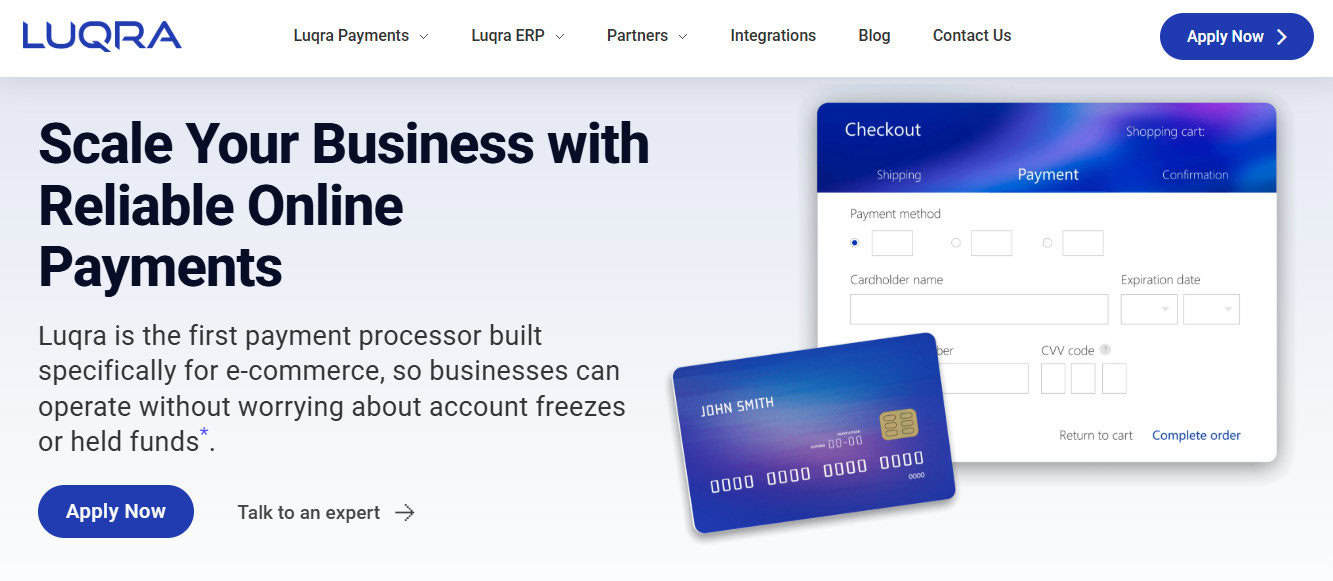
Luqra positions itself as a financial ERP first and a payment processor second. For a CPA, this is a breath of fresh air — instead of a standalone payment silo, you get a platform that integrates payments directly with financial management, reporting, and analytics. As a result, their dashboard gives you a granular view of cash flow that usually requires third-party software to achieve.
They focus heavily on upfront underwriting, and to me, this is a crucial distinction. Most aggregators like Stripe will approve you instantly and check your risk later, which can lead to account holds. Luqra does the hard work first, and once you’re in, you’re stable. For a business doing high volume, that peace of mind is non-negotiable.
Pros
- Integrated ERP: Merges payments with broader financial management and analytics
- Stability: Upfront underwriting that minimizes the risk of sudden freezes or holds
- Speed: 12- to 24-hour deposits, which improves cash flow velocity.
- Support: 24/7 US-based support
- Pricing: Transparent interchange-plus model, with a guarantee to match or beat existing rates
Cons
- Not for Micro-Merchants: Overkill for small-volume processing
- Newer Brand: Up-and-coming technology that doesn’t have Worldpay’s 40-year history
The CPA’s Take: In my opinion, Luqra has become one of the most robust alternatives for mid-market and enterprise businesses because they don’t just process cards; they also handle the data. Where Worldpay feels like a legacy bank, Luqra feels like a modern tech partner.
Adyen
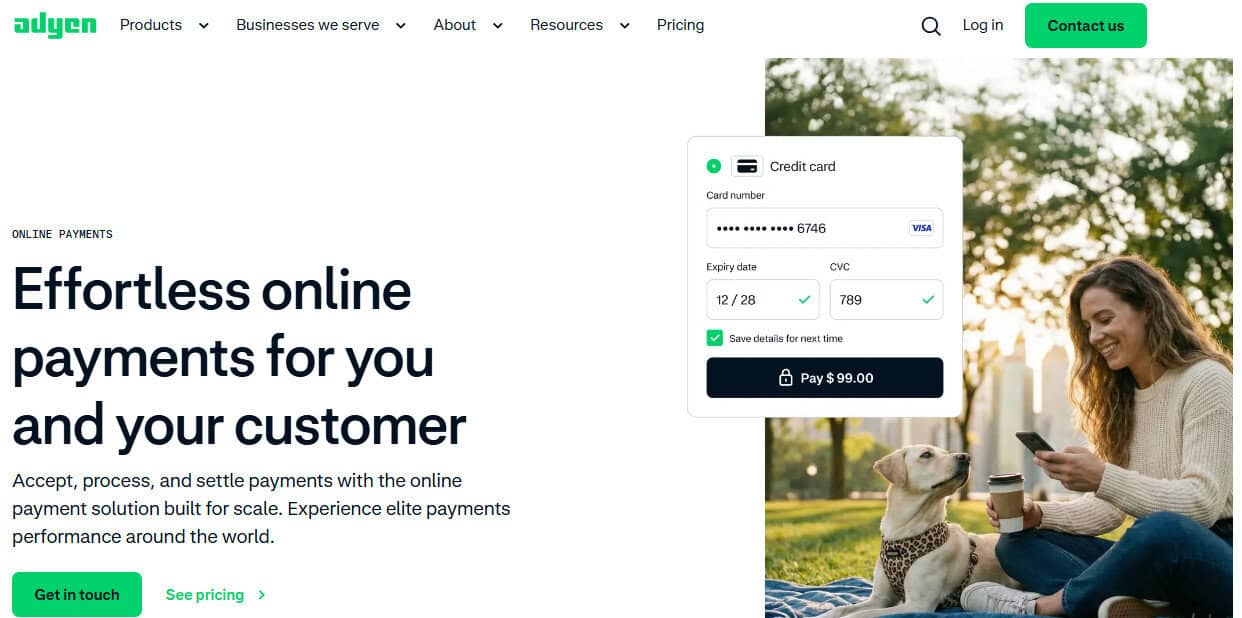
If you use Worldpay, you might be used to having different accounts for your US, UK, and Asian operations. Adyen consolidates that into one place, replacing the patchwork of different gateways and acquiring banks with a single, unified global platform. They’re the heavyweight champion for the global enterprise and the processor behind giants like Uber, Spotify, and eBay.
From an accounting perspective, Adyen is a dream for multi-national consolidation as it reduces the foreign exchange headaches that usually plague international P&Ls. However, this power comes with complexity: Adyen is built for developers and enterprise teams. You don’t just plug it in; you build on top of it, and it’s a chore… but a worthwhile one.
Pros
- Global Reach: Best-in-class support for multi-currency and cross-border payments
- Unified Commerce: Connects online and in-store payments in a single data stream
- Fraud Tools: Sophisticated RevenueProtect risk management system
- Direct Acquirer: Removes the middleman by being the bank and the gateway
Cons
- Complexity: Requires a dedicated developer team to implement and manage
- Strict Requirements: Hard to get approved if you don’t meet their high-volume minimums
- Contract Terms: Can be rigid compared to more agile competitors
The CPA’s Take: Adyen is excellent, but it’s often overkill for a business that operates primarily in North America. Their pricing is interchangeable and transparent, but they often require minimum volume commitments that can be steep. So if you’re a mid-market company, you might find yourself a small fish in their massive pond.
Stripe
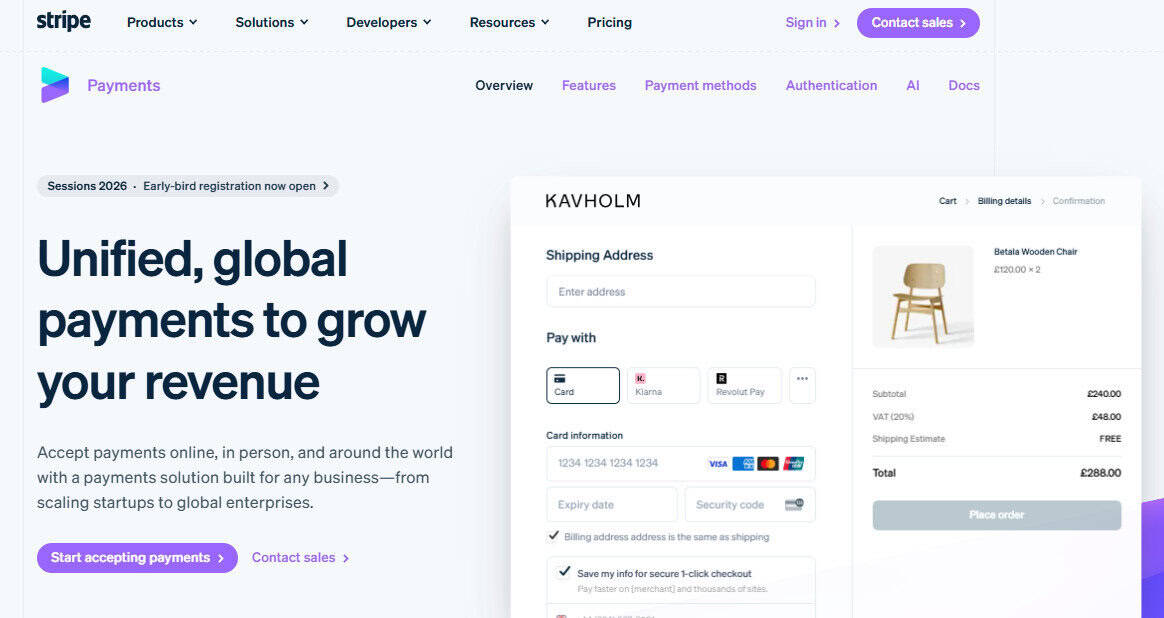
You can’t talk about payment processing without mentioning Stripe. They revolutionized the industry by making payments developer-friendly, so if your business is built on software, your developers likely want Stripe. Their API allows you to build custom checkout flows, subscription models, and marketplaces with ease. And for a tech-forward company, this flexibility is amazing.
However, as a CPA, I have to warn you about their “aggregator model.” Stripe relies on algorithms to police fraud, and if your business has a sudden spike in sales or a few chargebacks, their algorithm might auto-freeze your funds to investigate. This is not ideal if you’re in need of those funds for payroll or inventory.
Pros
- Developer Experience: The best documentation and tools in the industry
- Ecosystem: Massive marketplace of third-party apps that integrate instantly
- Feature Set: Incredible tools for billing, invoicing, and tax calculation (Stripe Tax)
- No Monthly Fees: Pay only when you process (though transaction fees are higher)
Cons
- High Fees: Expensive for high-volume merchants (2.9% + 30¢) compared to interchange-plus
- Account Holds: Algorithmic risk control that’s aggressive and impersonal
- Support: Very difficult to get a support agent on the line for standard accounts
The CPA’s Take: Stripe is fantastic for code, but it’s risky for cash flow if you’re in a sensitive industry. However, it’s a great alternative to Worldpay if your priority is customization and speed of deployment rather than rock-bottom rates or account stability.
Helcim
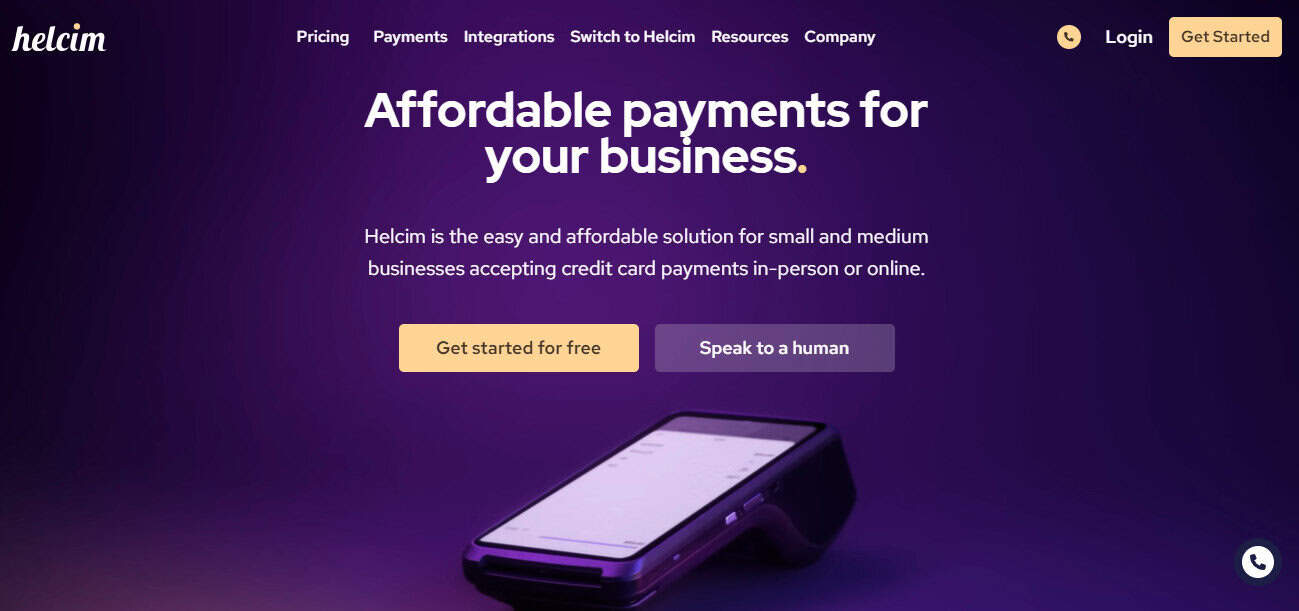
For the mid-market business that simply wants to cut costs and knows they don’t need a complex custom API, Helcim is a strong contender. They market themselves as the “world’s most transparent payment processor,” and I think they largely live up to that claim.
They use an Interchange-Plus pricing model that lowers your margin as your volume goes up. You don’t have to call and negotiate; the system just does it. For a business doing $50k to $500k a month, this can result in significant savings over a flat-rate provider or a tiered Worldpay contract. They also include a lot of software for free; things like hosted online stores, invoicing, and a virtual terminal are all a part of the package.
Pros
- Volume Discounts: Margins decrease as you process more
- Transparency: Exact interchange cost and markup listed on every transaction
- No Monthly Fees: No hidden “statement fees” or “PCI compliance fees”
- Hardware: Good selection of modern card readers and terminals
Cons
- Onboarding: Slower than Stripe (because they do checks), but faster than Worldpay
- Tech Limits: Not as customizable for complex software businesses
- Funding Speed: Funding often takes 2 business days
The CPA’s Take: If you’re a large retail chain or a wholesaler, Helcim fits well. They’re a pure-play processor with great ethics. However, they lack the enterprise-grade ERP features of Luqra or the global scale of Adyen.
Braintree
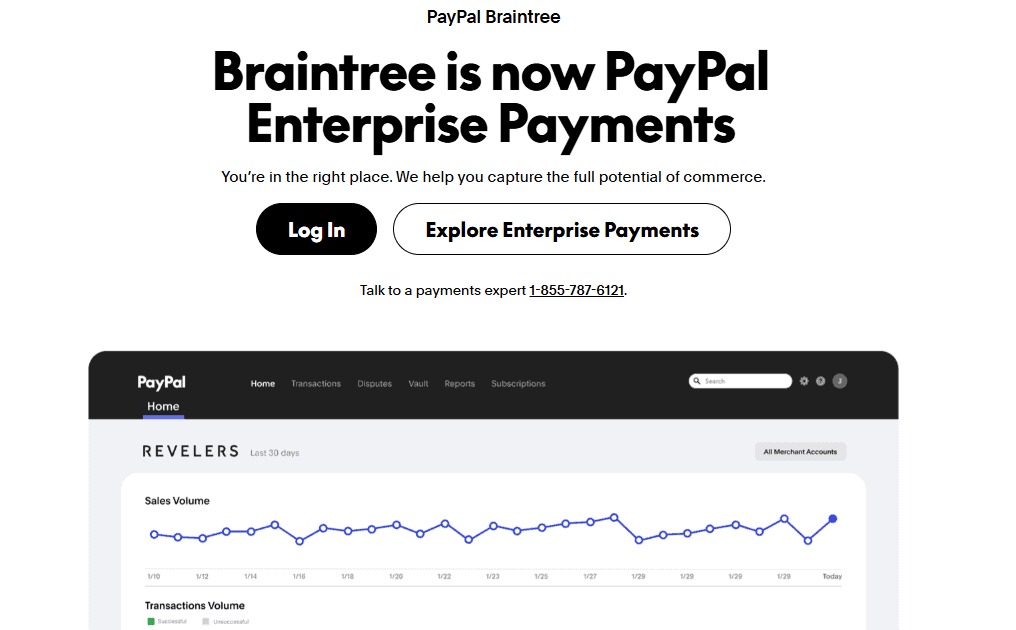
If Worldpay feels too old-school and Stripe feels too risky, Braintree sits right in the middle.
Because they’re owned by PayPal, they offer one distinct advantage: the massive network of PayPal users. When you use Braintree, you can easily turn on PayPal and Venmo as payment methods in your checkout. For B2C brands, this increases conversion rates significantly.
They offer interchange-plus pricing and are generally more stable than standard PayPal. They’re also strong in the subscription space and have good tools for updating expired cards automatically, which reduces churn for SaaS companies.
Pros
- PayPal/Venmo: Native integration with the most popular digital wallets
- Global: Good support for international currencies and markets
- Data Portability: Easy to move customer credit card data if you leave
- Security: Robust fraud protection tools
Cons
- Approval Process: Can be lengthy and bureaucratic
- Support: Often criticized for being slow and impersonal
- Backend: A functional interface that’s not as modern or data-rich as newer competitors
The CPA’s Take: Braintree is a solid choice if your customers love PayPal. However, the support can be disjointed. You’re dealing with a massive organization, after all, and navigating their bureaucracy can sometimes feel just as frustrating as dealing with Worldpay.
Square
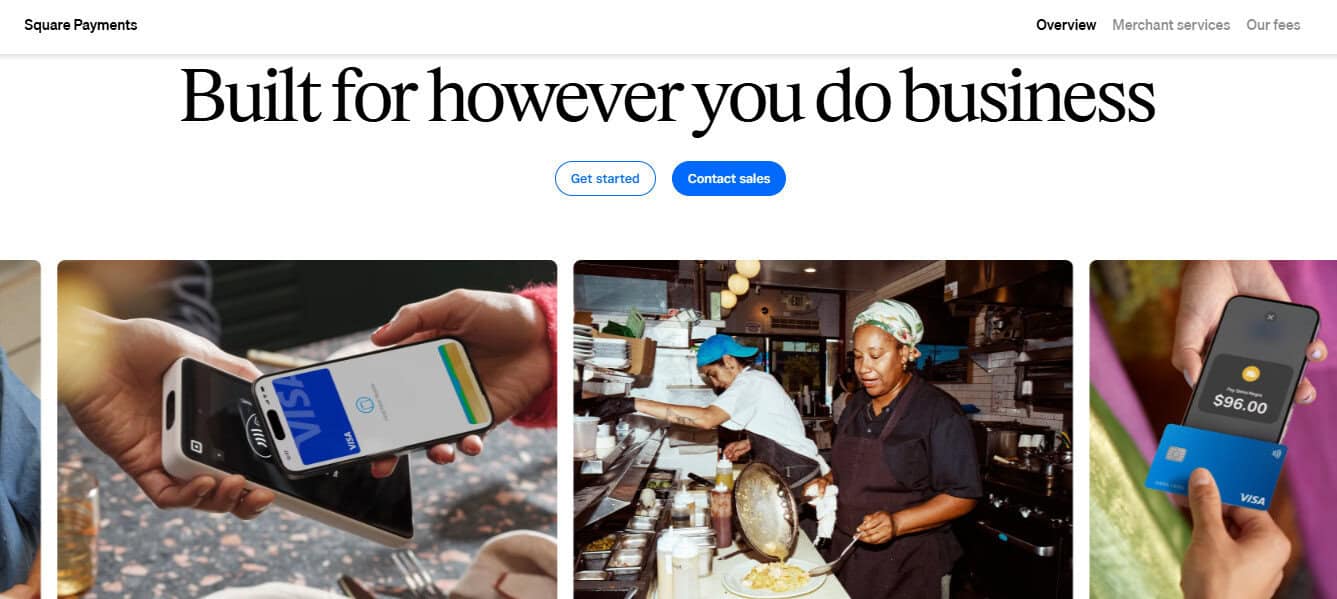
While they started as the little white dongle for food trucks, Square for Retail and Square for Restaurants are now robust POS systems capable of handling multi-location franchises.
If you’re a brick-and-mortar retailer leaving Worldpay because you hate their clunky terminals, Square is the aesthetic and functional opposite. The hardware is beautiful, the software is intuitive, and staff training takes five minutes.
For an enterprise, however, the math gets tricky. Square charges high flat rates; while they do offer custom pricing for businesses processing over $250k/year, you have to fight for it.
Pros
- Usability: The easiest platform to use for staff and managers
- Ecosystem: Tightly integrated payroll, scheduling, and loyalty programs
- Hardware: Sleek, reliable, and affordable equipment
- Speed: Instant setup and very fast payouts (instantly for a fee)
Cons
- Cost: Flat-rate pricing that’s generally much more expensive than interchange-plus for large businesses
- Risk: Like Stripe, they are an aggregator and can freeze funds unexpectedly
- Support: Very difficult to reach a human unless you’re on a premium plan
The CPA’s Take: Square is a software decision, not a finance decision. You choose Square because you want their POS, inventory management, and ecosystem — but you pay a premium for that convenience. If you have low average ticket sizes, those fees add up fast
The Verdict: Which Worldpay Alternative Is Best for You?
Leaving Worldpay is a big move. It involves changing workflows, retraining staff, and integrating new tech. You want to do this once, and you want to do it right.
Here is how I would break it down if someone were to come to me with these problems:
- If you want a financial partner: Think about Luqra. For mid-market and enterprise companies, the combination of aggressive meet-or-beat pricing, upfront stability, and ERP-level data integration makes them the smartest financial move.
- If you’re building a custom tech platform: Go with Stripe. The fees are higher, but the code quality is unmatched, and they’re the gold standard for APIs.
- If you’re a global giant: Adyen is the way to go. Their multi-currency handling is worth the complex setup, and their offerings are almost unmatched.
My advice? Always follow the data. Don’t just look at the rate they quote you; look at the effective rate, the integration costs, and the value of your own time.
Worldpay has had a good run, but the market is moving on without it. Your business deserves a processor that keeps up.