


- Guidde - Great for Quick, Simple, Web-Based Video Documentation Creation
- Vidyard - Great for Lead Generation and Sales Teams
- Veed.io (Veed) - For Content Creation that Requires Editing and Text Overlays
- Camtasia - Great for Education and Marketing Professionals Who Need Comprehensive Recording
- Screen Studio - Best for MacOS Users Who Need Advanced Video Editing
Last Updated on March 26, 2026 by Ewen Finser
Looking for a better Loom alternative? If your team needs quick, easy, and reliable video recording for training, onboarding, or async communication, Guidde is the one I keep coming back to. It’s simple to use, generates AI-powered videos and text guides, and handles both web and desktop workflows without a headache.
As someone managing international teams with constantly changing requirements, I need tools that let me capture processes fast, share them instantly, and avoid endless back-and-forth emails. Loom works okay, but the free plan is tiny, the paid plans are pricey for bigger teams, and it can be buggy. Guidde solves most of those problems while keeping things straightforward.
Below, I’ll break down my top Loom alternatives, what makes each one useful, and why Guidde still tops the list for process documentation and video walkthroughs.
Why I’m Looking at Alternatives:
Loom’s free plan is super limited. You only get five minutes per video, which means splitting content into multiple clips and talking way too fast. Paid plans get pricey fast if you have a bigger team, and the app can be buggy, sometimes crashing more than I’d like for a paid tool.
- Our teams are global, so we need a tool for asynchronous communication.
- We want to avoid long emails, so recording detailed explanations is more efficient.
- Training and onboarding processes need to be recorded so senior staff do not have to repeat information.
- Our support and customer success teams use recordings for advanced instructions and demos.
Here are my favorite Loom alternatives, in no particular order:
Guidde – Great for Quick, Simple, Web-Based Video Documentation Creation
What I Liked:
Guidde is one of the newer tools I’ve tried, and I was impressed with how simple and easy it is to use.
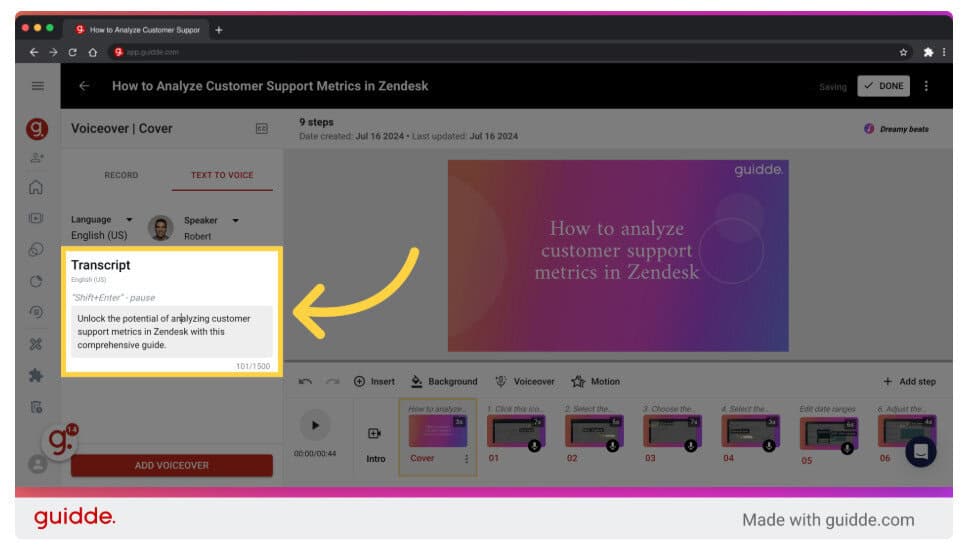
For anyone who needs to create documentation regularly, this can save a lot of time. The generative AI feature makes it easy to quickly produce “how-to” guides, and it works especially well for product demos or software walkthroughs because it automatically generates text alongside your recordings.
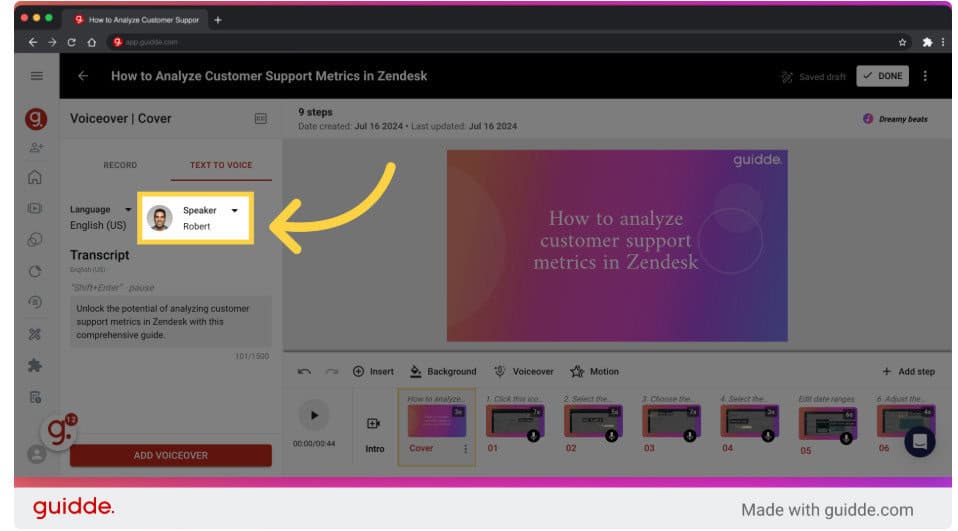
The price (for higher-tiered plans) is worth it for the AI-generated narration and text-to-voice options in different languages. It’s also easy to navigate and add text to your videos. Depending on your audience, being able to support both video and text makes it a solid choice for in-house training and onboarding.
The free plan is generous too, allowing up to 25 how-to guides per user per month, and the paid plans are unlimited and billed monthly rather than requiring an annual commitment.
What I Didn’t Like:
The free version includes a watermark and is limited to web use, while the higher-tier plans let you capture from both desktop and web sources.
Guidde is mainly purpose-built, not a full-featured video editor, so you may need to tweak things a bit after recording.
There’s also no mobile app yet, so you’re limited to Chrome or Edge extensions for now.

Guidde puts it ALL together for me. I've used many screen recording tools (like Loom). I've used many SOP buiding tools (like Trainual). But Guidde puts the best of both together for a quick, easy to use mixed media documentation builder in one (less expensive) workflow. A small, but signficant (compounding) time saver in our business.
Vidyard – Great for Lead Generation and Sales Teams
I think text-heavy sales emails are basically dead, at least in my experience. I hate getting one that is just a giant sales pitch with no personality. But, surprisingly, Vidyard has been a refreshing change for our potential customers, and our sales teams really enjoy using it for campaigns.
Why I Like it:
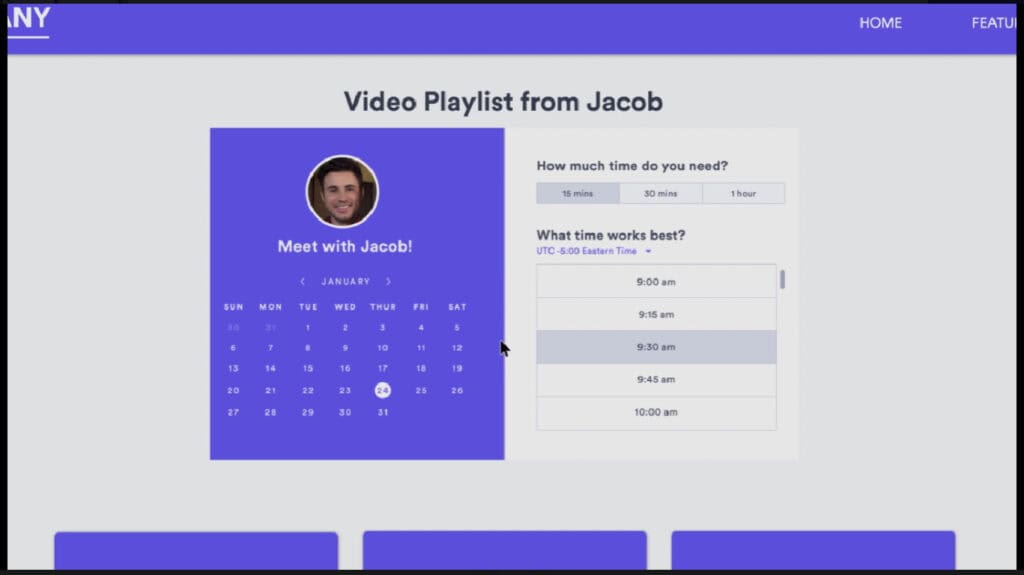
One of the biggest benefits is being able to personalize each video, which links to a landing page that can integrate with other apps like chatbots. I also love that potential customers can schedule a meeting straight from the video link.
The CRM integration is another win, letting you track sales and leads from the same platform without juggling multiple dashboards.
The free plan lets you store up to twenty-five videos with a 30-minute limit, while the paid versions are unlimited, which is quite generous.
Just a heads-up, make sure you don’t duplicate videos in your library because they count toward your limit, and you won’t get a warning if it happens.
Why I Don’t Love it:
The video editing capabilities are limited, so our teams need to get creative in how they record pitches for email marketing. I hate paying for a tool that requires using another one to get the job done.
And although they have a (limited) free plan – the paid-for version is quite pricey.
Some of our users also experienced the “video playback” error, which we found quite frustrating.
Although the Vidyard knowledgebase was helpful when experiencing issues like this, resolving them requires some time (and persistence).
Veed.io (Veed) – For Content Creation that Requires Editing and Text Overlays
Veed.io is much more user-friendly than I anticipated, which is ideal for our sales and marketing teams and less techie people who felt overwhelmed by some of the other tools. Veed has several pre-created templates, so you don’t have to start from scratch if you’re new to this!
What I Like:
I like that you can add text overlays and captions, which Loom doesn’t offer. I prefer a tool like Veed that allows you to record web-based content without installing software specifically for use.
The free plan does watermark your videos, but this doesn’t bother me personally as it’s small and not obstructive, which isn’t really a hassle if you use the free plan internally only.
What I Don’t Love:
The billing cycle pricing structure requires upfront payment for the year, and it doesn’t offer month-to-month payments, which might be limiting for small organizations with multiple users.
The free plan limits you to a ten-minute video length and doesn’t allow use on the iOS app.
Because it’s cloud-based (a big plus!), the downside is that poor connectivity or speed can hamper video upload and editing, which I found frustrating.
Camtasia – Great for Education and Marketing Professionals Who Need Comprehensive Recording
Camtasia was recommended to me by someone in the audio-visual industry as an alternative, and I immediately thought, “Okay, I bet it’s good, but I also bet it’ll be expensive and complicated to use.”
Man, was I wrong! Here’s why:
Why I Loved these Features:
They have an extensive free trial, so I actually used the free version as long as I could before needing the more advanced paid-for features.
The resolution is incredible (recorded in 4K) and doesn’t compromise on recording from multiple sources such as screen, audio, and camera tracks.
It’s easy to toggle these on and off depending on what you want to record:
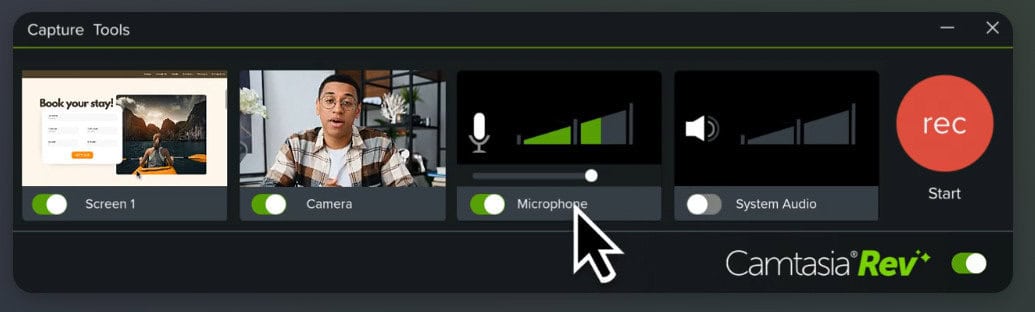
You can also edit your cursor once you’ve finished recording, which I like. It makes it easier to fix things without needing to start from scratch again. Camtasia is an excellent option if you’re like me and like using templates that you can customize later on and share with your team.
The Cons:
It has a slightly expensive paid-for plan with a one-time license fee, which may be limited for smaller organizations.
If you need cloud-based storage, you’ll need to use local or alternative storage options (like Google Drive). This wasn’t an issue for me, but if this is an essential requirement for your organization, consider Loom or Vidyard.
Screen Studio – Best for MacOS Users Who Need Advanced Video Editing
I needed multiple tools to edit videos I recorded on Loom, so I looked into Screen Studio as an option to get away from disparate system use. Here are my thoughts:
I Liked:
It’s clean and smooth. The auto-zoom feature is excellent for recording detailed demos or when there are multiple areas on the page you’re speaking to.
The advanced editing tools, such as trimming and adding annotations and special effects, were a huge plus. I also loved that, in addition to screen recording, you could access multiple audio inputs, webcams, microphones, or video sources simultaneously, making this a great tool for more advanced requirements.
The functions are easy to find and use, which makes it a good option if you’re looking for something with an easy toolkit.

The main selling point for me is that Screen Studio can operate offline, which the other cloud-based apps can’t! A HUGE PLUS if you’re on the road (or plane)!
The Downsides:
There is NO Windows version currently (and no near-future dates for a release either), which makes this a less-than-ideal option for larger organizations.
They also don’t have a free version, and without a Windows version, I think the pricing is steep as it limits you to three MacOS devices.
Which Loom Alternative Would I Keep Using?
If I had to choose one that I will keep using, it’s probably going to be Guidde, especially for documenting processes. I’m also prone to using Screen Studio a lot more now, it’s great when I need to do some work offline too.
Each tool brings something unique and valuable to the table, and I pick and choose them wisely based on my needs and each project. It’s important to understand what makes each a good fit for you based on your use and needs.
Hopefully, this will help you find some great alternatives to Loom!
Guidde puts it ALL together for me. I've used many screen recording tools (like Loom). I've used many SOP buiding tools (like Trainual). But Guidde puts the best of both together for a quick, easy to use mixed media documentation builder in one (less expensive) workflow. A small, but signficant (compounding) time saver in our business.