


Last Updated on February 3, 2026 by Ewen Finser
In the age of AI-driven search, brand visibility isn’t just about rankings in search engines anymore; it’s about representation in answer engines. Common AI tools like ChatGPT, Claude, and even AI Overviews in Google are replacing “traditional” search for many internet users and that trend only seems to be growing.
In fact, one 2026 study found that 37% of consumers reported using AI tools to begin searches because they’re “faster” and “less cluttered” in comparison, and 47% reported using AI to make a purchase decision.
I’ll share more data and insights into consumer habits (and where they’re headed) later on, but if your brand isn’t being referenced in AI-powered answers, it essentially becomes invisible within those spaces.
Recommended AI Visibility Tools At A Glance
Tool | Primary Focus | Best For | Pricing |
Peec AI | Prompt-level visibility, positioning, brand sentiment, competitor analysis | Small teams, agencies, and startups who want clear metrics and prompt-centric analytics | Starts at €89 per month; Gemini, AI Mode, and Claude with additional fee |
Hall | Brand mention and citation tracking | Broad brand monitoring; marketing teams/analysts | Free (Lite) for 1 project; paid tiers with much more versatility start at $199/mo |
Profound | Enterprise AI visibility, deep analytics | Larger, data-driven organizations that need robust metrics, security, and internal integration | Starts at $99/mo (ChatGPT tracking only); next tier with 3 answer engines is $399/mo |
Emberos | Automated brand control | Predictive brand visibility and action; brands/agencies that need task automation | Custom |
AirOps | Content production workflow and visibility | Teams that need to tie visibility analytics with content workflows | Custom |
In this article, I’ll break down what I think are the best AI visibility tools out there right now, what they offer, and which solutions are best based on your goals, team size, and budget.
Why AI Visibility Tools Matter In 2026
I mentioned earlier that as of January 2026, 37% of consumers reported starting their searches with AI tools to find information, rather than turning to traditional search engines. That same study also found that 60% of respondents reported AI delivers “better, clearer answers,” and 80% feel that AI is providing unbiased information.
AI doesn’t just provide information, however; it influences purchase decisions. Fifty-seven percent of study respondents reported using AI to find the best products, 54% used it to compare products, 48% used it for review summaries, and 47% report using AI to make a purchase decision.
The expectations through 2026 (and beyond) only anticipate those numbers to rise considerably.
AI visibility tools help brands and businesses to understand whether AI engines are recognizing them as being trustworthy and authoritative enough to include, but the tools also provide insights into competitors who may be (or already are) winning that trust instead.
Which leads into optimization, because a brand can’t improve trust or optimize what it can’t see. Without access to an AI visibility tool, a business can only guess about what prompts are triggering AI mentions, whether their brand is being cited directly (or summarized indirectly), and how sentiment and accuracy is varying across AI models.
Misinformation puts a brand at risk, and AI visibility tools operate as an early-warning system of sorts, alerting brands to incorrect claims or negative sentiment before it impacts their reputation. And revenue, for that matter.
Platforms that let you explore brand visibility in AI environments give you the means to track and measure real data, including citations, sentiment, and trends over time so you can strategize more effectively, especially against your competition.
But beyond current performance, AI visibility tools can make it easier to:
- Prove AI visibility (and its impact) to stakeholders, backed up with actual data.
- Identify content gaps that AI models are relying on.
- Reverse-engineer why some brands are earning citations (and why others are not).
- Align your content and SEO (which is still important) around AI trust signals.
Put bluntly: At this stage in the game, AI visibility tools are vital for any brand that cares about its credibility and discoverability in an AI-first search landscape.
The AI Visibility Tools Worth Exploring
So let’s take a look at the best AI visibility tools available right now, and why I think they’re worth a look if your brand wants to optimize its presence online.
Peec AI
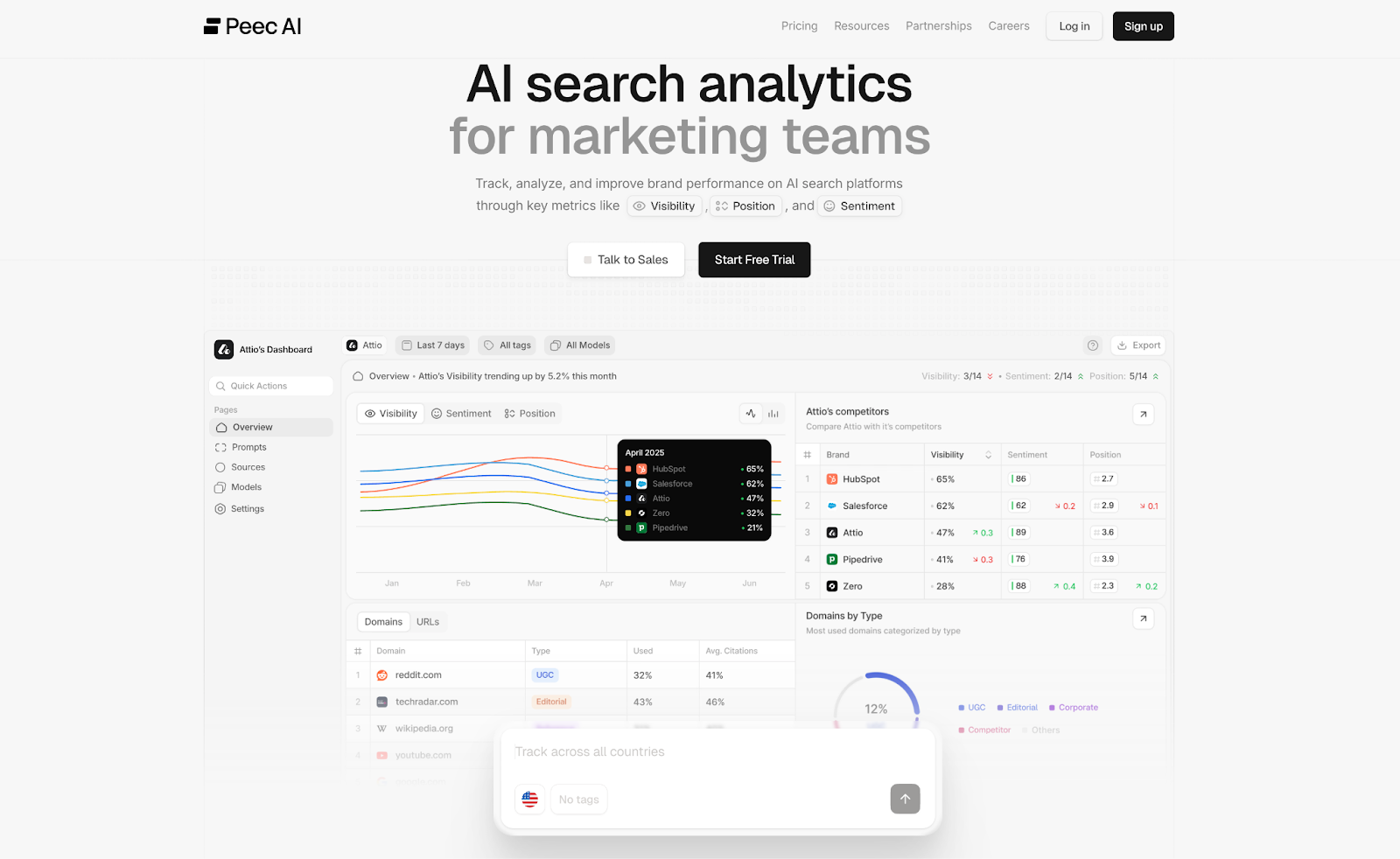
Peec AI monitors brand visibility in AI spaces in a way that I feel is the most user-friendly, especially for beginners. That’s also why I recommend it for startups and small teams specifically, above any others on this list.
Peec AI monitors generated answers from major LLMs that include ChatGPT, Perplexity, and Google AI Overviews, along with Gemini, Anthropic (Claude), and Google AI Mode.
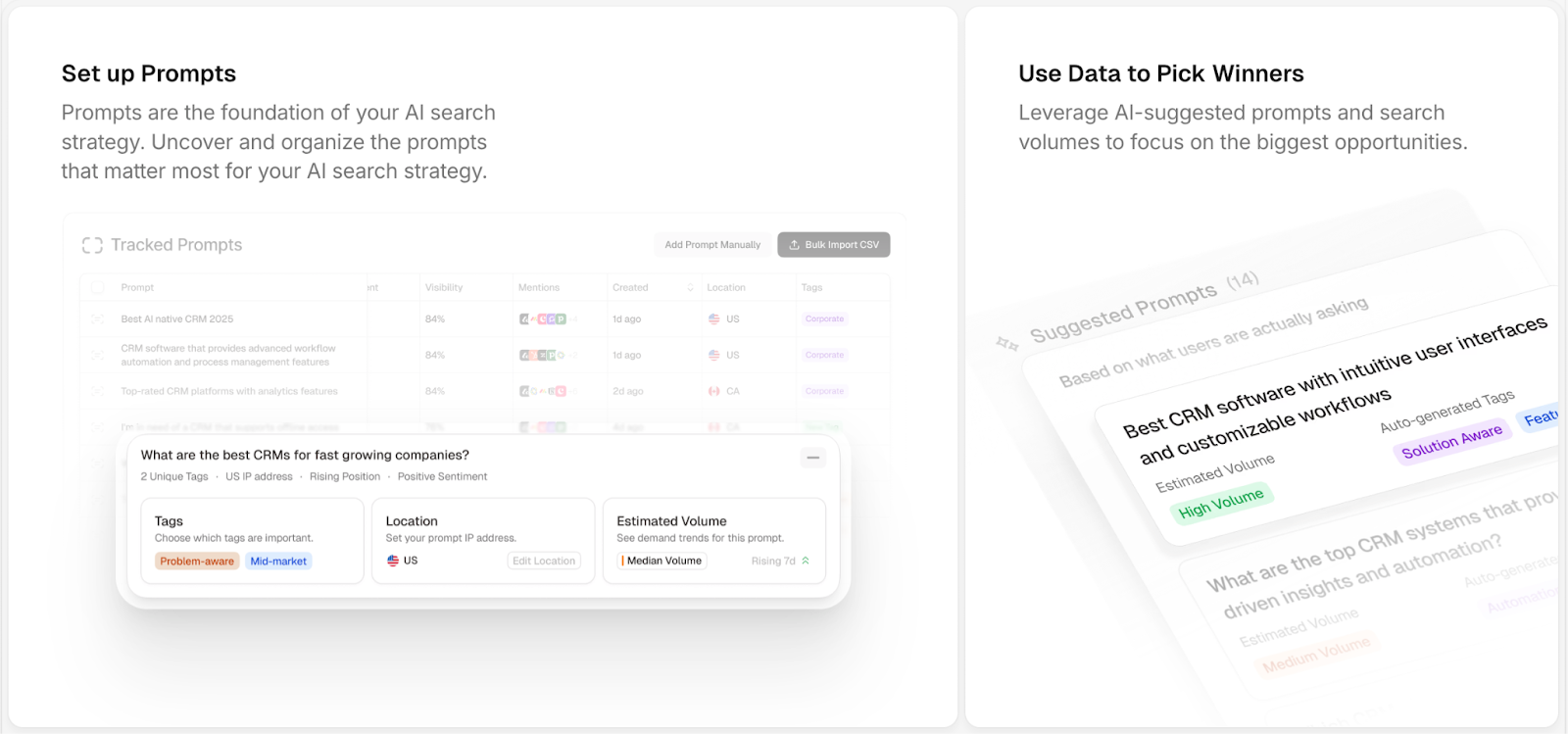
Prompt tracking enables users to see visibility metrics relating to position, sentiment, and competitor comparisons in a really straightforward way. You can define and monitor the prompts that matter most to your brand, see when and exactly how it’s being mentioned in those queries, and even compare your visibility against that of your competitors.
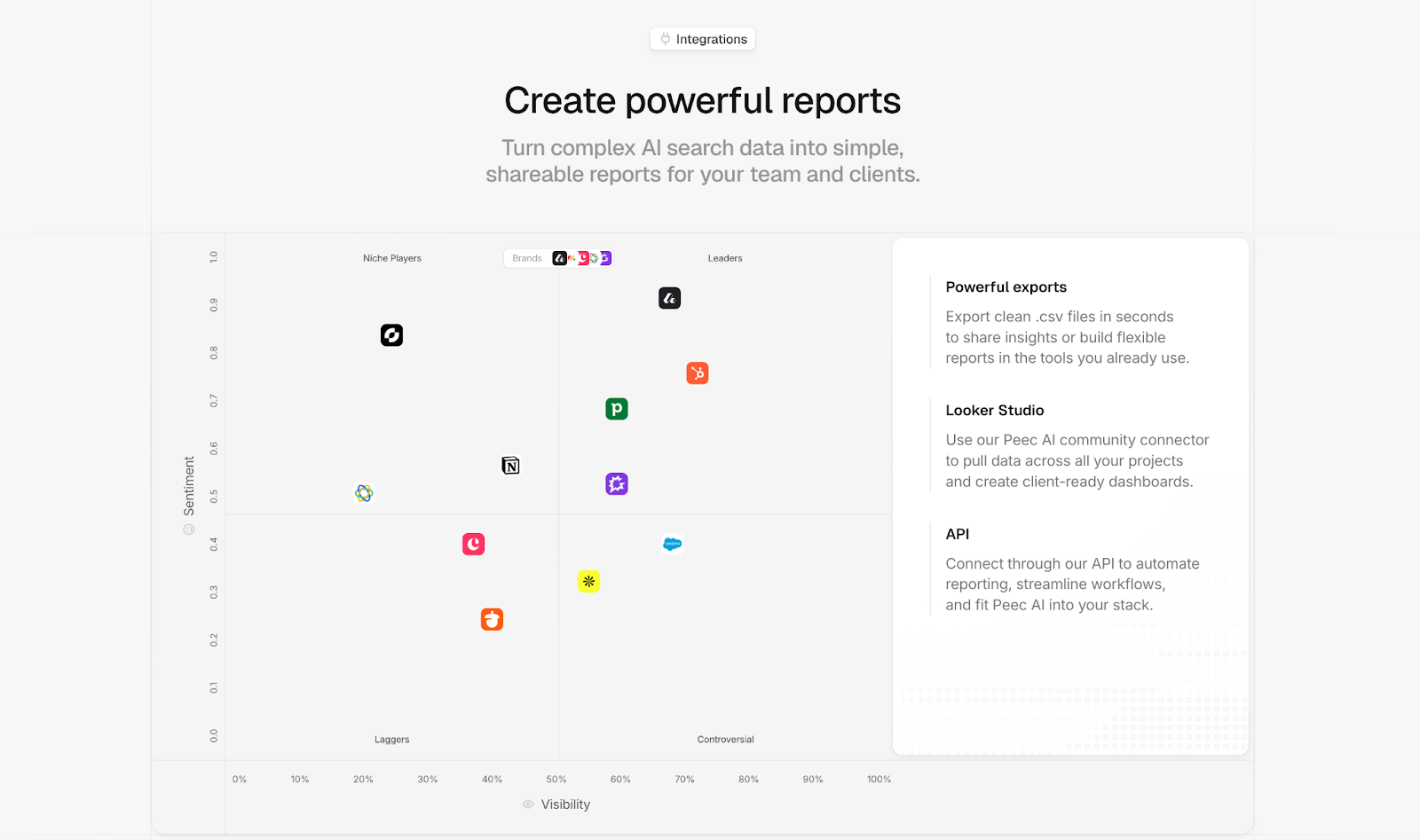
The UX is clean and easy to understand through a (relatively) simple dashboard with intuitive navigation. You can review visibility scores and sentiment, and take advantage of helpful visibility insights without a super steep learning curve.
Peec AI Pros:
- Easy to use with a quick setup so you can begin using it very quickly. In my experience, you’re off and running in a matter of minutes.
- Automatically suggests prompts to track, although you can add your own as well.
- Provides brand sentiment and competitor benchmarking.
- Unlimited team seats with all plans.
Peec AI Cons:
- This is, at its core, a monitoring tool. It shows you where and how your brand appears, but offers less actionable guidance compared to others on this list.
- Some AI models (like Claude) are add-ons with an extra fee associated.
- Visibility history only goes back as far as the date you began tracking.
Emberos
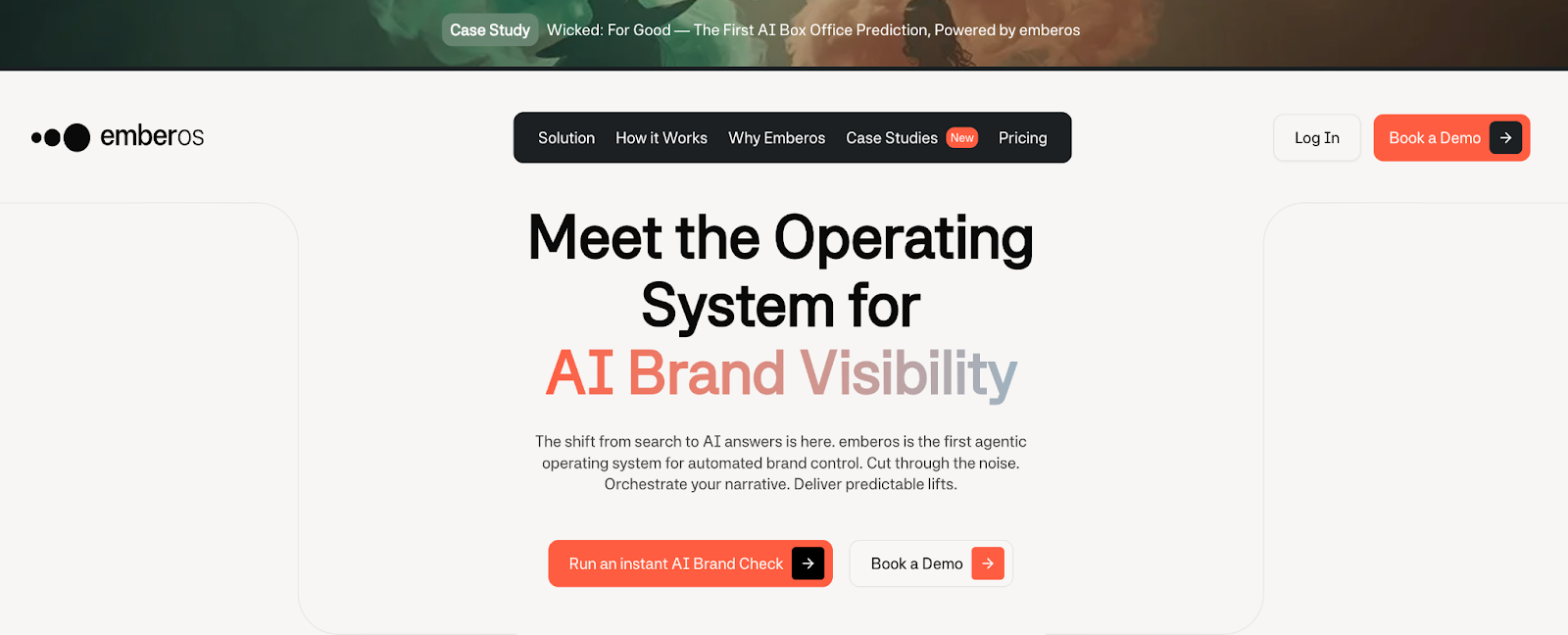
As “the first agentic operating system for automated brand control,” Emberos is the only tool that offers predictive analytics alongside real-time tracking and workflow automation. With an LLM-agnostic infrastructure, Emberos monitors all major LLMs that include ChatGPT, Claude, Perplexity, Google AI Overviews, and “any other model that matters” to you.
What really sets Emberos apart as an AI visibility tool is the fact that it forecasts visibility and the impact that targeted optimizations will have on a brand, with an impressive degree of accuracy.
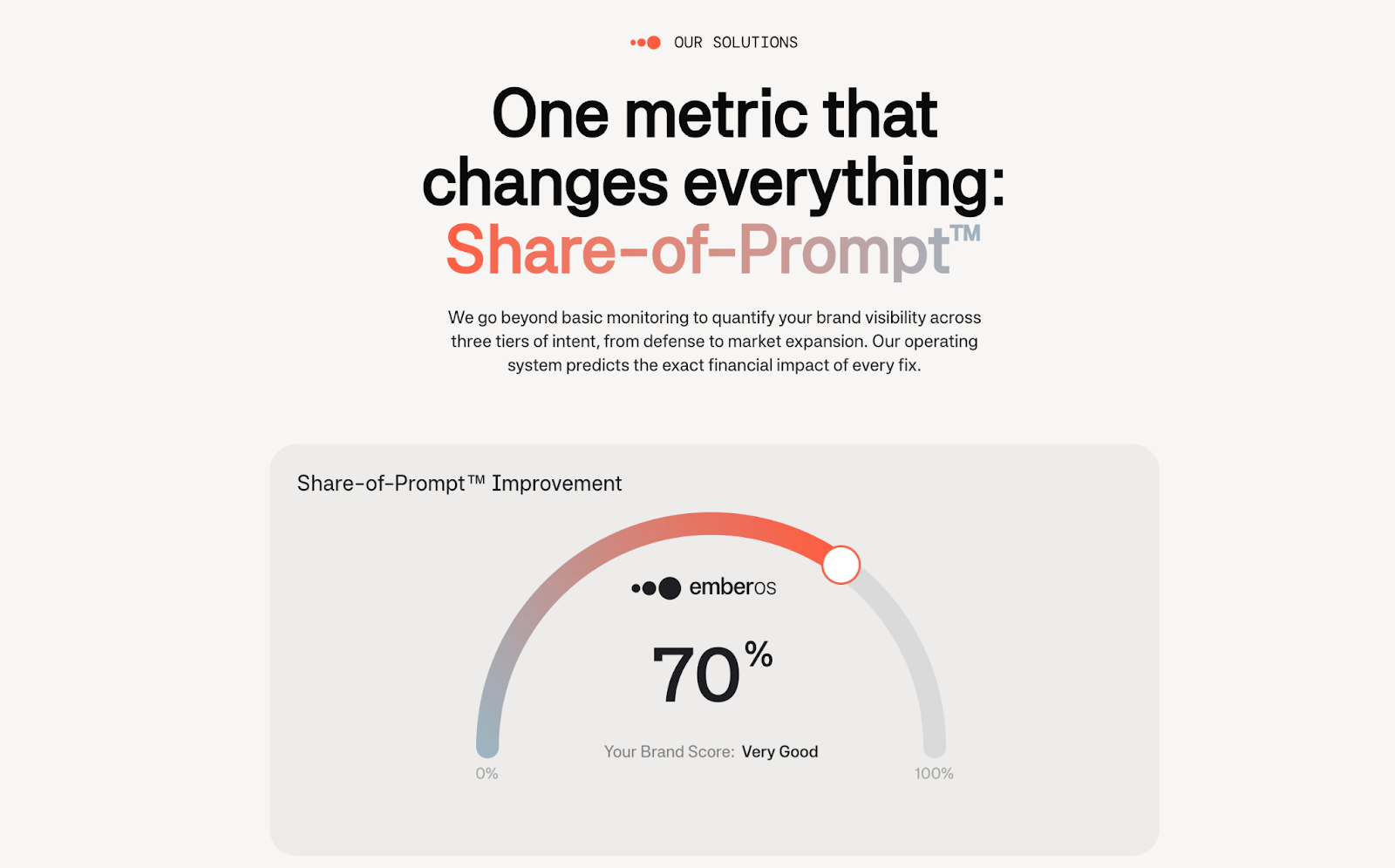
Yes, you read that correctly. Emberos is about as close as you’re gonna get to having a crystal ball in your pocket (in terms of optimizing content) to control your brand narrative and visibility, and seeing measurable lifts.
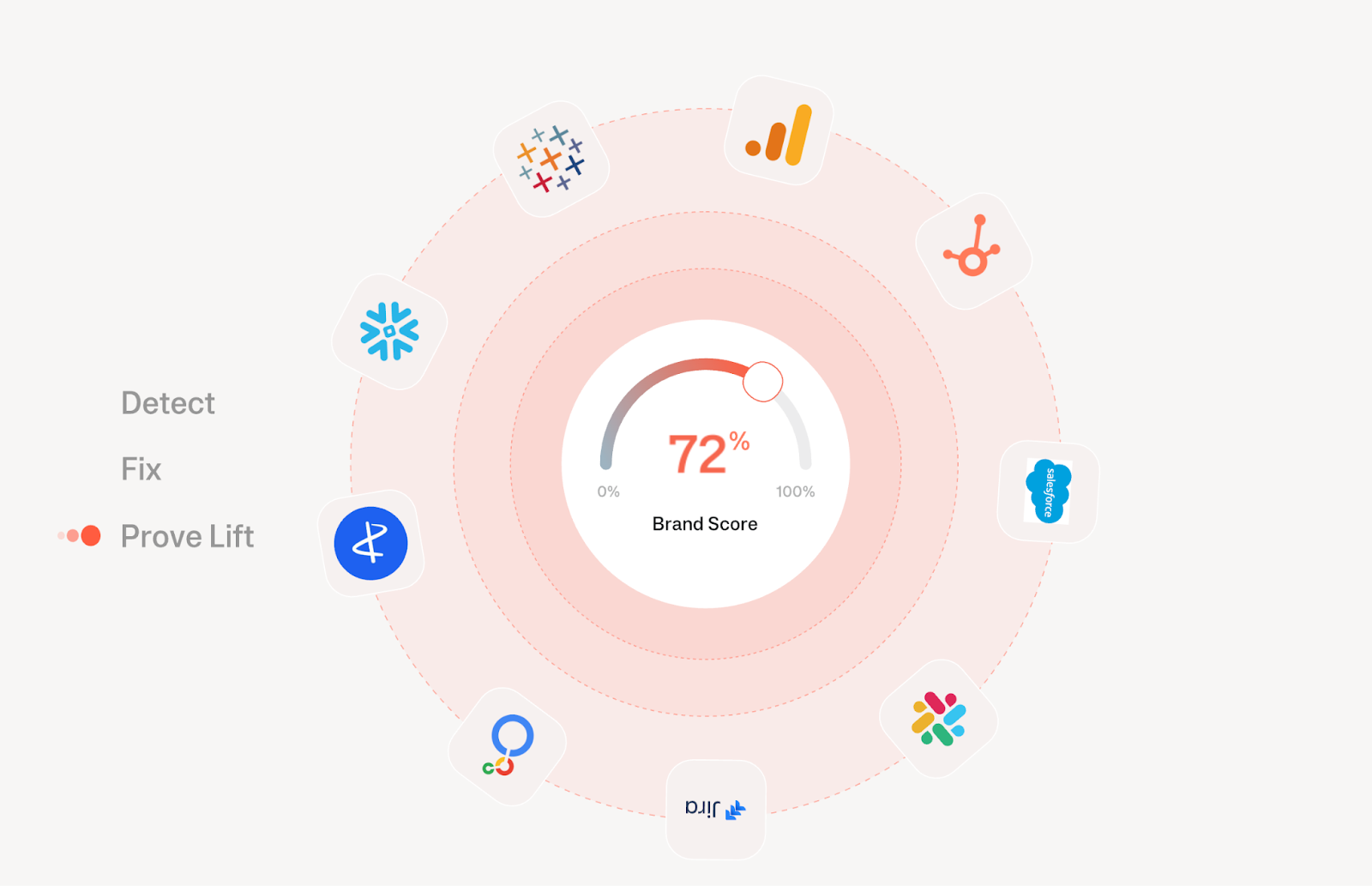
Emberos goes a lot farther than just reporting on AI visibility. It examines how changes could impact outcomes, and automates recommended fixes into tools like HubSpot, Slack, or Jira, allowing brands to turn insights directly into action that moves the needle in the right direction.
And where brand misinformation and safety are concerned, Emberos has built-in detection that alerts your team to take control of the narrative.
Is Emberos complex? Yes. Is it the best option for brands that need automated brand control and actionable execution? Also, yes.
Emberos Pros:
- One-of-a-kind predictive intelligence that can suggest improvements and forecast outcomes with high accuracy.
- Broad LLM coverage that includes all of the major engines and any others “that matter.”
- Automated workflow integrations that deliver insights for fast execution.
- Risk monitoring for misinformation and brand safety.
- Provides deep metrics relating to visibility signals and outcomes.
Emberos Cons:
- Pricing is entirely bespoke and custom to each brand.
- Likely too complex for small businesses, startups, or brands that only need basic visibility reporting.
- Onboarding and implementation takes longer compared to others on this list, but again, Emberos has much deeper integration and functionality so that makes sense given what it offers.
Hall
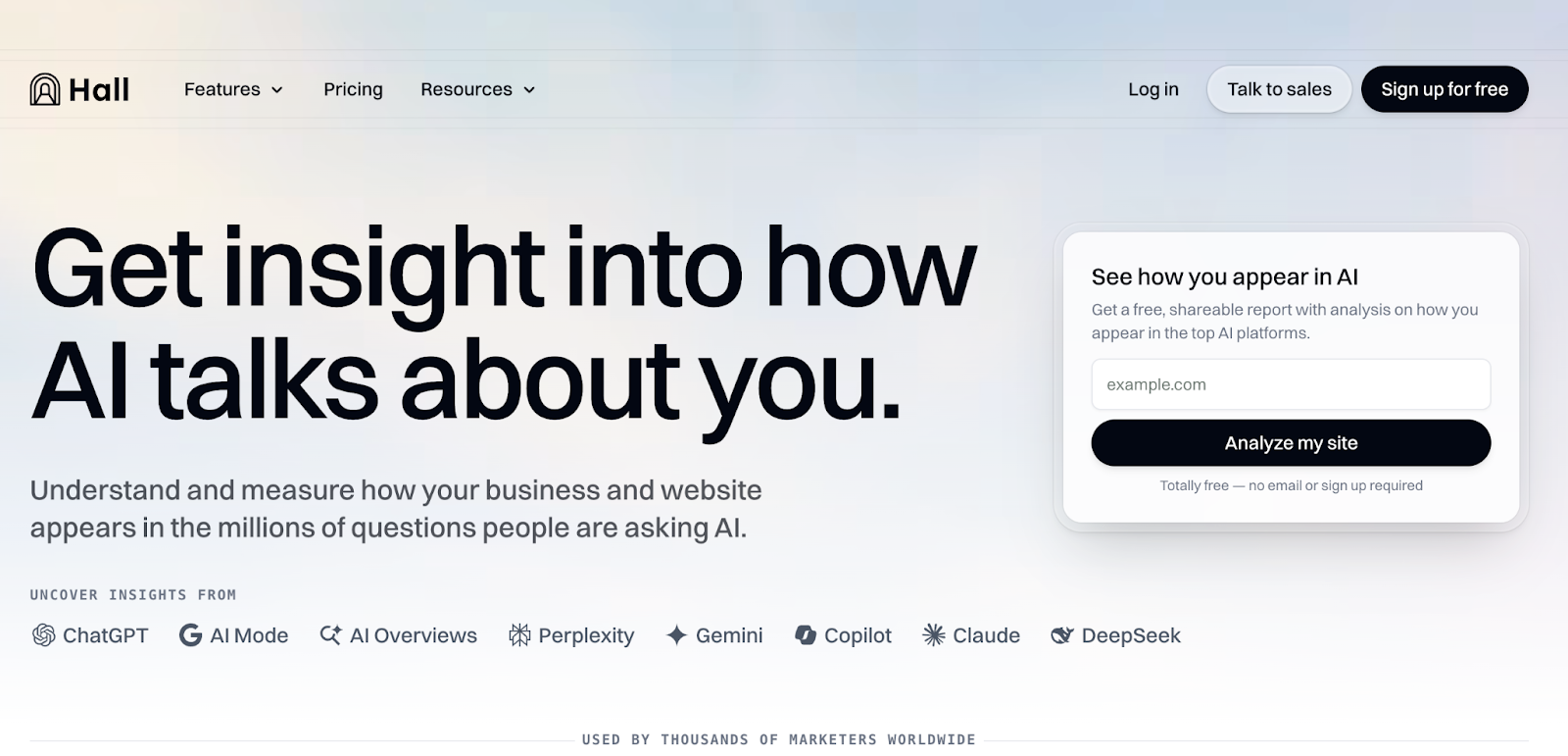
Operating similarly to Peec AI, Hall (often known as Hall AI) helps brands to understand how they’re appearing in AI-generated answers and benchmark that visibility over time.
As of this writing, Hall AI monitors ChatGPT, Google AI Overviews, Gemini, Anthropic (Claude), Copilot, Perplexity, Meta AI, and DeepSeek.
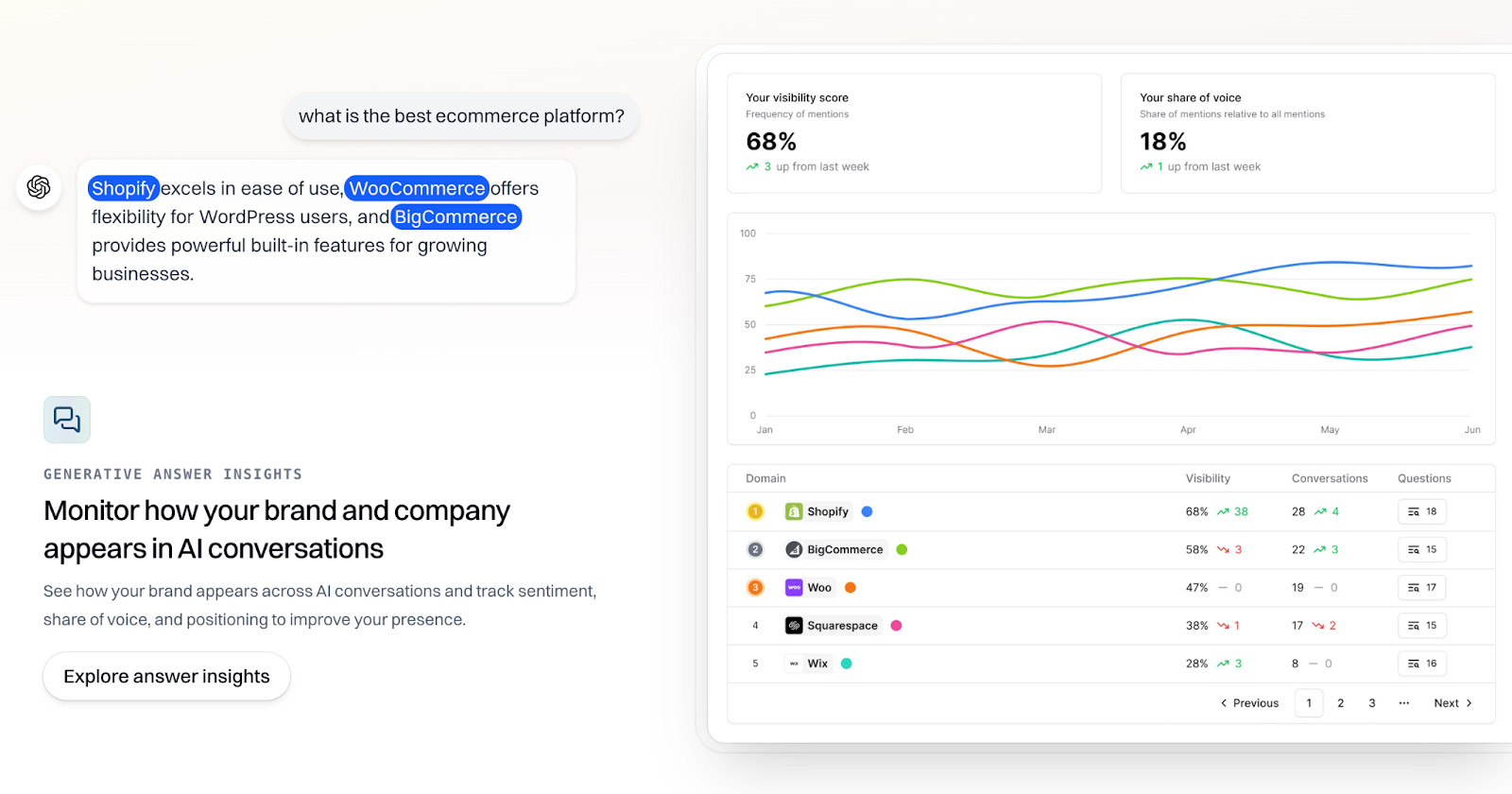
Like Peec AI, Hall provides context to brand mentions alongside the citation and source tracking, so you can see the complete prompt and answer. It also monitors how AI bots or crawlers access your own brand’s site so you can scope out visibility gaps or potential crawl issues.
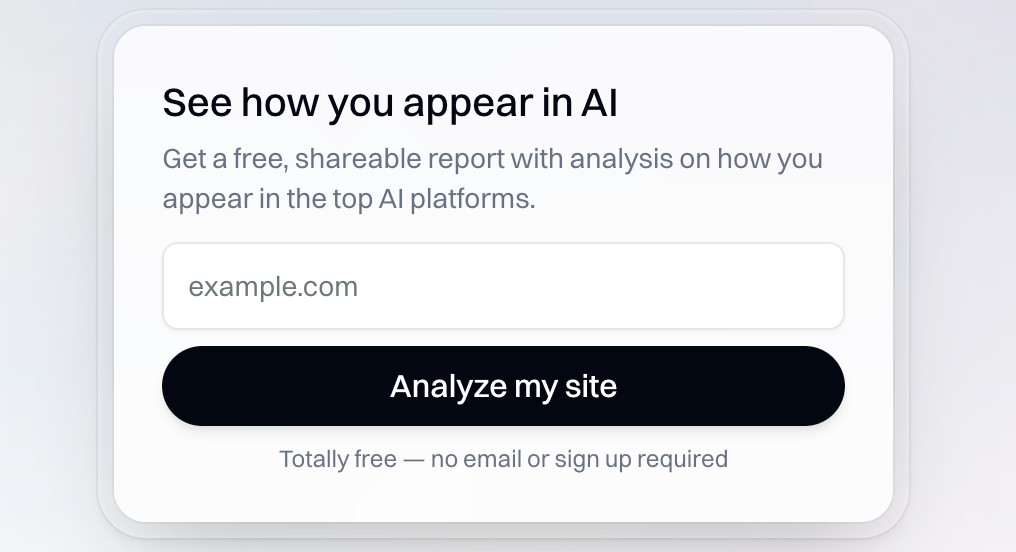
One of the biggest benefits to Hall AI, in my opinion, is the free visibility report, which is available even without a signup. You can access a free analysis to see a snapshot of your AI visibility, which can be really helpful when you’re new to this particular aspect of brand management.
Speaking of free things, Hall also has a free Lite plan (that really is light), so you can set up a single project (with a single user seat) to monitor up to 25 queries. It’s very limited compared to the paid tiers, but it’s also a simple way to get your feet wet, especially for small teams or brands just starting out with AI visibility monitoring.
Hall AI Pros:
- Offers a Lite (free) plan that allows you to have one project with up to 25 tracked questions and 300 answers analyzed each month.
- Clear, easy-to-understand insights that break down visibility by topic, platform, and even region.
- Provides competitor benchmarking and sentiment tracking (how AI talks about your brand).
Hall AI Cons:
- Advanced features (or more user seats) require access to higher tiers. API access is only available in the Enterprise tier (which starts at $1,500 per month).
- Like Peec AI, Hall is focused largely on insights rather than actionable recommendations for improvement.
Profound
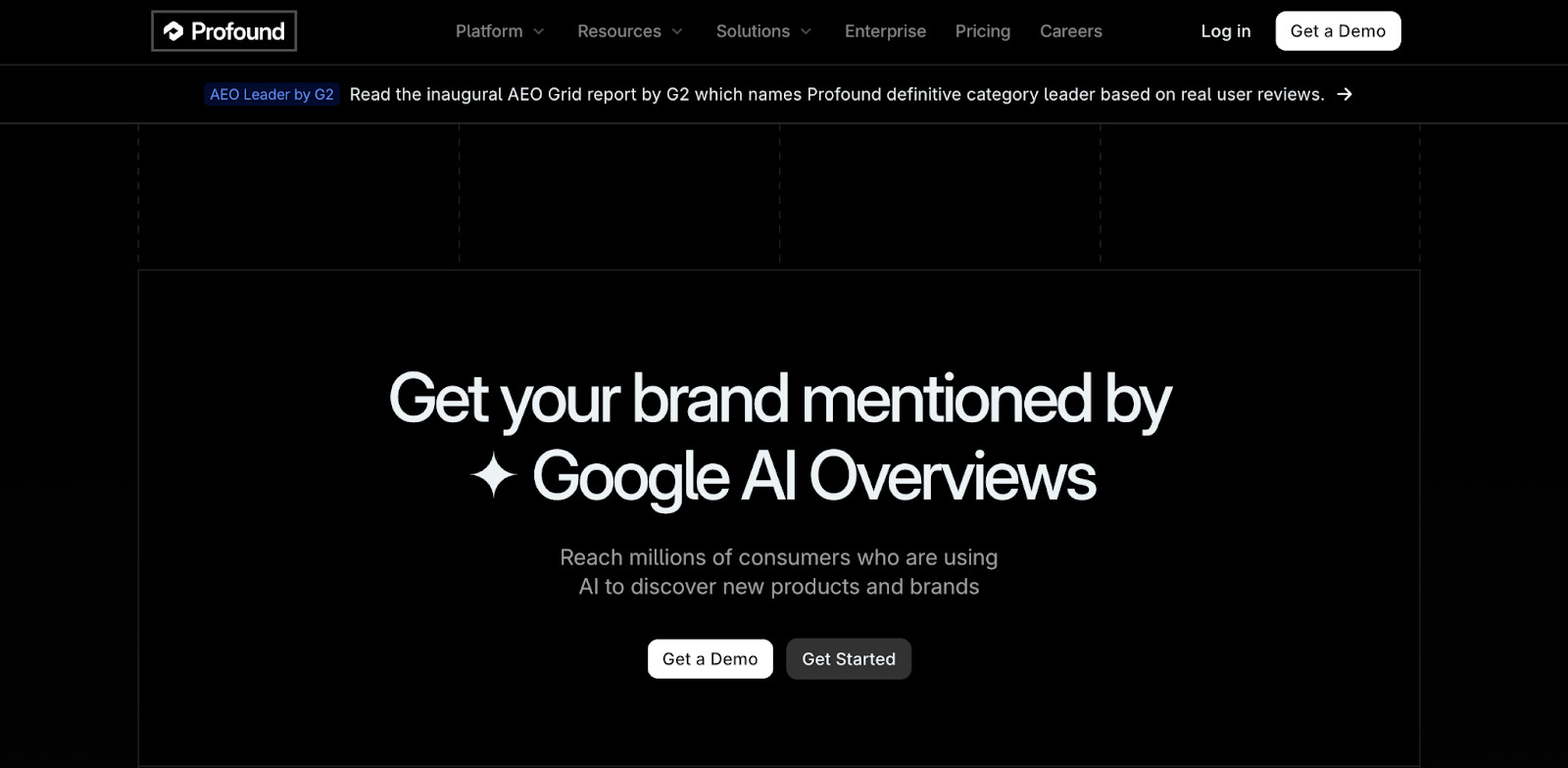
As a more enterprise-level option, Profound is ideal for marketing teams and organizations with strict governance and data requirements, offering comprehensive security and compliance.
Profound tracks insights from ChatGPT, Perplexity, Google AI Mode, Gemini, Copilot, Meta AI, Grok, DeepSeek, Claude, and Google AI Overviews. Unlike the more “basic” AI visibility tools in this list, Profound (living up to its name) combines visibility metrics, citation and sentiment tracking, agent analytics, and performance attribution so a brand can see exactly why mentions appear where they are, and how.
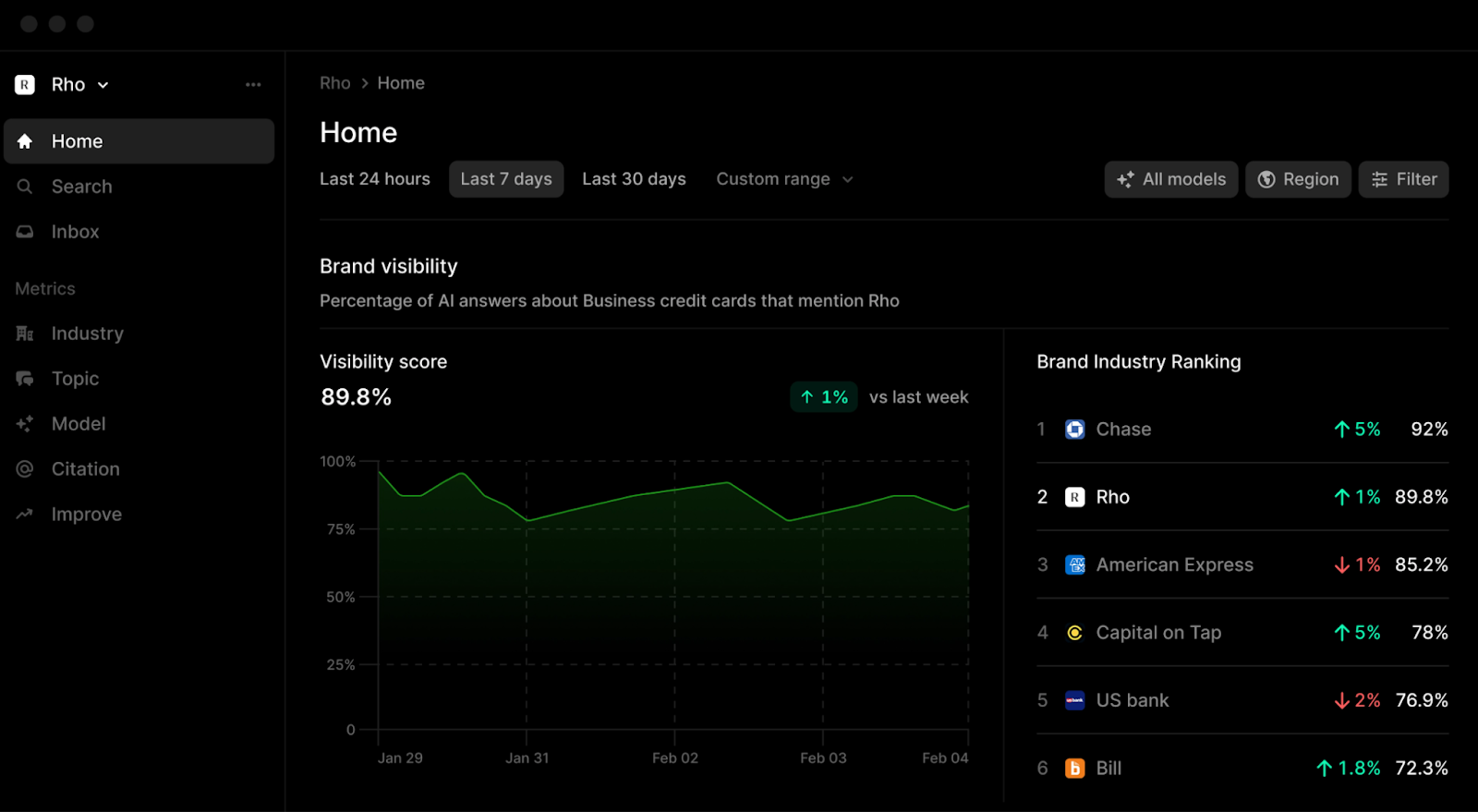
Real-time prompt analysis lets brands see what users are asking in AI-powered search environments and how often those queries occur. If you’re at all familiar with using SEO tools like Ahrefs, as an example, it’s similar to that, only for AI visibility.
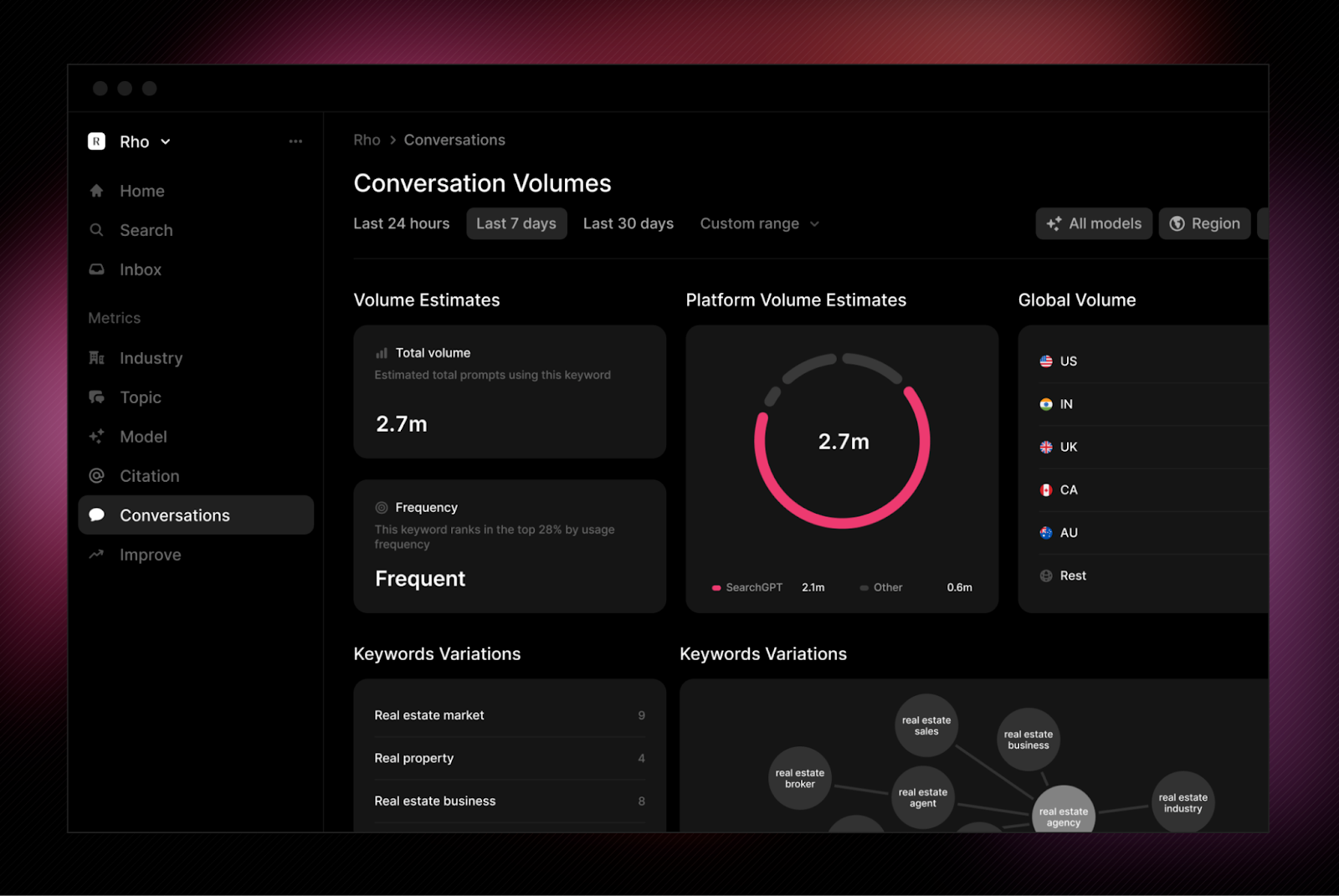
Like Hall, Profound shares how AI bots crawl your brand’s website and which pages are driving pickup and engagement. It also provides competitor benchmarking, along with tools to generate optimized writer’s briefs and content for teams seeking that type of workflow.
Profound Pros:
- Offers prompt and search volume data so teams can monitor trends for content creation.
- Deep visibility analytics across all major AI search engines.
- Advanced analytics and attribution beyond mentions.
- Enterprise tier provides SOC 2 Type II compliance and single sign-on for enhanced security and user authentication.
- Automated daily backups with one-week secure storage (Enterprise tier).
Profound Cons:
- Although Profound can track insights across ten AI engines, you cannot pick and choose them individually, and all ten are only available in the Enterprise tier (with custom pricing).
- Has a higher price point compared to others on this list for what it offers; even the most basic Starter tier, at just $99 per month, tracks ChatGPT only.
- Steeper learning curve compared to others on this list, like Peec AI or Hall.
AirOps
Finally, AirOps is a workflow-focused AI visibility tool wrapped into a content operations platform, helping brands and marketing teams to track, prioritize, and act on AI search insights. It provides the tools needed to scale production and AI optimization at the same time, so it’s more of an all-in-one kind of system.
AirOps makes it easy for brands to understand where they’re showing up in AI-powered search environments, but also guides them as far as what the next steps should be: creating new content, refreshing old content, or even engaging in online communities to improve visibility.
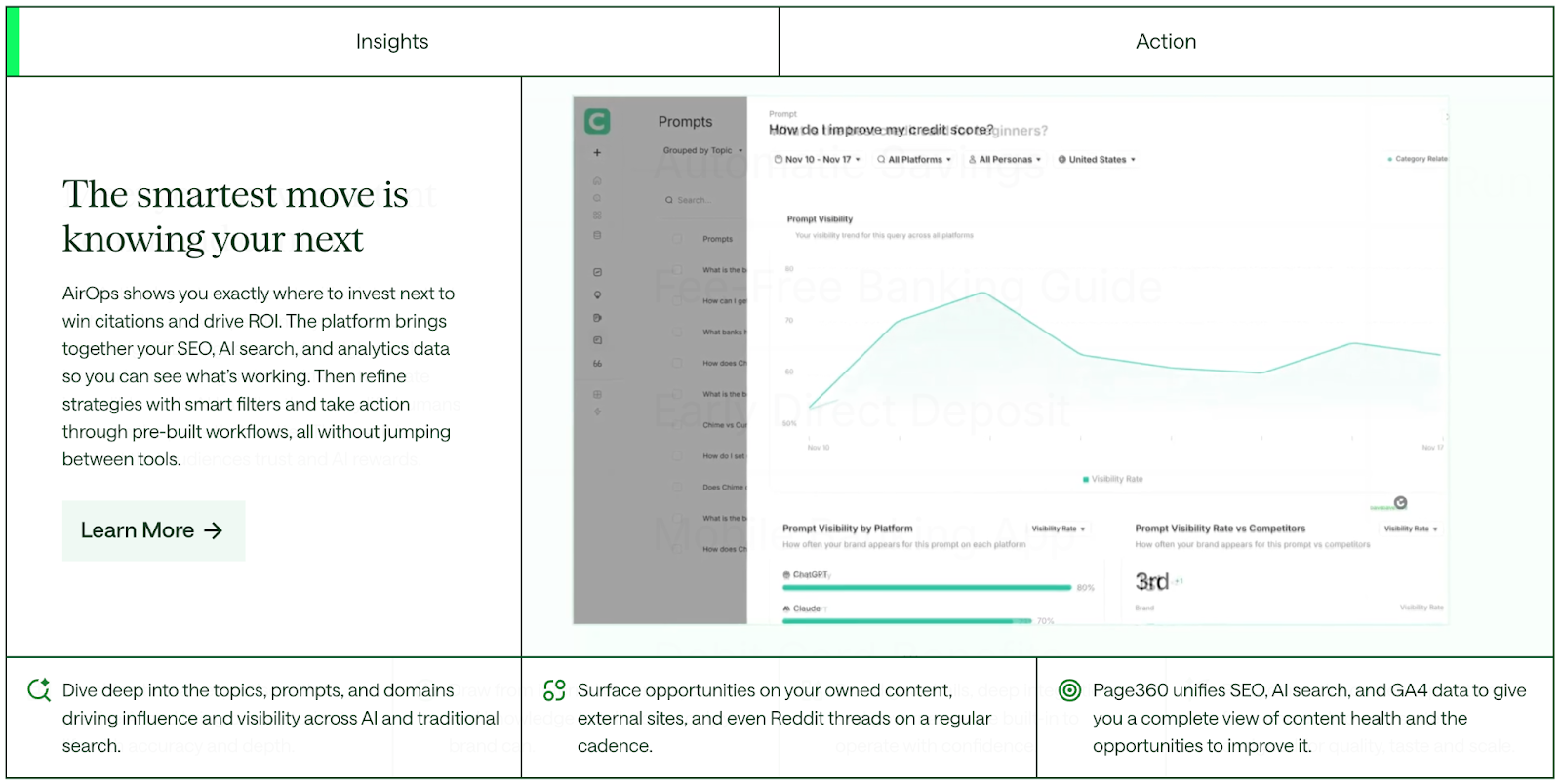
That said, AirOps is not as deep of an AI visibility tracker as Peec AI or Hall is. The AI monitoring is more surface-level in comparison, but it does provide more in the way of actionable insight so teams can focus on high-leverage opportunities.
AirOps Pros:
- Scales content operations for AI visibility optimization, offering drag-and-drop tools to build repeatable processes and publish content at scale.
- Combines insights with action that ties directly into content production and management.
- Integrates with CMS and SEO tools.
AirOps Cons:
- It isn’t an especially deep AI visibility tracker; monitoring is lightweight compared to others on this list and visibility insights are bundled with content workflow features.
- The learning curve can be steep(ish), since it’s a full suite content operations system.
- Pricing is custom, although lower tiers have a 14-day free trial. There is a free “Solo” tier, as of this writing, but that does not include AI visibility tracking.
Closing Thoughts
AI visibility is no longer a theoretical concern. It matters. A lot.
More and more, AI-generated answers are shaping the way people discover brands and decide to buy products (or not), and understanding exactly how (or if) your brand appears among those answers is essential to stay competitive.
If you’re new to AI visibility, lightweight monitoring tools like Peec AI or Hall can offer quick clarity with minimal setup. For enterprise brands that need deep analytics, Profound might be a great fit, while those who are scaling content might do best with AirOps. And for those brands that need predictive insights with execution, Emberos is definitely worth a look.
There’s no “right” answer, exactly, because every brand and team is different. Regardless, investing in the platform that suits your needs can help to future-proof your brand’s discoverability and, ultimately, its long-term success.