


- The “Best” Affiliate Software Will Depend on Your Strategy
- Best Affiliate Software Features Compared:
- What Makes Ecommerce Affiliate Marketing Different?
- What eCommerce Brands Should Look For in a Great Affiliate Marketing Platform
- Levanta: Best Overall Software For eCommerce Brands
- Awin: Best for Traditional Affiliate Growth
- Impact.com: Best for Unified Creator & Affiliate Programs
- Refersion: Best Direct-to-Consumer (DTC) eCommerce Brands
- Tapfiliate: Best for Mid-Level Affiliate Programs
- Choosing the Right Platform for Your eCommerce Business
Last Updated on April 3, 2026 by Ewen Finser
Affiliate marketing is more complex than it used to be. Managing multiple creators, partnerships, and sales channels without the right tools can become difficult real fast.
The best affiliate platforms will offer you cross-channel tracking, flexible payouts, multi-partner management, and actionable reporting. Let’s break down which Affiliate Software for eCommerce Brands might best fit your brand’s size, stage, and growth plans.
The “Best” Affiliate Software Will Depend on Your Strategy
Choosing the right affiliate software depends on your sales channels and growth goals. Some platforms excel at multi-channel marketplace tracking, others at global publisher networks or enterprise-scale programs, and some are built for Shopify or mid-level growth.
Here’s a quick glance at which platform is best for different strategies:
- Levanta: Best for multi-channel sellers (Amazon, Shopify, Walmart)
- Marketplace-native tracking, creator discovery, product-level reporting, and paid placements. Ideal for scaling creator- and affiliate-driven growth.
- Awin: Best for traditional affiliate growth
- Massive global publisher network with strong international reach. Great for coupon, deal, and publisher-driven campaigns. Primarily CPS payouts; less built for marketplace tracking.
- Impact.com: Best for enterprise-scale programs
- Advanced attribution, hybrid payouts, contract automation, and multi-touch reporting. Perfect for complex partner ecosystems, but a steep learning curve for smaller brands.
- Refersion: Best for Shopify/WooCommerce DTC brands
- Fast setup, easy to use, and solid ambassador/affiliate program support. Excellent for small to mid-sized Shopify stores, though may be outgrown by larger brands.
- Tapfiliate: Best for mid-level affiliate programs or SaaS/DTC hybrids
- Flexible commission structures (recurring, lifetime, CPS) and easy integrations. Good for growing brands that need flexibility without enterprise complexity; reporting is moderate.
Best Affiliate Software Features Compared:
Platform | Top Features | Flexible Payout capabilities | Robust Reporting | Best for |
Levanta | Marketplace tracking (Amazon, Walmart, Shopify), creator discovery, product-level reporting, paid placements, product sampling | High (CPS, CPC, flat fee, hybrid) | High Level (ASIN/SKU, multi-channel, new-to-brand, halo sales) | Omnichannel sellers aiming to scale creator-driven growth |
Awin | Large global affiliate network, strong publisher access, content/coupon/deal campaigns | Moderate (primarily CPS) | Moderate (network-level insights) | Brands focused on traditional affiliate growth and international reach |
Impact.com | Enterprise partnership management, contract automation, multi-touch attribution, hybrid payouts | Very High (custom contracts, hybrid, multi-touch) | Very High (predictive analytics, attribution modeling) | Enterprise brands with complex partner ecosystems |
Refersion | Shopify/WooCommerce integration, fast setup, affiliate/ambass-ador management | Moderate (CPS, tiered commissions) | Moderate (order + SKU-level within Shopify) | DTC brands on Shopify or WooCommerce, beginner to mid-level programs |
Tapfiliate | Flexible commission logic, recurring/subs-cription payouts, API integrations | High (custom, recurring, CPS) | Moderate (custom dashboards) | Mid-level affiliate programs or SaaS/DTC hybrids |
What Makes Ecommerce Affiliate Marketing Different?
Affiliate marketing has come a long way since the days of coupon sites and mom-blog reviews. Today, ecommerce growth is largely driven by influencers, YouTube creators, social media platforms like TikTok and Instagram, Reddit, and newsletters.
With the massive growth in both ecommerce and affiliate marketing, it’s important to understand where you are currently, where you want to go, and what sets your ecommerce affiliate stack apart from other industries.
Successful brands rarely depend on a single website for growth. Many sell across multiple platforms, including Amazon, Shopify, social media channels, and big-box shops like Walmart. Influencer partnerships have also evolved.
A few years ago, working with bloggers meant a one-time payment for their time and effort. Today, these relationships are more often hybrid arrangements, combining an upfront fee with a performance or commission structure. This might look like:
- A small fee up front plus a modest commission (5-15%) on sales via a coupon code or partner link
- No upfront fee but a higher commission on resulting sales
Customer journeys have also become a bit unpredictable. A typical path might include discovering a product on social media, using AI to do research, visiting your site, seeing additional posts from the same or other influencers, and finally returning days later to make a purchase. The right affiliate platform credits the correct partner, rather than only tracking the last click.
Commission structures have also become more complex. Brands now use:
- Tiered commissions
- Bonuses for top performers
- High-value product gifting
- Hybrid influencer packages
What eCommerce Brands Should Look For in a Great Affiliate Marketing Platform

With the wild west world of affiliate marketing constantly evolving with your brand, it’s crucial that you find an affiliate marketing platform that can immediately support your affiliate strategy as well as grow with your company and marketing stack. At a minimum, it should provide clear cross-channel tracking so you can see:
- Which partner drove the sale
- Which platform converted it
- What link originally led the customer there, not just the last click
You also need tools to manage multiple partners efficiently. Recruiting affiliates, managing relationships, negotiating deals, and scaling what works all become much easier when your platform centralizes these tasks.
Flexible payout structures are equally important, since partnerships often involve tiered commissions, performance bonuses, and hybrid arrangements that combine upfront fees with commission-based incentives. A good platform should handle:
- Tiered commissions and incentives
- Performance bonuses
- Hybrid partnerships that mix upfront fees with commission
Automation is another key factor. The more your platform can manage onboarding, payouts, contract management, and commission tracking automatically, the fewer errors and headaches you’ll face.
Finally, robust reporting is essential. Beyond simple charts and graphs, you want actionable insights that show:
- Which partners are driving revenue and which aren’t worth your time
- Which channels resonate with your audience
- Where conversions are actually happening
With these features in mind, here’s a look at the five best affiliate software platforms for ecommerce brands in 2026 and what makes each stand out:
Levanta: Best Overall Software For eCommerce Brands
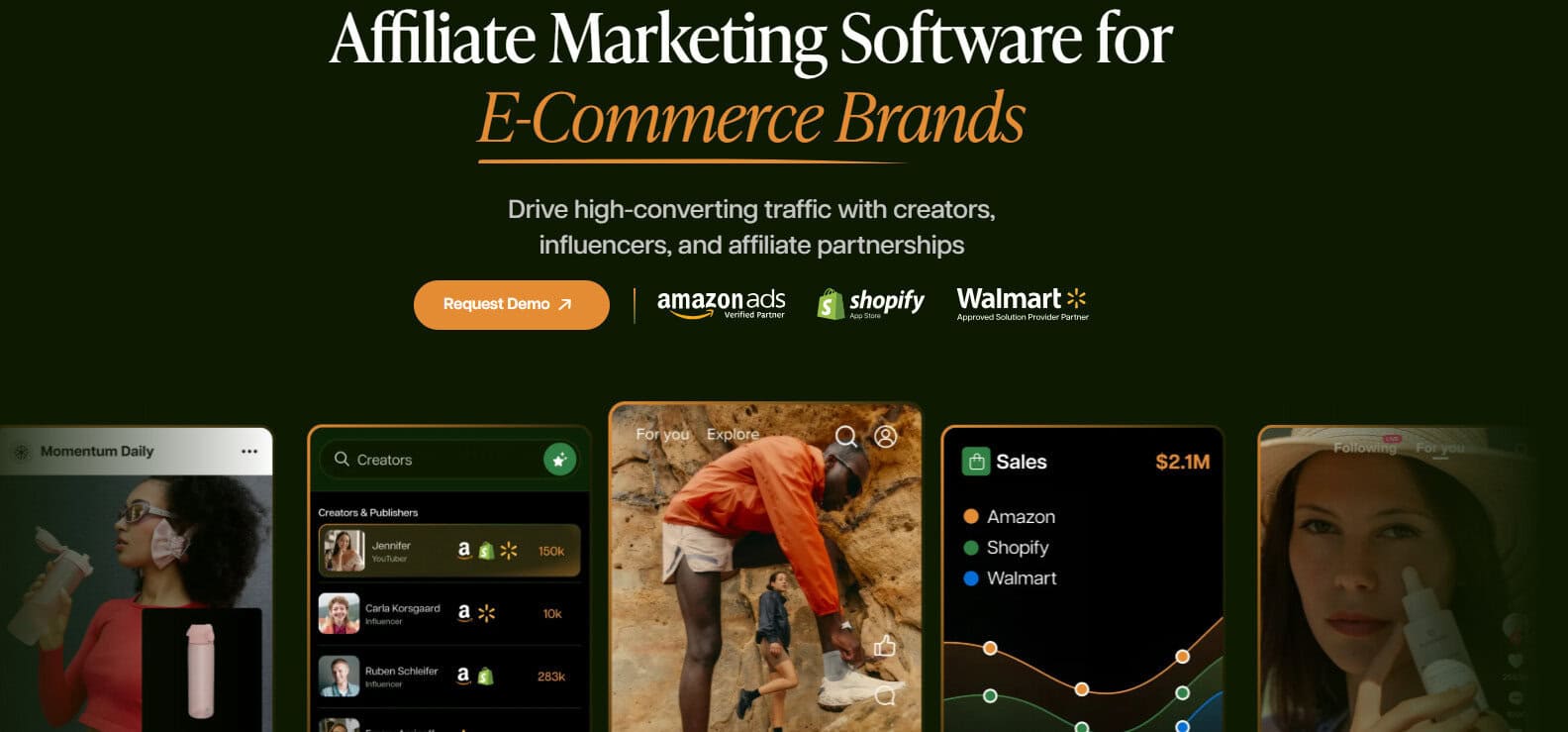
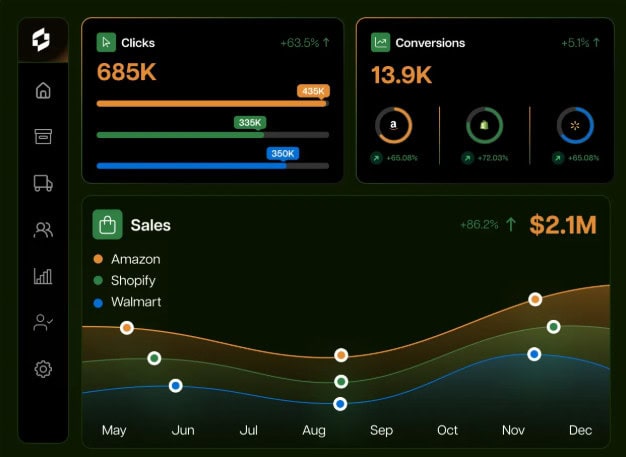
If you’re running programs across Amazon, Shopify, and Walmart, Levanta is worth a serious look. Few affiliate platforms really cover all your needs, so calling any one of them the “best” overall is tough. But if you want something that actually ticks most of the boxes (especially for multi-channel sellers and brands that rely on connecting creators to real sales), Levanta is a top contender.
Most tools break when a sale happens off your own website. Levanta gives you full visibility across marketplaces and your own store, letting you:
- Track marketplace conversions
- Work with creators and affiliates in one central hub
- See performance down to the product level
Its AI-powered creator marketplace helps you find high-performing partners, seed products, and run paid placements, all without the typical admin headaches. Plus, setup is relatively easy thanks to native, one-click integrations with Amazon, Shopify, and Walmart.
Just keep in mind that onboarding and results can feel slow if you treat it like “autopilot.” Some users say you still need active management (commission tweaks, outreach, content strategy) to get momentum.
Pros:
- A more modern platform for modern businesses
- Tracks performance across Amazon, Walmart, and Shopify
- Supports multiple payout structures (CPS, CPC, flat fee, hybrid)
- Built-in creator discovery and outreach
- Product-level reporting (not just order-level)
Cons:
- Not built for mobile or B2B affiliate marketing programs
- Not ideal for coupon/deal-site scale
Best for ecommerce brands focused on:
- Multi-channel eCommerce brands (Shopify, Amazon, Walmart)
- Scaling creator- and affiliate-driven growth without losing visibility
Awin: Best for Traditional Affiliate Growth
Awin is one of the largest affiliate networks available today, especially when it comes to generating incremental revenue through large publisher networks.
The platform boasts a massive global network of publishers. If your affiliate strategy is heavily focused on coupon sites, cashback platforms and deal traffic, Awin is a solid bet.
Pros:
- Massive global network of thousands of pre-vetted publishers
- Supports multiple affiliate channels (content, coupons, deals)
- Managed outsourcing for affiliate relationships
Cons:
- Not as customizable as other platforms on this list
- Primarily CPS-based payouts
Best for:
- Well-established global affiliate programs
- International ecommerce brands
Impact.com: Best for Unified Creator & Affiliate Programs

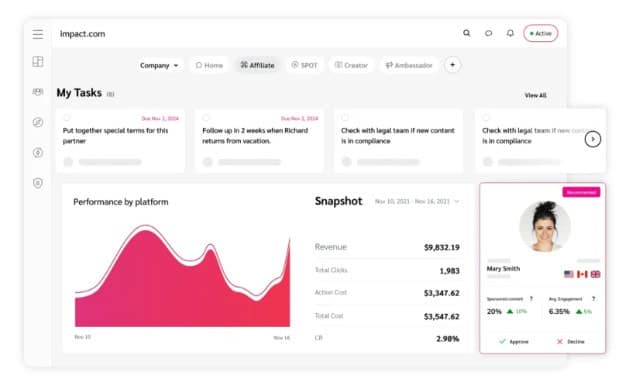
Impact.com is one of the oldest and well-known affiliate marketing platforms. It’s seriously powerful, flexible, and built for scale. This is the platform massive ecommerce brands gravitate to once their affiliate strategy is fully scaled out.
This also means that it comes with intricate implementation and a steep learning curve, so you better know affiliate marketing in and out before trying to jump on this train.
Pros:
- Extremely Advanced attribution capabilities
- Global payment infrastructure
- Robust contract and compliance tools
- Integrates well with multiple partner ecosystems (affiliates, influencers, B2B)
Cons:
- May be too much for smaller brands
- Steep learning curve
Best for:
- Well-established global affiliate programs
- Brands needing strong compliance and contract tools
- Brands with complex partner ecosystems and payout structures
Refersion: Best Direct-to-Consumer (DTC) eCommerce Brands

It’s fair to say that Shopify has completely leveled up the ecommerce brand game. From dining table DIY moms selling holiday kitsch to growing global brands, Shopify is where it’s at. And if this is you, Refersion just might be your affiliate platform answer.
Like Shopify, it’s easy to set up, use, and offers solid tracking and ambassador program support. While it’s simple and easy to launch, it’s also easy to outgrow if you are a brand looking to continue to scale your business and affiliate reach.
Pros:
- Great choice for Shopify and WooCommerce integration
- Minimal learning curve
- Good for base-level affiliate and ambassador partnerships
- Custom-branded dashboard for affiliate partners
Cons:
- Limited features compared to other platforms on this list
- May not be a great option for larger ecommerce brands with enterprise-level programs
Best for:
- Brands looking for seamless Shopify and WooCommerce integrations
- New to affiliate marketing
Tapfiliate: Best for Mid-Level Affiliate Programs
Tapfiliate sits somewhere in between Awin and Refersion: it offers plenty of bells and whistles, without too much bulk or learning curve headaches.
If you are a growing brand that has already outgrown your homegrown affiliate program or one of the smaller options on the market, but do not foresee ever needing the heavy-hitting options Awin or Impact.com offer, Tapfiliate may be the platform for your brand.
Pros:
- Mid-weight, easier to implement and use than an enterprise platform
- Flexible and customizable to easily scale alongside your affiliate program growth
- Customizable payout structures, including recurring and lifetime commissions
- Multi-lingual campaigns and support
Cons:
- Automations and analytics could be better
- Smaller ecosystem
Best for:
- Mid-level brands wanting flexibility without complexity
- Growing brands wanting easy integrations with tools like Shopify, Stripe, or WooCommerce, with influencer support as well
Choosing the Right Platform for Your eCommerce Business
Choosing the best platform for you mostly depends on your business model and goals.
If you’re selling across marketplaces or want a little of everything with the headache of too much weight, Levanta is a solid bet. If your affiliate strategy is fairly robust and relies on traditional affiliate and publisher networks, Awin may be the way to go.
If you’re running a global enterprise-scale program or want limitless growth options, Impact.com should be on your short list. If you’re new to affiliate marketing or rely heavily on Shopify, WooCommerce, and DTC channels, Refersion or Tapfiliate will give you the system and support you need to hit the ground running.
There truly is no single “best” affiliate platform. It all comes down to what your current affiliate program stage is and how far out you want to scale your strategy.