


- Why Use an AI Agent for Ecommerce Customer Service?
- The 6 Best AI Agents for Ecommerce Customer Service
- Seel Support Agent: Best for Post-Purchase Customer Service
- Gorgias AI Agent: Best for Shopify Retailers
- Intercom Fin: Best for High Autonomous Resolution Rates
- Zendesk AI Agents: Best for Enterprise Ecommerce Businesses
- Netomi: Best for Omnichannel Customer Service
- Tidio Lyro: Best for Small and Midsize Online Stores
- What Should Ecommerce Businesses Look For in an AI Customer Service Agent?
- So Which AI Agent Is Best for Ecommerce Customer Service?
Last Updated on November 28, 2026 by The Digital Merchant Editorial Team
Customer service teams spend a good portion of their day tracking packages, explaining return policies, processing refunds, and answering variations of the same handful of questions. It’s easy work that requires only simple answers, but it’s tedious, time-consuming work nonetheless.
But one of the best things to come out of the AI revolution is agentic tools that handle this kind of repetitive work much faster and more efficiently than any human. These days, AI customer service agents help online retailers deal with the deluge of incoming queries without having to grow their customer service teams every time order volume increases.
Still, there’s a pretty big difference between an AI that simply tells someone how to request a refund and one that can actually help resolve the issue.
So, which is the best AI agent for ecommerce customer service?
Why Use an AI Agent for Ecommerce Customer Service?

While traditional chatbots typically rely on predetermined responses or static decision trees, an AI customer service agent uses artificial intelligence to understand customer inquiries, access relevant information, and often take action to resolve issues without human intervention.
Depending on the platform and integrations, they can:
- Look up orders and provide shipping updates
- Assist with returns, refunds, and exchanges
- Answer questions about products and store policies
- Process eligible order modifications or cancellations
- Help customers with missing or damaged packages
- Escalate complicated requests to human customer service representatives
The goal isn’t necessarily to replace your customer service team; it’s to give them more time to deal with the problems that actually require a human.
The 6 Best AI Agents for Ecommerce Customer Service
Agent | Best for | Pricing | Other costs | Reported resolution rate |
Seel Support Agent | Order, delivery, and return support | $0.99 per resolved ticket | None for escalated tickets | 80%+ |
Gorgias AI Agent | Shopify retailers | $0.90–$1.00 per automated interaction | Help desk subscription, possible overages | Not published |
Intercom Fin | Autonomous resolution | $0.99 per ecommerce resolution | Some other outcomes may be billable | 70–84% |
Zendesk AI Agents | Enterprise operations | Varies by resolution tier | Seat subscriptions | 80%+ (target) |
Netomi | Omnichannel support | Custom quote | Unknown until quoted | 80%+ |
Tidio Lyro | Small and midsize stores | From $39/month for 50 conversations; $700/month for 1,000 | Human-handled conversations count toward the allowance | 75% |
*Pricing and performance figures are based on available provider information as of November 2026. Resolution figures are provider-reported and aren’t necessarily measured using identical criteria.
Seel Support Agent: Best for Post-Purchase Customer Service
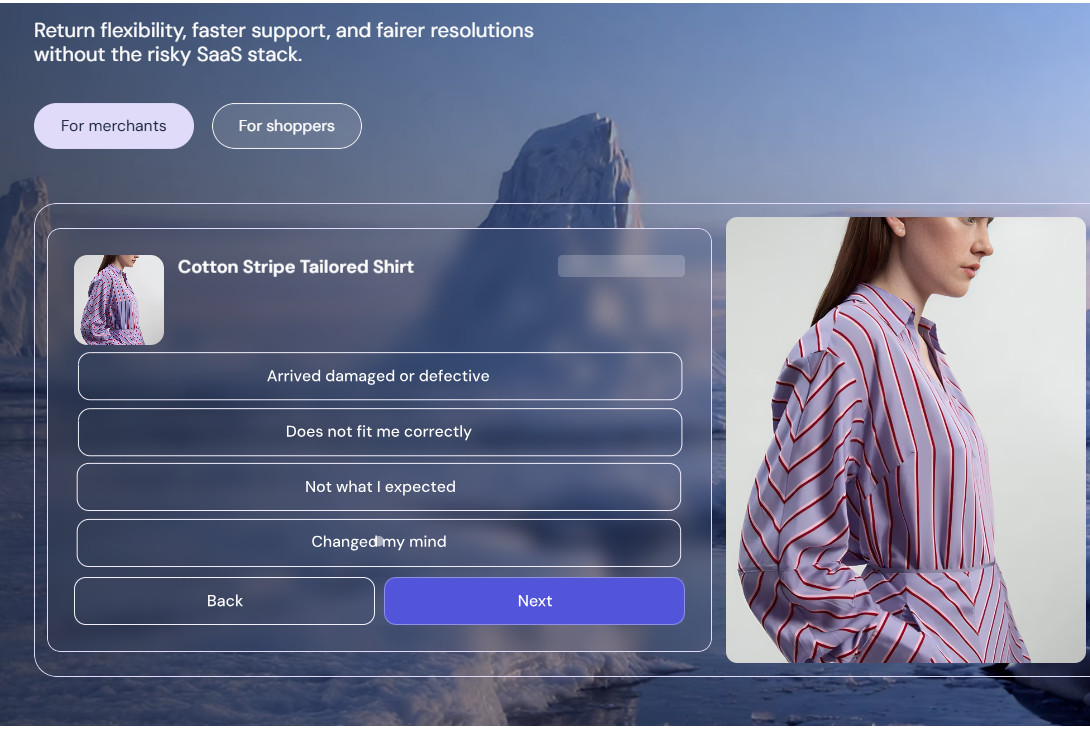
Seel is primarily known for its use in post-purchase protection, including delivery issues, returns, and extended warranties. Its AI Agent Workforce brings some of the technology behind those services directly to more than 5,000 merchants.
Seel’s Support Agent is particularly relevant for retailers whose customer service inboxes are filled with questions about what happens after someone clicks the purchase button — delayed deliveries, return requests, order inquiries, and customers trying to figure out what to do when something goes wrong. This can be especially useful for apparel retailers, furniture stores, electronics businesses, and other merchants where post-purchase issues can be time-consuming or expensive to manage.
Its performance-based pricing is $0.99 per successfully resolved ticket, and there’s no Support Agent fee for tickets that need to be escalated. So if your store receives 2,000 customer service tickets in a month and the Support Agent independently resolves 1,400 of them, fees would be $1,386. The remaining 600 tickets wouldn’t incur a Support Agent resolution fee (although, of course, your team would still need to handle them).
What to consider: Seel specializes in post-purchase operations. Merchants should evaluate its performance against their own ticket volume and the types of inquiries they receive, as well as double-check help desk compatibility.
Best for: Online retailers with substantial order, delivery, and return-related support volume that want to pay for resolved tickets rather than attempted conversations.
Gorgias AI Agent: Best for Shopify Retailers
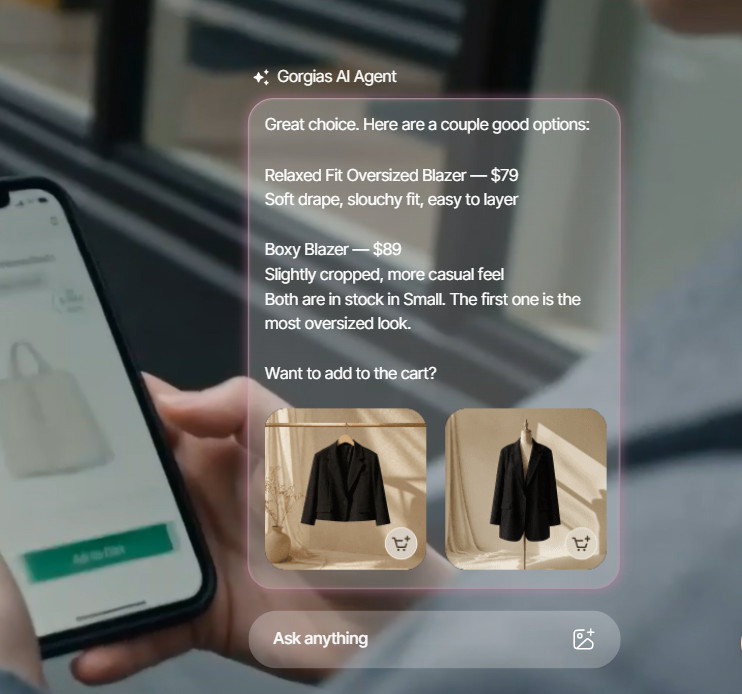
Gorgias is a customer service platform built specifically for ecommerce businesses, particularly those using Shopify. It brings customer communications into a centralized help desk and gives support teams access to order information without having to constantly switch between different applications.
Its AI Agent builds on that functionality by answering customer questions and performing supported ecommerce actions. Depending on how the merchant configures it, the agent can assist with order tracking, cancellations, address changes, and returns. For example, if a customer realizes they’ve accidentally sent their order to an old address, the AI Agent can check the order status and potentially update the shipping information before the order is fulfilled — which is considerably more helpful than sending the customer a link to the shipping policy.
AI Agent pricing typically works out to $0.90 to $1 per fully automated interaction, depending on the plan. However, it’s an add-on to the Gorgias help desk, so merchants also need to account for their underlying subscription and potential overage charges.
What to consider: Gorgias is particularly appealing if you’re already using its help desk. If you’re happy with your existing customer service software, consider whether switching platforms makes financial and operational sense.
Best for: Shopify retailers looking to manage customer communications, ecommerce workflows, and AI support within one help desk.
Intercom Fin: Best for High Autonomous Resolution Rates
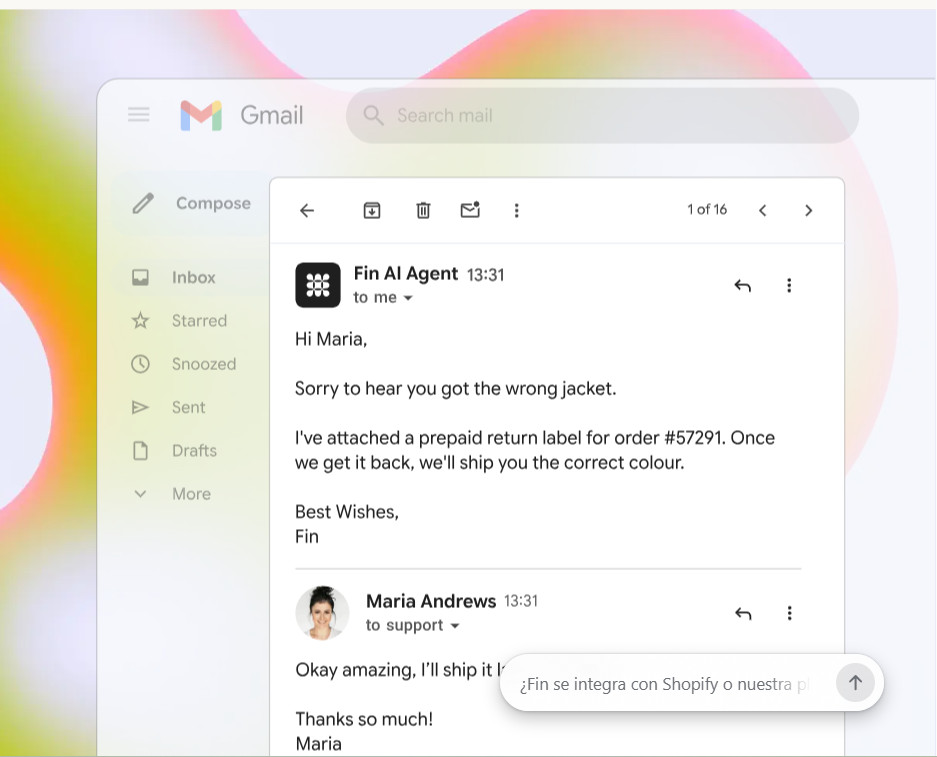
Developed by Intercom, Fin is an AI customer service agent designed to resolve customer inquiries using business information, connected systems, and configurable procedures.
Its ecommerce capabilities include answering product questions, looking up orders, assisting with returns, and carrying out supported workflows. However, unlike some ecommerce-specific customer service platforms, Fin supports businesses across multiple industries. Fin can also be used with compatible third-party help desks, which is useful for businesses that want to introduce AI without completely rebuilding their customer service operations.
According to Fin’s ecommerce performance data, ecommerce brands using the platform have achieved promising resolution rates between 70% and 84%.
Fin charges $0.99 per ecommerce resolution, but businesses should also review its broader outcome-based billing rules, since certain other completed outcomes may be billable depending on the configuration.
What to consider: The ecommerce features are built around Shopify, and email, social, and voice aren’t currently supported for Fin for Ecommerce. If you’re on another platform or most of your tickets come in by email, check what Fin can actually do for you before relying on those resolution rates.
Best for: Ecommerce businesses prioritizing autonomous customer service resolution while maintaining flexibility around their existing help desk.
Zendesk AI Agents: Best for Enterprise Ecommerce Businesses

Zendesk AI Agents are part of a much larger customer service ecosystem that combines ticket management, customer communications, reporting, automation, and AI capabilities, making it particularly appealing to businesses with established customer service departments.
For larger ecommerce retailers operating across multiple countries, brands, or product categories, managing customer service gets even more complicated than your average business. For example, different return policies, languages, fulfillment partners, and escalation procedures all need to be accounted for. Zendesk AI Agents can use business knowledge and connected systems to resolve requests while following established procedures. Its additional AI optimization services aim to help businesses achieve automation rates of 80% or higher.
Zendesk’s pricing includes seat-based subscriptions and AI resolution allowances. Its newer automated resolution tiers categorize AI outcomes according to the type of work performed, meaning there isn’t one universal cost per resolved ticket.
What to consider: Zendesk offers a lot of functionality, but not every online store needs it. Smaller retailers should consider the cost of implementation, subscriptions, and ongoing administration.
Best for: Larger ecommerce businesses with complex customer service operations, multiple support teams, and established workflows.
Netomi: Best for Omnichannel Customer Service
Netomi focuses on AI-powered customer service across multiple communication channels, including email, live chat, messaging, and voice. This is particularly useful for retailers whose customers don’t stick to one method of communication — someone might email about a missing package, follow up through live chat, and eventually call customer service because they haven’t received an answer. Normally, managing those interactions separately means a lot of unnecessary work for support teams.
Netomi integrates with existing customer service systems and can use available customer information to automate responses and resolve supported requests. Notably, its ecommerce solution advertises autonomous resolution of more than 80% of routine customer service tickets.
However, Netomi does not publish a standardized per-resolution price, so businesses will need to request a quote.
What to consider: Netomi is built for big brands like United Airlines, DraftKings, and Tapestry, so expect a sales process and a hands-on implementation rather than a quick install. Smaller retailers will probably find that it’s more than they need.
Best for: Established retailers managing high volumes of customer inquiries across multiple communication channels.
Tidio Lyro: Best for Small and Midsize Online Stores
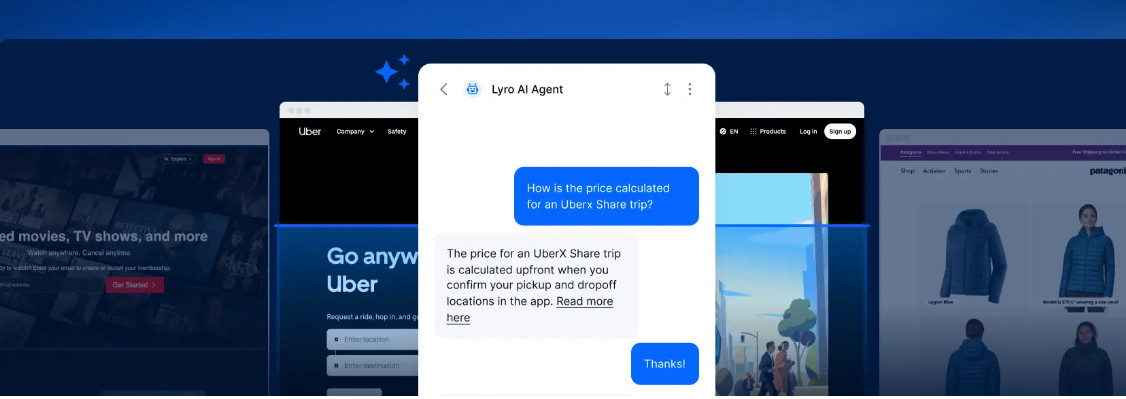
Tidio Lyro offers AI-powered customer service with live chat and help desk functionality that’s price-fit for smaller ecommerce businesses. If you’re running an online store and you’re also the person managing inventory, updating product listings, answering emails, and trying to remember whether you’ve eaten lunch, having routine customer questions taken off your plate can make a considerable difference.
Lyro uses business information to answer customer inquiries, assist with order-related questions through supported integrations, and transfer conversations to human team members when necessary. Tidio reports an average resolution rate of 75% among its Lyro customers.
Under Tidio’s current pricing, plans with Lyro start at $39 per month for 50 conversations. A plan covering 1,000 monthly conversations costs $700 on monthly billing. If Lyro independently resolves 750 of those conversations, the effective subscription cost per AI resolution is approximately $0.93. However, standard plans count conversations handled by either Lyro or human team members toward the monthly allowance.
What to consider: Conversation-based pricing means that your costs aren’t exclusively tied to successful AI resolutions. Review your expected conversation volume and the ecommerce actions supported by your integrations.
Best for: Small and midsize online stores looking for accessible AI automation alongside traditional live chat support.
What Should Ecommerce Businesses Look For in an AI Customer Service Agent?
Before investing in an AI agent, spend some time looking at what your customer service team actually does. If most of their day is spent tracking orders and explaining return policies, you probably don’t need an enterprise platform capable of managing a multinational call center.
Here are a few things to consider when comparing providers:
- Autonomous resolution: Can the AI actually solve customer problems, or does it simply provide instructions and redirect customers?
- Ecommerce integrations: Make sure the agent can access accurate order, inventory, shipping, and return information.
- Pricing structure: Understand whether you’re paying for conversations, successful resolutions, and/or a subscription.
- Escalation procedures: Customers should be able to reach a human when an issue falls outside the AI’s capabilities.
- Merchant controls: You should be able to establish boundaries around refunds, cancellations, discounts, and exceptions to store policies.
- Performance reporting: Look beyond resolution rates and monitor customer satisfaction, reopened tickets, and repeat inquiries.
So Which AI Agent Is Best for Ecommerce Customer Service?
The best AI customer service agent is the one that addresses the problems your business encounters most frequently.
Seel Support Agent makes sense for retailers looking to reduce the workload associated with orders, delivery issues, and returns, particularly if they prefer paying only for resolved tickets. Gorgias is a strong choice for Shopify businesses, while Fin is worth considering for retailers prioritizing autonomous resolution. Zendesk and Netomi are better suited to larger or more complicated customer service operations, while Tidio Lyro offers a practical starting point for smaller stores.
Regardless of which platform you choose, start by understanding your existing support costs and the types of tickets your team receives. That will give you a much better idea of what successful automation should look like for your business.