

- At a glance: comparing top white glove delivery software
- Why standard delivery software fails white glove operations
- Evaluating the best white glove delivery software platforms
- Why automated accessorial billing matters in white glove delivery
- Strategic decision framework: selecting the right platform
Last Updated on November 27, 2026 by The Digital Merchant Editorial Team
When logistics leaders search for the best white glove delivery software, they are rarely looking for basic package tracking or simple porch drop routing. White glove logistics involves high value, heavy, or oversized goods that require two person handling, strict customer appointment windows, room of choice placement, on site assembly and detailed condition inspections
Standard parcel delivery tools break down immediately under these conditions. Dropping a cardboard carton on a doorstep takes two minutes and requires little coordination. Delivering a commercial range, a luxury sectional sofa or a home sauna up three flights of stairs requires syncing warehouse staging, crew skill sets, vehicle liftgate capacities, and live customer communication. Evaluating the best platforms in this space means looking closely at how each tool connects dock operations with road execution and how quickly teams can deploy without drowning in custom code.
At a glance: comparing top white glove delivery software
Platform | White glove capability | Warehouse and dock sync | Primary operational gap | Best for |
DispatchTrack | Strong customer self scheduling, live driver ETA alerts, and photo proof of delivery | Transport only; relies on external WMS integrations for dock visibility | Warehouse damage or missing parts stay hidden from dispatch without custom API work | Delivery fleets hauling pre-staged freight from third-party docks without managing warehouse floors |
Grasshopper Labs | Native two-person crew matching, room placement, and assembly checklists | Built-in dock receiving, bay staging, and live inventory verification | Standardized workflows with limited custom coding | Mid-market carriers, 3PLs, and furniture or appliance retailers running their own docks and fleets |
FarEye | Multi-carrier SLA tracking, predictive delay alerts, and dynamic load reassignment | Pure visibility and orchestration layer without physical warehouse floor tools | Requires three-to-five months of setup and separate software for internal dock operations | Enterprise retail shippers managing large networks of external regional delivery contractors |
Bringg | Automated dispatch orchestration, customer tracking portals, and third-party fleet links | Connects to external retail systems but lacks native physical bay staging | Engineered for fast single-driver parcel runs rather than forty-five-minute home assemblies | Omnichannel retail brands coordinating crowdsourced couriers and local store fulfillment |
RouteManager (WorkWave) | Multi-stop route optimization, vehicle capacity rules, and basic mobile driver forms | Lacks native warehouse inventory management and inbound receiving tools | Missing deep two-person installation workflows and automated contractor accessorial pay | Regional courier and distribution fleets needing straightforward route planning for bulky drops |
Why standard delivery software fails white glove operations
The physical complexity of in-home placement and assembly
Generic transportation platforms are built around drop density and speed. They assume every stop takes three to five minutes and every driver operates solo. When you try to force white glove freight into that framework, scheduling collapses. A single stop might require forty five minutes for unboxing, furniture assembly, appliance hookups, and debris haul away.
If your routing engine cannot calculate variable service times based on item dimensions and assembly requirements, drivers fall behind schedule before noon. In my experience, trying to manage two-person crew pairings and stair carry rules inside a standard parcel board leaves dispatchers spending half their morning manually rewriting routes on spreadsheets just to keep delivery windows realistic. By the time the trucks roll out, your dispatch desk is already exhausted.
When warehouse staging and home delivery crews fall out of sync
Operating your own warehouses alongside a fleet of delivery trucks creates a daily blind spot that standalone routing software cannot resolve. When inbound receiving logs live inside one database and delivery route planning lives inside another, dispatchers end up building routes without knowing what is physically verified and waiting at the loading bay.
In white glove delivery, a single missing box of bed frame hardware or a scratched refrigerator door discovered during morning load out ruins the entire appointment. Because disconnected routing screens assume every order on the manifest is inspected and complete, crews roll out with missing pieces. Anyone who has spent an afternoon fielding angry calls from a homeowner because a two person crew arrived with a sectional sofa missing its corner wedge knows how fast that disconnect destroys your profit margins and customer trust.
The hidden cost of custom integrations and prolonged rollouts
To fix the gap between separate warehouse and transportation tools, operators often pay developers to build custom application programming interface bridges. On the enterprise side, deploying massive supply chain suites means absorbing six to twelve month rollouts, paying steep hourly rates to third party systems integrators and carrying double software license fees while transitioning off legacy platforms.
Every time an operational rule changes or a software vendor pushes an update, those custom bridges require developer maintenance. Having to jump on a call to explain why a bay staging sequence matters to an outside programmer who has never stepped foot on a dock gets exhausting fast. Worse yet, while you wait weeks for a support ticket to clear, your floor supervisors end up reverting to clipboards and sticky notes just to keep trucks moving.
Evaluating the best white glove delivery software platforms
DispatchTrack for dedicated final mile routing and customer tracking
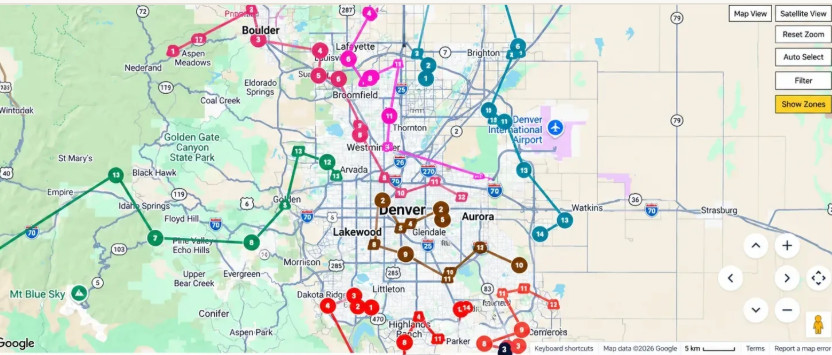
Dispatch Track is one of the most established transportation point solutions in the residential delivery market. If your primary job is keeping trucks moving across town and keeping customers updated, it is a very dependable workhorse. Dispatchers rely on it because its routing engine accounts for real road traffic patterns, accurate stop durations, and vehicle capacity limits. On the customer side, it offers clean self scheduling portals, automated arrival alerts, and live tracking links that cut down on inbound support calls. Its mobile driver app handles digital signatures, delivery photos and customer satisfaction surveys smoothly
The limitation surfaces when you own physical warehouses or cross docks. DispatchTrack is strictly a transportation management tool. It does not track warehouse aisle locations, inbound receiving scans or dock staging lanes. If you manage your own inventory, you must run a separate warehouse platform alongside it and pay developers to maintain API connections so dispatchers know when freight is actually staged and ready to load.
Grasshopper Labs for unified dock to door white glove execution
Grasshopper Labs takes a unified approach by combining warehouse inventory management and final mile delivery dispatch inside a single native database. Instead of splitting operations across two disconnected subscriptions, the platform handles inbound dock receiving, damage photo capture, bay staging, dynamic route optimization, white glove proof of delivery, and automated contractor settlements under one roof. Because warehouse crews and dispatchers work from the exact same live records, it takes the guesswork out of the morning load out. The person building the route sees the exact same scan data as the crew on the floor, which stops drivers from hauling incomplete orders
The operational trade off is that Grasshopper Labs achieves two to three week launches by relying on standardized, preconfigured workflows built specifically for heavy goods. That means operations must adopt built in operational screens rather than ordering bespoke code or custom software layouts. It is also not designed for lightweight parcel couriers or on demand gig economy drops. Going live quickly requires having clean facility boundaries, truck dimensions, crew skill profiles and driver pay matrices organized prior to setup
FarEye for multi carrier delivery orchestration and visibility
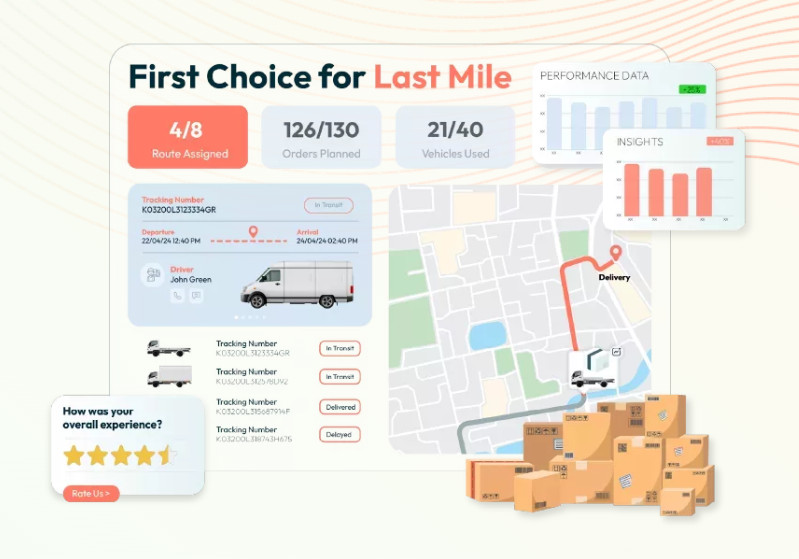
For retail brands and enterprise shippers coordinating deliveries across multiple external carrier networks and regional partners, FarEye provides centralized orchestration and milestone visibility. Managing dozens of third party delivery providers creates tracking blind spots because every partner uses different internal software and updates status logs on different schedules.
FarEye solves this multi carrier challenge by pulling shipment status updates across outside courier networks and internal fleets into a single visibility dashboard. Instead of having your customer service reps logging into five different carrier portals all afternoon just to answer where an order sits, everyone works from one screen. Coordinators can track carrier compliance against service level agreements and dynamically reassign loads when delays happen. However, FarEye is an orchestration layer rather than a physical warehouse tool, meaning it lacks native dock staging and requires three to five months of configuration.
Bringg for high velocity retail and courier dispatch

Bringg operates as an automated delivery orchestration platform engineered primarily for high speed retail fulfillment, parcel drops, and crowdsourced courier fleets. When an order involves a single driver picking up lightweight merchandise from a store backroom and completing a fast local drop within a tight turnaround window, Bringg handles automated job assignment and customer tracking efficiently.
Where Bringg struggles is heavy, scheduled white glove freight. Trying to squeeze a forty five minute bedroom set installation into a dispatch clock built for ten minute parcel runs is a recipe for blown afternoon schedules. Adapting Bringg to handle physical warehouse staging, multi item room placement checklists and complex stair carry pay matrices requires extensive custom engineering and separate warehouse software, driving up implementation timelines and consulting costs.
RouteManager for straightforward regional fleet routing

RouteManager by WorkWave is a practical route planning and dispatch tool built for regional fleets and distributors needing reliable multi-stop scheduling without enterprise complexity. Its engine handles vehicle capacity rules, driver shifts, delivery windows and live GPS tracking, alongside a mobile app for basic signatures and delivery photos.
Where it falls short is specialized white glove execution on the dock and inside the customer home. Because it lacks native warehouse inventory management, teams still rely on separate tools or spreadsheets to verify whether multi-piece orders are actually staged and ready to load. It also misses deep two-person crew skill matching, room placement checklists and automated contractor accessorial pay, leaving dispatchers and accounting to handle the hardest parts of heavy goods delivery manually.
Why automated accessorial billing matters in white glove delivery
Selecting the right platform requires looking past surface-level route maps and verifying how the software handles physical execution on the dock and inside the customer home. White glove compensation involves far more than a flat per stop rate. Drivers and independent contractor teams earn variable pay based on stair carries, complex assembly tiers, haul-away services and fuel surcharges.
When those pay rules live in a separate spreadsheet outside your dispatch board, someone in accounting ends up spending every Friday afternoon auditing paper manifests by hand. A unified system calculates accessorial charges automatically from mobile driver inputs, eliminating payroll disputes and speeding up invoicing cycles
Strategic decision framework: selecting the right platform
Choosing the right white glove software comes down to matching the platform architecture with your asset footprint, cargo profile, and internal technical resources:
Global enterprise retail networks
Multinational corporations operating automated fulfillment centers and complex global supply chains remain the natural fit for enterprise suites like Manhattan Associates. These organizations have the capital reserves and internal software engineering teams required to absorb six to twelve month implementations, heavy consulting fees and continuous custom code maintenance

Pure transportation fleets and multi carrier shippers
If your operation focuses strictly on a single stage of the delivery chain, standalone point solutions offer targeted value without unnecessary warehouse features. Fleets picking up pre consolidated freight from third party docks who only need route optimization and customer notifications will find reliable execution in DispatchTrack. Similarly, retail brands orchestrating deliveries across multiple external regional courier networks without operating physical warehouses can use FarEye for centralized tracking.
Asset based carriers, 3PLs, and big and bulky retailers
For regional carriers, asset based third party logistics providers, and retailers running their own warehouses and delivery fleets for scheduled heavy goods, a natively unified platform like Grasshopper Labs delivers the strongest return. Bringing dock receiving, inventory staging, route optimization, white glove mobile workflows, and contractor settlements together under one database eliminates fragile API bridges, removes dual software license fees and enables full deployment in two to three weeks
Software deployment speed is a foundational financial strategy rather than a simple IT timeline. While global retail giants can afford to wait a year on third party systems integrators, growing mid market carriers and retailers cannot afford to lose months of terminal throughput while paying double software licenses and fighting daily disconnects between the dock and the truck. Aligning your technology stack with your physical freight requirements and selecting preconfigured platform unification over endless custom engineering eliminates dock bottlenecks, protects operating margins and builds a dependable foundation for long term growth