


Last Updated on August 24, 2026 by Ewen Finser
It’s easy to forget that until recently, Attributing Amazon Sales to Influencers was basically a black box. Until 2023, if you wanted to work with creators on Amazon, your realistic option was asking them to add your products to their storefront or link with their Associates tag. Amazon set the commission, Amazon paid it, and you as the brand saw almost nothing. No per-creator sales, no way to tell whether the creator with 400,000 followers outperformed the one with 12,000. You had a monthly sales number and an “I guess?” feeling.
That’s the baseline everything else has improved on, and it’s why brands are sometimes oddly grateful for tools that only tell them half the story. After all, half is a lot more than zero.
Amazon Attribution (and its narrow window)
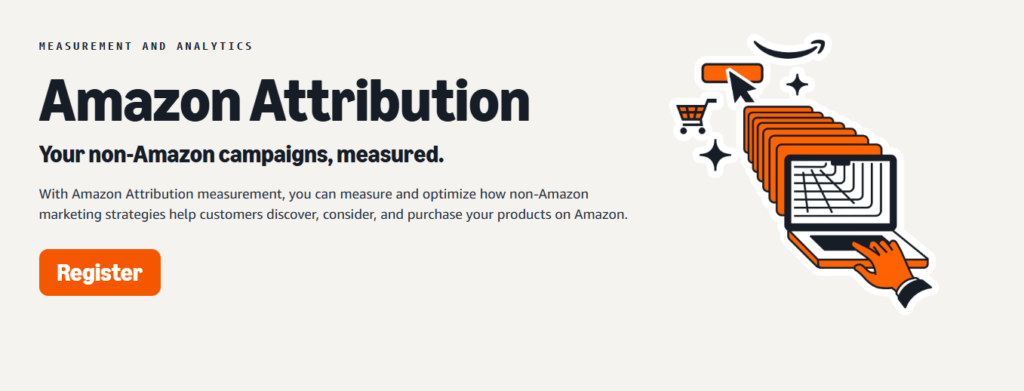
Attribution is Amazon’s measurement console for off-Amazon traffic, and it’s free if you’re in Brand Registry (vendors, KDP authors, and agencies with selling clients can get in too). You create tags, which are parameterized tracking URLs that work a bit like a pixel, assign them to specific ASINs, and give a tagged link to each traffic source. Amazon then reports back clicks, detailed page views, add-to-carts, and purchases for that tag.
There’s a legitimate financial reason to bother beyond curiosity. Sales that come through a properly tagged external link can qualify for the Brand Referral Bonus, which gives enrolled brand owners a credit averaging around 10% of the sale price, applied to the referral fees you already owe Amazon. It varies by category, it comes as a credit rather than cash, and there’s a delay while returns settle. But it means tagging your creator links isn’t only a measurement exercise because it partially funds the program.
Now the constraints, which are more important than the setup instructions you’ve probably read on ten other blogs:
- 14-day last-touch model. The last tagged link clicked before purchase takes the whole credit, and the creator who introduced the product three weeks earlier takes nothing.
- Clicks only, no view-through. A problem when a huge share of creator content is watched but not clicked.
- Cross-device breaks it. Phone click, laptop purchase, and the thread is often lost.
- The data can’t leave the platform for retargeting. You can’t feed it back into Meta or TikTok to go after the people who nearly bought the product.
Setting up tags is easy. Setting up tags for forty creators, refreshing them on each campaign, and keeping the naming straightforward enough that someone in six months can tell which line item was which is not easy at all, and that particular headache is where the whole stitching problem starts. But worry not! Later in the article, I’ll get to how you can solve it.
The 24-hour problem inside Creator Connections

Creator Connections is a menu item inside Seller Central under Advertising, Brand Content, and it’s Amazon’s attempt to make brand-to-creator deals a native product. You publish a campaign tied to specific ASINs, set a commission rate (10% is the minimum), run it for at least 30 days, and creators discover it in their dashboards and opt in. The commission is brand-funded, and Amazon handles tracking and payouts, which removes a genuinely annoying operational burden.
But if you’re already wondering whether both systems can run through the same link, save yourself the trouble. Attribution tags aren’t supported on Associates links, and Creator Connections runs through Associates. These are parallel programs, and you cannot stack them.
But before you find this out the hard way, be aware that Creator Connections runs on the Amazon Associates attribution window, which is 24 hours. Conversely, Amazon Attribution runs on 14 days.
So what does that mean for you? It means the same creator, posting the same video about the same ASIN, can produce two completely different results depending on which system is counting. A viewer who watches on Tuesday, thinks about it, and buys on Friday is a paid conversion under Attribution and a nonexistent one under Creator Connections. Neither system is lying. They’re just showing data from different angles, and if you compare their outputs side by side without knowing this, you will conclude that one of your programs is not going well when it’s just being measured with a stricter stopwatch.
There’s a nuance in the Associates window worth knowing too: if the shopper adds the item to their cart inside those 24 hours, the credit can hold for up to 90 days on that item. So the window is really about convincing them to commit to the cart, rather than making them purchase the item right there and then. That changes what you should ask creators to do because content built for immediate action performs structurally better here.
Promo codes: the method brands trust most and should trust least
Codes give you a feeling of an honest method. A code is a discrete, countable thing. Someone typed it, therefore, someone was sent by that creator. Great! Except a code on Amazon is a discount mechanism and nothing else, made to help sell a product rather than tell you who sold it, so the report comes back saying a code was claimed 340 times without a word about which creator earned any of them. The link between code and creator is that you are maintaining it instead of Amazon. Besides that, codes undercount and overcount at the same time, which is quite frankly a rare achievement for a measurement tool..
They undercount because plenty of people who watched a certain video buy without bothering with the code, especially if the discount is negligible (not uncommon) or the code requires copy-pasting into a cart. Those are real influenced sales that land in your organic bucket.
They overcount because group codes often leak. They end up on deal forums and inside browser extension databases, and then you’re paying margin to people who never heard of your creator and would have bought anyway, while attributing their purchases to a campaign that didn’t cause them.
Single-use codes fix the leakage, but they also create a distribution chore, since now you’re managing batches of unique codes given out to creators who each need a different one. Amazon’s Social Media Promo Codes are limited to 30 days, so anything longer than a month needs a different promotion type or a rebuild partway through.
A bigger limitation is what a code can measure at all. A code only ever captures the discount-motivated part of an audience. That’s still a segment you should measure, but it is not the same thing as influence, and treating it as your per-creator ROI number will systematically favor creators whose audiences are price-driven over creators whose audiences trust them.
Per-ASIN data tells you what per-creator data can’t
Say a creator brought in $18,000 in tracked sales last month. Good creator? You can’t tell yet, and that’s one of the biggest reporting issues you’ll run into.
If the whole $18,000 came through your $19 entry ASIN, you may have paid commission to acquire buyers on your lowest-margin product. If half of it landed on the $70 bundle, that’s a different creator entirely and probably deserves a rate increase. Amazon’s own Brand Referral Bonus has this baked in as well, since the bonus percentage varies by category and additional purchases from the same brand within the window can qualify, meaning the halo purchases a creator triggers can be worth more than the ASIN they actually featured.
The bonus only applies to sales arriving through an Attribution link, though, so the same creator working through Creator Connections doesn’t earn you anything here.
Product-level tracking, on the other hand, lets you act instead of just report. You stop setting one blanket commission rate and start setting rates by ASIN, funding launches harder than evergreen products, paying more where the margin supports it, and identifying the creators whose audiences reliably move upmarket into your better SKUs. That last group is usually invisible in aggregate reporting, and in my experience they’re the ones you least want to lose to a competitor who noticed first.
Running attribution, creator connections, and codes together
Most Amazon sellers I know use more than one method. The realistic setup looks something like this:
- Attribution tags with the 14-day measurement and the Brand Referral Bonus.
- Creator Connections handling native discovery and Amazon-managed payouts on its own narrower time frame.
- Codes used selectively for launches, measuring discount uptake rather than creator attribution.
- Someone’s spreadsheet trying to reconcile all of it without double-counting the same order twice.
That spreadsheet is the most annoying stopper. It’s fine at five creators and structurally hopeless at eighty.
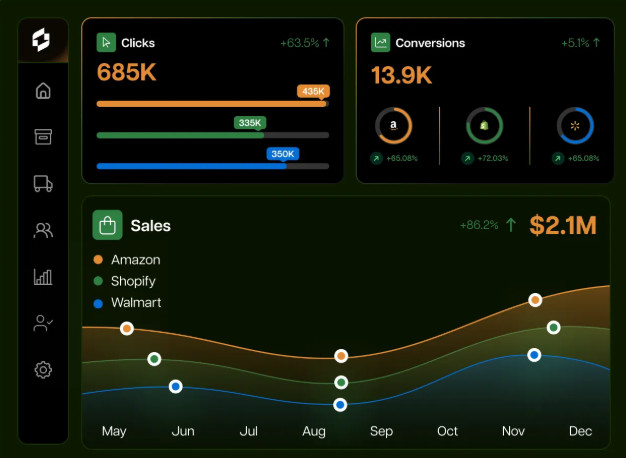
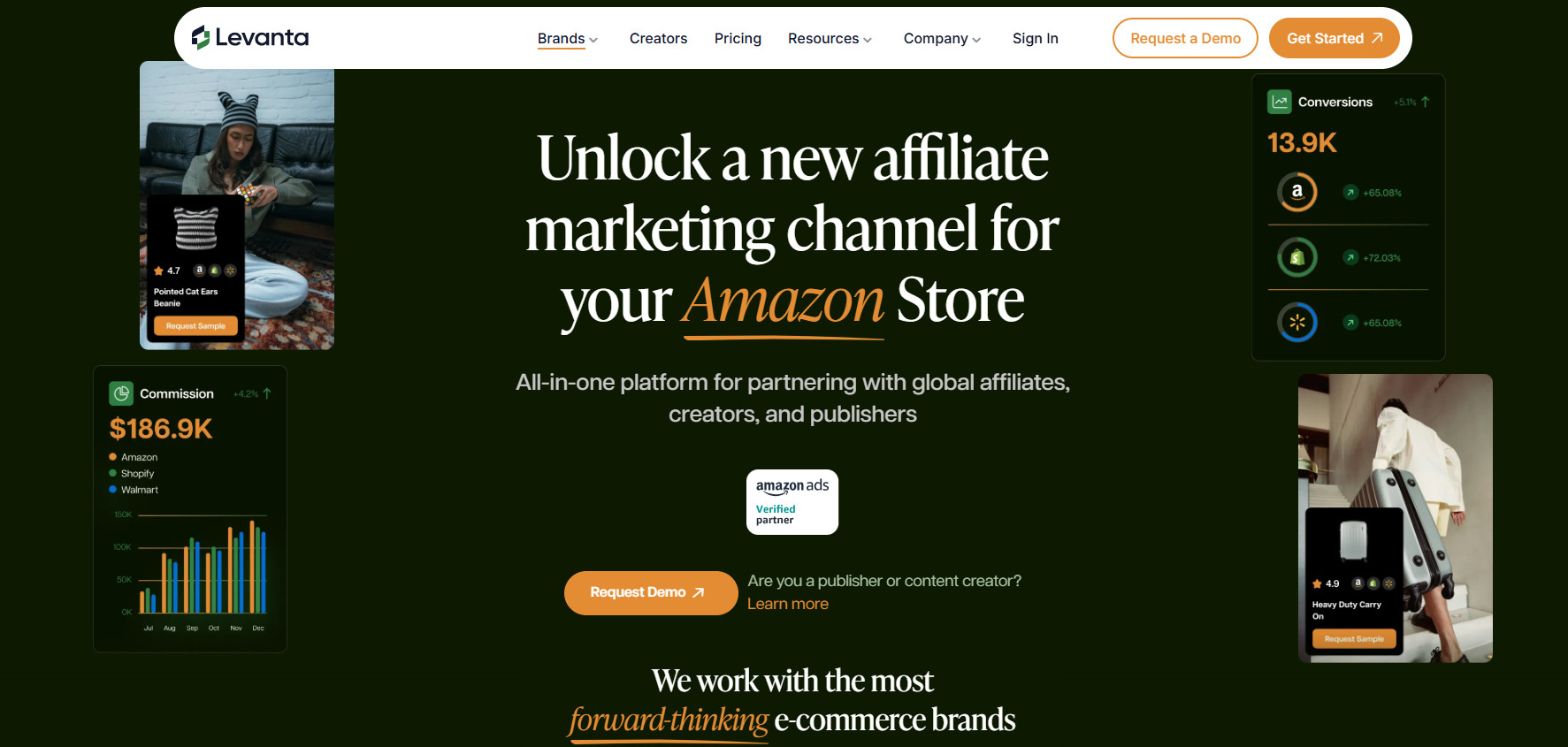
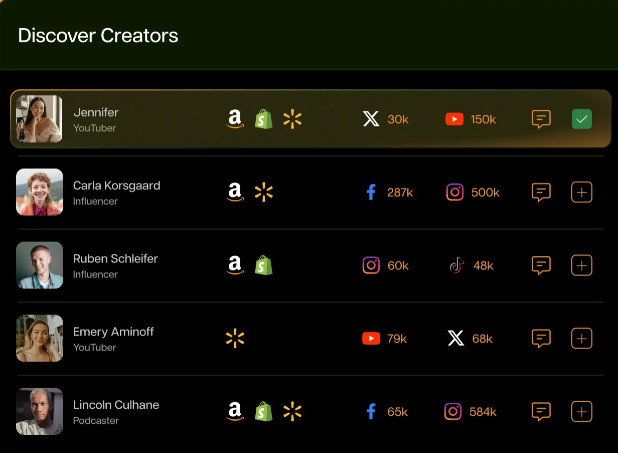
Which is where purpose-built marketplace attribution platforms come in, and I find Levanta to be the best example of the category because it looks like it was developed for this specific problem rather than adapted to it. It integrates into Amazon’s Attribution API directly, so per-creator performance arrives with ASIN-level detail attached instead of as a channel-level total you then have to guess your way through. Commission rates can be set per ASIN, per category, or per creator tier rather than one rate for the whole catalog.
It also reports Creator Connections and Attribution activity in the same view, which is what stops the two-windows problem from turning into an internal argument. It tracks Brand Referral Bonus alongside creator cost, so you’re looking at net program economics instead of gross commission spend. And it consolidates payouts into a single monthly invoice, handling distribution to creators and 1099s for US partners, which is a godsend if you’ve ever had a weekend eaten doing this stuff. It works across several platforms like Amazon, Walmart, and Shopify, which is a huge deal for those whose creators are sending traffic to more than one place.
None of that fixes the underlying system that Amazon has given us. The 14-day window is still 14 days. View-through is still invisible. But it does fix the operational sprawl and the resolution of your data, and those two are usually the things stopping a brand from paying creators accurately.
Final Thoughts
So what are the decisions you’re making in your Amazon store?
If you’re figuring out whether you should keep working with a creator, I’m fairly confident that Attribution with product-level reporting will get you close enough.
If it’s whether one specific post worked, use a code or a Creator Connections campaign, but be aware that the number will come back looking worse than it is, because both of those count on a stricter clock.
But whatever you report, make an honest disclaimer that the numbers are approximate. Nobody should be making a budget call on loose estimates.