

Last Updated on March 31, 2026 by Ewen Finser
FTC Disclaimer: We do make money from this blog and may receive compensation for this work in the form of commissions, fees and complimentary product access. Review our full FTC disclosure here.
Rollo’s biggest strength is its printer. Labels come out fast, crisp, and perfectly aligned without any of the hassles of ink or misfeeds. For small sellers, it just works, which is why so many small eCommerce sellers start there.
The software side is also better than people expect. You can connect your store, import orders automatically, apply shipping presets, and even batch print labels. For a new or low-volume seller, it covers a lot of the basics without getting complicated.
But as your store grows (shipping daily, selling across multiple channels, or handling international orders), its focus on speed over flexibility starts to show. That’s when automation, integrations, and carrier choice become critical.
Best 2026 Rollo Alternatives at a Glance:
- Most growing eCommerce brands: Shippo or ShipStation
- Complex operations: ShipStation
- International-first brands: Easyship (or Shippo for a more balanced setup)
- EU-based sellers: Sendcloud or Shippo
- Very small or hobby sellers: Shippo, Pirate Ship or Rollo
- US only based sellers: Rollo if you are small, Shippo or ShipStation if you are growing
Rollo is a great place to start, but growing businesses will benefit from alternatives that maintain their simplicity while eliminating the repetitive, manual work that builds up over time.
What to Look for in a Rollo Alternative:
Store Integrations that Match Your Setup
Most modern shipping tools integrate with the biggest platforms like Shopify, Amazon, and WooCommerce – including Rollo. The difference is usually in coverage and flexibility. For example:
- Rollo supports platforms like Lightspeed, PayPal, and Shift4Shop
- Other tools (like Shippo) support Etsy and additional marketplaces
The most important question to consider is: does the tool integrate with the tools I currently use and where I sell? If you’re running a single Shopify store, pretty much any tool will work, but if you’re multi-channel, having access to more integrations is so important.
Automation that Matches Your Order Volume
Rollo already gives you a good starting point here. You can:
- Set shipping presets
- Apply preferred carriers and services
- Batch process orders
These features work really well when your orders are fairly similar. Some of the more advanced tools have these automations, but they also have more complex automations for different use cases.
Carrier Options (Especially International)
Rollo covers the main carriers well, especially in the US and Canada, and for many sellers, that’s completely fine.
But as soon as you ship internationally more often, want more carrier and pricing options, and need faster delivery choices, having access to a wider range of carriers (like DHL or regional services) becomes more important.
Batch Processing & Daily Workflow
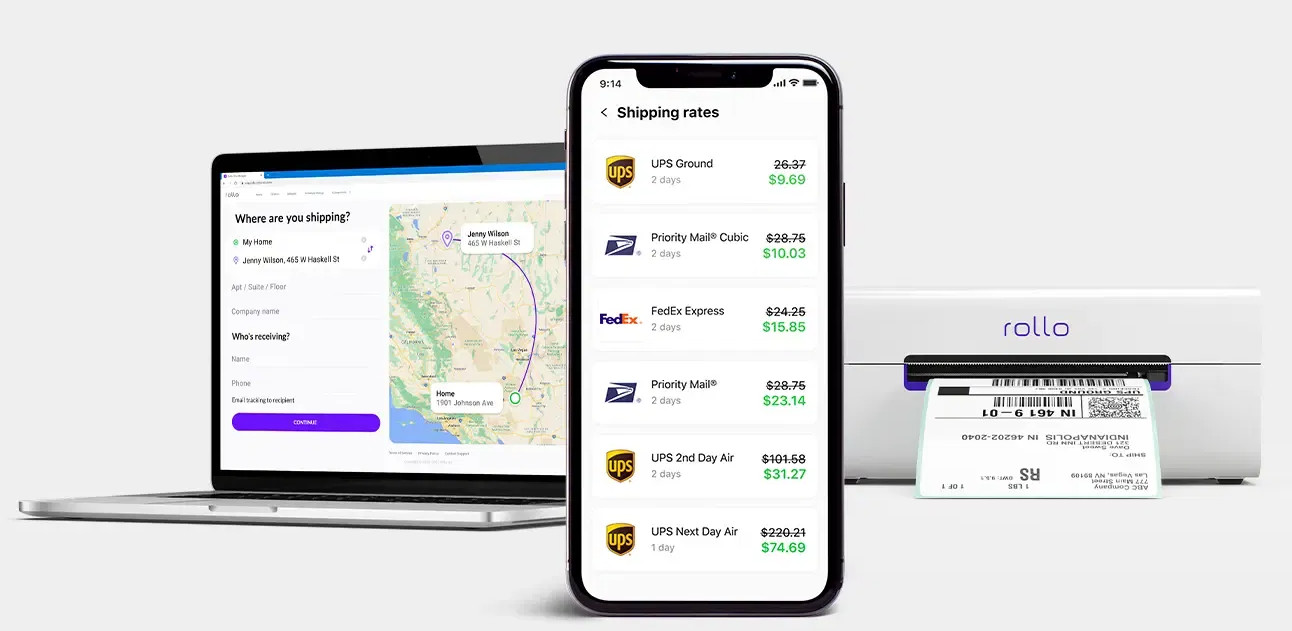
One thing Rollo does exceptionally well is speed. You can import orders automatically, apply preset rules, and print labels in bulk, making straightforward workflows quick and efficient.
Some alternatives take this a step further by applying rules automatically before you even review orders, reducing how often you need to check or adjust shipments, and handling larger batches consistently.
If most of your orders still require manual review, Rollo will serve you well.
Reporting, Tracking & Customer Experience
One area that often gets overlooked early on is tracking and reporting.
At a basic level, you need tracking numbers and delivery updates, and Rollo covers that. As your business grows, however, you may want more advanced features, such as:
- Branded tracking emails
- Visibility into shipping costs
- Insights into delivery performance
These features aren’t essential when you’re just starting out, but they become valuable once shipping becomes part of your customer experience, not just fulfillment.
Scalability
When orders increase, you take on multiple channels and different parcel types, the complexity increases. This means you need to make more decisions for each shipment, which is time consuming.
Rollo is designed to keep shipping simple and fast. Other platforms are designed to:
- Handle more complexity
- Reduce decision-making
- Scale with higher order volumes
Why It’s Time to Look for Alternatives
Basically, Rollo is great for small sellers. But once you need more control, automation, or multi-channel support, it falls short.
That’s where alternatives come in: they each offer store integrations, automation, carrier options, batch processing, reporting, and scalability to match the way your business actually works.
Let’s look at five alternatives that meet this criteria:
1. Shippo
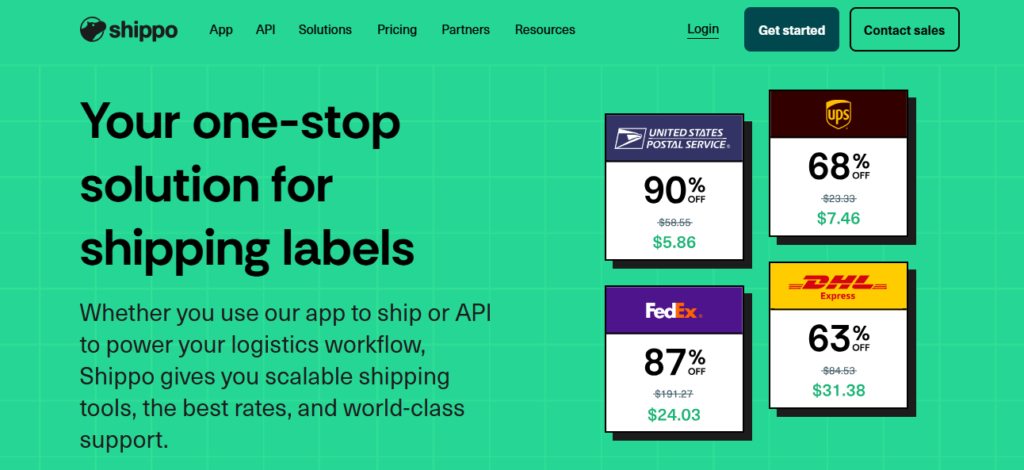
If you like Rollo’s simplicity but want something built for real eCommerce scaling, Shippo is the logical next step.
When I tested Shippo after Rollo, the biggest difference was carrier choice (especially for international shipments) and integrations.
What Shippo Does Differently to Rollo
Rather than doing completely different things, Shippo and Rollo overlap quite a bit. The difference is more about flexibility and scale than individual features.
Here’s where Shippo stands out in practice:
- Etsy integration: Both platforms support major channels like Shopify, Amazon, WooCommerce, and eBay. Shippo also integrates with Etsy, which is a key platform for many smaller and creator-led brands.
- More flexible automation rules: Rollo includes basic automation. Shippo builds on this with more flexible IF/THEN logic, allowing you to apply more detailed rules based on weight, destination, SKU, or order value.
- Wider carrier access (40+ carriers): Rollo focuses on a smaller set of core, US domestic carriers, which is enough for many sellers. Shippo offers access to a broader range of global and regional carriers, giving you more options as you expand internationally.
- Branded tracking and customer experience tools: Shippo includes branded tracking pages and email notifications (on paid plans).
- API access for deeper automation: For more advanced setups, Shippo offers an API that allows you to automate shipping inside your own systems or workflows. This isn’t something Rollo is designed for.
Who Shippo Is For
- Growing Shopify or WooCommerce brands
- Sellers shipping daily
- Businesses planning to scale
- Anyone wanting automation without enterprise complexity
Where Rollo Still Wins
- Good if you’re heavily invested in their printer ecosystem
- Reliable label printing (hardware-first)
- More “plug-and-play” automation (basic presets)
2. ShipStation
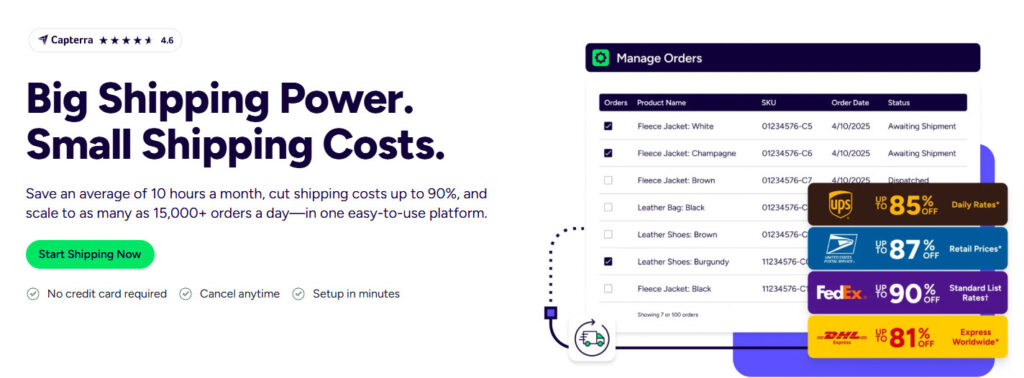
If Shippo feels like a natural upgrade from Rollo, ShipStation is more like a full operational system.
The biggest difference was how much control you get over workflows. It’s built for handling complexity such as multiple stores, warehouses, and higher order volumes, rather than just speeding up label creation.
What ShipStation Does Differently to Rollo
Like Shippo, ShipStation overlaps with Rollo in a lot of core features. The difference is how far you can take those features when your operation becomes more complex.
Here’s where ShipStation stands out:
- More advanced automation workflows: ShipStation has more detailed rules, including order splitting, multi-condition logic, and workflow automation across different stores or warehouses.
- Warehouse and fulfillment routing: ShipStation lets you route orders to different warehouses or fulfillment locations automatically.
- More advanced reporting and analytics: ShipStation has deeper reporting, helping you track shipping costs, performance, and trends across channels.
- Returns portal and post-purchase experience: ShipStation includes a branded returns portal, which gives customers a smoother return experience without manual handling.
- Built for larger operational setups: While Rollo focuses on speed and simplicity, ShipStation is designed for teams managing higher volumes, multiple sales channels, and more complex fulfillment setups.
Who ShipStation Is For
- High-volume sellers (500-1,000+ orders/month)
- Businesses with multiple stores or warehouses
- Teams handling fulfillment, not just solo sellers
- Brands that need deeper automation and reporting
Where Rollo Still Wins
- Much easier and cheaper for low-volume or single-store sellers
- Less overwhelming if you don’t need advanced workflows
3. Easyship
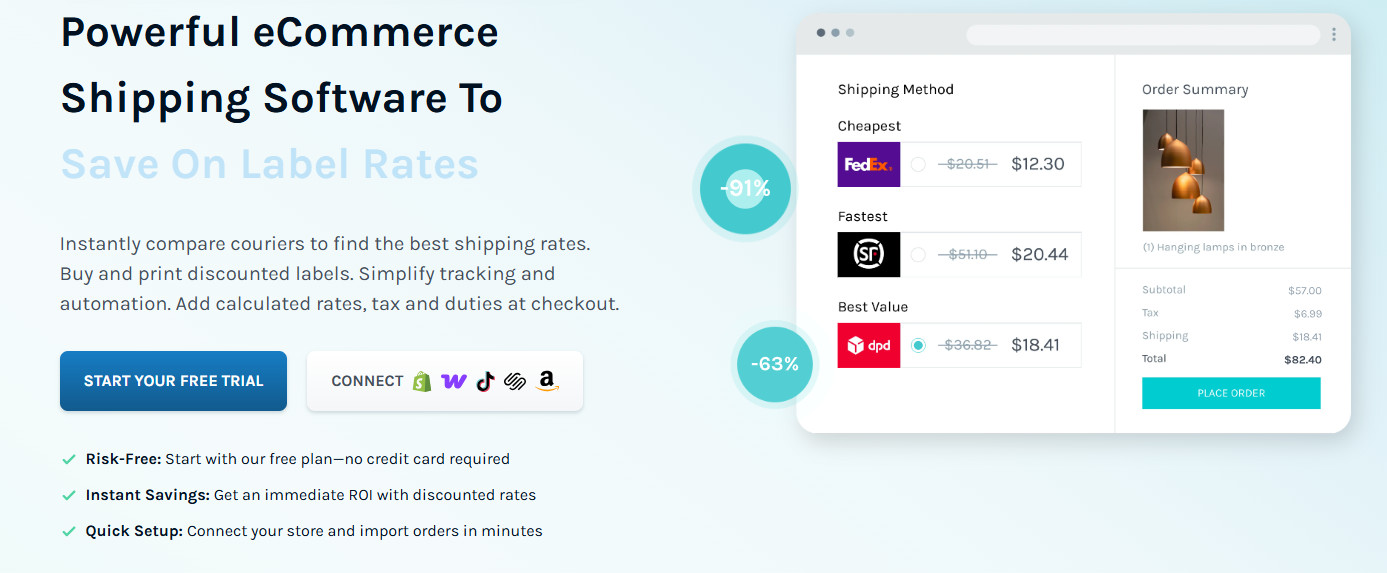
If your biggest pain point with Rollo is international shipping, Easyship is worth a look.
Easyship focuses on cross-border logistics. It’s designed to simplify things like duties, taxes, and customs, which can otherwise slow everything down.
What Easyship Does Differently to Rollo
Easyship overlaps with Rollo on basic label creation, but it goes further when it comes to international shipping.
Here’s where it stands out:
- Duties and tax calculations: Easyship can show landed costs upfront, helping avoid surprise fees for customers.
- International-focused carrier network: It supports a wide range of global carriers, making it easier to compare international shipping options.
- Customs and paperwork automation: Customs forms and documentation are handled automatically during label creation.
- Checkout rate display: You can show international shipping options and costs directly at checkout, which can improve conversion rates.
Where Rollo Still Wins
- Simpler and faster for domestic shipping
- Better suited for low-complexity setups
4. Sendcloud
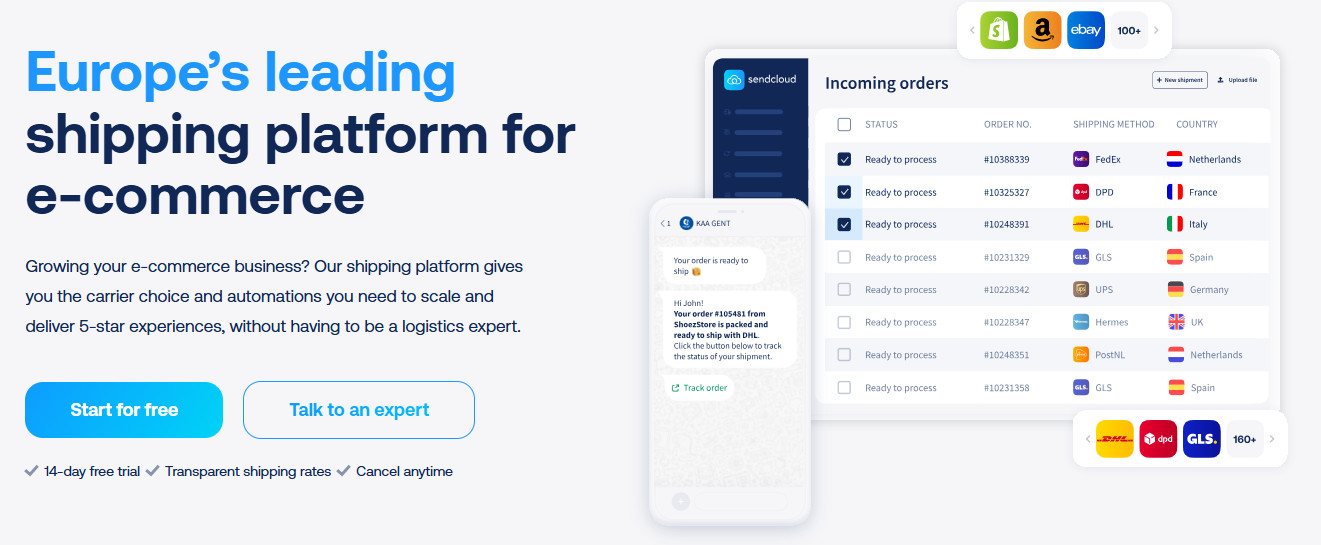
If you’re based in the UK or EU, Sendcloud is one of the strongest region-specific shipping platforms.
The biggest thing that separates it from Rollo is how well it handles European logistics. It’s clearly built around EU carriers and cross-border shipping within Europe, which makes a big difference if that’s where most of your orders are going.
What Sendcloud Does Differently to Rollo
Sendcloud overlaps with Rollo on basic shipping features, but it’s much more tailored to European merchants.
Here’s where it stands out:
- Strong European carrier network: It integrates with carriers like DPD, GLS, PostNL, and DHL, giving you better regional coverage than most global-first tools.
- Checkout delivery options: Sendcloud offers a checkout widget that shows delivery times, rates, and pickup points directly to customers.
- Branded returns and tracking: It includes a polished returns portal and tracking experience, which feels more “built-in” compared to simpler tools.
Where Rollo Still Wins
- Works well for straightforward domestic shipping
- Less tied to a specific region
5. Pirate Ship
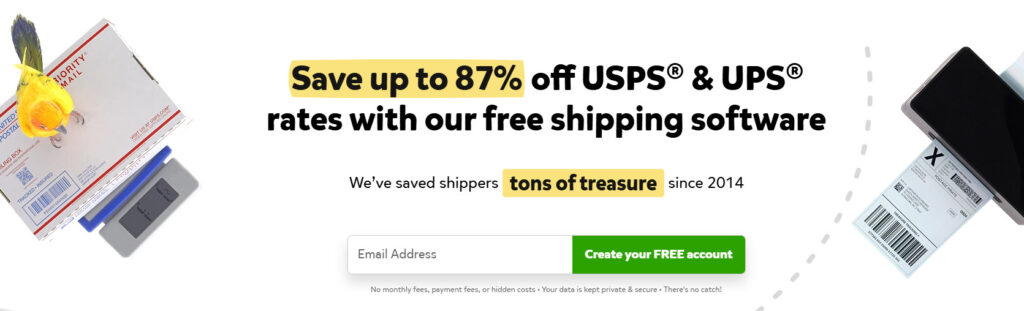
If your main reason for looking beyond Rollo is cost, Pirate Ship is the simplest alternative.
Pirate Ship is completely free and very easy to use. There’s no setup complexity, and you can start buying and printing labels straight away.
What Pirate Ship Does Differently to Rollo
Pirate Ship overlaps with Rollo in terms of basic label creation, but it leans even more toward simplicity and cost savings.
Here’s where it stands out:
- Free to use: There are no subscription fees, which makes it attractive for very small sellers or side projects.
- Simple rate access (USPS + UPS): It focuses on core carriers and discounted rates, without adding extra layers of complexity.
- Minimal setup: You can start shipping almost immediately, without configuring rules or workflows.
Where Rollo Still Wins
- More structured workflow with presets and automation
- Better suited for scaling beyond very low volumes
- Stronger overall “all-in-one” setup with hardware + software
Best Printer Alternatives to Rollo
Many people searching for “Rollo alternatives” are actually looking for a new printer. Rollo printers are popular for a reason. They:
- Print standard 4×6 labels
- Do not require proprietary labels
- Work with most shipping platforms
- Do not need ink, as they are thermal printers
But Rollo is not the only solid option. The Zebra ZD421 is extremely reliable and built for high-volume shipping, making it a common choice in warehouses and fulfillment centers. Its trade-off is a higher price and an industrial feel compared with Rollo.
For smaller or simpler setups, the DYMO 4XL is compact, easy to set up, and widely used by small businesses, though some newer DYMO models restrict third-party labels, so it is worth checking before buying.
If you want more flexibility at your desk, the Brother QL-1110NWB offers WiFi and Bluetooth connectivity, though it feels more like an office printer than a heavy-duty shipping tool.
Should You Upgrade Your Printer or Your Software?
When deciding whether to upgrade your printer or your software, the key is identifying where your bottleneck lies.
- If your challenges are printer reliability or setup, new hardware makes sense.
- If the slowdowns come from manual workflows or time spent managing shipments, the solution is software.
In most cases, people exploring Rollo alternatives do not actually need a different printer. The Rollo itself is reliable. It is the shipping workflow that begins to slow down as your business grows, and that is where the right software can make all the difference.