


- 1. Automation & AI: The Shift to Autonomous Finance
- 2. Integration Ecosystems: The Network Effect
- 3. The Core Logic: Revenue Recognition vs. Inventory
- 4. Reporting & Insights: The Founder’s Experience
- 5. Compliance, Tax, & The "Investability" Factor
- 6. Ideal Customer Profile (ICP) Analysis
- Conclusion: The Subtle Pivot Toward the Future
Last Updated on March 9, 2026 by Ewen Finser
In the rapidly maturing landscape of 2026 financial technology, the traditional, monolithic accounting software of the previous decade have been replaced by specialized, AI-driven operating systems. For modern founders, the choice is no longer between QuickBooks and Xero, but rather between high-velocity specialized platforms that promise to turn the back office into a strategic asset.
There are no shortage of platforms out there that claim to give time back and make management’s life easier. I want to discuss two that I think shine and deserve to be discussed, though: Puzzle vs Finaloop.
While both platforms leverage high-end automation to eliminate the manual drudgery of bookkeeping, they represent two distinct philosophies of financial governance. Finaloop has carved out a formidable niche as the comprehensive, full-service “automated bookkeeping” solution for the e-commerce and retail sector. Puzzle, conversely, positions itself as the intelligent general ledger designed specifically for the venture-backed startup. It focuses on real-time visibility, dual-basis accounting, and the unique metrics and needs of the SaaS and technology industries.
The 2026 Comparison at a Glance
Feature Category | Puzzle | Finaloop |
Primary Target Market | SaaS, AI, & Venture-Backed Tech | E-commerce, DTC, & Multi-Channel Retail |
Core Architecture | AI-Native Smart General Ledger | Service-Driven Automated Bookkeeping |
Real-Time Dashboards | Burn, Runway, ARR, & SaaS Metrics | COGS, SKU Profitability, & Cash Flow |
Revenue Recognition | Automated ASC 606 (SaaS/Subs) | Marketplace & Payout Reconciliation |
Inventory Handling | Lightweight / API-Dependent | Deep InventoryIQ (Landed Cost/FIFO) |
Accounting Basis | Simultaneous Cash & Accrual | Accrual-Optimized (E-comm Focus) |
Integrations | Mercury, Ramp, Brex, Stripe, Deel | Shopify, Amazon, Walmart, TikTok Shop |
1. Automation & AI: The Shift to Autonomous Finance
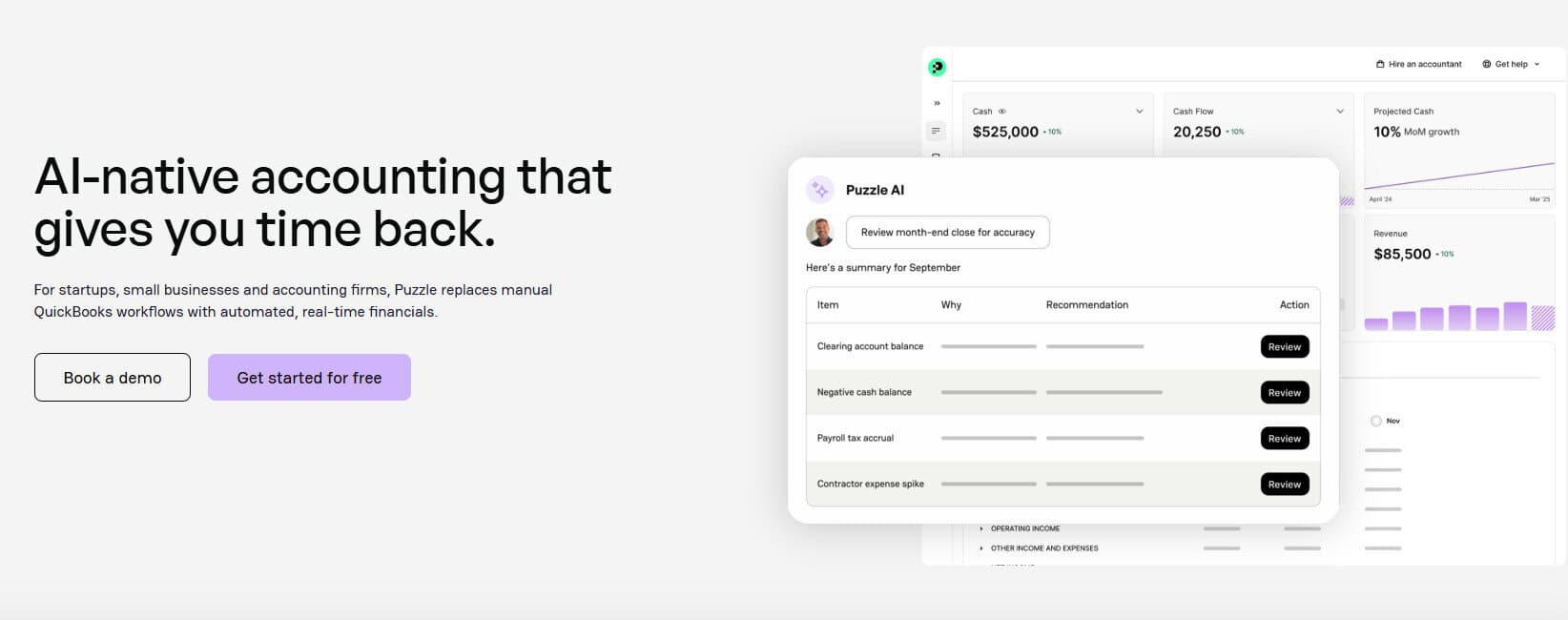
In 2026, “automation” is no longer just a buzzword for bank rules and static if-then logic. Both Puzzle and Finaloop have moved into the realm of Autonomous Finance, but their execution paths diverge based on their ideal customer.
The Puzzle Approach: The Intelligent Ledger
Puzzle was built from the ground up as an AI-native system. It doesn’t just import data; it attempts to understand the business logic behind each transaction. Its categorization engine is trained on specific charts of accounts used by venture-backed startups. For a software company, this means the system can know how to differentiate between COGS (hosting, cloud infrastructure) and OpEx (marketing, sales commissions).
In my opinion, one of Puzzle’s most significant features is its 98% automated categorization rate. Because it integrates natively with the “startup stack” (Mercury, Ramp, Brex), it ingests rich metadata that legacy scrapers can miss. This allows Puzzle to reconcile the books continuously. Nowadays, the concept of a monthly close is becoming obsolete for Puzzle users; the books are, for all intents and purposes, closed every 24 hours.
The Finaloop Approach: The Full-Service Hybrid
Finaloop takes a different, perhaps more “high-touch” path toward automation. While it utilizes sophisticated machine learning to reconcile marketplace payouts and bank feeds, Finaloop is fundamentally a hybrid solution. It combines its software with an in-house team of expert e-commerce accountants.
For a merchant dealing with the chaos of Amazon payouts, which involve gross sales, refunds, FBA fees, and advertising costs all lumped into one deposit, Finaloop’s automation is a lifesaver. It acts as a specialized utility that untangles the Gordian knot of marketplace data. However, the reliance on an in-house team means the “autonomy” is managed by Finaloop’s staff, rather than being a pure software-driven autonomy owned by the founder.
2. Integration Ecosystems: The Network Effect
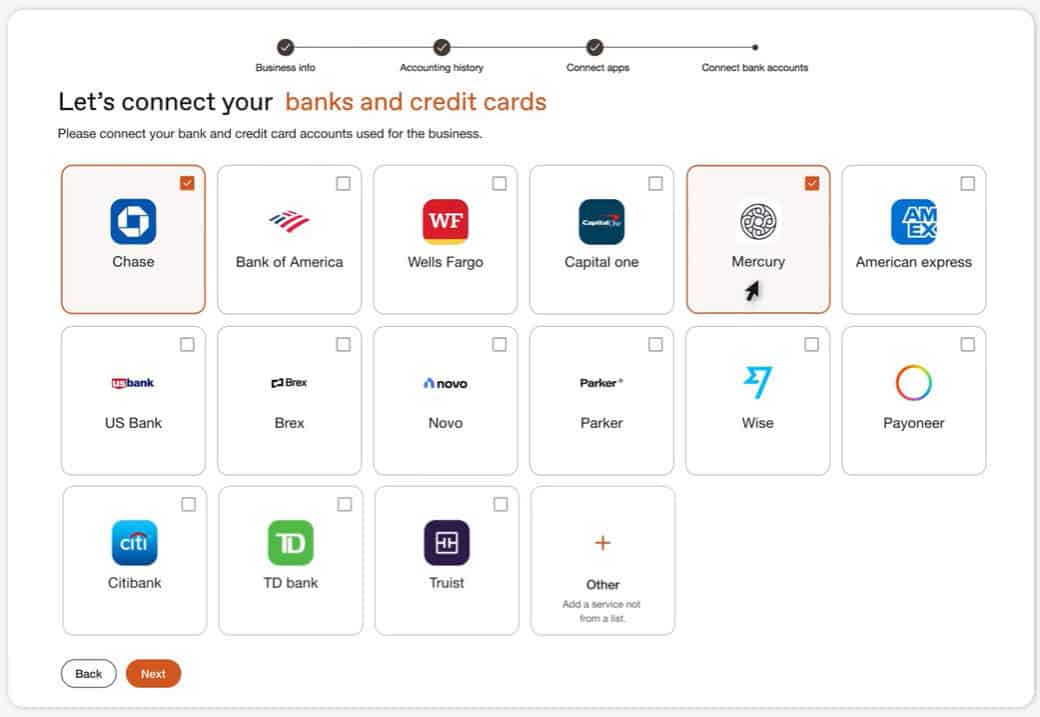
A finance tool in 2026 is only as strong as its connections. Both platforms have built impressive “walled gardens” of integrations, but their focuses reveal their different priorities.
Finaloop: The Marketplace Master
Finaloop is arguably the most connected platform in the history of e-commerce. It offers native, deep-sync integrations with:
- Storefronts: Shopify, WooCommerce, Magento.
- Marketplaces: Amazon, Walmart, eBay, TikTok Shop.
- Payment Gateways: Stripe, PayPal, Afterpay, Klarna.
- Shipping: ShipStation, Pirate Ship.
For an e-commerce brand, this network is essential. Finaloop’s ability to perform 3-way reconciliation—matching the order in Shopify to the payout in the gateway to the deposit in the bank—is its “killer feature.” It ensures that no dollar is lost in the digital ether.
Puzzle: The Fintech Backbone
Puzzle’s integration strategy is optimized for capital efficiency. It focuses on the tools that modern tech founders use to manage their runway.
- Fintech Banking: Mercury and Brex (Native API).
- Spend Management: Ramp and Brex (Native API).
- HR & Payroll: Gusto, and Rippling.
- Revenue: Stripe.
Puzzle’s choice to use Direct APIs rather than traditional “scrapers” (like Plaid) is a subtle but critical distinction. Data stability is paramount. Direct APIs mean that Puzzle’s connection to a Mercury bank account almost never “breaks,” ensuring that the burn rate and runway calculations shown on the dashboard are always accurate to the penny.
3. The Core Logic: Revenue Recognition vs. Inventory
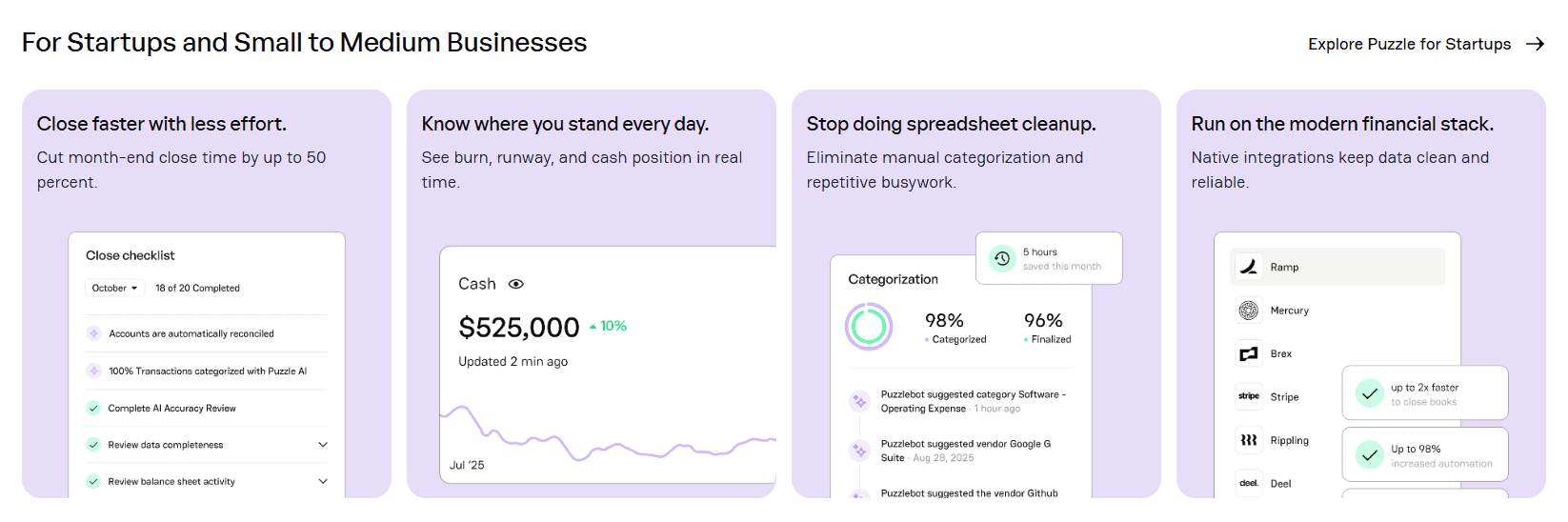
This is the sector where the true differences between the two platforms emerge. It is here that a CPA must look at the “logic layer” of the software to determine its long-term viability for a company.
SaaS Revenue Recognition: Puzzle’s Crown Jewel
For a SaaS founder, the biggest headache isn’t making money, it’s recognizing it. If a customer pays $12,000 for an annual subscription today, you cannot count that as $12,000 in revenue this month. You must recognize $1,000 per month for the next year.
Puzzle’s automated ASC 606 compliance is a masterpiece of modern accounting logic. By pulling data directly from Stripe, Puzzle can automatically create the schedules for deferred revenue and recognized revenue. This is a level of sophistication usually reserved for enterprise ERPs like NetSuite. For a startup planning a Series A or B, having “audit-ready” revenue schedules built into the primary ledger from Day 1 is a massive competitive advantage. It eliminates the need for the “Excel workpaper bridge” that often leads to errors during due diligence.
Inventory & COGS: Finaloop’s Stronghold
For an e-commerce brand, “revenue recognition” is relatively simple (you recognize it when you ship), but inventory management is a nightmare.
Finaloop’s InventoryIQ module is the gold standard for mid-market merchants. It handles:
- Landed Cost Calculations: Factoring in shipping, duties, and freight to determine the true cost of an item.
- FIFO (First-In, First-Out) Tracking: Ensuring that older stock is accounted for before newer stock to maintain accurate margins.
- SKU-Level Profitability: Showing exactly which products are making money and which are losing money after all fees.
If your business lives and dies by its ability to manage physical “stuff,” Finaloop’s inventory logic is indispensable.
4. Reporting & Insights: The Founder’s Experience
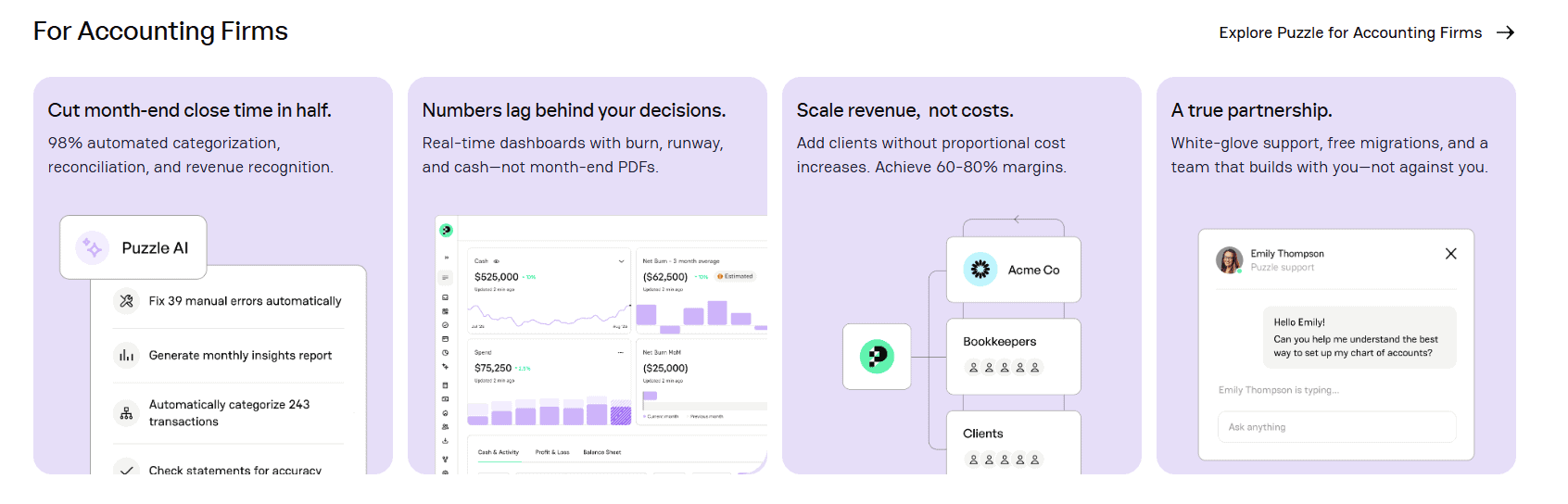
In 2026, founders use financial statements to make actionable decisions. Therefore, it’s my opinion that these financial documents should perpetually be kept up to date.
The Puzzle Dashboard: Built for the Boardroom
Puzzle’s reporting suite is designed for a founder who needs to answer one question: “How much time do I have left?”
The dashboard puts Cash Runway and Net Burn front and center. It also includes “SaaS-native” metrics like:
- ARR (Annual Recurring Revenue)
- CAC (Customer Acquisition Cost)
- LTV (Lifetime Value)
- Rule of 40 Tracking
Because Puzzle maintains Simultaneous Dual-Basis Accounting (tracking both Cash and Accrual books at the same time), a founder can toggle between the “Cash” view (to see their bank balance) and the “Accrual” view (to see their true business performance) with a single click. This is a game-changer for investor reporting.
The Finaloop Dashboard: Built for the Warehouse
Finaloop’s insights are tactical. They focus on Velocity and Margin. A founder logging into Finaloop wants to see:
- Marketing Efficiency (ROAS)
- Net Margin by Channel (Is Amazon more profitable than Shopify today?)
- Inventory Turnover
Finaloop provides a 24/7 “living” view of the business, but it is focused on the operational health of a retail business rather than the capital health of a venture-backed startup.
5. Compliance, Tax, & The “Investability” Factor
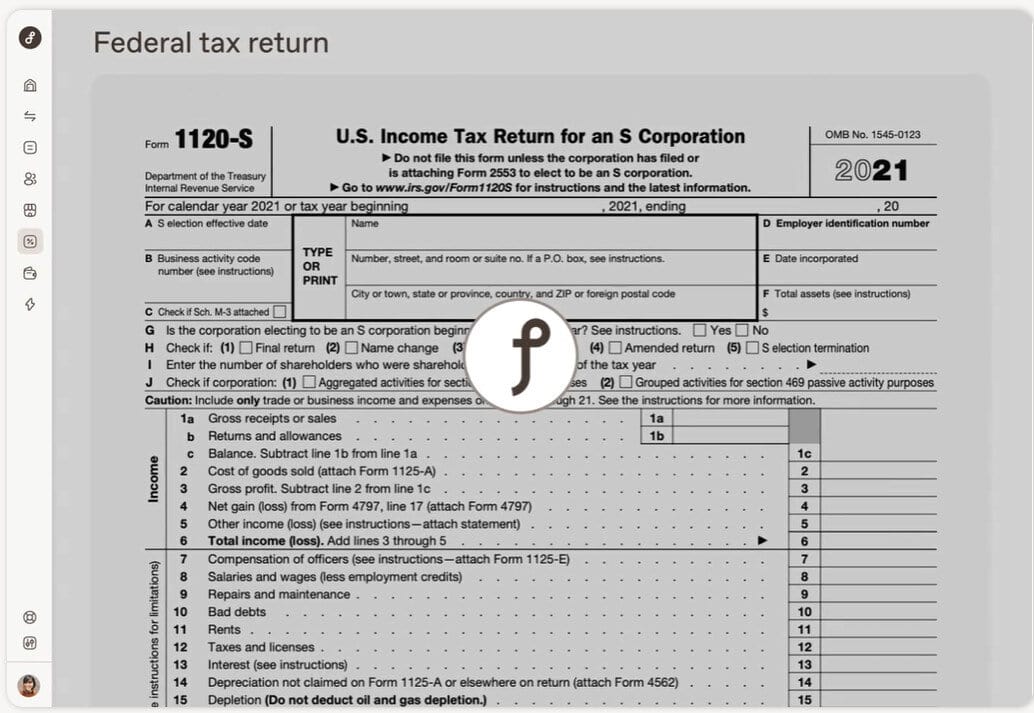
As a CPA, the most critical evaluation metric is how a platform prepares a company for its “next phase”, whether that is an exit, an IPO, or a venture round.
The “Cleanliness” of Data
Finaloop’s biggest selling point is that it is a tax-ready solution. They handle the filings and ensure the books are compliant for the IRS. For a lifestyle brand or a profitable e-commerce company, this is perfect. It is a “closed loop” service (almost like they’re the Final Loop…I digress).
Puzzle, however, is built for External Auditability. Puzzle recognizes that a high-growth startup will eventually need to work with a Tier 1 accounting firm for a financial audit. By building the ledger on a clean, SOC 2-compliant, AI-native architecture, Puzzle makes the audit process significantly cheaper and faster. Puzzle doesn’t just get the books tax ready, it builds a permanent financial record that can withstand the scrutiny of a multi-billion dollar VC firm.
6. Ideal Customer Profile (ICP) Analysis
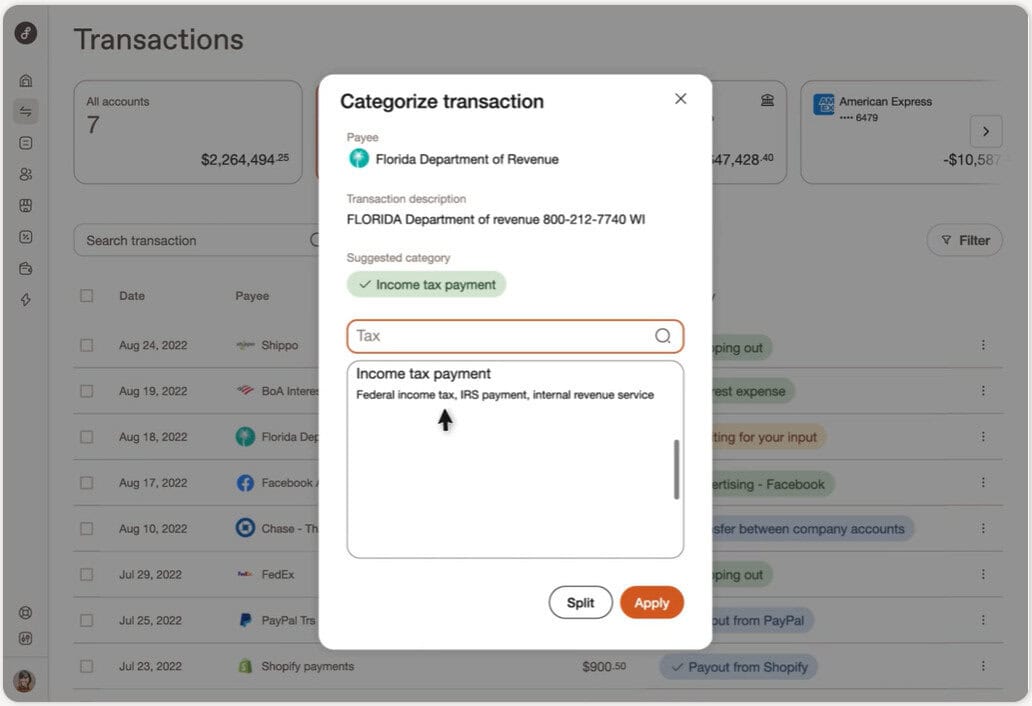
To choose between Puzzle and Finaloop, one must identify their business’s primary DNA. I don’t know if this is something you’ve picked up on, but we’re comparing two very different platforms that each serve their niches very well.
Who Should Choose Finaloop?
If you are a merchant whose business involves SKUs, Warehouses, and Marketplaces, Finaloop is the clear winner. There is currently no other tool in the 2026 market that so seamlessly integrates the “Physical Reality” of inventory with the “Digital Reality” of e-commerce payouts. It is the definitive choice for:
- Amazon FBA Sellers
- Shopify Plus Brands
- Omnichannel Retailers
Who Should Choose Puzzle?
If you are a founder whose business involves Subscriptions, Venture Capital, and Complex Equity, Puzzle is the superior platform. Its ability to handle “SaaS Rev Rec” and “Dual-Basis Reporting” while integrating natively with the fintech stack makes it the premier choice for:
- SaaS & B2B Software Startups
- AI & Deep Tech Companies
- Fintech & Marketplace Startups (Non-inventory)
Conclusion: The Subtle Pivot Toward the Future

The debate between Puzzle and Finaloop isn’t really a debate about “which software is better.” It is a debate about strategic, long term alignment.
Finaloop is a world-class utility. It solves a specific, painful problem (e-commerce bookkeeping) with remarkable efficiency and a human touch. For the merchant who wants to “offload” their finance department, it is an incredible value.
However, as we look toward the landscape of 2026 and beyond, Puzzle represents a more fundamental evolution of the accounting function. By building an intelligent general ledger that founders can use to make decisions, Puzzle has transformed accounting from a “look-back” obligation into a “look-forward” advantage.
By aligning your finance stack with your business model, you ensure that your accounting software is an engine of growth, rather than a point of friction. In 2026, Puzzle is proving that for the modern tech founder, an “intelligent ledger” is the most powerful tool in the shed.