


Last Updated on March 11, 2026 by Ewen Finser
As a CPA who spends most of my day digging into the guts of financial systems, I’ve seen firsthand how “growth” can quickly turn into a “grind” when your accounting software can’t keep up.
Most founders start with a single entity, because it’s easy, logical, and makes sense. One set of books, one bank account, and one tax return. It’s manageable. But then things get interesting. You launch a subsidiary, you set up an arm in a different state, or you create a separate holding company for tax reasons. Suddenly, your simple accounting setup feels like trying to drive a minivan in a Formula 1 race. You’re toggling between six different logins, manually reconciling intercompany transfers, and spending weeks every month just trying to get a consolidated P&L that doesn’t make your head spin.
If you’re managing multiple entities, you don’t just need accounting software. You need a system that understands the relationship between those entities. You need automation that handles the busy work so you can actually be a strategic advisor to your business.
In this rundown, I’m looking at the best multi entity accounting platforms on the market in 2026. We’re going to compare six heavy hitters, from the AI-native disruptors to the legacy ERP giants, to see which one actually deserves a spot in your tech stack.
1. Puzzle
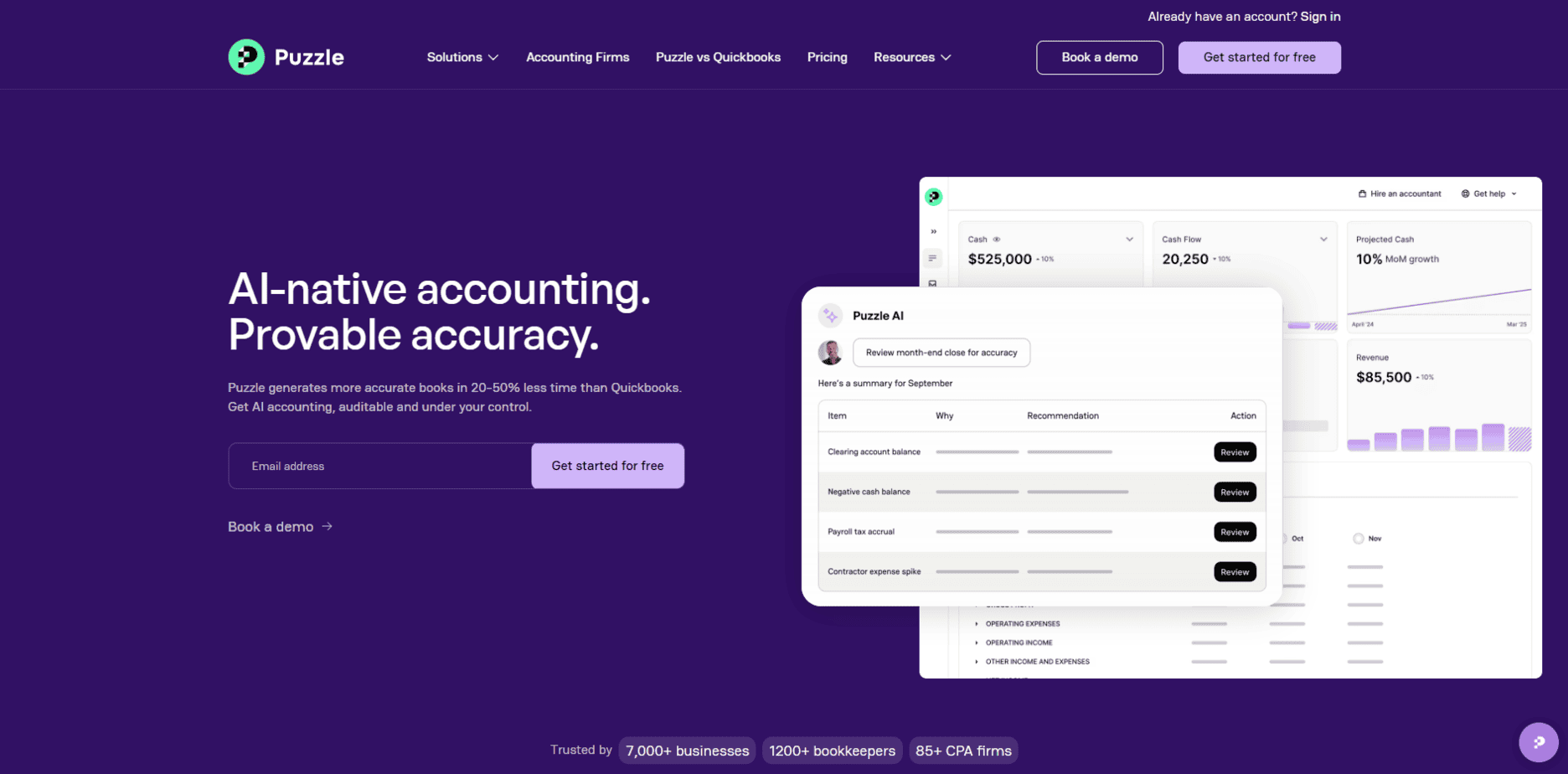
Where it excels: AI-native automation and real-time startup metrics.
Puzzle isn’t just another accounting tool that “added AI” as a marketing gimmick. It was built AI-native from the ground up, specifically for the modern fintech stack (think Mercury, Brex, Ramp, and Stripe). Where most legacy systems wait for a month-end close to give you data, Puzzle works in real-time. It’s designed for startups and the accounting firms that serve them, focusing on the metrics that matter to founders and investors, like burn rate and runway.
How it handles multi-entity accounting
Puzzle’s approach to multi-entity accounting is all about reducing the friction prior to consolidation of your books. Because it uses direct API integrations rather than brittle screen-scraping, data flows in to your books autonomously, and then is auto categorized using Puzzle’s AI so it can generate P&Ls, Balance Sheets, aging reports, and other KPIs with minimal effort from the user.
For companies with multiple legal entities, Puzzle allows you to maintain separate books with a quick change between companies so you can see how each is performing almost instantly. For GAAP compliant consolidations, you’ll need to off ramp to a third party platform.
Pros and Cons
Pros:
- Insane Automation: Puzzle claims up to 98% of categorizations can be automized.
- Fintech Native: Direct, stable integrations with Mercury, Ramp, Brex, and Stripe which means no more broken bank feeds.
- Dual-Basis Reporting: Seamlessly toggles between cash and accrual views, which is a godsend for startups managing runway.
- Partner-Focused: Unlike some competitors, Puzzle doesn’t compete with your accounting firm; it empowers them.
Cons:
- Startup Focused: Might lack some of the deep manufacturing or heavy inventory modules found in massive ERPs.
- Newer Player: While rapidly growing, it doesn’t have the decades of “brand legacy” that some old-school CFOs might look for.
Cost
Puzzle offers transparent, startup-friendly pricing that scales as you grow. Their direct plans typically start around $25 to $100 per month, depending on the complexity and volume of the business. Custom solutions are available over the $300 per month threshold.
2. Oracle NetSuite
Where it excels: Global scale and total business integration.
NetSuite is the undisputed gold standard for companies that have outgrown everything else. It’s not just accounting; it’s a full ERP (Enterprise Resource Planning) suite. If you need your accounting to talk to your CRM, your inventory, your HR, and your e-commerce platform in one single database, NetSuite is the beast you’re looking for.
How it handles multi-entity accounting
NetSuite’s “OneWorld” module is specifically designed for the complex multi-entity, multi-currency, and multi-national enterprise. It handles intercompany eliminations and provides real-time consolidated reporting across hundreds of subsidiaries. If you have an entity in London, one in Tokyo, and one in New York, NetSuite will handle the currency translations and local tax compliance (VAT, GST, etc.). It is built for the CFO who needs a consolidated P&L in USD with one click.
Pros and Cons
Pros:
- Infinite Scalability: You will likely never outgrow NetSuite.
- Single Source of Truth: One database for every department in your company.
- Global Compliance: Robust support for international tax and accounting standards.
Cons:
- The “NetSuite Tax”: It is incredibly expensive and the pricing is famously opaque.
- Implementation Hell: Expect a 6-to-12 month implementation period and a high reliance on expensive consultants.
- UX Fatigue: The interface can feel dense and compared to modern AI-native tools.
Cost
NetSuite pricing is custom and generally starts with a base platform fee around $999 per month, plus per-user licenses and module fees. Most mid-market companies end up spending $20,000 to $100,000+ per year.
3. Sage Intacct
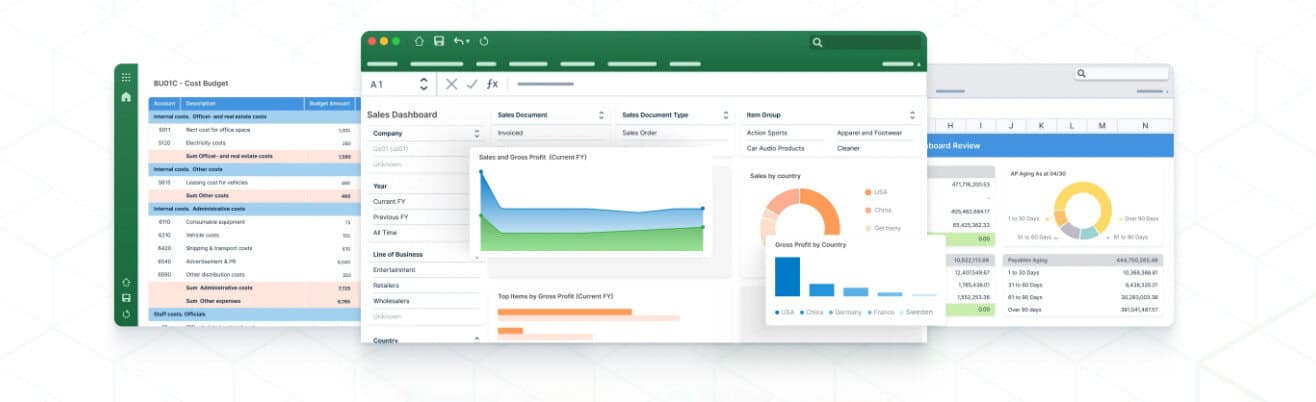
Where it excels: Best-in-class core accounting and dimensional reporting.
While NetSuite tries to do everything, Sage Intacct focuses on being the best possible accounting system. It is the only platform preferred by the AICPA, which tells you a lot about its technical rigor. It excels at dimensional accounting, allowing you to tag transactions with multiple attributes (department, project, location) without bloating your Chart of Accounts.
How it handles multi-entity accounting
Sage Intacct is a powerhouse for multi-entity management. It allows for a Shared Services model where you can manage AP/AR for all entities from a single screen. It also automates intercompany transfers and eliminations, and its consolidation engine can run in minutes rather than hours. It’s particularly popular for franchises or healthcare groups with dozens of locations that need to be aggregated. It truly is a robust, mid market platform.
Pros and Cons
Pros:
- Dimensional General Ledger: Unbeatable for granular reporting without a 50-page Chart of Accounts.
- Modular Growth: You only pay for the modules you need (e.g., project accounting, revenue recognition).
- Open API: It plays very well with other “best-of-breed” tools like Salesforce or Bill.com.
Cons:
- No Native CRM/Inventory: You’ll need to integrate third-party tools for things like CRM or manufacturing.
- Complexity: Still requires a significant amount of professional setup and “accountant-level” knowledge to operate. This is not a platform that a book keeper should tackle, typically a team of accountants is needed to get the most out of the system.
Cost
Like NetSuite, Sage Intacct uses custom pricing. Most organizations can expect to pay starting around $15,000 to $35,000 per year depending on the number of entities and modules required.
4. Xero

Where it excels: Modern UX and a massive app ecosystem for small businesses.
Xero is the “cool” alternative to QuickBooks. It’s cloud-native, has a beautiful interface, and is a favorite for tech-forward small businesses and e-commerce brands. It excels at bank reconciliation as its “matching” logic is highly intuitive and makes daily bookkeeping almost enjoyable.
How it handles multi-entity accounting
Xero’s approach to multi-entity is similar to Puzzle, from a GAAP stand point. Each entity requires its own separate subscription, but you can manage them all under one login. While Xero doesn’t have the “heavy” native consolidation of an ERP, it integrates seamlessly with consolidation apps like Joiin or Fathom. This allows smaller multi-entity groups to get consolidated reporting without the $30k price tag of an ERP.
Pros and Cons
Pros:
- Unlimited Users: Unlike QuickBooks, Xero doesn’t charge you more for adding team members.
- Superior Ecosystem: Over 1,000+ integrations in their app marketplace.
- Mobile-First: Their mobile app is arguably the best in the business for on-the-go owners.
Cons:
- Separate Subs: Paying for 10 separate Xero subscriptions for 10 entities can get annoying and costly.
- Not a True ERP: It lacks built-in intercompany elimination and advanced global consolidation features.
Cost
Xero offers tiered pricing, with most growing businesses landing on the “Comprehensive” plan for around $100 per month per entity.
5. QuickBooks Online (Advanced)
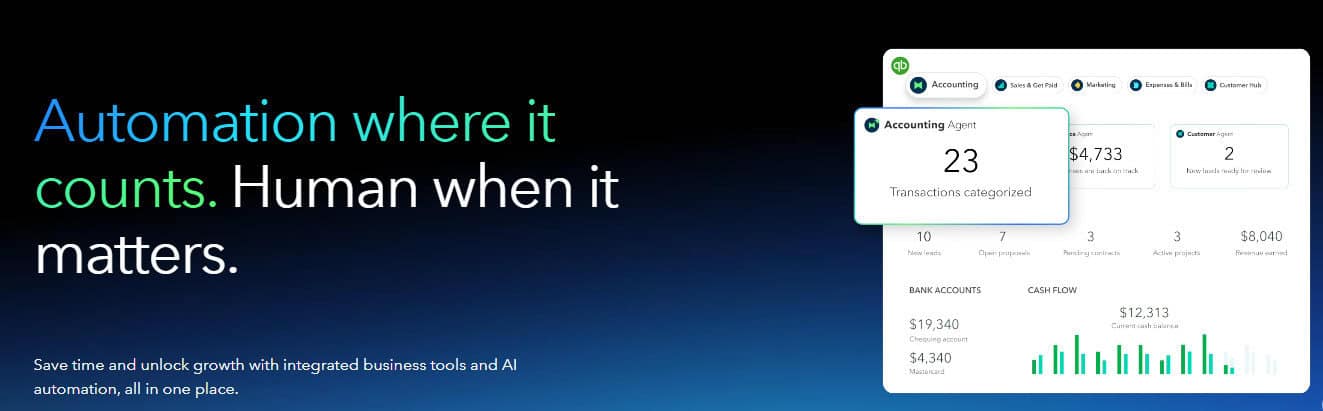
Where it excels: Market dominance and ease of hand-off to your CPA.
QuickBooks is the 800-pound gorilla in the room. As a CPA, I can tell you that almost every accountant in the U.S. knows how to use it. It excels because of its ubiquity; if you hire a bookkeeper tomorrow, they already know how to use QBO.
How it handles multi-entity accounting
For a long time, QuickBooks was terrible at multi-entity. However, with the QuickBooks Online Advanced tier, they’ve introduced Consolidated Reporting and the ability to manage multiple companies more effectively. You can now sync data across multiple QBO files to see a holistic view. That said, it still lacks the automated intercompany balancing that true multi-entity systems have, meaning your accountant will still be doing a lot of manual journal entries to keep things square.
Pros and Cons
Pros:
- The Industry Standard: 100% CPA adoption; you’ll never struggle to find help.
- Constant Updates: Intuit is pouring money into their “Intuit Assist” AI agents.
- Easy Onboarding: You can set up a new company in about 15 minutes.
Cons:
- Rigid Architecture: It’s legacy software that’s been moved to the cloud; it can feel clunky for complex startups.
- Price Creep: Intuit is famous for raising prices and pushing users toward higher tiers.
Cost
QuickBooks Online Advanced (the version you’d need for multi-entity features) typically retails for around $275 per month per entity, though they often run “50% off” promos for the first few months.
A CPA’s Takeaway: How to Choose?

When I’m advising a client on their tech stack, I always tell them to model for where they will be in 24 months, not where they are today. This is because migrations, implementations, and transfers are expensive when you outgrow a system that was good enough for today.
- If you are a high-growth startup using Mercury and Ramp, and you want to close your books in days instead of weeks, Puzzle is the clear winner. The AI automation isn’t just a bell or whistle, it’s a fundamental shift in how the work gets done.
- If you are a global enterprise with complex supply chains and hundreds of employees, bite the bullet and go with NetSuite. It’s painful to set up, but it’s the only tool that will hold everything together at that scale.
- If you are a professional services firm with 5-10 entities and you need bulletproof reporting for your partners, Sage Intacct is your best bet.
- If you are a smaller shop just starting your multi-entity journey consider Xero and a consolidation app. It’s a great way to learn multi-entity without the enterprise price tag.
The best software isn’t the one with the most features; it’s the one that your team will actually use and that gives you the visibility you need to make decisions quickly.