


Last Updated on March 12, 2026 by Ewen Finser
Companies have monitored their presence (and ranking) in traditional search engines for years, but with generative AI becoming a primary way people are accessing information, brand visibility has shifted.
When someone asks a question on Google now, AI summarizes information, recommends products, and even compares vendors in a TL;DR overview, and the answers it serves up can shape a person’s decision before they ever visit your website.
LLM monitoring tools help brands track mentions, recommendations, citations, and competitive positioning across AI platforms, and they also provide insight into opportunities that can improve visibility.
Key Takeaways:
- AI influences brand trust for 47% of consumers, according to one study, and 54% have used it specifically for product comparisons.
- Even though most purchases are still happening on brand or retailer sites, discovery is occurring in AI-powered spaces like Google AI Overviews, ChatGPT, Perplexity, and other LLM platforms.
- If a brand isn’t surfacing in AI search environments, it can affect overall visibility, brand recognition, and conversions over time.
- LLM monitoring tools provide much-needed insight that can help companies to stay relevant (and visible) wherever AI is generating answers for consumers.
LLM Monitoring Platforms At A Glance
The platforms below are listed in order of capability, from simple to complex.
Compare | Focus | Best For | Lowest Tier |
Hall | Surface-level monitoring with simple dashboards and no implementation | Solopreneurs or small teams just starting out with AI visibility monitoring | Lite (Free) |
Peec AI | Surface-level monitoring, some strategy recommendations, simple dashboards and no complex implementation | Smaller teams or agencies that need prompt-level insights | Starter ($95/mo.) |
AirOps | AI visibility insights tied into content operations and execution workflows | Content and SEO teams that need to scale content production and optimization workflows | Custom |
Profound | Analytics-heavy monitoring, agent crawler data for onsite optimization, prompt density | Enterprise SEO and marketing teams that need deep analytics and competitive visibility reporting | Starter ($99/mo.) |
Emberos | Continuous monitoring, connecting signals to forecasting, automated optimization workflows, lift validation | Growth teams that need governance, forecasting, and measurable business impact | Custom |
I’ll explain what LLM monitoring is, why it matters so much, and share several of the best platforms currently available for monitoring your presence in AI-driven environments.
What Is LLM Monitoring & Why Do You Need It?

Large language models (LLMs) act as conversational agents that guide users, or as recommendation engines that rank products in search environments. But LLMs don’t gather information quite the same way as traditional search engines do, which is why you’ll sometimes come across brand mentions or citations that aren’t otherwise “ranking” on the first page of search engine results.
LLMs analyze user prompts along with historical data to identify context or suggest relevant items, and they often defer to third-party user reviews to gauge sentiment and consider nuanced preferences.
Monitoring involves tracking, analyzing, and validating the results that are showing up within LLMs, which can include AI Overviews in Google or Bing, and AI platforms like ChatGPT, Perplexity, Gemini, or Copilot, among others.
LLM monitoring can include insights into:
- Prompts that are driving brand visibility (what phrases or queries people are using that result in brand mentions or recommendations)
- Competitor benchmarking (where your competitors are appearing and their position)
- Citation patterns (what sources and/or types of sources are being referenced for information)
- Brand sentiment (how your brand/products are being presented)
- Output quality and hallucinations (invented information that isn’t accurate)
- Model drift (changes in responses over time)
LLM Monitoring Is Becoming Essential

AI-powered search is relatively “new” in the grand scheme of things, but more and more people are using it as a means of discovery. Back in the day (with “the day” being just a couple of years ago), search engines were the primary gateway to find and explore brands, products, or services.
Today, however, things have changed significantly. One study found that 47% of consumers reported using AI to help them make a purchase decision, and 59% “believe AI will become their main way of finding information.”
Needless to say, having brand visibility in AI-powered search environments has created a new dynamic. When your brand appears in AI search results, it can generate awareness, website visits, leads, and conversions.
But if you aren’t anywhere to be found in those results (or worse, your competitors are dominating the responses), your company might quietly lose demand without even realizing it.
Another important reason to monitor LLMs closely is to keep an eye on what AI systems are saying about your brand or products. Although it’s gotten better with time, AI can still “hallucinate,” which means it’ll generate information that sounds accurate… but isn’t.
This could include anything from incorrect pricing or product details, to straight-up nonexistent features.
Outdated information is another thing that needs to be monitored in LLMs, especially for organizations operating in highly-regulated industries. Customer confusion is bad enough, but inaccuracies can pose brand reputation damage or even legal risk.
Monitoring systems allow internal teams to detect issues early so intervention can take place as soon as possible. The same can apply to sentiment shifts; if you notice negative information about your brand surfacing in AI-powered searches, you’ll see it and can take steps to change the narrative for the better.
Finally, if you’re on a mission to improve your visibility and you need to report evidence of impact, LLM monitoring is paramount. Teams that are optimizing content, running digital PR campaigns, publishing structured knowledge bases, or taking steps to build authority to increase citations may need to “prove” their efforts are worth it.
LLM monitoring platforms can help you measure improvements in brand mentions, recommendations, and competitive positioning, and some advanced platforms can even tie that to ROI.
Is LLM Monitoring Enough?
Not really; although monitoring your brand’s visibility in LLMs is a solid start, it won’t automatically improve your AI visibility.
Depending on what you’re seeing in the analytics, visibility improvements will generally require any of the following:
- Content strategy and deployment
- Optimizing existing content
- Structured information
- Digital PR
- Distribution across trusted sources
Basic LLM monitoring only gives you the diagnostics to work from, although some tools provide the growth engine too.
Key Features Of LLM Monitoring Tools

Platforms can vary widely but most offer several core capabilities. These include:
- Prompt-level monitoring: This works similarly to keyword research for SEO, but tracks how models respond to specific user prompts.
- Brand mentions: Where your brand name appears in prompts you’re monitoring.
- Sentiment: How AI is talking about your brand; this can be positive, negative, or neutral.
- Recommendations: When AI is actively suggesting your brand or products.
- Competitor comparisons: What brands are appearing in the results and their positioning.
- Citations: Which websites or sources are being cited and whether any of your brand-owned content is being sourced.
Some LLM monitoring tools take things further, offering actionable advice to improve visibility, pushing optimization recommendations into workflows, or even modeling lift to forecast gains. And this is where platforms really differentiate themselves from one another.
LLM Monitoring Tools To Consider
There are a lot of LLM monitoring tools out there (with new ones emerging all the time), so I’m going to share my top recommendations in order from the most beginner-friendly (and simple!) to the most complex and enterprise-grade.
Hall
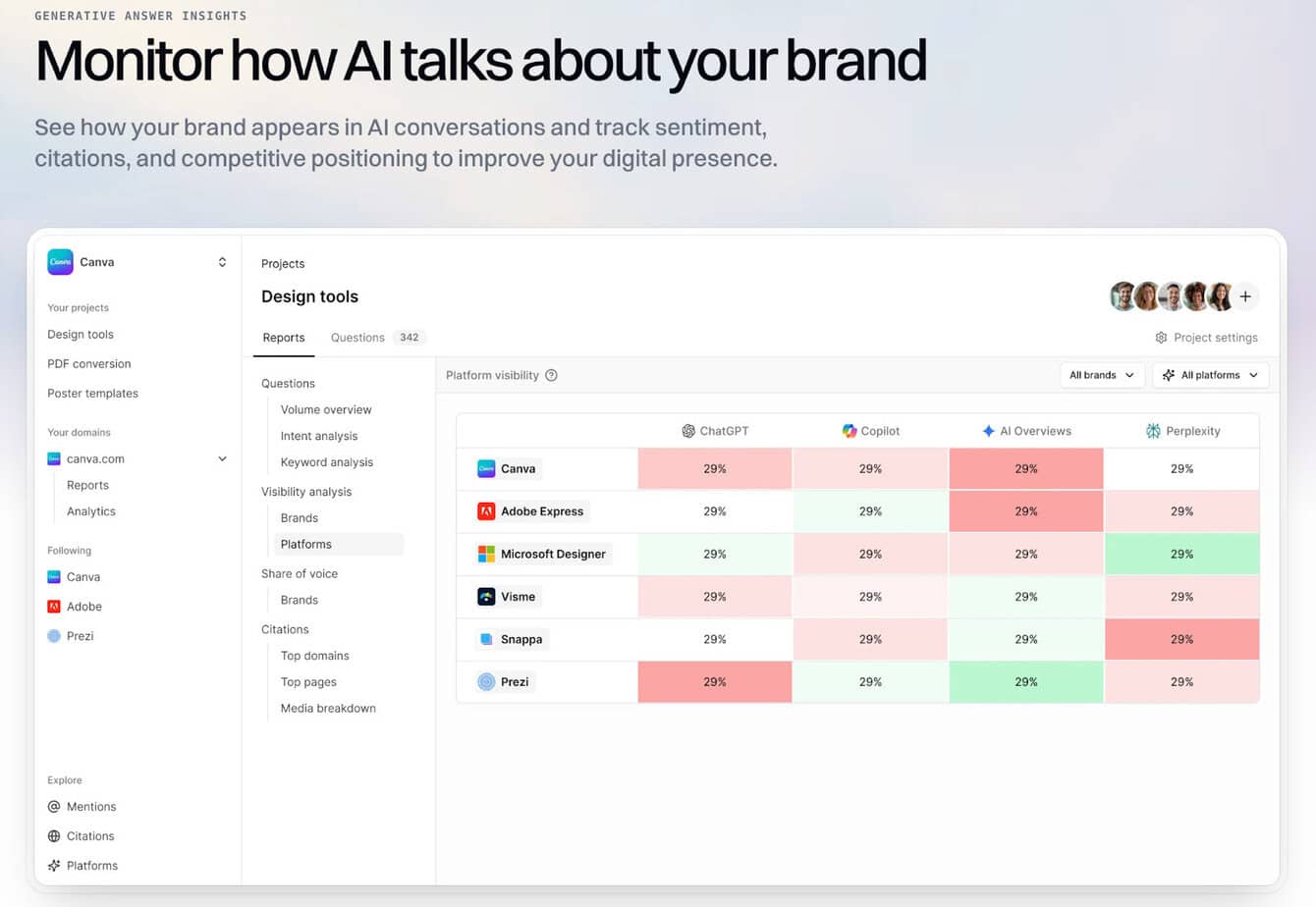
Hall AI is one of the easiest LLM monitoring platforms out there, and I think it’s a perfect place to get your feet wet if you’re totally new to AI visibility. It offers a free Lite plan that’s super limited, but provides enough to get familiar with LLM monitoring with no contract or obligation.
Having set up an account myself, the process is quick with no special integration needed, and you’re tracking prompts across ChatGPT, Google AIO, and Perplexity in a matter of minutes.
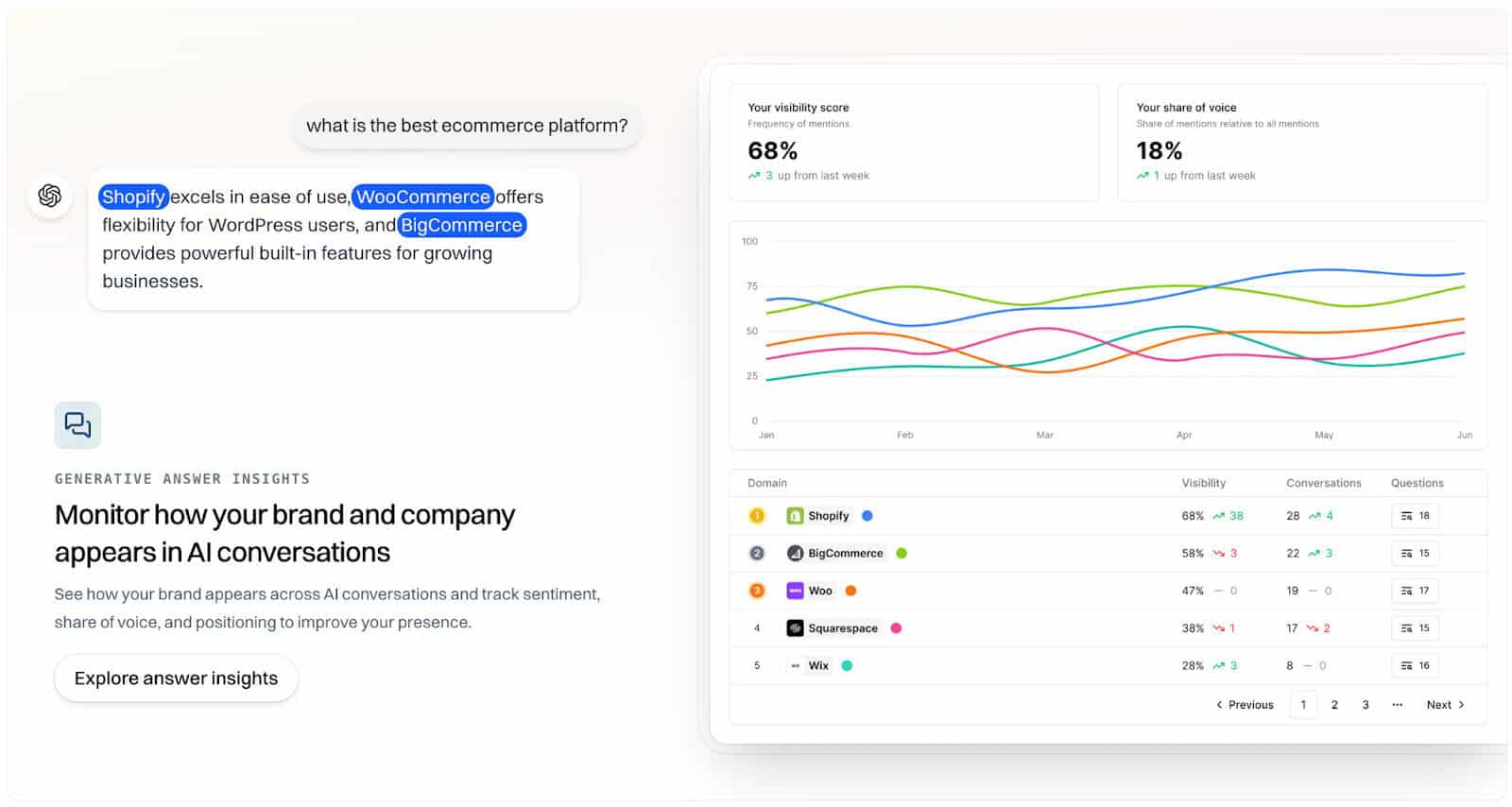
Hall focuses on prompt-level analysis and trend tracking, which can help you diagnose visibility gaps. The dashboard is easy to navigate and you’ll gain insight into your own visibility alongside your competitors. It also lets you see how AI is describing your brand and how that relates to your narrative, perception, and reputation.
Citations are broken down by domain and pages, and you can see the entire context of AI conversations.
The biggest drawback to Hall is that there aren’t actionable strategies offered and user seats are limited unless you’re on a custom plan. And although the Lite tier is free, it is very limited to only 1 project and 25 tracked prompts with data updated weekly; the next tier up (Starter) runs $199 per month.
That said, as a beginner-friendly option, Hall is a great one to explore.
Peec AI
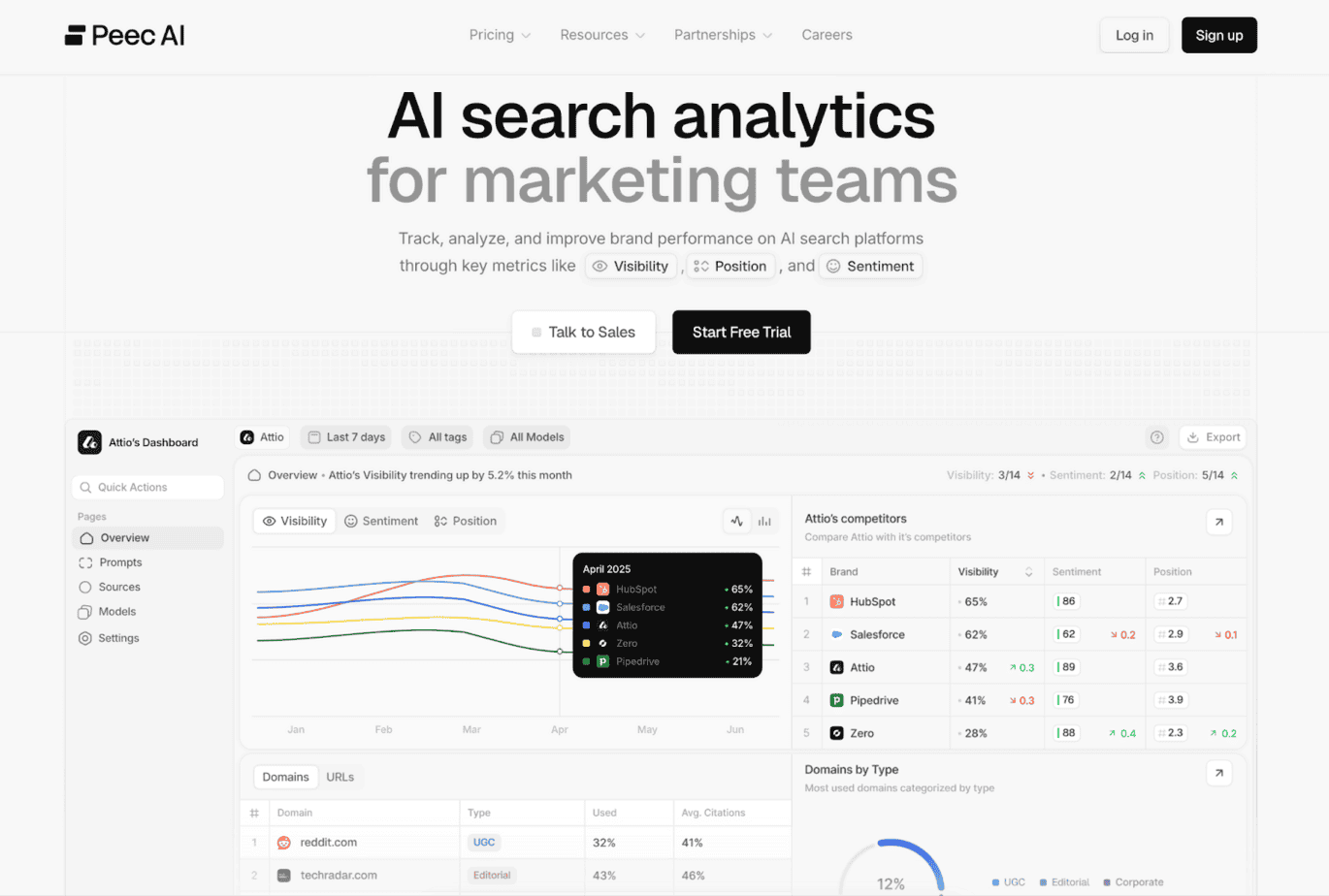
Peec AI is similar to Hall in a lot of ways, and it’s equally good for anyone who is new to LLM monitoring, in my opinion. I’ve used this one, as well, and it’s just as simple to set up; although there’s no free plan, there is a free seven-day trial.
The Peec AI dashboard is easy to navigate and once you’ve added prompts to track (it can suggest some if you need), it provides insights into brand mentions, positioning, sentiment, citations, and competitor benchmarking.
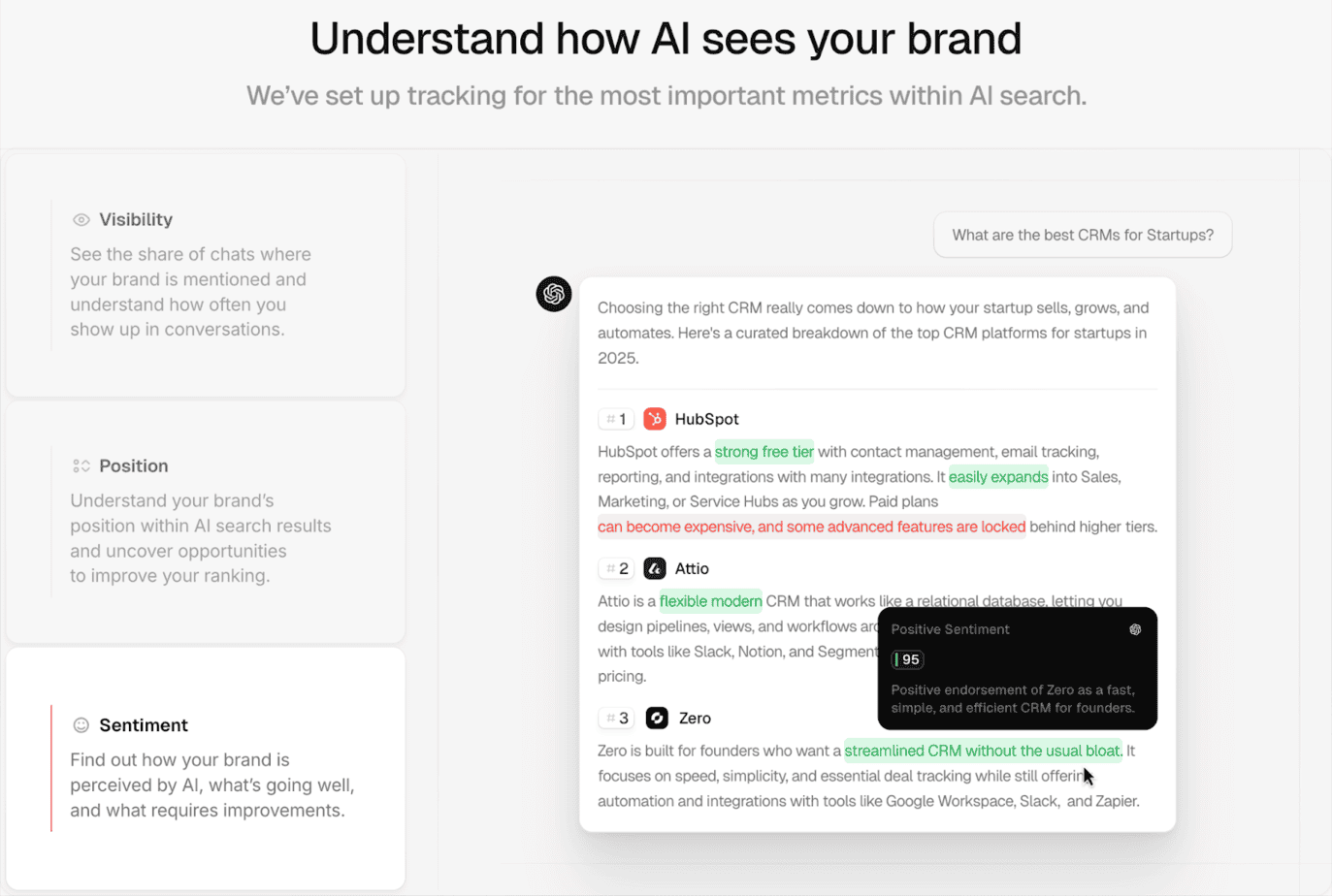
Recently, Peec AI has begun providing recommendations for improving visibility by capturing high-impact opportunities based on the citations that are surfacing. And no matter what size your team is or how many people you might need to add, every access tier offers unlimited seats.
I think the biggest drawback to Peec is the lack of historical data. Any prompts you track will only show insights beginning from the date you started tracking them, and not before. And most tiers track just three models (of your choice) unless you tack on additional ones for an extra fee.
The lowest tier, Starter, is $95 a month and includes 50 prompts with daily tracking for one project.
AirOps
This one is more advanced since it ties AI visibility into content operations, but it’s a good option for teams that need to scale publishing.
AirOps gives you LLM visibility along with prioritized workflows to publish new content (or update past and underperforming content) with performance tracking built in. For AI presence specifically, it shows you the highest-impact actions that will improve your visibility.
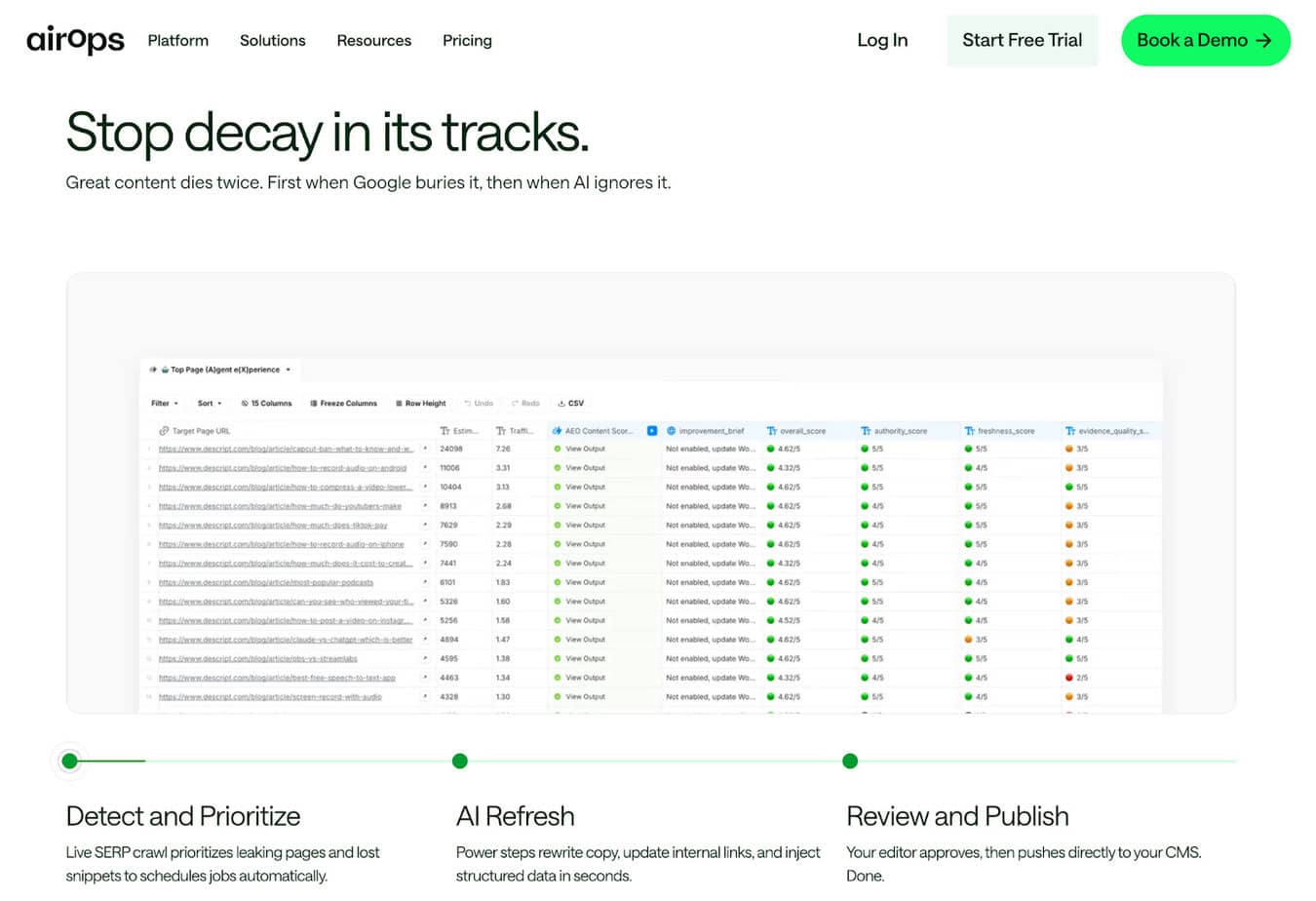
This is more of a workflow and execution program rather than a pure standalone LLM monitoring tool, but for teams that need guidance in identifying which pages or content assets should be updated to improve visibility, AirOps is one of the best out there.
But that’s also the main drawback if all you need (or want) is basic LLM monitoring; in that case, a more lightweight tool like Hall or Peec is probably going to be the better option.
Pricing at AirOps is custom, although you can start the Solo or Pro tiers for free.
Profound
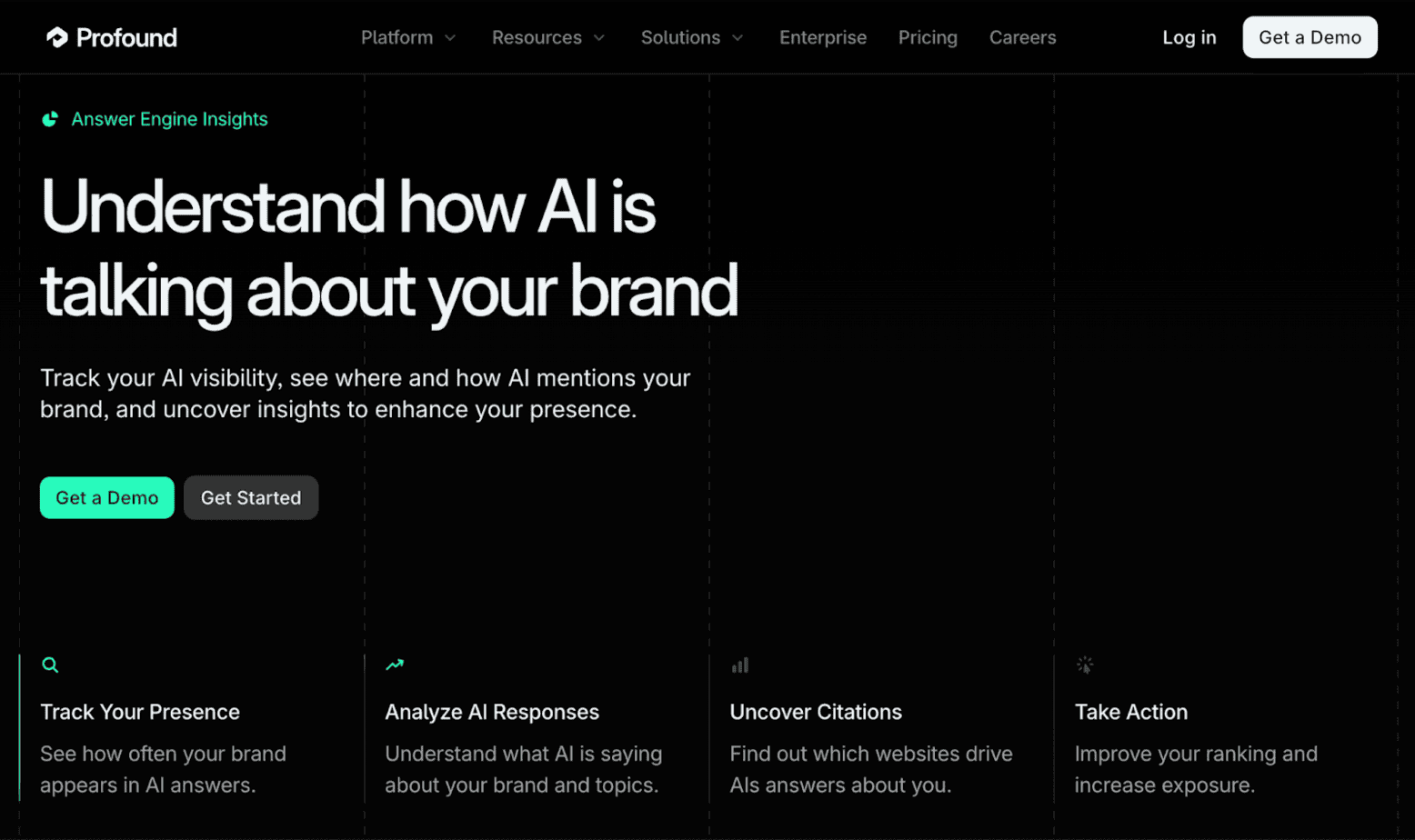
Profound is one of the most well-known LLM monitoring platforms, and its core strength is deep analytics and reporting. I’d consider this to be more of an enterprise-grade platform because it’s very powerful, data-heavy, and also pretty expensive.
This platform monitors all the usual things (brand mentions, citations, sentiment, trends, competitors) but it also provides agent analytics. Profound’s crawler tracks when AI bots access your site and how often, providing insights into content performance so you can see which pages are being referenced in AI responses.
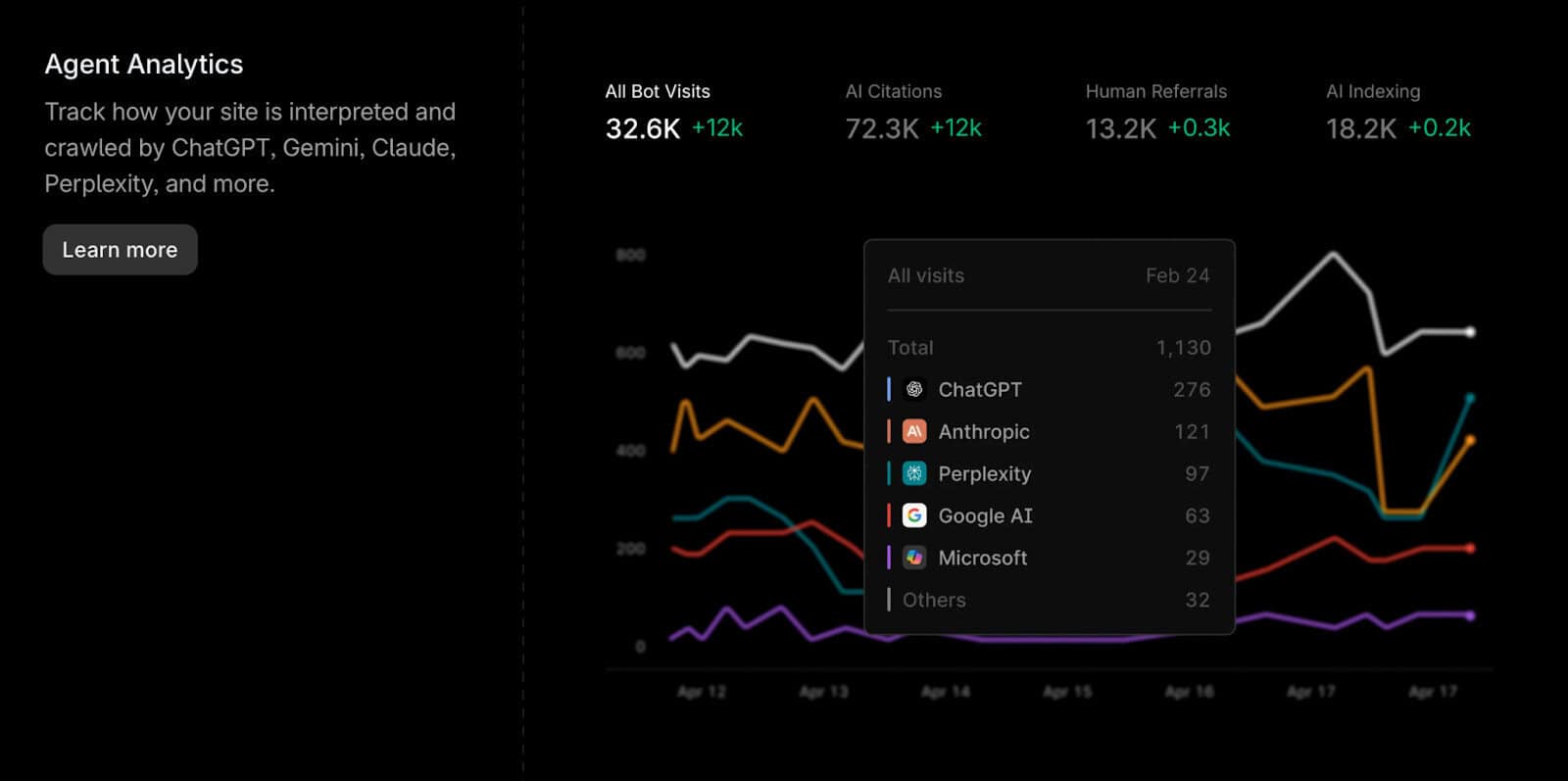
Profound performs a technical analysis to make sure that your website is fully optimized for AI retrievals, highlighting any areas that need attention from your dev team, and measures how many visitors are converting from AI-powered search environments.
A recent addition to Profound’s capabilities is Prompt Volumes, which is similar to keyword density in SEO (only for LLMs). This lets you discover trends and take action, while also tracking performance.
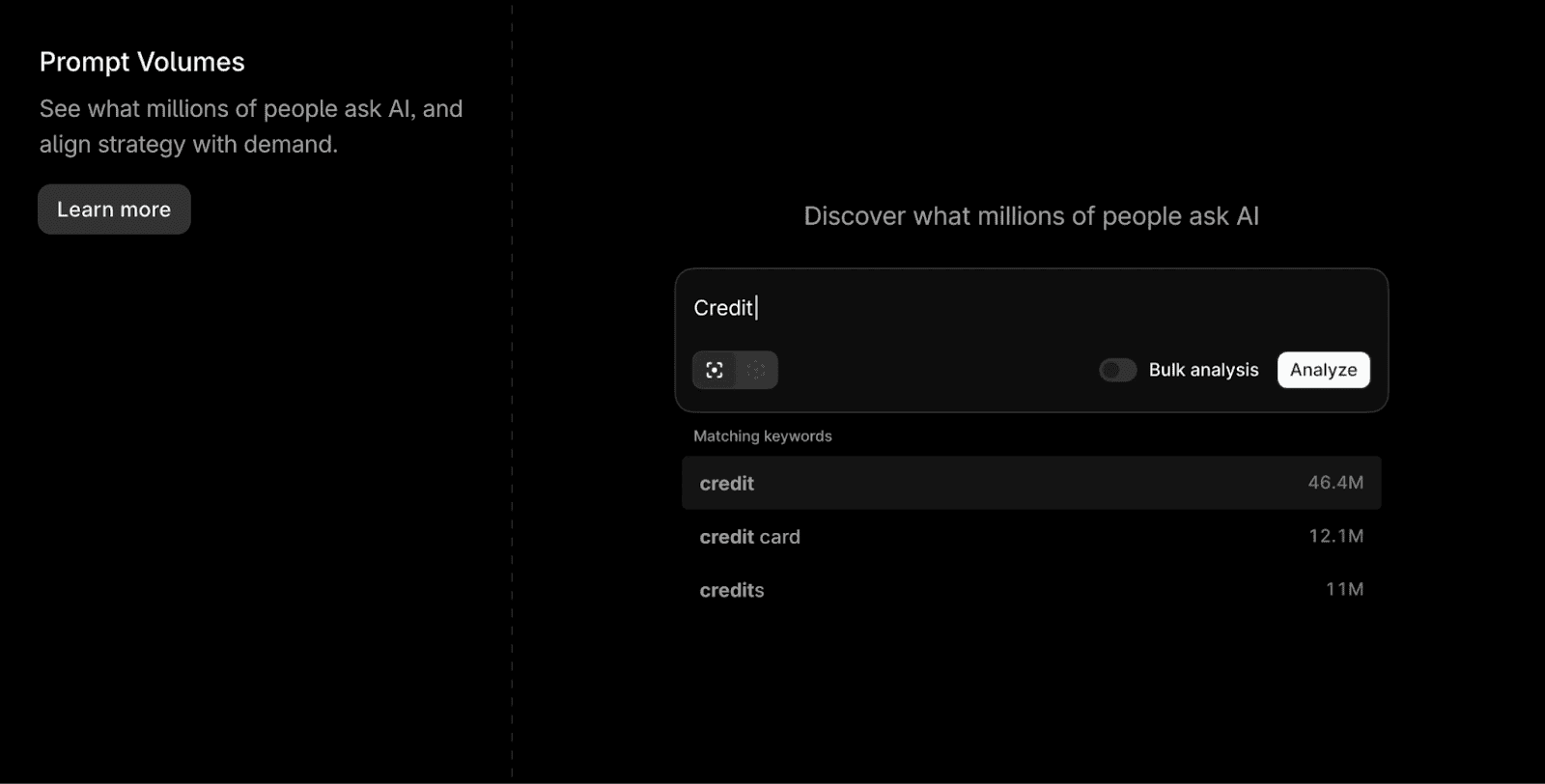
The biggest downside of Profound (if you can call it a “downside”) is the complexity. This is a beast of an LLM monitoring tool and one that’s really best suited for enterprise organizations, rather than beginners.
While the Starter tier is just $99 per month (on par with Peec), it only tracks ChatGPT. The next tier, which includes three answer engines, is $399 per month (or $332.50 if billed yearly).
Emberos
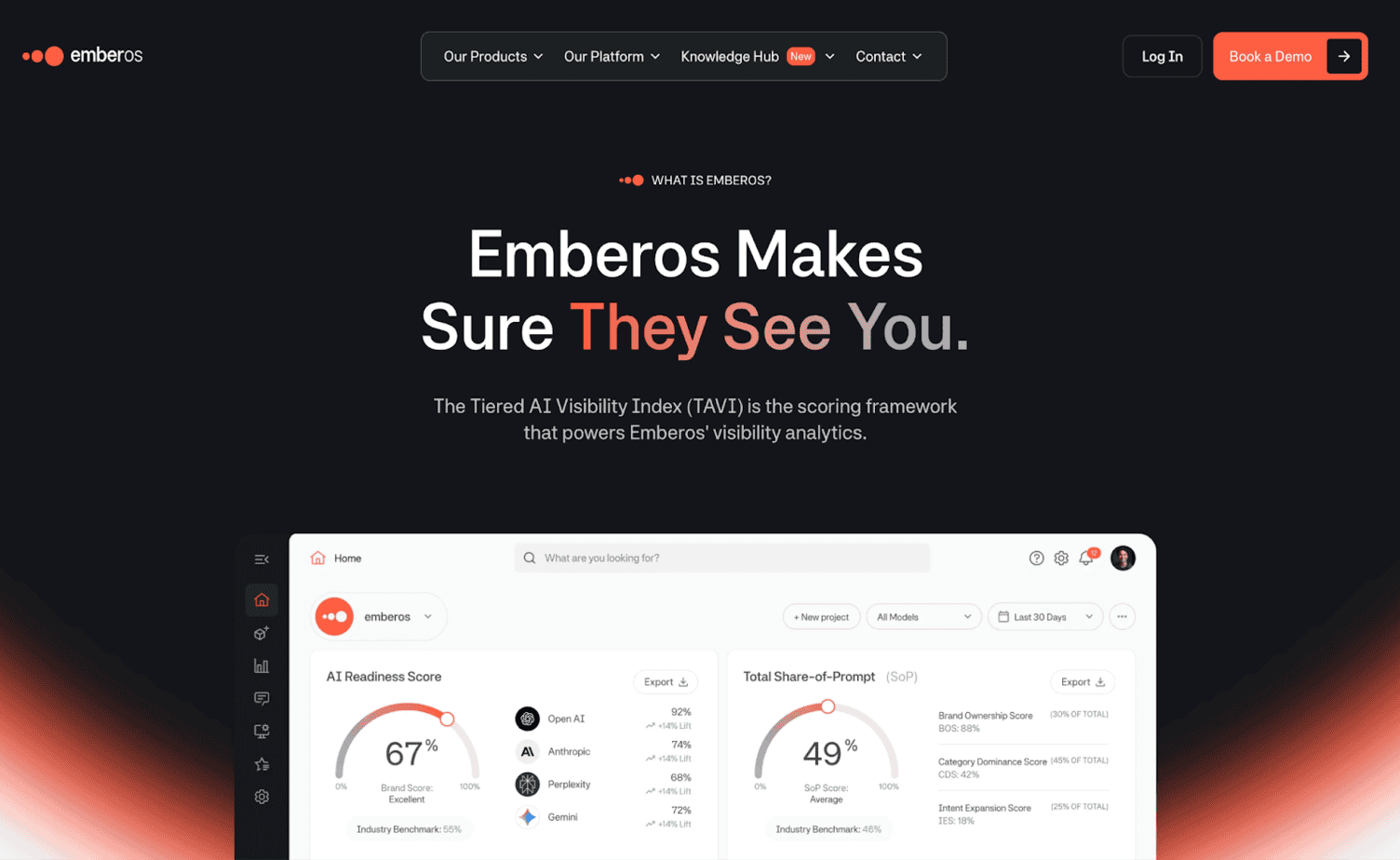
Last, but definitely not least in terms of functionality, Emberos is the first agentic operating system for LLM monitoring and automated brand control. The detection and monitoring are continuous on this platform, and for organizations that need to keep a very close eye on the narrative or correct any misinformation that surfaces in AI environments, there is no better tool available.
Emberos examines your visibility (or lack of it), and strategizes smart fixes that are pushed directly into automated workflows for seamless deployment. It’s able to forecast share-of-prompt lift (improvement) in AI visibility with accuracy that’s greater than 75%; Emberos is currently the only LLM monitoring tool that offers predictive optimization.
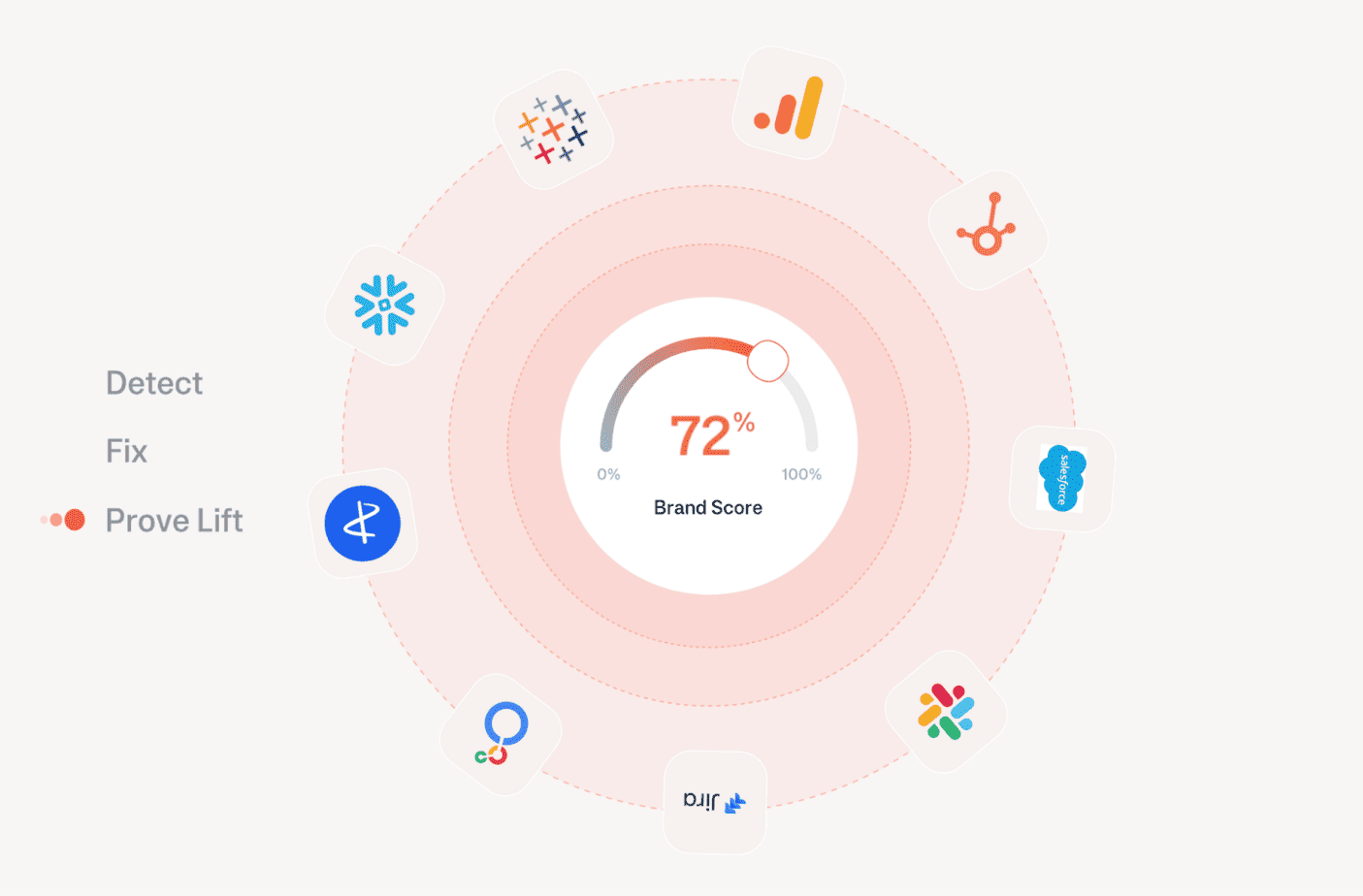
In one case study, Emberos used AI visibility signals to forecast opening-weekend performance of a new film release. “AI visibility surged well before traditional indicators,” and Emberos’ Share-of-Prompt metric showed what was about to happen almost two weeks before it did.
The idea is that AI recommendation patterns can reflect consumer intent sooner than search or sales data.
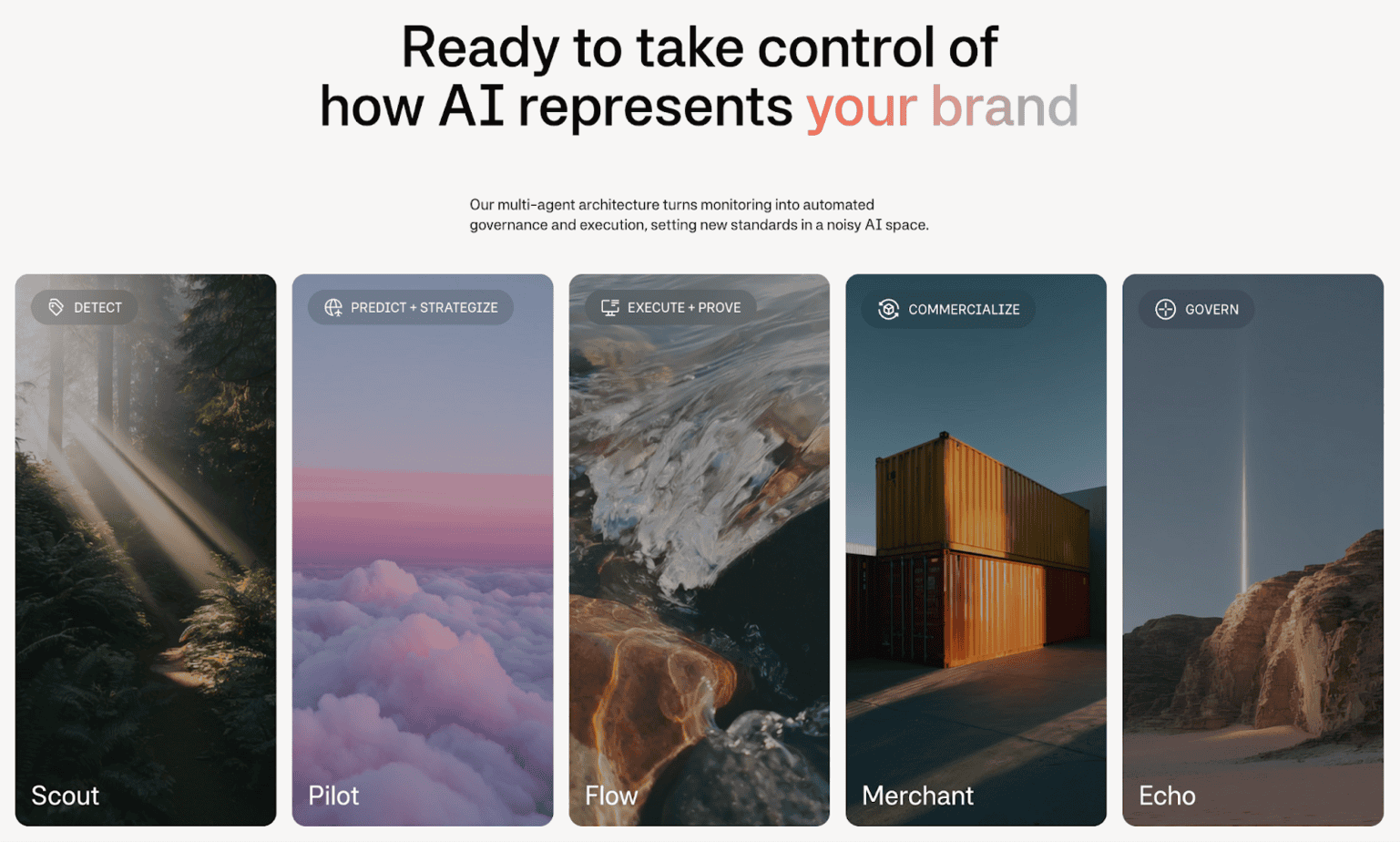
When you need to prioritize improvements, Emberos can tell you which ones will deliver the highest ROI and later validate the impact. That’s another thing only this platform does, and it’s invaluable for teams that need to provide proof of lift, or tie optimization efforts to revenue.
The downsides to Emberos are the complexity and the cost; all tiers are custom-priced, and the platform is best for mid-market and higher organizations that need governance and orchestration.
How To Choose The Right LLM Monitoring Tool
Every platform I’ve shared is one I’d recommend, but the “best” option will largely depend on what you’re trying to accomplish with AI visibility data.
- If your only (or primary) goal is simply understanding how your brand is appearing in AI-generated answers, a surface-level analytics platform like Hall or Peec can provide all the monitoring you need.
- For enterprise teams that need deeper analytics and AI crawling, Profound is probably the best choice. If your priority is executing optimized content at scale, a tool like AirOps can identify opportunities and operationalize everything.
- Organizations that need governance, forecasting, automation, and measurable impact from AI visibility efforts, however, should look at Emberos.
Really, the right choice comes down to what you need.
Closing Thoughts
Instead of browsing through pages of “blue links” or clicking across multiple websites, users are increasingly relying on AI assistants to summarize options, recommend products, and compare brands in a single, easy-to-digest response.
And that’s why it’s so important to understand how large language models are representing your brand, and to make sure that they do.
The search engine landscape was competitive for years, but visibility has moved to a new playing field. And while I can’t predict the future the way Emberos can, it’s a safe bet to assume that the landscape is going to stay AI-first for some time to come.