


Last Updated on February 24, 2026 by Ewen Finser
Influencer marketing has always been big in the beauty and fashion industries, from celebrity endorsements in old TV ads all the way to a Kardashian Instagram campaign. But it’s often forgotten by Amazon sellers in other niches.
Meanwhile, the cost of Amazon PPC ads keeps climbing, competitors are multiplying, and Amazon’s Brand Referral Bonus is literally paying you to bring traffic from outside the platform. Brands like Allbirds shoes have gone viral on TikTok and Instagram, leading to a $4 billion valuation.
The fastest way to tap into that? Partner with influencers who already have your target audience’s attention.
That’s where tools like Levanta and Influencity come in. Both can help you connect with the right creators, manage campaigns, and track results, but they’re built for different purposes.
- One is laser-focused on driving traffic and sales to Amazon.
- The other is designed for multi-platform influencer marketing.
With that in mind, here’s Levanta vs Influencity, how each one works, what they do best, and how to choose the right one for your brand.
Why Use Influencer Platforms Instead of Doing It Yourself?
You could find influencers manually by scrolling Instagram, messaging on TikTok, or tracking posts in spreadsheets. But for serious Amazon brands, that approach quickly gets messy and difficult to track.
Influencer platforms streamline the entire process so you can focus on sales, not admin work.
Here’s why they’re worth it:
- Faster influencer discovery: Search and find thousands of creators by niche, audience, and engagement… instead of guessing who might be a fit.
- Better targeting: Filter for audience demographics, locations, and interests that match your buyer profile.
- Trackable results: Clicks, sales, and ROI are measured automatically instead of relying on screenshots and guesswork.
- Scalable outreach: Recruit hundreds of influencers in one go (without 100 separate email threads).
- Centralized management: Keep contracts, deliverables, messages, and payments in one dashboard.
- Proof of ROI: For Amazon and marketplace sellers, platforms with attribution tracking show which influencers actually drive sales and rankings.
Influencer platforms turn what could be a spreadsheet time suck into a repeatable, measurable sales channel… especially when you’re juggling other Amazon marketing like PPC and product launches.

Levanta assembled this report to help digital merchants navigate the new AI-shaped buying journey. Discover why creators now drive the clicks AI can’t and how to turn that into revenue.
Levanta vs. Influencity: At a Glance
While both Levanta and Influencity help brands connect with influencers, they come from very different starting points.
Levanta
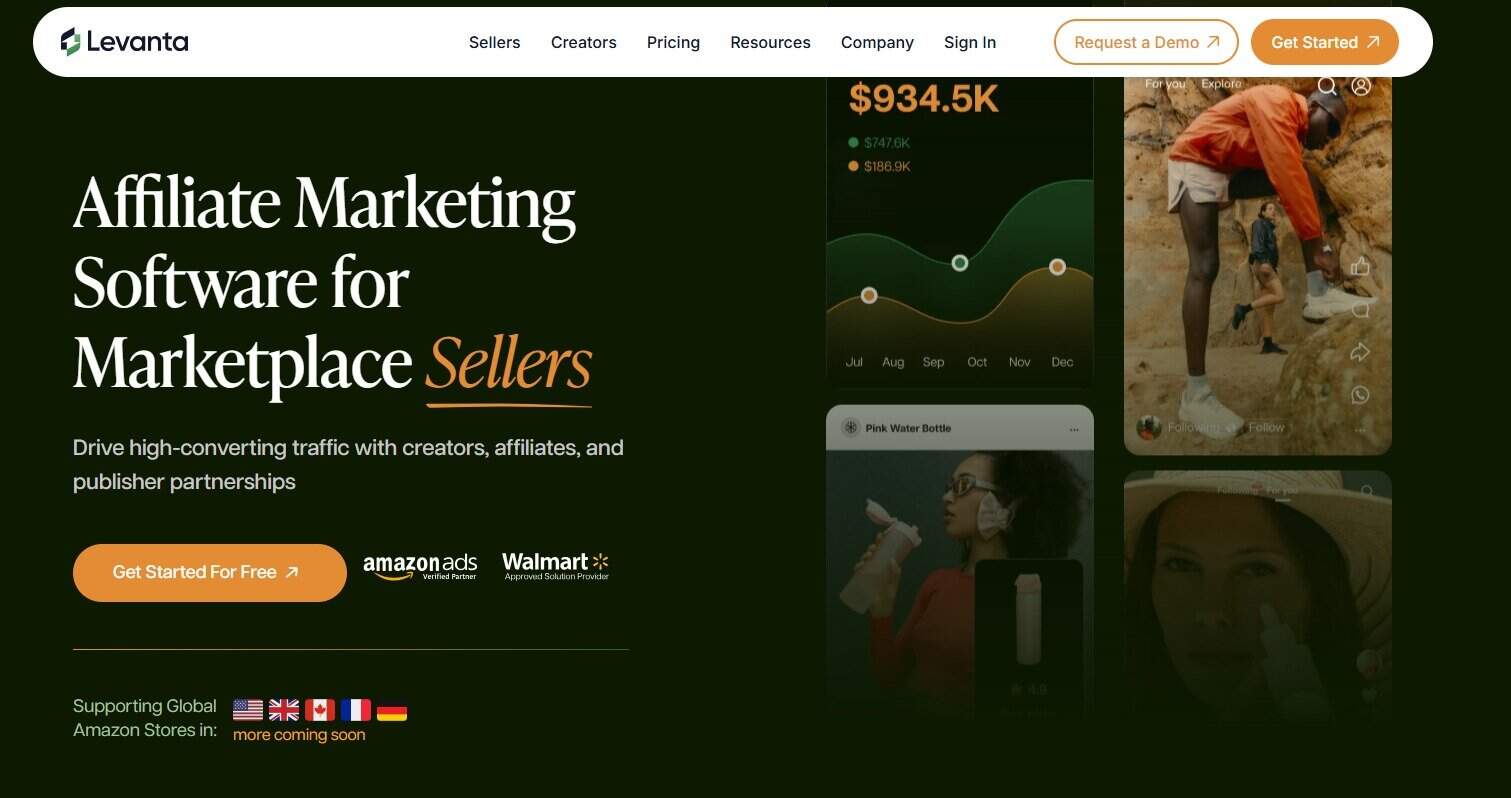
Levanta is a plug-and-play affiliate marketing platform, specifically designed for Amazon (and now supports Walmart). It’s easy to get set up and started, connecting directly with your Seller Central account in just a few minutes so you can track every click, cart add, and sale from influencer traffic.
It also collects the Brand Referral Bonus that Amazon pays for off-platform traffic, which is an average kickback of 10% toward the fees you pay to Amazon. So if you drive a $100 sale from an influencer link, Amazon might give you around 7% ($7) back as a credit toward your referral fees.
Levanta additionally helps you find creators, set up affiliate links, track sales at every stage, and manage payouts automatically. It’s designed to make Amazon influencer campaigns easier to run and measure without juggling spreadsheets or manual tracking, and it’s less about building multi-platform campaigns and more about sending directly measurable traffic to Amazon.
Key features include:
- Amazon-native tracking: Easily track views, clicks, conversions, and sales. Unless you’re using Amazon PPC, it is difficult to accurately track these KPIs within the Amazon platform.
- Branded landing pages: Give creators an easy way to view your products and brand.
- Comprehensive dashboards: Visualize the entire customer journey, from clicks and conversions to revenue and commissions, all broken down by brand, creator, and product.
- Easy to use billing and payouts: You get one invoice, and Levanta divides it and pays all the creators.
- Access to over 50,000 creators: Easily form relationships with new influencers who are looking for Amazon products to promote.
Influencity
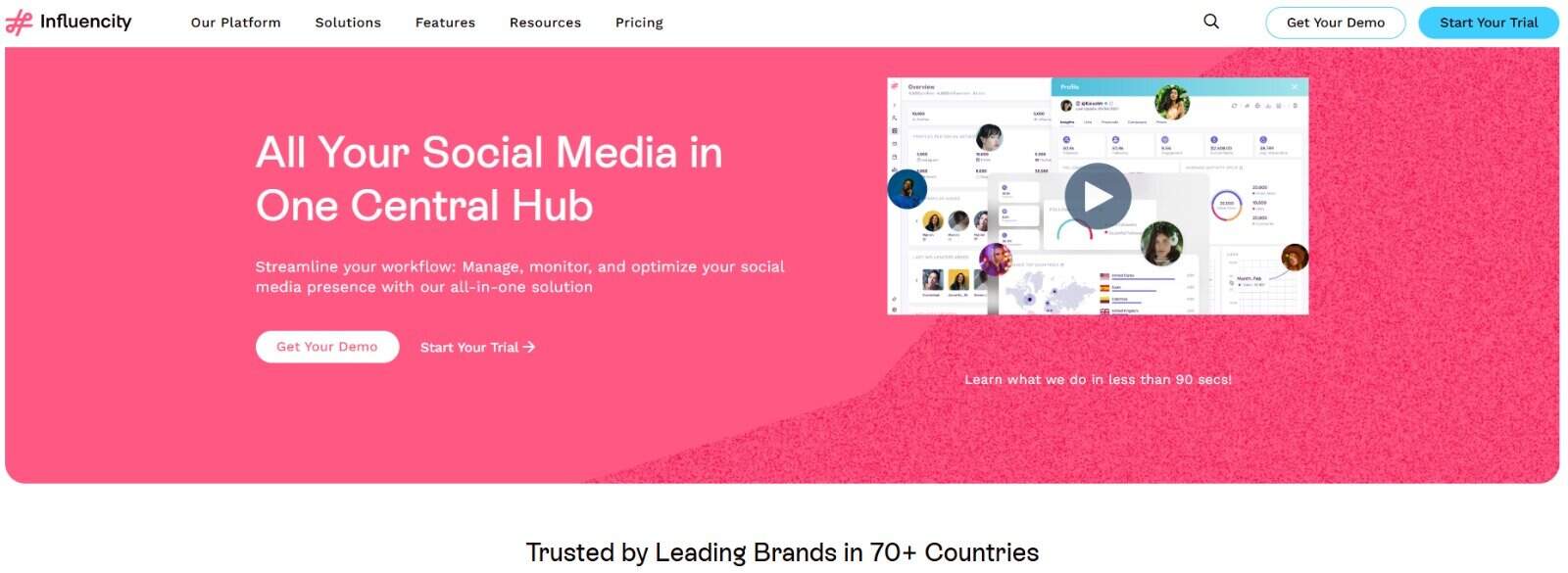
Influencity is a huge influencer marketing platform designed for brands and agencies running campaigns across social networks (mostly on TikTok, Instagram, and YouTube). Influencity is mostly for discovery and campaign management at scale, making it useful for brands that need to manage multiple influencers, campaigns, and platforms in one place.
Key features include:
- Massive creator database: Get access to over 200M influencers, with filters for niche, demographics, engagement rates, and interests.
- Proprietary Influencer Relationship Management (IRM) tool: This is a CRM-style system to store contact details, track outreach, and organize campaign activity.
- Campaign workflows: Influencity provides tools that cover the full process, from recruitment and negotiation to deliverables and payments.
- Analytics & reporting: Get real-time campaign results, plus extras like social listening and a built-in content calendar.
- An easy-to-use workflow: The platform’s guided highlights help new users navigate the platform despite its depth.
Unlike Levanta, Influencity doesn’t integrate directly with Amazon, but it offers broader reach and deeper campaign management for multi-channel strategies.
Feature / Capability | ||
Purpose-Built for Amazon Sellers | Yes – Designed for Amazon (and Walmart) marketplace affiliate programs. | No – More general influencer campaigns across platforms. |
Influencer / Creator Discovery | Filters by product category, social channel, and promotion type. | Tracks 200M+ creators; filters by demographics, location, niche, engagement rate, and much more. |
Commission & Payments | Aggregated monthly invoice; Levanta divides and sends payments. | Influencer payments must be managed by the user/platform. |
Amazon Incentives (Brand Referral Bonus) | Built-in attribution via Amazon API; captures Brand Referral Bonus automatically. | No direct Amazon-specific tracking or Brand Referral Bonus support. |
Analytics & Reporting | Intuitive dashboard with simple tracking of Amazon-specific KPIs | Real-time reporting across campaigns, influencers, posts; highly customizable. |
Additional Features | Simple ASIN import, intuitive dashboards, creator messaging, and one-click setup. | Social media management (inbox, content calendar), social listening, fake audience detection, automated outreach. |
Ease of Use | Very easy to use; one-click tools with minimal design friction. | Simple UI but a huge amount of features. Potentially confusing for Amazon-only campaigns. |
Pricing | Starts from $750+ per month |
In short:
- Levanta: A purpose-built Amazon sales engine for influencer traffic
- Influencity: A wide-reaching influencer discovery and campaign management platform for various social media outlets
Feature-by-Feature Comparison
Amazon Integration
Levanta
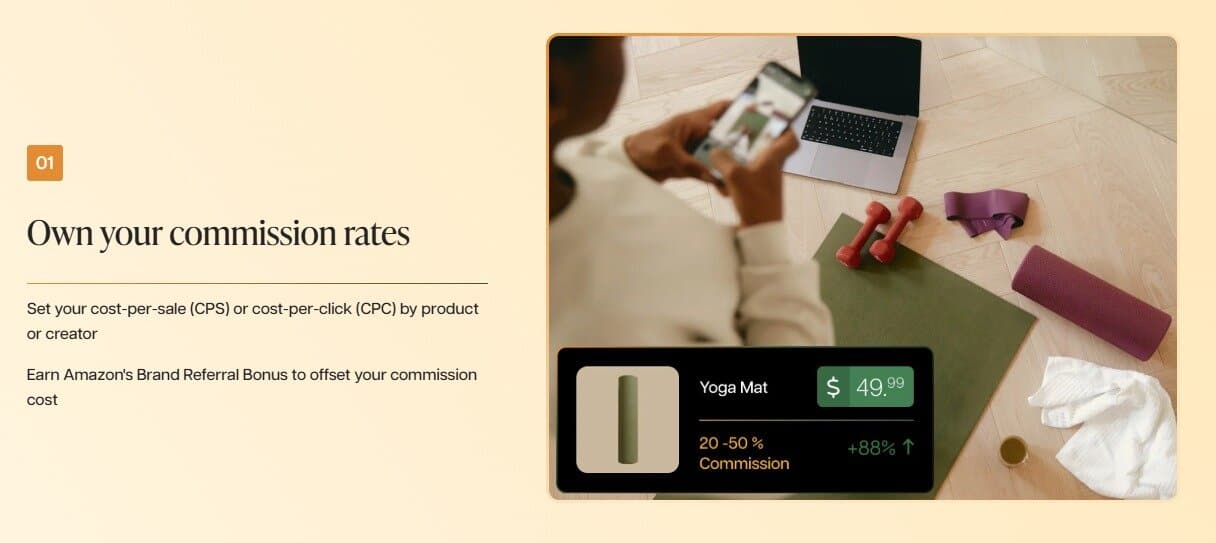
Levanta is made for Amazon brands, so the connection here is native. Once you link your seller account, it automatically uses the Amazon API to track KPIs such as clicks and purchases, down to the ASIN level.
It also pulls in your Brand Referral Bonus easily, as long as you are enrolled and eligible.
Example: Let’s say you sell premium coffee beans, and you want to grow your brand’s presence on Amazon. So you send a bag to a coffee influencer on Instagram, and when their followers click your Levanta link and buy, Levanta tells you exactly how many sales came from that post and adds your Brand Referral Bonus earnings to your total.
Influencity
Influencity, on the other hand, doesn’t have a direct Amazon API integration. You can still drive influencer traffic to your Amazon listings, but you’ll need to either manually use Amazon Attribution links or track performance indirectly via click data or coupon codes.
That means Influencity is better suited if your campaign has multiple destinations (Shopify, your blog, etc.) instead of being focused on just Amazon.
Influencer Discovery
Levanta
Levanta’s influencer network is smaller but more focused on e-commerce and Amazon specifically. You can filter by niche, product category, or channel, but the real power is in inviting any Amazon affiliate to join your campaign via a branded landing page. That means you can find creators who are already driving traffic to Amazon and make them part of your “official” affiliate team.
Influencity
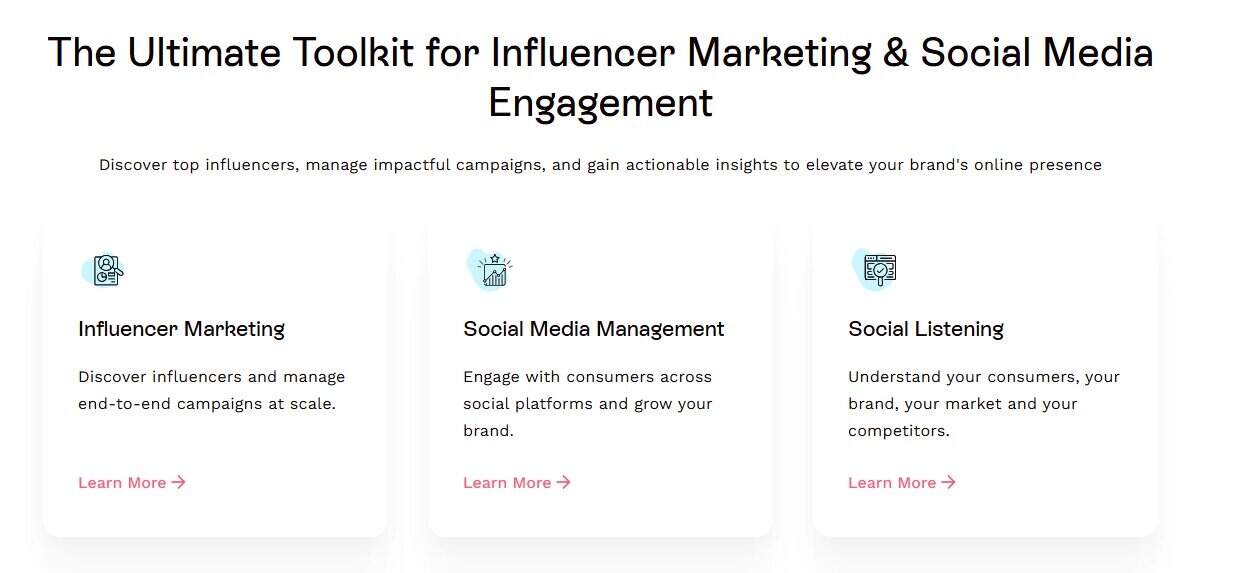
This is where Influencity shines:
- A database of 200M–300M creators worldwide
- Deep filters like follower authenticity, audience demographics, interests, engagement rate, and location
- Multiple platform search (Instagram, TikTok, YouTube, etc.)
Example: Suppose you’re launching a new line of yoga mats, and you sell on Amazon, Shopify, and through other marketplaces. If you want influencers in the U.S., Canada, U.K., and Australia with >50k female followers and at least 4% engagement, Influencity can find them in seconds.
Campaign Management
Levanta
Levanta’s campaign management is built for speed and simplicity:
- Easy product imports via ASINs
- Automatic commission tracking
- Aggregated invoices so you don’t have to pay creators one by one
Influencity
Influencity’s Influencer Relationship Management system lets you:
- Track multiple campaigns at once
- Keep influencer contact info, contracts, and payment terms in one place
- Monitor deliverables across platforms
It’s more powerful for long-term partnerships and multi-phase campaigns, but less Amazon-specific in workflow.
Analytics & Reporting
Levanta
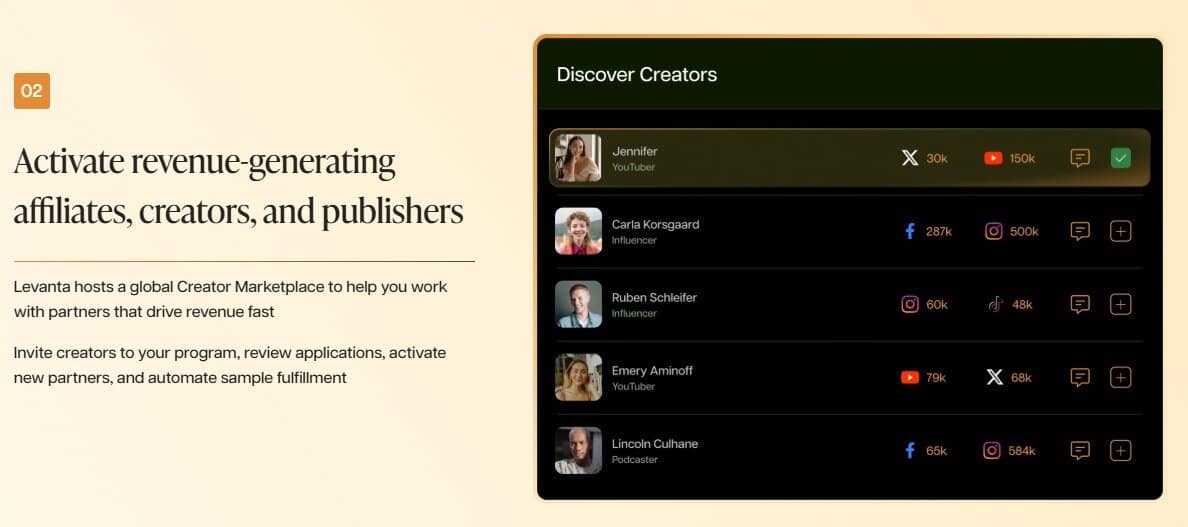
Levanta focuses on what Amazon brands care about most:
- Which influencers are generating clicks and sales
- Which ASINs are performing best
- How much revenue and Brand Referral Bonus each influencer brings in
Example: You can quickly see which influencer is converting at 8% and which is lagging at 2%, letting you double down on the higher performer.
Influencity
Influencity’s analytics are broader:
- Engagement rates
- Reach and impressions per post
- Audience breakdown (gender, age, geography)
- Platform-by-platform comparison
You can’t see exact Amazon sales without manual tracking, but you get a strong picture of brand awareness and audience fit.
Pricing & Value
Levanta
Levanta’s pricing is based on the selected tier and requires an annual contract. The two available options are:
- Gold: $750/month + 3.5% of affiliate sales (annual contract required)
- Enterprise: Custom pricing (annual contract required; available for high-volume sellers)
Influencity
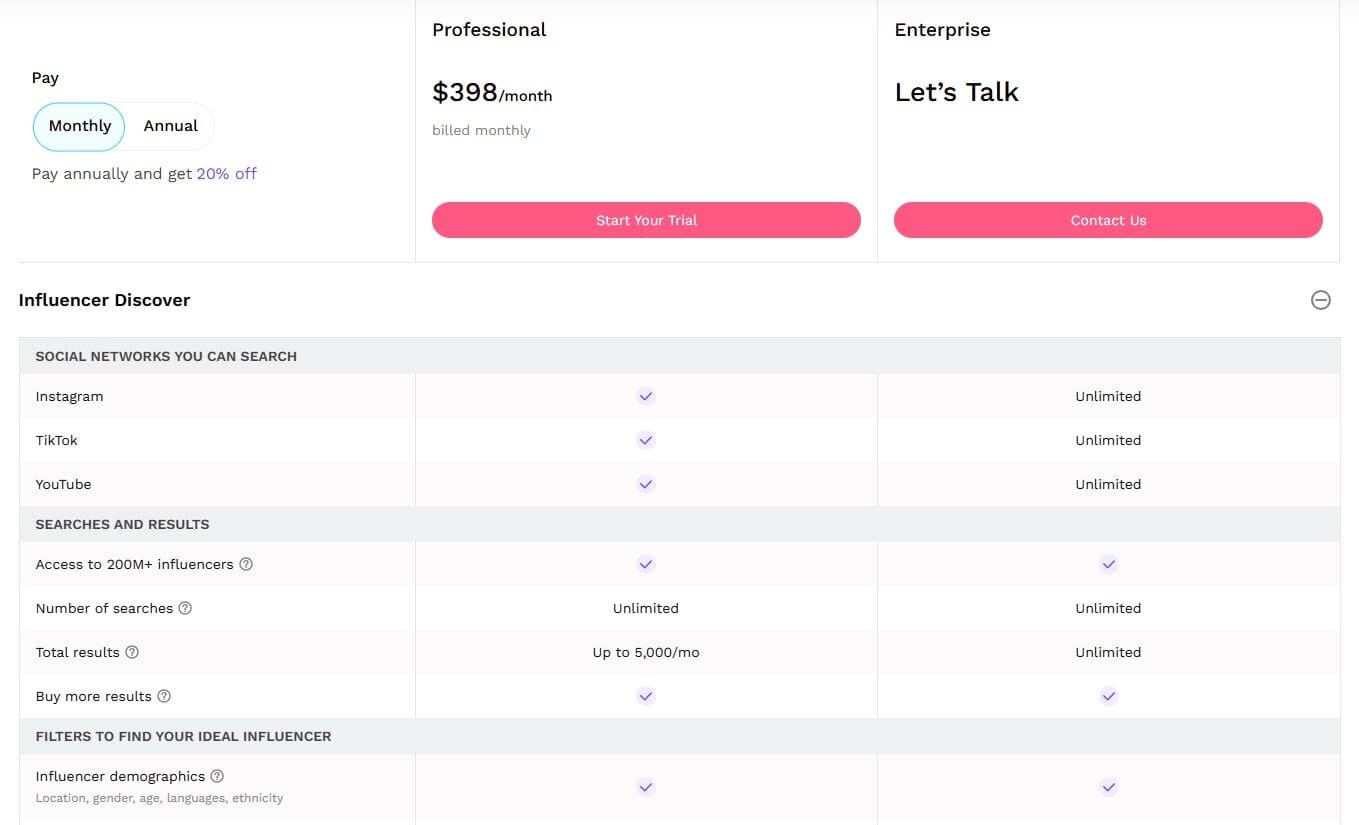
Influencity also offers a 20% discount on annual plans, and its monthly prices are as follows:
- Professional: $398/month
- Business: $998/month, including 10,000 profiles and 10 campaigns
- Enterprise: Custom
If you’re running large-scale, multi-market campaigns, Influencity’s cost makes sense since there’s no percentage cut taken for affiliate sales. However, for smaller, Amazon-only campaigns, it can be overkill unless you really need the discovery tools.
Pros and Cons
Levanta
✅ Pros | ❌ Cons |
Purpose-built for Amazon sellers: Everything from tracking to payments is optimized for marketplace sales. | Smaller influencer pool compared to big discovery platforms. Limited integrations outside of Amazon’s ecosystem, which could be a drawback for brands using complex tech stacks. |
Automatic Brand Referral Bonus tracking: You earn extra revenue without lifting a finger. | Less suited for multi-platform, non-Amazon campaigns. |
ASIN-level reporting: See exactly which products are converting. | Limited advanced analytics beyond ASIN-level reporting. |
One-click affiliate onboarding: Branded landing pages make it easy for influencers to join. | Limited tools for DTC or retail expansion, since it’s mainly focused on Amazon sellers. |
Payouts handled for you: You pay one invoice, and Levanta pays everyone else. | Payouts are handled internally, which may mean less flexibility if you want to customize payment terms or manage them in-house. |
Beginner-friendly: You can get set up in a day without technical help. | Scaling takes time. Significant returns and a strong affiliate base require consistent effort and patience. |
Influencity
✅ Pros | ❌ Cons |
Massive influencer database: Get access to 200M+ profiles with deep search filters. | No built-in Amazon integration. |
Multi-platform reach: Works for Instagram, TikTok, YouTube, and other mediums. | No automatic Brand Referral Bonus tracking. |
Powerful campaign management tools: Easily manage long-term, multi-phase campaigns. | May be overkill for Amazon-only sellers focused on quick conversions. |
Rich audience insights: Including demographics, interests, and authenticity checks. | More expensive. |
Advanced reporting: Easily see engagement, reach, and sentiment for brand awareness tracking. | Some users report issues with the interface, including slow load times and freezing when working with large data sets. |
Which Should You Choose?
Choosing between Levanta and Influencity really comes down to your goals and where your audience lives.
Go with Levanta if…
- Amazon is your main (or only) sales channel: Levanta is built around the Amazon ecosystem, so you’ll get the best sales tracking, automatic Brand Referral Bonus capture, and ASIN-level reporting.
- You want quick wins with minimal setup: You can launch a campaign in a day, send out affiliate links, and start seeing results within hours.
- You want better ROI when scaling Amazon influencer campaigns: Levanta is just over half the price of Influencity.
Go with Influencity if…
- You need massive reach across multiple platforms: Influencity’s 200M+ creator profiles mean you can find influencers in any niche, anywhere.
- You’re running campaigns that go beyond Amazon: If you want influencers driving traffic to a mix of Amazon, your own site, and social media, Influencity can handle it.
- You value deep audience data and campaign control: Influencity’s filters, authenticity checks, and IRM features make it ideal for long-term brand partnerships.
Why Not Both?
Some Amazon brands actually use both tools in tandem:
- Influencity to discover and recruit the right influencers
- Levanta to manage the Amazon-specific tracking, payouts, and Brand Referral Bonus collection
This approach works well if you’re serious about influencer marketing and you want the reach of a global discovery tool, but you also need the precision tracking of an Amazon-focused platform.
Example 1: Levanta: Amazon-Only Campaign for a Skincare Brand
Scenario: Suppose you run a mid-sized skincare brand that sells exclusively on Amazon. You’re launching a new vitamin C serum and want influencer traffic to directly boost sales rankings ahead of Prime Day.
How You’d Use Levanta:
- Connect your Amazon seller account to Levanta.
- Import the ASIN for your new product.
- Create a branded recruitment page that invites skincare influencers.
- Send product samples to selected influencers and provide them with affiliate links.
- Run the campaign during the two-week push prior to Prime Day.
How You’d Track Results:
- Intuitive dashboards: See exactly how much traffic and conversion, plus how many clicks and sales each influencer generates.
- ASIN-level performance: Track conversion rates for the vitamin C serum versus other products in your store.
- Revenue + Brand Referral Bonus: Levanta automatically shows total revenue plus the extra ~10% BRB earned from off-Amazon traffic.
Example 2: Influencity: Multi-Platform Lifestyle Campaign for a Kitchenware Brand
Scenario: Suppose you sell high-end kitchen gadgets on both Amazon and your Shopify store. You want to build brand awareness while also driving sales to both channels during the holiday season.
How You’d Use Influencity:
- Search the database for influencers in the food/cooking niche with >50k followers, 4%+ engagement, and audiences in the U.S. and U.K.
- Filter by platform: Instagram for pictures/reels, YouTube for recipe videos, TikTok for quick cooking hacks.
- Contact influencers directly through Influencity’s IRM to negotiate deliverables (Reels, Stories, YouTube videos).
- Provide each influencer with tracking links: Amazon Attribution for marketplace sales, UTM links for Shopify.
- Manage your content calendar inside Influencity to coordinate posting dates.
How You’d Track Results:
- Digestible analytics: See impressions, reach, and engagement per post.
- Amazon Attribution: Track which influencers drove Amazon sales, including conversion rates.
- UTM codes: Measure traffic and sales on your Shopify store from each influencer.
- Campaign reports: Export full post-performance summaries for internal ROI analysis.
Choosing Levanta vs. Influencity
Levanta and Influencity aren’t competing for the exact same space… they solve different problems for Amazon brands.
If your priority is driving direct Amazon sales and growing your brand on the site, Levanta is the clear choice. You’ll see exactly which influencers sell more products and collect your Brand Referral Bonus automatically. Amazon Associates provides very little control over which affiliates promote your products, but Levanta makes it possible to manage and build direct relationships with them. It also helps brands to tap into external traffic, which can improve visibility and organic ranking on Amazon.
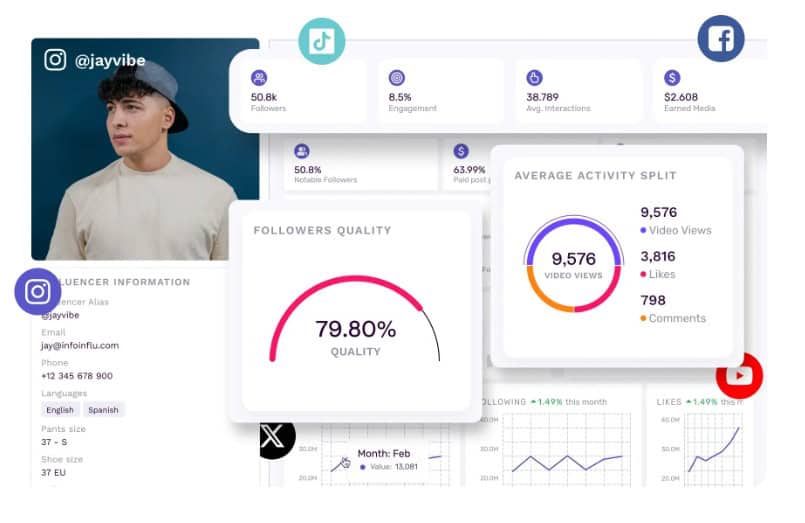
If you need massive reach across multiple platforms, deep audience data, and plan to build long-term influencer relationships, Influencity’s database and campaign management tools give you that scope. It lets you view any single influencer’s footprint across the various networks they belong to (YouTube, TikTok, or Instagram, for example), and the reporting metrics include engagement, follower quality, audience demographics, and more. Just note that it’s more than twice the price of Levanta.
Influencer campaigns are a great way to grow on Amazon and get the edge over your competitors. It’s still relatively underused in many niches, so having some influencers champion your brand can give you a massive advantage.