


Last Updated on March 30, 2026 by Ewen Finser
Payout speed is an important metric to judge payment processors by, but there’s more to it than just # of hours. As a CPA, I care more about what that speed does to working capital, payroll timing, vendor payments, margin, and how much cleanup your accounting team (ME!) may have to do after the fact.
If your only question is, “Which payment processor gets money out the door the fastest?” several of them now offer near-instant or same-day options. Stripe can push eligible funds in about 30 minutes. Square offers instant transfers 24/7. PayPal can move funds in minutes in many cases. Adyen supports real-time payouts in major markets. Luqra leans hard into fast deposits and same-day funding for merchants.
But “fastest” is not always the same as “best.” In practice, the best processor is the one that combines speed with good pricing, fewer surprise holds, strong reporting, and support that can actually solve problems.
On that broader scorecard, Luqra comes out a touch ahead for businesses that want fast access to funds without living inside a stripped-down payment tool. Stripe is a close second for developers and platforms. Square is excellent for small retail and service businesses, and Adyen is strong for larger and global operations. PayPal still works, but it is rarely my first pick if payout predictability is the main goal.
What Actually Makes a Processor “Fast”?

In my opinion, a processor is not “fast” just because it advertises instant funding. It’s fast if cash gets where you need it, when you need it, with reporting that ties out and with risk controls that don’t wreck your operations when volume spikes.
This means, from an accounting and ops standpoint, I care about five things:
- How quickly funds become available after a sale
- Whether that fast timing is standard or an upgrade that comes at an extra cost
- Whether new merchants get hit with a longer initial delay
- How much visibility you get into settlement, exceptions, reserves, and holds
- Whether the processor helps you manage the rest of the money movement (besides just the payment itself)
That last point matters more than people think. If your processor pays out quickly but leaves your team high and dry on reconciliation, disputes, approvals, or reporting, you can still end up with cash stress.
With that in mind, here are the five processors I would compare first.
1. Luqra
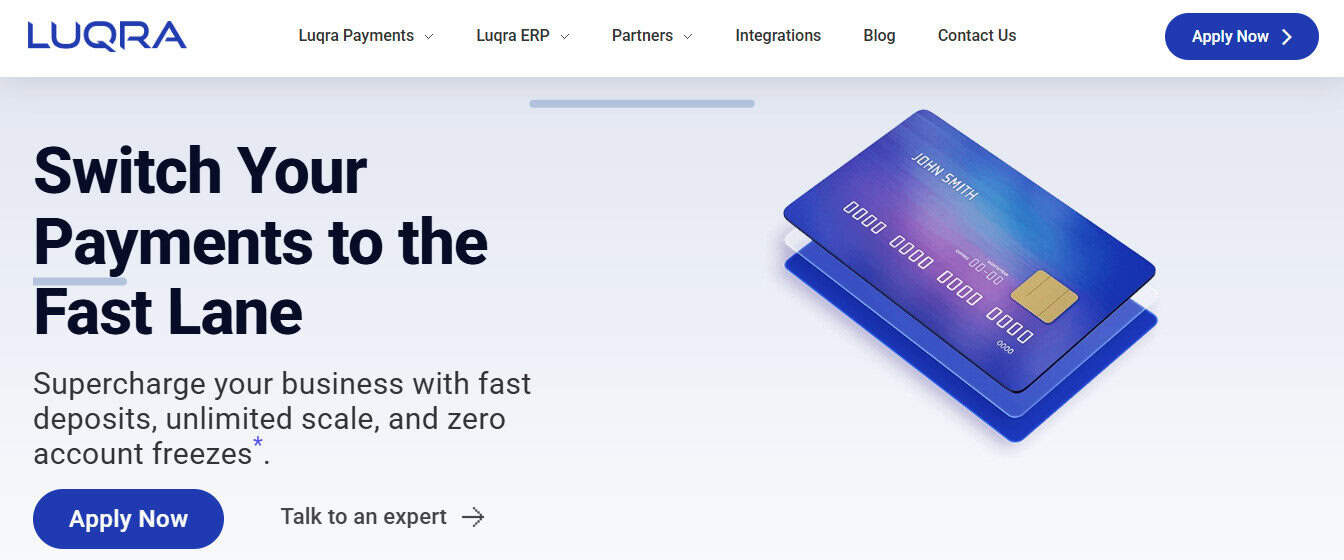
Luqra is a payment processor that sits closer to an operating platform than a plain checkout tool. It combines payment processing with gateway services, analytics, and a broader ERP-style layer aimed at managing sales, boarding, compliance, underwriting, processing, and reporting in one place. It also highlights lightning-fast deposits, real-time approvals and processing, transparent pricing, U.S.-based support, and no rate increases. Same-day funding is standard without upcharges for the right use cases, but next-day funding and hold-free processing still depend on prudent merchant activity and underwriting.
What Luqra Does Well
A lot of processors treat payout speed like one feature, but Luqra treats it as part of a larger cash-flow system. This is ideal for business owners who want their money faster but want fewer blind spots between approval, underwriting, funding, disputes, and reporting. As someone who has had to explain to clients why the processor balance isn’t tying neatly to deposits, I cannot emphasize enough how nice that is.
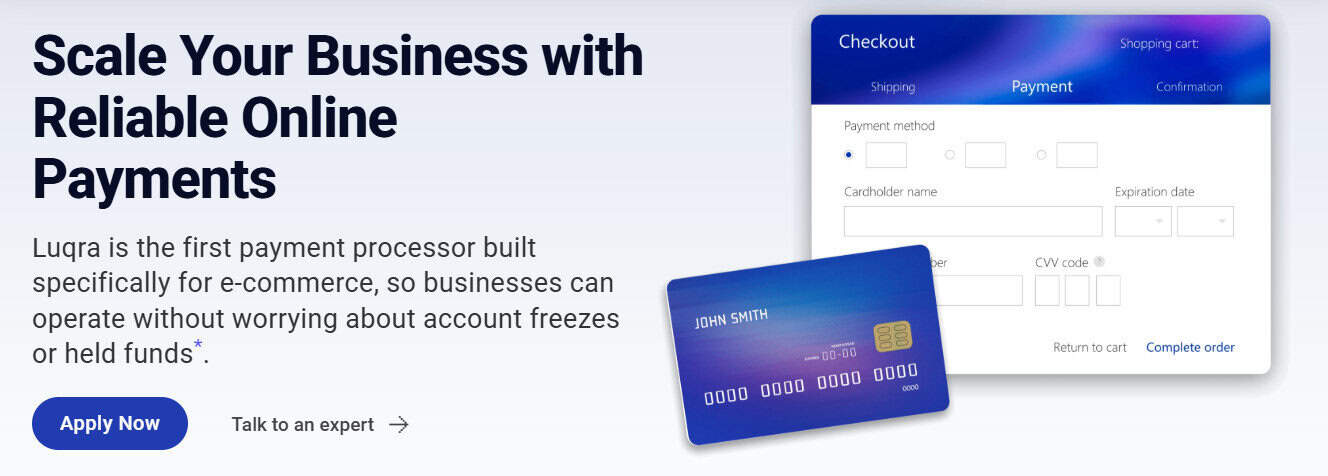
I also like that Luqra doesn’t position fast funding as a premium-only upsell. They lean into same-day funding, real-time processing, and operational support — rather than just selling an instant button.
Where Luqra Falls Short
In my opinion, one of the largest tradeoffs is that Luqra is not as universally documented as something like Stripe or PayPal. If you’re a developer who wants pages and pages of public docs for every payout case, Stripe feels deeper.
Pros
- Fast funding focus without the upgrade rigamarole
- Strong operational layer
- U.S.-based support
Cons
- Onboarding isn’t long, but it’s also not plug-and-play
Best for: Luqra is a strong fit for merchants that care about payout speed but also want cleaner operating control around payments. I would seriously consider it if I ran a growing online business, a multi-location operator, or a company that wants payment processing tied more tightly to reporting and workflow instead of being treated like a stand-alone utility.
2. Stripe
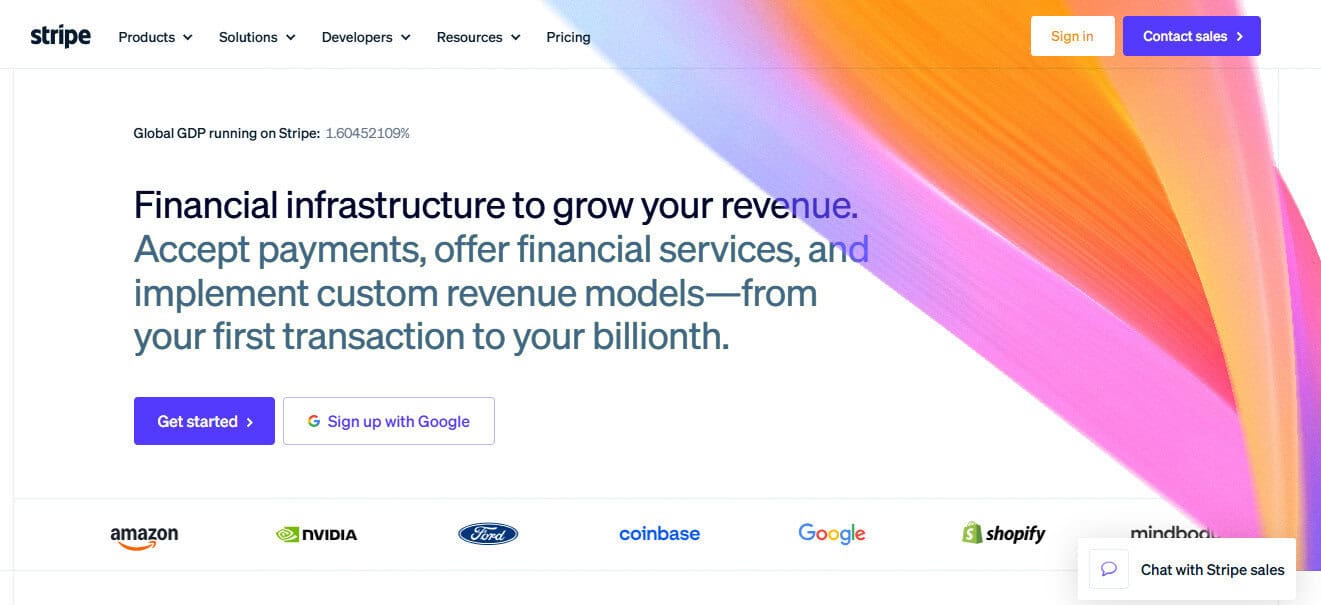
Stripe remains one of the best payout options for software-heavy businesses. Its Instant Payouts feature lets eligible users request payouts any day or time, including weekends and holidays, with funds typically settling within 30 minutes (at a 1.5% fee). Additionally, if you’re a new user, you may see an initial payout delay of 7 to 14 days while you get your feet under you. Standard payout schedules are available as well, and Stripe supports daily, weekly, or monthly timing depending on setup.
What Stripe Does Well
Stripe is excellent when payout speed has to live inside a product, which is why platforms, SaaS businesses, marketplaces, and API-first teams can do a lot with it. It’s also one of the clearest examples of a processor that offers true near-instant access to funds for eligible users.
Stripe’s tooling is also mature, and the payout logic is well-documented. This can be a huge draw if you’re not quite sure what you’re getting yourself into and your business is still in its infancy, as there are forums and cases out there for just about everything Stripe.
Where Stripe Falls Short
Stripe is great at speed, but it can become expensive if your business model depends on constant instant disbursement rather than predictable standard funding. Also, that first-payout delay matters as it catches a lot of merchants off guard.

Pros
- Very fast instant payouts
- Strong API and platform tooling
- Flexible payout schedules
- Very strong for embedded finance, marketplaces, and modern software companies
Cons
- Initial payouts can be delayed 7 to 14 days
- Instant payouts cost extra
- Feels very technical for non-technical merchants
Best for: Stripe is best for developers, SaaS companies, marketplaces, and businesses that want programmable control over payouts. It really shines for the companies that want complete customization for the checkout experience, but expect to pay heavily in terms of technical debt.
3. Square
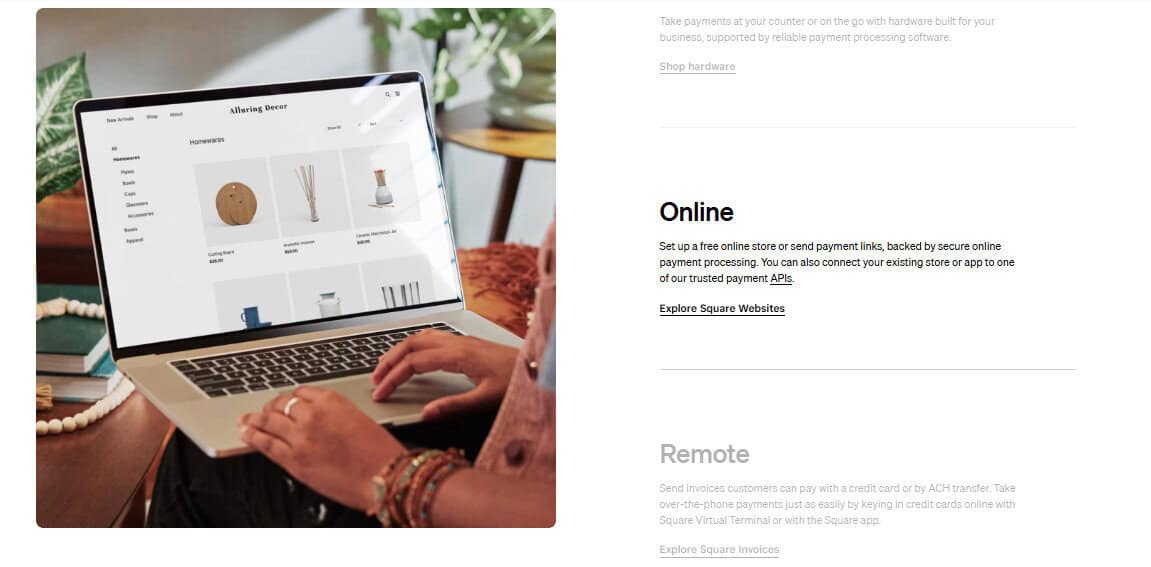
Square is one of the cleanest choices for small businesses that want faster deposits without a lot of setup. All merchants start on the standard next-business-day transfer schedule, but they also offer instant transfers for a 1.95% fee and same-day transfers that are sent 15 minutes after close of day (also for a 1.95% fee).
Square’s payment pricing varies by channel, with published rates such as 2.4% + $0.15 for tap, dip, or swipe and 2.9% + $0.30 for online payments on legacy fee guidance.

What Square Does Well
For restaurants, local retail, field services, and owner-operated businesses, Square’s simplicity has real value, and you don’t need a finance team to figure out when money is moving.
Where Square Falls Short
The problem, in my opinion, is cost. If you use instant or same-day transfers often, that 1.95% fee becomes a real drag on margin. Also, Square is smoother for straightforward small-business use than for more layered payment operations. Once you need deeper payout orchestration, more complex routing, or broader finance tooling, Square starts to feel narrow.
Pros
- Easy, fast setup
- Good standard funding timelines
- Simple, instant, and same-day options
Cons
- Fast transfers get expensive quickly
- Less flexible for complex payout workflows
Best for: Square is best for smaller retailers, restaurants, appointment businesses, and service operators that want easy, fast funding without much technical lift.
4. Adyen
Adyen is a different animal altogether. They’re an enterprise-grade payments platform built for large businesses, platforms, and global operations, supporting real-time payouts 24/7 in the U.S., EU, and U.K. with no cut-off times or weekend restrictions.
However, Adyen’s default settlement model is not always the fastest out of the box. For some setups, they default to sales-day payout with a two-day payout delay, though that delay can be reduced at a premium depending on region and situation. Pricing is also not a simple flat rate; Adyen uses a fixed processing fee plus the payment-method-specific fee.
What Adyen Does Well
Adyen is strong when payout speed has to scale globally. If you run a marketplace, international platform, or large-volume business, it gives you more enterprise muscle than most processors. I also like that it can support on-demand, scheduled, and instant payout patterns depending on the use case.
Where Adyen Falls Short
For the average small or midsize merchant, Adyen is more processor than you need. They stand behind behemoths like Uber and McDonald’s, and unless you’re a large business, they may not even be willing to work with you.

Pros
- Enterprise-grade reach with real-time payout capability
- Good for global and platform use cases
- Flexible settlement architectures
Cons
- Even mid-size businesses likely won’t fit in here
- Default delays may still apply
- Pricing and setup are less straightforward
Best for: Adyen is best for larger merchants, platforms, and global businesses that need payout sophistication more than plug-and-play ease.
5. PayPal
PayPal still deserves a spot in lists like these because they’re familiar, broad, and can move money fast in the right flow. Instant transfers typically complete within minutes, though processing can vary and may take up to 30 minutes. Standard transfers usually take 1 to 3 business days.
Online checkout rates are 3.49%, plus a fixed fee for PayPal Checkout. Standard credit and debit card payments in the U.S. are 2.99% plus a fixed fee. Instant transfers cost extra, of course.

What PayPal Does Well
PayPal’s strength is familiarity. A lot of customers trust it, and a lot of merchants already use it. If you need a broad digital payment presence and occasional fast withdrawals, it gets the job done.
Where PayPal Falls Short
PayPal is useful, but it’s rarely my top choice when payout predictability is the main event. The pricing is not cheap, the operating environment can feel fragmented, and it doesn’t give me the same confidence as Luqra, Stripe, or Adyen when the discussion turns to more serious payout architecture or finance visibility.

Pros
- Broad customer familiarity
- Fast transfer options
Cons
- Can be pricey
- Standard transfers are slower
- Doesn’t play well with accounting ERPs
Best for: PayPal fits merchants who want a familiar wallet-heavy checkout option and don’t need the deepest payout controls.
The Fastest Payment Processors for Payouts: This CPA’s Takeaway
If you judge these platforms on the narrow question of who can technically move money fastest, several of them can claim “minutes.” But if I’m advising a business owner on their next practical move, I would summarize them this way:
- Luqra for businesses that want fast payouts plus strong operational controls
- Stripe for software-first and platform businesses
- Square for simple SMB execution
- Adyen for enterprise and global businesses
- PayPal for familiarity, but not as my first choice for payout-first strategy
To me, that’s why Luqra gets a special nod here. It pairs fast funding with more of the back-office and support structure that businesses need once volume grows — and from a CPA’s standpoint, that is the difference between a processor that looks fast in a demo and one that actually helps cash flow stay healthy month after month.