


Creator campaigns sound simple, until the tracking, payouts, and reporting start to give you headaches.
Maybe creators are interested, but attribution is messy. Links are live, but it’s still unclear what is actually driving incremental revenue. Or maybe you’ve outgrown the “post and pray” phase and need something more structured, without turning creator partnerships into a rigid performance machine that kills creativity.
Picking the right affiliate platform can make all the difference.
I’ve worked with brands at all stages of creator and affiliate maturity, and the biggest mistake I see is assuming every affiliate platform is built for creator-led growth. They’re not. Some excel at traditional affiliate programs, others are designed for enterprise partner networks, and a few just bolt creators on as an afterthought.
If you’re looking for the right affiliate platform used for creator campaigns today, we’ve collected a few of the best and compared them. Let’s talk about what they’re actually good at, and where they tend to fall short in real-world use.
At a Glance: Best Affiliate Platforms for Creator Campaigns
Before diving deeper, here is a quick snapshot of how these platforms typically shake out:
- Levanta: Best for creator-led commerce with real performance accountability
- Impact: Best for traditional enterprise affiliate programs
- CJ Affiliate: Best for traditional affiliates and publishers
- Partnerize: Best for flexibility across affiliate types
- Rakuten: Best for publisher and content creator discovery with light affiliate support
Now, let’s break each one down and talk about their strengths and pitfalls.
Levanta
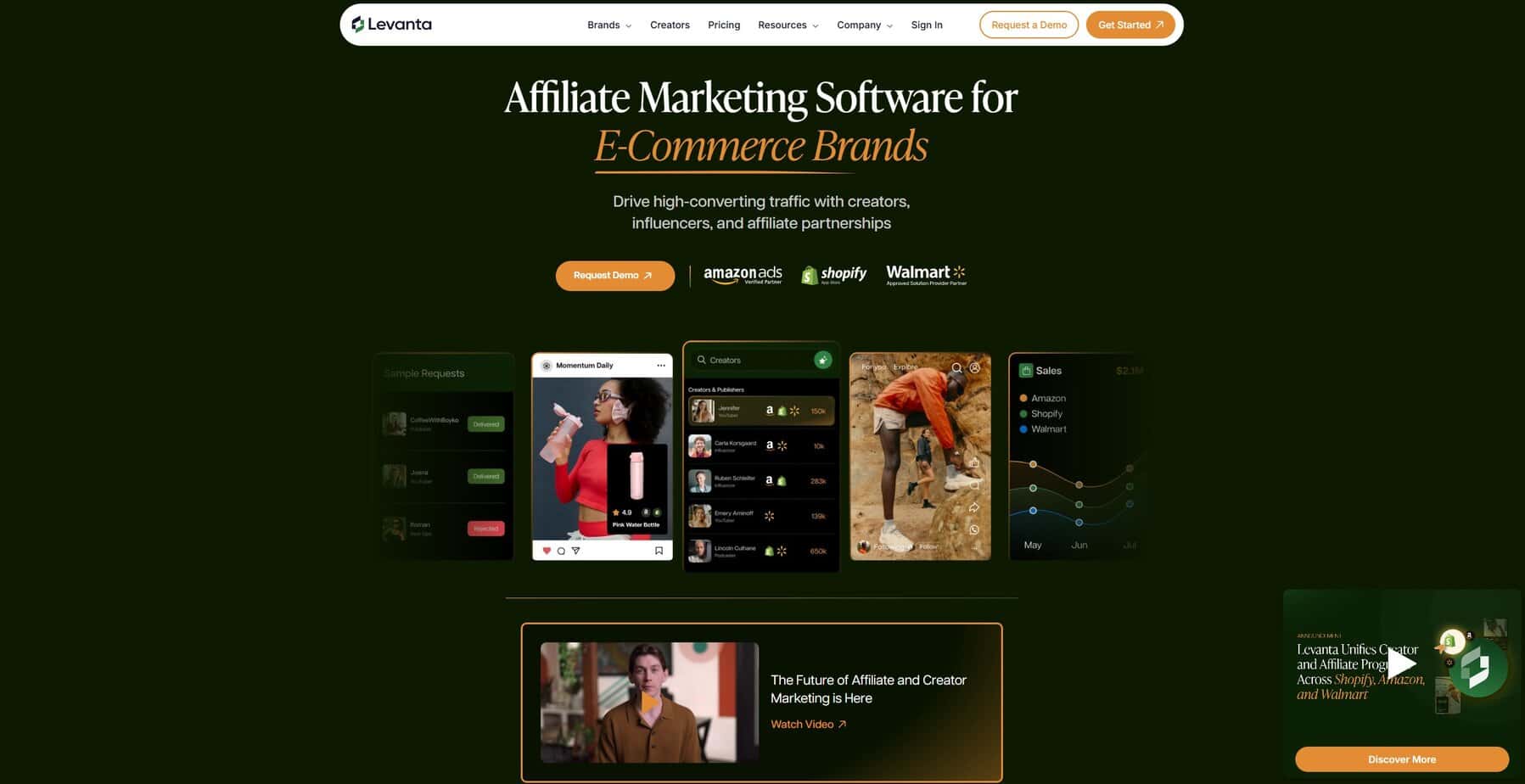
Levanta approaches creator campaigns differently, and that’s why it tends to stand out once brands reach a certain level of maturity.
Instead of treating creators like an add-on to a traditional affiliate system, Levanta is built around creator-led commerce from the ground up, especially for brands selling on Amazon, Shopify, and Walmart. The focus here isn’t just tracking clicks, but understanding which creator partnerships are actually driving incremental value across marketplaces and DTC. On Levanta, you’ll find high-authority creators and publishers who can promote your brand and products in a way that actually influences buyer journeys and customer acquisition.
One of the biggest advantages I’ve seen is how clearly performance is tied back to outcomes that actually matter. Between commissions-based programs, CPC options, and most recently paid placements, brands can test, scale, and optimize creator partnerships without relying on gut feel.
Through Levanta’s Paid Placements, brands can negotiate flat-fee deals and layer commission structures to secure authoritative content from publishers and creators, measure their incremental impact (including new-to-brand and halo-effect sales), and gain greater visibility in AI-powered search environments where consumers are actively seeking product recommendations.
More and more, customers are using AI as part of their path to purchase, and paid placements are a modern route to growth and visibility made easier through this platform.
Levanta isn’t built for brands that want a simple set-and-forget affiliate program. It works best when teams are actively testing, learning, and refining their creator strategy across Amazon, Shopify and Walmart and who want to optimize across those channels to drive incremental value that truly moves the needle.
As an aside, Levanta recently relaunched their private Slack community for ecommerce brands and agencies, which is free to join but does require an application. Active members discuss what’s working right now in creator and affiliate marketing, and that can be a great place to learn new strategies from others who are growing their programs.
- Best for: Brands that are serious about creator-led performance and accountability
- Watch out for: Teams must take strategic ownership and be willing to iterate
Impact
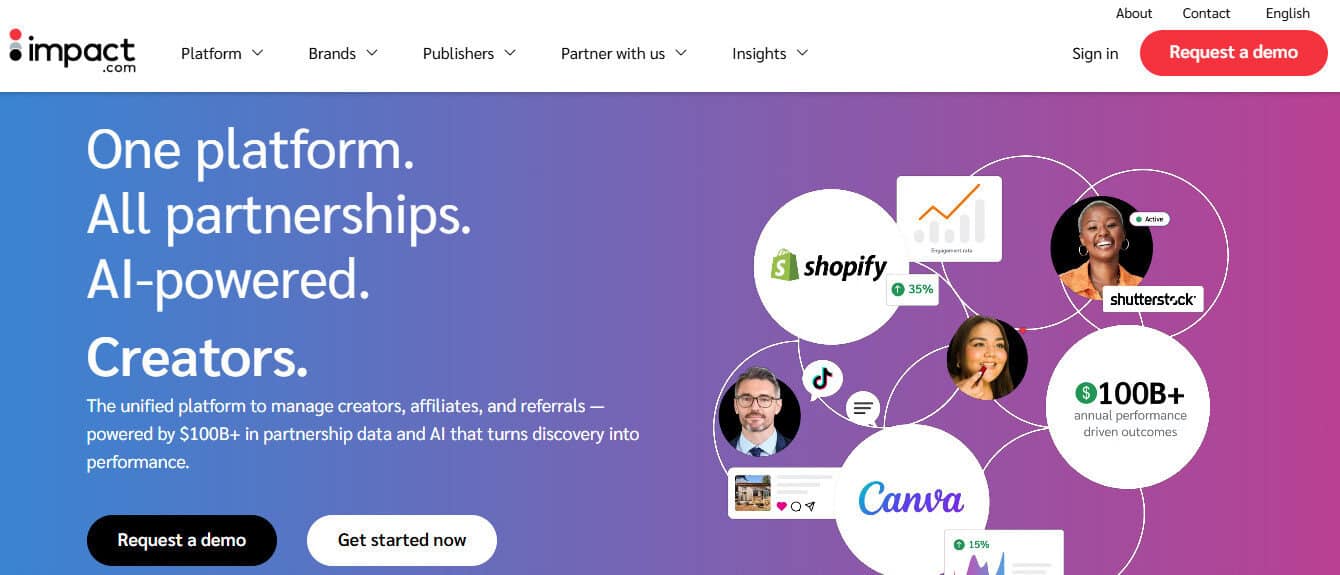
Impact is one of the most widely used affiliate platforms on the market, especially among larger brands with traditional enterprise affiliate programs. It’s powerful, customizable, and built to support complex partnership structures.
For creator campaigns, Impact works well if you already have strong internal processes and a team that can handle onboarding and optimization. It supports creators, influencers, affiliates, and even B2B partnerships under one roof.
Where teams struggle with Impact is its usability. It’s not particularly intuitive for creators, and onboarding can feel heavy if you’re trying to move fast; it can sometimes take months to launch your program. For brands just getting serious about creator-led affiliate programs, the learning curve can slow momentum.
Additionally, Impact’s creator marketplace is geared toward “old school” affiliate partners, like coupon sites, but these aren’t necessarily the types of partners your brand wants to attract. Coupon sites are common but they don’t help to drive customer acquisition; instead, they intercept a conversion at the end of a transaction that would have happened anyway. This means your brand is paying a commission to a partner that jumped in at the last second, usually right at checkout, and it’s also losing money through the discounted coupon price at the same time.
- Best for: Large brands with mature affiliate programs and internal resources
- Watch out for: Complexity and friction for creators who want speed and simplicity
CJ Affiliate
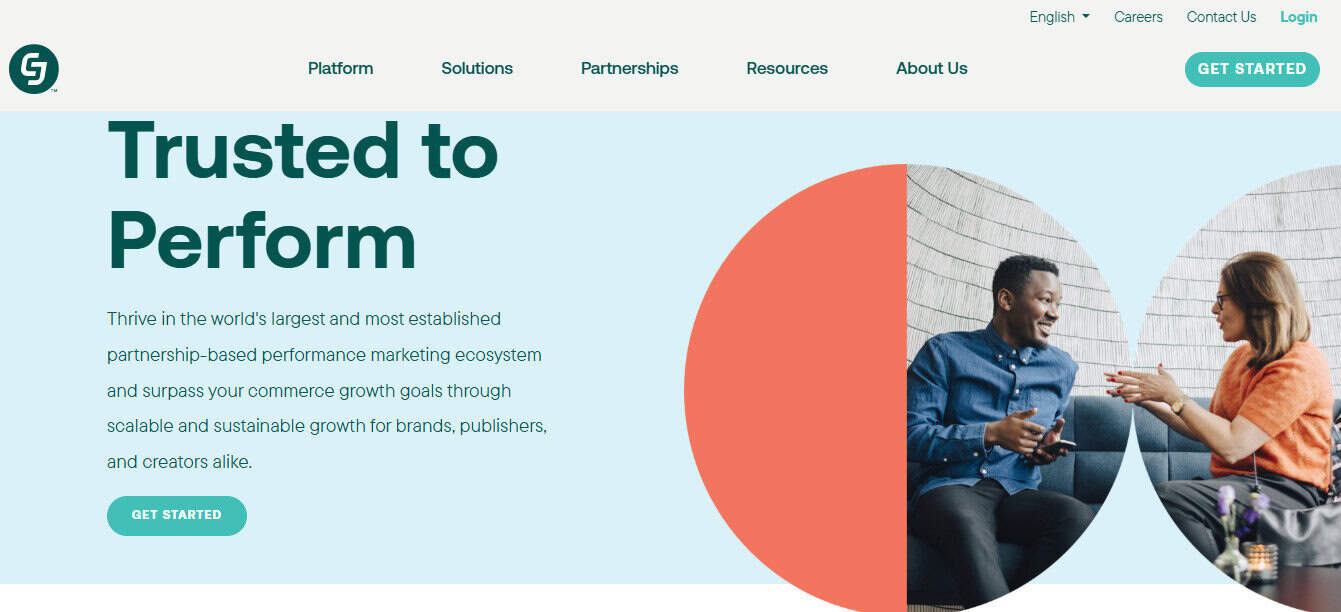
CJ is one of the oldest names in affiliate marketing for both good and for bad. It’s extremely strong when it comes to traditional affiliate relationships like publishers, deal sites, and content affiliates. However, CJ isn’t really built with modern creator workflows in mind.
If your creators already operate like affiliates and are comfortable with links, reporting dashboards, and traditional commission structures, it can work.
However, discovery is limited. Because the platform offers limited support for finding and activating creators, many brands end up managing relationships, outreach, and optimization manually outside the platform. This reduces efficiency overall.
- Best for: Content publishers and traditional affiliate partners
- Watch out for: Limited creator tooling and outdated workflows
Partnerize
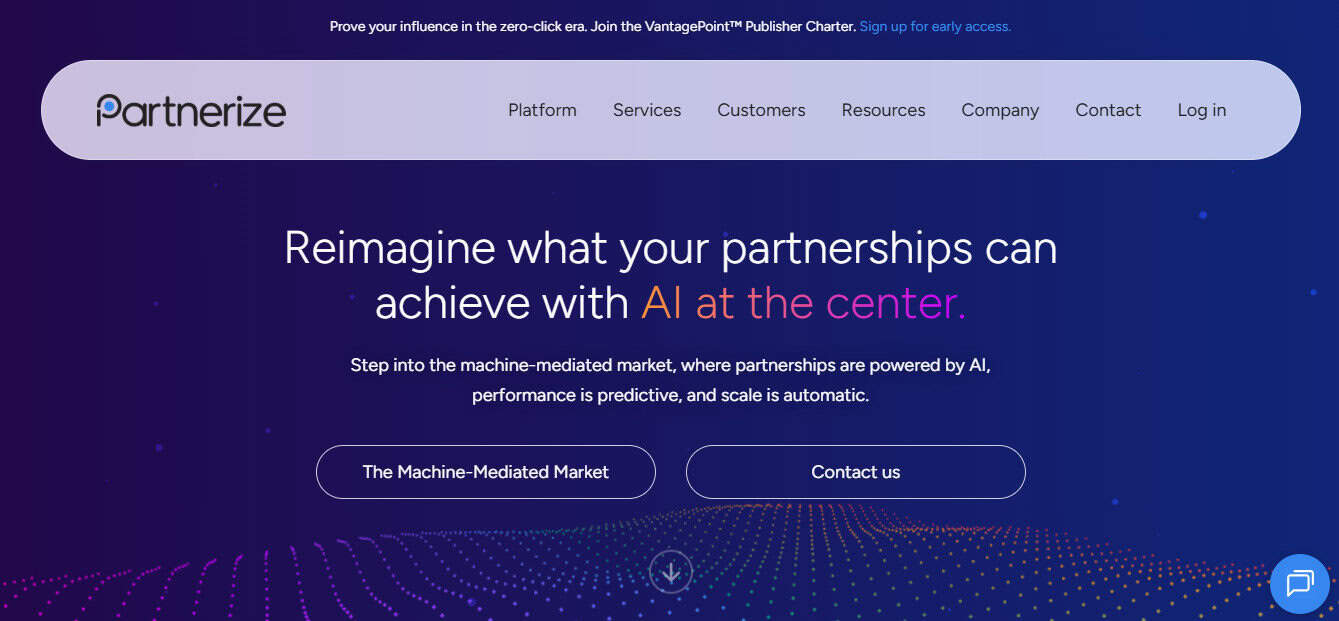
Partnerize sits somewhere between CJ and Impact in terms of flexibility. It offers strong tracking, decent customization, and more openness to different partner types, including influencers and creators.
For brands running hybrid programs, Partnerize can be a solid option. It supports automation, partner segmentation, and performance optimization without forcing everything into a one-size-fits-all model.
That said, the quality of the creator experience depends more on how the brand sets up campaigns, onboarding, and communications than on the platform itself. It’s not inherently creator-first, which means teams need to put in the extra effort to make campaigns feel attractive and easy for creators to participate in.
- Best for: Brands running mixed affiliate and influencer programs
- Watch out for: Creator experiences varies based on setup and internal process
Rakuten
For brands running creator-led campaigns, Rakuten blends traditional affiliate infrastructure with influencer-friendly capabilities. Its network includes content creators, publishers, media properties, loyalty partners, and influencers, although it skews more toward established creators rather than microinfluencers.
Rakuten has a global reach, so it can be a great option if you’re expanding in multiple regions or running creator campaigns across North America, Europe, or Asia-Pacific.
The reporting tools support multi-touch attribution so you can evaluate incremental impact and assisted conversions, but it can feel a lot more like a traditional affiliate platform (like Impact or CJ), rather than an influencer-native one. And just like those old school platforms, the onboarding and setup can be lengthy and complicated, requiring more hands-on support.
- Best for: Mid-market to enterprise brands integrating creators into a broader affiliate ecosystem
- Watch out for: Brands looking for purely self-serve influencer discovery tools
How to Choose the Right Affiliate Platform for Creator Campaigns
The biggest mistake that I see brands make is choosing a platform based on reputation instead of readiness.
So, ask yourself:
- Do we want creator content, or creator-driven revenue?
- Do we need discovery, performance, or both?
- How much internal ownership are we prepared to take on?
Platforms don’t fix unclear strategies. They amplify whatever structure already exists. The best affiliate platform for creator campaigns is the one that matches how your team actually operates today, not how you hope it will operate six months from now.
There isn’t one universal “best” affiliate platform for creator campaigns. The right choice depends on your stage, goals, and appetite for accountability.
If you’re running traditional affiliate programs, platforms like CJ or Impact may be enough. If you’re running a hybrid program, Rakuten can work early on.
But if your creators are becoming a real channel for revenue and you need visibility into what is actually driving results, platforms like Levanta tend to hold up better over time. Not because they promise certainty, but because they are built for how messy creator-led growth actually is.