


Last Updated on March 4, 2026 by Ewen Finser
If you’re running a Shopify store and looking for the best affiliate marketing platform, chances are you’re already feeling some friction.
Maybe you’ve tried gifting creators and hoped for the best. Maybe you’ve set up an affiliate tool that technically works, but no one actually wants to use it. Or maybe your program is growing, but tracking feels messy, payouts feel manual, and you’re starting to worry that you’re spending more time managing affiliates than benefiting from them.
Affiliate marketing sounds simple in theory. Find partners. Give them links. Track sales. Pay commission. In reality, especially on Shopify, the tool you choose can make or break the experience for both you and your affiliates.
I’ve seen brands stall out not because affiliate marketing didn’t work, but because they chose a platform that didn’t match how they actually operate. The “best” platform isn’t universal. It depends on your stage, your margins, and how involved you want to be in managing relationships.
Below is a grounded breakdown of the most commonly used Shopify affiliate marketing platforms, what they’re actually good at, and where they tend to fall short.
Best Affiliate Marketing Platforms for Shopify at a Glance
If you want the quick version before diving deeper, here’s how the top options tend to shake out:
- Best overall and best first choice for Shopify brands: Levanta
- Best for large, complex affiliate programs: Impact
- Best for influencer-heavy programs : Grin
- Best for simple, beginner-friendly affiliate setups: Refersion
- Best for enterprise partner programs: Partnerize
Each of these platforms can work in the right context. The key is choosing the one that aligns with how your brand actually grows.
1. Levanta
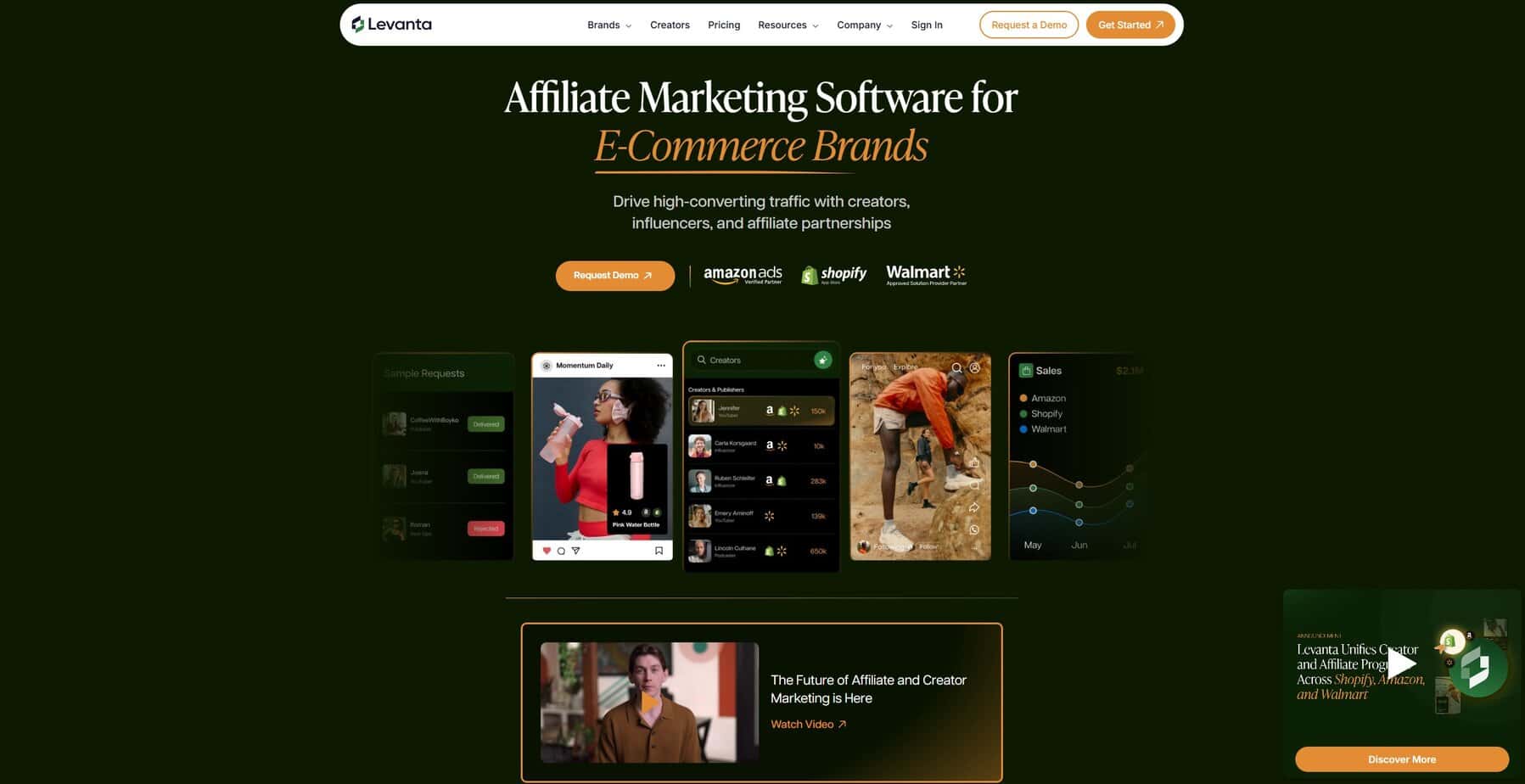
Levanta has quickly become one of the most interesting options for Shopify brands, especially since expanding beyond Amazon and Walmart and launching their Shopify offering.
Levanta is clearly built for modern e-commerce brands that rely on creators, affiliates, and partnerships as real growth channels, not side experiments. Affiliate and creator marketing are converging, but that’s the gap that Levanta is able to fill like no other: it is the best marketing platform for both.
Levanta offers clean tracking, simple brand onboarding with one-click integrations for Shopify, Amazon, and Walmart, and it unifies cross-platform management without feeling over-technical or bloated. You can migrate to Levanta and be up and running in a matter of minutes.
Levanta makes it easy to discover and invite creators that are a fit for your industry (the AI-powered marketplace has social listening capabilities), and brands can track partner performance and incrementality (which ones are really influencing sales and not just getting last-click credit for conversions).
Another underrated aspect is the creator experience. Levanta automates product seeding (gifted samples) for creators, and paid placements are built into the platform.
Levanta isn’t trying to be a legacy monster with endless configuration options, and that’s a good thing. It’s a modern platform that addresses some of the biggest affiliate marketing pain points (high overhead, disjointed programs, outdated software, limited visibility), and it’s designed to help omnichannel brands manage everything from one place and scale without having to rip their tooling apart later.
- Best for: Established omnichannel brands scaling their affiliate program who need to integrate Shopify, Amazon, and/or Walmart into a single platform for more cost- and time-effective management.
- Watch out for: Brands that are just starting out with affiliate marketing or have not yet launched a program.
2. Impact
Next up, Impact is one of the most established affiliates and partner marketing platforms on the market. It’s powerful, flexible, and built to support very large programs with multiple partner types, including content creators, influencers, and publishers.
For Shopify brands operating at scale, Impact can be a strong option, especially if you’re managing many strategic partnerships all at once. The reporting and automation capabilities are robust, and the platform is trusted by many large brands.
The tradeoff with this one is complexity.
Impact is not plug and play; far from it, in fact. Setup can take time (months, in some cases!), and most teams need a lot of internal expertise or agency support to fully leverage it. For smaller or even mid-sized Shopify brands, Impact can feel like overkill early on.
- Best for: Large brands with highly complex partner ecosystems.
- Watch out for: Steeper learning curve and a much longer setup time.
3. Grin
Grin is best known as an influencer marketing platform, but many Shopify brands also use it as part of their affiliate strategy.
Where Grin shines is in relationship management. It’s excellent for discovering creators, managing outreach, handling contracts, and keeping communication centralized. If your affiliate program is heavily influencer-led and built around long-term partnerships, Grin can be a strong fit.
From a tracking perspective, Grin is solid but not as deep as affiliate-first platforms. Many brands pair it with other tools to handle attribution and payouts more cleanly.
- Best for: Influencer-driven affiliate programs.
- Watch out for: Less robust affiliate tracking compared to dedicated platforms.
4. Refersion
Refersion is often one of the first platforms Shopify brands look to when launching an affiliate program, and for good reason. It’s relatively easy to set up, straightforward to use, and integrates clearly with Shopify.
For brands just getting started, Refersion can be a practical way to test affiliate marketing with minimal upfront investment. You can get a program live quickly and see if affiliates gain traction.
The downside is scalability. As programs grow, reporting and flexibility can start to feel limited. Brands with more sophisticated needs often outgrow Refersion and migrate to more robust platforms like Levanta later on.
- Best for: Small to mid-sized Shopify brands just starting.
- Watch out for: Limited flexibility as programs scale.
5. Partnerize
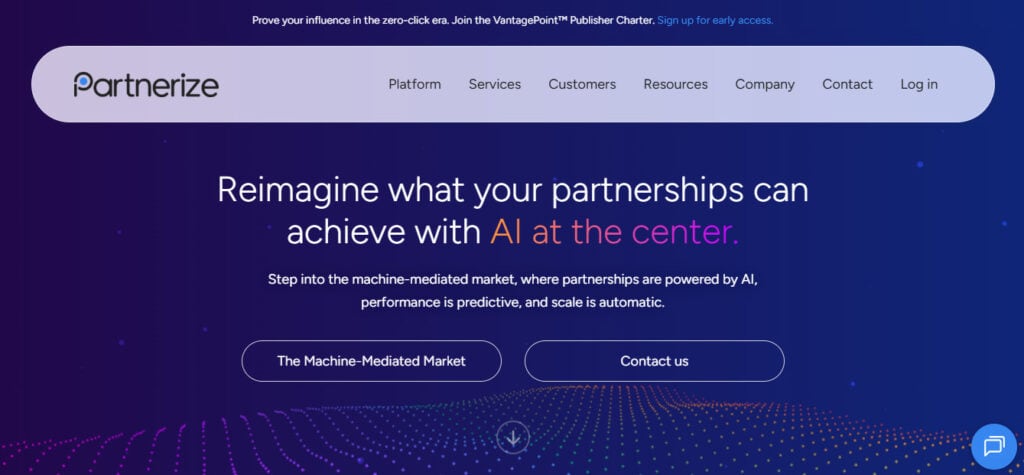
Partnerize sits firmly in the enterprise category. It’s built for large, global brands managing extensive partner programs across regions and channels.
The platform offers advanced automation, strong reporting, and governance features that matter at scale. For Shopify brands operating internationally or running complex partner strategies, Partnerize can be a fit.
For most growing Shopify brands, though, it’s more tools than they need early on. Implementation and cost can be significant, and teams may not fully utilize the platform’s capabilities.
- Best for: Enterprise-level Shopify brands.
- Watch out for: Higher costs and operational complexity.
How to Choose the Best Affiliate Platform for Your Shopify Store
One thing I don’t see discussed enough is how often affiliate programs fail because of tooling mismatch, not strategy.
Brands choose platforms based on their feature lists or reputations, then struggle to implement them. Or they choose something simple and hit limitations too quickly.
Before choosing a platform, I’d ask a few practical questions:
- How hands-on do we want to be with affiliates?
- Are we working mostly with creators, traditional affiliates, or both?
- Do we want to move fast, or are we optimizing for complexity and control?
- How important is ease of onboarding for partners?
The best affiliate platform supports how your team already works instead of forcing you into a new operating model.
Why Levanta Makes Sense as a First Choice for Shopify Brands
If I were advising a Shopify brand that’s also running affiliate programs on Amazon and Walmart (or is working toward that in the future), Levanta would be my top recommendation. This is the tool you want when you need to unify everything into a single platform to reduce costs, but also want to be able to get your creators up and running quickly, with cross-channel insights, tracking, and incrementality.
Levanta supports creators without overengineering the process. And it gives brands enough structure to scale without locking them into too much complexity too early; one-click integrations make migration a simple task.
The recent addition of their Shopify-focused features shows that Levanta is thinking beyond software. They’re building an ecosystem around affiliate and creator marketing that reflects how e-commerce actually works now.
For omnichannel brands that want to move quickly, learn fast, and scale their affiliate program without unnecessary overhead, Levanta stands out as the most practical, modern choice.
What Actually Matters When Choosing an Affiliate Platform
There’s no single best affiliate marketing platform for every Shopify store. The right choice depends on your stage, your team, and how you plan to grow.
If you’re running a large, complex operation, platforms like Impact or Partnerize may make sense. If you’re influencer-heavy, Grin can be valuable. If you’re just getting started, Refersion can work.
But if you want a clean, flexible, and creator-friendly platform built with modern Shopify brands in mind, Levanta is one of the strongest places to start.
The best tools don’t try to do everything. They help you execute well, adapt as you grow, and focus on what actually drives revenue.