


Last Updated on July 3, 2026 by Ewen Finser
Few scenarios are more agonizing for a business owner than logging into a dashboard to discover that tens of thousands of dollars in hard-earned revenue have been frozen for seemingly no reason. You can’t make payroll, you can’t pay your suppliers, and your customer service inbox is flooding while you sit trapped in an automated support queue, waiting for a risk department to review your file.
This phenomenon is not the result of malicious intent by the payment processor; it’s a structural byproduct of how modern digital payments are underwritten, monitored, and regulated. The convenience that’s allowed instant-onboarding payment aggregators to democratize e-commerce has only been made possible by shifting risk assessments from the front of the application process to the back end.
With that in mind, let’s explore the complex mechanics behind why payment processors freeze your capital.
The Anatomy of an Account Freeze

To understand how to prevent fund holds, you must first understand the financial architecture that causes them.
Payment processors don’t hold your money simply to earn interest or inconvenience your operations… they freeze funds because, under the rules established by major card networks like Visa and Mastercard, the processor acts as an unsecured lender to your business.
If you sell a product, collect the capital, and subsequently go bankrupt or fail to deliver the promised goods, the customer’s issuing bank will forcibly reverse the transaction. If your business bank account is empty, the payment processor is legally required to pay the refund out of its own pocket.
To protect themselves against this catastrophic liability, processors utilize three primary risk-mitigation mechanisms.
The PayFac Trap: Upfront Speed vs. Backend Underwriting
The vast majority of modern digital merchants launch their businesses using payment facilitators (PayFacs) such as Stripe, Square, or PayPal. These platforms allow you to type in an email address, connect a checking account, and begin accepting credit card transactions within minutes.
However, this convenience is achieved through a structural compromise known as delayed or backend underwriting.
Under this model, these platforms perform almost no due diligence when you open your account, such as reviewing your financial statements, business model, and supply chain logistics. Instead, aggregators group your business into a massive, shared merchant pool.
These aggregators rely entirely on post-approval automated algorithms to monitor your account. This means the true underwriting process only begins after your business starts processing meaningful transaction volume. Fund holds occur, then, when your live processing behavior contradicts the aggregator’s generic baseline.
Algorithmic Risk Scoring and Velocity Triggers
Payment processors monitor transaction flow using sophisticated algorithms designed to spot anomalies in real time. These automated systems measure transaction velocity, which tracks the speed, frequency, and financial volume of incoming charges. When an algorithmic trigger is tripped, the system automatically restricts the account to prevent potential losses.
Velocity spikes are the leading cause of surprise holds for legitimate businesses. If your historical processing average is $10,000 per month in $50 increments and you suddenly launch a viral marketing campaign that pulls in $80,000 in a single week, the risk model views this as an immediate red flag. From the algorithm’s perspective, a sudden spike in volume frequently indicates that a bad actor has taken over the account, or that a merchant is selling unfulfilled pre-orders they can’t realistically manufacture.
Unexpected changes in average ticket size or an influx of international credit cards can also instantly depress your internal risk score. Because these aggregators manage millions of accounts simultaneously, human risk analysts don’t manually investigate the anomaly before applying the restriction. The system freezes the capital automatically, leaving you to prove your legitimacy after the fact.
Chargeback Thresholds and Acquiring Bank Liability
While velocity triggers represent automated caution, chargeback spikes represent an existential threat to your payment processor.
Simply put, they do not like them.
A chargeback occurs when a cardholder contacts their bank directly to dispute a charge, bypassing your internal refund policies. The problem is that card networks enforce strict tolerance thresholds around transaction disputes. For example, Visa and Mastercard explicitly mandate that a merchant’s standard chargeback ratio must not exceed 0.9% to 1.0% of total monthly transactions.
Processors face crippling financial penalties if their merchant portfolio breaches these network limits. If an acquiring bank exceeds network thresholds, they’re placed into burdensome monitoring programs that carry tens of thousands of dollars in monthly fines.
A rising dispute ratio forces the processor to hoard your cash as collateral. If your dispute rate creeps toward the 1% danger zone, the risk department will freeze your settlements to build an involuntary rolling reserve fund. High-ticket businesses are disproportionately vulnerable to higher dispute ratios — if you only process one hundred sales per month, a single customer initiating a fraudulent chargeback instantly pushes your business to the absolute brink of network compliance.
Standard vs. Specialized Underwriting
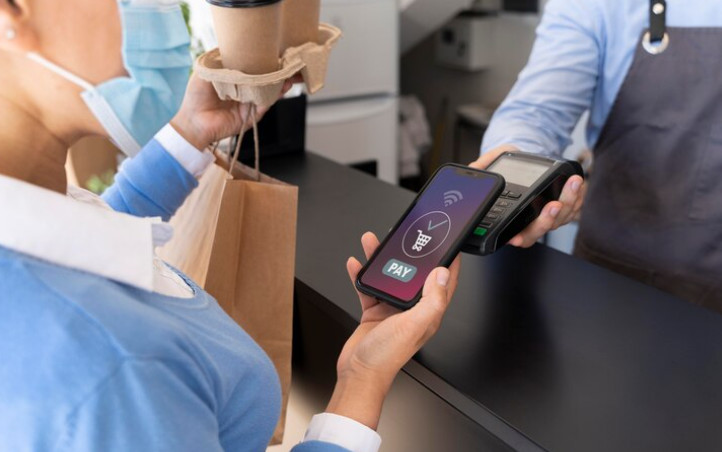
The fundamental divide in the payment processing industry lies between aggregated models built for effortless onboarding and dedicated models built for operational permanence.
Here are core operational differences that dictate whether your capital remains liquid or gets locked behind a surprise investigation:
Feature / Metric | Aggregated PayFacs (e.g., Stripe, Square) | Dedicated Merchant Accounts (e.g., Helcim, Luqra) |
Underwriting Timing | Post-approval (evaluated during active processing) | Pre-approval (evaluated before account activation) |
Speed to Market | Instantaneous (under five minutes) | Thorough (typically 24 to 72 hours) |
Risk Tolerance | Low (strictly automated algorithmic enforcement) | High (custom underwriting matched to industry) |
Account Ownership | Shared (sub-merchant within a master pool) | Unique (dedicated merchant identification number) |
Volume Scaling | Capped by automated algorithmic velocity flags | Uncapped within pre-approved custom parameters |
Support Architecture | Tiered ticketing loops and automated chat agents | Direct access to assigned account managers |
As you can see, choosing a payment processor is ultimately a choice between front-end convenience and back-end security. Investing two days into thorough, upfront underwriting is the single most effective action a business can take to permanently eliminate the threat of frozen capital.
Top Payment Processors Positioned for Fund Stability
To achieve genuine fund stability, scaling businesses should ideally migrate away from one-size-fits-all aggregators and partner with merchant acquirers that emphasize transparent onboarding. The following payment processors represent a diverse cross-section of the market, ranging from low-risk transparent providers to high-risk multi-bank specialists.
Luqra
Luqra represents a modern hybrid approach to payment processing, positioning itself as a comprehensive financial enterprise resource planning platform alongside its core merchant services. It focuses heavily on structural transparency, combining frictionless payment gateways with unified back-office workflows to protect scaling brands from unexpected cash flow disruptions.
- Target Merchant Profile: Luqra targets high-growth e-commerce brands, mid-market retail operations, and scaling digital service providers that require unified backend data management.
- Underwriting Methodology: Luqra utilizes a streamlined upfront underwriting process that establishes clear parameters around maximum ticket sizes and monthly volume — before a live transaction occurs.
- Freeze Prevention Mechanics: By integrating dispute management and active account takeover protections directly into their native ERP workflow, Luqra resolves transaction friction internally before it escalates into an account freeze.
- Customer Support Access: The company pairs its modern technology stack with dedicated, U.S.-based human problem solvers, ensuring business owners have immediate access to specialized operations staff.
- Pricing Structure: Luqra has a “meet or beat” rate transparency guarantee, promising that established processing rates will never be subjected to unannounced backend increases.
Helcim
Helcim has built a formidable reputation as a fiercely transparent, low-to-mid-risk payment processor that systematically dismantles the hidden fees and backend surprises common in traditional banking. Operating exclusively on an interchange-plus pricing model, Helcim offers predictable costs and rock-solid account stability.
- Target Merchant Profile: Helcim is perfectly optimized for established B2B enterprises, professional service providers, and high-volume retail merchants operating in traditional, non-controversial commercial sectors.
- Underwriting Methodology: Helcim enforces a rigorous manual underwriting process during onboarding, requiring verified business documentation and identity checks before any payment processing tools are activated.
- Freeze Prevention Mechanics: Because risk analysts establish clear processing baselines and average ticket expectations before your launch, legitimate volume surges are anticipated rather than flagged by automated security sweeps.
- Customer Support Access: Merchants are provided with direct telephone and email access to an in-house, North American support team that won’t read to you from a script.
- Pricing Structure: Helcim utilizes an aggressive, tiered interchange-plus pricing model with zero monthly platform fees, long-term contracts, or cancellation penalties.
PaymentCloud
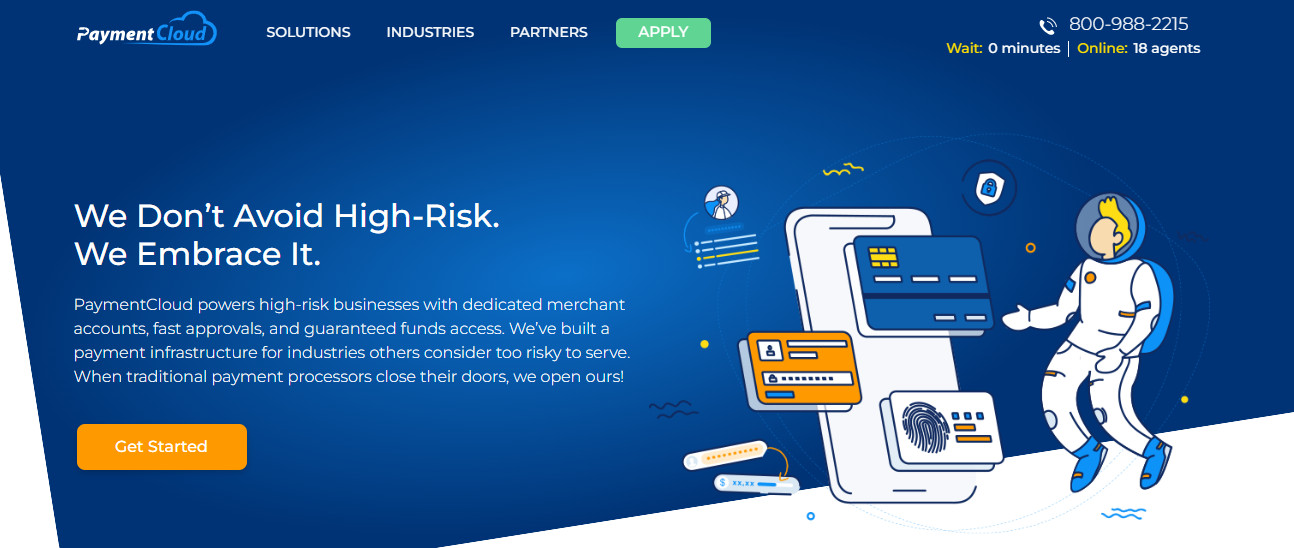
PaymentCloud specializes in navigating the complex regulatory environments surrounding high-risk e-commerce, heavily regulated goods, and businesses operating in historically volatile industries. Rather than relying on rigid internal algorithms, they act as an elite brokerage, matching complex merchant files with specialized acquiring banks that understand their specific operational hazards.
- Target Merchant Profile: PaymentCloud actively seeks out at-risk merchants such as subscription box sellers, adult entertainment platforms, CBD vendors, and businesses carrying elevated chargeback histories.
- Underwriting Methodology: Assigned risk specialists conduct exhaustive manual audits of your processing history, marketing claims, and fulfillment supply chains to guarantee alignment with backing banking partners.
- Freeze Prevention Mechanics: By matching your business model directly to a bank that explicitly welcomes your specific industry, PaymentCloud completely eliminates the structural friction that causes surprise freezes.
- Customer Support Access: Every merchant is permanently assigned a dedicated account representative who actively monitors daily batch files and serves as a direct internal advocate during dispute events.
- Pricing Structure: Due to the specialized nature of high-risk acquiring, pricing is entirely customized per account based on individual industry risk assessments and long-term volume projections.
Easy Pay Direct
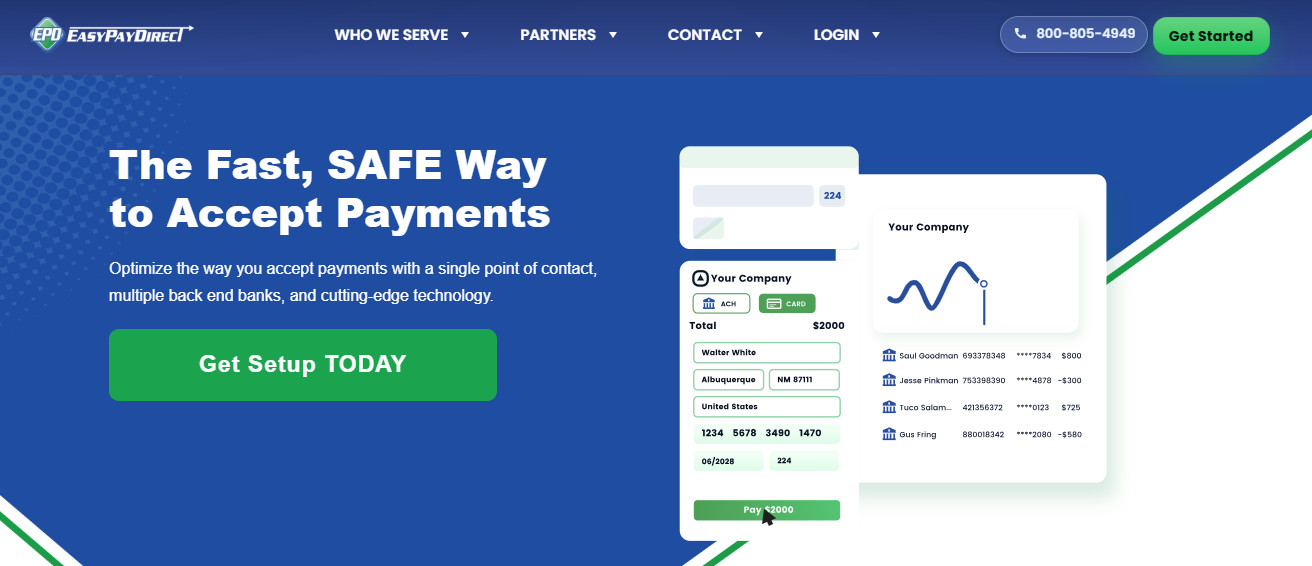
Easy Pay Direct caters to digital marketers, info-product creators, and high-volume digital businesses that experience massive, unpredictable revenue swings during product launches. Their core value proposition centers on their proprietary load-balancing gateway, which systematically shields scaling businesses from catastrophic single-source payment failures.
- Target Merchant Profile: Easy Pay Direct is designed explicitly for high-volume e-commerce sellers, large-scale event marketers, digital mastermind leaders, and online educational course creators.
- Underwriting Methodology: Their consultative onboarding staff conducts deep investigative underwriting up front, gathering detailed historical batch data to pre-clear massive upcoming sales events.
- Freeze Prevention Mechanics: The platform’s proprietary load-balancing technology automatically distributes incoming sales volume across more than thirty different backing bank partners to bypass individual volume ceilings.
- Customer Support Access: Clients are backed by high-level payment liaisons who act as ongoing advisors, proactively adjusting bank routing rules as your sales campaigns scale.
- Pricing Structure: The provider implements a transparent, tiered pricing architecture tailored to high-volume processing, combined with a standard monthly maintenance fee for access to its load-balancing gateway.
Best Practices for Eliminating Holds

Obviously, partnering with a transparent payment processor is the critical first step toward capital stability.
However, merchants must also optimize their internal operations to remain compliant. Even the most accommodating merchant acquirer will be forced to restrict an account if a business acts recklessly or violates core card network rules.
To maintain continuous liquidity and permanently insulate your business from unexpected holding actions, implement the following operational safeguards.
- Maintain proactive communication with your processor before launching major sales. If you plan to drop a new product line or run a promotional campaign that will double your normal daily volume, notify your account manager in advance.
- Provide extremely accurate billing descriptors on your customers’ bank statements. Ensure that the legal business name or website address appearing on the credit card statement exactly matches the branding your customer interacted with during checkout.
- Publish unmistakable refund, exchange, and shipping policies directly on your checkout page. Forcing customers to check a mandatory box acknowledging your fulfillment timelines drastically reduces the likelihood of friendly fraud disputes.
- Retain meticulous, organized proof of delivery and customer communication logs. If a high-ticket transaction is flagged for manual review, immediately uploading tracking numbers and signed delivery receipts can resolve the investigation in hours rather than weeks.
Avoiding Unexpected Freezes with a Combination of Good Platforms and Smart Strategies
The blistering speed of the modern digital economy makes the threat of frozen working capital an unacceptable operational risk. While instant-approval aggregators offer an alluringly simple entry point for new ventures, their reliance on algorithmic risk scoring creates an inevitable collision course for growing brands. A single successful product launch or an unavoidable string of friendly fraud disputes can instantly trap your capital in an opaque administrative holding pattern.
True financial stability requires graduating to a dedicated merchant account provider that invests in upfront underwriting. By building a partnership grounded in operational transparency and shared due diligence, you secure your revenue streams, protect your cash flow, and ensure that your business remains open for business.