


Last Updated on February 26, 2026 by Ewen Finser
For years, SEO teams have optimized for first-page rankings and featured snippets, but these days, what matters most is being visible in AI-driven search. Customers are asking AI systems what to buy, which providers to trust, and which brands or products outperform competitors.
Brands need more than share-of-voice snapshots or positioning data, however, when stakeholders or decision-makers start asking about controls, validation, or even forecasts. And that’s where basic AI visibility platforms tend to fall short.
Overview: Platforms That Measure & Track Lift
Compare | Focus | Lift Approach | Best For |
Emberos | Forecasting and impact validation | Visibility signals as leading indicators to support forecast + validation | Teams that need to prove incremental impact |
Brandlight | Source-level intelligence + citation mapping | Tracks visibility and sources, designs targeted influence strategies | PR/content teams influencing citation ecosystems |
Profound | AEO optimization + content engineering | Improves probability of citations/recommendations, AEO-ready content production | Content/marketing teams building scalable AI-ready content |
Semrush AIO | AI visibility data within existing SEO workflows | Extends keyword/SERP tracking into AIO, benchmarks visibility changes | SEO-first teams needing AI signals without a new stack |
AI visibility is no longer a novelty metric. Answer engines are increasingly changing the way that people discover brands and make purchase decisions. When your brand or products appear in AI-generated answers as a direct result of your optimization efforts, that ties directly to business impact and revenue.
But while most AI visibility tools track presence, few measure influence, and even fewer attempt to forecast and validate impact.
Improving AI Visibility: What Does “Lift” Actually Mean?
Most conversations about “tracking lift” are pretty surface-level (and generalized); while AI visibility tools usually provide positioning and movement metrics, there’s a lot more to it. Lift is not quite the same as week-over-week fluctuations that are moving in the right direction, although some tools consider it as such.
Lift refers to any incremental improvement in your brand’s AI visibility that can be attributed to an action you intentionally took. This might include content updates, schema changes, PR placements, or page improvements, as examples.
Different aspects of lift provide more (or less) value in AI visibility, too. From strongest to weakest value:
- High-intent prompt class: increase in high-intent prompt visibility, segmented by query intent category
- Citation: increase in how often your website is a linked source
- Recommendation: increase in how often a model endorses your brand/products
- Positional: improvement in visibility toward the top of an answer (earlier position = greater influence and perceived endorsement)
- Sentiment: improvement in how positively the model describes your brand/products
- Mention: increase in how often your brand appears anywhere in AI-generated answers
Lift tracking in AI environments is a much bigger challenge compared to traditional SEO because AI answer results can differ run-to-run, mentions don’t necessarily equate to clicks, traffic attribution is lacking, and citation behavior varies based on the engine. The same exact prompt can be run through ChatGPT twice during the same day, with the results presenting different phrasing, brand orders, and citation sets.
True lift tracking requires repeated sampling, controlled comparisons, segmentation, statistical modeling, and a lot of other technical stuff that’s probably best saved for another article.
Unfortunately, most AI visibility tools don’t actually provide that kind of depth. They observe and track citations, share of voice, positioning, and even brand sentiment. But they don’t look at whether the model retrieval index updated, if the sampling variance created noise, if the model version changed, if the “prompt universe” simply tilted a bit, or how any of those things might have impacted the results independently from content edits, page updates, or placements you’ve done on your end.
And barring one (Emberos), they provide no forecasting whatsoever.
Common Mistakes In AI Visibility Lift Reporting
There are a few things that can make lift reporting inaccurate (and ineffective).
Not freezing the prompt set. If you add new prompts or change them, you’re redefining the map, essentially, which can artificially inflate (or deflate) lift.
Single sample logging. Tools that run prompts once per period (whether that’s per minute, day, week) aren’t getting a deep-enough view. You need to have multiple runs per prompt with variance tracking.
Ignoring model drift. If your visibility suddenly increases after a model updates, that isn’t lift. That’s an algorithm change, and similar to SEO rankings that suddenly improve overnight after a Google core update (if you’re one of the lucky ones).
Focusing on aggregated lift with no segmentation. I mentioned earlier that different aspects of lift carry more (or less) value, which is why aggregated percentages won’t paint a complete picture.
This last point, I think, is the biggest mistake to avoid because it can be misleading at best, detrimental at worst. You might be “up” overall, but losing the prompts that actually drive revenue.
Imagine you’ve got two visibility segments: Segment A is high value (high intent prompts), Segment B is low value (basic mentions). If Segment B improves dramatically while Segment A declines modestly, the weighted average can still look like positive improvement despite losing a chunk of your highest-value-intent visibility.
Segmented lift reporting helps you understand exactly where you’re gaining or losing so you can strategize improvement. At a minimum, you should segment by intent tier (informational, commercial, comparison), funnel stage, product category, competitor comparison queries, brand vs. non-brand prompts, and model type.
This helps you answer:
- Where are we gaining or losing?
- Are we influencing buying decisions?
- Are we strengthening our comparison performance?
- Are we improving citation trust?
Aggregate lift can’t help you with any of those questions, let alone strategy or forecasting.
AI Visibility Tools That Track Lift
Below, I’ll share the best tools that track lift (and how), what they offer, their pros and cons, and who they’re best for.
Best Overall: Emberos
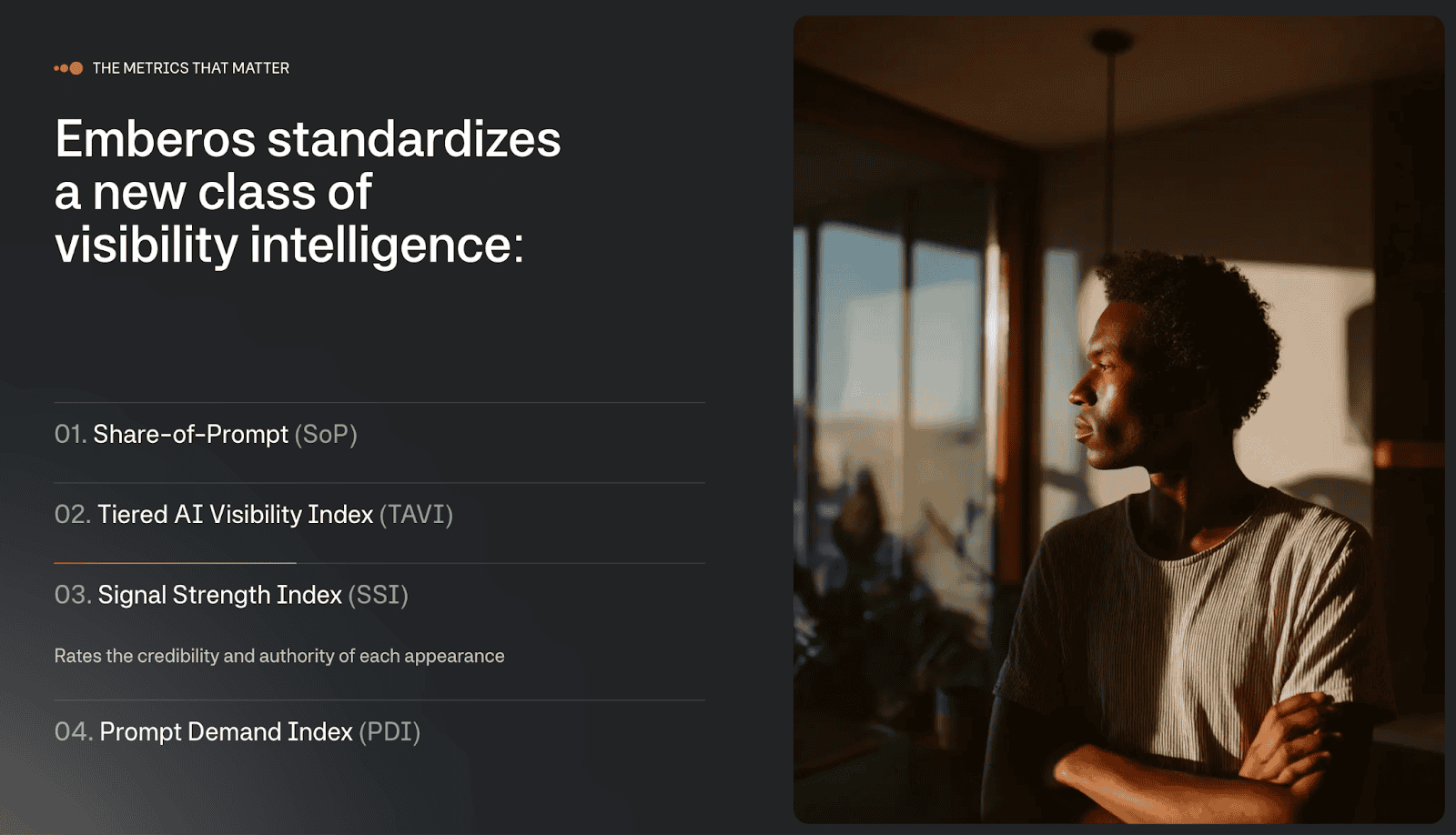
Emberos is built around proving impact rather than reporting correlations, and it treats AI visibility as a signal to act on (and forecast from). Their case studies demonstrate how visibility signals are used to predict outcomes; Share-of-Prompt (how often your brand/products appear in AI answers) is an actionable indicator for improvement strategy and outcome forecasting.
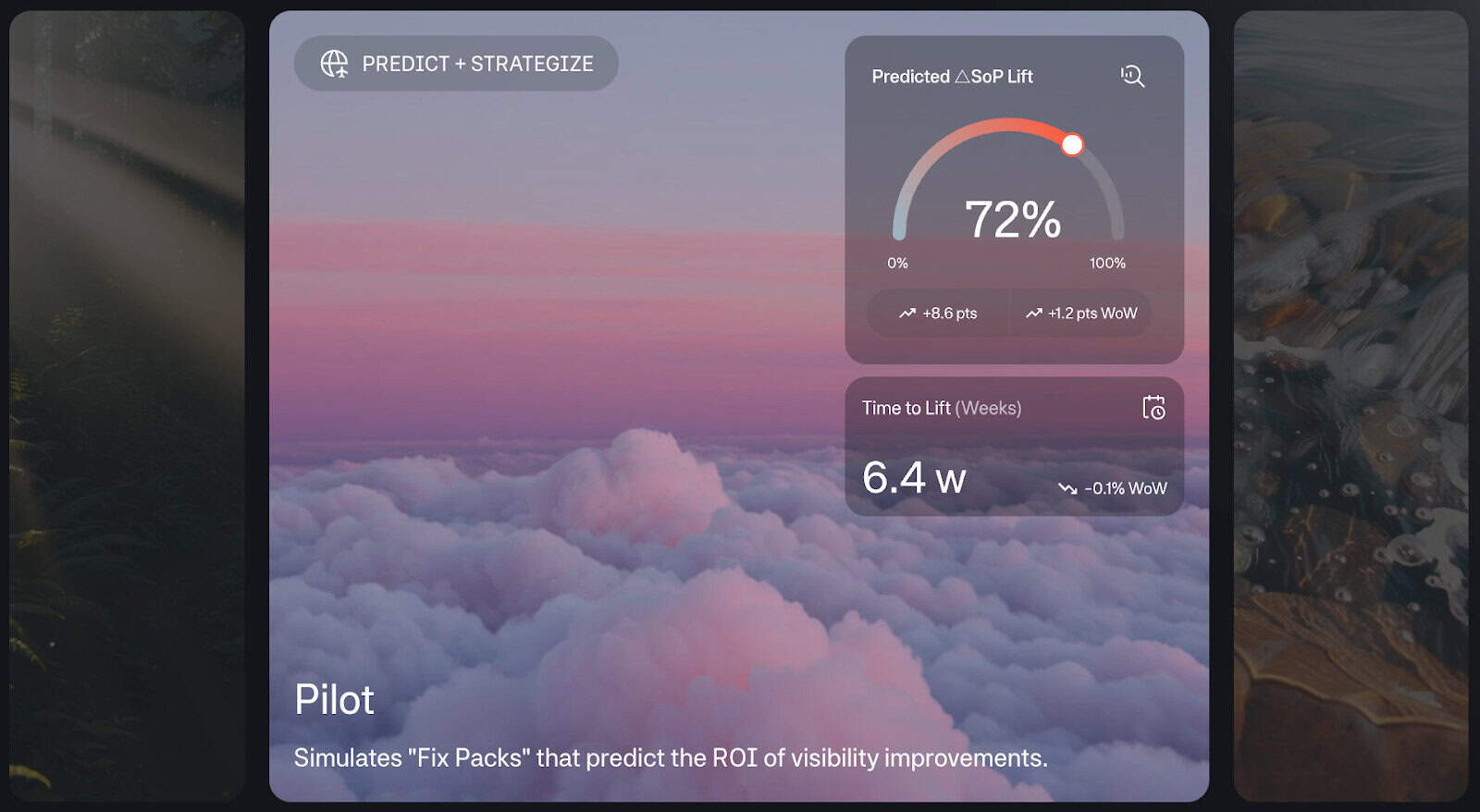
This is the best choice for teams that need to prove the business impact of AI visibility to stakeholders because you’re given transparent insight, actionable workflows, forecasts, and a complete audit trail.
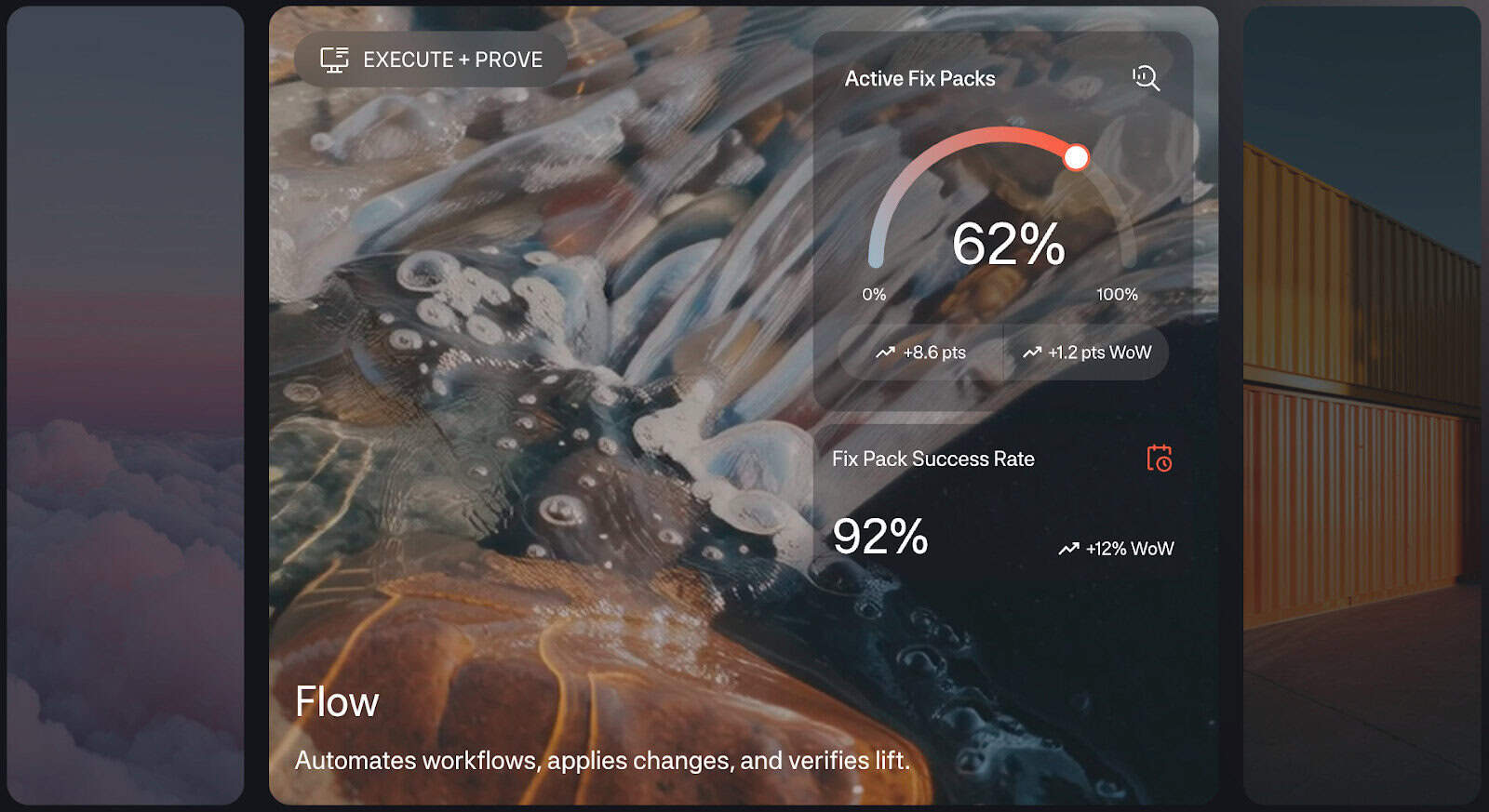
Emberos provides a closed-loop system that shows you how and where your brand is being represented within AI-driven search environments, prioritizes what you need to improve, forecasts the results from those improvements, integrates with your existing tools to execute updates through automated workflows, and then verifies the lift.
Most AI visibility tools barely scratch the surface of what Emberos can do. If your brand needs to increase its presence in high-value queries and prove the ROI, this is the best platform to get it done.
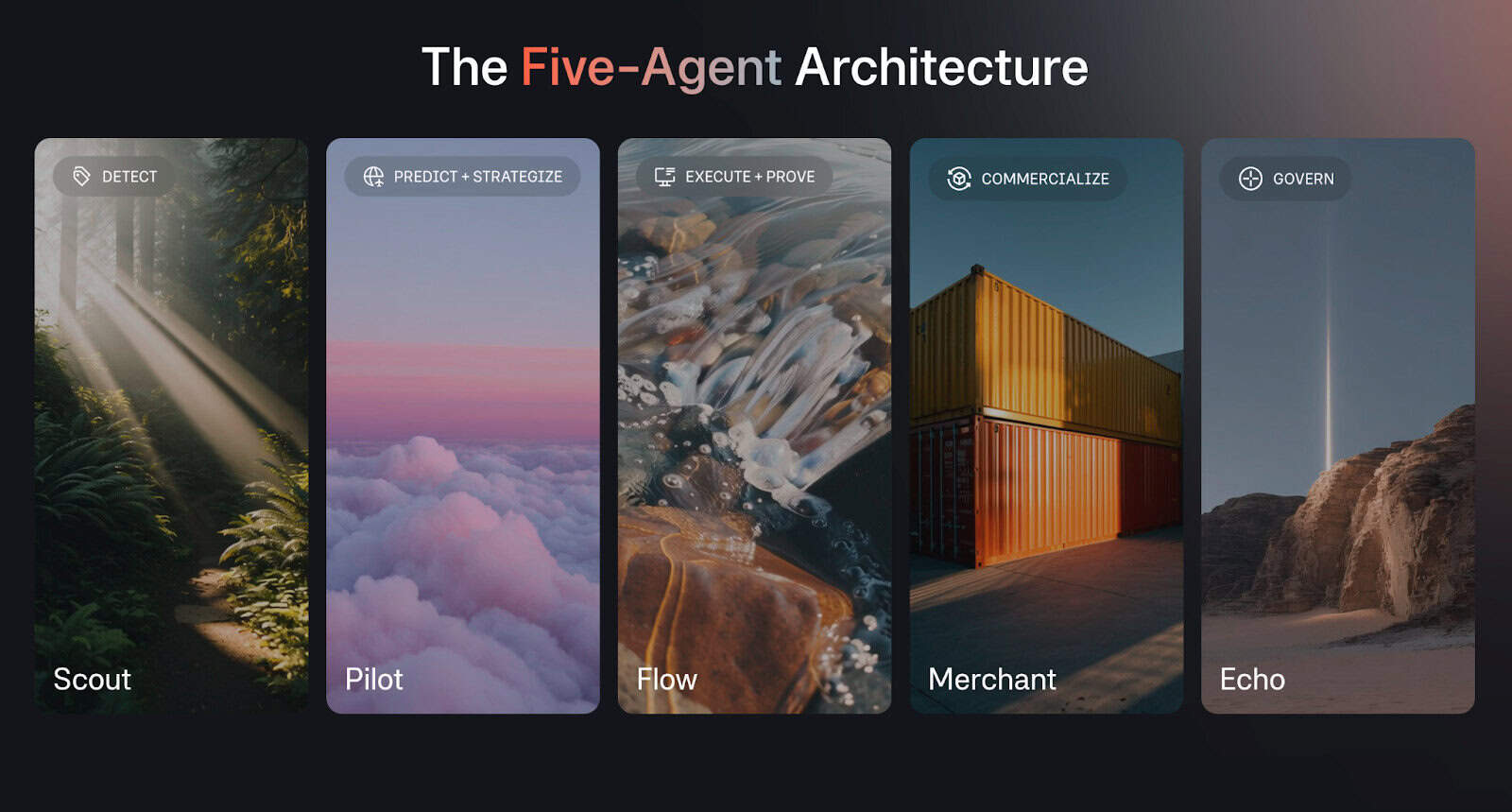
Emberos Pros:
- Identifies gaps in visibility or areas for improvement and provides “fix packs” that automate updates through your existing workflow tools (like HubSpot or Jira as examples).
- Offers predictive revenue modeling to predict future demand or sales.
- Its tiered AI visibility index (TAVI) serves as the scoring framework and segments presence across direct, competitive, and contextual layers.
- Provides an early warning system of sorts, detecting shifts in consumer intent a week to ten days in advance. It also monitors for misinformation (or outdated information) to maintain brand messaging and compliance.
- Monitors dozens of AI models including Google AIO, ChatGPT, Perplexity, Copilot, and others.
Emberos Cons:
- Pricing is bespoke, although that’s common for tools that go beyond the most basic AI visibility monitoring.
- Implementation and onboarding may require technical resources, especially for integrations with your existing tools.
Best for Provenance Analysis: Brandlight

Brandlight focuses on visibility and provenance so you can understand where your brand is showing up in AI answers, but also why. Lift is treated as a function of being cited by the right sources to increase a brand’s chance of being trusted (and surfaced) in LLMs.
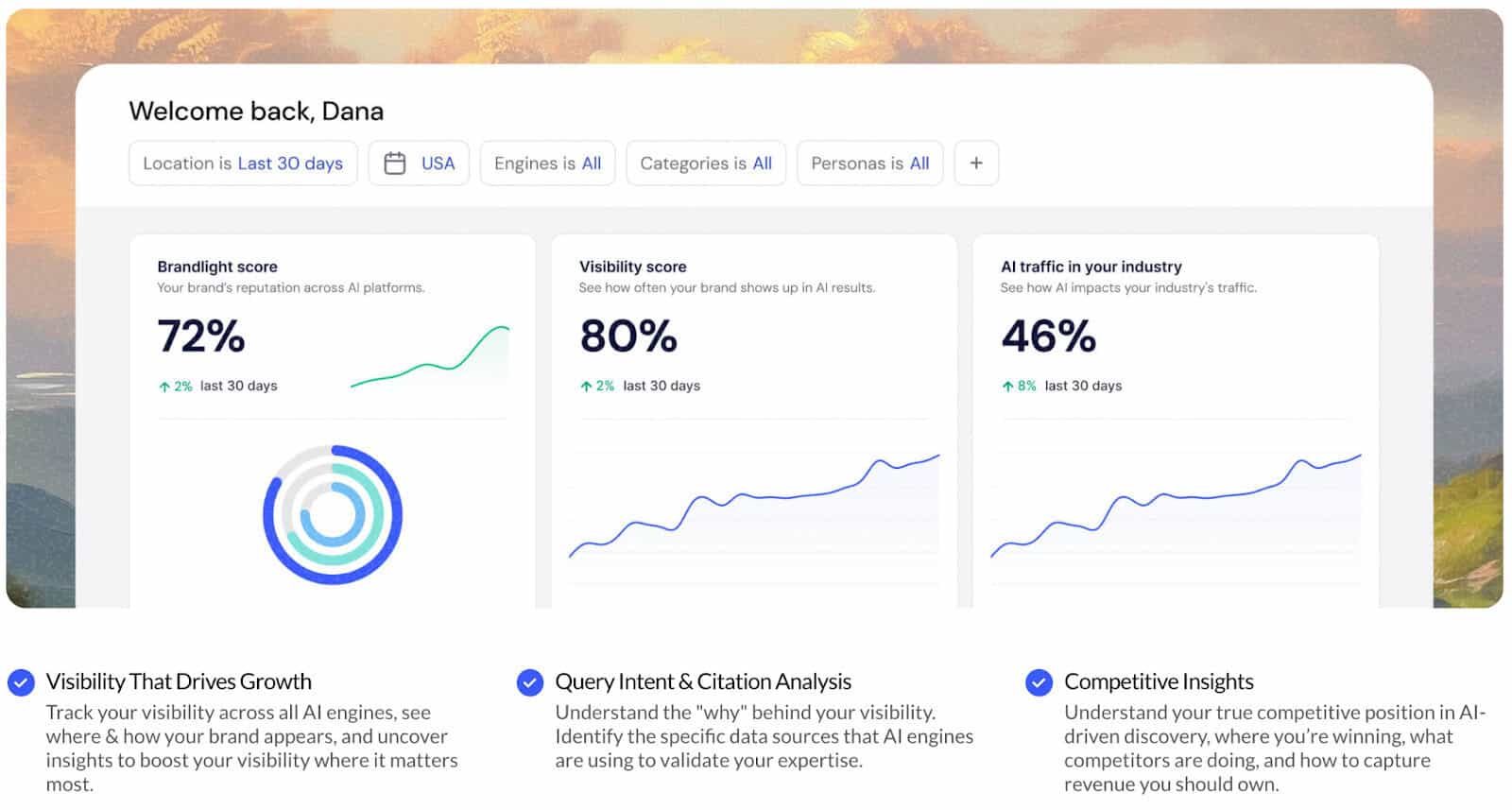
If lift is about incremental and attributable change, Brandlight’s focus helps you to design interventions and then observe whether more citations arose as a result.
Brandlight offers some of the same things that Profound does, including technical insights into the way AI crawls your website and content to measure discoverability and potential issues that are hindering visibility. It also guides content strategy teams for topical direction and areas where optimization can make AI trust stronger.
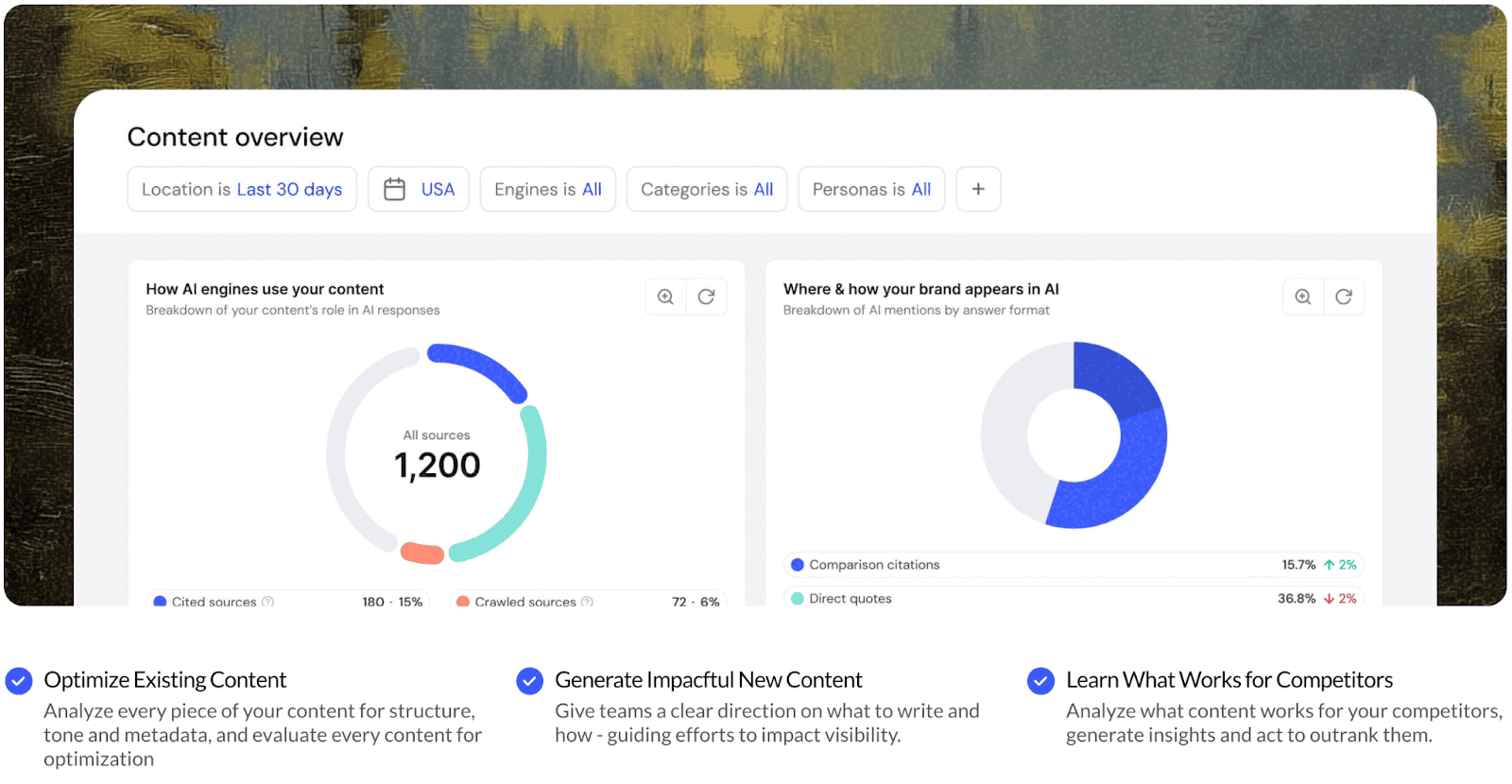
Beyond that, Brandlight also provides publisher performance intelligence that helps marketing teams to discover competitive placements and untapped partnership opportunities, along with ad share and competitor spend data that guides budget decisions.
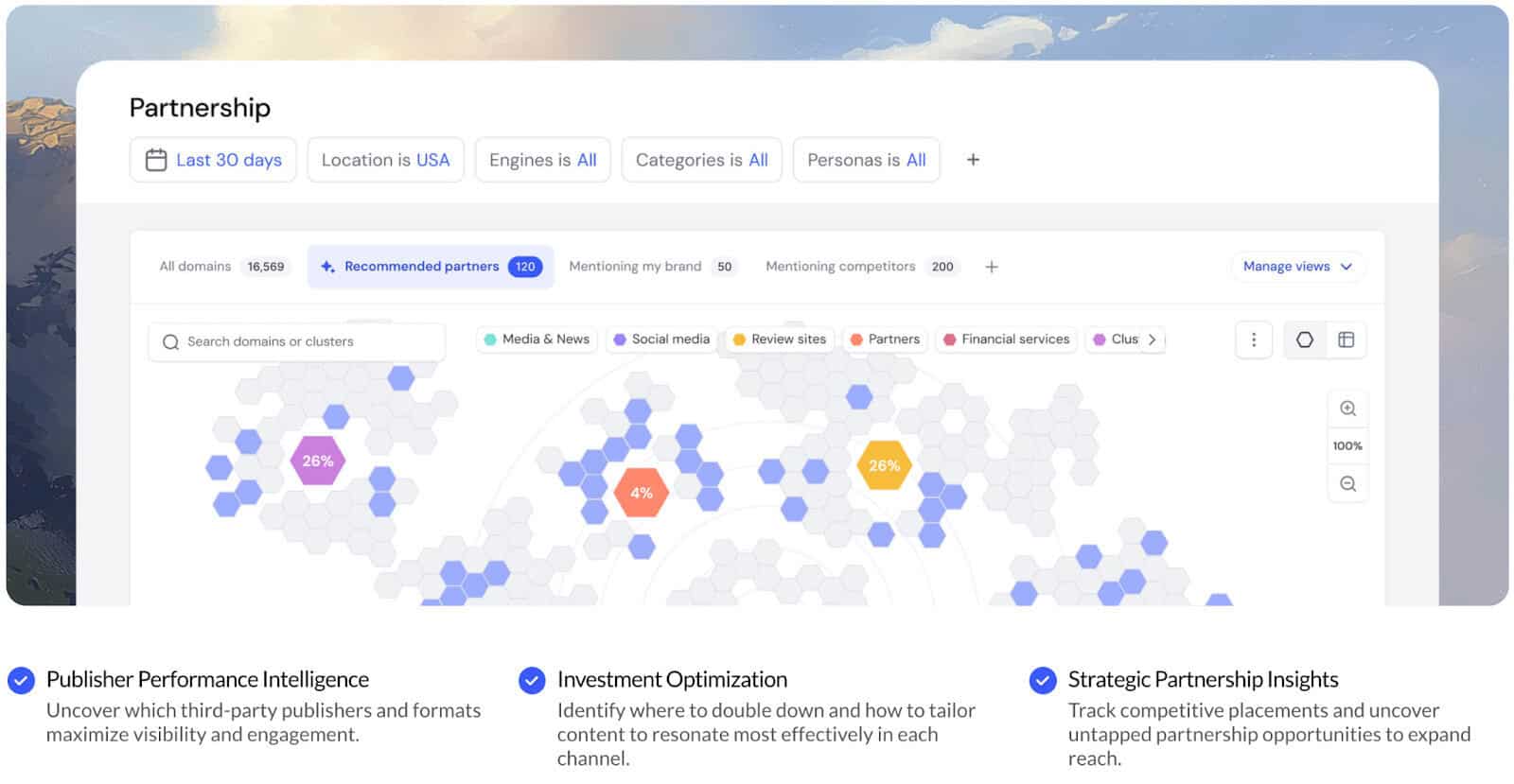
Brandlight Pros:
- Especially well-suited for PR/communications and content operations teams that want to influence citations.
- Surfaces which domains to target and what content types get cited.
- Provides actionable insights and a governance-first design for brand voice consistency.
- Capable of generating on-brand content and conducting A/B testing to measure effectiveness across AI platforms.
Brandlight Cons:
- Tracking citations and showing correlation is not exactly the same as forecasting commercial impact the way that Emberos can.
- You will still need experimental setups or downstream attribution to prove causal lift, although Brandlight provides explanations and templates to do this (and interpret the results).
- Enterprise-level bespoke pricing.
Best for AEO + Production: Profound
Profound takes an operations-first approach to AEO and views lift as the result of engineering content and signals for answer engines, specifically structure, clean excerpts/definitions, authoritative sourcing, schema, and content design that enables clean extract by LLMs.
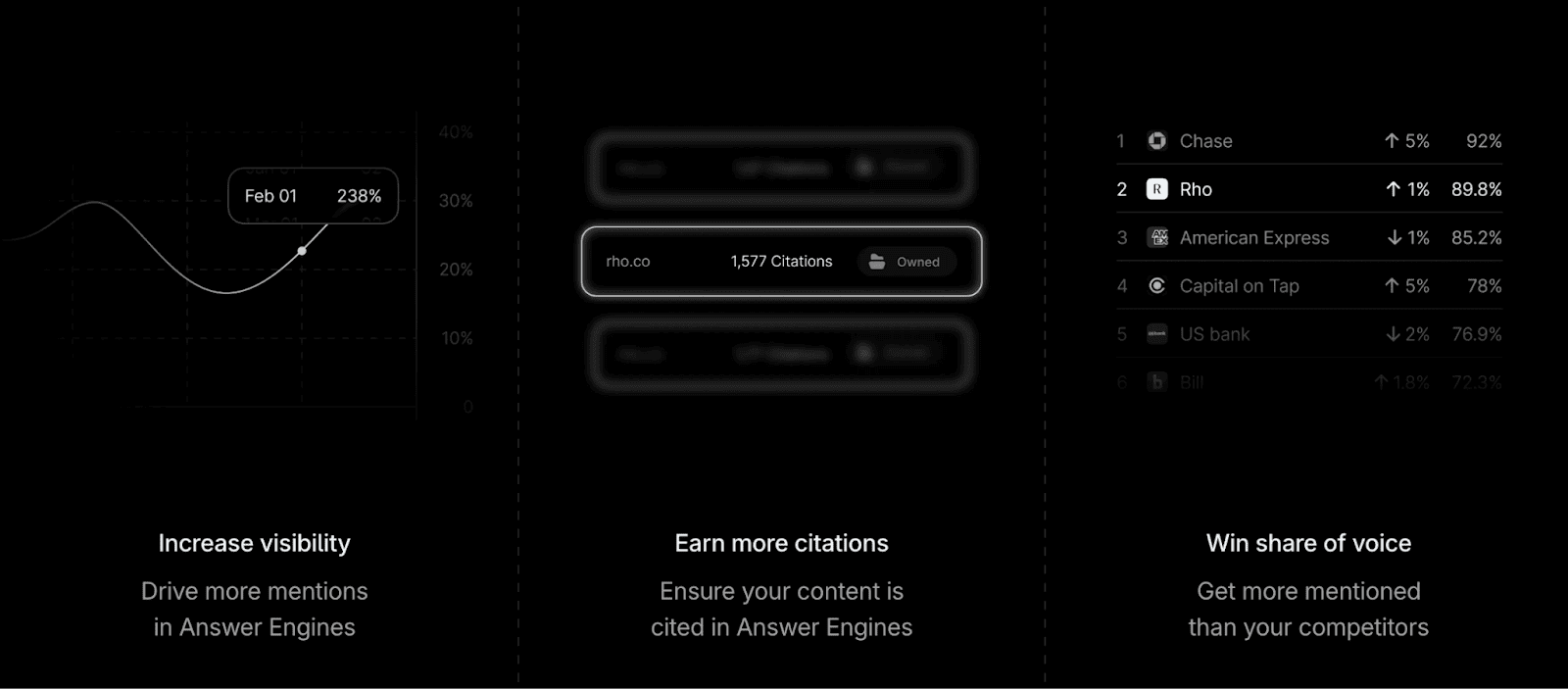
Essentially, AEO is treated as a discipline similar to SEO, so Profound provides the tools and workflows to execute at scale. It’s focused on making content trustworthy and extractable by LLMs and these improvements increase the probability of being cited and/or recommended.
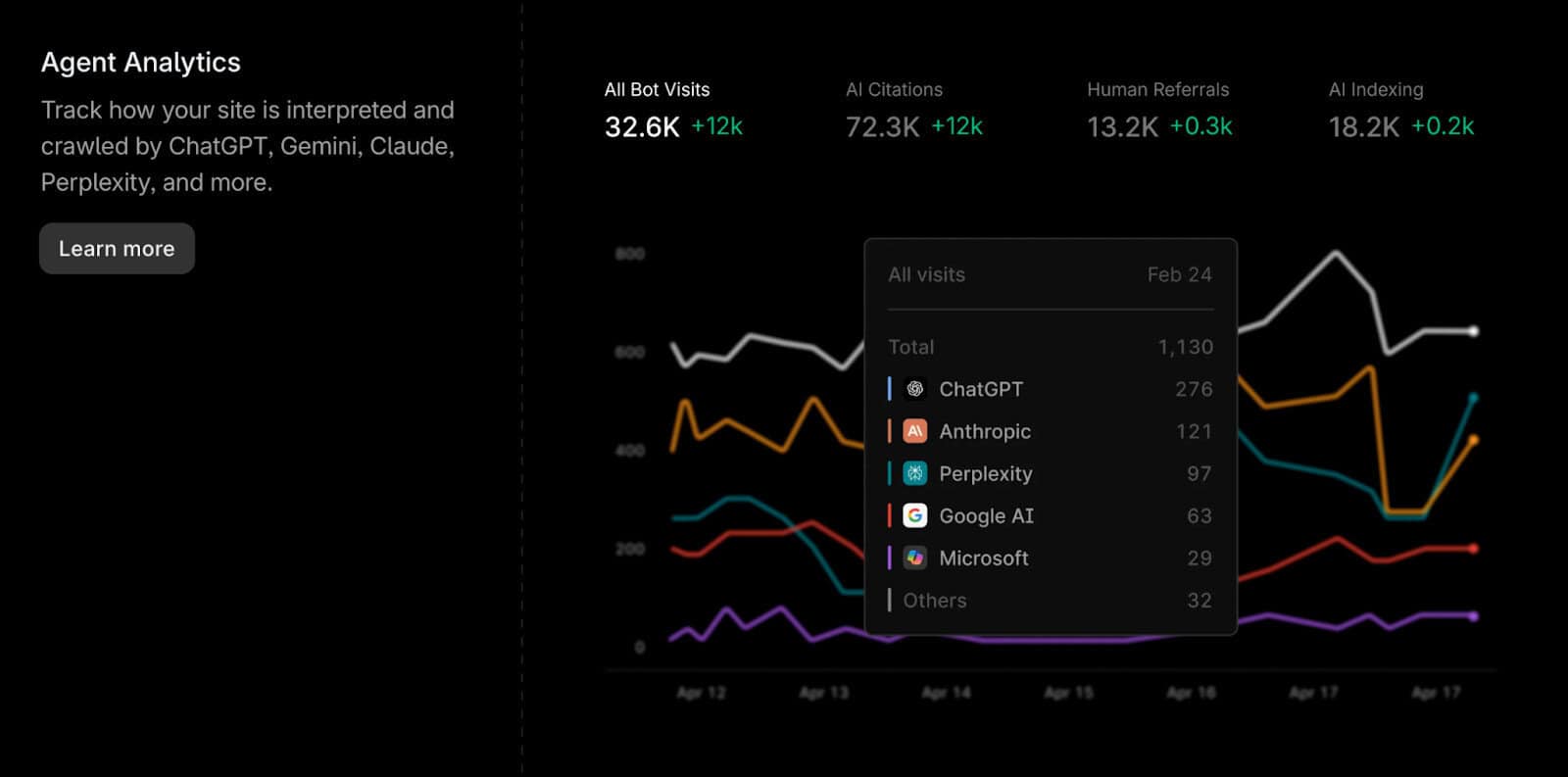
Profound audits your current presence across answer engines and includes testing and iteration to validate whether content is appearing as an answer or citation, adjusting the playbook as needed to optimize. And like Brandlight, Profound tracks AI bots crawling your own website to examine areas that need attention to improve visibility.
White the data and insights provided by Profound are deep, forecasting and ROI validation need to be paired with downstream measurement, although it does integrate with GA4.
Profound Pros:
- Monitors brand mentions, citations, sentiment, and share-of-voice, providing comprehensive data and visibility tracking with actionable insights.
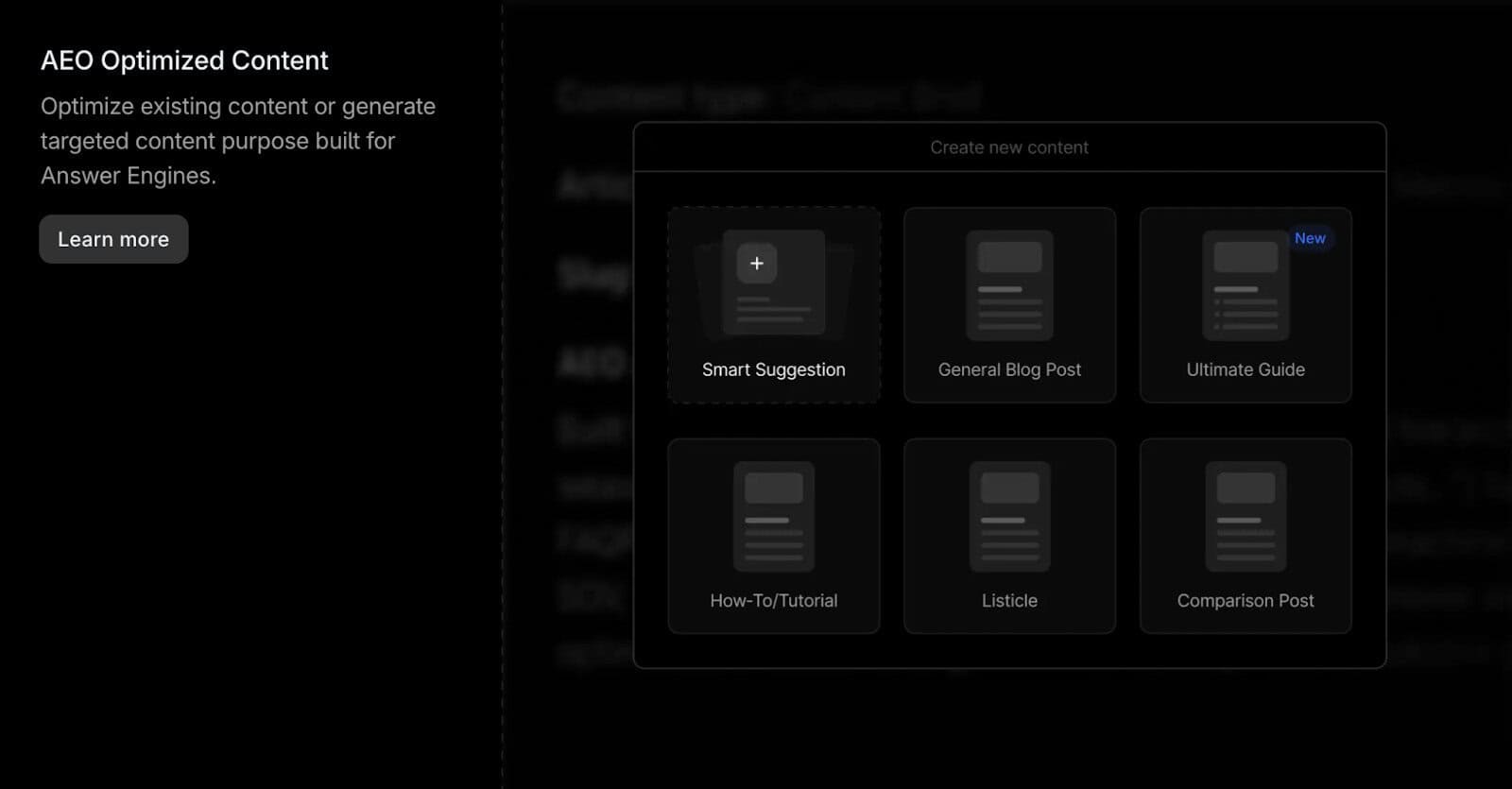
- Best for content teams who need a playbook and automation-forward workflows to optimize existing content or produce AEO-ready pages.
- Integrates with GA4 to share conversion and revenue metrics, which acts as an extension to the platform’s core AI tracking.
Profound Cons:
- Like Brandlight, Profound’s insights and execution can increase the probability of being surfaced in AI environments, but it doesn’t provide forecasting or validation as Emberos does.
- Steep learning curve, especially for beginners.
- The lowest tier that tracks more than just ChatGPT and includes optimized articles starts at $399 per month; the next tier up (Enterprise) has custom pricing.
Best for SEO-Native Teams: Semrush Enterprise AIO
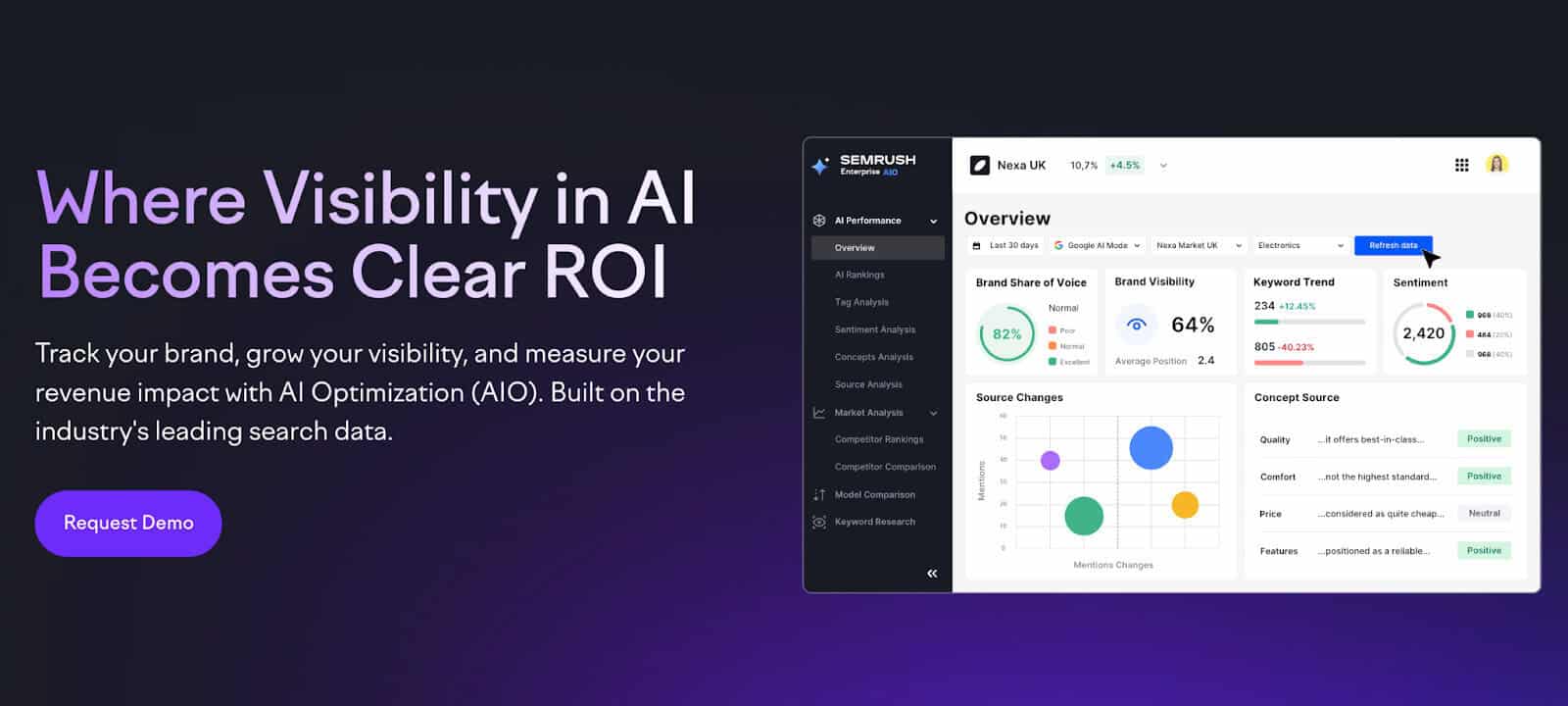
Semrush treats lift as an extension of discoverability and being included in AI summaries is another SERP (search engine results page) feature to optimize and track. This is best suited for teams that are SEO-focused since Semrush Enterprise AIO pulls this data directly into the keyword research and reporting stack.
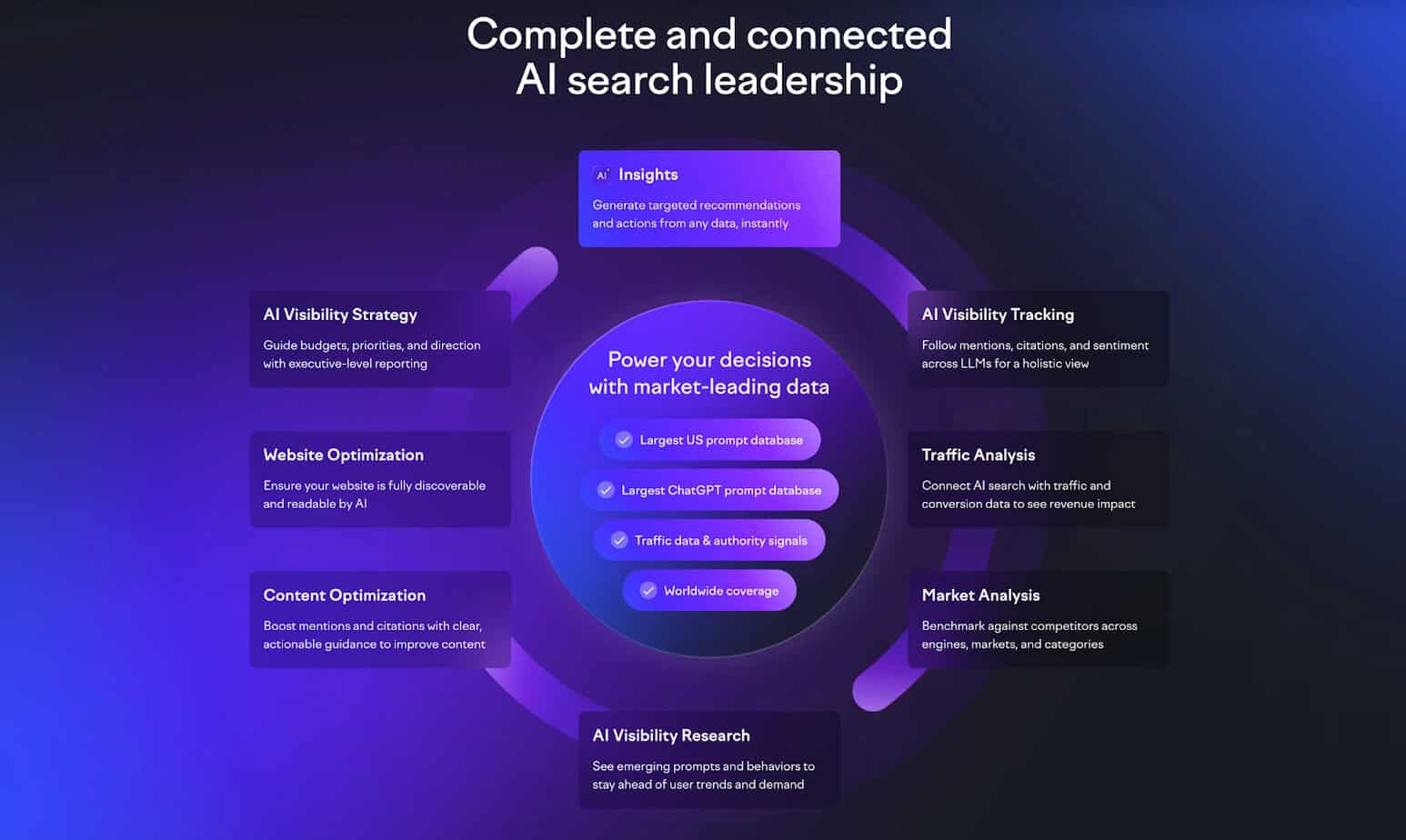
In fact, that’s probably the biggest strength. Semrush AIO provides deep integration with traditional SEO workflows including keyword mapping and tracking, content audits, and backlink data, folding AI visibility metrics into those reports. That’s ideal for teams whose measurement and organization structure still lives in SEO. Plus it’s accessible for those who want to manage their SERP and AI surfaces from one platform.
Semrush AIO connects AI search with conversions and traffic to measure revenue impact, alongside visibility tracking that provides insights into mentions, citations, and sentiment. Prompt demand helps you to spot trends for content strategy, and market analysis is available for competitor benchmarking.
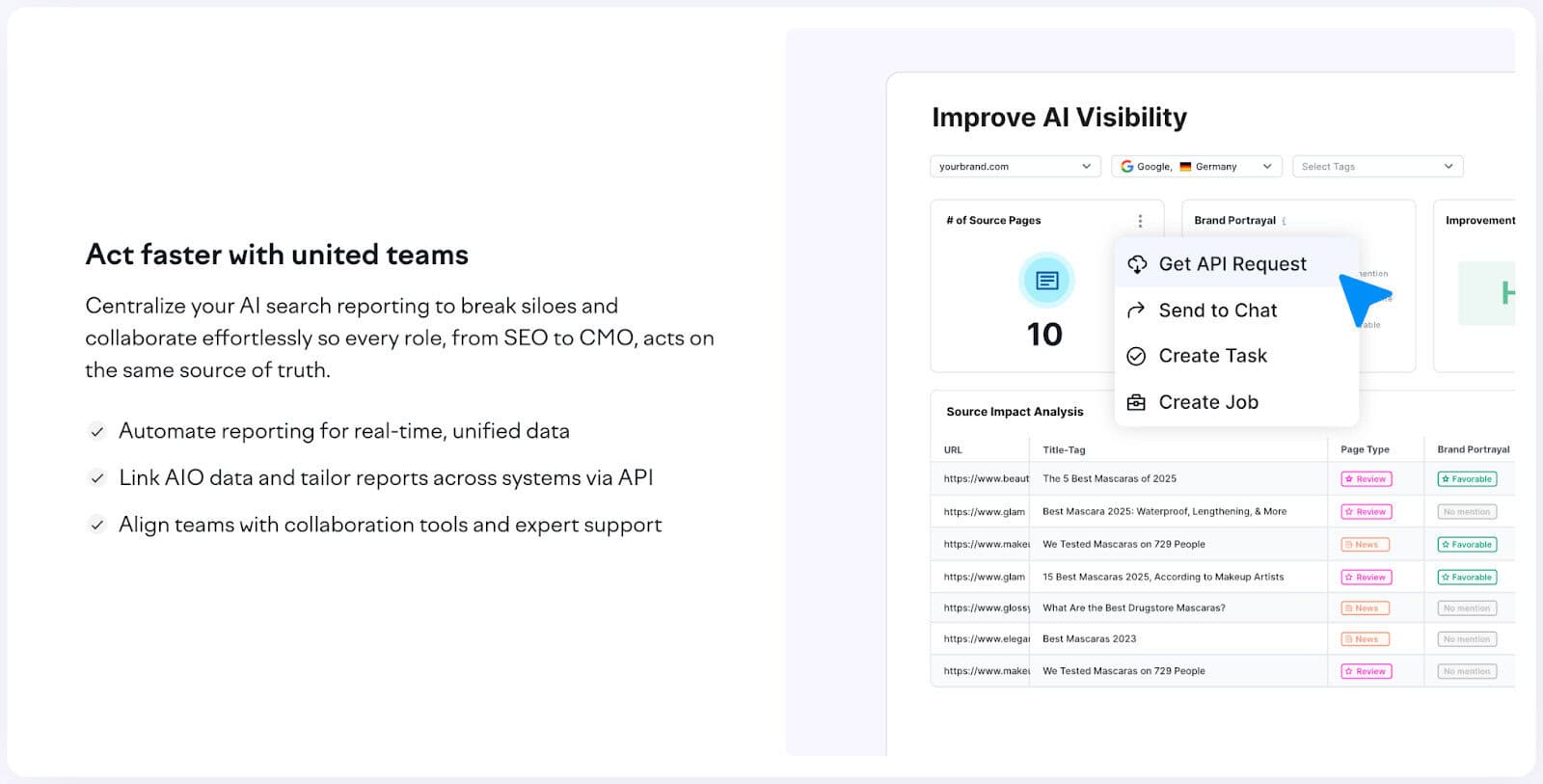
That said, it’s less focused on forecasting or deep provenance. If you’re an SEO team and you want AI signals inside tools you’re already using, however, this is the quickest way to align AEO with your keyword priorities.
Semrush AIO Pros:
- Will provide targeted recommendations to guide content priorities or other actions needed for optimization.
- Tracks AI bot crawls on your site to make sure it’s easily read and discoverable.
- Provides complete visibility tracking and prompt monitoring, with traffic analysis for ROI measurement.
- Prompt search volume data (similar to keyword search volume).
- Contextualizes with Adobe Analytics or GA4 data.
Semrush AIO Cons:
- As of this writing, it does not extend across all major LLMs.
- Pricing is bespoke.
- Steep learning curve if you’re not already a Semrush user.
Closing Thoughts
AI visibility has become its own performance channel. Lift is about being mentioned in the prompts that matter (and in ways that influence real decisions) and being able to demonstrate that your actions caused the change.
AI visibility reporting is easy. Tracking lift and proving it is hard.
The difference between monitoring and measurement is accountability. Of all the platforms mentioned here, Emberos pushes the discipline a step forward by asking (and answering) “What impact did we expect, and did we deliver it?”
And that’s the metric that separates experimentation from effective, data-driven strategy.